

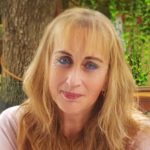

Eldad Beck: Son of the family of builders of the "Herzliya" hotels in Haifa, orientalist, writer and journalist - lives between the Carmel, Wadi Salib and Vienna Europe and the Middle East

A foreign correspondent born into a historical story
Eldad Beck's story begins long before his birth. To understand his life path, his professional choices, and his unceasing curiosity about peoples, countries, and cultures, one must return to his family roots, to the days of the first immigrants, to European Jewry, and to the Carmel of the early twentieth century.
Sometimes it seems that his books and the long journalistic career he built were a natural continuation of a family story that moved between continents, languages, and historical periods.
Beck, who has written five books, is a Middle Eastern scholar and son of one of the families identified with the history of the city of Haifa. In this section, Beck talks about his memories, travels, and life between Israel and Europe.
Although he was born in 1965, it seems that the extraordinary density of his life, the multitude of stops, countries, encounters, and stories he collected along the way, give the feeling of a man who did not live the life of just one person, but a life broad and layered enough to fill the lives of several people.


"I live here too"
Here, the section that seeks to open doors, not only of houses, but of souls. This is a section that brings you fascinating Haifa characters, straight to their living spaces, with the belief that true acquaintance is forged through stories, life lessons, and unique and personal perspectives.
Thus, the rich human mosaic of our city, Haifa, a city of voices, memories, and living, breathing identities, gradually unfolds. A section about women and people who live here, as the section's name suggests: "I live here too."
This is where we meet these characters inside their homes, but not as a purely physical space, one measured in square meters, real estate valuations, or design aesthetics. The home is described here as a space filled with meaning: a treasure trove of memories, evidence of life stories, and a space charged with emotion. Through the home, we get to know its inhabitants, not from the outside, but from the inside: through an intimate, one-time lens that reveals their world as it is experienced from the inside.
This time we will enter the home of Eldad Beck and his partner Karl-Hans, which is located in an old Arab house that has been renovated and restored with great love and is located in Wadi Salib.


Family Roots: Europe, Zionism, and the Building of the Land
Eldad Beck's family carries with it two central Jewish stories of the twentieth century.
On his father's side stood the Beck family, whose roots are in Europe. The family experienced firsthand the upheavals of the continent and the disaster of the Holocaust. His great-grandfather, Hermann Beck, was murdered in the Sobibor extermination camp. His grandfather, Hugo Beck, managed to escape to Israel before the gates of Europe were closed to Jews. These stories of rescue and loss were an inseparable part of the family memory.
On the other side stands the Halevi-Epstein family, a long-standing and well-known family in Haifa. According to family information, his maternal grandfather was a Levi-Epstein, a member of a family that was connected to the famous "Herzliya" hotels on the Carmel.
During the Yishuv period, these hotels were considered a symbol of modern Hebrew hospitality. Guests from Israel and abroad, public figures, writers and leaders used to stay there. The family members lived in an environment where meeting people from other countries was a natural part of life.
It is possible that the first seeds of their grandson's future tendency to be interested in the world beyond the horizon were already planted here.

Love, exile and a family secret
One of the special stories in Eldad Beck's world was revealed to him only at the end of his military service, shortly before he left Israel to study in France. It was a family secret that had been kept for decades, almost in a whisper, and passed down from generation to generation as a charged memory that no one dared to touch too much.
At its center was Shoshana Epstein, a great-aunt from the Haifa hotelier family that built the legendary "Herzliya" hotels in Haifa. During the Mandate years, Shoshana fell in love with Emil Atallah, an Arab Christian from a wealthy and respected family. In an era when national, religious, and family boundaries were almost as rigid as stone walls, their love was seen as a threat to the existing order.
Shoshana's family tried to prevent the relationship and even forced her to marry a Jerusalem Jew. But Shoshana refused to give in.
It was Mendel Cohen. When he married Shoshana, he worked as a teacher, but later abandoned teaching and turned to his father's profession, carpentry. With his talent and diligence, he earned a name for himself, until he was eventually appointed carpenter in the palace of King Abdullah I of Jordan. In 1924, five years after his failed marriage to Shoshana and after she had run away to the arms of Emil, Mendel Cohen remarried, started a new family, and began a new chapter in his life.
Shortly after the forced marriage, Shoshana left her husband and ran away with Emil. The two left the Land of Israel, settling first in Romania and then in France, where they built their lives far from their families. For many years, their story remained in the family as a kind of tragic novel of forbidden love, rebellion against conventions and exile forced upon those who chose to follow their hearts.
For Beck, who has dedicated much of his professional life to the study of identities, nationalities, and cultural boundaries, there was something much bigger in this story than family history.
He returned to it again and again, searching for documents, testimonies, and details that had fallen out of collective memory. Then, decades after he first heard about it, a turning point occurred that gave the affair a whole new dimension. During his family tree research, a document was discovered in the Ashkenazi Rabbinate archives in Cairo, indicating that Emil Atallah had undergone an official conversion and received the name Abraham. The document, written in the dry rabbinical language of the period, revealed a powerful human story behind it: a man who sought to cross the boundaries of religion, community, and origin out of his love for the woman of his choice.
The revelation did not solve all the mysteries. It did not answer the question of whether the family members in Israel knew about the conversion in real time, nor whether it changed their attitude towards Shoshana and Emil. But it is precisely these gaps, the places where history leaves empty spaces, that attract Beck.
For him, the story is not just about two lovers who crossed continents to be together, but about how families build memory, erase chapters from it, and then rediscover them.
In many ways, the entire affair seems to be a microcosm of the Middle East he has written and researched for years: Jewish and Arab, love versus conventions, identity versus belonging, and a constant struggle between personal story and the greater forces of history.
Even today, when everyone who could have witnessed that drama firsthand is no longer alive, the story continues to reveal new layers. For Beck, it is a reminder that the past is never frozen in archives; it is alive, changing and surprising, and sometimes a family's deepest secrets are revealed only when it seems there is no one left to tell them.
It should be noted that the author Sarah Khafri-Aflal wrote a historical novel and a social drama. "rose" (1999). In this book, she describes a love story that takes place in Israel in 1925, surrounding a complex and turbulent relationship between an Arab man and a young Jewish woman against the backdrop of the period.
She describes it as a plot that weaves together an exciting description of life in those days and focuses on themes of identity, love forbidden by social conventions, internal struggles, and self-discovery.

Roots that preceded the country
To understand the depth of Eldad Beck's Haifa roots, one must go back almost one hundred and eighty years. His mother's family branch arrived in Israel as early as 1846, on a Chabad mission, and settled in Hebron, long before the familiar waves of Zionist immigration.
For decades, the family lived among the ancient alleys of the city, until at the beginning of the twentieth century they moved to Jerusalem. From there, the family's journey continued in the wake of the great changes that had taken place in the country. In 1908, Eldad's grandfather's father left Jerusalem for Jaffa, and immediately afterwards continued on to Haifa, a young and vibrant port city that would be linked to the family's fate for generations.
The birth of the "Herzliya" hotel chain in Haifa
In 1910, the father of the family opened the first hotel, the beginning of hotel operations that bore the name "Herzliya", after permission was received from the widow and children of Benjamin Ze'ev Herzl to use the name.
The hotel operated in the building that now houses the "Beit HaGefen," and was an expression of the pioneer generation's belief that the Jewish future in the land would be built not only through agriculture and settlement, but also through commerce, tourism, and private initiative. Therefore, the name "Herzliya" was not chosen by chance and became a symbol of a Zionist vision translated into the daily act of hospitality.
But history, as is often the case in the Middle East, has not left much room for stability.
With the outbreak of World War I, the hotel was caught in the middle of the turmoil. A British ship bombed the area, the Turks took over the building and turned it into a military headquarters, and in 1917, Moshe-David, the grandfather's father, was drafted into the Turkish army.
Left behind was a mother who had to take care of eight children alone in a time of scarcity and uncertainty. But the family did not give up. As early as 1918, the second "Herzliya" hotel was built at 7 Allenby Street in Haifa, thus beginning a new period of expansion and consolidation.

The hotel's ascent to Mount Carmel
In 1923, another tourist branch was opened at 7 Keller Street in the center of Carmel, where the supermarket building in the center of Carmel now stands, and then the activity moved to another building on Yaffe Nof Street, the place now known as "Nof Hanna."
The building was used as a private residence between 1922 and 1928, but in 1928 the Herzliya Hotel was transferred to it, and it became one of the three hotels of the Herzliya Hotels chain. In those years, it was considered one of the highest quality hotels on the Carmel. The balconies offered a spectacular view of the bay, and its guests included some of the most prominent figures of the period: Chaim Nachman Bialik, Shalom Esh, Arthur Biram, Shmaryahu Levin, Lord Balfour, Chaim Weizmann, and others.
For many of them, the hotel was not just a place to stay but a stop in the great enterprise of building the country.
It should be noted that the conversion of the building into a hotel was initially an initiative of Hasidim who acted on behalf of the Rebbe of Gur and sought to strengthen Jewish settlement on the Carmel. However, this hotel also faced many challenges. The German hotels in the German colony and in the center of the Carmel enjoyed a high reputation and good connections with the British government, which often preferred their services. Established Arab hotels also operated alongside them. The competition was tough, but in time the "Herzliya Hotel" managed to establish itself as a respectable Jewish hotel that offered quality accommodation and kosher food to its guests.

The End of a Dynasty – "Nof Hana" and the Memory That Remains
Despite the successes of the Herzliya hotel chain, financial difficulties continued to mount. The hotel on Mount Carmel closed in 1932, but the hotel on Allenby Street continued to operate for several more years.
In 1939, during the Arab Revolt, a bomb was thrown into the hotel kitchen. The explosion marked not only the end of the family business that bore the name "Herzliya", but also the end of a hotelier dynasty that had lasted nearly three decades. The family members scattered throughout the country, to kibbutzim, moshavim and various cities. Only three of the children remained in Haifa.
The building on Mount Carmel has served over the years as a boarding house, a British naval headquarters, an Irgun training camp, and an IDF military facility. In 2005, it was purchased by the Alon Global company, meticulously preserved and renovated, and now serves as a residential home, named "Nof Hana."
But even today, as it silently overlooks the bay and the stone layers of the city, it is hard not to imagine the days when poets, statesmen and pioneers ascended its steps, and the family members who saw the hotel not just as a business but as a mission.
For Eldad Beck, who was born decades later, this is not just a family story. It is part of the foundation on which his deep sense of belonging to Haifa was built, a city where history is not hidden in archives alone, but continues to live on in the stones of the houses, in the balconies facing the sea, and in the memories passed down from generation to generation.


Childhood in Haifa: A city of encounters and borders
Eldad Beck was born on May 4, 1965, at Rothschild Hospital in Haifa, now the Bnei Zion Medical Center Hospital, but in fact his Haifa story began even before his birth.
His parents lived in Jerusalem at the time, but his grandmother Esther, a central and influential figure in his life, insisted that her eldest grandson be born in Haifa, the city where she lived.
He spent the first year of his life in Jerusalem, then the family moved to Tel Aviv, and later to Givatayim, to Aliat HaNoar Street. Only when he was six years old, about to start kindergarten, did the family settle in Haifa. They lived at 21a Heine Street on the Carmel, in a spacious family home, all floors of which bore the family's seal: Grandma Esther lived on the middle floor, his family on the top floor, and the bottom floor was rented out.
His father's parents passed away near his birth, so Beck became deeply attached to his maternal grandparents, who were an emotional anchor and daily presence for him.
He was the eldest in the family, and was followed by two sisters who were six and seven years younger than him. Looking back, it seems that childhood itself took place in the space between the house and the nearby "Gan Shmuel", between the green Carmel paths and the open view of the port and the sea.
Haifa in the 1970s was a rare city in the Israeli landscape: a multicultural port city where Jews and Arabs, new and old immigrants, workers, academics and seafarers shared one living space. From the Carmel, one could see the ships anchored in the port and the horizon that led to Europe, Africa and Asia. For a curious and intellectually inclined child, it was a daily lesson in the fact that the world was much bigger and more complex than the street on which he lived.


School years: Reali and Carmel
He studied at the "Herzl" school until the third grade, and from the fourth grade he continued on to the "Real School" in Hadar and later to Beit Biram.
He describes those years as a "charming childhood": a childhood of nature, of proximity to the sea, of quiet, and of unceasing intellectual curiosity. Eldad was an excellent student, a child who loved to learn and who found true pleasure in books, in questions, and in discovering new worlds.
In retrospect, it's hard not to see how the city where he grew up, with its constant encounter between cultures, languages, and perspectives, shaped the man who would later become a journalist, writer, and orientalist.
Haifa gave him not only happy childhood memories, but also the ability to look at reality through more than one lens. Perhaps that is why, even today, after years of living between countries, languages, and cultures, Haifa remains for him the place most identified with a sense of home: a calm and pleasant city, where he first learned that behind every story lies another story, and beyond every visible horizon, a whole world awaits, waiting to be discovered.
Beck, who, as mentioned, was educated at the Hebrew Reali School in Haifa, one of the most prestigious and oldest educational institutions in the State of Israel, graduated in 1983.
At the same time, he was a camper in the "Wandering in Carmel" tribe of the Boy Scouts. These years of activity connected him to the landscapes of Carmel and the social life of the city. They also developed in him qualities that would accompany him later: independence, curiosity, adaptability, and a desire to explore new places.
During these years, he began to develop a growing interest in the Middle East and what was happening beyond the country's borders.


Military service: the beginning of the journalistic journey
For many, military service is a period of transition. For Eldad Beck, it was also the beginning of his career.
He served on the IDF Radio and began covering Middle Eastern affairs. At a relatively young age, he found himself engaged in a complex field that required broad political, historical, and cultural understanding.
During those years, he realized that in order to cover the region seriously, it was not enough to know the facts alone. It was necessary to be familiar with the language, culture, and ideological world of the countries and societies being reported on.
This insight was to influence his next decision.


Paris and the Sorbonne: Studying the Arab World from the Inside
After his military service, he went to France and studied at the Sorbonne University in Paris.
He chose to focus on Arabic and Islamic studies. This was a relatively unusual choice for a young journalist at the time. Rather than settle for practical work, he spent years acquiring in-depth academic knowledge of the Arabic language, the history of Islam, and the cultures that emerged in the Arab world.
Paris also gave him a broader perspective on Europe and the relations between the Middle East and the West. He learned to understand the European perspective on Israel and the entire region.

Early career: Middle East correspondent
After his studies, he began working as a Middle East correspondent for the newspaper "Hadashot".
At that time, he already stood out for his unconventional approach. He sought to reach the people themselves, to get to know the reality on the ground, and not rely solely on secondary sources. For him, journalism was first and foremost a human encounter.
This approach later opened doors for him to places that very few Israeli journalists had ever reached.
Beyond Europe: The Foreign Correspondent
In the 1990s, a new chapter in his professional life began.
Beck moved to Europe and served as a correspondent in France, Austria, and Germany for Israeli media outlets. Over the years, he became one of the most recognized voices in European coverage in Israel.
He was not just concerned with daily reporting. He sought to understand deep processes: identity changes, social transformations, immigration, relations between religion and state, historical memory, and the rise of new political forces.
Germany: The occupation that became a mission
Of all the countries he covered, Germany held a special place.
For a man whose family carried the memory of the Holocaust, his long engagement with Germany was charged with both historical and personal significance. For over two decades, he closely followed the development of modern Germany, its relations with Israel, and the way in which German society deals with its past.
Over the years, he has published books dealing with Germany, European politics, and key figures such as Angela Merkel.
To the Arab world and back
In parallel with covering Europe, Beck also continued to engage with the Arab and Muslim world.
He is one of the few Israeli journalists to have visited and reported from countries such as Iran, Syria, Iraq, Lebanon and Afghanistan. These trips have solidified his status as an exceptional field reporter, one who seeks to understand complex realities from within, not from afar.
His work was characterized by a constant attempt to see people beyond political slogans and to understand societies beyond their conventional images.
Writer, researcher and commentator
Over the years, he expanded his activities beyond daily journalism.
His books dealt with relations between Israel and Europe, modern Germany, the Arab world, and broader political processes. All of them reflect the same approach that characterizes his journalistic work: an attempt to understand the historical and cultural forces that shape the present.
Eldad Beck is the author of five non-fiction books that deal primarily with Israel's relations with Europe and the Middle East. In his book "Across the border"(2009) Documented travels and encounters in Arab and Islamic countries."Germany, otherwise"(2014) deals with the phenomenon of anti-Semitism in post-World War II Germany."Chancellor: Merkel, Israel and the Jews" (2017) examines the character of Angela Merkel and her relationship with Israel and the Jewish people. In the book "Alternative – A New Right for Germany?" (2022) He analyzes the rise of the New Right in Germany, while "Late reconciliation"(2024) describes the complex and evolving relationship between Austria and Israel.
His writing combines journalistic observation, historical knowledge, and deep human interest.

The house that awaited him in Wadi Salib
Some people choose a house, and some houses seem to have been patiently waiting for their owners for years. For Eldad Beck, the Arab house in Wadi Salib was of the latter type.
He met his partner, Karl-Hans, a psychiatrist and psychoanalyst, in December 1999, and since then the two have shared a life that moves between cities, languages, and continents. They lived in Vienna, then Beck's professional path led to Berlin, for another three years, and later returned to live in Germany, dividing their time between Europe and the Middle East.
Although he says that of all the European cities, Paris is the city where he feels most comfortable than anywhere else, something inside him continued to look south, to the Carmel and the Gulf.


In 2019, after many years of living in Europe, he made the decision to return to Israel. For him, it wasn't a choice between different cities; there was only one option. Haifa. The city where his family stories, childhood memories, and the layers of history he grew up on are intertwined.
He dreamed of an old Arab house, with arches and high ceilings, one that bore the signs of time on its walls and did not hide its age. Even the need for extensive renovation was part of the attraction. When he found the house in Wadi Salib, it was half-abandoned and in the beginning stages of reconstruction, but Beck already saw in it what it would become.
But in 2020, in the midst of the Corona period and in the shadow of a significant professional opportunity that did not allow him to remain in Israel, management of the project was transferred to his younger sister. She supervised the work, recruited an interior designer, and was a partner in realizing the vision.
Together they took care to utilize the height of the spaces and preserve the character of the building. Beck himself insisted on one principle: that the house would not become a nostalgic vintage decor, but would remain a true Arab home, with a clear local presence, in which collectibles, old furniture, carpets, flea market finds, and countless objects that carry stories with them would be subtly integrated.
The result is a space that does not appear designed in the conventional sense of the word, but rather a living, breathing place, one that time has left its mark on without damaging it. It seems that the house not only reflects the trajectory of Eldad Beck's life, but actually continues it.
Between the stone arches, the rugs, the objects collected at flea markets around the world, and the memories brought from faraway places, a personal space is woven that is at once a home, an archive, and a life story. Beck collects menorahs, magnets, old postcards, Christmas greetings, music CDs, and books, but these are not just collectibles. Each object is a station, each shelf is another layer of memory, and each corner of the house tells the story of another journey, another city, a person he met, or a period that shaped him.
Thus, the house became a kind of quiet anchor in the heart of a life that moved for years between continents, languages, and cultures, a place where memories are not stored but continue to live within everyday life.


After years of wandering between countries, hotels, new systems, and European train stations, this is the place where he feels, he says, the deepest sense of security and peace. Not because he is closed off from the world, but because he manages to contain within himself all the worlds from which he came.
Today, Eldad and Karl-Hans share their lives between Haifa and Vienna, moving back and forth between two cities that are geographically distant but close to their hearts, between the Carmel and the Danube, between the Middle East and Europe, and between two homes that each tell a different chapter in the same life story.


The room where threat becomes home
Among his favorite places in his home in Wadi Salib is the command center, a room whose emotional significance residents of other countries would have difficulty understanding.
For Beck, it is not just a protected space but a space where home, love, and Israeli reality come together.
In the lovingly renovated and restored old Arab house, the protected room doesn't look like a typical security space. Part of it leans right against the mountainside, as if the Carmel itself had enlisted to provide an extra layer of protection.
On nights of alarms and missile attacks, when many Israelis gather in such rooms out of anxiety, Beck finds an almost paradoxical sense of peace in this space.
On one of those nights, while his partner, who, as mentioned, is a psychiatrist by profession, admitted in retrospect that he had mentally prepared himself for the worst possible possibility, Beck felt mostly the comfort of home: the thick walls, the proximity of the mountain, the presence of his beloved by his side.
For him, the MAMD is not just a means of protection but a kind of small parable about life in Israel, a place where fear and love, danger and security, fragility and perseverance coexist. Amid the noisy and threatening reality outside, this room represents something simpler and rarer for him: the possibility of feeling protected, belonging, and loved.
That is: there, far from the alarms and explosions outside, the MMD transforms from a symbol of threat to a symbol of belonging. For him, this is the place where the most difficult reality of life in Israel translates into a sense of home, and the knowledge that despite everything, this is where he wants to be.


A Little Light from the Old House – Grandma Esther’s Menorah
Entering Eldad Beck's home, one may be initially impressed by the books, maps, and souvenirs he brought with him from his travels in distant lands, but after a moment, another, quieter, more intimate collection comes to mind: dozens of Hanukkah menorahs scattered throughout the house.
They stand on shelves, interspersed between the rows of books in the library, peeking out from unexpected corners and giving the entire space the feeling of a small family museum, one that was built not out of planning its treasures but out of accumulated longing.
The collection of menorahs in Eldad Beck's home is not just a collection, but a kind of Jewish memory map that spreads across walls, shelves and bookshelves. Dozens of menorahs are scattered throughout the house, and each one carries with it a different story, a different scent of exile, tradition and family.
Most of them are antiques and old, collected over many years in flea markets and antique shops, and especially in the Haifa flea market, and they reflect the mosaic of Jewish heritage throughout the generations: menorahs created in communities in North Africa, Eastern Europe, the Balkans, Yemen, and the Middle East, objects that illuminated windows and homes long before they became collectibles.
Each one is a silent testament to the journeys Jews made across continents, to the customs that survived despite wanderings, and to the faith that continued to light a light even in times of uncertainty. But of all of them, the menorah closest to Beck's heart is not the oldest or the rarest. It is the menorah of Grandma Esther, one of the most significant and beloved figures in his life.
Unlike many of the menorahs in the collection, which originate from Jewish communities around the world, Grandma Esther's menorah belongs to a completely different world: the world of Israelia from the early years of the state.
It is restrained in appearance and has a unique design, designed in the spirit of the period when young Hebrew culture sought to shape a new visual language for itself. In its center is a jug of oil, flanked by olive branches on both sides, and a narrow space for thin candles. It is reminiscent of those objects created in early Israel, alongside "Ata" products, local ceramics, decorated tin boxes, and children's books that have long since become a collective memory.
But the value of the menorah does not stem from the period it represents but from the person it commemorates. When Beck's gaze rests on it, he sees not just a decorated object from a nostalgic period in the country's history, but Grandma Esther herself: her voice, her presence, the warmth she gave, and the family world around her.
Among the many ancient menorahs that have come from different countries and tribes, this Israeli menorah connects the broad Jewish story to the most personal story. It reminds us that ultimately history is not preserved only in archives and books, but also in simple objects that remain on a shelf for many years, carrying within them the light of those who are no longer there and the memory of the homes where candles once burned.


Four words from the desert – "In the name of Allah, the Most Gracious, the Most Merciful"
Among the dozens of souvenirs, books and objects he collected during years of travels across border lines that seem almost impassable on the map of the Middle East, Eldad Beck chose a modest-looking item: a decorated photograph he brought from the city of Al-Madinah in Saudi Arabia, on which are inscribed four words in Arabic: بِسْمِ اللهِ الرَّحْمٰنِ الرَّحِيمِ. That is: بُسْمِ اللهُ الرَّحْمٰنِ الرَّحِيمِ – In the name of Allah, the Most Gracious and the Most Merciful
The choice is not accidental. Beck, who holds a European passport that allowed him to enter many countries closed to Israelis, including Syria, Lebanon, Iraq, Iran, Pakistan, Sudan and Afghanistan, documented his travels in his book "Beyond the Border."
Over the years, he has crossed political, linguistic, and cultural borders, but it seems that this souvenir, taken from one of the holiest cities in Islam, symbolizes a different kind of journey for him: a journey to the heart of a culture that seeks to present itself not through power or rule, but through the idea of compassion. The meaning of the inscription is "In the name of Allah, the Most Gracious, the Most Merciful," the Muslim opening formula known as the Basmala, which begins almost every chapter of the Quran.
To an ear unaccustomed to Arabic, the last words may sound like a mere poetic doublet, but within them lies a subtle and meaningful theological distinction. Both words are derived from the root ر.ح.م, also known in Hebrew as “رحميم” and “رحم.” The term الرَّحْمٰن al-Rahman – describes universal mercy, an abundance of grace showered upon all of creation, while الرَّحِيم al-Rahim – expresses a closer, more lasting and personal mercy, a kind of intimate bond between the Creator and His creatures.
Thus, in just four words, an entire worldview is unfolded, in which divinity is not defined primarily through power, law, or sovereignty, but rather through the ability to forgive.
The fact that the Basmala opens almost every chapter in the Quran is not just a religious convention but a fundamental statement: a reminder that every act, from a transcontinental journey to a small human gesture, should begin with an acknowledgement of the mercy that precedes all else.
Perhaps that is why this photograph found its way to the home of a journalist who dedicated a significant part of his life to encountering worlds beyond barriers, fences, and mutual suspicions.
Amidst memories of dusty roads, border crossings, ancient mosques, and cities whose stories were written in layers of faith and history, Beck chose to keep these four words in front of his eyes, because they carry not only a religious statement but also A profound human reminder: שCompassion, Like the road itself, Sometimes precedes any destination.

A guide to the journey to the land beyond the horizon
When Eldad Beck was asked to choose, from a house filled with collectibles, souvenirs from travels, rare books, and nostalgic items collected over decades, a number of objects that were particularly close to his heart, the choice immediately outlined the contours of his inner world.
Alongside Grandma Esther's menorah, which carries with it the memory of home and family, and alongside the decorated photograph of Al-Madina on which the basmala appears, بِسْمِ اللهِ الرَّحْمٰنِ الرَِّيمِ, Beck chose an item that is seemingly not particularly impressive: a thin, gray, yellowing old book that he found during one of his strolls through the Haifa flea market.
This is a tourist guide to Lebanon, published in 1935 by the Lebanese government itself. Its pages, etched with the colors of time, describe to the reader the country's cities, its landscapes, its landmarks, and the places that visitors should visit.
But the most surprising detail lies not in the content but in the very existence of the book: it was written for tourists who knew Hebrew. The year was 1935. The Middle East was still a different space, more open and fluid than it seems today, and the idea that a Jew who read Hebrew would consult an official guide to Lebanon, plan an itinerary in Beirut, Tripoli or the Shoof Mountains, and cross the border as a full-fledged tourist was not a historical fantasy but a possible reality.


For Beck, a journalist who has spent much of his professional life crossing actual borders between Israel and the Arab world, this book is much more than a collector's item. It is a window into a historical moment that has been almost erased from consciousness, tangible evidence of an era in which the region's borders had not yet been fixed into regimes of alienation, war, and suspicion. Hidden within its covers is not only a guidebook but also a memory of another possibility, of a Middle East in which the Hebrew language did not necessarily signify foreignness, and the road from the heart of the country to Lebanon was not a charged dividing line but a travel route.
Perhaps that's why the little book found among piles of dust in the Haifa flea market moves Beck so much. It reminds him, like other beloved objects in his home, that history is not just what happened, but also what was almost forgotten was possible.
Sometimes a single thin story, printed more than ninety years ago, is enough to shed new light on the vast distance between the past and the present, and the deep longing for bridges that have disappeared from the landscape but not from memory.
Over the years, and in fact six times, Eldad Beck found himself in Lebanon not in a military context but in a journalistic context as a correspondent for Galei Tzahal.
He crossed not only a border between countries, but also the thin seam line between roles, between uniform and microphone, and between a reality dictated by action instructions and a reality conveyed in a human voice.
Amid this tension between reported reality and experienced reality, that old Lebanese government tourist brochure from 1935, printed for Hebrew readers at the time and describing a country that was still open to a completely different journey, one that is almost inconceivable from the perspective of the present, takes on a new meaning.


The book located on the top shelf
Among the hundreds of books that fill Eldad Beck's home, and among many others that remain packed in storage and await, almost with silent patience, the day when a place will be found for them, there is one book that is exceptional in both its simplicity and emotional weight: an old Bible, placed on the top shelf in his library, as if it had been placed there not only for reasons of order but also as a gesture of respect.
This is a Bible he purchased at a flea market in Haifa, a book that was probably printed in the 1970s, and on its pages appears a dedication dated Sivan 13, 1972, May 26, 1972: "To the Ben Zvi family, health and success, from the Shulevitz family."
This Bible was apparently given as a Bar Mitzvah gift, as was the custom of the time, before being uprooted from its original location in one family's home, passed through unknown hands, and finally found its way to the crowded market stalls, and from there to the top shelf of Beck's library, where it now resides as if it had never truly left anything behind.
As is known, for Jews living in Israel, the Bible is much more than a religious text: it is an identity, historical, and cultural foundation, in which myth and history are intertwined, and from which the landscapes of the land, the history of the people, the Hebrew language, moral and legal values, and even the cycles of time and holidays are derived, in a way that makes it a foundational document of life and existence.
Amidst all these layers, the Bible on the shelf in Beck's home ceases to be just a book. It becomes a charged, almost biographical object, one that carries with it not only the history of a people, but also the personal journey of one small book that was born as a Bar Mitzvah gift, wandered between homes, and finally landed in a place where it continues to serve as silent testimony to the ongoing connection between text, memory, and identity.


This is the boy from Carmel who never stopped searching.
When you look at the trajectory of Eldad Beck's life over six decades, it's hard to see it as a random chain of stations. From his family roots stretching between Hebron, Jerusalem, Jaffa and Haifa, through his childhood on the Carmel, his service in the IDF Radio, his studies at the Sorbonne and his long international career spanning Europe and the Middle East, the same hidden thread resurfaces: a restless curiosity and a stubborn desire to understand the world beyond the border.
Beck was never satisfied with looking from afar. He sought to enter the cities, hear the languages on the street, smell the cafes, wander the markets, read the local books and listen to the people before they became headlines. Perhaps that is why his collections, the books, the menorahs, the old postcards and the souvenirs he brought back from his travels do not seem like a collector's hobby, but rather a kind of human map of his life, an attempt to grasp the moments and places that time tends to erase.
In this sense, Eldad Beck is not just a foreign correspondent. He represents a breed of journalist that is becoming increasingly rare: one who believes that true knowledge is acquired not only in front of screens and databases, but also by walking slowly through foreign streets, learning languages, becoming deeply familiar with cultures, and being willing to look directly at reality even when it is complex, contradictory, or uncomfortable.
Behind all the borders he crossed, all the countries he covered, and all the stories he collected, there remains in the end that same boy from Carmel, who looks to the horizon and asks, even today, what lies beyond him.


To Daphne,
Thank you very much for the warm and encouraging words.
You moved me greatly, both with your approach to the article and your attentive and sensitive reading, and with your accuracy in stating things.
I appreciate it very much.
With love, Rachel, I meant every word..
Is there a connection to the Beck family who lived on George Elliot Street in the center of Carmel? (In the part that connected the street with Yaffe Nof, I imagine everything changed with the construction there, I left for Tel Aviv and haven't visited there since)
You are writing – a member of the hotel builders family?
What hotel did they build?
As far as I know, all 3 "Herzliya" hotels that operated in Haifa, one after the other, were in rented buildings.
They didn't build any building or hotel.
To the Django reader,
As is known, the term "hotel builders" does not necessarily refer to the construction of the building itself, but rather to its establishment as a hotel, that is, to the conversion of an existing building to hotel use and its operation.
This is exactly how the Halevi Epstein family acted.
The three "Herzliya" hotels that it established and operated were located in buildings that it was not the construction contractor for, but they were converted into hotels by it.
And they served as such at her initiative and under her management.
Therefore, the use of the phrase "hotel builders" in this context is absolutely correct.
Without any doubt,
This expression does not in any way imply that the family was the contractor building the buildings themselves, but rather that they founded and established the hotel services in these houses, which are hotels.
Hello, is Eldad Beck related to the Beck family from Bat Galim, Uzi Beck and Billy Beck who grew up with us in Bat Galim, Uzi was the Israeli swimming champion, what's the wonder? They grew up near the mythical Bat Galim pool and Billy is younger than him. A respected Bat Galim dynasty!! I have the impression that Billy is Eldad's father?
¤ © × !
Although I don't know him personally, I enjoy hearing him on various media channels and even agree with most of his opinions.
As they say, "a man of clusters."
To a neighbor from Halisha,
Thank you very much for your response.
It seems that your feeling is shared by many.
Even those who do not know Eldad personally can be impressed by the breadth of knowledge, the clarity, and the respectful manner in which he presents his positions.
I was glad that the article was able to convey something to you from the man behind the story.
Eldad. I enjoyed every moment of reading. It warms the heart. Yes, it does.
I'm curious to know where the house is.
To Ms. Ya.
Thank you very much for reading the article and for the curiosity it aroused in you.
As noted in the article, the house is located in Haifa in the Wadi Salib neighborhood.
As for your curiosity to know the exact address of the house, I hope you understand that it is not right to give out such personal details,
Especially when you also chose not to identify yourself with your full name.
Thank you for understanding.
Congratulations to Eldad Bak. It's just a shame that the article is very critical and not flattering. Jealousy, as we know, causes wrinkles.
To Ziva, the Merciful,
Thank you for reading and even responding.
Interesting that was your feeling,
Sometimes it happens that things are understood in a completely different way than they are simply, as my intention was to write a very complimentary article, out of appreciation for the unique life story, the many years of work, the knowledge, perseverance, and choices that shaped Eldad's path.
To my friend,
There is a true, genuine paragon here, with the presentation of the person in a complete, humane and profound way, about the various stages in his life and the background that led him to where he is today.
That's why I was very, very surprised to read your comment,
But I respect the fact that each reader experiences a text differently and sometimes places emphasis on different points.
In any case, thank you for reading carefully, commenting, and taking the time to share your thoughts.
No greeting.
Where in the article did you find an expression of lack of respect?
It seems to me that you are the one who is not flattering. It is clear that the article was written after in-depth research, and that a lot of time was invested in writing it. Racheli's great sympathy and appreciation for Eldad and his family is also evident. It is also clear that your response was written without basis, with the aim of stinging the author of the article.
Not beautiful nor respectable.
Racheli aspired to an in-depth and fascinating article (as always), which tells the story of the family through the twists and turns of the different periods, and serves as a mirror to Haifa as a special city with an open mind.
And thanks to Eldad Beck for sharing the beauty of life, the distance and connection between the past and the present. Life, relationships, collections, the lovely home and more.
To Orit Cohen,
Thank you very much for the warm and moving words.
I was very happy that the article touched you and that you found in it not only the story of the family, but also a reflection of Haifa in its many faces, people, and eras.
I join you in thanking Eldad Beck, who generously opened his home, his memories, and his life story, allowing a fascinating glimpse into the connection between past and present, between distance and proximity.
Thank you for reading and taking the time to share your feelings.