Yosuke Rubin is an Israeli actor who returned to his city of Haifa and to the stage to play Edmund Keane, the English star who turned acting into a true art form, and whose life ended in a clash between the body and the role.
There is a moment in the theater when the actor ceases to be a private person, if only for a short time. The light falls on him, his body becomes a tool for someone else's story, and his voice utters words that were perhaps written centuries ago. The audience watches him and sees a figure. But beneath the figure is a man who carried his body to the stage, for years that are not visible to the eye and are not necessarily recorded in cultural history.
The actor who collapsed on stage during the role of Othello
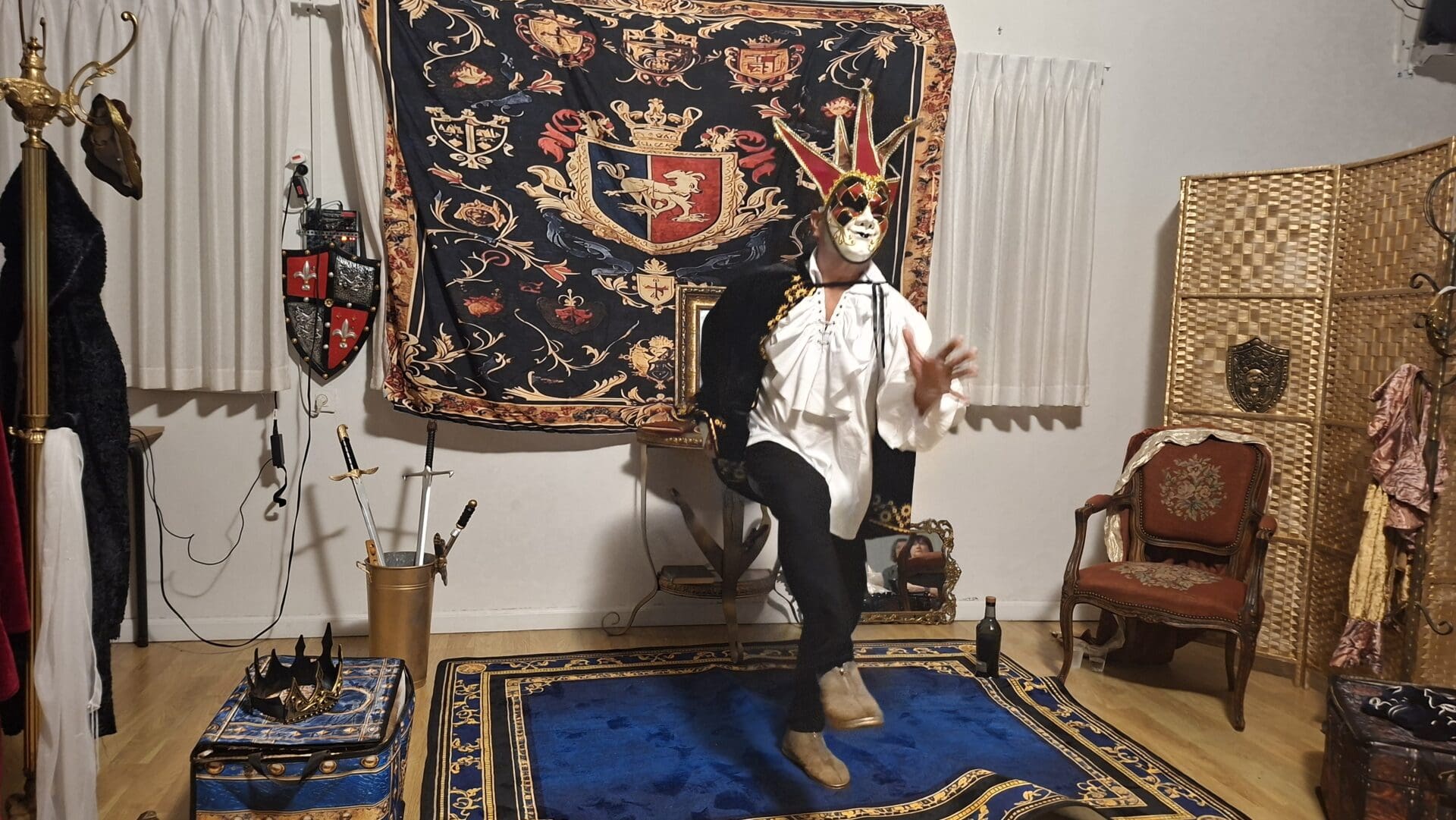
In 1833, on a stage in England, the actor Edmund Keane collapsed during a performance of Othello. He was forty-six years old. The man considered one of the greatest actors of his time, who changed the way actors approached Shakespeare's characters, was unable to complete the performance. He died shortly afterwards, leaving behind a life story that seemed to be written by a playwright with a penchant for symbolic cruelty: an actor who dedicated his life to the art of disguise, and whose own body finally removed the mask.
Almost two hundred years later, in Haifa, Yosuke Rubin chooses to return to the story of Cain. He adapts, directs and stars in the solo play Edmund Cain, based on a play by Raymond Fitzsimmons, translated by Avi Hos. It is a choice that has more than the opportunity to portray a fascinating historical figure. An Israeli actor, whose career spanned theater, film and television, takes on the story of another actor: a man who became famous for his ability to bring characters to life, but could not escape the confines of his own life.
Returning to Haifa with a work in which he is the performer and responsible for designing the encounter between the text and the audience
Rubin is not one of those actors whose name regularly fills the cultural headlines. The public information available about him is limited relative to the scope of his professional activity that emerges from the credits and the records of the productions in which he participated. There are not many interviews or comprehensive testimony about the path he took. Still, the documented stops paint a path of perseverance: professional training at the Kibbutzim Seminar, work on various stages, an appearance in an Israeli film in 1988, participation in television productions, and finally a return to Haifa with a work in which he is not only the performer but also the one responsible for shaping the encounter between the text and the audience.
This story is not the story of a star in the conventional sense. It deals with a more interesting question: What keeps an actor in the profession for years, even when public recognition doesn't necessarily reflect the scope of his work? And what happens when, at a certain point, he seeks not only to accept a role but to create for himself the stage on which he can tell a story?
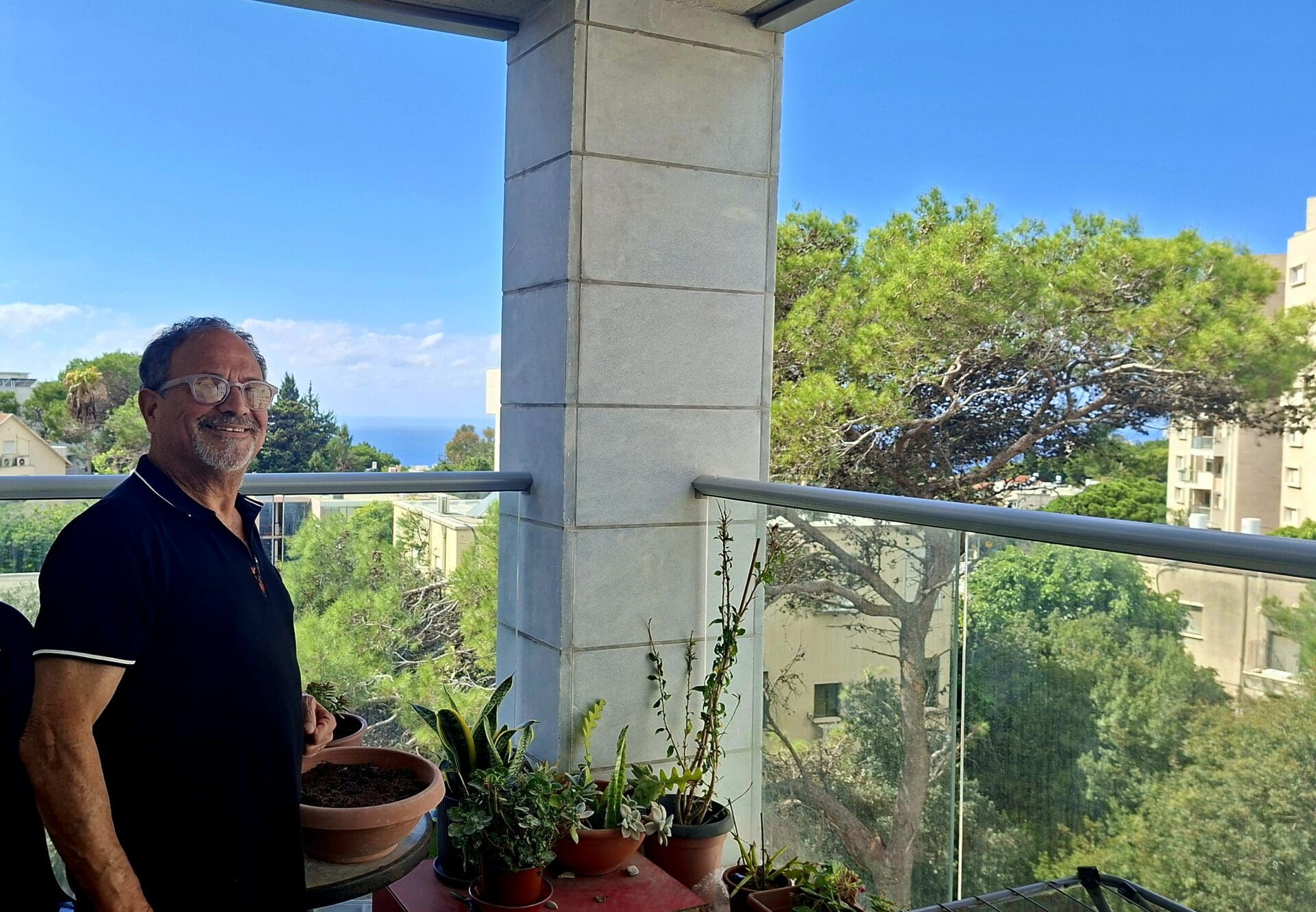
"I live here too"
Here, the section that seeks to open doors, not only of houses, but of souls. This is a section that brings you fascinating Haifa characters, straight to their living spaces, with the belief that true acquaintance is forged through stories, life lessons, and unique and personal perspectives.
Thus, the rich human mosaic of our city, Haifa, a city of voices, memories, and living, breathing identities, gradually unfolds. A section about women and people who live here, as the section's name suggests: "I live here too."
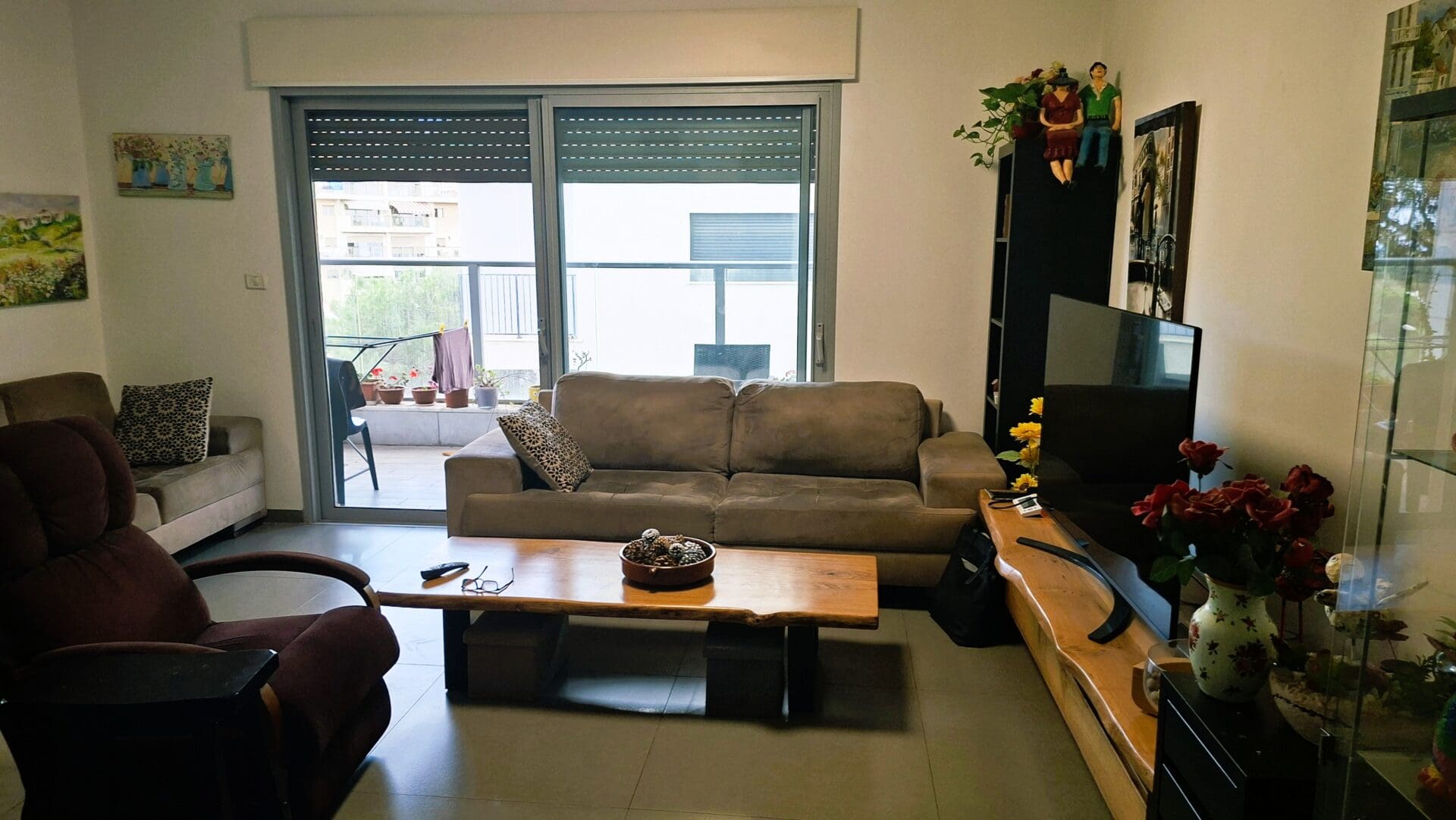
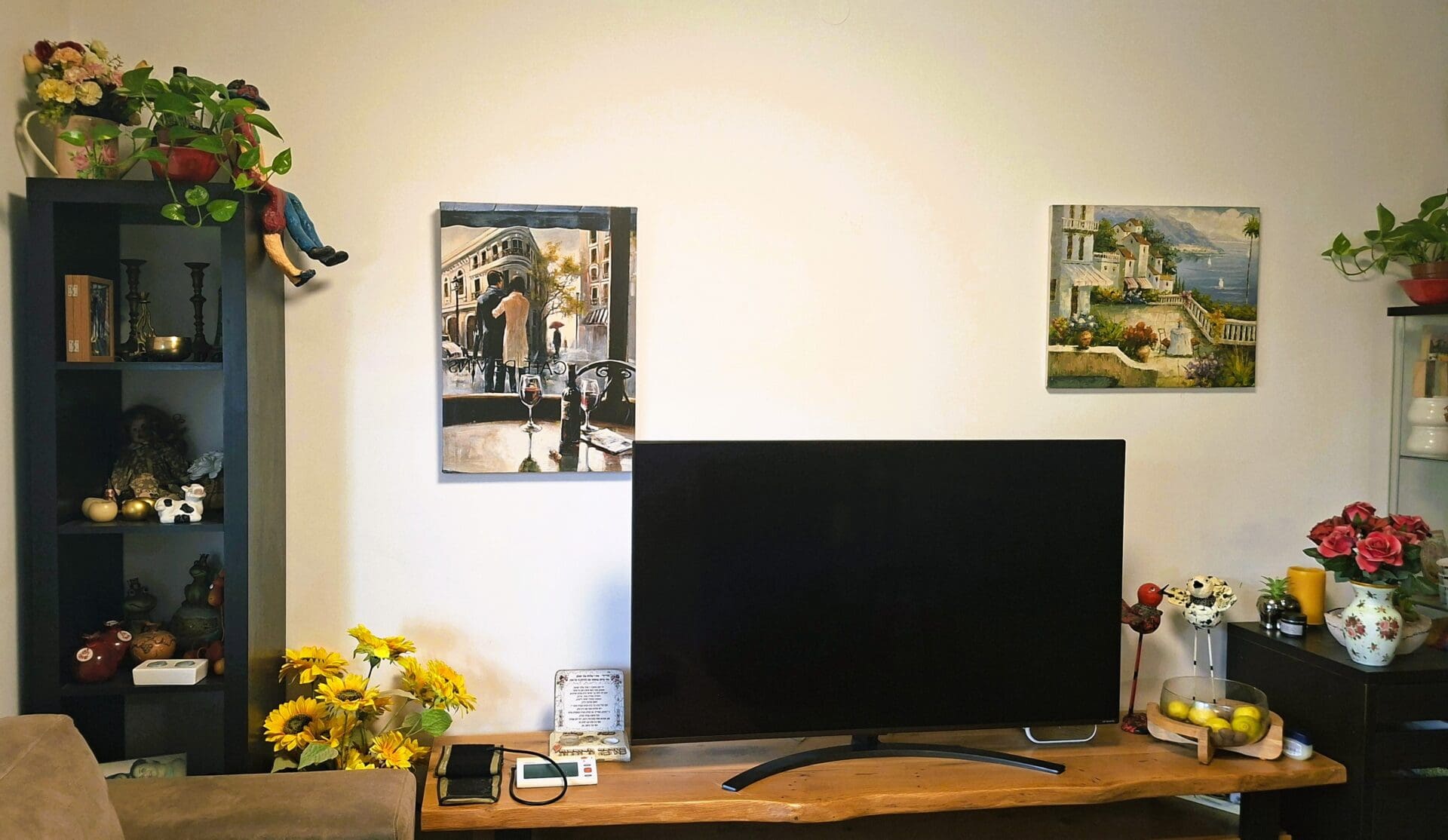
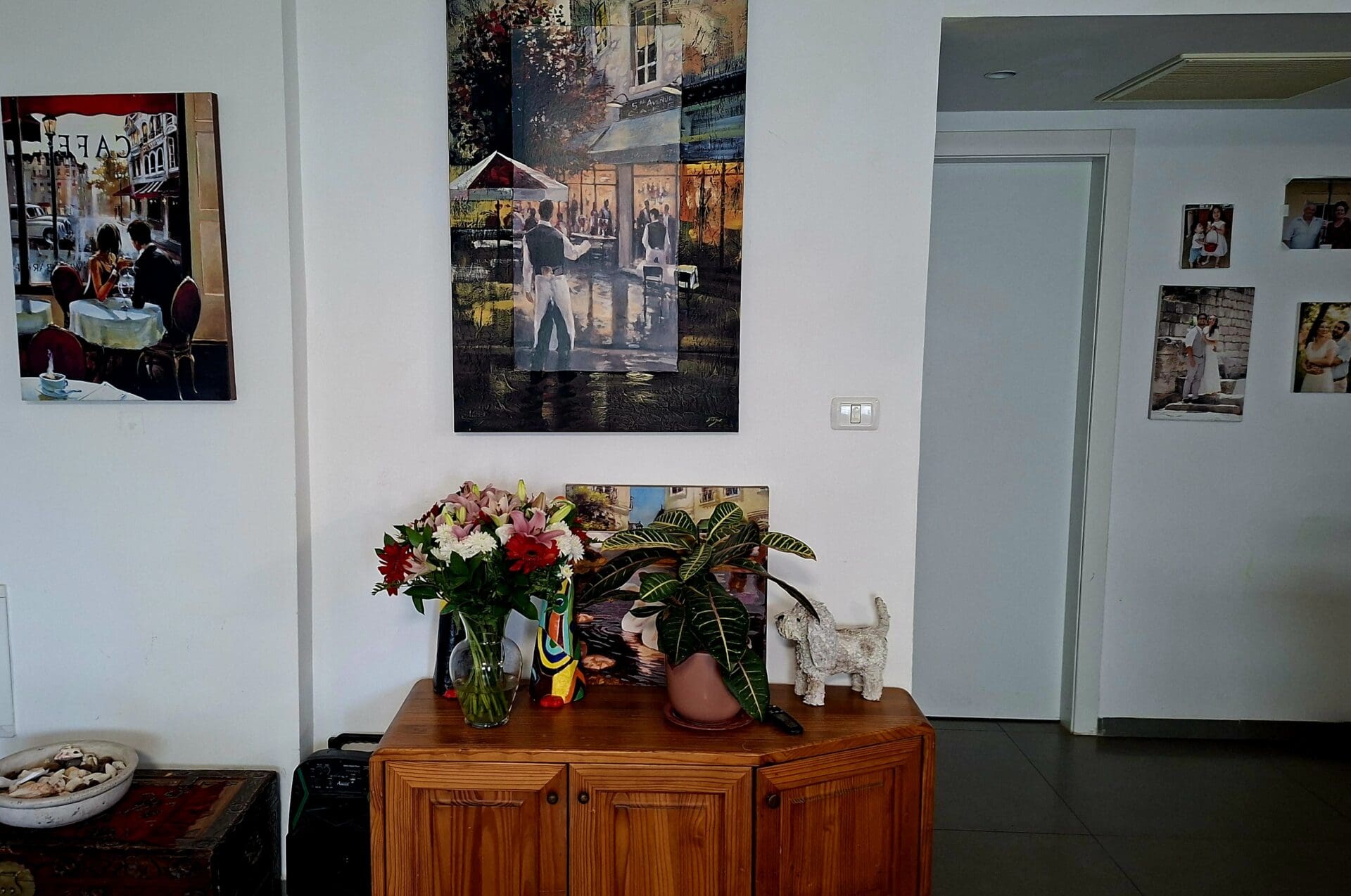
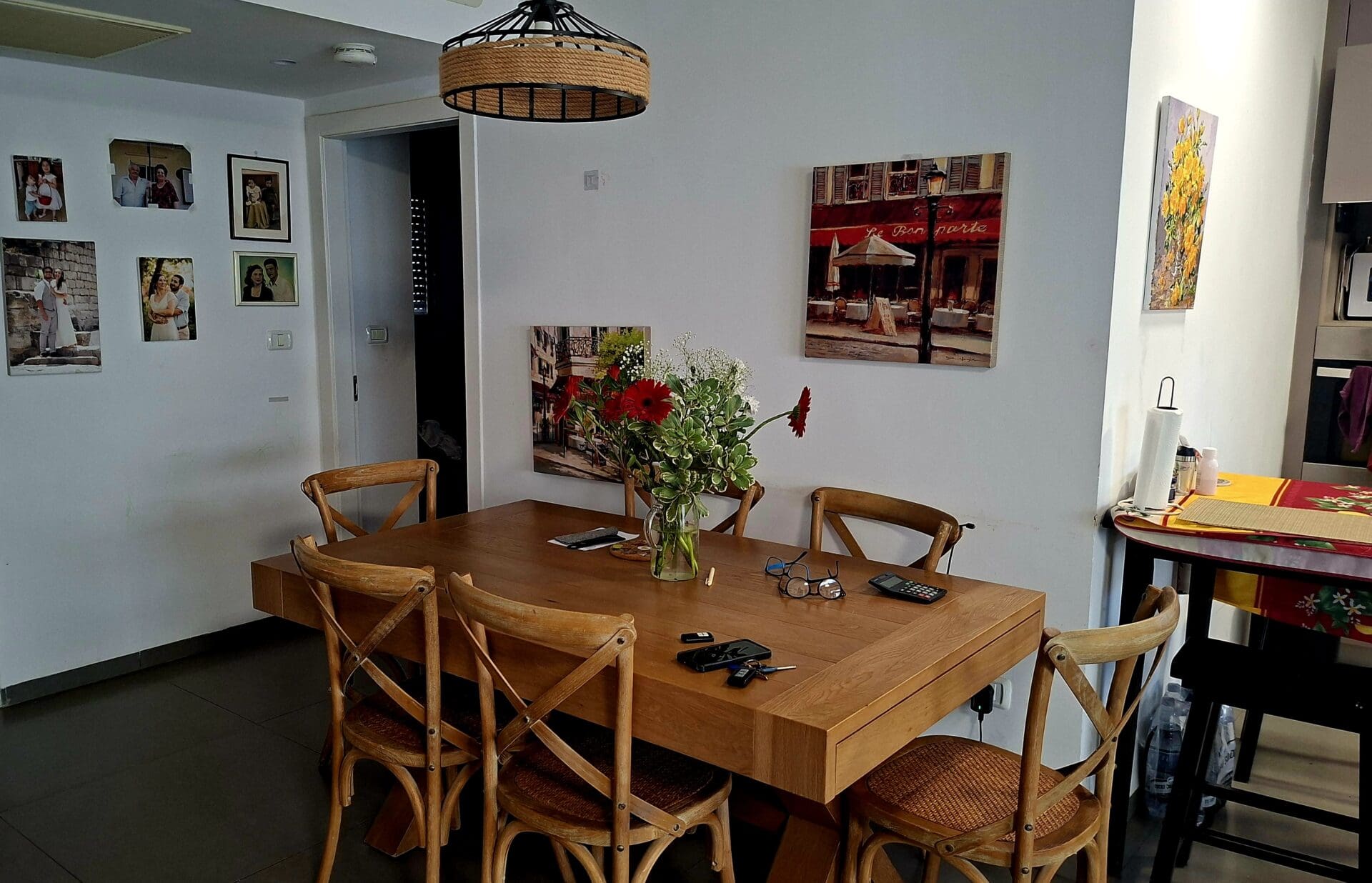
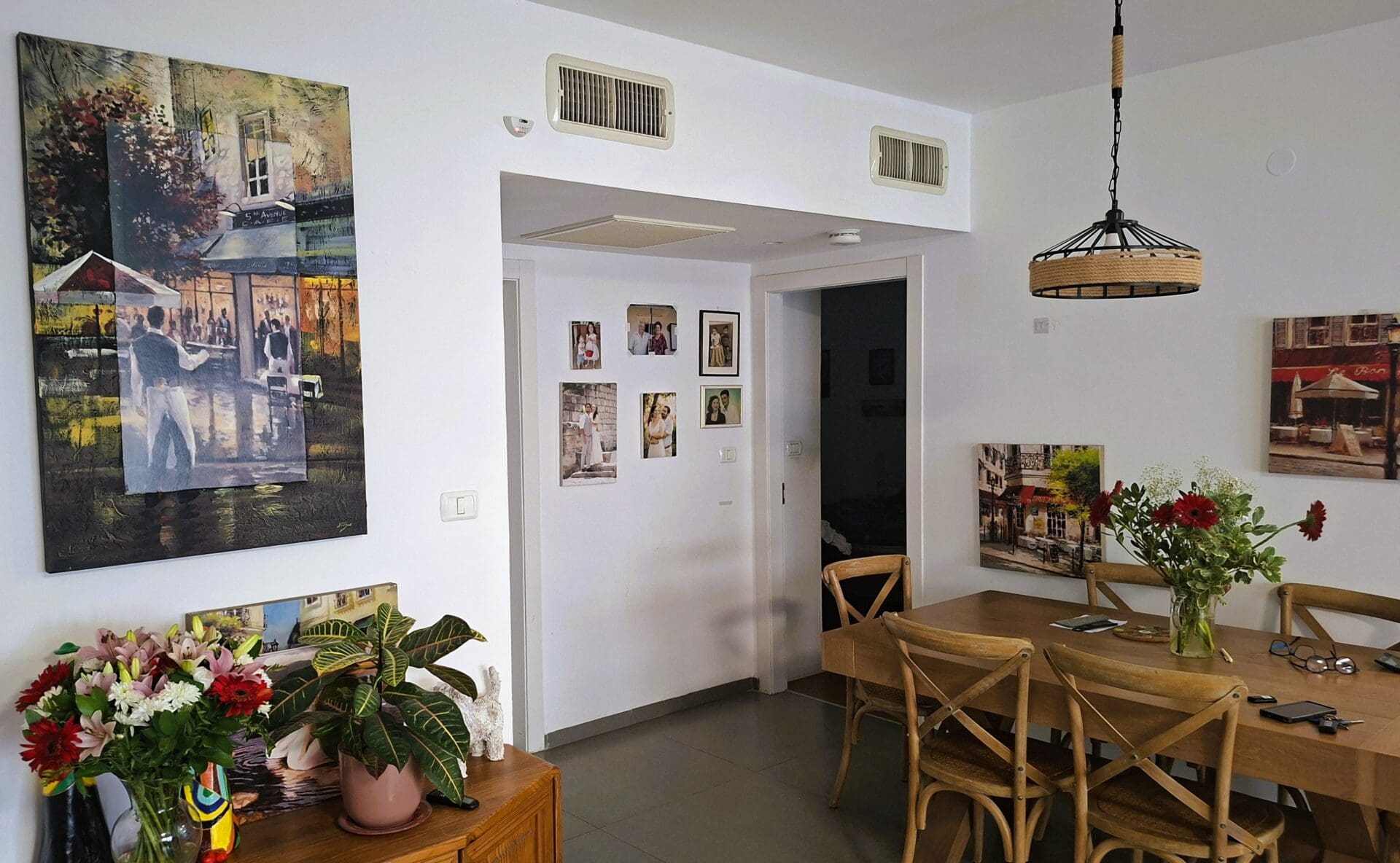
This is where we meet these characters inside their homes, but not as a purely physical space, one measured in square meters, real estate valuations, or design aesthetics. The home is described here as a space filled with meaning: a treasure trove of memories, evidence of life stories, and a space charged with emotion. Through the home, we get to know its inhabitants, not from the outside, but from the inside: through an intimate, one-time lens that reveals their world as it is experienced from the inside.
This time we will be staying at the home of actor Yosuke Rubin – the man behind the mask.

Between Izmir and Haifa Port: A Childhood Reborn on the Seashore
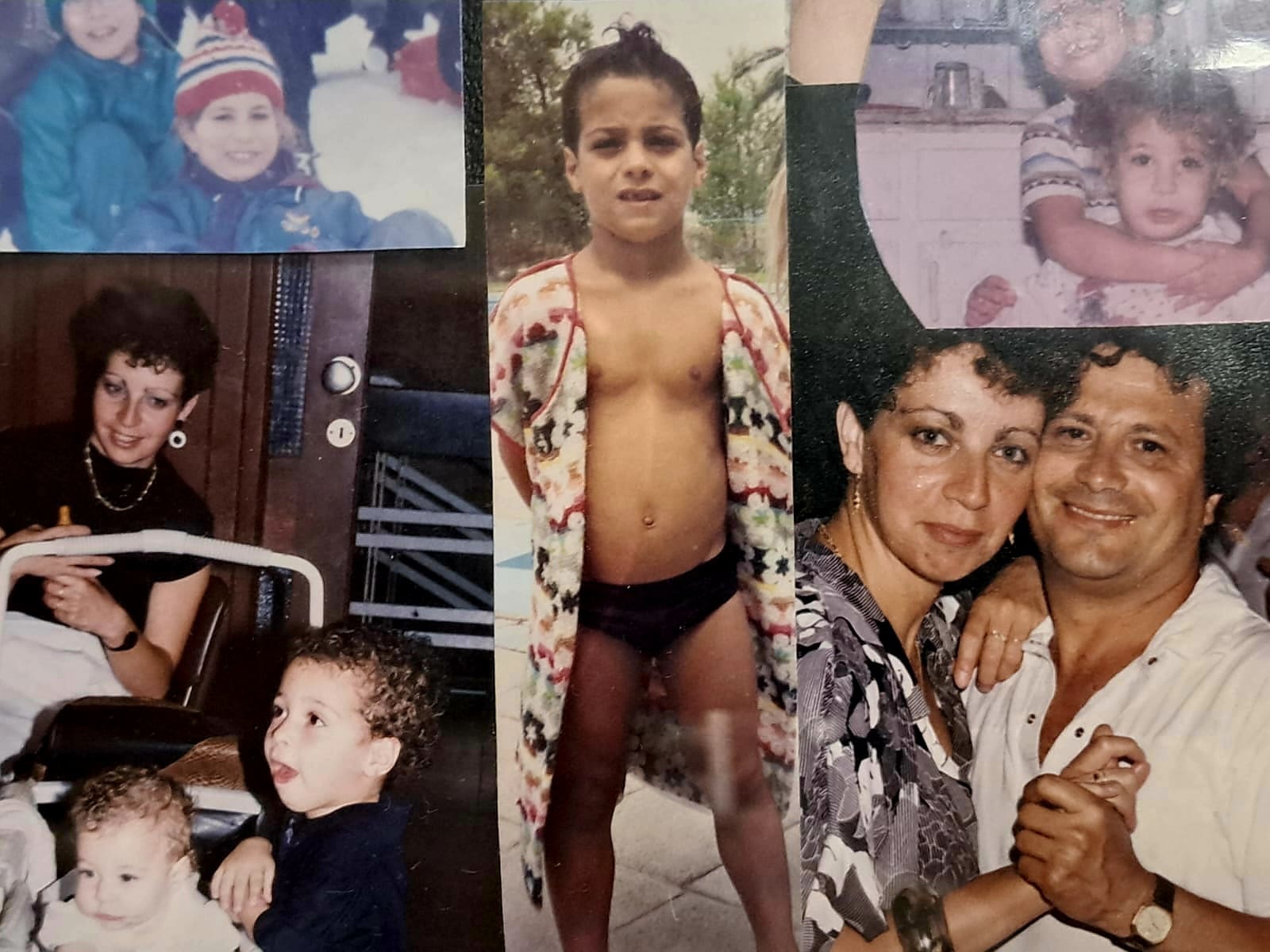
In 1949, when young Israel was still trying to define its face, Yaakov and Becky (Richard) Rubin immigrated from Izmir, Turkey, and arrived in Haifa, a city of steep slopes, sea breezes, smoke from chimneys, and ships that brought with them not only goods, but also people who carried in their hearts entire worlds that they had left behind.
For Yaakov, a man who loved water and the port, Haifa was more than a transit station in a new country; it was a place where one could put down roots, without moving away from the sea that was close to his heart. The couple chose to settle in the Shemen neighborhood, and found an apartment there, which was a modest house, probably within their means, but one in which one could begin life's work anew.
At first, Becky was a housewife and later the head of the household at Ulpan Bat Galim, and Yaakov went out to work every day at the Haifa port, where he served as a foreman and was responsible for the first floating cranes built in the world, the giant cranes called "Shimshon" and "Bar Kochba." There is something almost symbolic about these names, taken from ancient Jewish memory, which were carried on modern steel machines and rose above the water: as if distant history and the pioneering present met for a single moment at the port, a place where the strength of people is measured by their ability to lift heavy loads and put them back in place.
In this reality, far from the home they left behind in Izmir, the Rubin family was built. Shmulik, the eldest, was born in 1949; Yoska was born on October 17, 1950; and Galia, the younger sister, was born in 1953. Shmulik would later work in tourism and buses, while Galia would become a businesswoman in the food industry. Each of them would find their way in the world of work, as if they had inherited something from that constant movement of departure, arrival, journey, and building a future.
In Yosaka's memory, childhood does not begin with the father's profession nor with the history of immigration and settlement, but rather on the streets of the Shemen neighborhood, in the simple and rich space of children's games, neighborhood groups, and the voices of people who came to the new land from all corners of the world.
The neighborhood was a kind of melting pot even before this expression became a common language: immigrants from different countries and cultures shared alleys, houses, hardships and hopes, and the children, in their natural way, made the differences between the adults an inseparable part of the landscape in which they grew up. For Yoska, the Shemen neighborhood was the whole world: the place where friendships were forged, where the street served as a playground and the yard of the house was an extension of the public space, and where life did not need a setting to leave its mark.
The family stayed in the neighborhood until second grade, then moved to Bat Galim, another neighborhood in Haifa, also close to the sea, but already belonging to the next chapter in the family story.
Between the Bay and the Stage: The Years in Which Yusuke Searched for Himself
Yosuke's childhood was shaped between the streets of Bat Galim, the landscapes of Haifa and the sea, which was an inseparable part of the world he grew up in. At the elementary school in Bat Galim, he studied with the teacher Malka, and at the end of his childhood years he continued on to "Ort High School", where he studied mechanics, fine mechanics and electricity for a year and a half.
But something in him had difficulty coming to terms with the path that had been marked out for him. He dropped out of school, but did not give up on his education, and completed his matriculation exams as part of a "Mishlab" program. Even then, perhaps without knowing how to name it, he began to feel a movement between the practical world, which offered a profession and security, and an inner pull toward another life, one that had not yet found a form.
In the IDF, he served in the Communications and Electronics Corps. He served in the Armored Corps, in Ariel Sharon's division, and later did reserve service until the age of forty-seven. These were years of frameworks, missions, and responsibilities, years in which he learned to meet the demands of reality, even before he dared to listen to the demands of his soul.
At the age of twenty-one, he was discharged from the IDF, and immediately after that he met Ruthy from Beersheba. The two married, and in 1973 their first son, Kobi, was born. They lived in Ramat Shaul. At that time, Yosuke began working for the Philco-Crystal-Zohar company, which dealt with the maintenance and repair of household appliances, including washing machines, air conditioners and ovens. He was a service technician, a professional who was required to locate faults, understand mechanisms and restore operation to what had stopped working.
He worked at this job until the age of thirty-two, but it seems that even when his hands were busy with electrical circuits and mechanical mechanisms, something in him sought to decipher another, more internal circuit, the hidden mechanism of his life. His marriage to Ruth ended about three years later. She moved to Beersheba, while Kobi, their son, remained the living and inseparable link of their love, the beginning of a family story that would continue even after the relationship came to an end.
Later, Yosaka met Batsheva from Kiryat, and the two married, but this marriage was also short-lived. This time it became clear that what separated them was not just a gap in character or expectations, but a profound difference in the way they wanted to live their lives.
The stage bug, which had already settled in Yusuke, wouldn't let him. He wanted to study theater in Tel Aviv, to get closer to a world that didn't promise him stability or certainty, but rather the possibility of expressing something of himself that until then had remained without an outlet. Batsheva wasn't built for a life involving the unpredictable trajectory of an actor, and the relationship failed to bridge this gap. Yusuke turned to a crash course in drama at the Rothschild House, a first step toward the possibility that was beginning to become clear before his eyes.
Later, he answered an ad published by producer Paschenel, in preparation for the production of the musical "Fiddler on the Roof," in which Eli Gorenstein also participated. Yoska was accepted into the ensemble, and became one of the members of the troupe. Suddenly, the dream ceased to be a vague thought about another life and became real work: rehearsals, texts, meeting other actors, and standing on stage, where a person is required not only to perform a role, but also to bring something of himself to it.
He then moved to Tel Aviv and participated in the play "Botzer," which was performed throughout the country one hundred and eighty times. The play opened up the possibility for him to experience the profession through the work itself, but also postponed his plan to study acting at the Kibbutzim Seminar.
The stage demanded its time, and acting took precedence over formal studies. Thus, instead of progressing along a defined training path, he learned the profession from the movement, from repeated performances, from encounters with the audience, and from the experience gained night after night.
But Yosuke's story did not develop in a straight line from longing to its fulfillment. After this period, he returned to Haifa, to the city where he grew up, to the landscapes of his childhood and to the place from which he first set out into the adult world. Returning was not necessarily a renunciation of the dream, just as leaving for Tel Aviv was not a promise of its fulfillment. It was another stop on the journey of a man who moved between his roots and the possibility of reinventing himself, between a practical profession and an artistic passion, between a life that can be explained and one that can only be felt. And in this movement, between Haifa and Tel Aviv, between the technician and the actor and between the frameworks that life presented to him and the stage to which he was drawn, Yosuke's story gradually unfolded: the story of a man who was not satisfied with what he knew how to do, because within him burned the desire to discover who he really was, and what else he was capable of being.
The love that gave a place to a dream: Yusuke takes to the stage again
In August 1985, when he was thirty-six and a half years old, twice divorced and the father of Kobe, his eldest son, who was already approaching Bar Mitzvah age, Yosuke met Sarah, a twenty-seven-year-old, single woman who was to change the course of his life.
Behind him were two marriages that had ended, years of searching, experiences on stage, and a return to Haifa, the city where he grew up and to which he returned after experiencing the theater life in Tel Aviv. He was no longer a young man standing on the threshold of life, free from the need to decide what he would be when he grew up. He was a man who carried with him an entire history, the responsibility of a father, memories of loves that had ended, and one dream that had not yet found its stable place in the world.
And yet, amidst this reality, he remained passionate about studying acting, this time seriously, at the Kibbutzim Seminar in Tel Aviv.
Sarah came into his life at precisely the moment when this dream required not only courage, but also a person who could believe in it by his side. Their relationship progressed rapidly: in August they met, and on April 21, 1986, they were married. Sarah not only accepted Yusuke's desire to study acting, but was at peace with this choice, with its practical significance, and with the possibility that it would require both of them to rebuild their lives.
She herself was a nurse, and at that time she worked in the pediatric department at Rothschild Hospital in Haifa, now known as Bnei Zion Hospital. Moving to Tel Aviv was not a leap into the unknown for her: she managed to integrate into Sheba Hospital in Tel Hashomer, where she worked as a dialysis nurse in the nephrology department.
Thus, while Yusuke turned to the world of acting, she continued on her professional path, in demanding work that required knowledge, responsibility, and human sensitivity, and the couple were able to begin their life together in a new place. But the move to the center of the country was not just a change of address. For Yusuke, it marked the beginning of a later, and perhaps therefore particularly complex, chapter in the journey to the stage.
He came to study acting at the Kibbutzim Seminary in Shabbat when he was already an adult, with life experience, a father of a child (and soon another one) and a personal history that could not be left out of the classroom. Around him sat students younger than him, many of them shortly after their discharge from the army, at the beginning of their careers, when their life experience and practical experience on stage were still limited. The gap between them was not just an age gap.
They came to school from different starting points, with a different baggage of memories, disappointments, decisions, and beginnings. Yusuke carried with him what they had not yet had time to accumulate, while they brought with them their youth and the initial stage where everything still seemed open. His presence in the classroom was uncomfortable for him, and the young people had the same difficulty finding their place in front of him.
The man who didn't give up the stage: Between the boycott in the classroom and the light in the eyes of children
The experience at the kibbutz seminar, from which Yosuke hoped to emerge into a new chapter in his life, gradually became a source of pain.
The gap between him and the younger students in his class, which had already made it difficult for him to find his place at the beginning of his studies, deepened, and the unpleasant atmosphere developed into friction, to the point of a boycott by the students in his class against him.
For a man who came to school as an adult, after years of work, marriage, divorce, fatherhood, and experiences on stage, it wasn't just a social difficulty or discomfort in the classroom. He came to study a profession he loved, to open a door for himself that he had long dreamed of, and here, in the very place that was supposed to allow him to develop, he found himself pushed out of the circle.
In the end, the hardship became unbearable, and he decided to leave the Kibbutzim Seminary. This decision did not do him any good psychologically. There was something in it of the deep disappointment of a man who had to walk away again from something he longed for, not because he had stopped loving it, but because the path to it had taken a heavy emotional toll on him.
But Yosuke was not a man who was content with a door that closed in his face. Life had already taught him that dreams don't always come true in a straight line and that sometimes you have to find another way to hold on to them, even when reality refuses to align according to plan.
He chose to continue working as an air conditioning and washing machine technician for the company where he was employed two days a week, thus maintaining a source of income and a grip on the practical world. In the meantime, his family expanded: his daughter Karin and son Omri were born, and fatherhood added a new dimension of responsibility, love, and commitment to his life.
Alongside the technical work, which was well-known to him and served as an anchor in a changing reality, he devoted two additional days a week to teaching drama in schools in his area of residence in Tel Hashomer, Givat Shmuel and Ramat Ilan. There, in front of young students, another possibility opened up for him to live his love of theater. If in the kibbutz seminar he felt his alienation within a group of his apparent equals, then in teaching he could turn the experience he had accumulated into a gift for others, to guide, encourage and expose children to a world where imagination is not a luxury, but a way to understand themselves and their surroundings. He also taught students with special needs in Ra'anana, an encounter that required sensitivity, patience and understanding that each person has their own rhythm, their own way of expressing themselves and their own place in the world.
At the same time, he was accepted into the cast of the musical "Oliver Twist" and continued to participate in various roles that life and the stage called upon him. His path was not a career built according to the accepted rules of progression, and it was not always possible to distinguish between profession, mission, and hobby. Everything existed side by side: the technical work, the drama lessons, the performances, and the ongoing effort to maintain contact with that part of his soul that never ceased to seek expression.

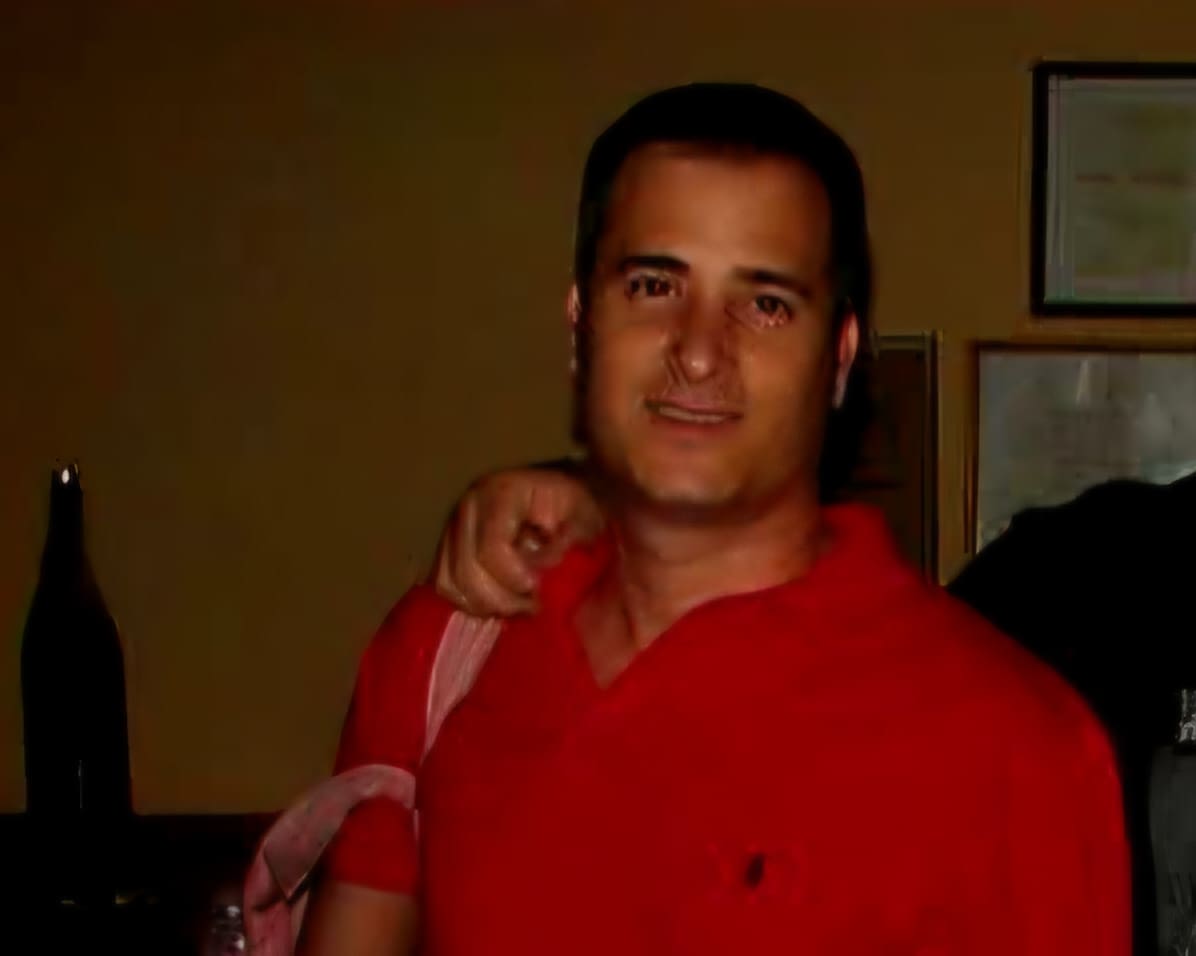
"Yusuke the Clown"
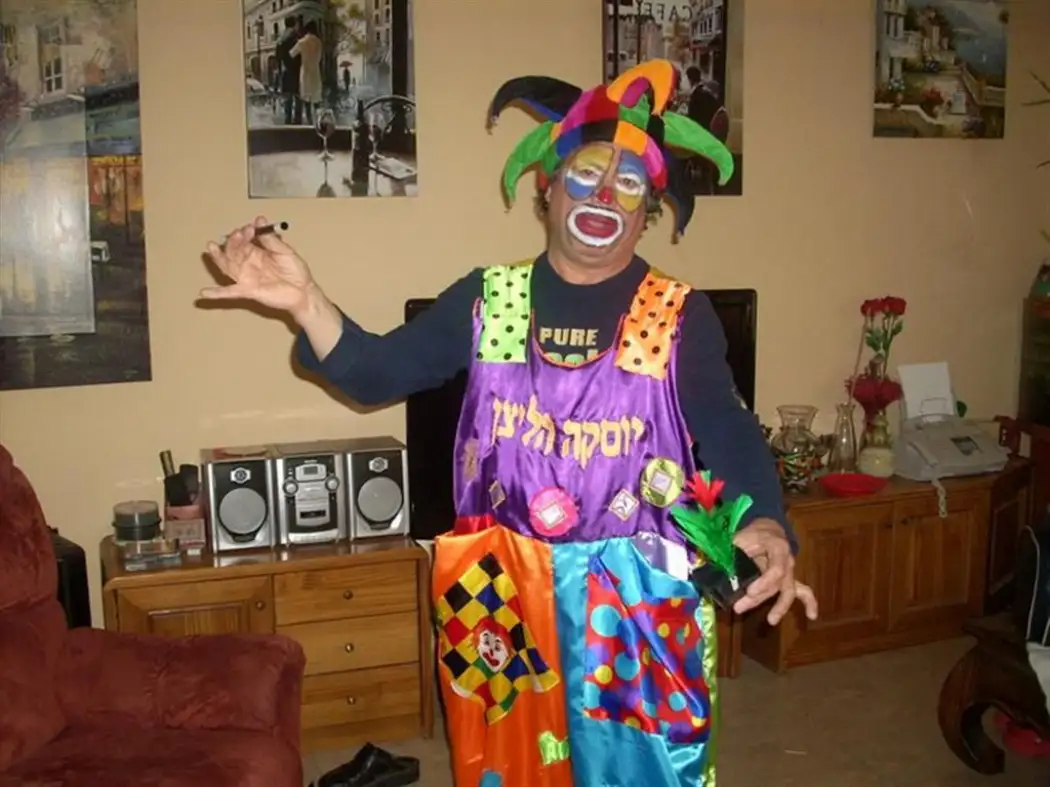
When he reached the age of sixty, Yosuke opened another door, unexpected but remarkably true to his spirit. He enrolled in a medical clowning course and learned the profession from Itzik the Clown. Here too, he did not settle for an idea or a fantasy, but acquired training and turned to a world where the encounter with another person may occur precisely at the most vulnerable moments of his life. Medical clowning offered him a way to combine acting, humor and human sensitivity, between his ability to stand in front of an audience and the desire to reach the heart of an individual.
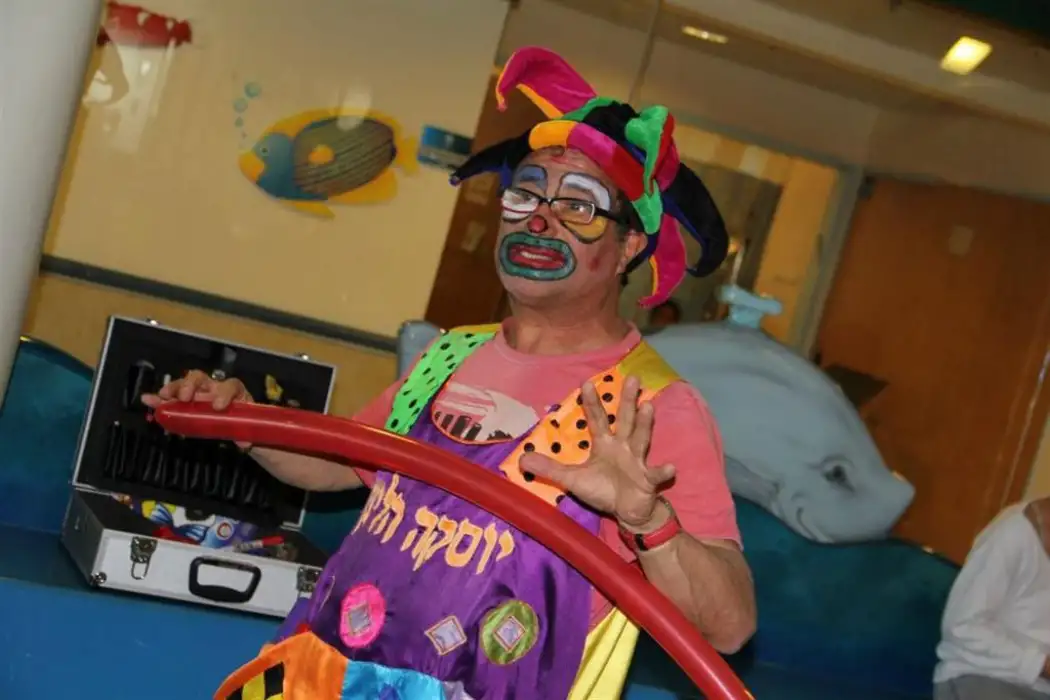
At the same time, he worked for the Tel Aviv Municipality as the municipality's house clown, on weekends, and especially in the Sarona complex, where he brought his image and joy to the public space. For ten years, he also volunteered at the "Hillel Yaffe" hospital. Ten years of giving that is not measured only by the number of appearances or applause, but also in the small moments, in a look that softens, in a smile that manages to break through fatigue, and in the ability to bring a little lightness to a place where life and worry are present with great intensity.
However, this mission did not eliminate the need to make a living. In addition to his teaching and volunteer work, Yusuke produced birthday parties and performed there under the stage name "Yusuke the Clown." This name carried with him more than a professional nickname. He expressed a character he built from his life experience, the ability to take what he learned on stage and with people, and turn it into joy that could be shared with others.
Behind the clown stood a man who also knew the less funny sides of life: breakups, disappointments, a sense of alienation, and the pain of giving up a dream, even when the giving up is incomplete. Perhaps that is why clowning was not just a form of entertainment for him. It was also a way to give back to the world some of the light it lacked, at certain moments, to offer others the smile that he himself knew how precious it could be.
Yosuke's story is not a story of a dream that was fully realized, nor of a failure that was decided once and for all. It is a story of a man who continued to seek new ways to express his love of the stage, even when reality forced him to change direction; of someone who did not build a single path for himself, but moved between craft and teaching, between acting and medical clowning, between the need to make a living and the desire to give.
Looking back, it is precisely this irregular path that reveals something profound about his character: Yosuke may have left the kibbutzim seminary, but he did not leave the theater. He carried it to schools, to students with special needs, to the hospital, to the streets of Tel Aviv and to birthday parties. Wherever he performed, taught or made people laugh, he found a way to continue being the man he wanted to be in the first place: a person who seeks to touch others through play, imagination and compassion.

The Road Back to Haifa: When Family Becomes a Compass
For more than three decades, Sara and Yoska Rubin built their lives in the center of the country, moving between different places of residence, recently settling in Karkur, and within this continuous movement, the years flowed and took their toll.
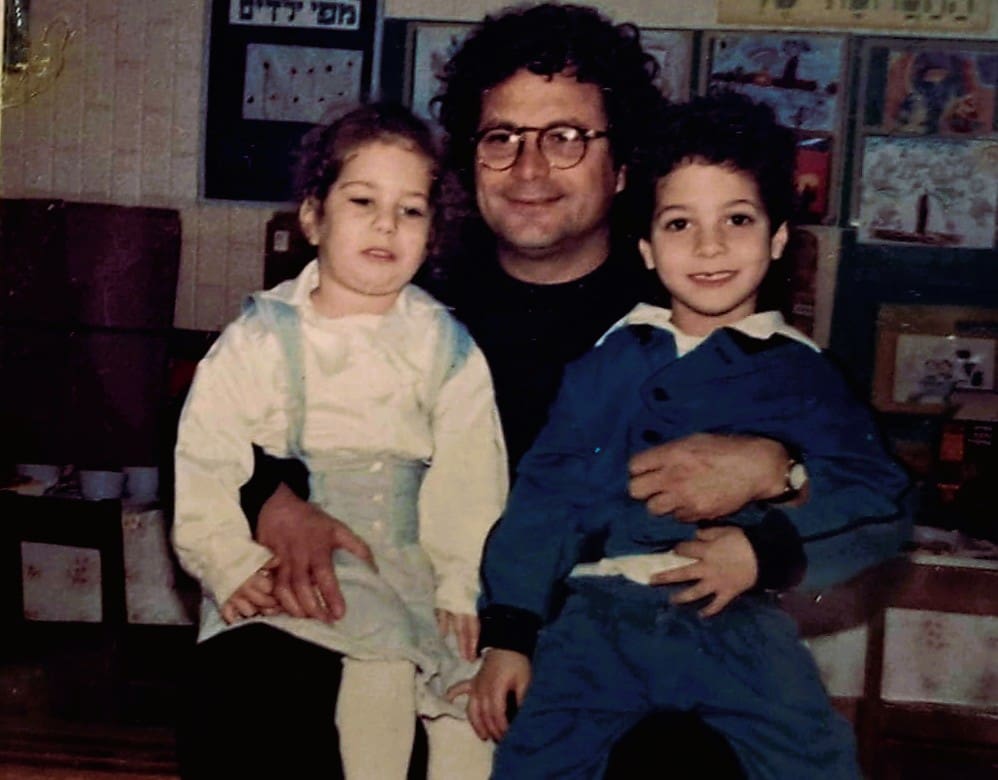
The children, Omri and Karin, grew up, matured, went their separate ways and started their own families, and both, almost as if life wanted to indicate the next direction for their parents, married a couple from Haifa. Omri, a guide by training, is the father of Noga and Nadav, two grandchildren of Sarah and Yoska, who add a new dimension of love, continuity and curiosity to their lives.
Karin chose the world of food, a place where homeliness is not just a matter of taste but also a way to connect people. As part of her activity through "Yummy," an Israeli website that connects about a hundred home cooks from all over the country with customers looking for homemade, fresh, and healthy food, she is a partner in a culinary space that allows you to pre-order meals for the week, food for Shabbat and holidays, as well as dishes for events, which arrive directly at customers' homes. She also set up her home next to Haifa, and so, without planning in advance and without being declared a family destination, Haifa began to come closer to Sarah and Yuska's lives.


The decision to return to Carmel
First through the marriage of the children and then through the quiet understanding that geographical distance is no longer just a matter of a map, but also of time, presence and opportunities to be together. In 2023, the decision was made, almost as a family decision that came naturally: Omri and Karin informed their parents that it was time to make another move, this time from the center to the north, and return to live in Haifa.
The Rubin family made the decision to join the children, not out of a desire to give up the life they had built over the years, but out of a desire to bring the home closer to the people who gave it its deepest meaning. But it was clear to Sarah that the move could not come at the expense of her independence. She did not just ask for an apartment in Haifa, but a place from which she could continue to live her life to the fullest, to maintain her freedom, her interests, and the constant movement between home and the world. The requested apartment was not supposed to be too large, but it had to meet several conditions that could not be compromised on: a new building, an elevator, parking, and most importantly, a central and convenient location, one that would allow her to come and go easily, continue working, meeting people, traveling, creating, and enjoying everyday life without the move turning her life into a journey of adaptation and limitations.
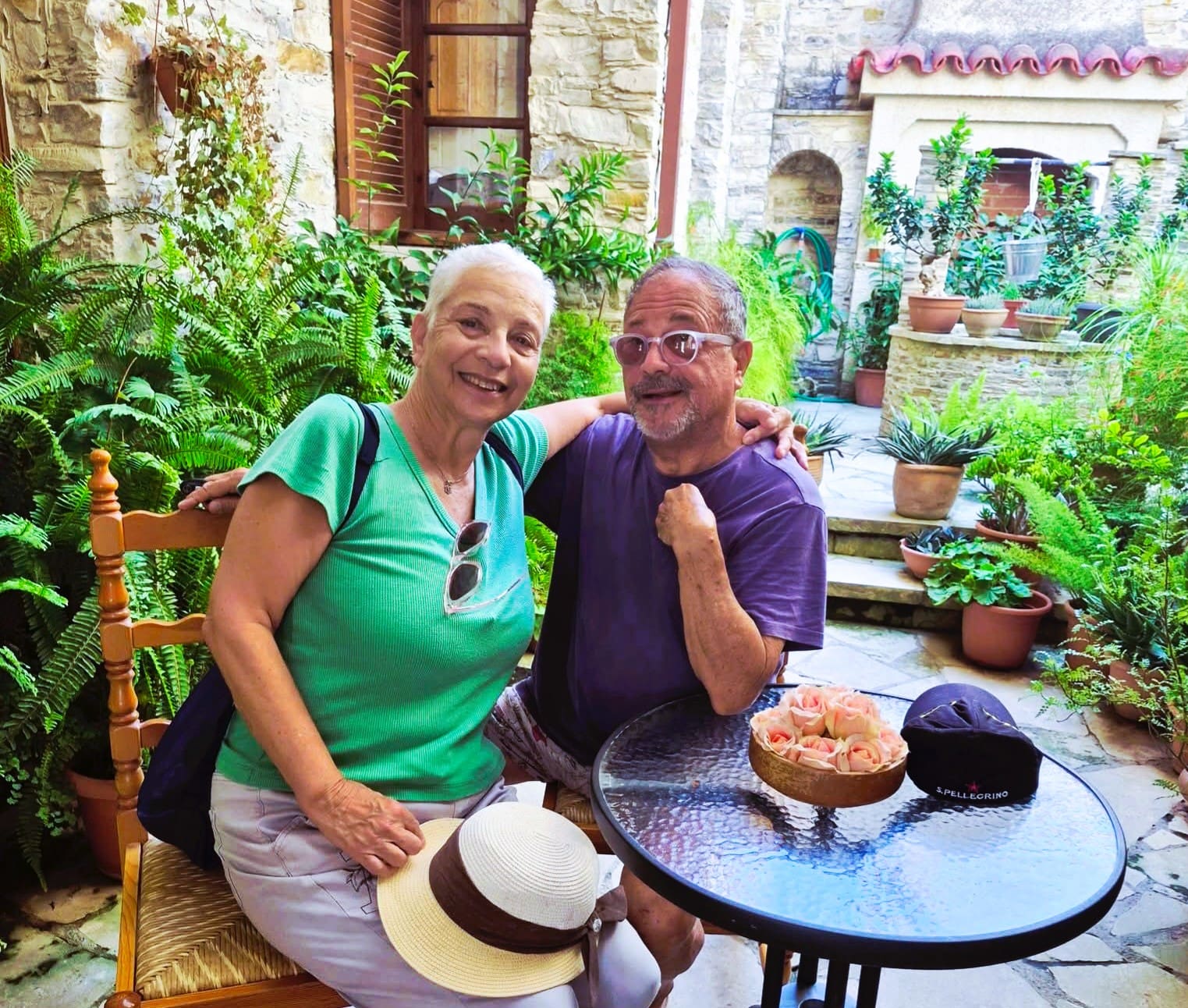
Indeed, Sarah is not one of those people for whom home closes its door to the world; on the contrary, home is for her a starting point, a place to return to after the world has once again invited her outside. She travels with the Tiyulady group, a boutique group for women's trips in Israel and around the world, offering small, intimate journeys that combine nature, culture, and unique content workshops. On these trips, the road is more than a scenic route, and encountering new places is also an opportunity to broaden one's perspective, get to know other women, and rediscover what else can be experienced.
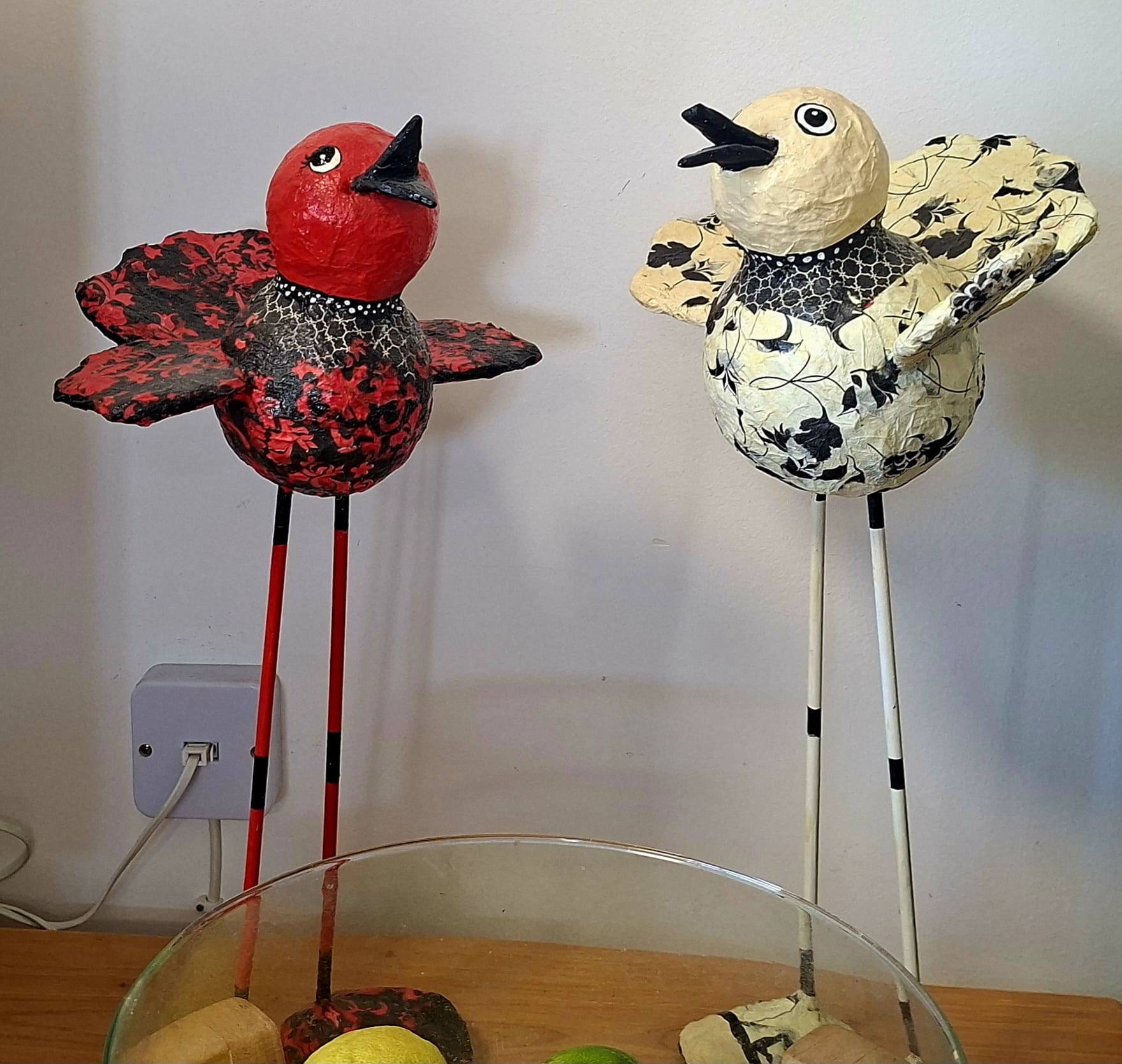
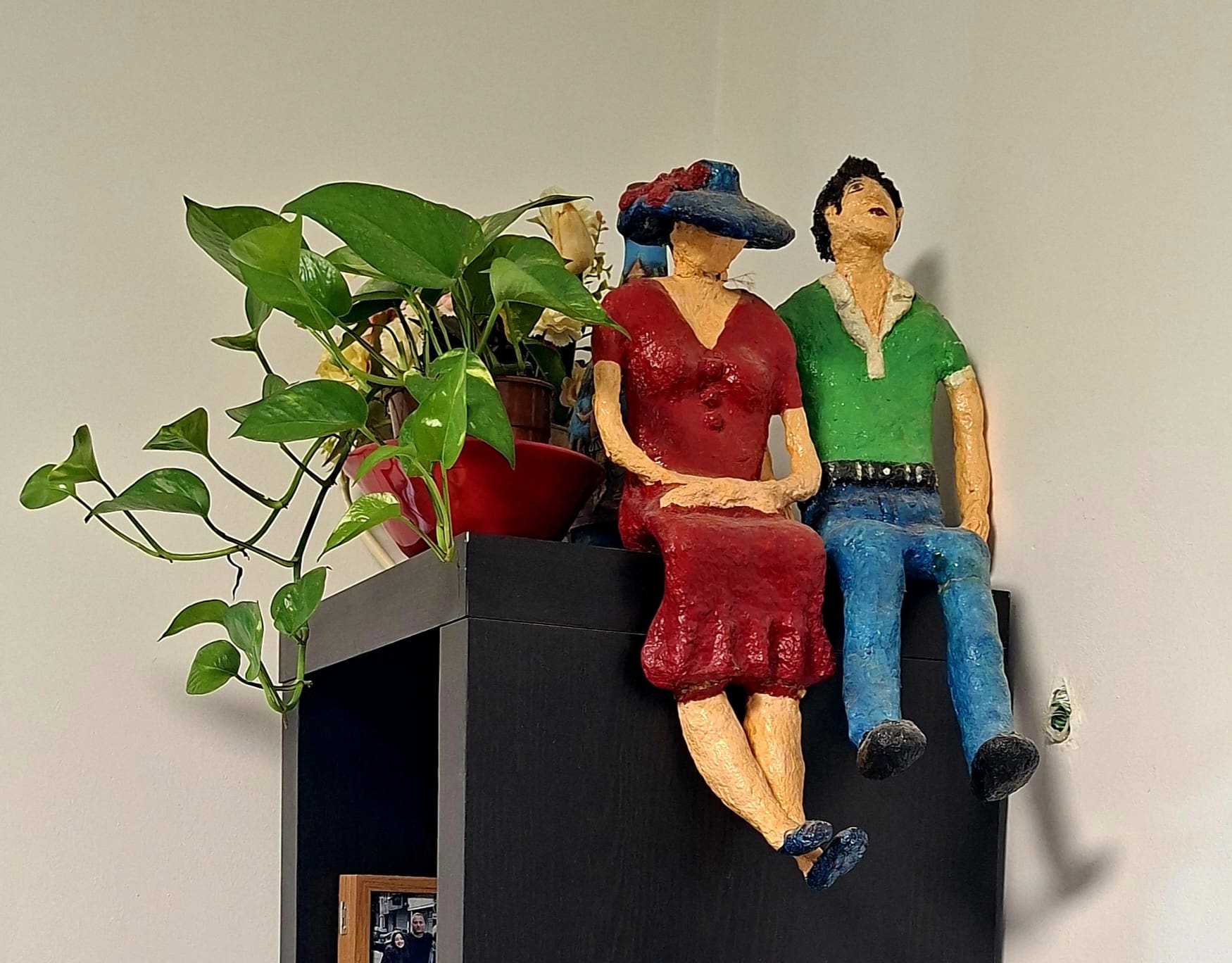
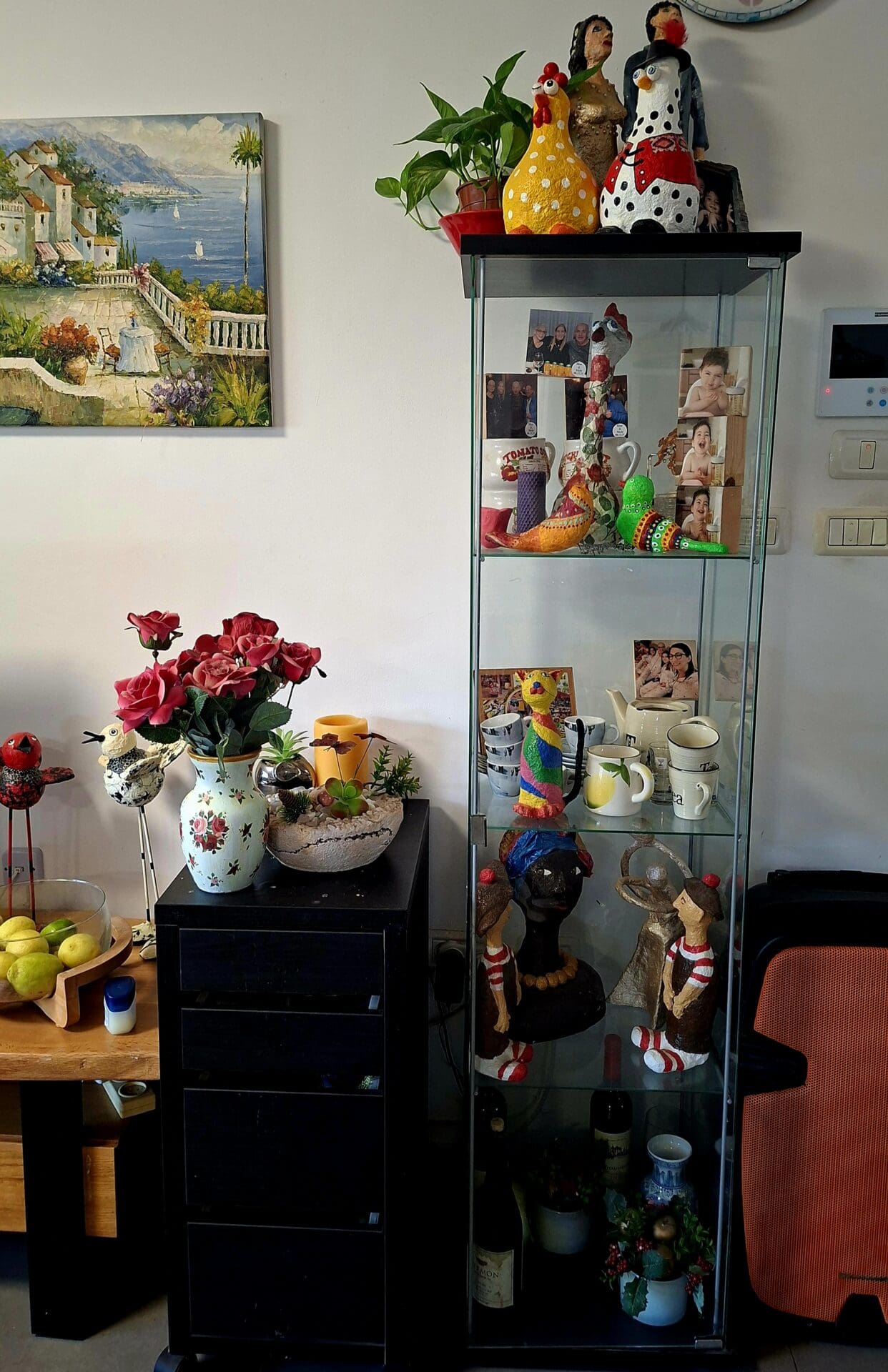
Alongside her travels, Sarah also cultivates her own creative world: paper sculpture using the papier-mâché technique, an art based on strips of paper or paper pulp mixed with glue, which dry and harden, turning into a material from which shapes, figures and entire worlds can be shaped. She learned the craft at a studio in Karkur, and she continues to practice it even after moving to Haifa, in a dedicated group on Shimshon Street.
Between the water and the screen: The daily routine of a man for whom curiosity is second nature
To keep his body flexible and the artist's soul alert and vital, Yosuke Rubin begins his day with a regular, almost intimate ritual, which has become an inseparable part of the inner rhythm of his life: Every morning he comes to the Maccabi Haifa Club pool, on Bikurim Street, and starts the day with a swim.
There is something about the body's repetitive movement in the water, the encounter between breathing and movement, and the relative silence that surrounds the pool, that gives the first hours of the day a special quality, as if the body gets its due before thoughts begin to claim theirs. For Yusuke, swimming is not only a means of maintaining fitness and body flexibility, but also a way to cultivate mental balance, maintain vitality, and prepare for a full day of thought, interest, and encounter with the world.
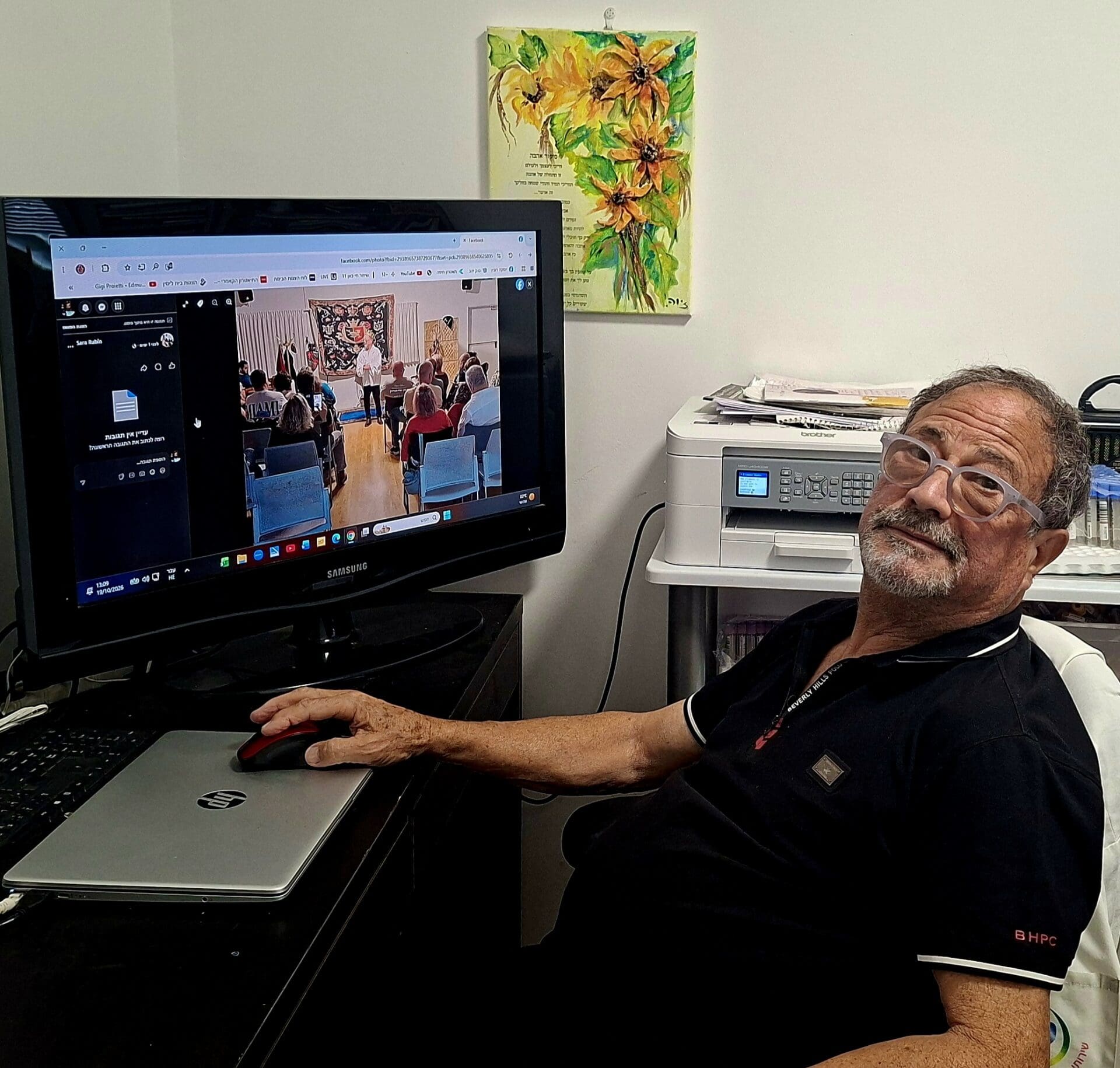
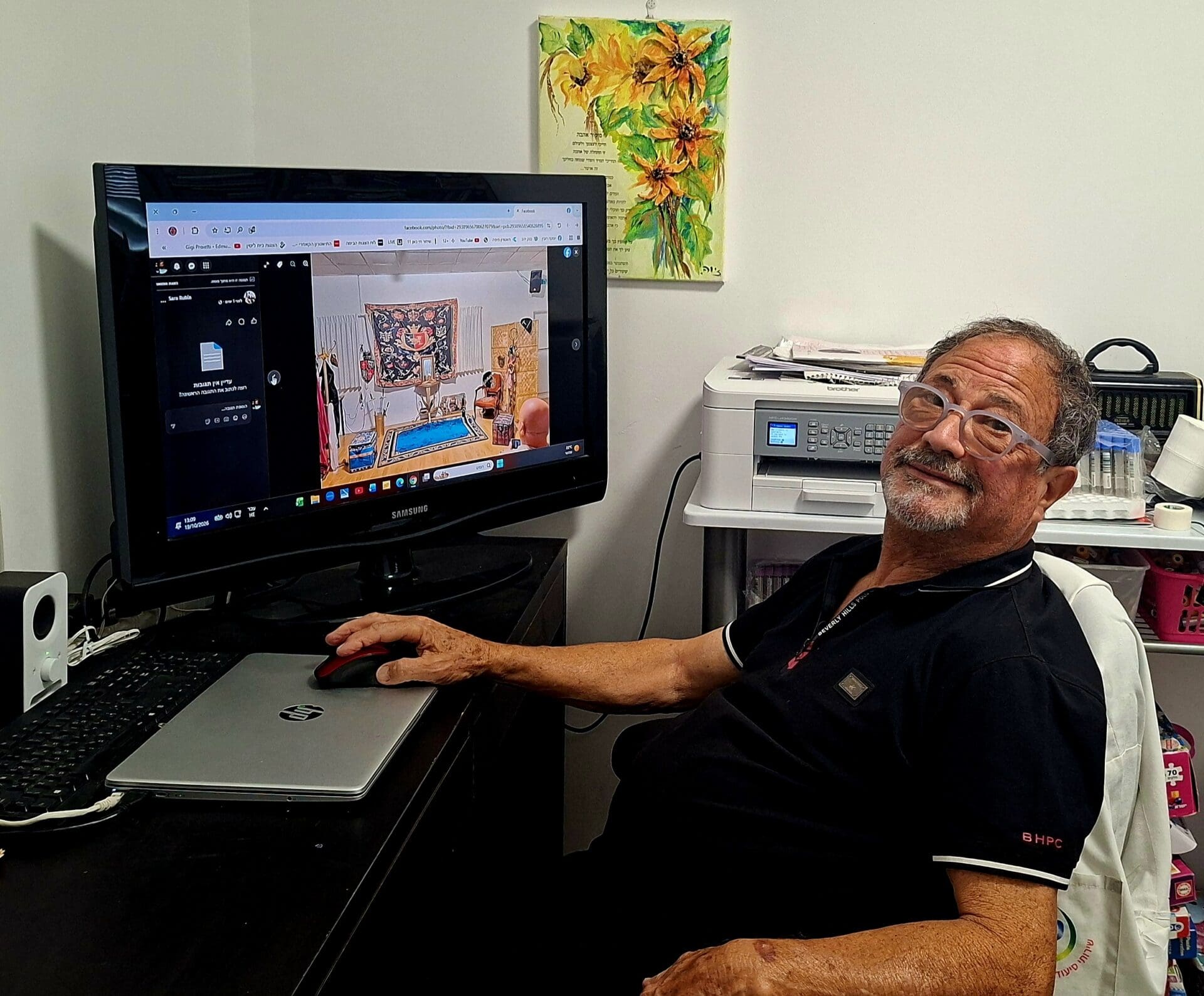
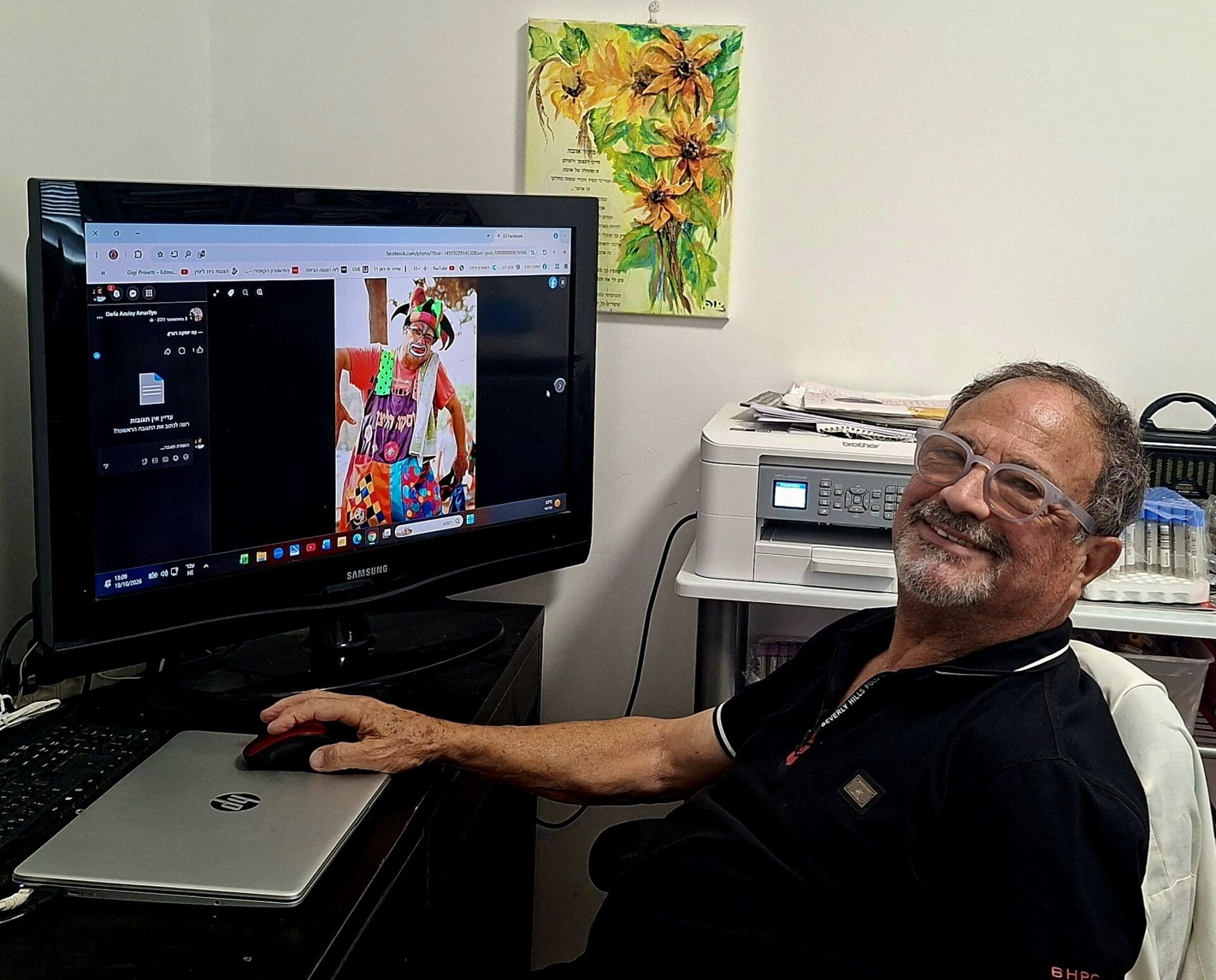
If the pool is the place where he moves his body, then upon returning home he rushes to the place where the movement of the world reaches him through words, images, and information: his computer room, located in the MMD.
This is one of his favorite places in the house, a personal space to which he returns, again and again, not out of a need to pass the time, but out of an insatiable curiosity. Yusuke is a person who loves to know, to learn, to expand his horizons and discover new areas, and his interest in the world does not stop at the boundaries of a particular field of knowledge. He seeks to understand what is happening around him, to follow developments, to be exposed to ideas and opinions and to try to decipher the changing reality, with all the contradictions, dramas and turns that characterize it.
In this sense, he could certainly be called a current affairs freak: a person who is drawn to the news and current affairs programs that deal with what is happening in Israel and around the world, and devotes a lot of time to following the events and the accompanying interpretations. In front of the big screen of his personal computer, in the computer room at the MMD, he finds himself again and again, at the heart of the action, even when he is sitting at home, far from the epicenter of events.
The screen becomes a kind of open window to reality for him, a means of staying involved, informed, and attentive to the ever-changing world. Thus, Yusuke's daily routine is woven between two complementary spaces: the pool, where he takes care of his body and finds his way to inner balance, and the computer room, where he feeds his curiosity and continues to exercise his mind.
Between Two Shores, Between Memory and the Stage: Yusuke's Balcony
Sometimes there are places in the home that are not measured by their size, but by the space they provide to the soul, and their ability to open within us a door to places and times that have already moved away, but have never truly disappeared.
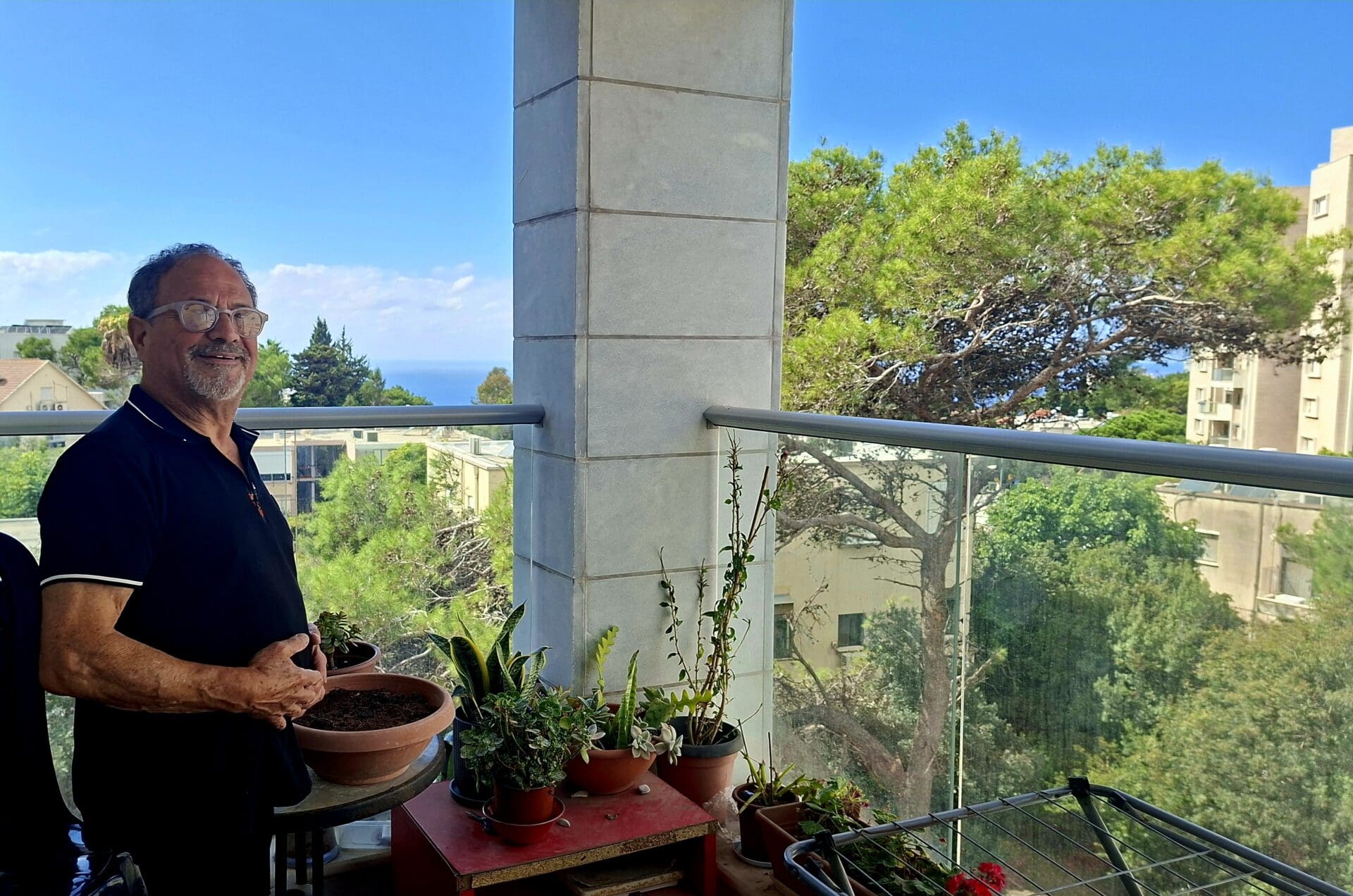
For Yoske Rubin, the balcony at his residence is such a place. Although it is smaller than the wide balcony that was at the family home in Bat Galim, the same balcony that carried with it years of life, meetings and conversations, it still holds a special place in his heart. Precisely because it does not try to compete with that balcony, it manages to preserve something of a spirit, as if going out into the open air is enough to awaken memory and bring the past closer to it.
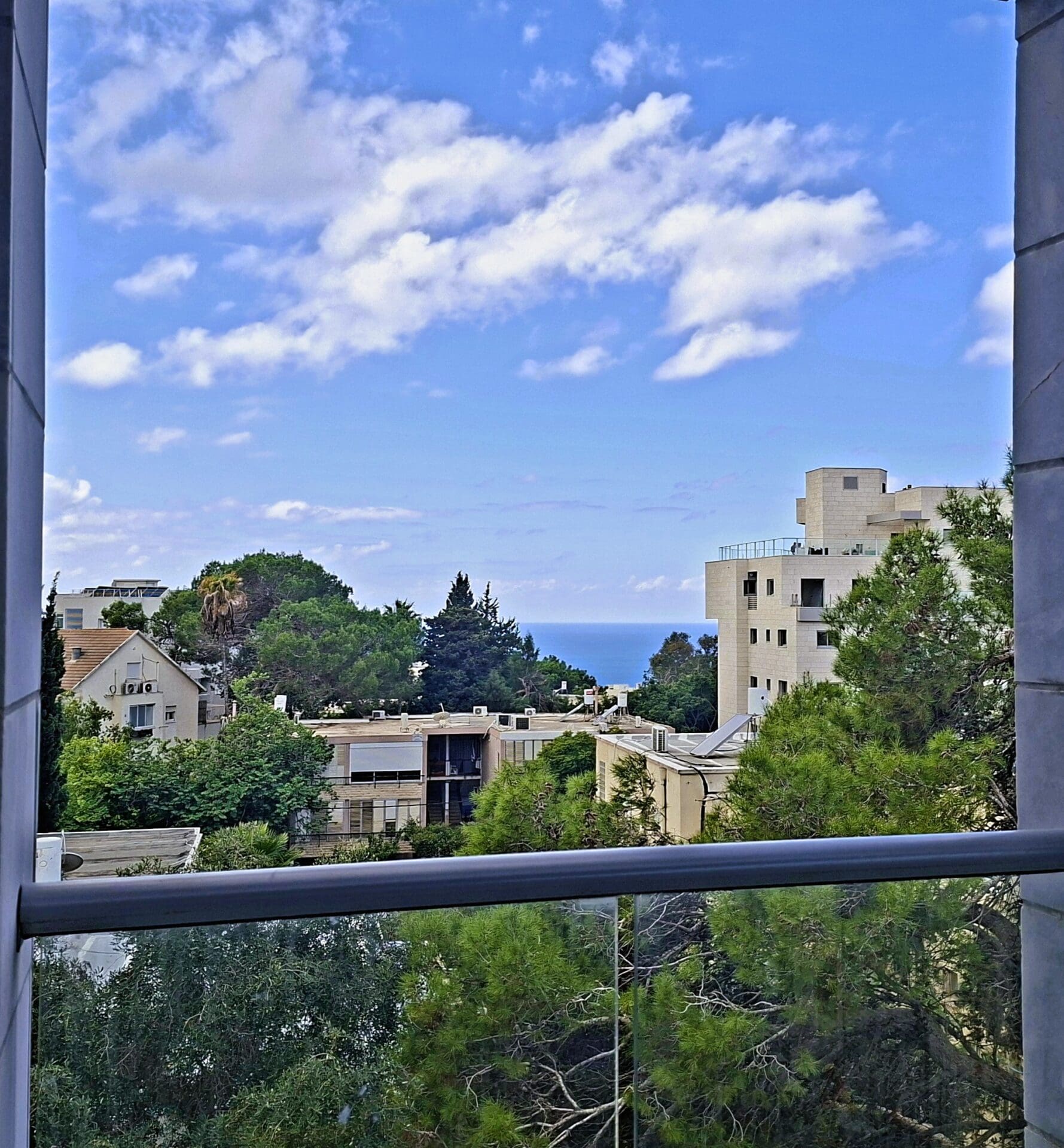
From the current balcony, two sides of the sea unfold: on one side, one can see the western shore of the Mediterranean Sea, and on the other, the shore of Haifa Bay, on the waterfront that accompanies the city and its life. This view, moving between the expanses of the open sea and the bay, gives the balcony a special quality, a place that allows the gaze to move away and at the same time to come back inward.
Yusuke likes to sit there, observe, reflect, and let his thoughts develop at their own pace. For someone for whom the stage is an essential part of his world, thinking doesn't end when the performance ends or the curtain falls. Even in the quiet moments, away from the lights and the audience, the inner work continues, he plans which scenes should be presented, how to design a particular character, what should be emphasized in her, and what acting options might give her life.
The balcony thus becomes a kind of rehearsal room without walls, a place where the imagination can move freely, where a character that has not yet taken on a complete form may gradually become clearer, and where thoughts about the stage mingle with the landscape and silence.
But most of all, this balcony is also a bridge to the large balcony of the family home in Bat Galim, and to one of the most significant figures in Yosuke's life, his mother, Becky/Ribka, whom he greatly valued. The memory of the long conversations he had with her there remains especially vivid, as if time could not erase the place of those hours when they sat together and talked, surrounded by the house, the sea, and the neighborhood that was part of their world.


Pots, the sea, and a mother's memory: the kitchen where Yusuke feels most at home
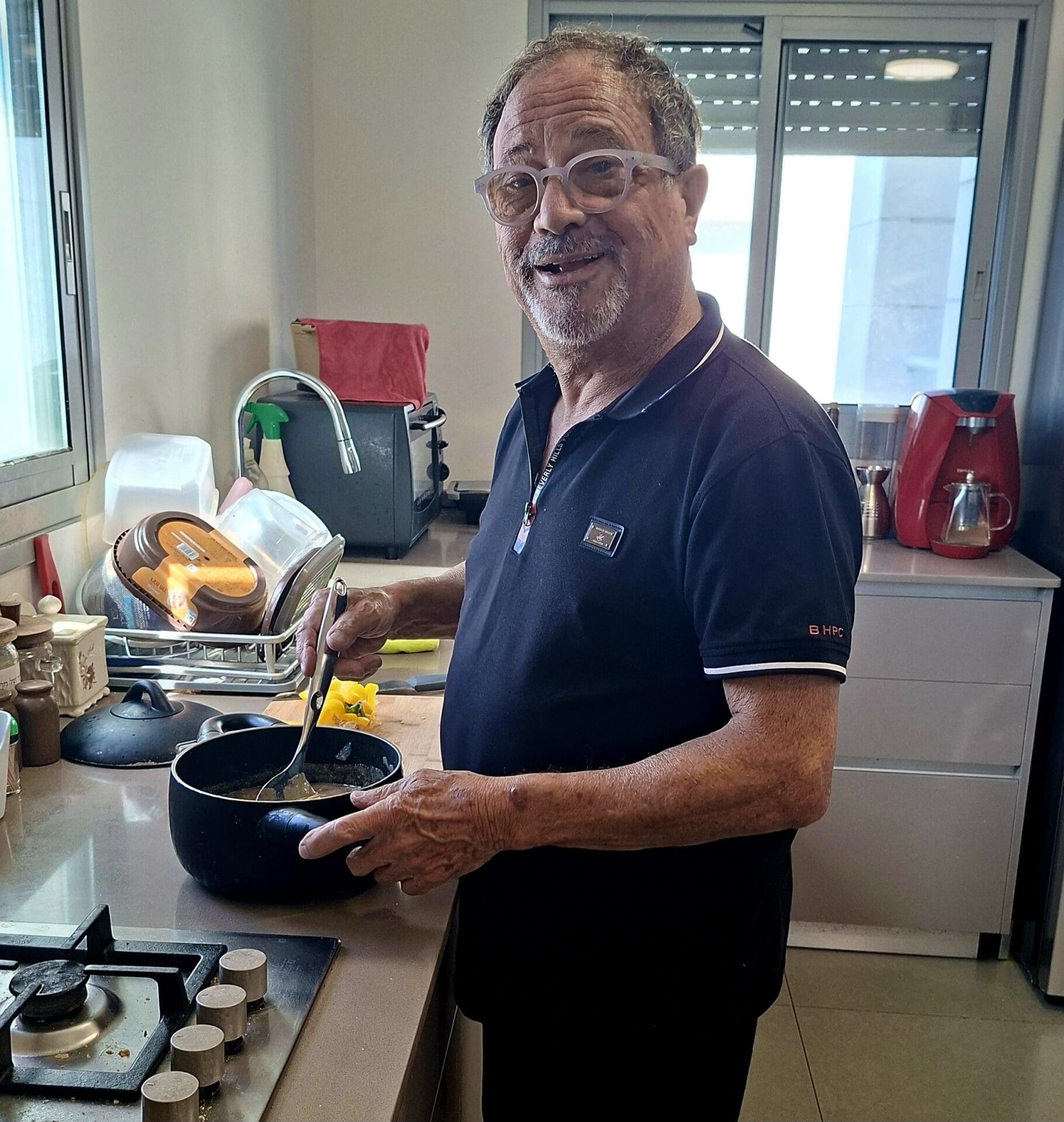
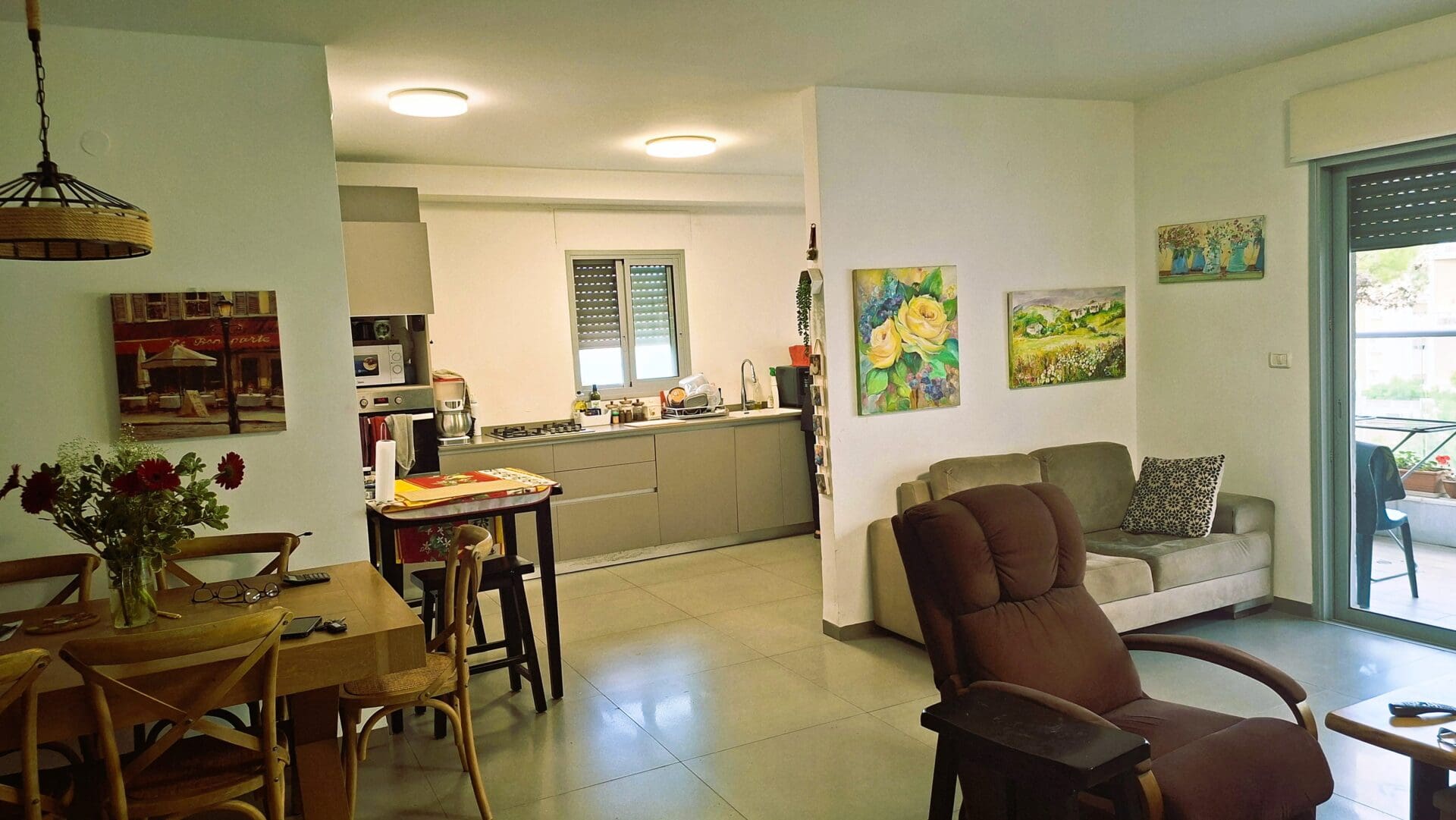
For Yosuke Rubin, the kitchen is not just the place where the day's meals are prepared, but the beating heart of the home, a space where childhood memories take shape and smell, love is translated into dishes, and the past continues to exist within the daily, almost simple act of cutting vegetables and putting a pot on the fire.
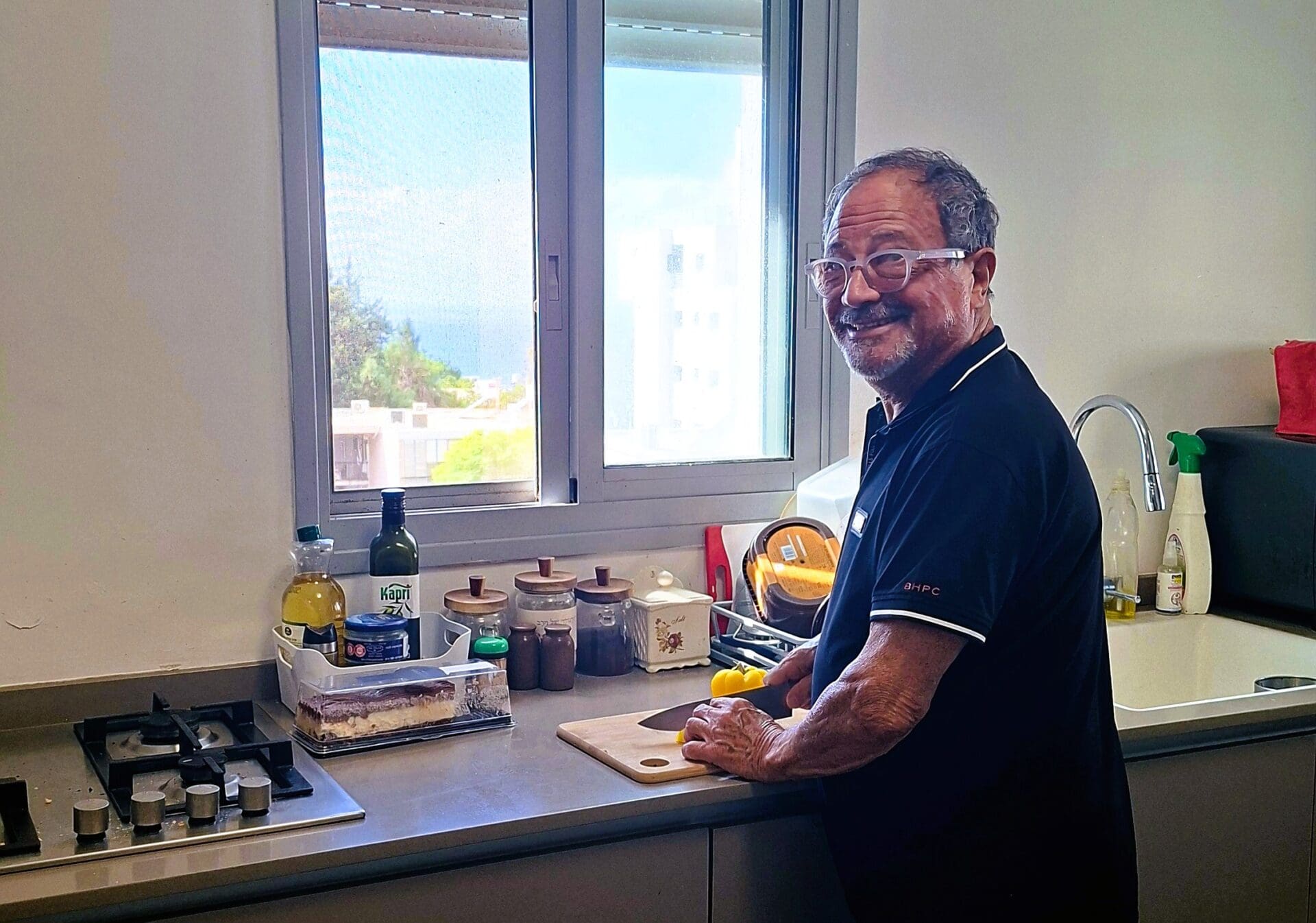
You can find him standing in the kitchen, facing the window from which the sea can be seen, busy preparing a dish he wants to make, as he carefully cuts the vegetables and progresses from the first ingredients to the moment when they all come together to form a complete dish.
There is something in this image, in the man standing in the kitchen facing the sea, that connects two spaces that seem seemingly far apart, the open, constantly changing landscape, and the precise, domestic work done with a deep familiarity with the raw materials and the time they require.
Yoska learned the art of cooking from his mother, Beki/Ribka, who passed on to him the secrets of Balkan cuisine, and from her he inherited not only practical knowledge, but also a tradition of flavors, smells, and habits that bear the stamp of the home he grew up in. He is particularly skilled in these dishes, and it is probably no coincidence that there are crafts that a person learns by hand, but they become more deeply ingrained in him, until they become part of his memory and identity.
When Yoska cooks Balkan food, he is not just recreating a recipe or recreating a familiar flavor, he is continuing a family tradition, giving it life in the present and allowing it to pass on through the food served on the table.
His love of cooking can also be recognized by the special affection he has for pots, a affection that has become a kind of amusing and personal hallmark over the years. When asked what he would like to receive as a gift, he may simply reply: a pot. Not a book, not a garment, not a decorative object, but a tool that he can add to his collection of favorite pots, each of which awaits the opportunity to fulfill its purpose. Recently, his aunt even made sure to fulfill his wish and brought him a pot, a seemingly small gesture, but one that indicates an acquaintance with a man whose pleasures do not require great decor.
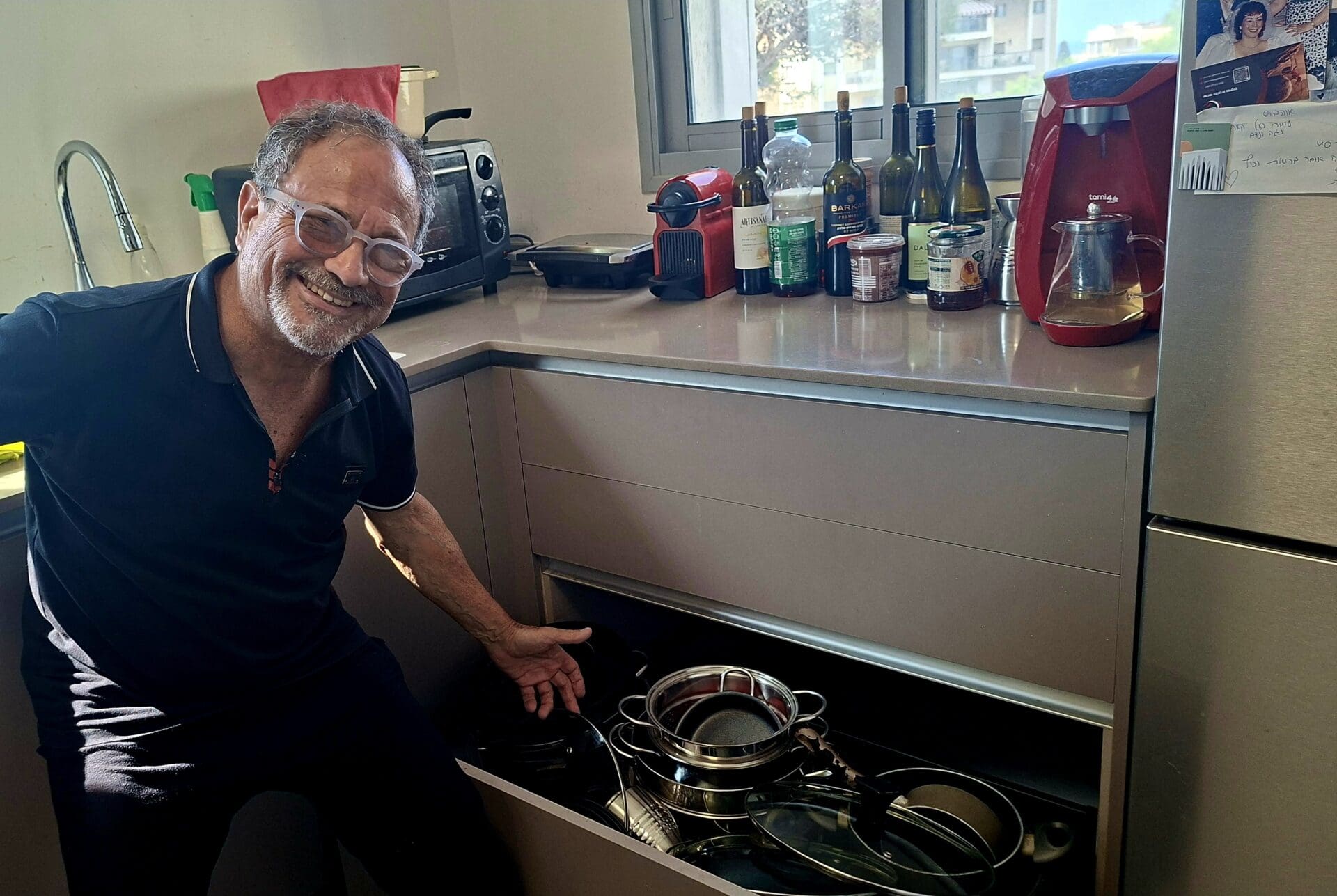
Yusuke even has a special drawer for his favorite pots, separated from the rest of the pots in the house. This very separation makes you smile, but it also reveals something of the seriousness with which he takes cooking. The pots are not random items in the kitchen cupboard, but tools that have a defined place in his world, almost a personal collection of loyal partners in the craft.
Indeed, Yosuke's name precedes him thanks to his cooking, and the kitchen is where many of the house's finest dishes emerge. He takes on the bulk of the cooking himself, out of love and skill, without this detracting in the least from his appreciation for the dishes of his wife, Sara.
Yosuke's Toolbox: The Profession That Became a Language of Love
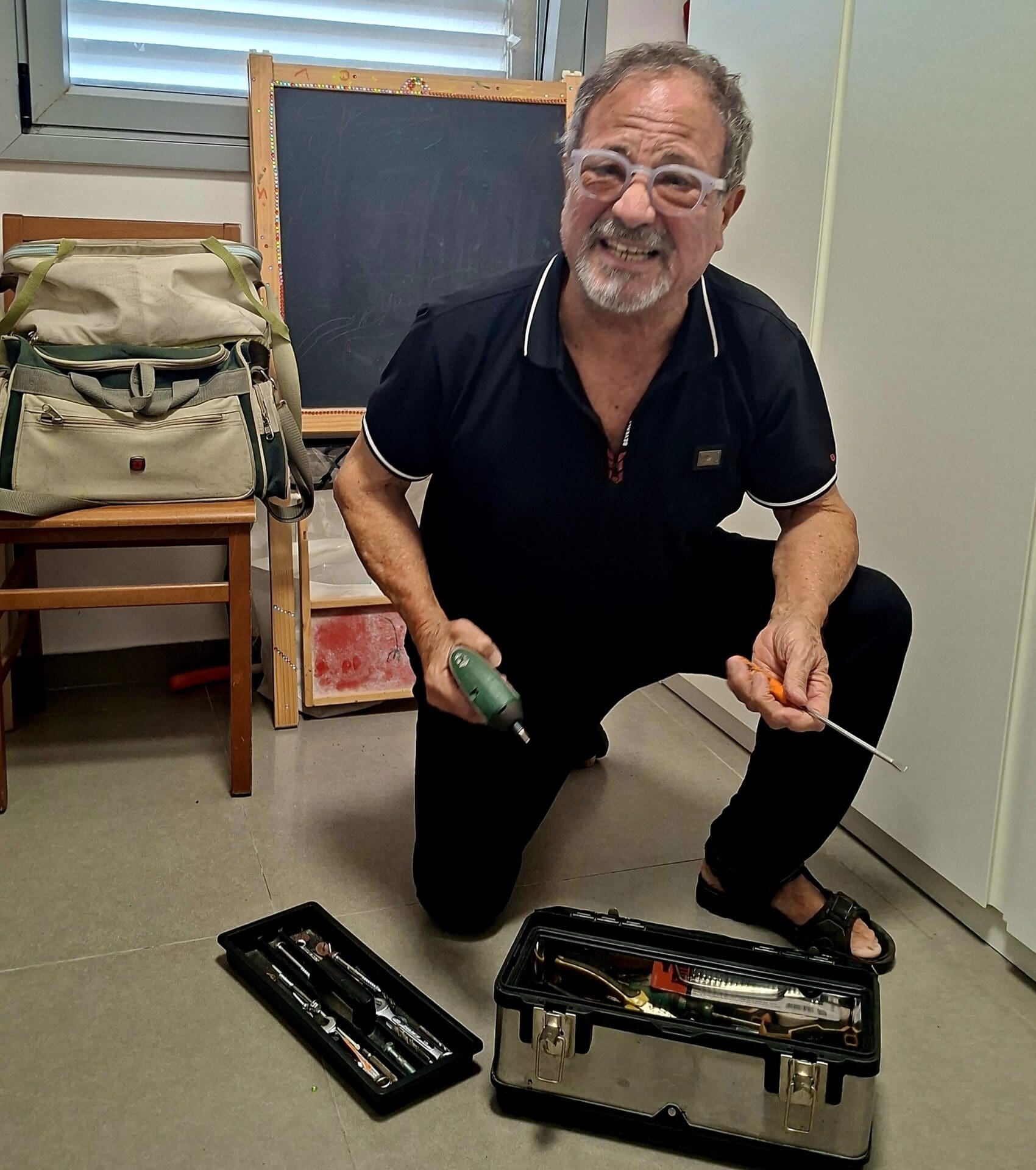
In this world of ours, there are people who express their love with words, others with actions, and there are those who arrive with a toolbox in hand, examine the problem in silence, and begin to work, as if the mere knowledge that something can be fixed gives them the necessary peace.
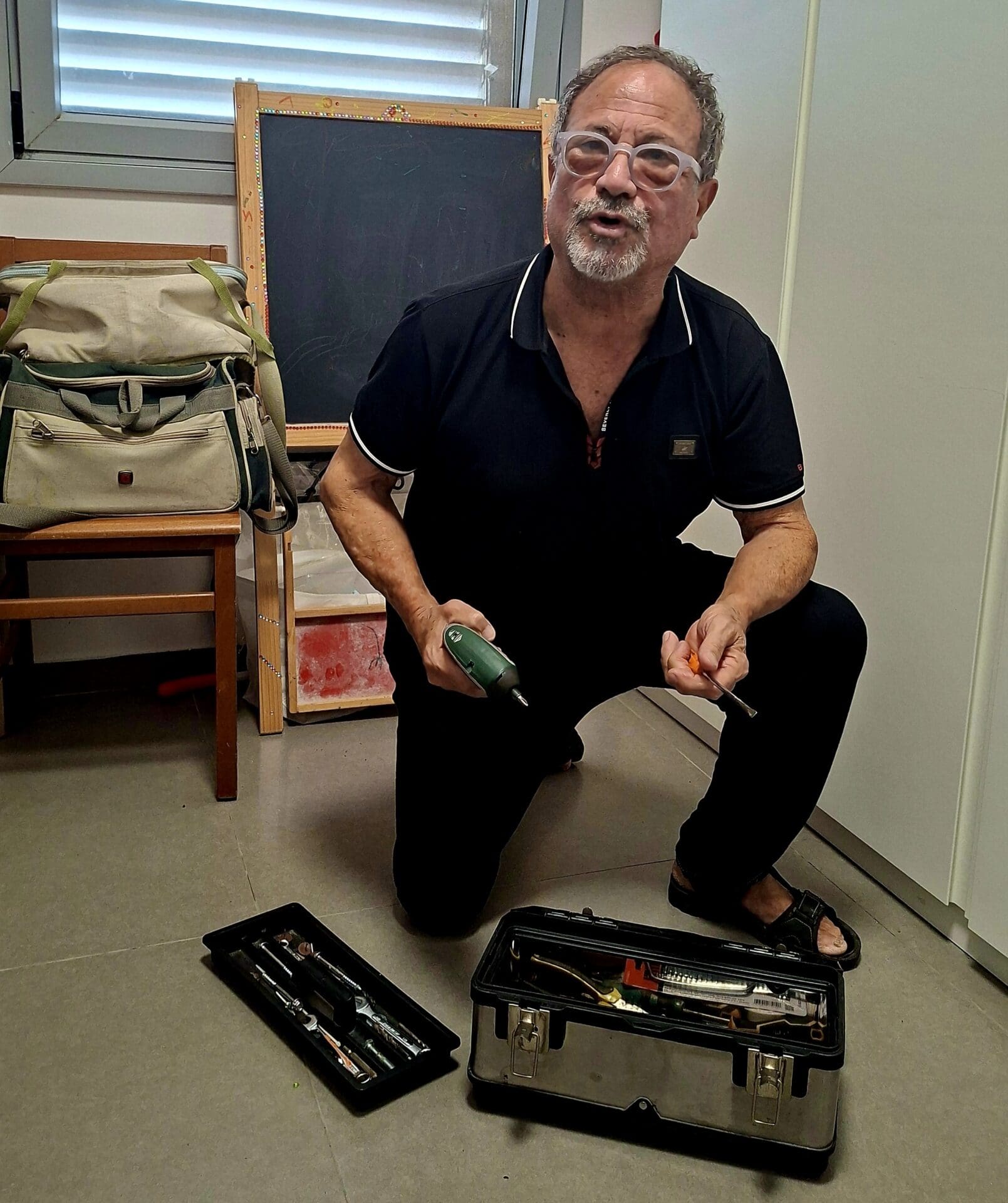
Yosuke Rubin is one of the latter types. Today, he is the home handyman, the man who fixes anything that breaks, loosens, or stops working properly, not only in his own home, but also in the homes of his children, whom he has taught and trained to use the toolbox and to recognize the possibilities inherent in the tools.
His personal toolbox is much more than a collection of screwdrivers, wrenches, pliers, and other tools. It is a box that carries with it the memory of his years as a technician repairing machines and household appliances, a time when his professional knowledge was both a source of income and a field in which he could apply his skills, patience, and ability to understand how things work and what is needed to bring them back to life.
The importance he attaches to this craft can also be seen in his relationship with his children's families. Yusuke has prepared their own toolboxes for them, so that they can deal with simple malfunctions and learn to manage on their own, but there is a clear limit to this independence, a limit that is well known to all family members: their boxes are only a first aid kit, until Yusuke himself arrives and performs the precise repair.
There is both family humor and a quiet confidence in the man's skill, who is not quick to settle for a temporary solution when he knows the job can be done better. The children can hold the tools, try, learn and experiment, but when their father's experienced hand is needed, they know who to turn to.
The toolbox, so close to Yosuke's heart, in this way also becomes a symbol of the bond between him and his children, giving them the tools for independence, but continuing to be there when they need it. And perhaps this is also the most emotional aspect of this object. When a person's profession changes or becomes part of the past, the identity that was built around it does not always disappear with them.
For Yosuke, the toolbox is a tangible reminder of his years as a technician, of the days when he earned a living from his skill, and of a time when his ability to solve problems was part of his professional definition. Today, when he repairs his home or comes to the aid of his children's families, he touches this world again, not as someone trying to cling to the past, but as a person whose experience continues to serve him and his loved ones in the present.
From training to the stage
As mentioned, Yosuke Rubin was born in Haifa and studied acting at the Kibbutzim Seminar in Tel Aviv. He participated in a diverse series of productions, including "Black Box," "They Were All My Sons," "Jewish Soul," "Ghetto," "Good," and "It's Turning," as well as in segments from the musical "Joseph" and the play "Les Miserables."
From this list, without specifying what his role was in each production, one can understand an encounter with a wide range of theatrical languages: Israeli drama, international plays, works concerning identity and history, and musical theater. For an actor, such a variety may be a kind of additional school, outside the classroom. In each play, the relationship between the body and the word, between emotion and style, and between the actor's presence and the structure within which he operates, changes.
The theater demands a paradoxical thing from the actor. He must develop a distinct stage personality, but also be prepared to give it up every time he enters a new character. He must learn to control his body and voice, while at the same time maintaining the ability to surprise himself. Technique allows him to perform the role, curiosity prevents the performance from becoming a mechanical rehearsal.
Rubin has also appeared in productions including "Fiddler on the Roof," "Oliver Twist," "Boutza" at the Haifa Theater, and "The Sign" at the Acre Festival. These are different frameworks, ranging from theater based on familiar works to arenas where the boundaries of the medium may be tested. This list does not necessarily represent an orderly progression. It rather describes a movement between worlds.
The building contractor has various roles.
In 1988, Rubin appeared in Haim Bozaglo's first full-length feature film, Fictitious Marriage, as a building contractor. His name appears in the film's credits and in the Israeli film documentation.
The film follows a Jerusalem teacher who decides at the last minute not to board a flight to the United States. He adopts a false identity and finds himself in a world of charged social encounters and predictions. The film was shot at the beginning of the first intifada, a time when questions of identity, belonging, and the Israeli reality carried with them a heavy political and social burden.
There is something interesting about the profession that cinema and theater share, yet separate them. In cinema, the camera can capture a brief glance or a tiny movement and make it the focus of the scene. The actor exists within a world that has been prepared for him, but after filming he may continue to exist on screen even when the person who played him has already moved on to another role. In theater, however, the character is recreated every evening, and his disappearance from the stage is part of the event.
The appearance in "Fictitious Marriage" does not teach how Robin has developed since then, but it does remind us that his career is not limited to the stage. He later also participated in the series "Seeing Six Six" and the program "Come Eat With Me," in its second season, which aired on "Kan" 11.
Such appearances illustrate the difference between visibility and fame. A person can appear on screen, enter the homes of many viewers for a moment, and yet remain outside the narrow circle of names associated with the period. Not every appearance is made for an event, and not every role is etched in the public memory. But the absence of a voiceover is no proof that no work was done.
The man who changed the game
To understand why Edmund Keane is a hero worthy of a solo performance, one must return to the world of English theater in the early nineteenth century.
Keane, born in 1787, was a Shakespearean actor of extraordinary reputation. He was known for his interpretations of characters such as Othello, bringing to the stage an emotional intensity and acting style that departed from the rhetorical and elevated manner that was common in some of the theater of his time. Rather than contenting himself with presenting a hero through conventional gestures and emphatic pronunciation, he sought to give the character a sense of an inner life of impulses, contradictions, and reactions arising from a real human condition.
Keane became a star at a time when actors could enjoy great public status, but their professional lives remained largely dependent on their physique, strength, and ability to continue to attract audiences. He was successful, but his life was turbulent and his last years were marked by a decline. In 1833 he collapsed during a performance as Othello and died shortly afterwards, aged forty-six.
The event almost invites symbolic interpretation: an actor playing a tragic hero falls on stage, and the boundary between play and reality suddenly becomes real. Still, it is best to beware of the temptation to turn Cain’s life into a perfect allegory. The collapse was an event in a person’s life, not an ending written in advance to serve the history of theater.
The power of his biography stems precisely from the tension between the two: he was an artist of historical influence and at the same time a man whose body could not continue to carry out his roles indefinitely. He could give life to a character on stage, but not grant himself immunity from time.
The light goes out, the actor stays: Laurence Olivia on the art of exposure
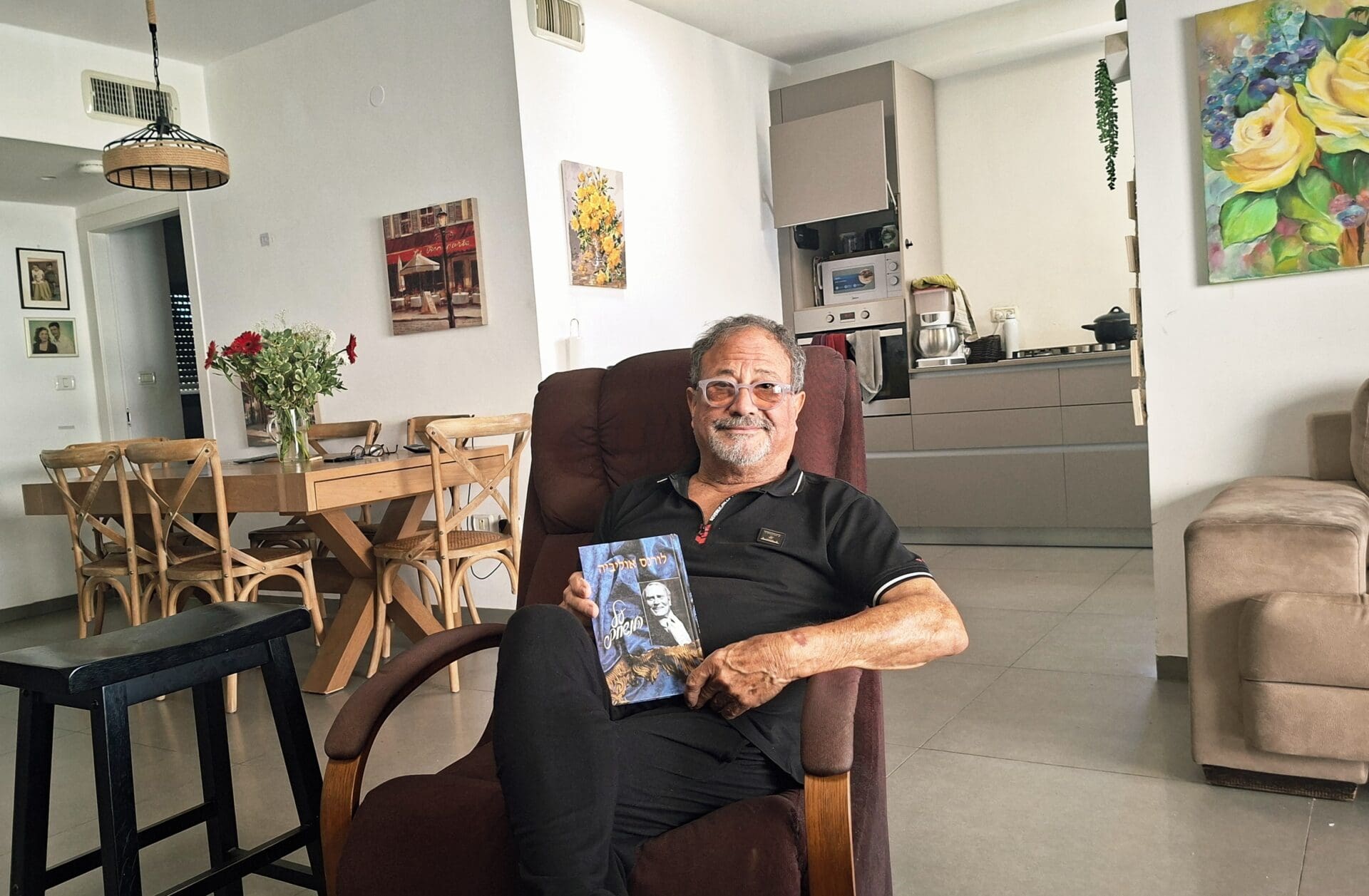
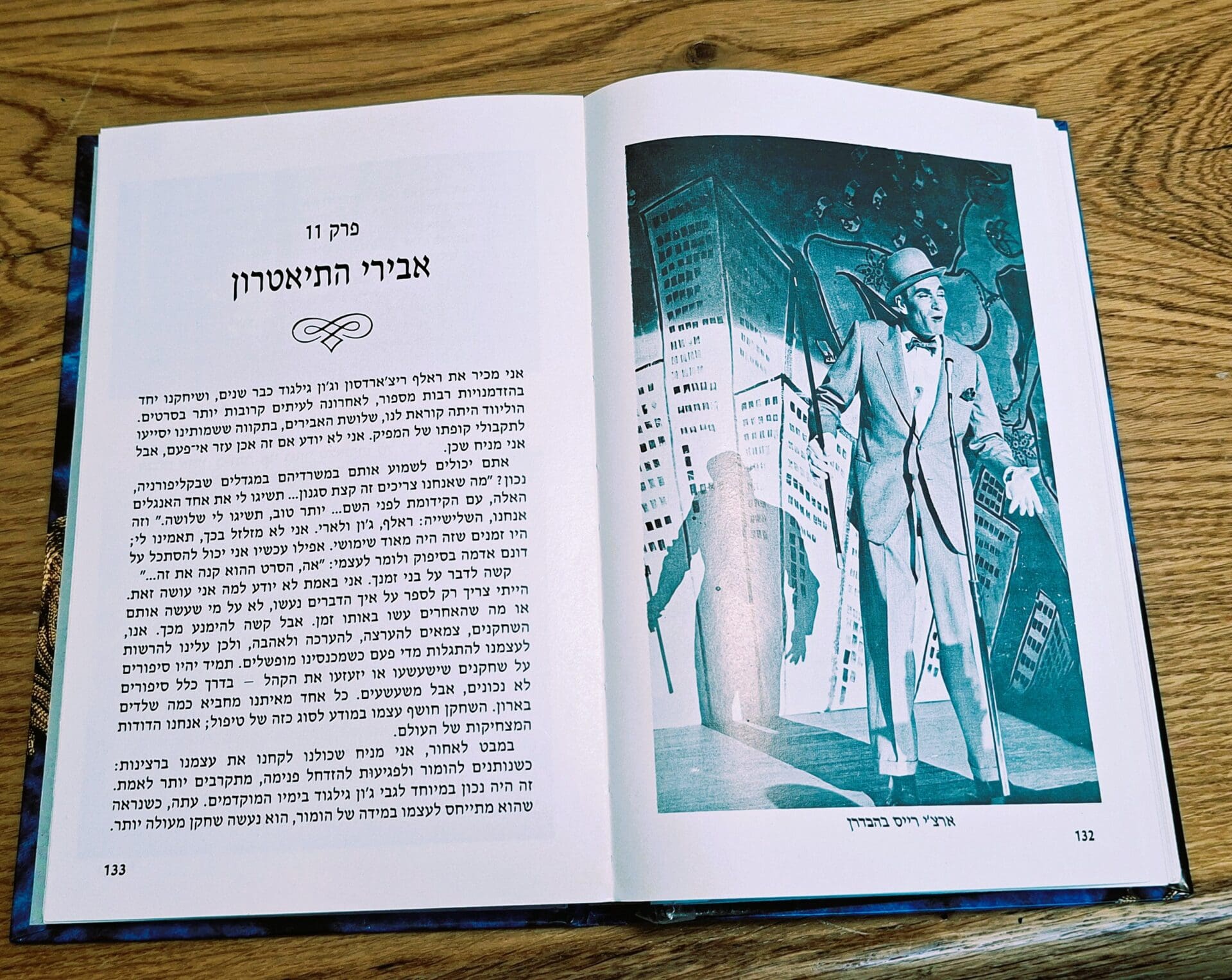
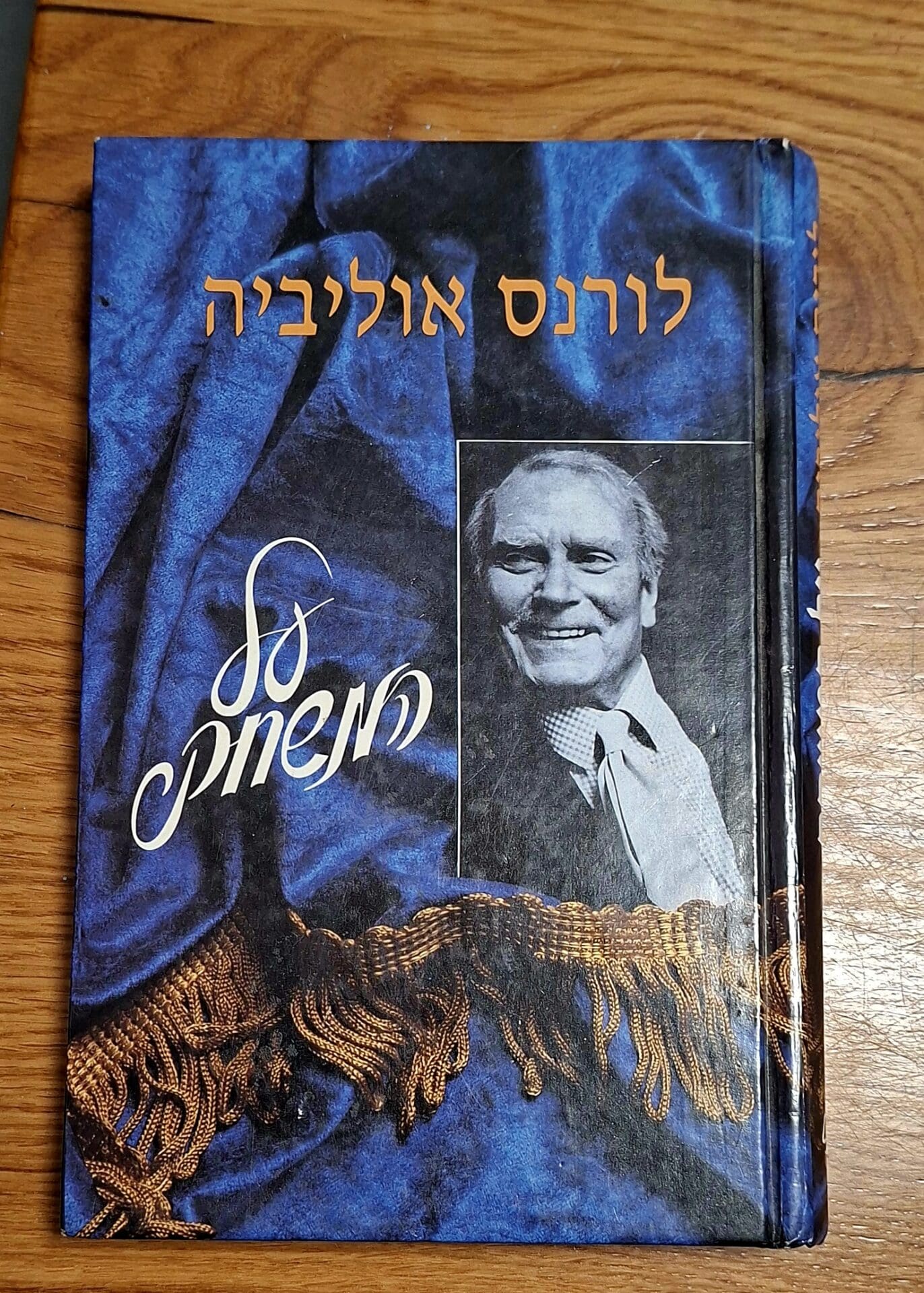
About the book: "On the Game" by Laurence Olivia
In his book "On the Game," published by Moden, Laurence Olivier invites the reader into territory that the viewer from the theater does not get to know: the space between the actor and his character, between the moment the curtain rises and the moment it falls, and between the security that the stage provides and the anxiety it arouses.
Olivia, one of the greatest theater actors of the 20th century, writes not only about the craft of acting, but also about the life required to sustain it. He traces the thoughts that lead to the character, the actor's hesitations, the personal biography that permeates the role, and that elusive distance between knowing how to act and the moment when the act becomes true.
With rare candor, he allows the reader to share with him the joy of success, but also to dwell on the failures, lick the wounds, and get to know stage fright up close, that excitement that does not necessarily fade with experience, fame, or applause, but rather reawakens every time the actor is required to entrust himself to a new evening, a new audience, and a character he must recreate.
From his story, doors open before us to the first plays of "Richard III" and "King Lear," and to the world of Edmund Keane; not only to the roles and their achievements, but to the hidden thought, search, and effort that allow them to exist.
With Olivia, we walk through the dressing rooms, lingering in the charged air before going on stage, and can almost smell the excitement and feel the adrenaline pulsing through our bodies. There, far from the public gaze, the actor reveals himself not as a figure adorned with glory, but as a person who is required to confront himself anew each time. After all, acting, as the book suggests, is not just the art of putting on other faces, it is also the attempt to discover what within the person himself can give them life.
The uniqueness of "On the Play" lies not only in what it teaches about theater, but in the way it brings the reader closer to the inner experience of someone who stands center stage, and yet remains, in the crucial moments, alone.
Reading this book is like a private conversation with Olivia, a meeting in which there is no hall, audience, or barrier of fame, but a single actor and a single reader. The actor is Olivia; the viewer is the reader. His sharp gaze is directed solely at her, as if for a moment the rules of public performance have been suspended and he is speaking not to an audience, but to a person.
Thus the book becomes a kind of intimate dressing room, a place where one can approach the craft of acting without being content with the illusion it creates, and listen to what remains when the role, the costume, and the gestures are set aside. Therefore, beyond being a document on the art of the stage, it is also a book about the loneliness of the person exposed to the eyes of others, about the gap between the mask and the face, and the surprising possibility that precisely through pretense one can approach the truth.
Actor playing an actor
Robin's choice is particularly intriguing. In "Edmund Keane," he is not just an actor playing a historical figure. He plays a man whose entire professional life was based on the action of the game itself. The Israeli actor is thus confronted with the character of an English actor, behind whom stand many other characters he has played.
It is a kind of hall of mirrors. Robin plays Cain, and Cain plays, in theatrical memory, Shakespeare's heroes. Each layer adds distance, but also brings them closer: to play another person, the actor must find something in them that is not completely foreign to his own human experience.
The structure of the play raises fundamental questions of acting: How do you present fame without turning it into an imitation of stars? How do you embody decline without being content with external signs of weakness? How do you give presence to a person whose life has become part of the history of performing arts?
In a solo performance, these questions fall on the shoulders of a single performer. He cannot rely for long periods on exchanges with other actors to create the pace of the performance. He has to carry the text, the dramatic changes, and the connection with the audience. Every silence becomes a choice, and every change in voice or movement can carry great weight.
There is also freedom in performing alone. The actor can construct the encounter with the character in an intimate way, almost as if the audience were called to listen to the testimony. He does not have to recreate the entire historical world in which Cain lived; he can look for the moments when his story becomes relevant to the contemporary viewer.
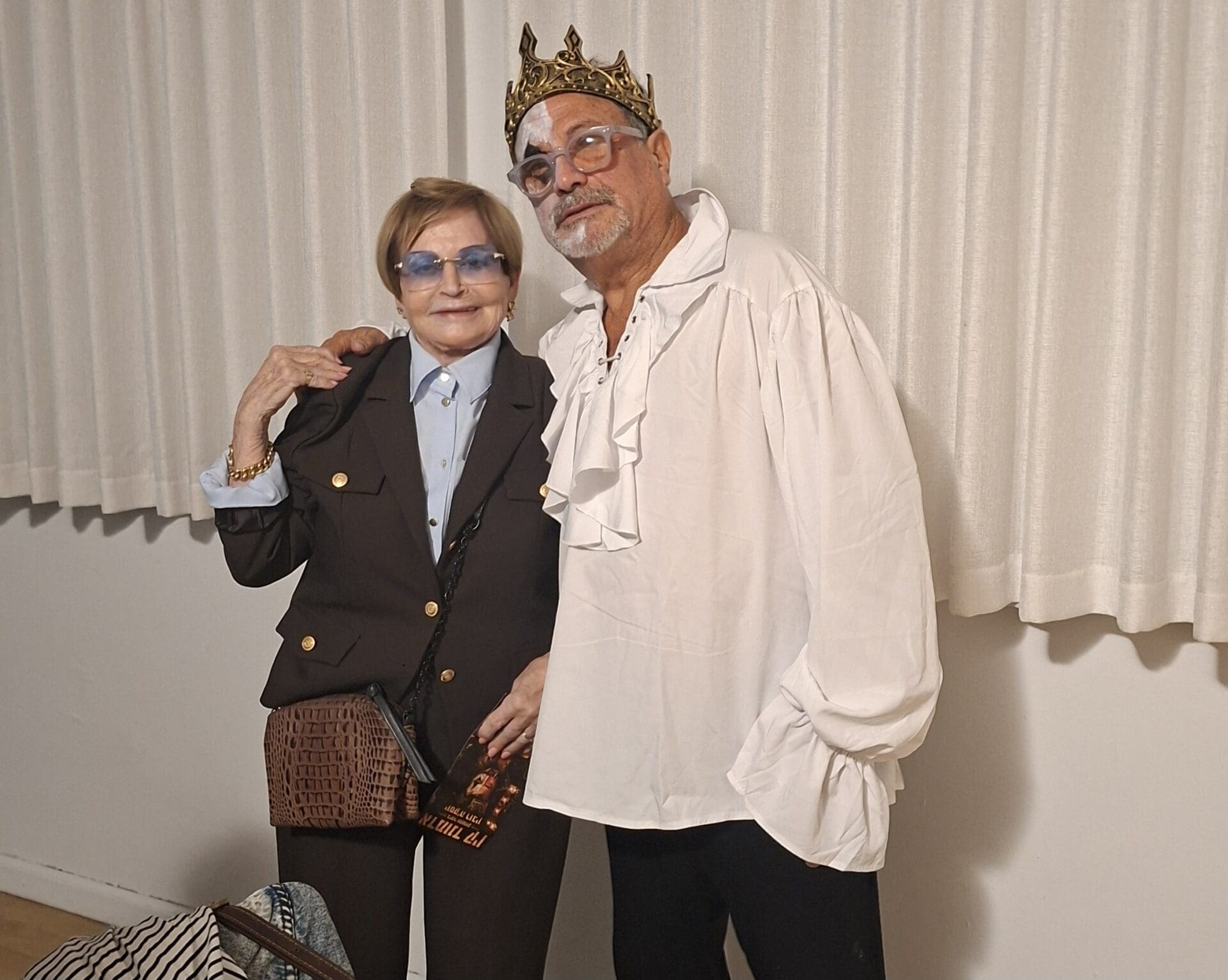
Rubin's adaptation and direction add an important layer to this. He is responsible for the three main roles in the work: arranger, director, and actor. And therefore is responsible not only for the interpretation of the character but also for the way her story is built and revealed. Working alongside him is Chen Geva, who is responsible for the musical editing and lighting.
When an actor becomes both an editor and a director, he is required to decide what to leave out of the original text, what to emphasize, where to shorten, and how to shape the transitions between moments in the story. The game is no longer the end point of a creative process that began with others; it is part of a broader process in which the actor participates in shaping the entire world.
This work does not guarantee absolute freedom. Independent creation often involves organizational responsibility and dealing with limited resources. But it gives the creator the opportunity to choose the material and build the conditions under which he will meet an audience. For those who want to continue creating over time, this is a significant option: Instead of always waiting for the next role, one can start by asking what story is worth telling.
Haifa, away from the spotlight
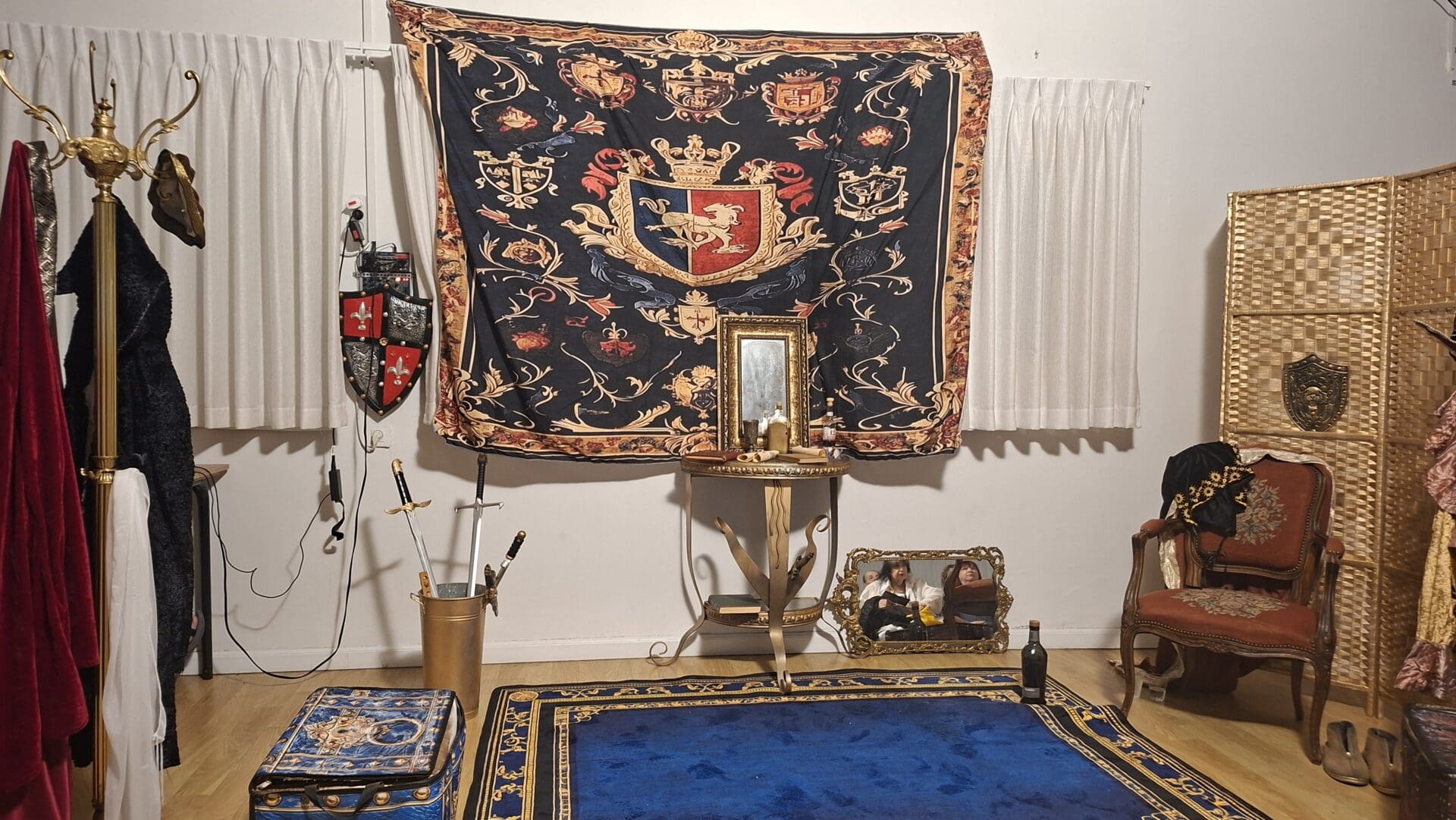
On Saturday, October 17, 2026, "Edmund Keene" premiered in Haifa at the Ramot Sapir Community Center and will later be performed at the Fanny Kaplan House, as part of local cultural events, and at the "Room Center", a house for culture and creativity located in the "Reali Ahuza" complex.
Haifa is both Rubin's hometown and a place where he has performed in the theater in the past. Now it serves as an arena for his work again. There is not enough information to attribute this return to a deliberate biographical significance, but it gives his trajectory an almost circular shape: the city from which he left to study and work is the city where he is now presenting a work that he himself leads.
There is also an interesting contrast here between the protagonist of the play and the conditions of its performance. Edmund Keane was a major star of his time; Robin tells his story in a local setting, far from the mechanisms associated with fame. The story is about an actor who has come to center stage, but it is told by an actor who operates outside the centers of public attention.
There is no need to make this contrast a deliberate statement by Rubin. It stems from the known facts and from the artistic choice itself. It also suggests another way of thinking about success in theater. You can present a story about fame without being part of the fame industry; you can engage with a major historical figure from a small space; and you can create a meaningful encounter without the play becoming a media event.
What's left after the applause
It's hard to sum up a career like Rubin's with one show. Her resume includes professional training, theater work, film appearances, television roles, and later independent work. These are not chapters in a story of continuous ascension, but parts of a trajectory that unfolds over time.
The body gains experience, but it does not become immune. Each role demands something different from it, and each performance takes place in a time that cannot be returned. A veteran actor carries with him not only the memory of characters, but also the memory of the craft: of rehearsals, of texts learned, of evenings when everything came together, and of moments when it was necessary to start over.
That is why Cain's story is so well suited to a solo performance by an experienced actor. It embodies the contradiction at the heart of the profession: the actor is required to give others the illusion of a full life, while his own life is limited in time. He can re-enact Othello, but he cannot become forty again. He can bring a literary character to life, but he cannot prevent his body from changing.
And yet, theater is not just a story of loss. It is also an art of transmission: a text that passes between generations, a character that takes on new life in the body of another actor, and an audience that discovers in an old work a question that still concerns them. Edmund Keane is dead, but the possibility of playing Keane remains. Each new performance changes the character in some way, because it carries the body, voice, and experience of the current performer.
When Josuke Robin takes the stage and plays him, he does not bring the English actor back to life as he was. He creates a new encounter between past and present, between a historical story and the contemporary craft of acting. The full meaning of this encounter can only be determined by the audience who sees the play.
The choice itself says something about the profession. After decades of appearing in other people's works, Rubin takes on the task of building a work around a character that interests him, not just playing, but deciding what will be seen, what will be heard, and what will remain out of the picture.
For Yosuke Rubin, there is no need to preface and praise the result, to appreciate the very choice. There is something remarkable in the willingness to continue to turn to the stage, to deal with a demanding character and through her to examine questions that concern not only the actor who was Cain, but also the person behind the mask. In this sense, Rubin and Cain meet at a place where theater becomes more than a profession or a performance, it becomes a continuous possibility of inquiry. The full meaning of this encounter can be seen in a play in which the old character is resurrected in the body of a contemporary actor.