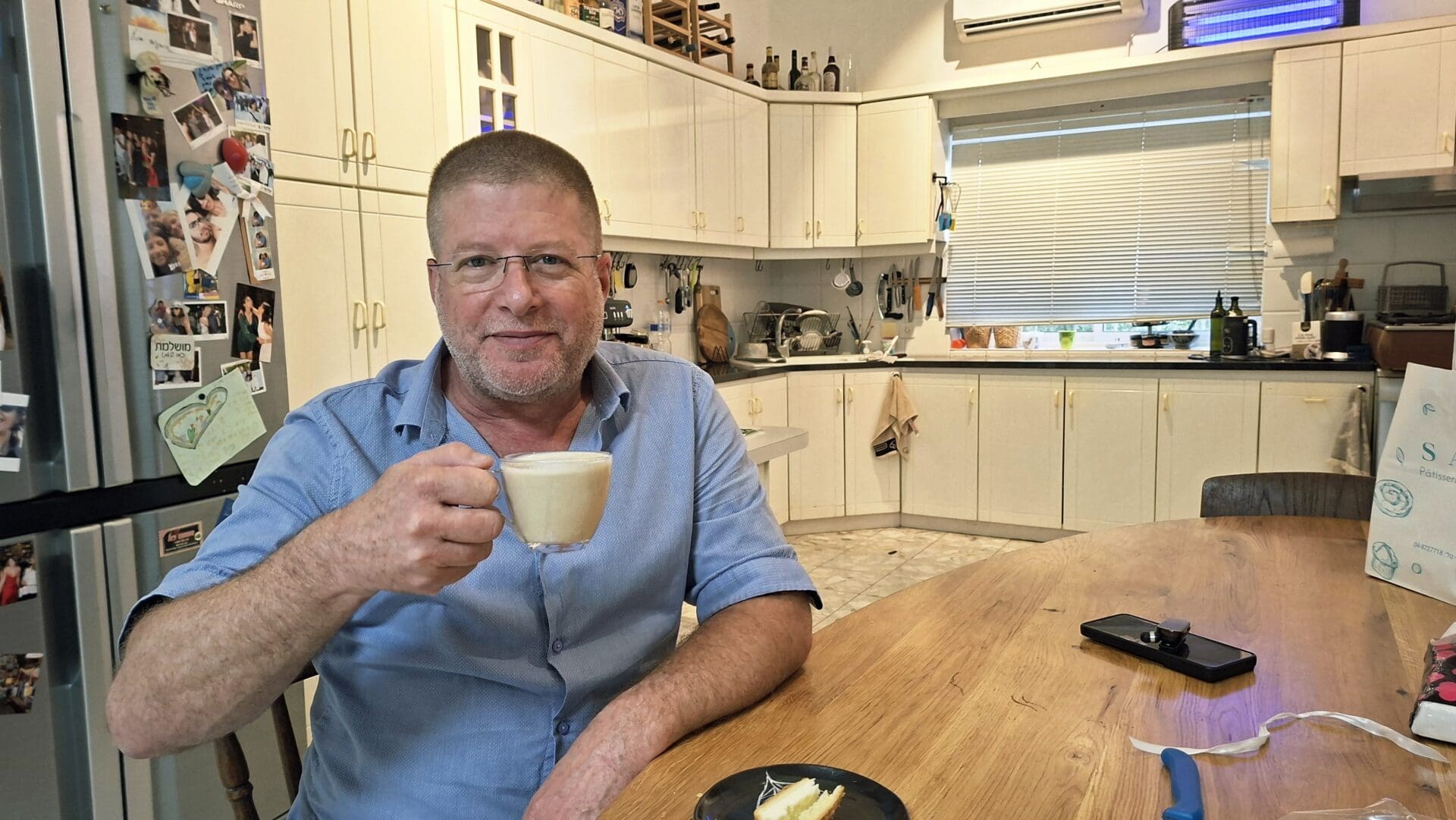
In Haifa, a city where law, local politics, journalism, neighborly relations, and struggles over public space tend to intersect, it is possible to follow the career of Attorney Ron Aviv, almost like following a map of the city itself. His name appears as a representative in court documents, as a judge in disciplinary proceedings of the Bar Association, in news articles, in opinion columns, and in public struggles.
Sometimes he is on the side of a person seeking to protect the name of a certain person, sometimes on the side of an official struggling with a decision by a public authority, and sometimes in a completely different place: in front of his desk, trying to interpret a municipal or social event using the tools he acquired as a lawyer.
His career is not limited to the story of a lawyer appearing in court and representing clients. It also tells something about the place where law ceases to be a technical matter and becomes part of public life.
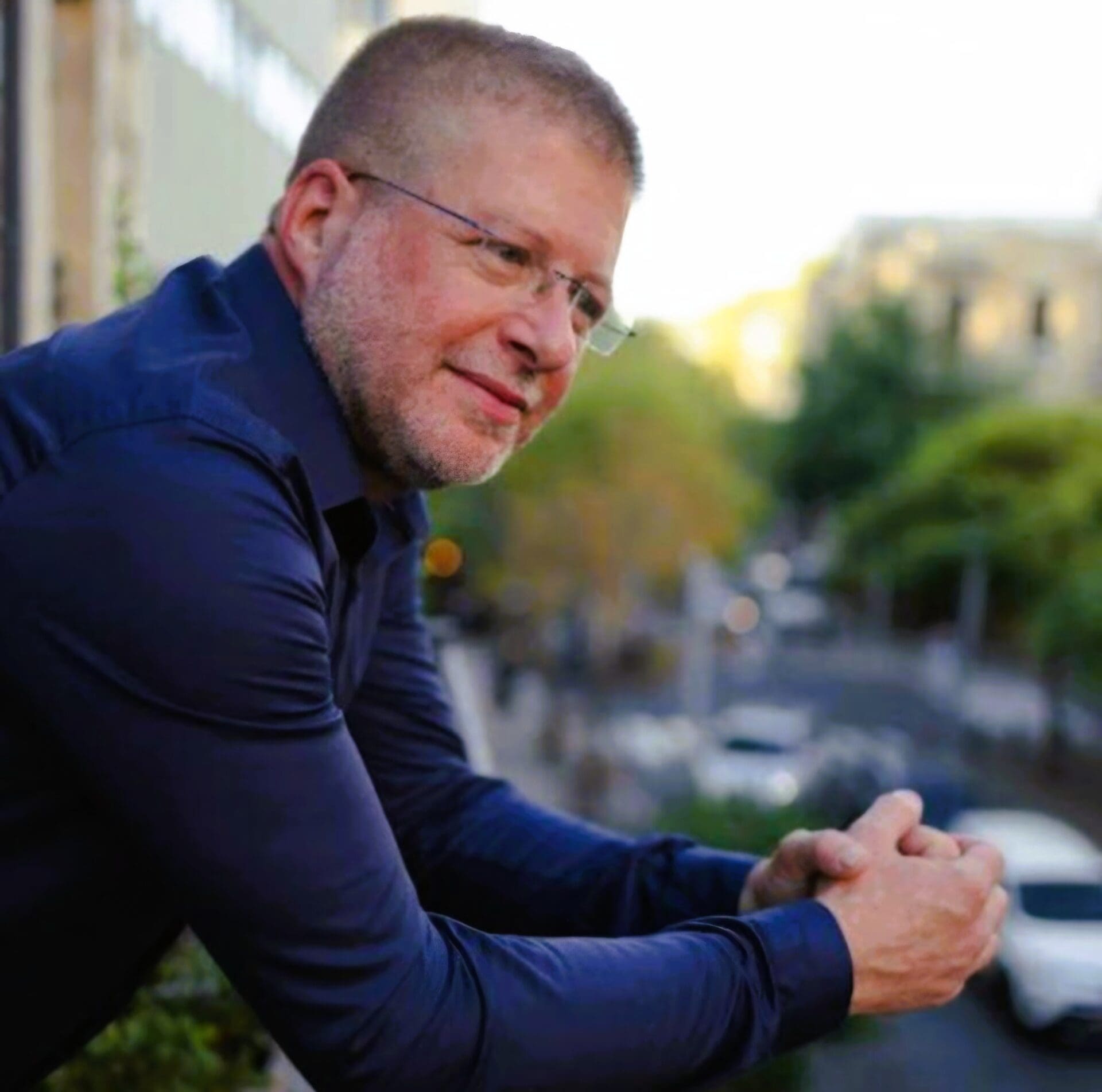
A veteran attorney from Haifa, whose main practice is civil and commercial law and litigation.
Ron Aviv is a veteran notary attorney and mediator in the city of Haifa, owner of an independent firm, whose main focus is civil and commercial law and litigation.
Alongside these, his areas of practice include defamation, privacy protection, copyright, financial disputes, contracts, real estate, condominiums, enduring power of attorney, mediation and arbitration. He also serves as a notary and mediator.
Ron Aviv holds an LL.B. in law, is a member of the Israel Bar Association, and has been active since the end of the previous millennium.
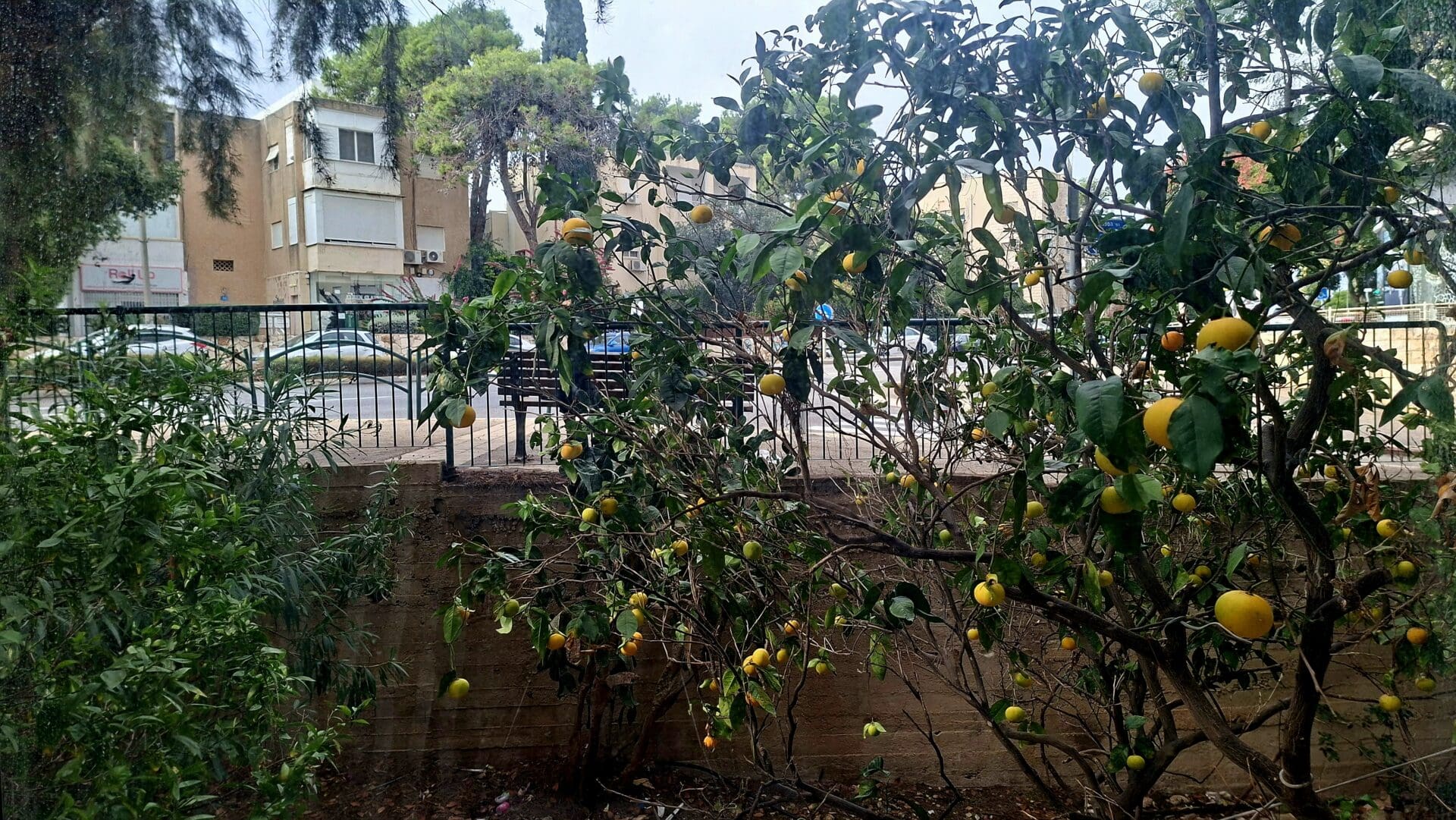
"I live here too"
Here, the section that seeks to open doors, not only of houses, but of souls. This is a section that brings you fascinating Haifa characters, straight to their living spaces, with the belief that true acquaintance is forged through stories, life lessons, and unique and personal perspectives.
Thus, the rich human mosaic of our city, Haifa, a city of voices, memories, and living, breathing identities, gradually unfolds. A section about women and people who live here, as the section's name suggests: "I live here too."
This is where we meet these characters inside their homes, but not as a purely physical space, one measured in square meters, real estate valuations, or design aesthetics. The home is described here as a space filled with meaning: a treasure trove of memories, evidence of life stories, and a space charged with emotion. Through the home, we get to know its inhabitants, not from the outside, but from the inside: through an intimate, one-time lens that reveals their world as it is experienced from the inside.
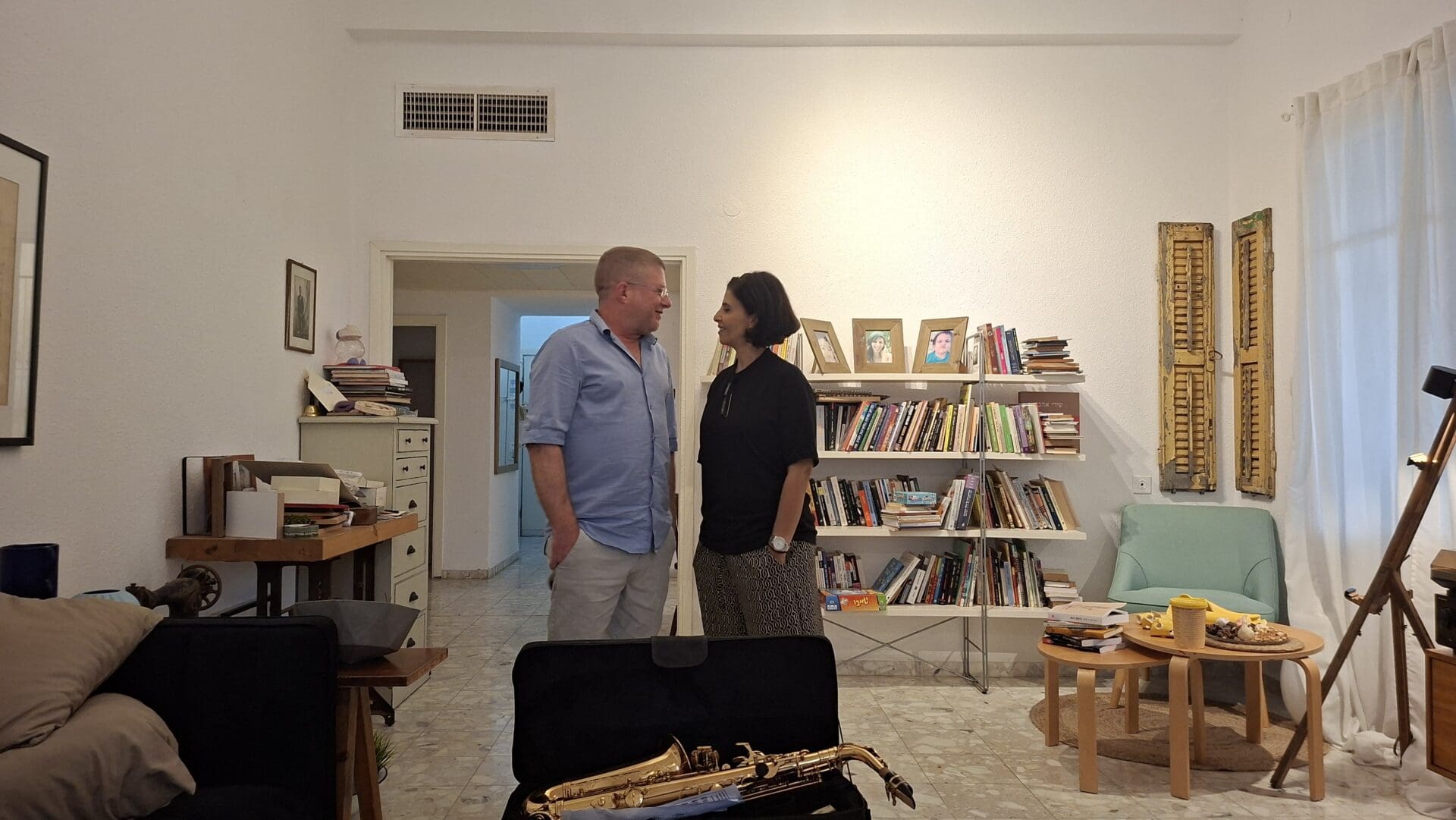
This time we will be staying at the home of Attorney Ron Aviv and his wife Efrat.
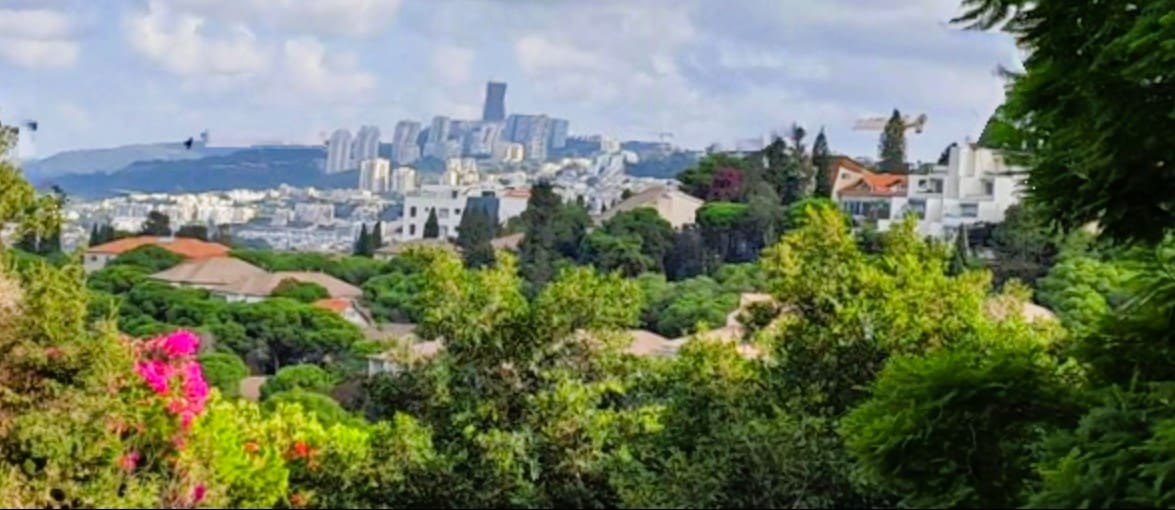
From the city of Rehovot to Haifa: The boy who chose to leave home and seek his place in the world
In 1969, in Rehovot, Aviv Ron was born into a family whose world was rooted in science, enlightenment, and education.
His father, who was then in the midst of an impressive academic career, completed a doctorate in chemistry at the Weizmann Institute. Upon completing his studies, the family returned to Haifa, and there, between the Carmel and the sea, Ron's childhood years were shaped, until he reached the age of thirteen.
Already in his early childhood, something was evident in him that did not necessarily fit in with the family environment he came from: a need to seek his own path, even if it led him to places that his parents would not necessarily choose for him.
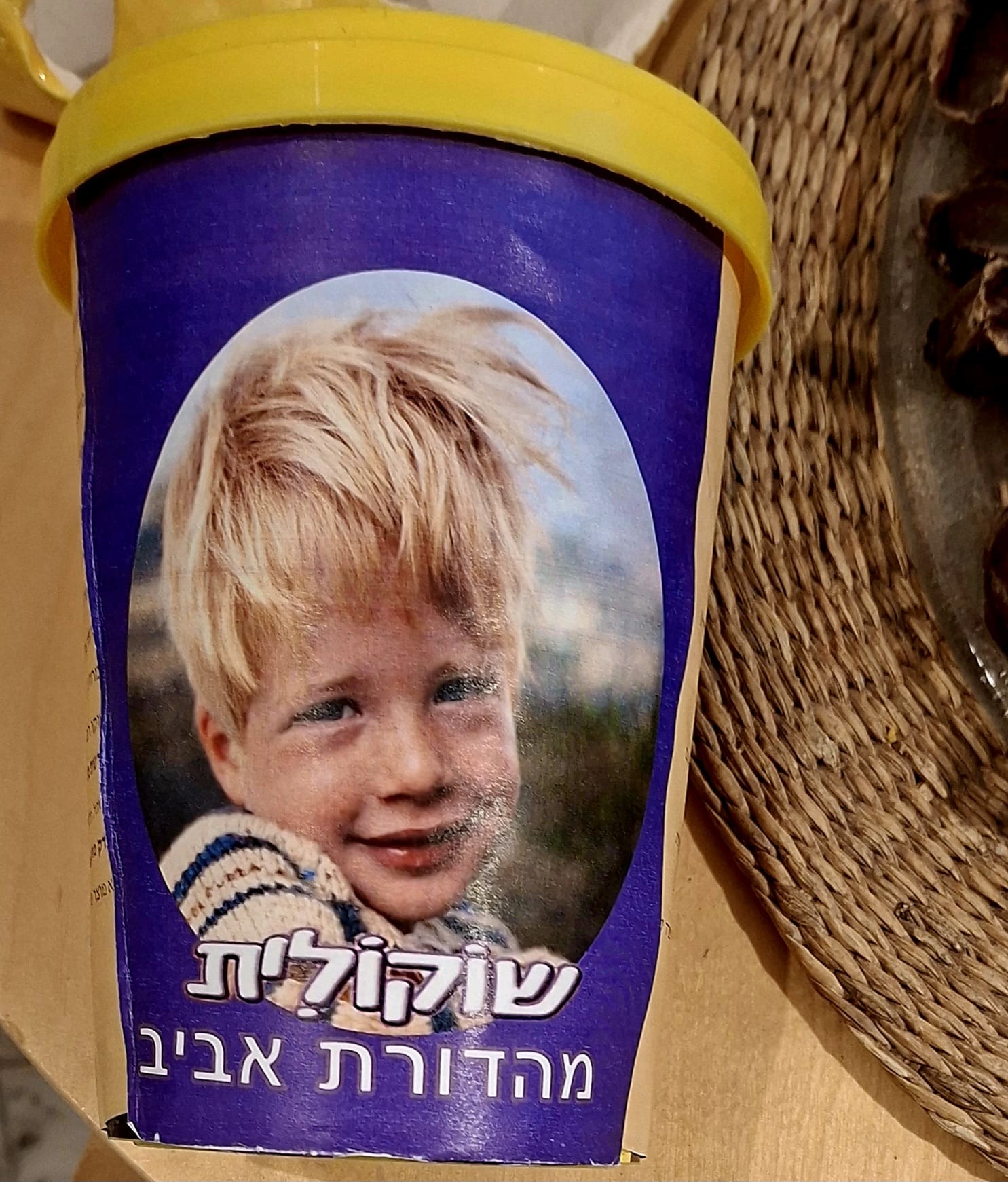
In fourth grade, he decided to join his friends in the "Hashomer Hatzair" movement. It seemed like a natural step for a child who wanted to be part of a group, go on trips, sing around the campfire, and share experiences with his peers. But for Aviv, it seems, a deeper attraction had sprouted there.
The movement offered him not just a children's company, but an entire world of belonging, independence, an ideology of equality and shared life. By the eighth grade, a firm decision had already been made: he wanted to move to a kibbutz. This was not a passing fantasy or a whim of an adolescent boy. He wanted to realize the lifestyle he had absorbed in the movement, and he was even willing to do so against his parents' wishes.
There was something almost paradoxical about this boy's choice: a son of an educated and well-established family, whose father was not only a doctor of chemistry but also the chief scientist of the Paz company laboratory, dreamed of a completely different life. He didn't ask for another room in the family home, but rather to leave it. He was fascinated by the idea of a children's home, of living alongside his peers, of waking up to a common morning, and of a community where the boundaries between the private and the collective were completely different.
Alongside the father, the scientist, there was also the figure of the mother, Michal Ron, a mythological teacher for grades 1 and 2 at the "Zichron Yosef" school. Generations of students knew her as the legendary teacher, the one who in their first years at school not only taught them to read and write, but also opened the gates of the world to children and helped many children who were on the verge of special education to overcome their difficulties and integrate into a regular classroom, and from there to a more promising future. If the father represented the world of research, scientific knowledge and the pursuit of understanding reality, then the mother operated in the intimate and primary space where a child's personality is built, in a place where a kind word, an encouraging look and patience can become a memory that lasts a lifetime.
These two figures, each in their own way, were part of the infrastructure from which Ron Aviv grew. His father passed away in 2025, at the age of ninety, leaving behind a life of scientific and professional activity; and his mother, Michal, remains an inseparable part of the family story and the educational memory of Haifa.
Between these two worlds, the scientific and the educational, and between the Haifa home and the kibbutz dream, Aviv's story began to be written: the story of a child who, from a young age, wanted to choose for himself where he would stand, with whom he would live, and to which community he would belong. Many years before he became a lawyer, even before he faced people, institutions, and systems, he had already waged his first fight for his right to define his own life.
The family that chose the path, and the world that opened up beyond the kibbutz fence
For Aviv, moving to Kibbutz Mishmar HaEmek was not just a change of address or a natural continuation of his youth in the Hashomer Hatzair movement. It was a moment when an idea that had been taking shape within him became a real choice, involving separation, independence, and building a new life.
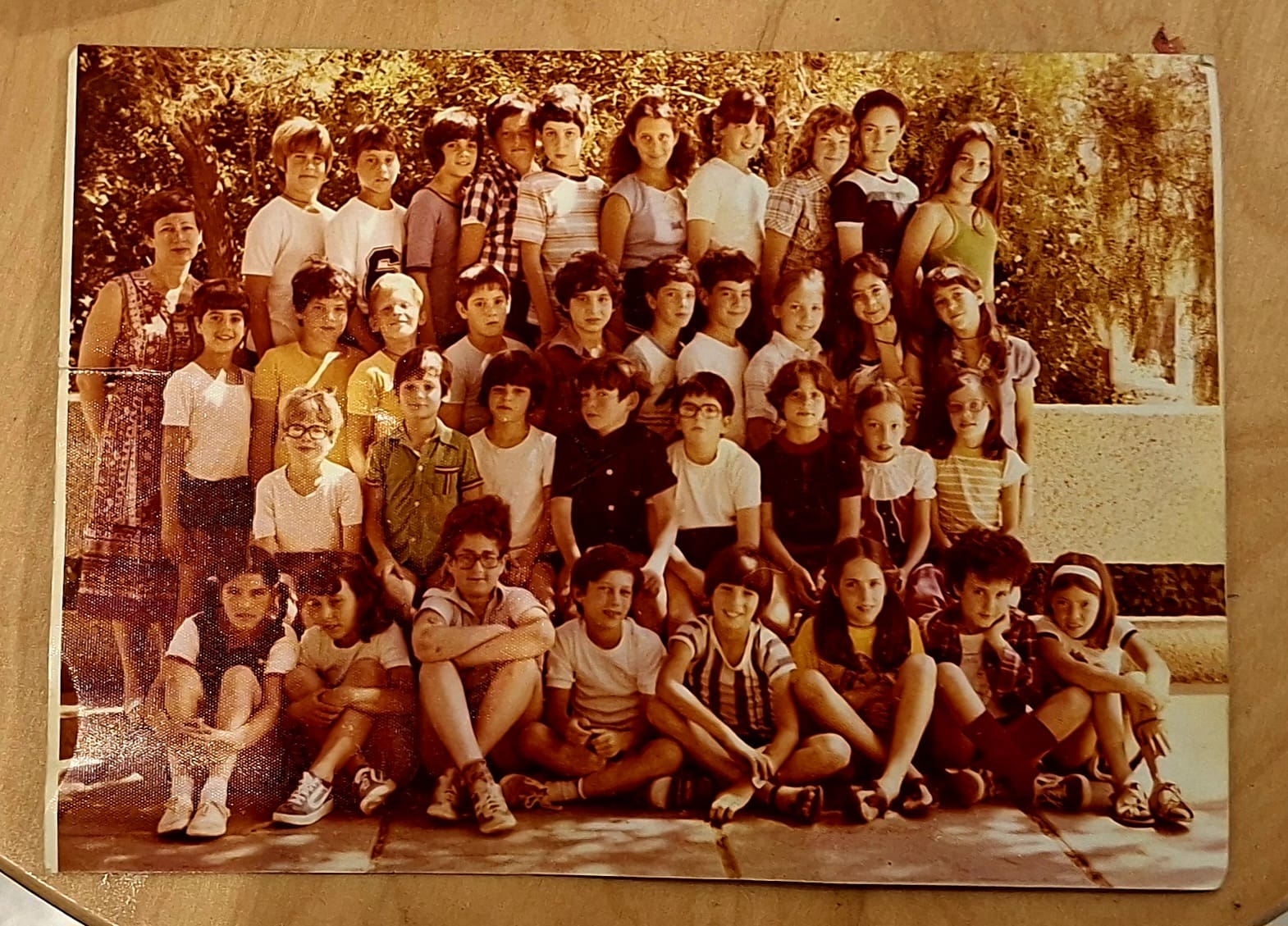
He began his studies at the "Zichron Yosef" school in Haifa, and after completing his duties there, he continued for one year at the Urban H school. From there, while his friends continued on the familiar path of home, family, and school, he went to Kibbutz "Mishmar HaEmek", leaving behind his parents and his sister, who is currently an accountant, in Haifa.
He arrived at the kibbutz as a boy who wanted to belong to the world he had chosen for himself, but also as someone who had to discover how to turn an ideological choice into everyday life: how to live away from home, how to build new relationships, and how to turn a foreign place into a place that can be called home.
A family born by choice: between biological roots and roots of the heart
In "Mishmar HaEmek," Ron Aviv found not only a kibbutz framework, but also a family that became an inseparable part of his life. He was absorbed into the family of Michal Shamai, a professor of social work, and her husband, the late Shamai Shamai, a doctor of education and language. Shalom himself carried with him a life story that included a formative Israeli chapter: he immigrated to Israel from Iraq at the age of eight, and arrived at the Ma'abara, to a reality of a new beginning, foreignness, and adaptation in the country that had just become his home.
Later, it was he and Michal who opened their home and hearts to a boy who came to seek his place on the kibbutz. The family had two sisters, and after Aviv joined the family, a little brother was also born. Over the years, the bonds that were formed between them became much more than those of an adoptive family. They became his family for all intents and purposes, and have remained so even into his adulthood, and to this day.
There is something particularly profound in this story: a boy who left his parents' home in Haifa to choose a different way of life for himself found in the kibbutz not only an ideological community but also a human home, a family that gave him belonging, continuity, and love. The Shamai family was not a transit station in his life, but one of the central anchors in the story of his coming of age, a family that was chosen and built from life itself, and proved that sometimes the deepest bonds are not determined at birth, but are created from opening a door and from the decision to stay by each other's side.
Ron completed his theoretical studies at Mishmar HaEmek. In those years, the kibbutz did not hold matriculation exams in the familiar format, and instead, students were required to prepare final projects, a different way of learning that sought to test not only the ability to pass the exam, but also the ability to research, delve deeper, and present independent thought.
Between a book and a game: The world of Winnie the Pooh as a journey of discovery and thought
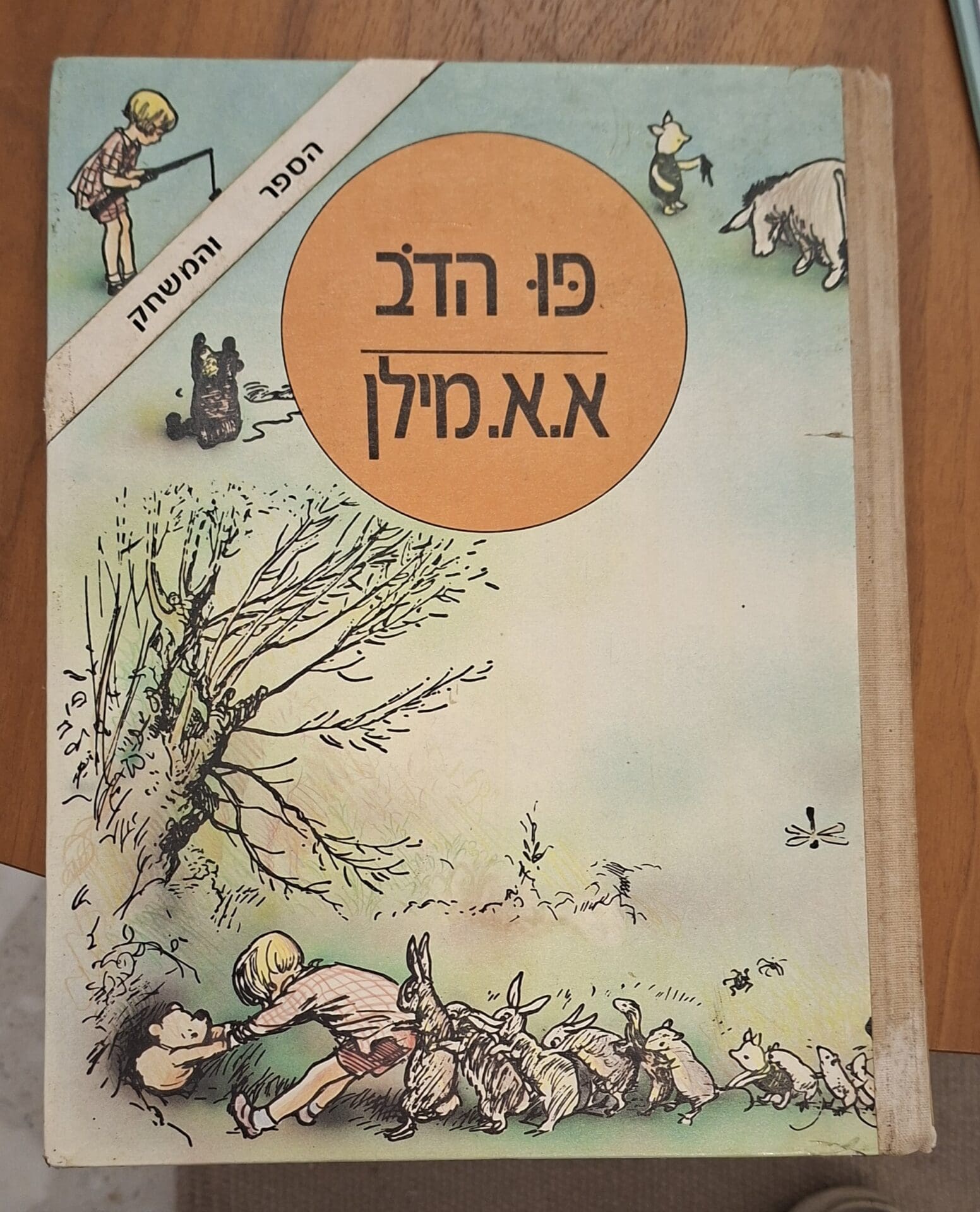
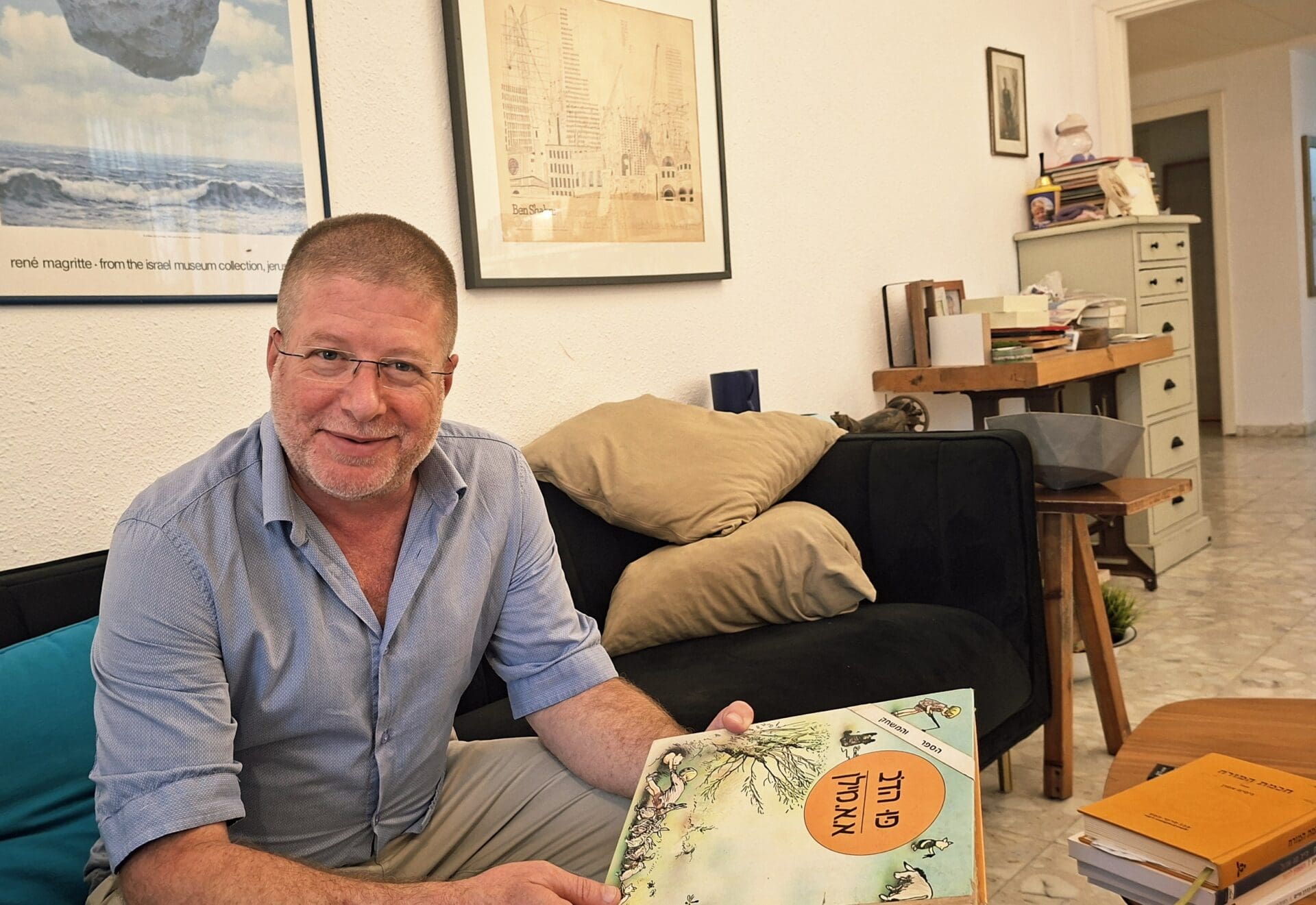
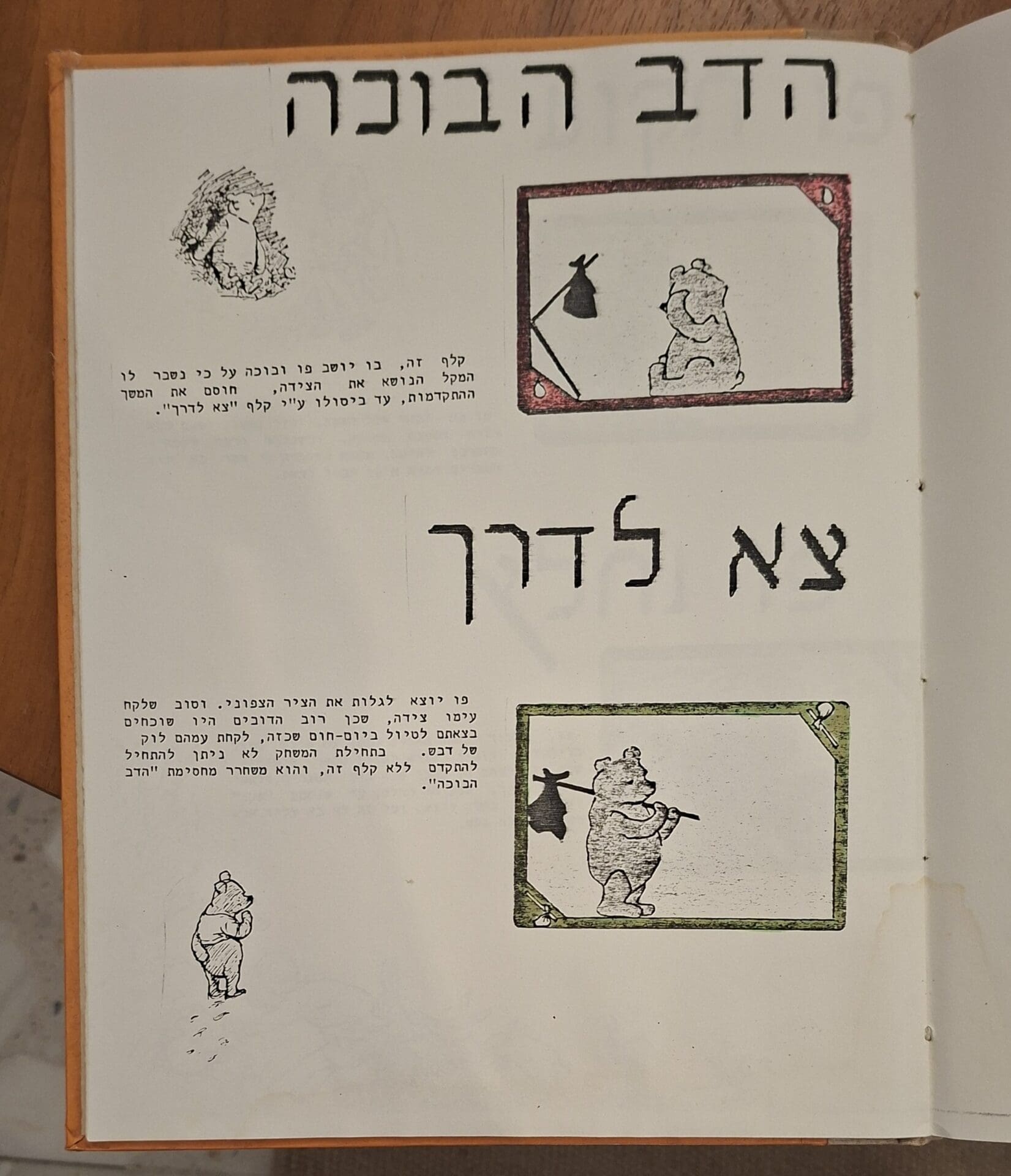
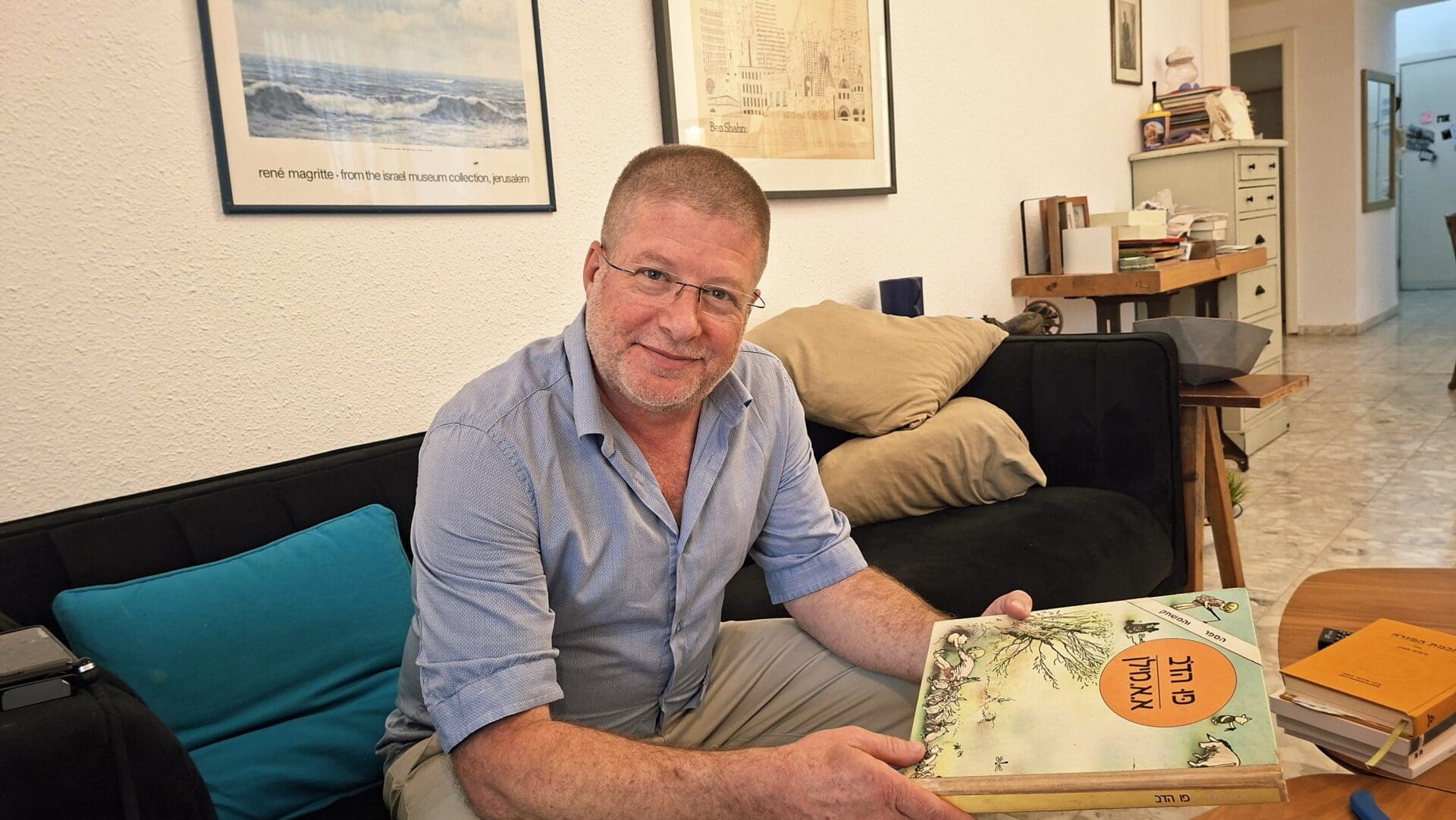
In his final thesis, Aviv chose to go beyond the boundaries of ordinary research. His goal was not only to prove his ability to demonstrate knowledge and meet academic requirements, but to test his ability and aptitude to investigate, delve deeper, ask questions, and formulate independent thought. As a child who loved to read, he came across Benjamin Hoff's book "The Tao of Po" (which had not yet been translated into Hebrew) and opened up to him the connection between the literary world and Eastern philosophy, and the combination of the work of E.A. Milne, which is much more than adventure stories about a friendly bear and his friends. But behind the innocence, humor, and apparent simplicity of the forest and its inhabitants lies an entire world of human relationships, insights, and ideas, inviting observation beyond the written words.
To these worlds, Aviv chose to add a third world: the world of game (in the GAME sense). And his final project, from 1987, was the development of three board games, which combine these worlds of game and Eastern wisdom, with the world of Winnie the Pooh.
What is the essence of the game? What can we learn through it? What did E.A. Milne want to tell us through Winnie the Pooh and all his friends? These questions give the book an additional dimension, going beyond familiarity with a beloved literary work and turning it into a process of exploration and understanding.
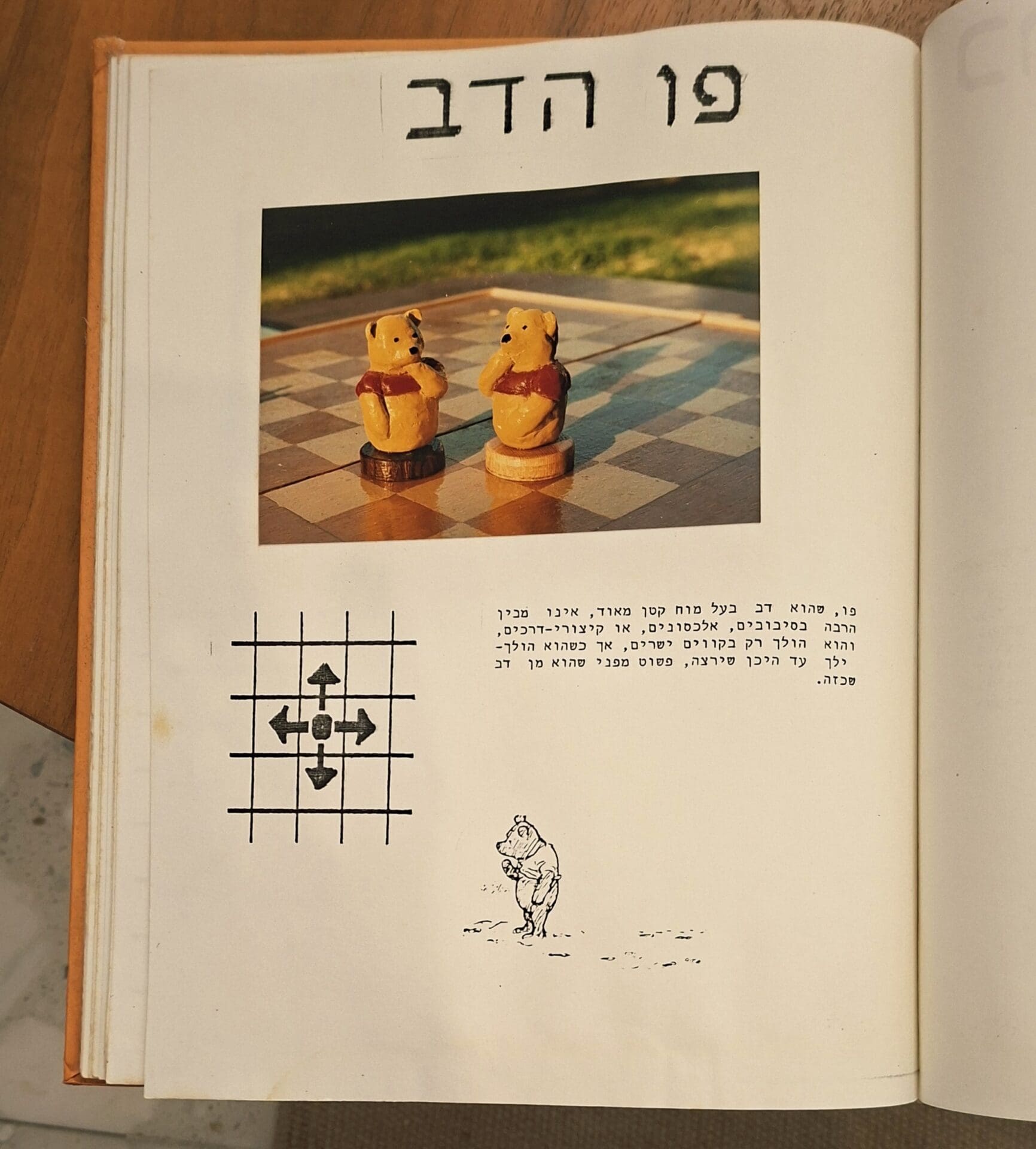
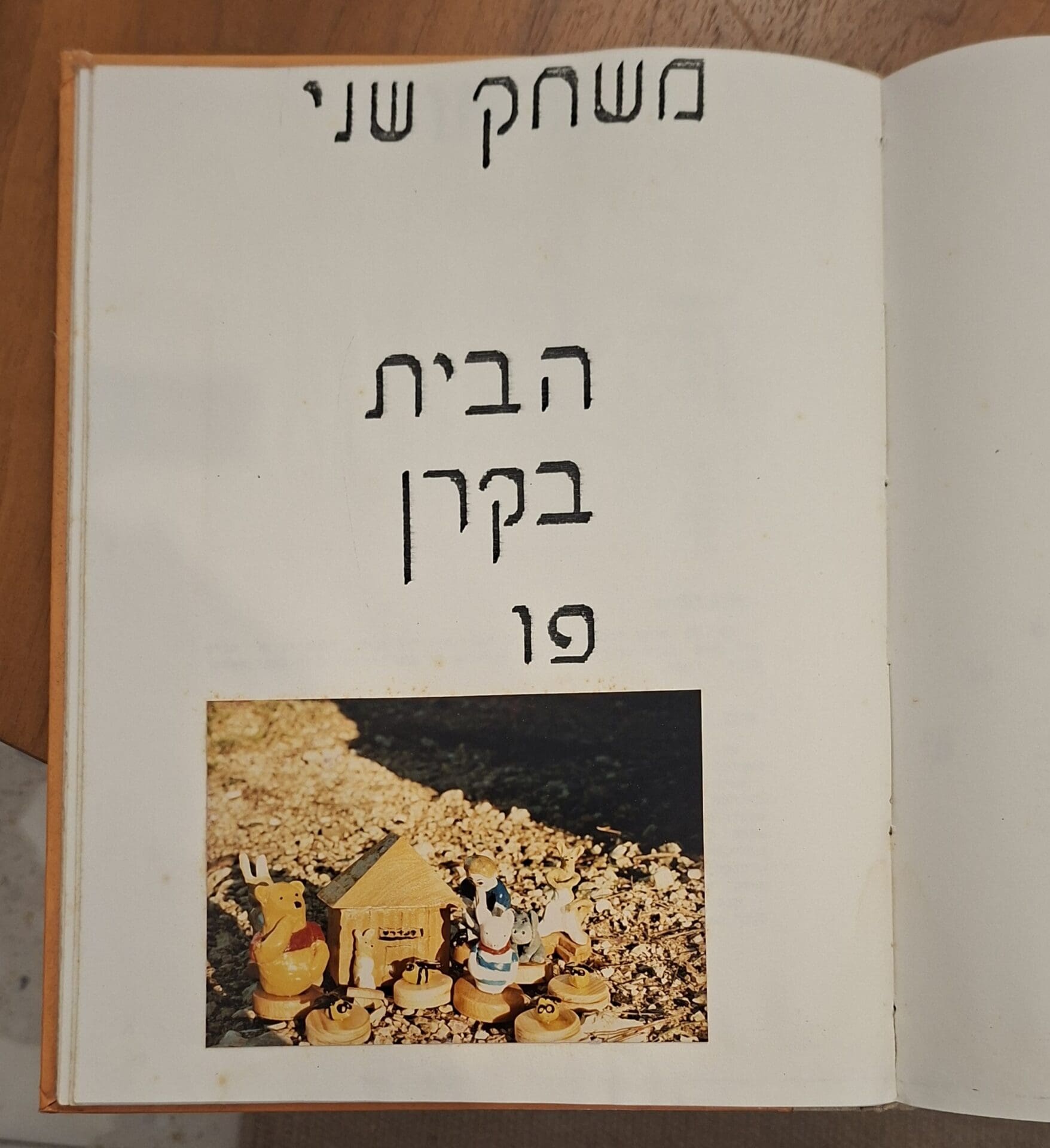
Play as a mirror to life itself
Aviv was not satisfied with a theoretical study of the concept of the game. To trace its essence, he read books and studies, and even had a long conversation, lasting hours, with Haim Shafir, the inventor of the game of Taki, and others. From the conversation and from studying the essence of the game, he sought to distill the idea that underlies the game, which he defined as "a functional system in which people act as if there were a better situation."
But Aviv's thinking didn't stop at the boundaries of the game. He expanded his insight to life itself, and came to the conclusion that the entire world is like a large stage, where every person plays a role and participates in an ongoing game.
From this also arose a personal, almost philosophical question, concerning the way a person chooses to live his life: Does he act out of habit, on automatic, drifting within the rules of the game without stopping and examining them, or is he aware of his path, knows where he is headed, and actively chooses his steps? In Aviv's view, this question is not reserved for moments of soul-searching. It deserves to be asked at any given moment.
Aviv wanted not only to tell about the world of Winnie the Pooh, but also to decipher some of the wisdom hidden in him.
It is precisely the choice of a world that at first glance seems childish and simple that allows us to discover the depth of things: the power of play to provoke thought, the ability of literature to teach about life, and the beauty of learning that stems from true curiosity.
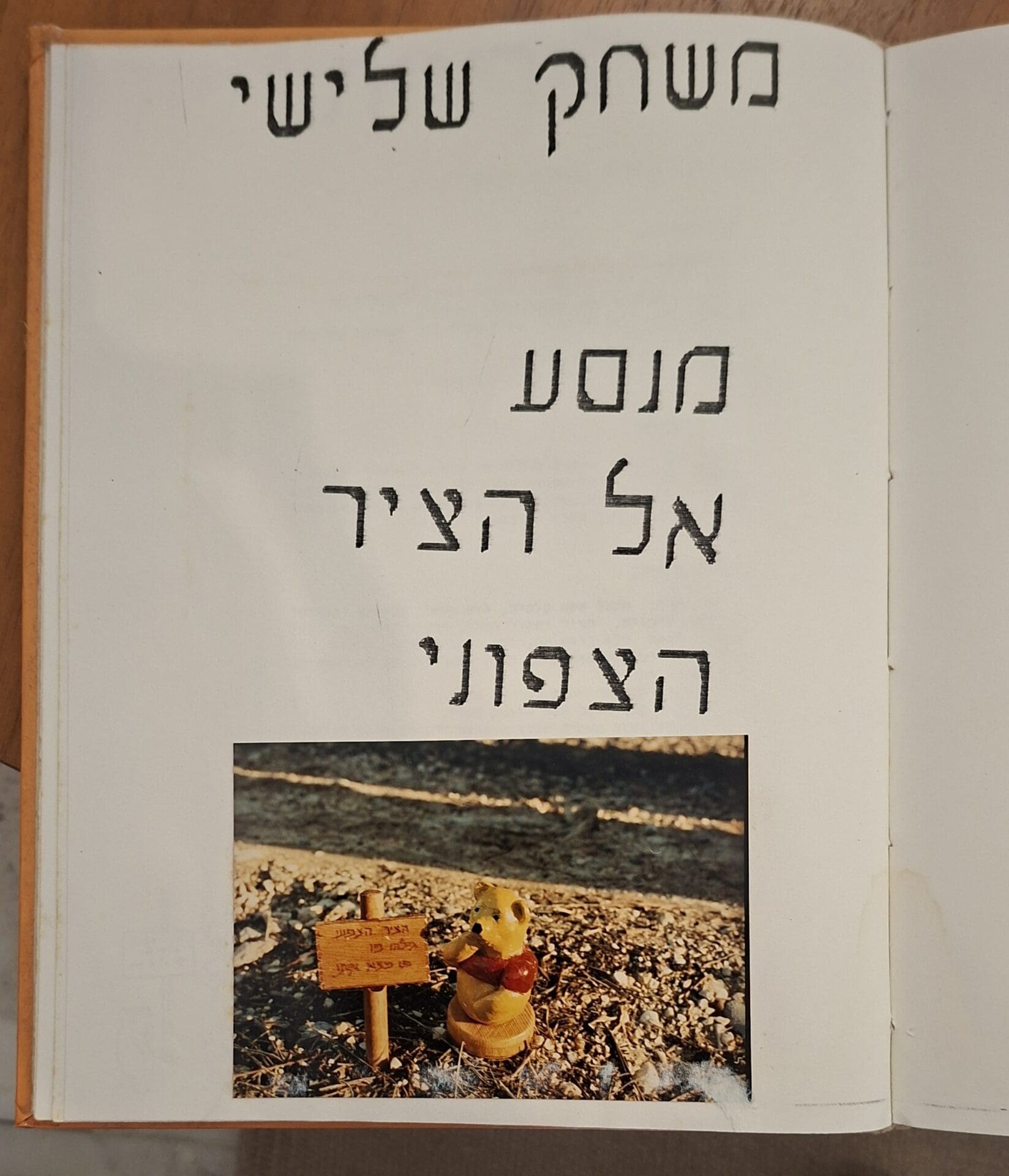
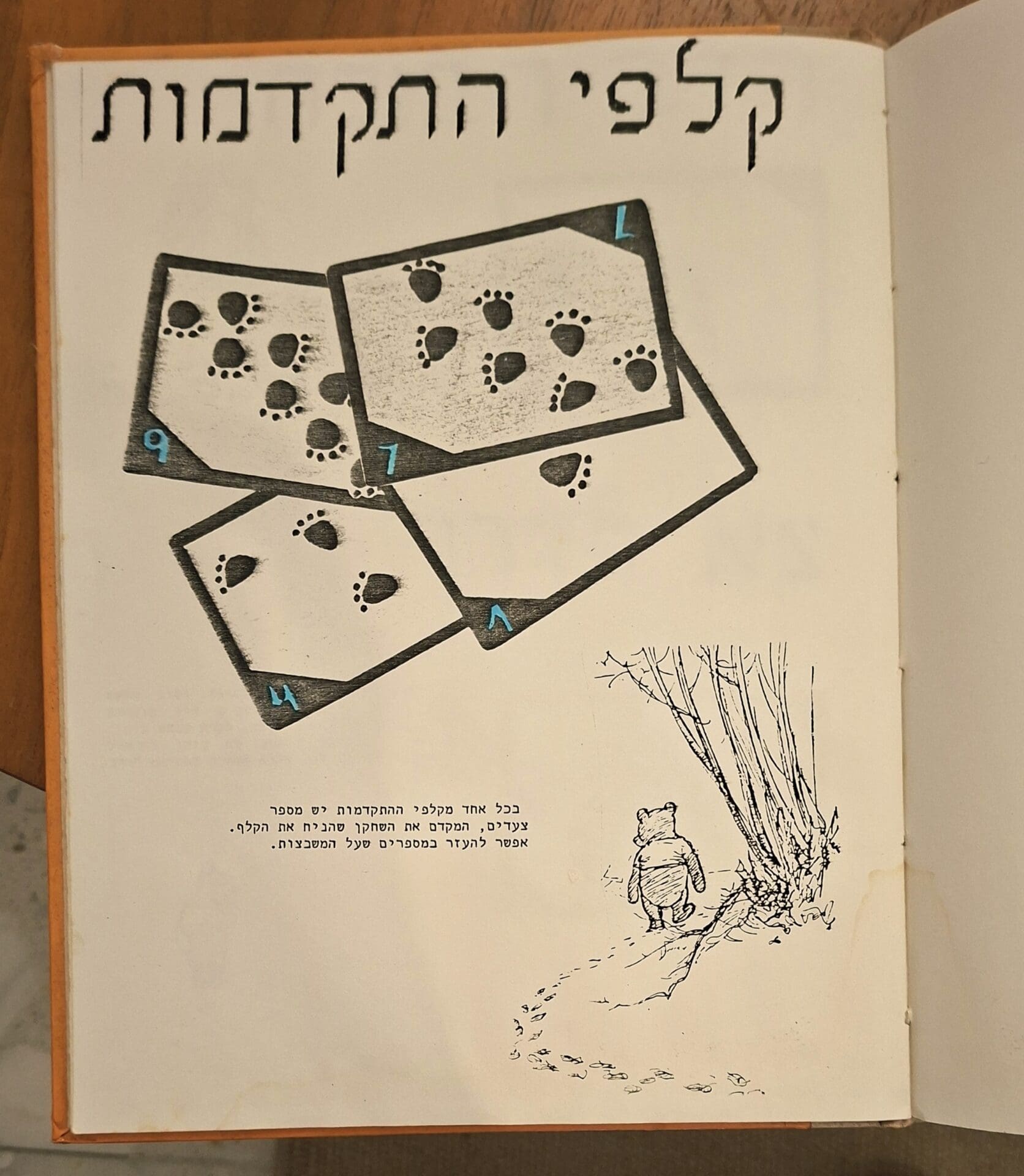
The transition to IDF uniform – an encounter with worlds: Military service as a window to cultures and people
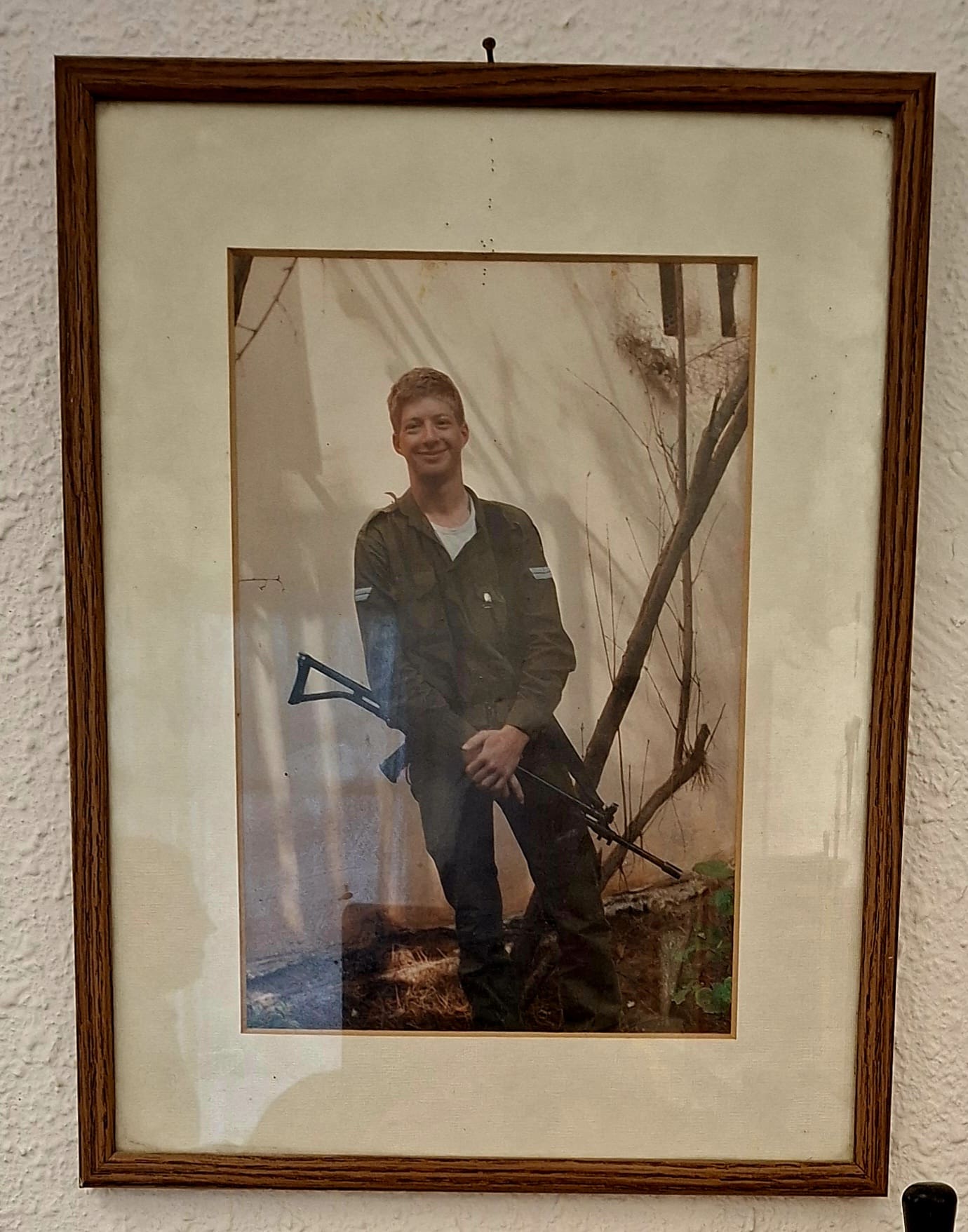
His military service also brought with it the same encounter between worlds. Since, unfortunately, he did not have a combat profile, Aviv joined as a youth guide from abroad, a role that opened a window for him to cultural and human spaces much broader than the boundaries of the kibbutz where he grew up.
As part of his role, he was exposed to foreign cultures, different lifestyles, and the diverse mosaic of Jewish communities around the world. This encounter allowed him to get to know the many faces of Jewish identity, the way in which Jews in different parts of the world carry with them tradition, memory, and belonging, and the interesting tension between local roots and the sense of belonging to a people and culture that crosses borders.
For a boy who chose at a young age to leave his parents' home and build a new community for himself, this was perhaps another link in a journey of getting to know people, inner worlds, and the different ways in which people define their place in the world.
Alongside the unconventional path he took, Ron's life had a professional direction that was evident to those around him at a very early stage. From a young age, it was clear to many that his future lay in the world of law. His verbal talent, well-developed ability to express himself, and his impressive ability to formulate ideas, conduct a conversation, and present an argument marked him as someone who might find his place in the practice of law.
But anyone who knows Aviv knows that his attraction to the human soul does not end within the boundaries of the legal profession. He often reads psychology books, is interested in the motives behind human behavior and the complex space between what people say and what they feel, want or have difficulty expressing.
Today, he does indeed incorporate insights and tools from the world of psychology into his work as a lawyer. This combination is no coincidence: it expresses a perception that behind every legal case there is a person, behind every dispute there is a story, and behind every position a person presents to the world, sometimes there is a whole system of emotions, fears, aspirations, and memories.
Looking back, here all the lines of his childhood and youth connect: the child who sought to choose a family and community for himself, the boy who encountered different cultures and people, and the man who chose a profession that allowed him to listen, understand, formulate, and struggle. Law provided him with the tools, psychology gave him another layer of understanding, and life itself provided the human raw materials from which his path is composed.
בין The Law of Conscience: The Lawyer Who Believes That Not Every Lawsuit Is a Victory
From 1992 to 1996, Ron Aviv studied at the Faculty of Law at the University of Haifa. In 1997, he received his certification as a lawyer, but in fact his path in the legal world began even earlier, when he was a young student and joined the office of attorney Ephraim Glasberg.
He first worked there as a student, later interned at the firm, and after receiving his certification, remained there as a lawyer. What began as a workplace turned over the years into a deep professional and personal relationship, into a real friendship, one that survived the changes that people go through in their lives. When Aviv decided to go his own way, the separation from Glasberg was emotional to the point of tears. Even today, years after they parted ways professionally, their friendship continues.
In 2004, Aviv founded an independent law firm. He likes to joke about the true meaning of professional independence, defining it as "the freedom to choose which eighteen hours a day to work." In other words, in his view, the independent is often "the servant of a thousand masters."
Behind this humor lies a sober understanding of the price of professional freedom. He defines law as the most interesting profession in the world, mainly because no two days are the same. Every morning he may find himself in a different human situation, facing different people, in different kinds of disputes, and in circumstances that could not have been planned in advance.
That is why his professional choices do not necessarily follow the expected path. Aviv does not practice family law and he does not practice criminal law. His areas of practice are influenced, he says, to a large extent by the kibbutz education he grew up on, an education that centered on values of sharing, social responsibility and a certain degree of reservation, and by the pursuit of money for its own sake. Working, but not just to earn; making a living, but not at the cost of giving up one's inner compass. One of the areas in which he deals a lot is defamation, an area that has become a particularly charged space in Israeli society in recent years.
It is here that a less conventional side of his professional approach is revealed: he often tries to convince people not to file a lawsuit. He explains to potential clients that not every insult requires legal proceedings, not every offensive statement justifies years of litigation, and not every violation of dignity will be remedied by a ruling. Sometimes, he believes, it is better to seek other solutions, ones that will save the parties time, money, and mental energy. He even tells his clients honestly that in certain cases the main beneficiary of the lawsuit will be the lawyer himself, through the fees that will be paid to him. There is no small professional irony in this: a lawyer who recommends that a client not sue, even when he could have conducted legal proceedings for him and profited from it. He is "shooting himself in the foot," in the economic sense of the expression, but, as he himself testifies, thanks to this approach he sleeps well at night.
His work on defamation does not end within the walls of the courtroom. Aviv lectures extensively on the subject, seeking to raise awareness of the law, as well as the unfathomable gap between today's media and public reality and the reality of life as it was when this law was created, over sixty years ago, which requires a reexamination of some of its outdated provisions, which have hardly been amended since then.
But his observation of the situation is not only professional, in his hat as a lawyer, but also as a citizen concerned about the culture of discourse in Israel, and especially the way in which public figures express themselves. And he is outraged by what he calls "the sewage that flows from the mouths of public figures," a sharp expression that illustrates the extent of his frustration with public language.
In his view, the culture of speech is deteriorating, literally from one end to the other. Words, which were supposed to be used as a tool for discussion, persuasion, and dealing with disputes, are often turned into weapons. For those who deal with defamation, this is not just a legal or academic issue. It is a question concerning the quality of life together, the ability to conduct an argument without erasing the dignity of the other, and the status of language in a society that is finding it increasingly difficult to listen.

Love, family and Haifa: the place he chose to stay
Alongside the lawyer, the lecturer, and the man who spends a significant part of his life trying to resolve other people's conflicts, Ron's personal story also unfolds, about love, family, separations, and the possibility of starting over.
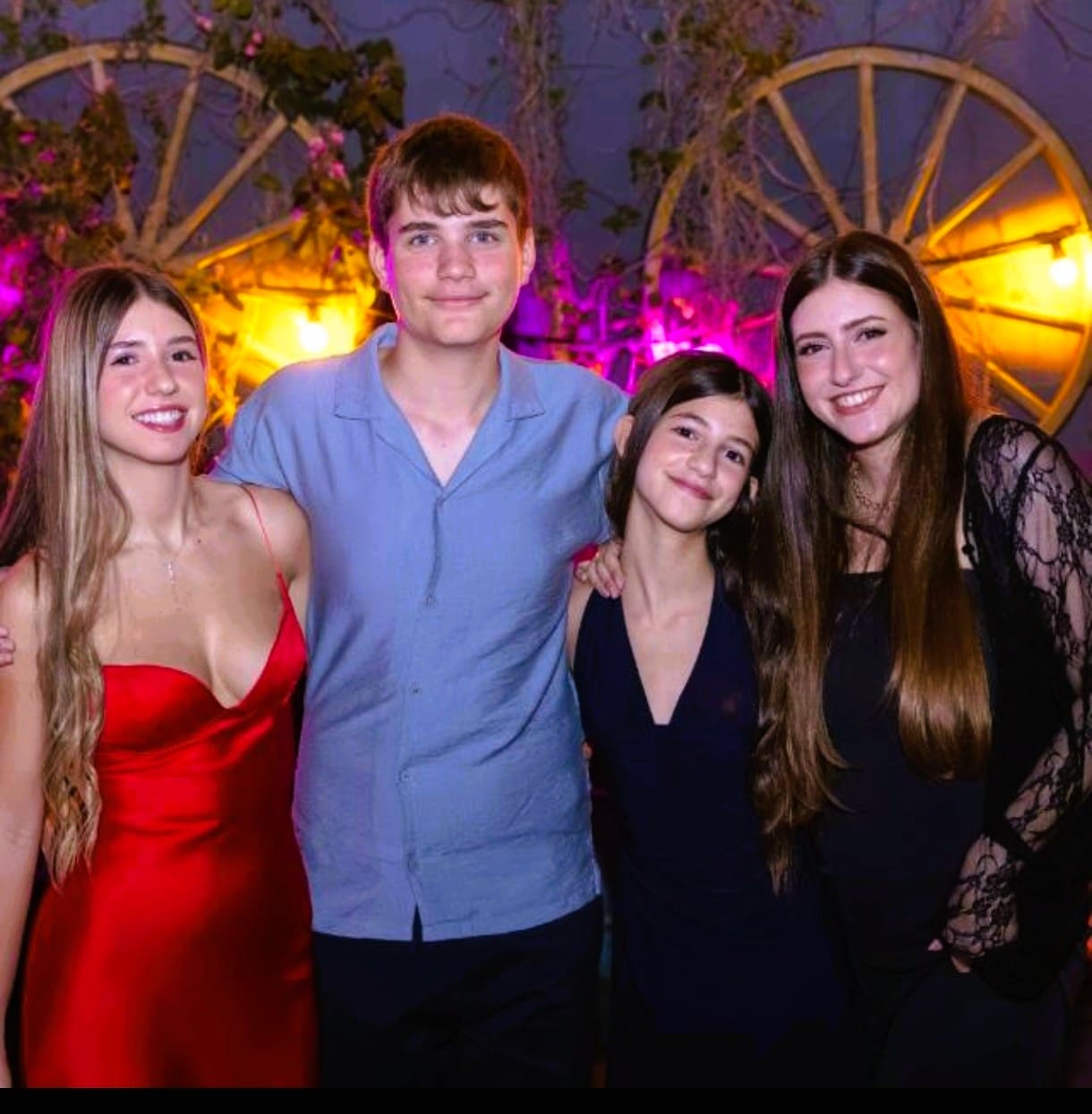
In 1997, he married for the first time. During his years of marriage, he had four children, each of whom is currently at a different stage in their lives. His eldest daughter, 26, has long since graduated from Tel Aviv University with a degree in law and accounting. His second daughter, 22, served in the IDF as a paramedic in an elite unit, and after her discharge went on the "Big Trip." His two youngest children are still students: the son is in the 10th grade at the Municipal High School, while the youngest daughter is in the 8th grade at the middle school.
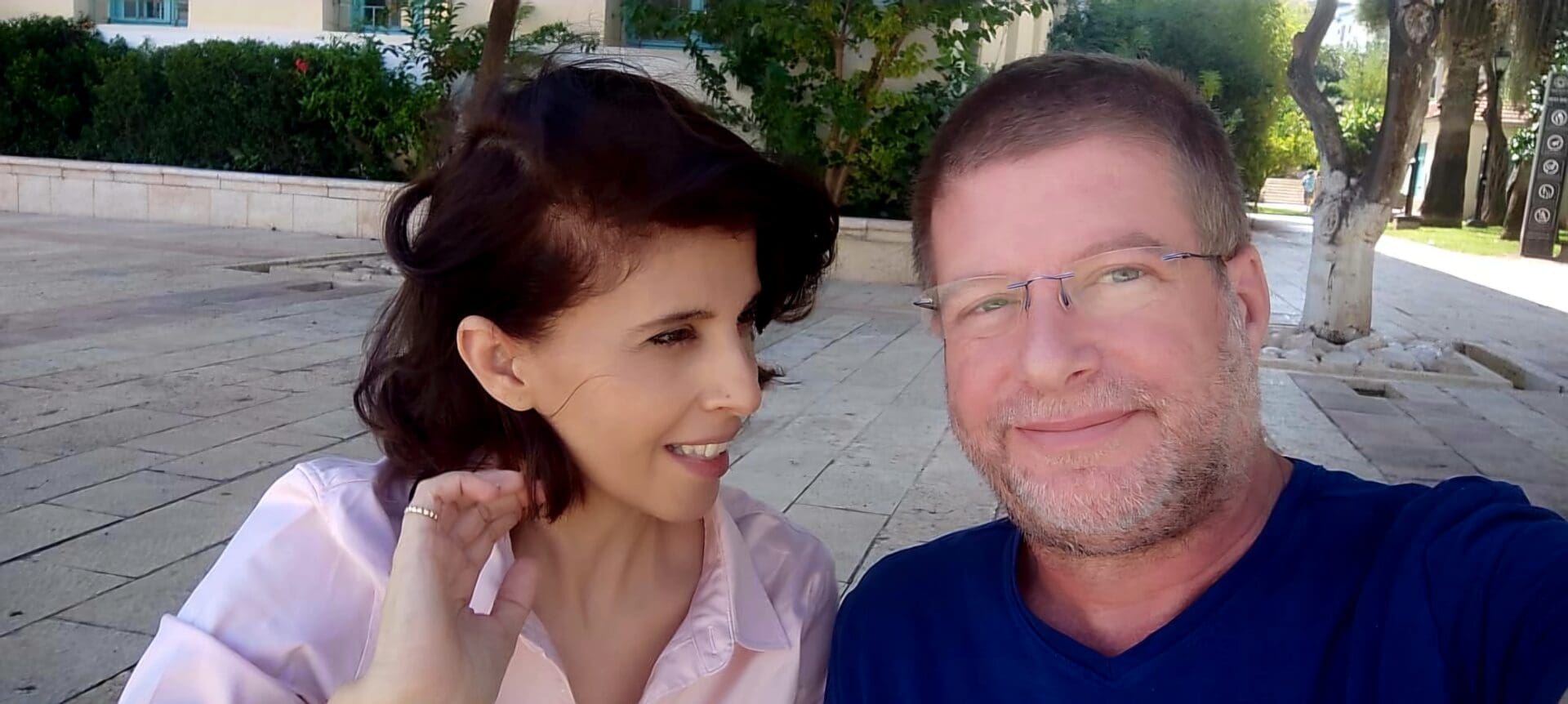
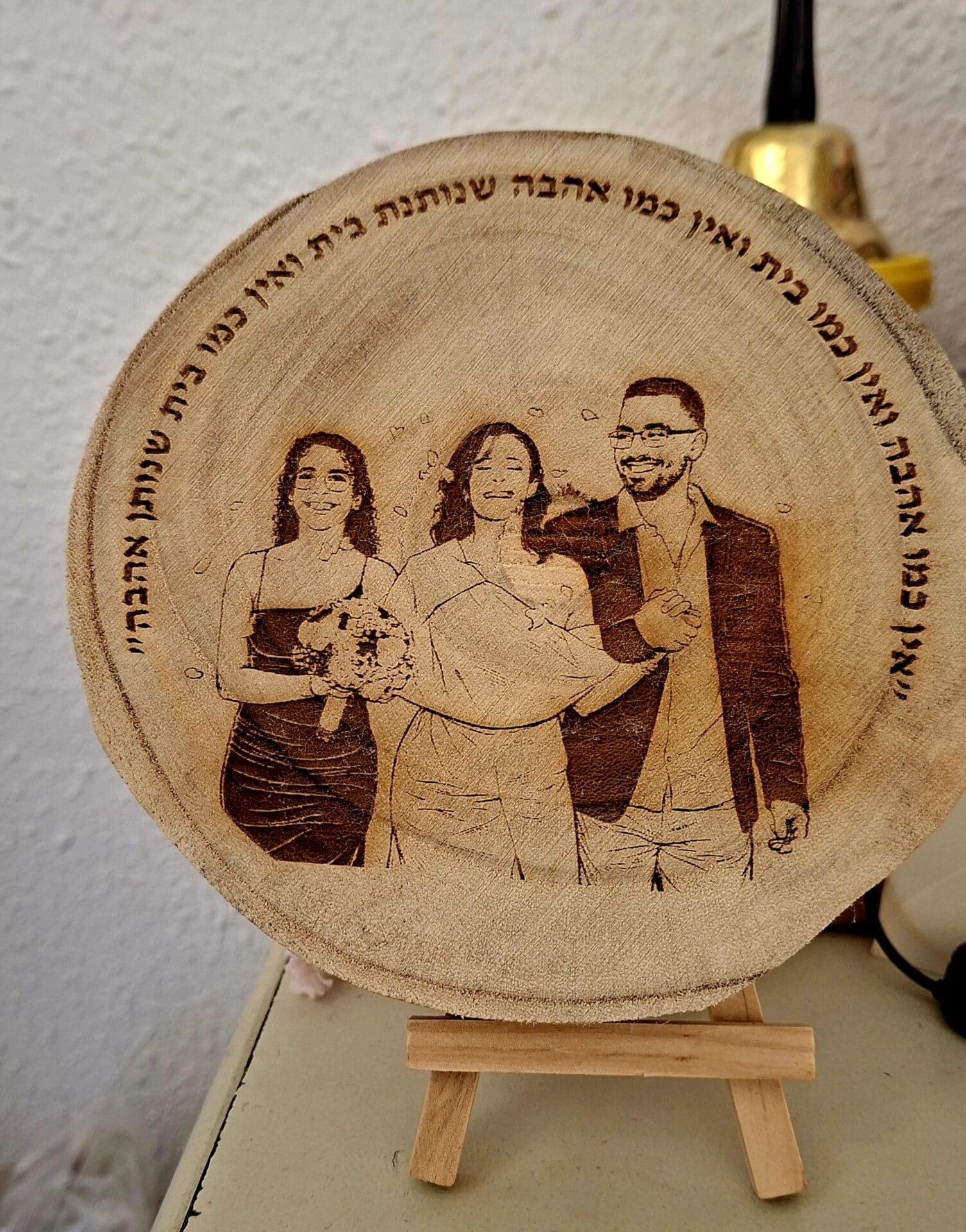
In 2020, after more than two decades of living together, his marriage ended. Six years after his divorce, on October 27, 2025, he remarried to Efrat, an art therapist and mother of two adult children, a son and a daughter.
Efrat's professional story is also rooted in the world of therapy and creativity: she studied at David Yellin College, the Academic College of Education, Ariel University, and the Kibbutzim Seminary, and completed an MA in art therapy. Her professional world, which seeks to give people the opportunity to express themselves beyond words, meets in an interesting way with Ron's world, whose work as a lawyer relies heavily on words, interpretation, and understanding the person behind them.
Efrat moved from Kfar Saba to Haifa following their life together, and today she lives with Ron in Carmel and runs an art therapy clinic next to their apartment. Efrat, who came here from Kfar Saba following their love, is indeed in love with Ron Aviv, but the city of Haifa itself has also managed to capture her heart.
Between the individual and the legal system – the profession as a person
Over the years, Aviv has worked in a variety of areas, from civil disputes and financial disputes to defamation, protection of privacy and struggles of public significance. In some cases, the proceedings touched on a particularly sensitive question: how does a person protect their good name when they feel they have been harmed, and what happens when the individual's right to know conflicts with the public's right to know. These are questions that do not always have simple answers and dealing with them requires distinguishing between facts and claims, between personal harm and public interest, and between a person's sense of justice and the way the law defines it.
Alongside his work as a lawyer, Aviv also served as a member of the Haifa District Disciplinary Tribunal, at the Bar Association. In this role, he sat on the other side of the hearing table, as part of a system that examines the professional conduct of lawyers. The transition between representing clients and participating in a disciplinary proceeding highlights the many facets of the profession: not only a struggle for the cause of a particular person, but also responsibility for the rules on which the entire system rests.
Even in disputes of a public nature, the connection between one's work and the life of the city in which one operates is evident. In a representation concerning the termination of employment of a former senior official in the Haifa municipality, for example, questions of employment rights and proper procedures intersected with the municipal system and the public sphere. Here, the law became a means by which an institution's conduct toward an individual is examined.
"Live here": The trial enters the news system
Aviv's connection to Haifa does not only exist through the clients he represents. A significant part of his public presence occurs within the framework of "Live Here – The News Corporation of Haifa and the Surrounding Area", A local media outlet that covers urban life in Haifa and the region. Aviv serves as the legal advisor for "Hai Peh," and at the same time publishes opinion and commentary columns on the site. This combination gives his role a dimension that goes beyond the usual legal work of behind-the-scenes consulting.
A media legal advisor typically works where journalism meets the boundaries of the law. He must deal with questions regarding advertising, defamation, privacy, copyright, sources of information, editorial responsibility, and legal risks arising from advertising. In Aviv's case, this field is no stranger to him. He comes to it from a legal practice where defamation, privacy, and reputation are already a central part of his work. In this sense, his role at Haifa naturally connects to his legal expertise.
As mentioned, the relationship with "Hai Fe" does not end with legal advice. Aviv also writes on the site. In doing so, he moves from the position of someone who advises a media outlet on what it is allowed to publish, to the position of someone who uses the journalistic platform himself to write about public reality.
This transition is significant. The legal advisor is usually behind the scenes. He examines sensitive texts before they are published, warns of legal exposure, analyzes risks and helps the system make decisions. The writer, on the other hand, is at the forefront. He presents a position, interprets events and participates in the public conversation. For Aviv, both roles exist side by side.
From parking to the question of power
The columns that Aviv published in "Hai Pa" allow us to get to know another side of his work. In "Parking, Interests - and You," he dealt with the parking policy of the Haifa Municipality, a topic that at first glance seems technical and everyday, but quickly becomes a question of interests, municipal policy, and the way in which decisions by a public authority affect the lives of residents.
In "Who is Not Like Me," he moved away from the city hall and the parking lot and moved on to a broader social question. He dealt with the human tendency to judge others, distinguishing between things a person chooses and traits and circumstances beyond his control, and in the process addressed racism and discrimination based on nationality, origin, and religion. The column is not a neutral legal article but rather a personal opinion text, and therefore its importance lies precisely in the fact that it allows us to get to know the positions that Aviv chooses to voice when he is not speaking on behalf of a client.
In 2026, Aviv appeared in coverage of a lawyers' protest in Haifa against violence. In his remarks, he distinguished between violence coming from outside and violence occurring within Israeli society, and expressed concern about violence, humiliation, and exclusion of Arab citizens. He also criticized situations in which police officers, he said, might act out of a sense of unlimited power.
Here he no longer appears simply as a lawyer explaining his client's position. He speaks on his own behalf, within a public event, and places the trial within a broader conversation about society, power, equality, and responsibility.
When a pianist plays, sometimes loneliness turns into human connection
Attorney Ron Aviv's favorite song is Billy Joel's 1973 song, Piano Man. Joel places the listener in a small American bar, among people carrying with them dreams that have been rejected, disappointments and hopes that have not yet been extinguished. They ask the pianist to play, but there is a sense that they are asking for something more: to feel for a moment that someone sees them, hears them and connects them.
The choice of poem illuminates Aviv's worldview, which seeks to center on what is sometimes lost in an era of incessant connections: not the number of friends, but the quality of friendships; not the encounter itself, but what happens within it. Are we able to truly listen, to talk about doubts and disappointments, and to allow the person in front of us to be more than the role they play and the image they seek to maintain?
There is something almost New York-esque about the scene Joel paints. Ordinary people, in an ordinary place, each with a story that deserves to be heard. The pianist doesn't rescue them from their loneliness, but gives them a momentary sense of togetherness. It's understandable that this is the secret of the song's power for Aviv, who seeks to expand this moment beyond the confines of the bar.
For him, deep encounters are not a luxury for leisure time, but a part of life that truly matters. In a world that celebrates efficiency, action, and achievements, there is value in conversation that is not measured by results and in friendship that does not require us to prove anything. It is precisely when roles and achievements are pushed aside that a different kind of acquaintance is possible, both with others and with ourselves.
It turns out that Piano Man is more than just a favorite song for Aviv. It gives voice to the idea that a person needs not only companionship, but also someone by their side to put down their armor for a moment. Someone who will listen even when there are no achievements to tell, and who will stay in the conversation even when it becomes complex.
At the end of the song, the people return to their lives and the pianist continues to play. Reality may not have changed, but something has happened between them. Sometimes, the difference between an evening that passes and an encounter that stays with us is The feeling that someone was really there. That is, this is not just one of the pleasures of life, but One of the things that makes them worth living.

The sound he's been waiting for all these years: Ron Aviv and the dream he chose to fulfill
Between Attorney Ron Aviv's professional pursuits and his demanding daily routine, he has reserved room for a small dream, one that he may have waited patiently for many years until his time came.
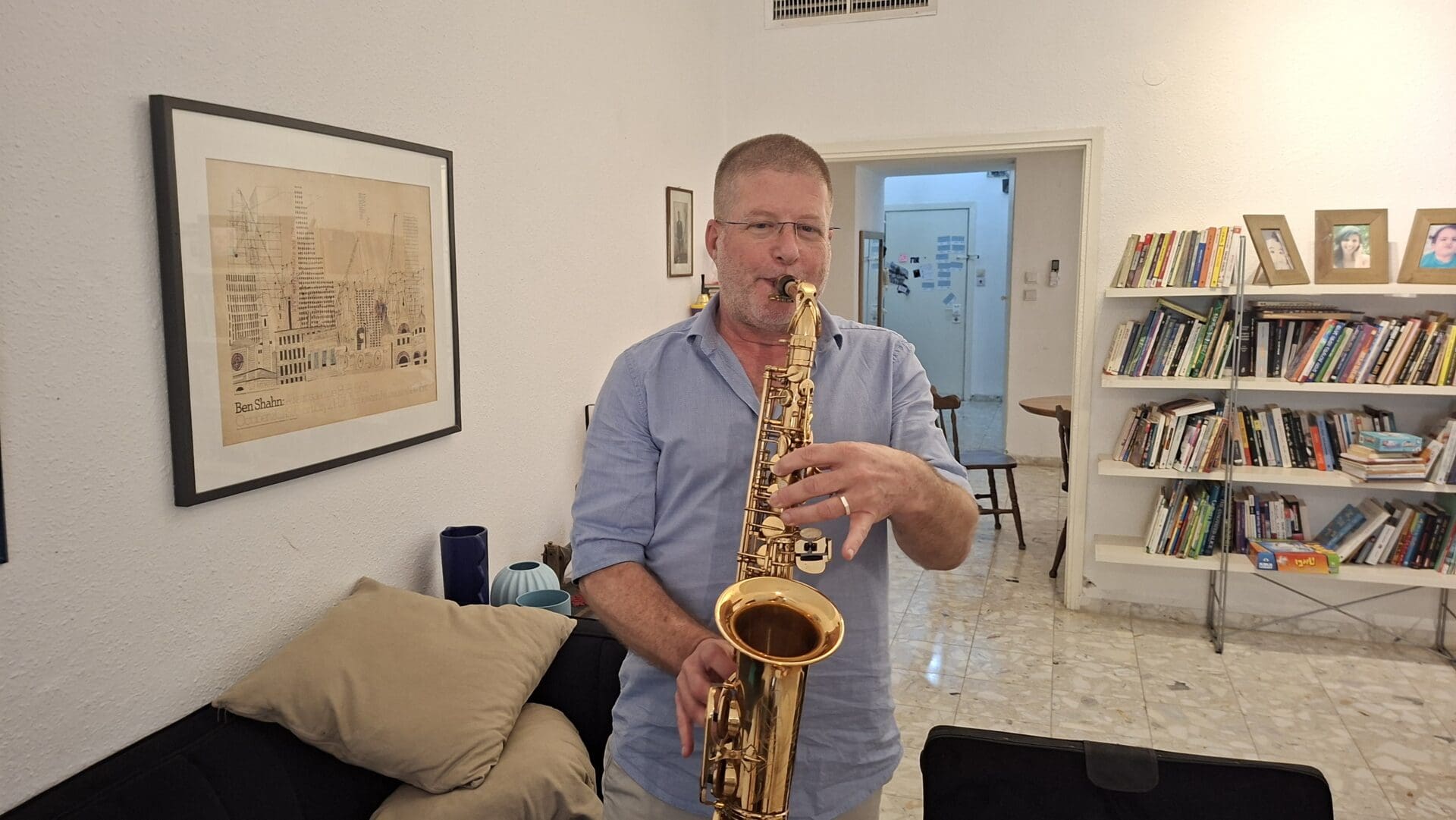
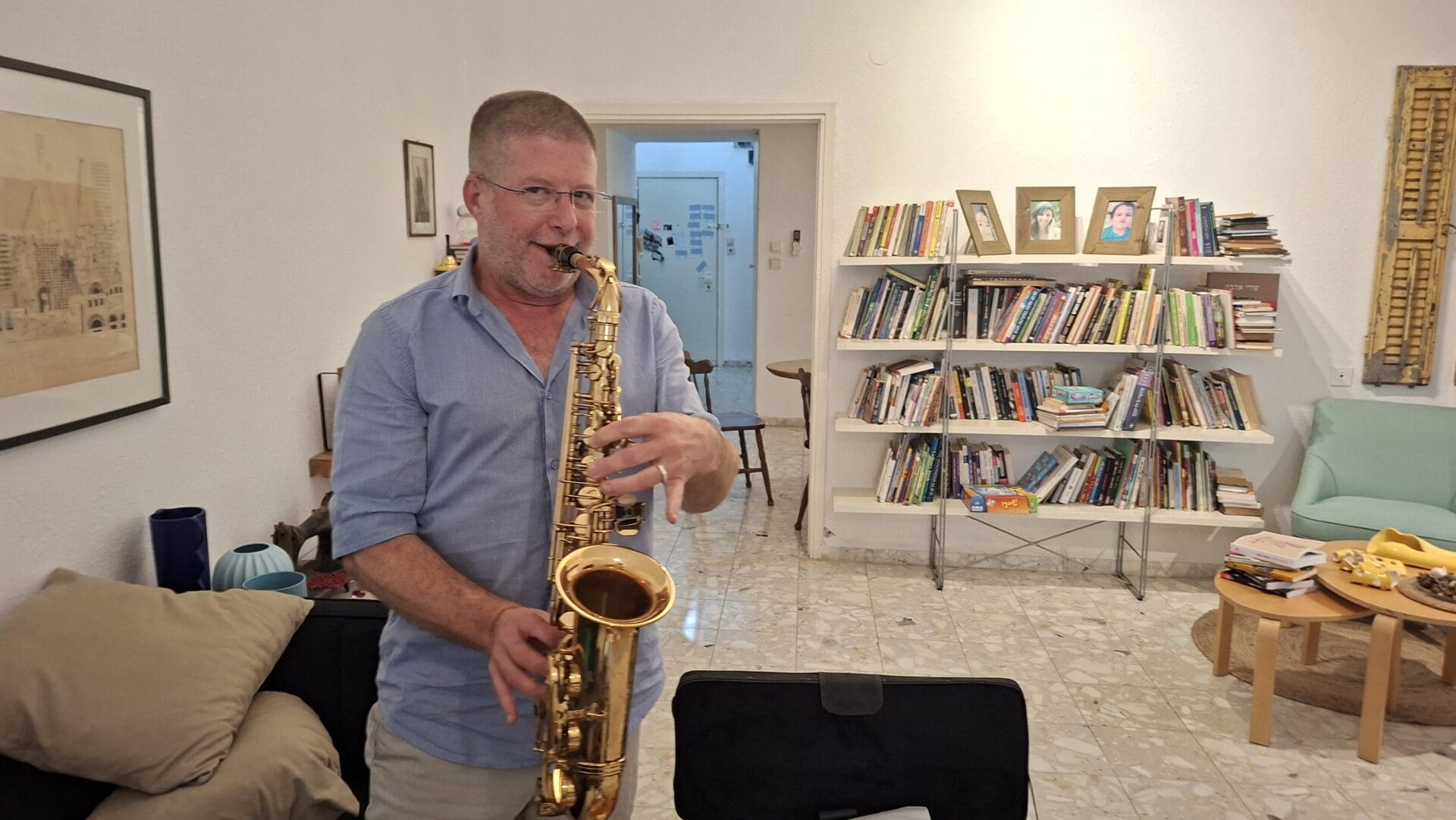
Now, at his current age, he chooses to give it a real place: to learn to play the saxophone, an instrument that arouses a special attraction in him and which he describes simply and enthusiastically as "a really beautiful instrument." He is fulfilling this dream at the "Rock City Music School" in Haifa, located in a building next to the Horev Center, on Mount Carmel. The place offers lessons in a variety of musical instruments and subjects, including drums, guitars, bass guitar, keyboards and piano, ukulele, singing, writing and composing, and musical production.
Of all the options, Ron chosesaxophone, an instrument whose musical history is as fascinating as its sound.
Originally intended to be integrated into classical brass bands and marching bands, the saxophone gained its central place in world musical culture largely thanks to jazz, which made it one of its most recognizable and beloved voices. Over the years, it has spread its wings into many styles, from light music, jazz and pop to punk and progressive rock, and has even found its place in the works of French composers who introduced it to the world of classical music.
Ron comes to class once a week, learns to get to know the instrument and plays mostly by ear. The truth is that he still doesn't dedicate the time to practice as much as his teacher would like, and perhaps not even the time needed to progress at the desired pace.
Nevertheless, it seems that this is precisely where part of the story's charm lies. Not every dream has to become a demanding task, and not every love needs measures of achievement and excellence. Sometimes it's enough to decide to make room for it in your life, to come once a week, put the saxophone to your lips and try to extract another sound from it. For Ron, this is perhaps one of the most beautiful types of freedom: the possibility, even in the middle of life and in the midst of a routine, to return to a childhood dream and start playing it.
The Rock That Floats Above Reality – The Painting That Aviv Chose to Live With
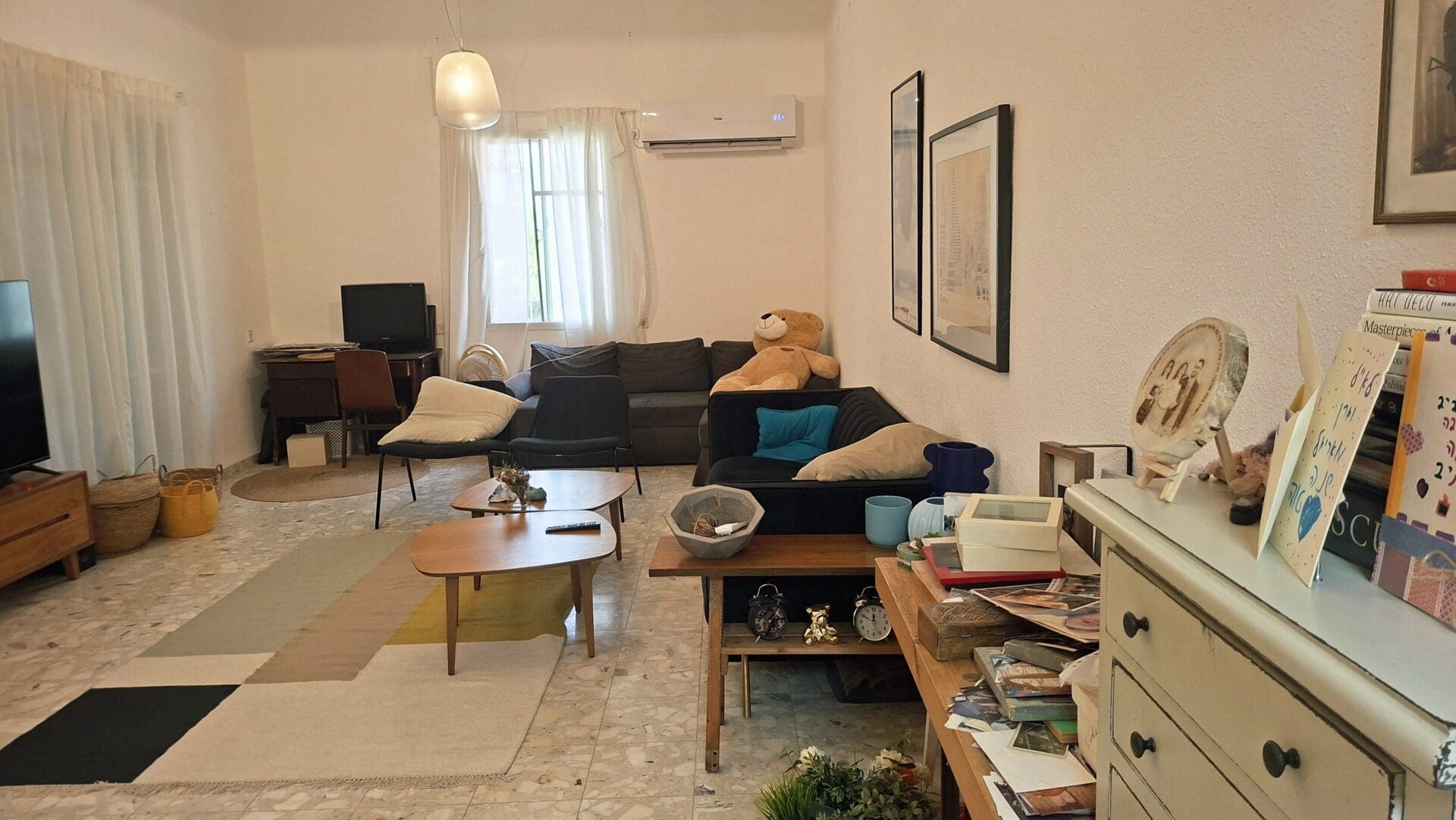
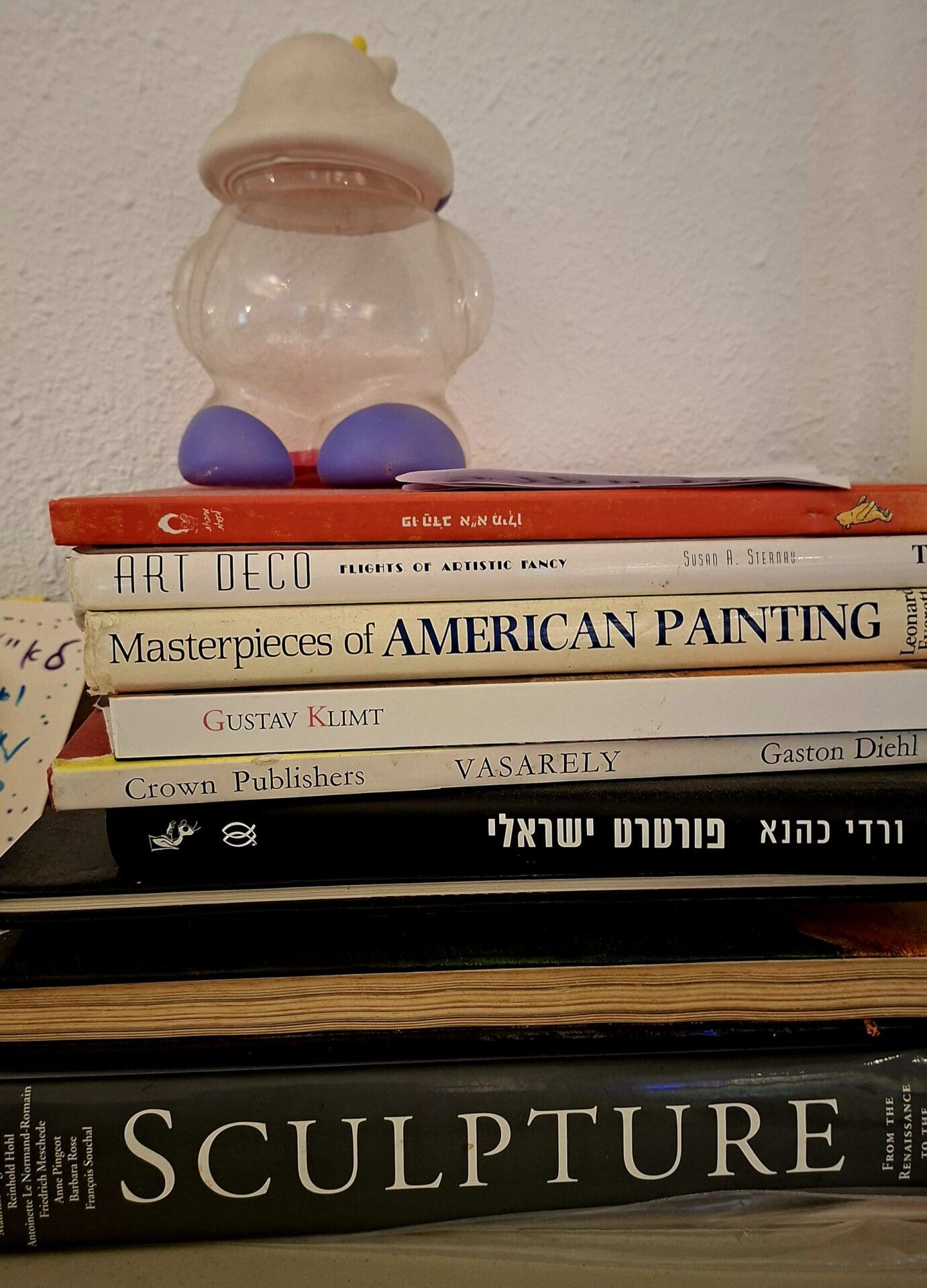
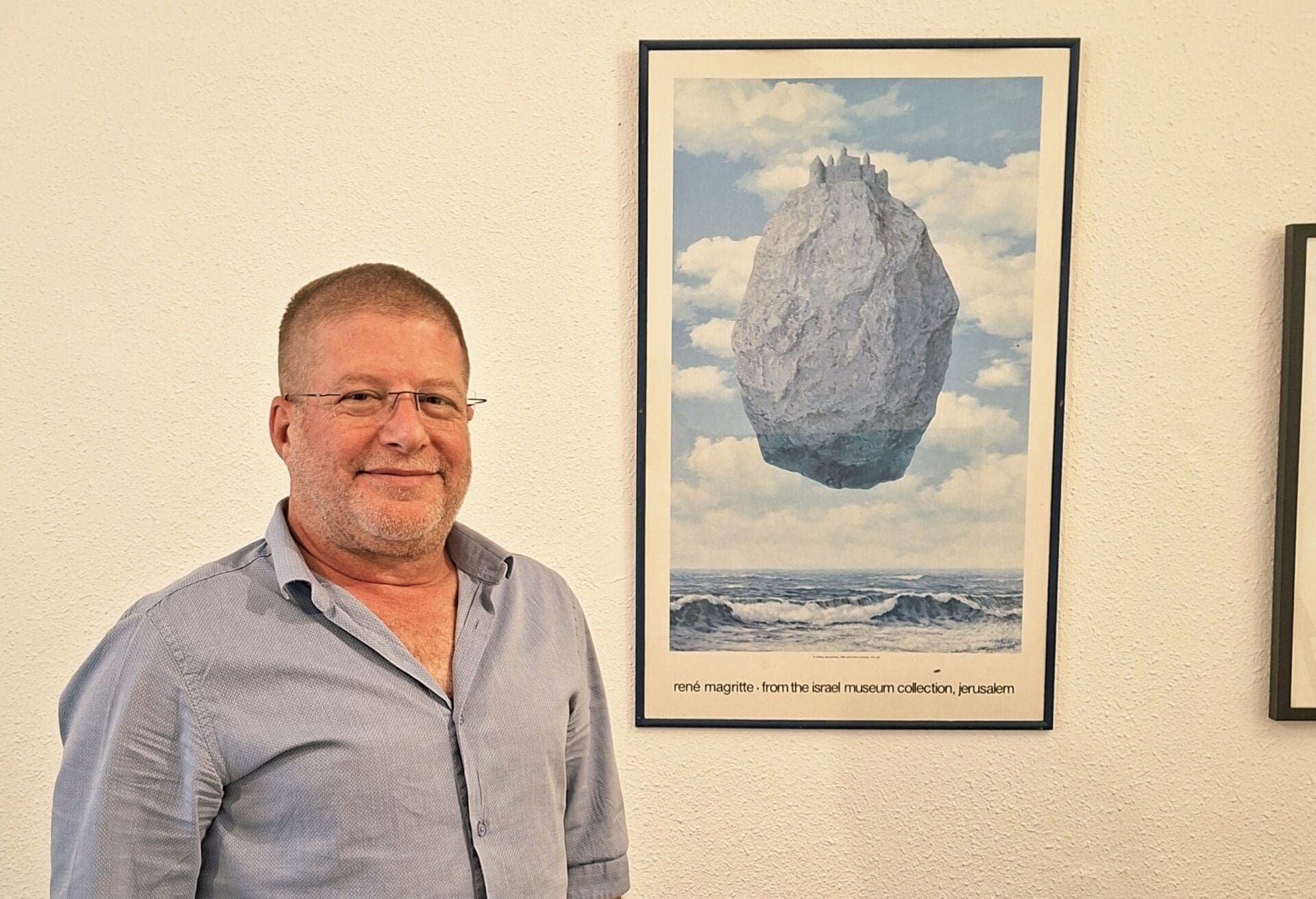
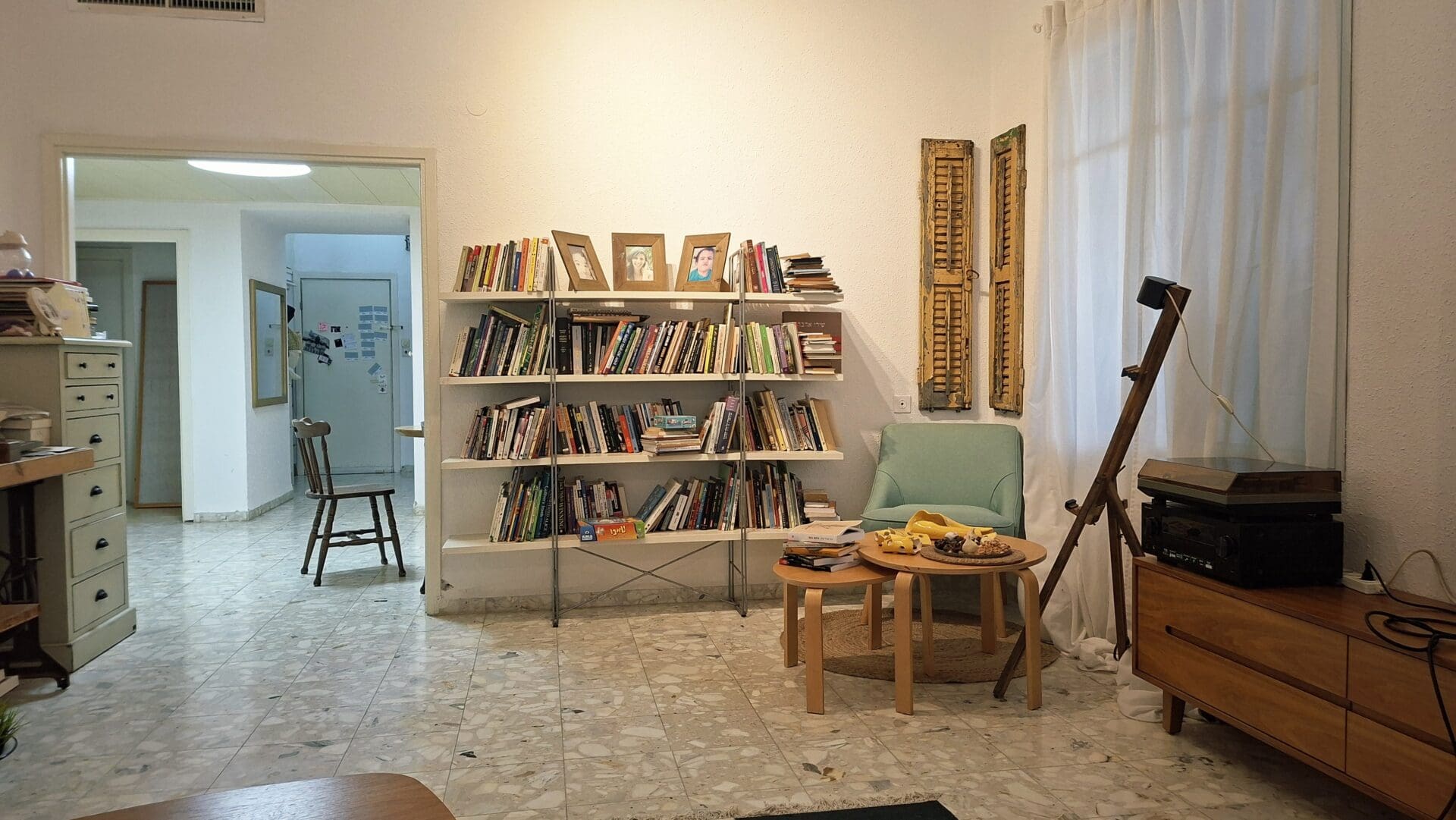
In the living room of Attorney Ron Aviv's home hangs a framed poster of "The Castle of the Pyrenees" by René Magritte, a painting in which a huge rock, with a castle on top, floats above the sea as if the laws of gravity were merely a recommendation.
It is difficult to think of a more appropriate image for someone who seeks to find in the world not only what is visible, but also what is hidden behind it.
Magritte, one of the great surrealists, does not obscure reality to make it mysterious; he paints it with almost legal clarity, then places within it a single fact that does not fit with any logic. The rock remains a rock, the sea is a sea, and the castle stands in its place, but the connection between them disrupts the familiar order and leaves the viewer faced with a question that has no easy answer: To what extent can we trust what we think we know?
Is the rock hope, loneliness, or threat? These three possibilities can coexist.
Hope: The rock rises above a stormy sea, as if resisting the forces that threaten it.
loneliness: It is cut off from the earth and from any visible possibility of reaching it.
threat: The vast mass hangs above the sea, and in a sense also above the viewer's head. It may appear as an unstable structure, although it is painted calmly.
There is no need to choose one option. The power of painting lies in the fact that it allows us to feel admiration and fear at the same time. Beauty does not eliminate anxiety, and anxiety does not eliminate beauty.
The painting, which is in the Israel Museum collection, is particularly close to Aviv's heart. Magritte's rock is not just a rock that doesn't fall. It is an entire world that refuses to behave as we expect it to.
Its presence in the living room needs no explanation, and that is precisely why it arouses curiosity. Since there are works that a person hangs on the wall to decorate his home, and there are those that he wants to live among, as if their very presence reminds him that reality, even when it seems solid and orderly, may at any moment rise above itself.
Crafts and the Soul: The Art That Begins with Forgotten Objects
Alongside the worlds of culture, spirituality, literature, and philosophy, in which Ron Aviv often wanders, there is also a practical, productive, and incredibly skilled side to him.
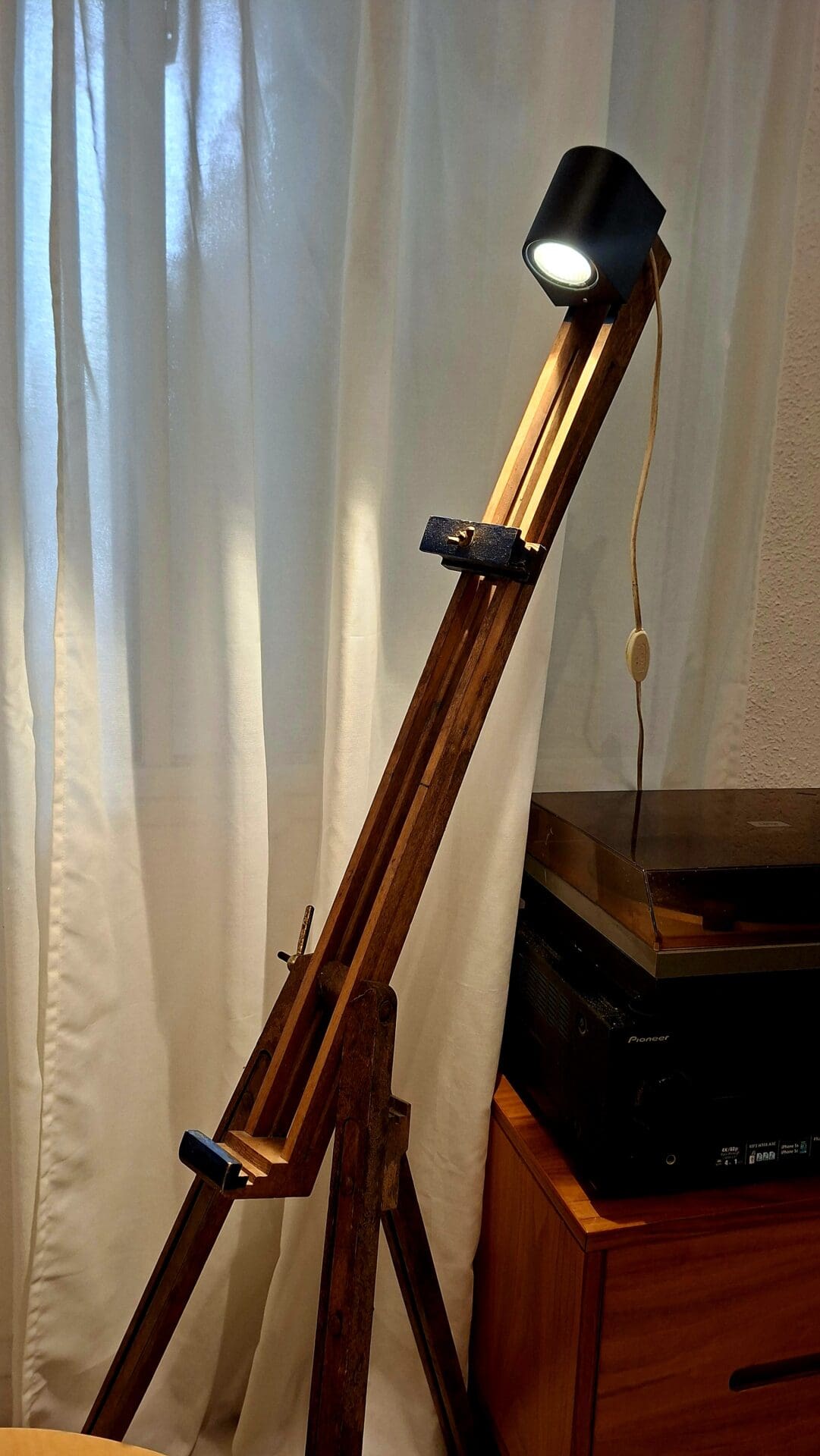
Ron is a talented "handyman," a man of crafts, whose many tools are not just a collection of repair and maintenance tools, but almost an extension of his curiosity and natural inclination to create. He loves to disassemble, repair, repurpose, and give objects new life. In his view, an old object is not necessarily something that has lost its value. Sometimes it is precisely the time that has left its mark on a particular item that makes it interesting.
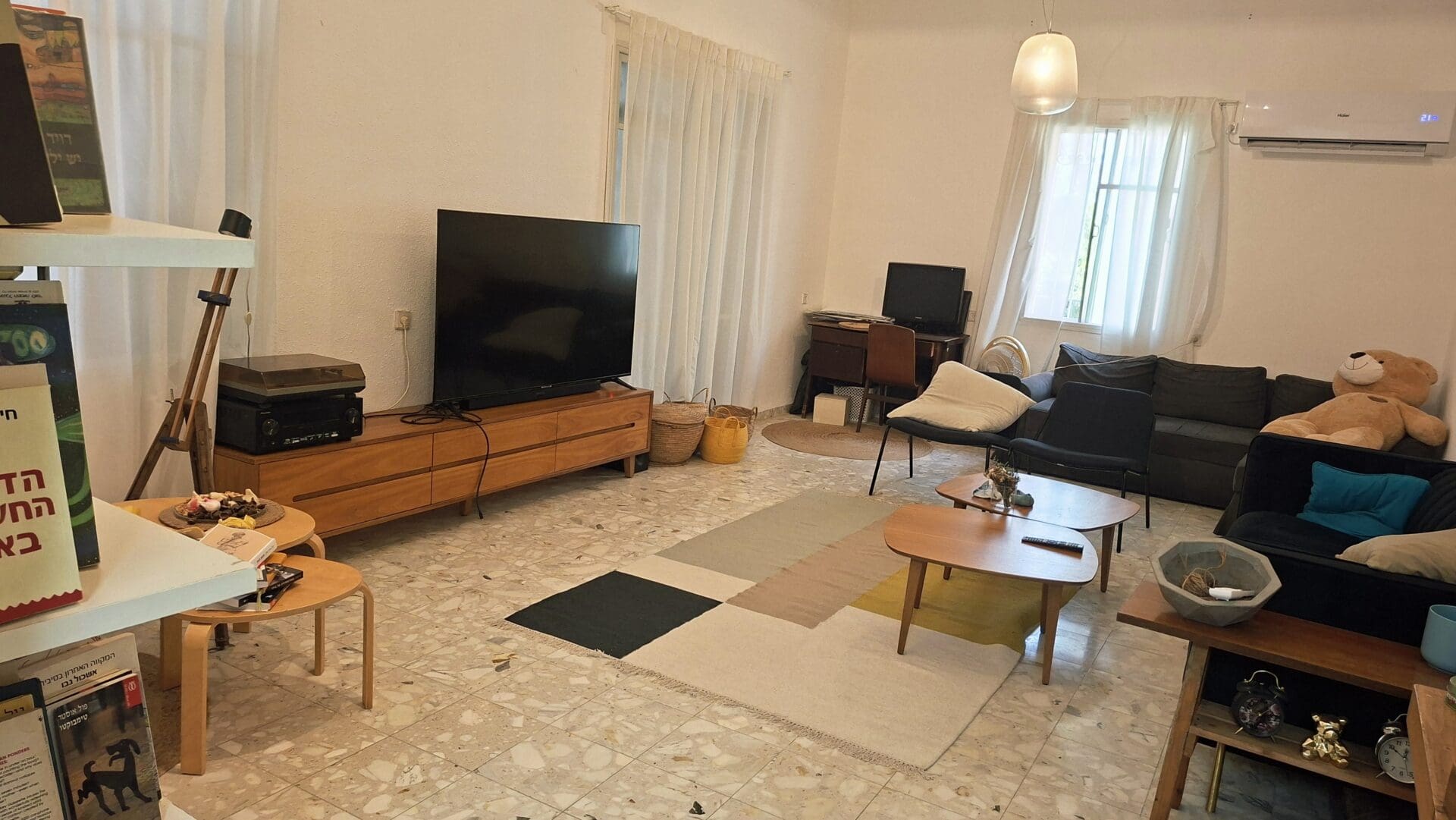
For example, he found an old easel, the wooden stand on which a canvas is placed, and turned it into a lamp. In this act of conversion, it seems as if he wanted to give an object that had already known other days new life and new light in both a literal and symbolic sense.
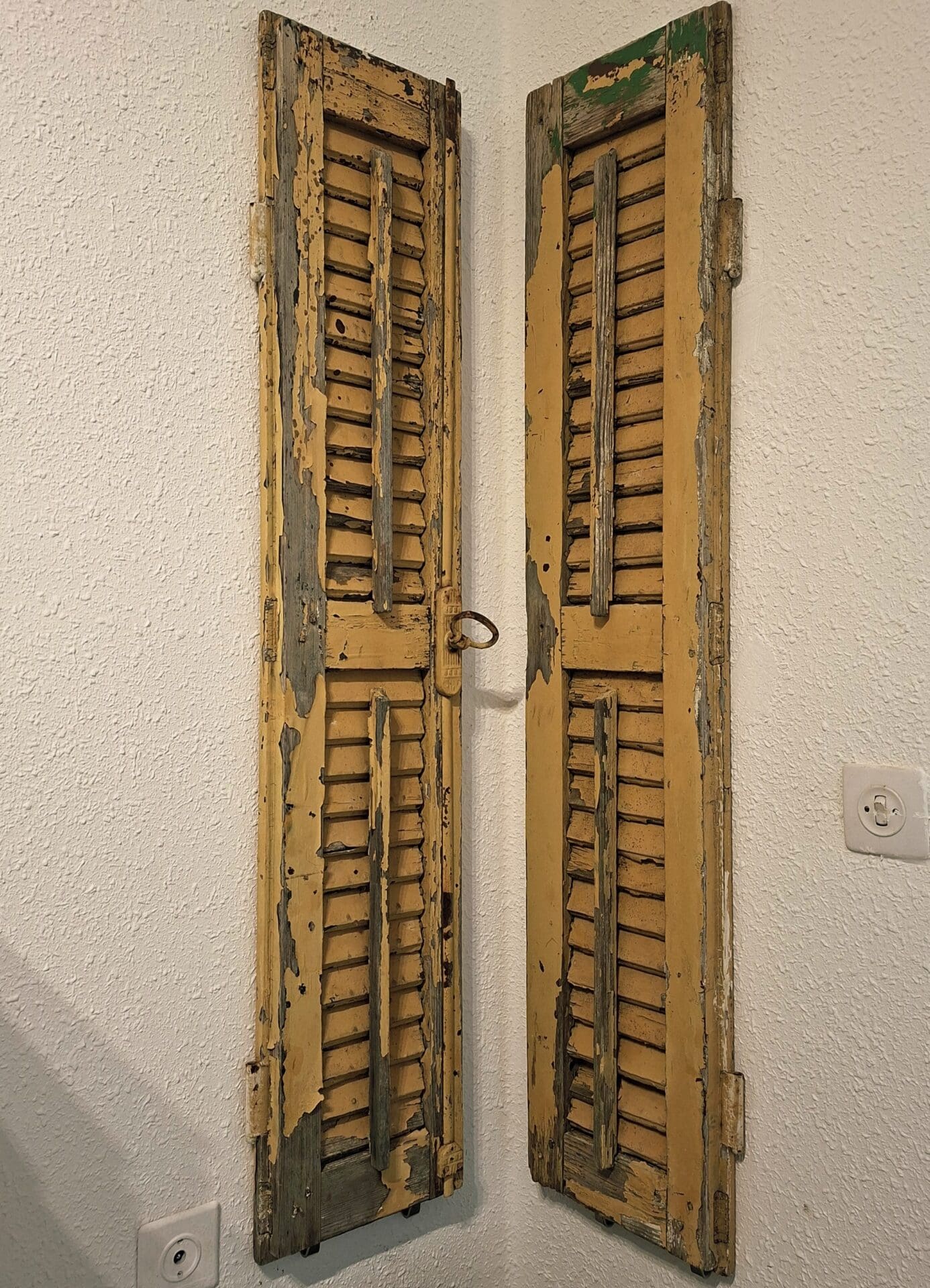
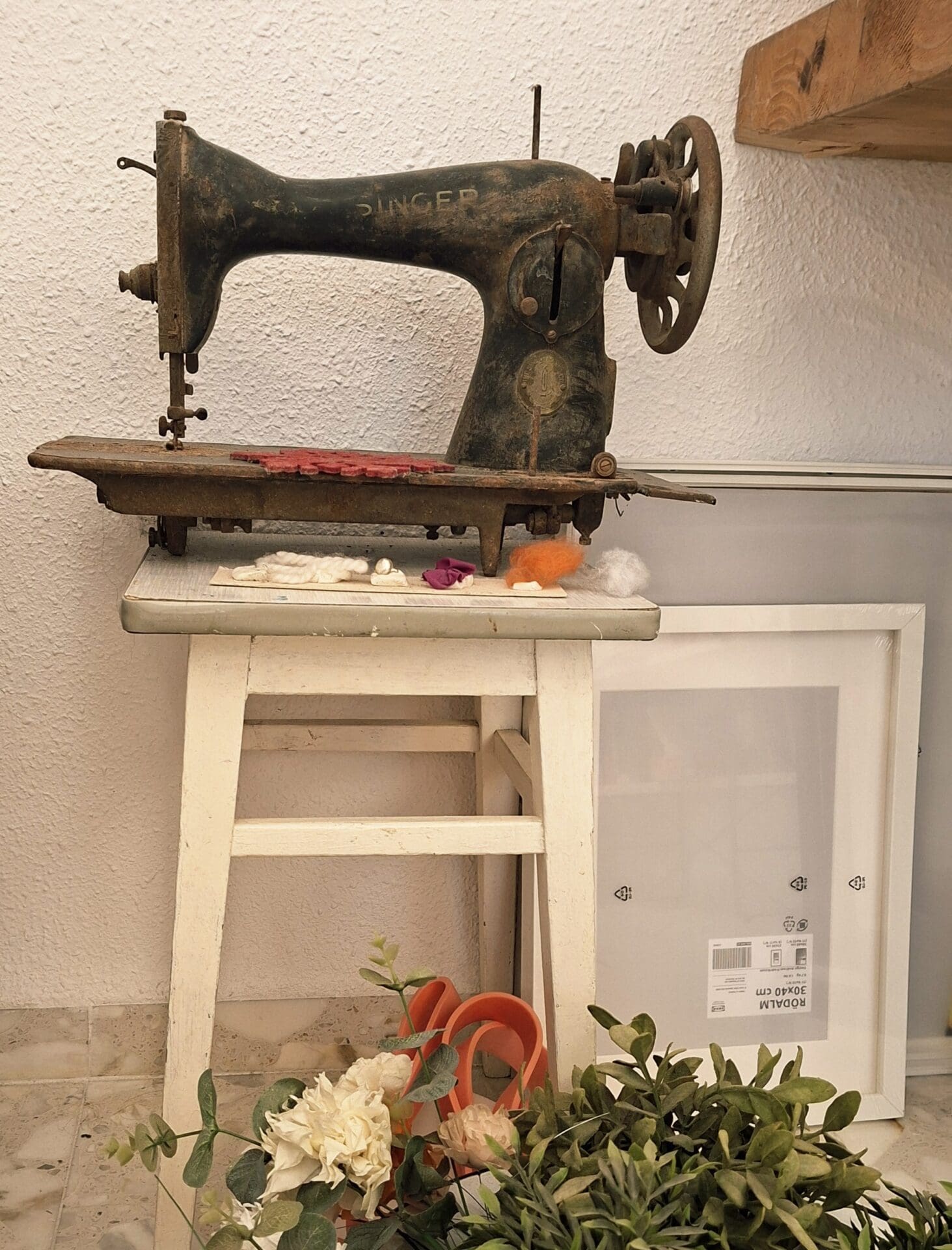
In another case, a friend, who used to collect old objects and even sold some of them, received a set of old window blinds and transformed them into a work of art. In the living room of his apartment there is also an old sewing machine, another object that has integrated into his living space and carries with it something from the past and the world from which it came.
It seems that Ron has a complete concept of creation: it is not limited to a painting, a page in a book, or a philosophical idea. It can also begin with a window shutter saved from a throwaway, a forgotten painting base. In all of these, he recognizes another possibility, a potential that awaits the right hands and a gaze that knows how to discern it.
Between the Pages of the Book and Reality: The Boy Who Was a Bookworm and the Man Who Continues to Search for Meaning
Television has never been a significant attraction for Ron Aviv. He doesn't like to watch it, rarely sits down in front of it, and even the news he tries to consume in moderation. According to him, the news "attacks you from all sorts of different directions," and he prefers, it seems, to choose the content that enters his world himself, rather than letting it enter him uninvited.
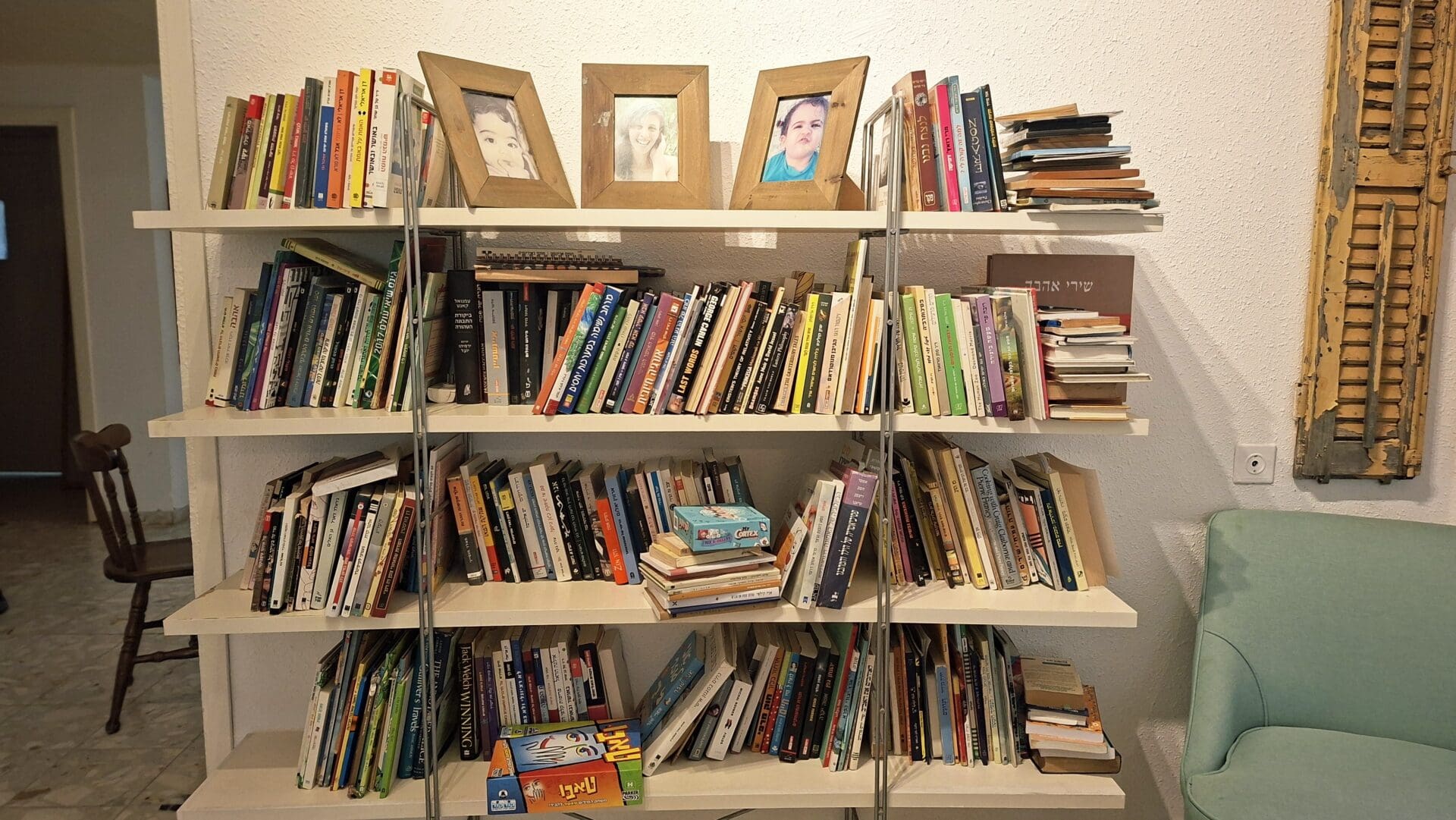
Passive viewing was replaced by books, an old love that has accompanied him since childhood, when he was, as he puts it, "a real bookworm." Today, he reads a lot in the context of his work, a little less at home, and usually in the quiet hours of the night, when he curls up with his book in bed.
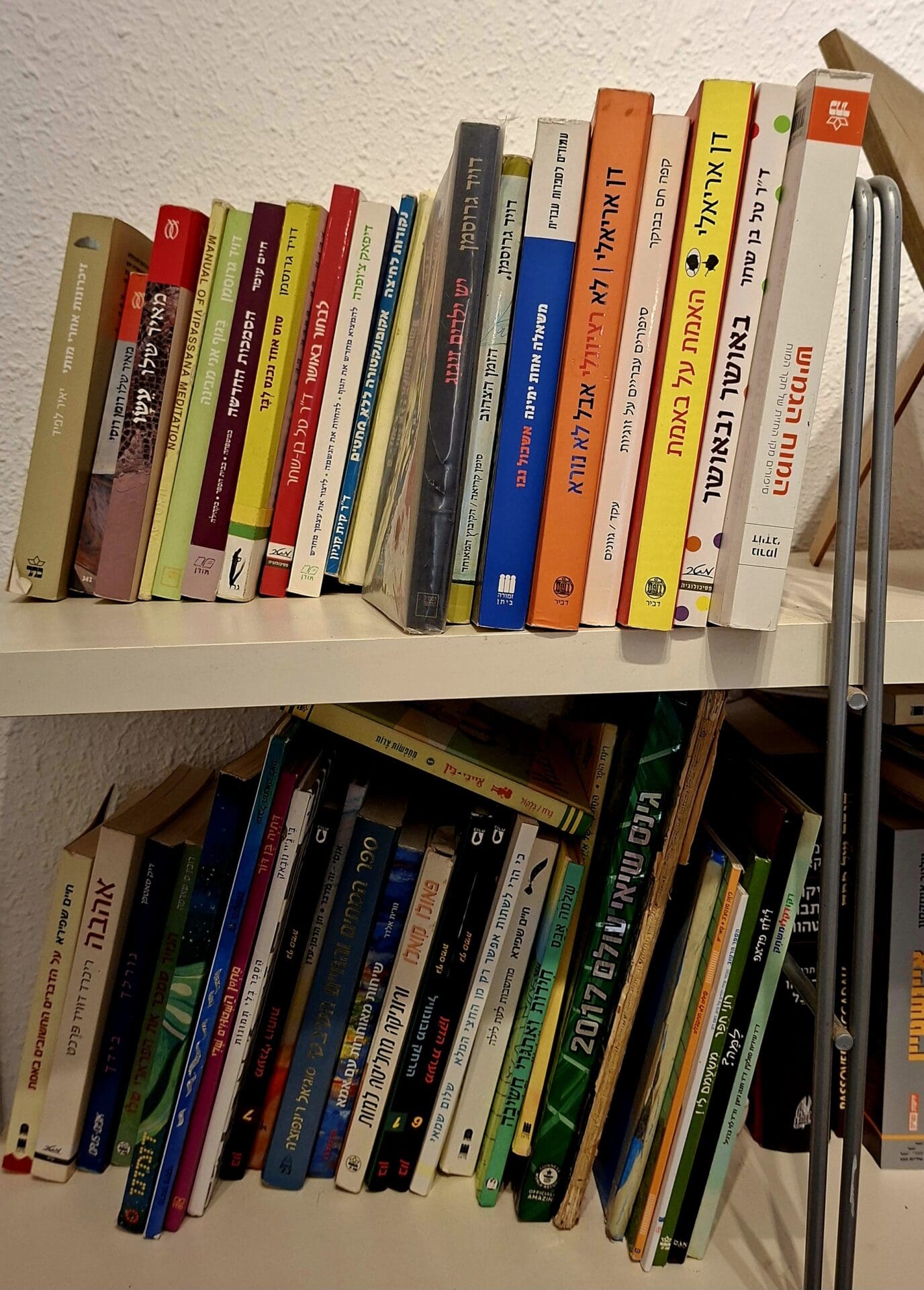
His choice of books indicates quite a bit about his inner world: he is drawn to books on psychology, therapy, and insight, to writing that seeks to decipher the human soul and the hidden mechanisms that motivate it.
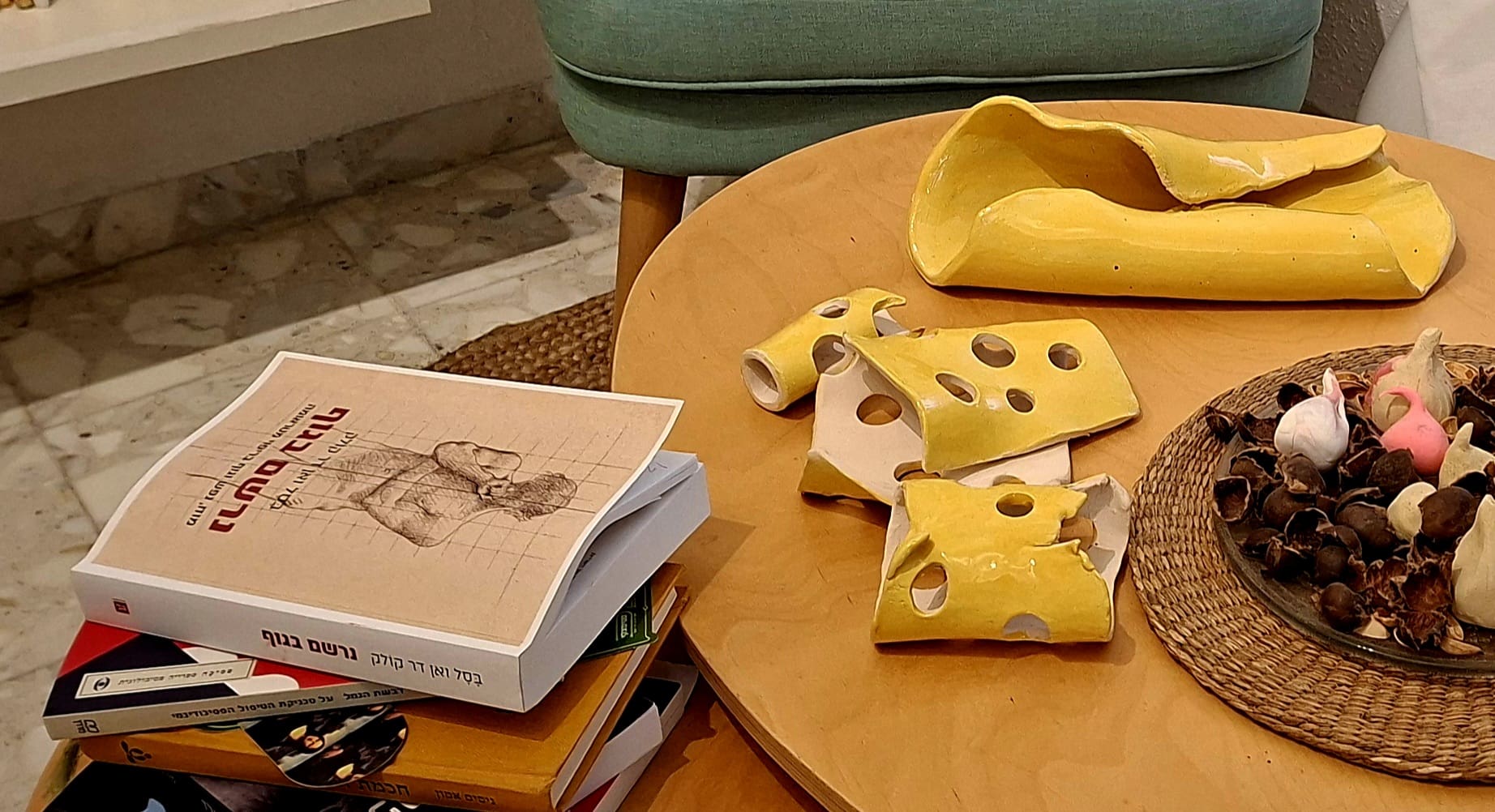
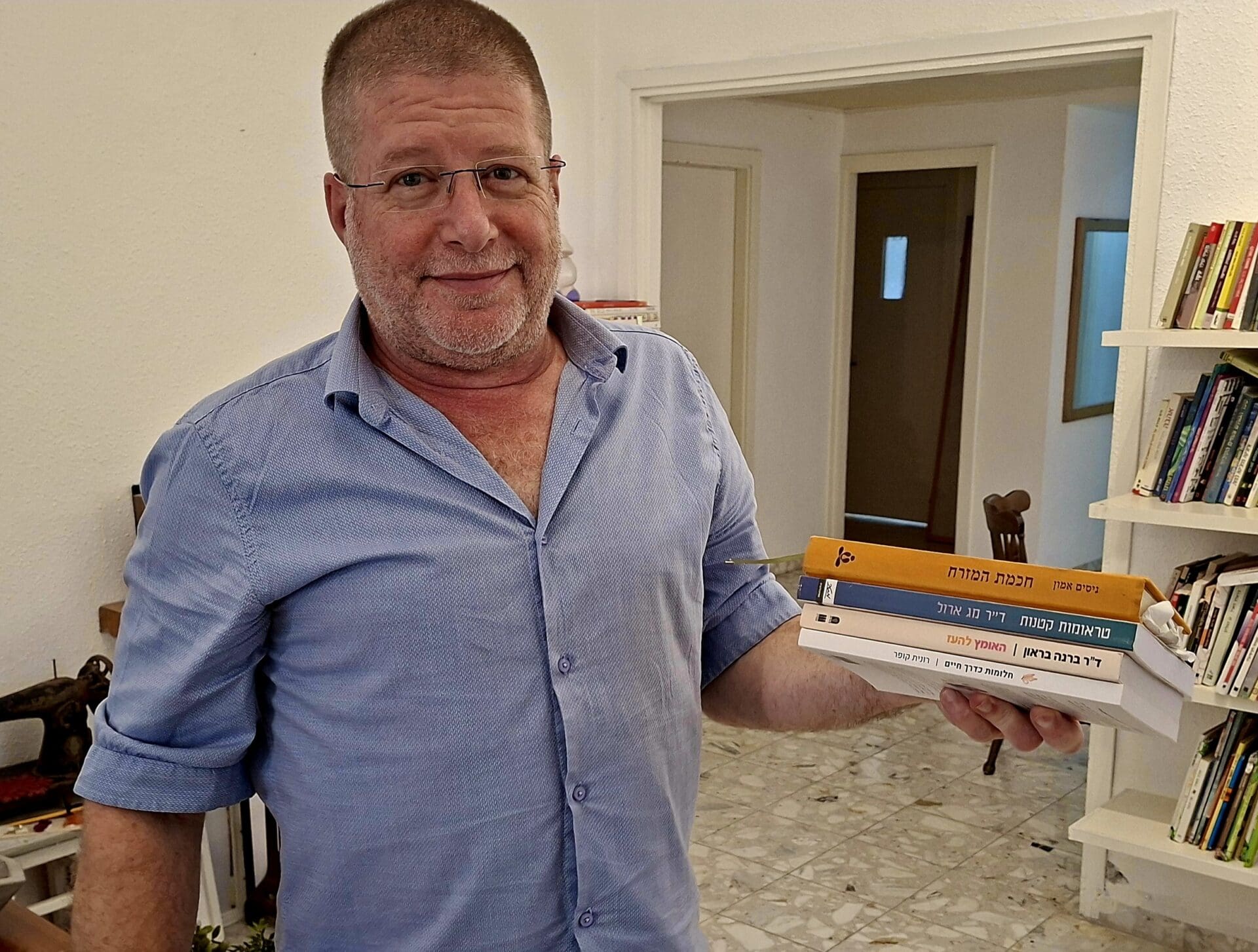
Above all, Meir Shalev's book stands out, "Fontanella", Published in 2002 by Am Oved Publishing. Ron speaks of it with extraordinary affection and appreciation, saying that he is able to quote many passages from it and that he almost remembers the entire book by heart.
In his eyes, Meir Shalev is one of the most brilliant writers. And one can understand the appeal: Fontanella is not just a family story, but a multi-generational journey into Israeli history, memory, and landscape. At its center stands the Yoffe family, descendants of settlers from the Jezreel Valley, and its stories unfold against the backdrop of the world of the pioneers, farmers, and first settlers in moshavim, colonies, and kibbutzim, in the period preceding the establishment of the state.
Within its family fabric, historical events, including the expulsion of the German colonies by the British, are also woven. Even the book's title carries with it a physical and personal secret: it refers to the foramen magnum, which never closed as it was supposed to in a baby during the first year of life. One of the beautiful and original ideas in "Fontanelle" is that sometimes it is precisely what does not close, what remains vulnerable and open, that is the source of a person's special ability.
It is no coincidence that Meir Shalev chose the name "fontanelle," which in Italian, and also as a medical term in several languages, means "a freckle": that is, that soft opening in a baby's skull, which is supposed to close during the first years of its life, but in the book's protagonist remains open and transforms from a sign of vulnerability into a source of sensitivity and an extraordinary ability to absorb the world. This is a book in which the body and memory, family and history, the private and the national, are woven together into one rich and multi-layered story.
However, when talking to Ron about the literature that shaped him, it becomes clear that for him, the roots are not only planted in the works of great writers or in the corridors of academia. He attributes his personal formation, more than any possible academic education, to the kibbutz family. This is a sentence that has more than a nostalgic preference; it points to the origins of his world of values, his childhood environment, his encounters with people, lifestyles, and experiences that left a deep mark on him.
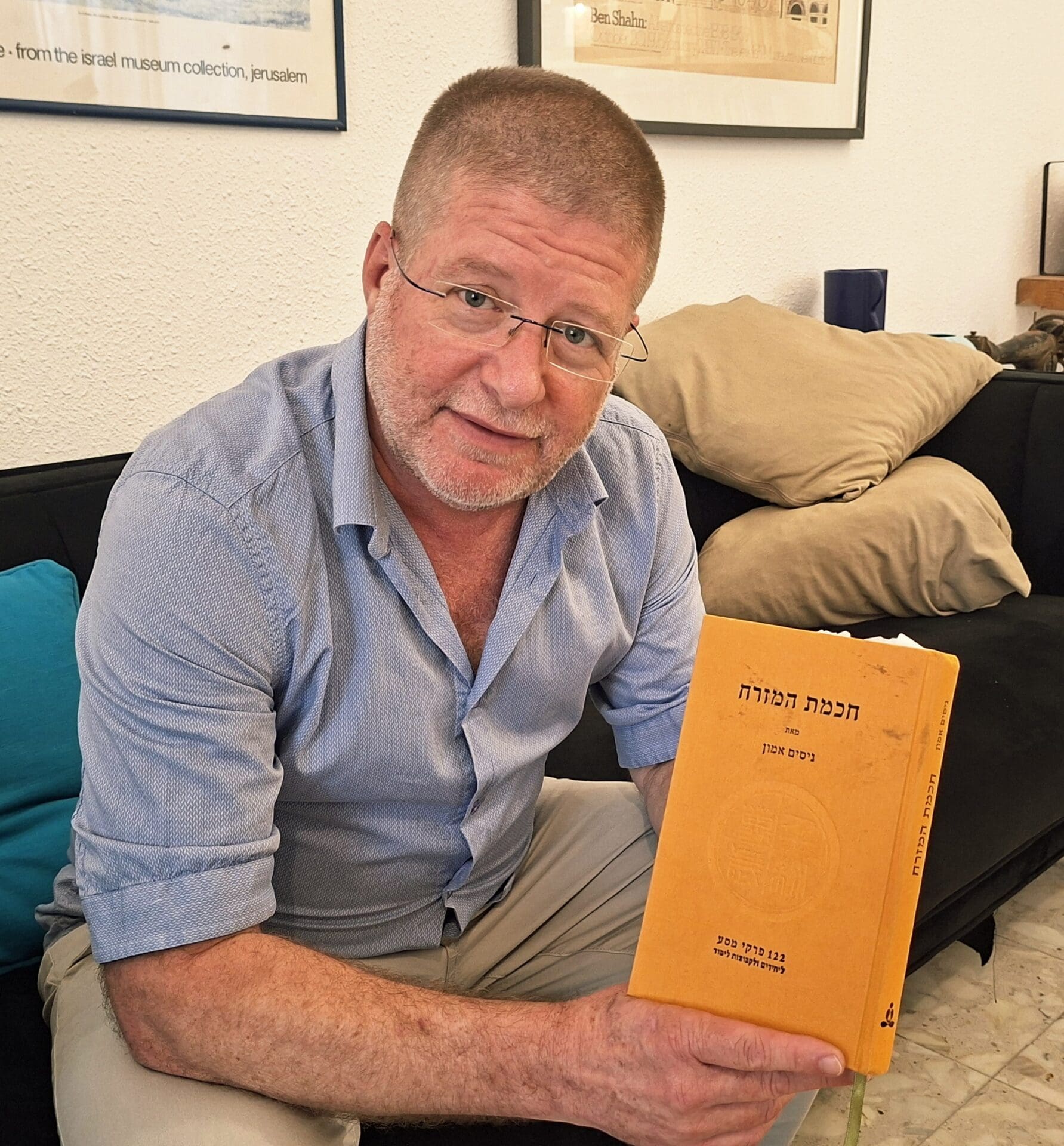
Alongside Meir Shalev, he also mentions Nissim Amon's book, "Oriental Teachings", which combines Eastern cultures, to which he was exposed in his youth, with Western culture and presents complex ideas and worldviews in an accessible manner, allowing the reader to approach them and digest them.
It seems that this is where his two favorite books meet: one returns to the land, family, and local history, and the other opens a window to distant wisdom and cultures. Between the Jezreel Valley and Eastern thought, between childhood memories and the search for understanding the soul, Ron emerges as a person for whom reading is not just entertainment or the accumulation of knowledge. It is a way to observe the world, return to its origins, expand the boundaries of consciousness, and try to understand a little more about the person and the place they come from.
Between Spirit and Matter: The Kitchen as a Place of Love, Generosity, and Closeness
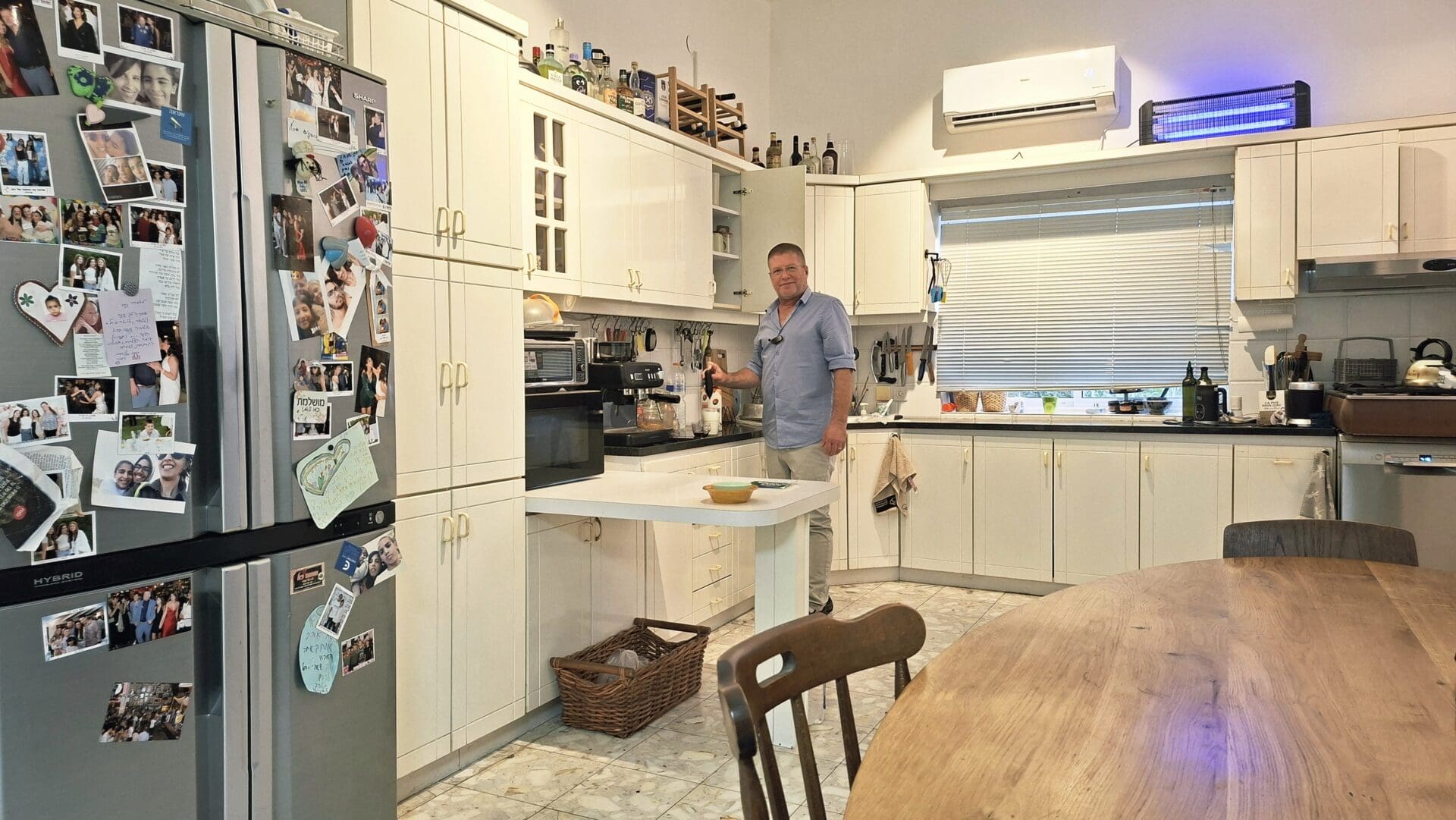
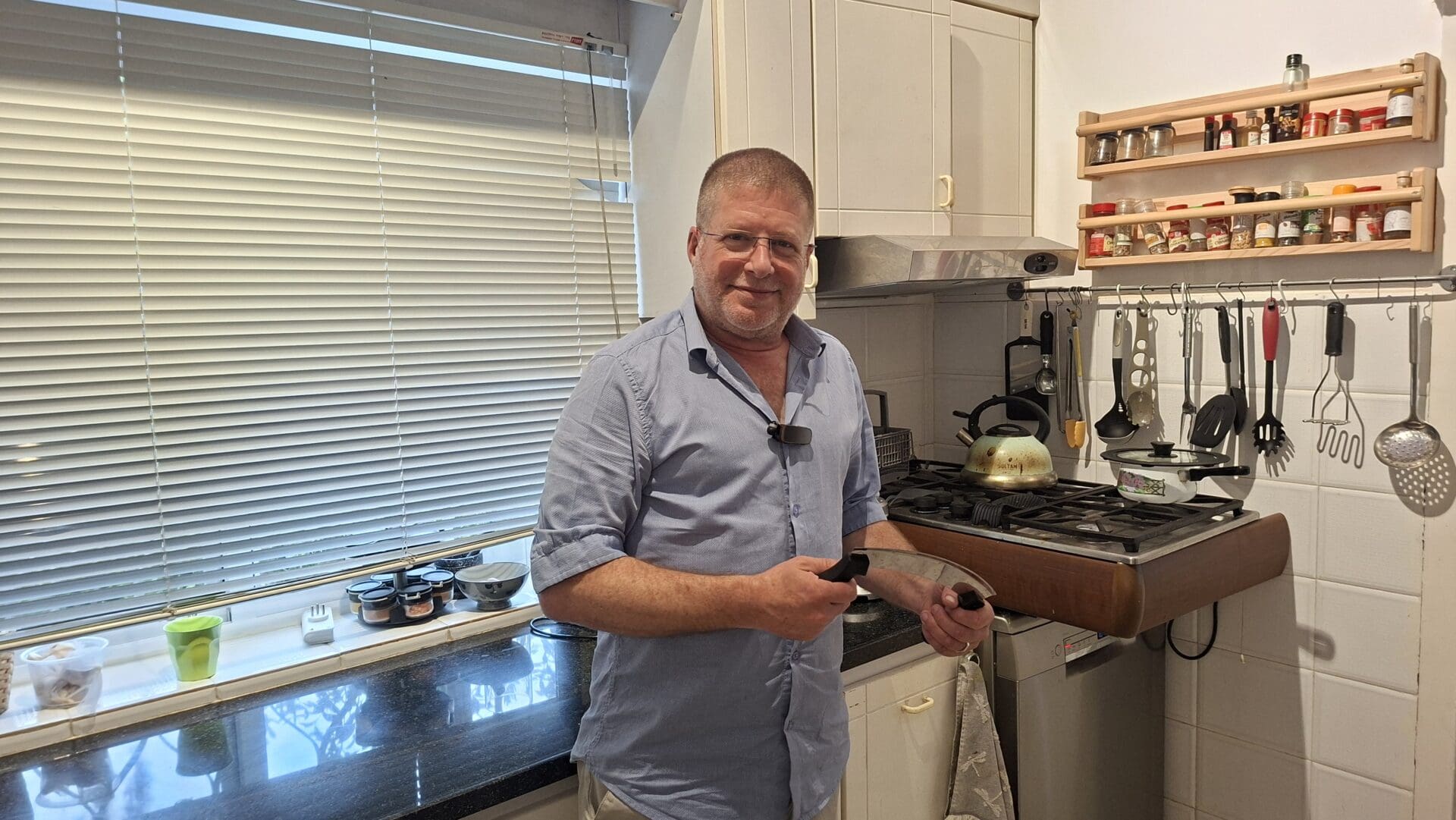
Alongside the worlds of reading, philosophy, and spirituality, in which Sharon Aviv often wanders, there is also another side to him, earthly, sensual, and full of life: a love of the kitchen.
Ron loves to cook, knows how to do it well, and most of all, loves to feed others. In his eyes, serving food is not just an act of hospitality or a gesture of generosity, but also a way to seek closeness, perhaps even to win love. There is, as he himself puts it, something of a gratification in it: a kind of nonverbal statement of "love me with the food I serve you." Food, in this sense, becomes a language in itself, a way of saying to others things that are not always said in words.
His love for the kitchen doesn't end with cooking. Ron also makes ice cream, as an amateur who doesn't pretend to scrape the edges of the famous and exquisite Haifa ice cream parlor.Ice Salon", which he also represented in the past.
He loves not only preparing good food, but also enjoying it, at home and abroad, in restaurants that he carefully chooses. Two of his favorites are "Zayt-Zaytoon," located in the Talpiot market, and next door, the "Beranda" restaurant, whose name in Arabic means "balcony." Both restaurants belong to the same owners and offer fairly similar cuisine, except that Branda gives it a slightly more elegant and meticulous touch.
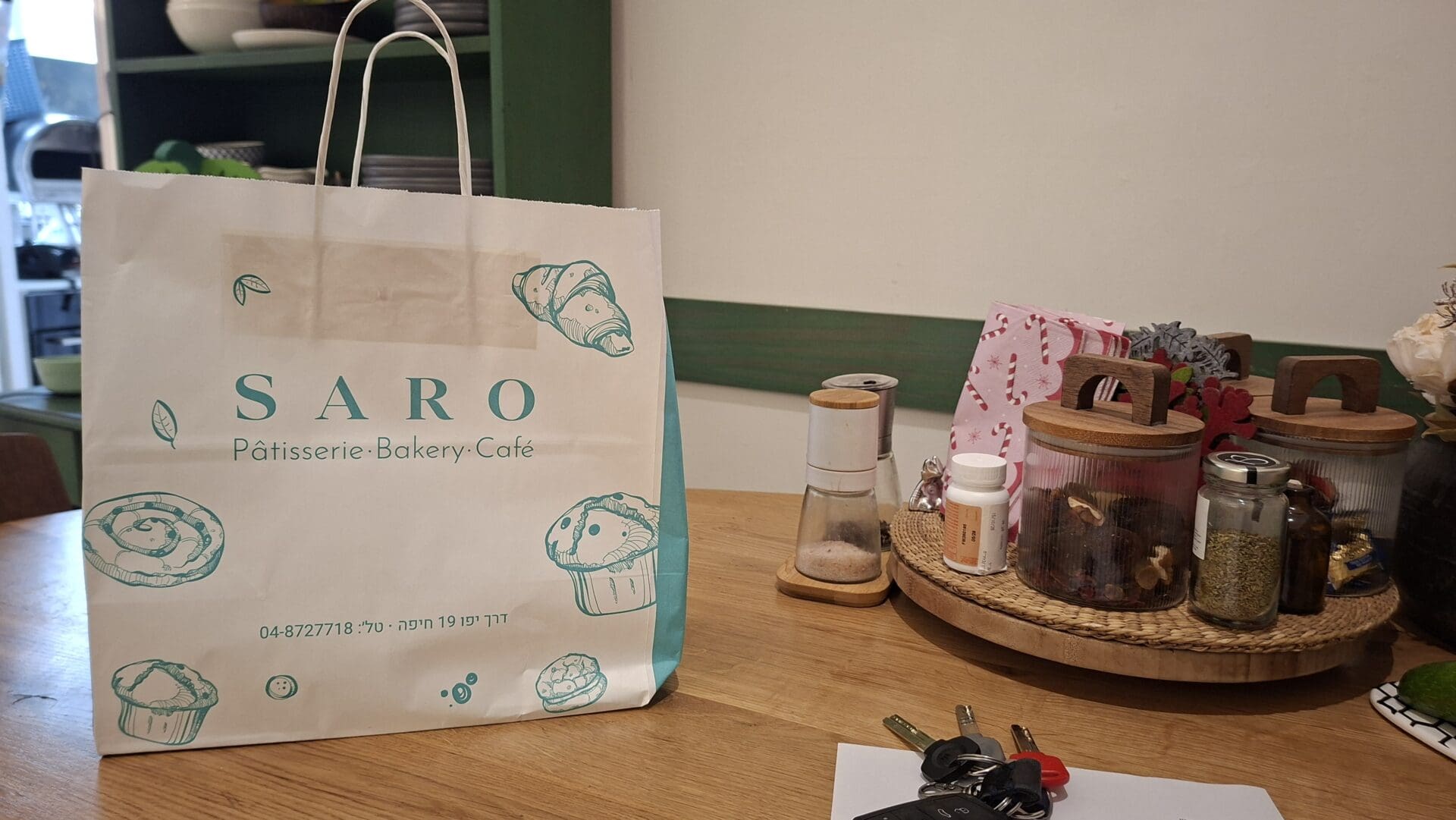
Even in the daily space around his office, Ron has found small stations of pleasure and closeness. At "SARO," an Austro-Hungarian-style café and pastry shop owned by brothers Christian and Julian Abu-Shakara, located in downtown Haifa near his office, he likes to sit with his clients, turn the professional meeting into a more relaxed conversation, and perhaps also allow the words to soften a little over coffee and sweets. Along with all of this, he also has a special fondness for the "Yudi" pizza bar, next to Sefer Square. This is a place that offers special pizzas made from long-risen dough, with draft beer and even a selection of gluten-free pizzas served alongside the pizzas.
Through these culinary choices, one discovers a person for whom food is much more than good taste or expertise. It is a language of generosity, of closeness, and of love. A way to open the heart, to bring people together, and to let them feel, if only for a moment, that they are exactly where they "want to be."

Between two days, between man and man: Ron Aviv's love for place and life
Ron Aviv is a quintessential Haifa patriot, one of those people who not only live in the city, but carry it with them, in their inner landscape, in their memories, and in the way they look at the world.
This is precisely it. Against the backdrop of the achievements, difficulties, disputes and divisions that characterize Israeli society and the reality of Haifa. Despite all this, and perhaps precisely because of it, his love for the city and the place remains deep, steadfast, and uncompromising. This is not blind or uncritical patriotism, but A deep sense of belonging, which exists even when reality is complex and challenging.
In his eyes, Haifa is beautiful at every hour of the day, and in so many ways that it is difficult to list all its virtues. He often quotes a friend who lives in London, who claims that Haifa has more general abundance than the British capital. And perhaps this is not just a statement about the city, but also evidence of the gaze of someone who knows it, loves it and never ceases to admire it.
Recently, he has been rediscovering the city with his wife Efrat, who came to Haifa from Kfar Saba and looks at the city with fresh eyes, full of admiration. Together they like to linger at the entrance to Wadi Roshmiya, and look at the bridge next to it where a beautiful climbing plant covers its surroundings with a green texture, adding an almost hidden touch of magic to the urban landscape.
When asked to choose the most beautiful place in Haifa in his opinion, Ron does not hesitate: in his opinion, it is the bend in the road that descends from Isfaia, just after Antenna Hill. There, in an instant, a geographical picture unfolds before the eyes that is almost hard to believe exists at a glance: to the right, in a north-northeast direction, the Haifa port is revealed; to the left, to the west, the Mediterranean Sea opens up, blue, wide and boundless. The two sides of the maritime expanse, two horizons, and one city standing between them. Perhaps this is also an appropriate image for Ron himself: a man whose gaze moves between past and future, between roots and movement, between the place he came from and the people who chose to walk alongside him.
But the love of the place, however deep, is not the limit of his world. If he is a quintessential Haifa patriot, his Israeli patriotism is even deeper. "We have a wonderful country," he says, and not as someone seeking to make a celebratory proclamation, but as someone who finds its true beauty first and foremost in the people who live there.
For nearly fifty years, people walked alongside him who became an integral part of his life; others entered his world initially as clients, but over the years crossed the line between professional relationships and friendships and remained as friends.
In his eyes, these are not marginal details in a biography, but perhaps its essence. He loves to sit with a friend, to have a chat, to eat together, to listen, to talk, and to be part of that simple, everyday human interaction that doesn't need any special setting to become meaningful. When he tries to formulate his worldview in one sentence, he says: "Conversations with people are the raisins in the porridge of life." There is something humorous in this sentence, but also a lot of wisdom and tenderness.
It expresses the perception of life of a person who understands that in the end, it is not the landscapes alone, nor the achievements nor the stations we have passed that give life its flavor, but the encounters, connections and people we gather along the way. And perhaps this is where Ron Aviv's secret lies: he loves Haifa for the view that unfolds from it, the country for its people, and life for the opportunity to share it with others. Because, as he mentions, in this human need to meet, talk, eat, listen and be together, what also reveals to him what distinguishes man: "Man is different from the beast."