


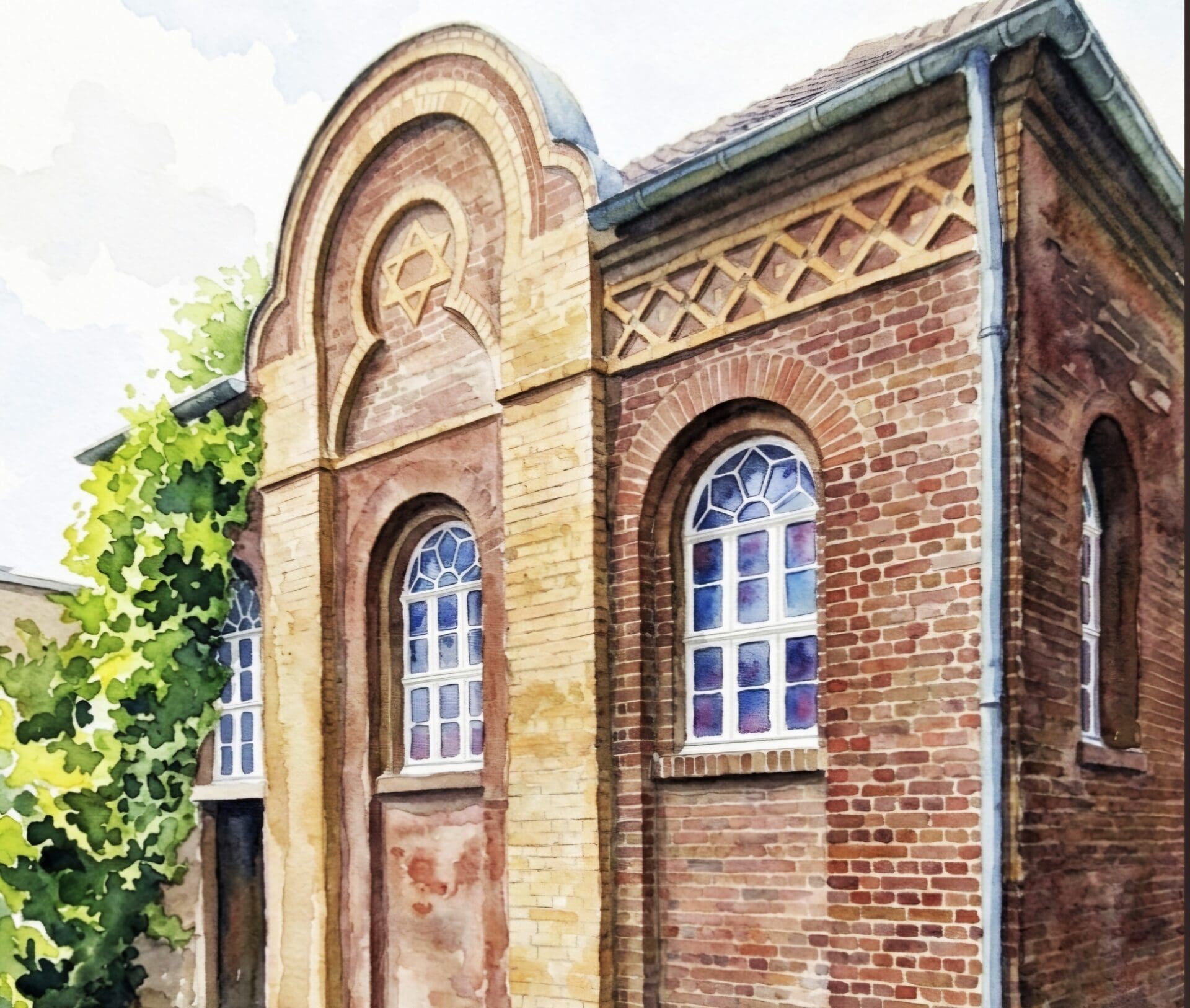
What happens when a place that was once home to a Jewish community becomes a stage for art, and is it possible to bring back not the past, but something from life?
Between what remains and what returns
There is something almost inevitable in the fact that the story of a Jewish synagogue in Germany returns to us precisely in the days when the Hebrew calendar narrows the distance between past and present.
At the beginning of the year, as the month of Tishrei opens with the sound of the shofar and continues into the soul-searching of Yom Kippur, to the Sukkah and Simchat Torah, Judaism asks us not only to remember but to return: to return to a story, to a place, to a community, to a continuity that was interrupted but never ceased to exist in memory.
In Stommeln, a German town where the synagogue that was once the heart of a Jewish community now stands as a testament to a world that has disappeared, the word "return" seems to take on a different meaning. Artist Boaz Keizman came to this place, not to recreate what was, nor to give it a comforting ending, but to listen to what still remains.
His artistic work inside the synagogue transforms the space itself into a kind of space of living memory, and within it arises a question that the High Holy Days give special power to this year: Can Jewish memory only be preserved, or is it capable, under certain conditions, of coming back to life?
Perhaps art, which is not content with reconstructing what has been lost but dares to reimagine its presence, can offer an answer.
In this tension, between Rosh Hashanah and all the Tishrei holidays, which ask us to remember, and a place where almost everything is destined to be forgotten, art enters the place where memory ceases to be just the past and becomes a presence again. In the synagogue in Stomlen, this presence receives its voice in the work of artist Boaz Keizman.
When the building remains and the community is gone
In Stommeln, a small town near Cologne, stands a synagogue that survived the pogroms of 1938, but lost the congregation that worshipped there. Over the years, the place has become a stage for international contemporary art.
Now Israeli artist Boaz Keizman wants to do something different: not just remember the Jewish life that disappeared, but try to bring new Jewish life into the place. Between art, memory, Yiddish, music and artificial intelligence, and in the shadow of the municipality's opposition, a debate is underway about who has the right to determine the future of the synagogue.
This building was saved by chance. The community was not.
In Stommelen, the same synagogue built in 1882 still stands. It survived Kristallnacht almost unscathed, partly because it had already ceased to be used by the local Jewish community and was sold before the war. Since then, the building has undergone several transformations: from a place of prayer to an abandoned building, from an abandoned building to a conservation site, and from a conservation site to one of the most interesting places in Germany, to a meeting point between contemporary art and Jewish memory.
Now alive, artist Boaz Keizman seeks to add to the place a word that does not usually appear in the language of memorial sites: life.
Museum in the synagogue that survived Kristallnacht
There are places where history needs no explanation. It's in the walls.
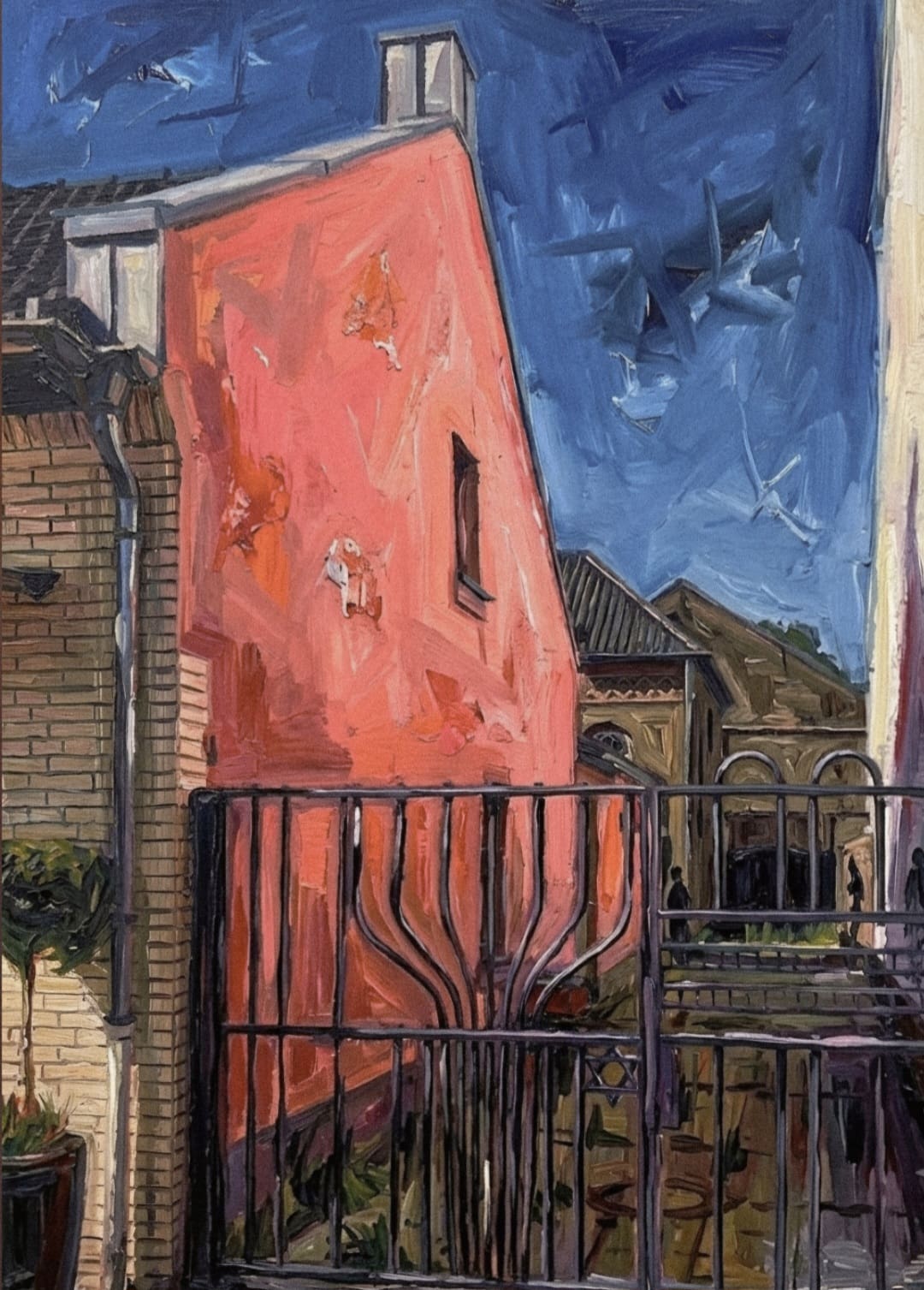
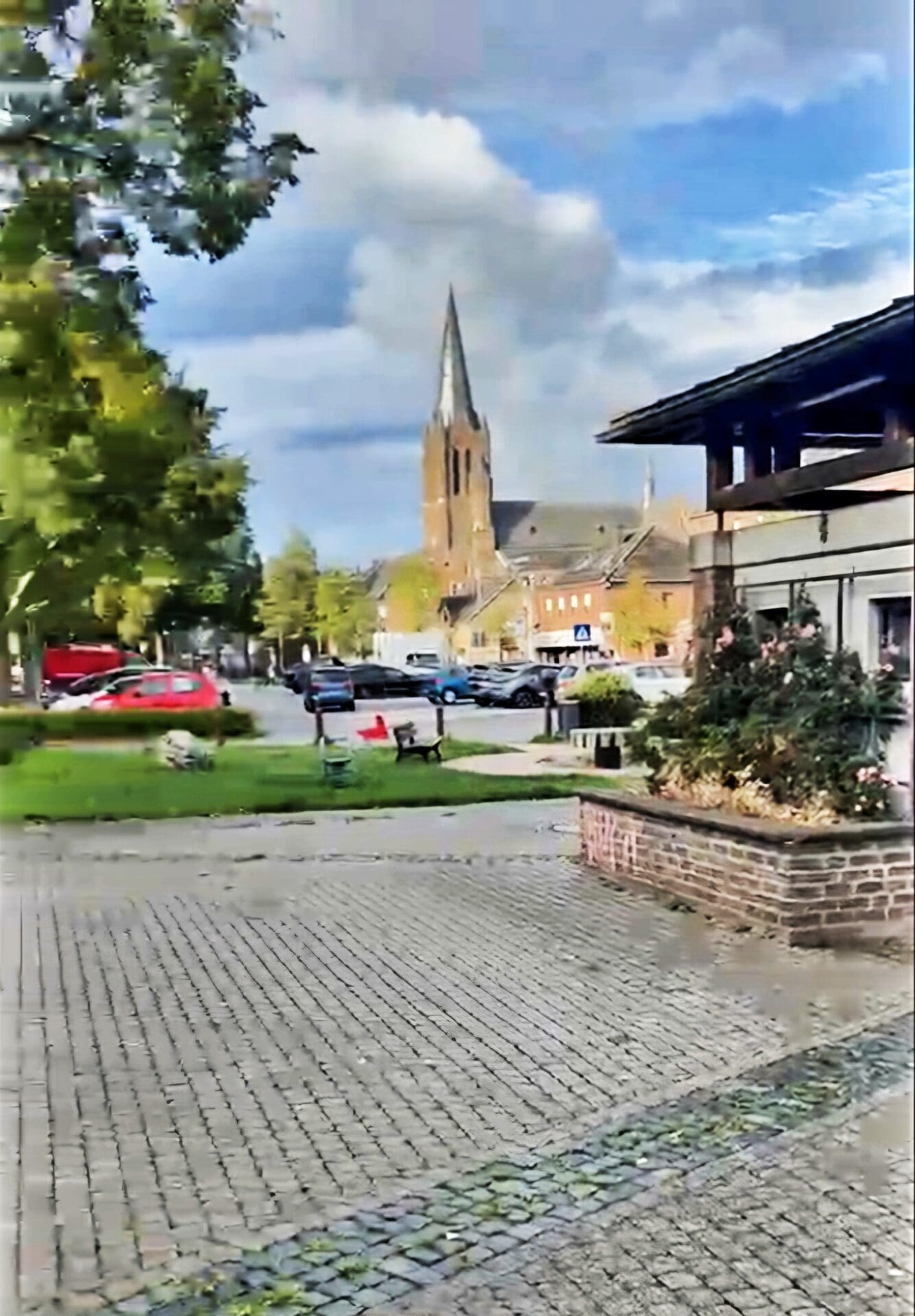
In Stommelen, a small town in the Fulheim district, not far from Cologne, Germany, stands a simple-looking brick building, the synagogue built in 1882.
For orientation: Stommeln is a village or urban district that is part of the city of Pulheim, in the state of North Rhine-Westphalia in western Germany, and is located about 4 kilometers northwest of the center of Pulheim, that is, very close to the large city of Cologne. The town has about 8,500 residents.
From the outside, this synagogue building doesn’t announce its historical power. It’s not a large museum, it doesn’t have a monumental square around it, and it doesn’t have the dramatic architecture of grander synagogues. Still, it’s one of those places in Germany where just standing inside the building changes the way you look at time.
This synagogue did survive Kristallnacht. The Jewish community that lived there, however, did not.
This gap, between a building that remains and a community that has disappeared, has made Stommelen an extraordinary place in the German art world over the years. Since the 1990s, international artists have been invited to create contemporary works of art there. Artists Richard Serra, Rebecca Horn, Janis Konlis and others have entered this space, each of them trying in their own way to answer the question of what art can do in a place where the past is no longer a story but a presence.
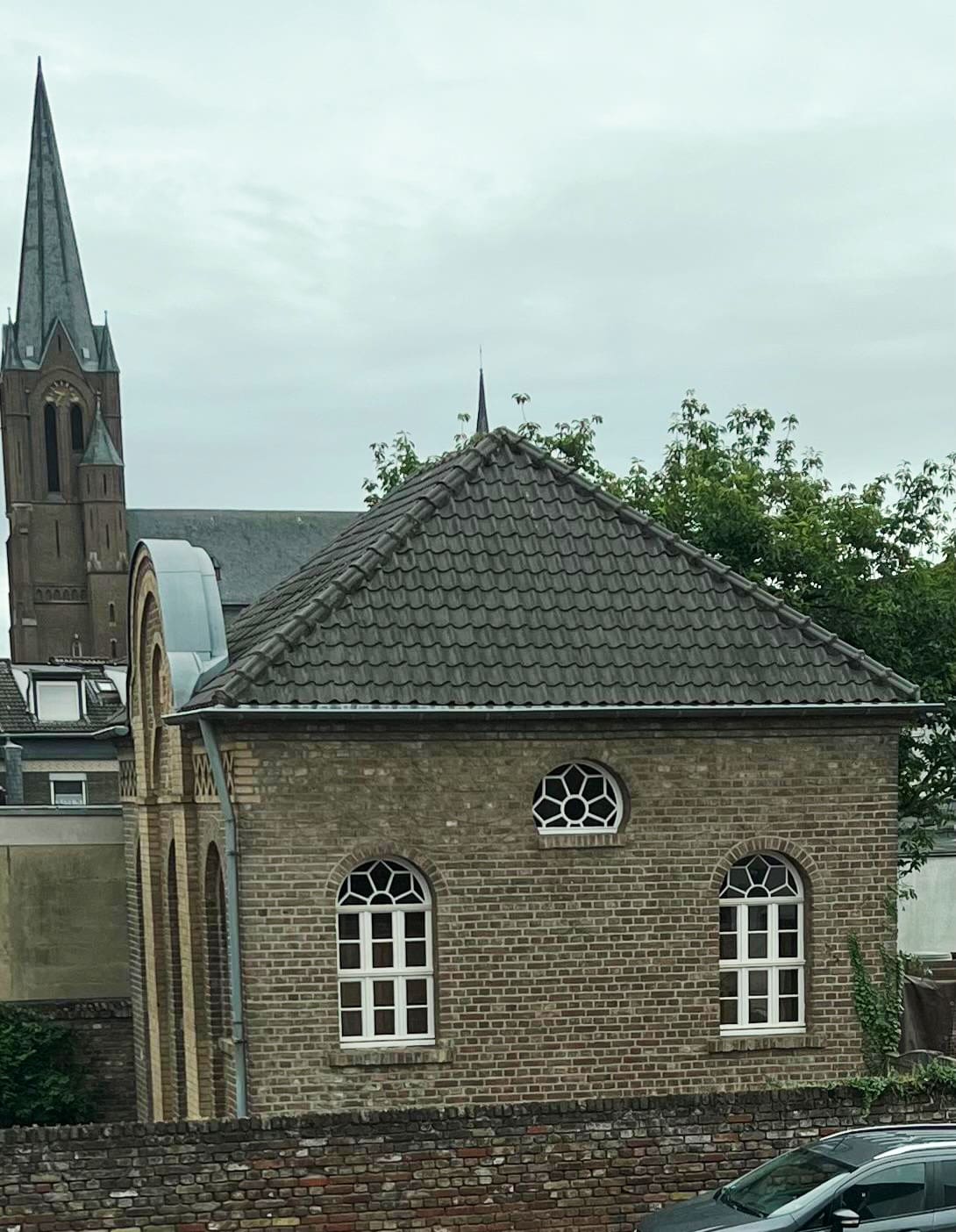
The story of the synagogue in Stomlan begins precisely at the moment when it ceased to be a synagogue.
In 1937, a year and a half before Kristallnacht, the building that had been the prayer house of the local Jewish community was sold. It was not the municipality that sold it, but the Jewish community of Cologne, which became the legal successor to the Jewish community in Stommelen, after it effectively ceased to exist.
The direct reason for the sale was seemingly simple: the building no longer had a religious use. The Jewish community in Stomlén had been shrinking for decades, many of its members had left for the big cities, and around 1930 it was no longer possible to hold a prayer meeting in the synagogue.
The numbers tell the story of the disappearance almost without the need for interpretation. In 1861, the community numbered 78. In 1890, 40 remained, and in 1933 only about ten Jews lived in Stommeln. The last head of the community moved to Cologne, probably in 1926 or 1928, and the local community effectively ceased to exist.
Then, on May 14, 1937, the synagogue was sold to a local farmer, Anton Potz. He used it as a warehouse. The sales contract also included a condition that the building would not be converted into a barn or a stable, especially not a piggery. The Star of David on the front was covered with plaster, and another opening was opened in the building.
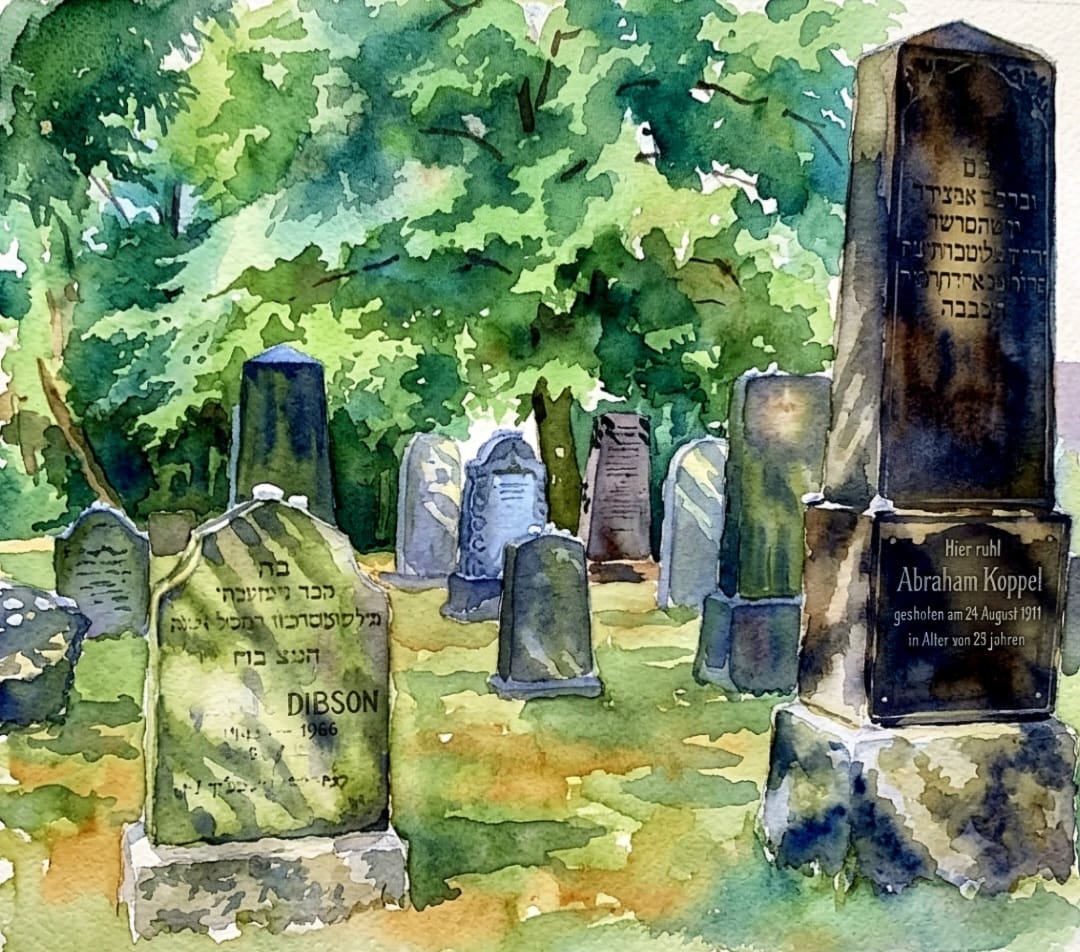
Here begins the historical irony that made Stomlén an exceptional case.
What seemed at the time to be the end of the synagogue was also what allowed it to survive.
When the SA (the stormtroopers of the Nazi Party in Germany. They also called them "the brownshirts") arrived at Stommelen on Kristallnacht, the night of November 9-10, 1938, they arrived equipped with gasoline, and with them were also members of the Hitler Youth. They sought to destroy the building.
Putz confronted them and made it clear that the building was no longer a synagogue, but his private property, used as a warehouse. The fact that the building had already been sold, and that it was no longer in Jewish ownership and was not used as a house of prayer, allowed him to prevent its destruction. Thus, the synagogue in Stomlén remained standing, while many other synagogues in the area were burned or destroyed.
But the sale itself deserves more careful consideration. Historical sources offer two explanations that are not necessarily contradictory. One is the practical explanation: the Jewish community in Stommeln no longer existed, no services were held in the synagogue, and the Jewish community in Cologne, which owned the property, no longer had any use for it.
The second explanation places the sale within the political reality of 1937. Sources describing the history of the place indicate that the sale was made under the pressure of increasing anti-Semitic persecution. In other words, there is no need to choose between the two options: it is possible that the building was already an asset that was no longer of use to the community, and at the same time there was also a reality in which its mere possession by a Jewish body became increasingly problematic and dangerous.
What is not available, at least from these available sources, is a protocol that would allow us to know exactly what was going through the minds of the decision-makers in the Jewish community in Cologne when they decided to sell the building. Therefore, it is better not to turn the sale into a premeditated heroic story, as if someone knew that the building would be saved thanks to it. The known facts allow us to say something more modest and complex: the synagogue was sold at a time when the local community had already disintegrated, under Nazi rule, when the persecution of Jews there was intensifying; and in retrospect, it was precisely the change in ownership and use of the building that allowed it to survive Kristallnacht.
The Jewish community, however, did not survive.
The last Jews of Stomlén were deported in 1942. About twenty Jews who were born in Stomlén or lived there for years fell victim to the Holocaust.
And so an almost unimaginable situation arose in Stomlan: the synagogue survived because it was no longer a synagogue, while the community that built it and led its life in it disappeared.
This is the paradox from which the current story of the place begins. When the synagogue returned to public consciousness in the late 1970s, it was no longer a house of prayer and no longer a center of community.
In 1979, the municipality of Fulheim purchased it, restored it, and reopened to the public in 1983. Since then, the building has become a place of cultural activity, and in the 1990s, the municipal project for contemporary art developed there, bringing artists from Germany and around the world to the place.
But now, almost ninety years after that sale, another question arises: What do we do with a Jewish place that was saved precisely because it lost its original function? Is it enough for it to be a site of memory and art? Can another layer be added to it, not of reconstructing the past, but of a Jewish presence in the present?
This is where an Israeli artist comes into the picture.
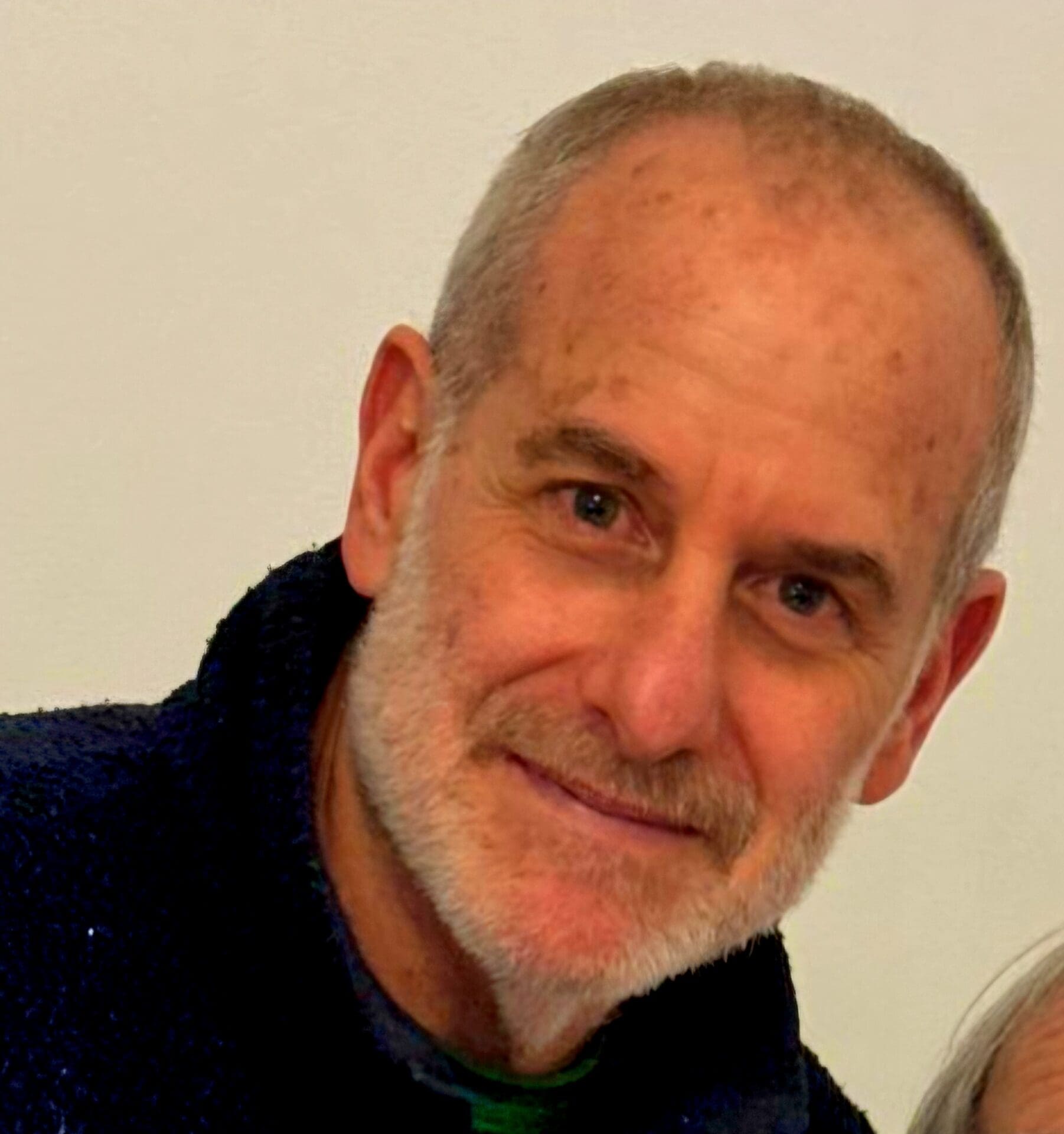
And then came Boaz Keizman – from Givatayim to Cologne: the road that became a home
Keizman, who is an Israeli artist who lives and works in Cologne, does not seek to abolish the artistic tradition that was created in Stommeln. He proposes something different, and to some extent more dangerous: to add to the artistic question a Jewish question. Not only how can art speak about the place. But whether the place itself can speak again in a Jewish voice.
Boaz Keizman was born in Haifa, but he spent his childhood and youth in Tel Aviv, where he also studied.
He took his first steps as an artist in Israel, but in the early 1990s he sought to expand his world and expose himself to what was happening in the European art scene. In 1993 he moved to Cologne, Germany, a move that later turned out to be a turning point in his life.
Cologne at that time was one of the vibrant centers of contemporary art in Germany, and Keesman found himself in a new environment of galleries, artists, museums, and intellectual encounters. He was a visiting student with the artist Konrad Klapfek, and his stay in the city opened up a cultural and artistic world different from the one he had known in Israel.
About two years after arriving in Cologne, he exhibited at the Tanja Grunert Galerie, which was at that time associated with the German avant-garde scene. According to him, this was a turning point for him: he stopped feeling like an outsider observing the German art world, and began to feel like he had become a part of it. Following the exhibition, he decided to stay in Cologne.
What was initially intended to be a specific chapter in his life turned into a stay of more than thirty years, during which the city became his home and permanent living space. Looking back, Keizman describes the move not only as a transfer of residence from Israel to Germany, but as a profound change in the perspective from which he viewed his life and himself.
Alongside his ongoing pursuit of art, over the years he also turned to writing and music, but Cologne remained the central axis of his adult life, the place he arrived in as a young artist from Israel, and where he gradually built his life over decades.
A synagogue that became an art site
To understand Keizman's initiative, one must go back and understand what was there before him.
As mentioned, the Stommelen synagogue was built in 1882 for the local Jewish community. For decades it was a place of prayer, study, meeting and community life. Like many synagogues in Germany, it was not just a religious building. It was part of the civic fabric of the place.
Then the twentieth century came and changed its meaning. The community disappeared, but the building remained.
In 1979, the city of Fuldheim acquired the building and renovated it. In 1983, it reopened as a cultural center. Later, it became one of the most interesting artistic enterprises in Germany: every year or at different times, contemporary artists were invited to respond to the space, its history, and its meaning.
Thus a paradox is created. The synagogue It ceased to be a synagogue, but it did not cease to be a place. It has become a stage for art.
Art, for its part, has repeatedly had to deal with the fact that it enters a space that is not a neutral "white space." Every sculpture, every sound, every artistic action receives additional charge there. The walls are not just walls. The floor is not just a floor. Silence is not just silence..
The visitor knows that the people who were supposed to be here are not here.
And that changes everything.
"Reviving the Jewish Heritage"
Caseman suggests calling this situation by another name.
His initiative is called "Synagoge Stommeln - Wiederbelebung des Jüdischen Erbes", namely: "The Stomlén Synagogue – Revival of Jewish Heritage."
The important word here is "revival." Not preservation. Not restoration. Not mere commemoration.
CPR.
Because preservation looks back. Revitalization seeks to bring something into the present. And this is perhaps the point at which Keismann's project begins to deviate from the conventional model of Jewish memorial sites in Germany.
Usually at a traditional memorial site, the visitor comes to know what happened, but here Keizman asks if it is possible to create a place where the visitor can also experience something of the question: What could it be now?
Not to bring back the community that disappeared, of course. After all, it is impossible to turn back history. Nor to try to artificially recreate a Jewish world that no longer exists. But to introduce present-day Jewish voices into the place: music, language, ceremony, thought, creation, memory, education, and encounter. In this sense, "revival" is not reconstruction. It is a kind of act of imagination.
From the dead to the living
A seemingly small difference can change the whole story. You could say:
"Jews lived here." But one could also ask: "What is happening to Jewish culture in this place now?"
The first sentence is a historical sentence. The second is a question. The artist Keizman is interested in the question.
Therefore, his initiative is not satisfied with another exhibition. It seeks to expand the meaning of the place through music, Hebrew and Yiddish, meetings around holidays and Shabbat, educational activities, working with the local community and using new technologies. The goal is to take Judaism out of the museum. Not in the sense of erasing memory, but on the contrary: to turn memory into something that can be continued to live with.
The voice of one person
One of the projects that clarifies the idea more than any statement is the project dealing with Henry Theodor Kurz.
Kurtz in 1925 was still living and growing up in the Jewish community of Stomlén. His testimony allows Keizman to do something both simple and complex: to give the place a human voice. Not the voice of a museum announcer. Not the voice of a historian. But the voice of a person who was there.
Keizman took a text by Kurz and turned it into the basis for a musical work, in collaboration with composer and author Henry Theodor Kurz and the ensemble Handwerk, creating a situation where an interesting transition occurs when historical evidence becomes artistic material, and the artistic material becomes sound.
The past is not just shown in a photograph. It is sung. Or rather, it passes through music.
The project also uses artificial intelligence technologies and the concept of a digital "memory assistant," which enables a new encounter with the testimonial materials. There is something almost paradoxical about this process. The newer the technology, the more it tries to bring us back to an old voice.
The computer is not supposed to replace the person who has disappeared. It is used here precisely to hold on to what the person left behind.
Yiddish leaves the building
One of the most beautiful moves in the initiative is actually the most modest of them: the attempt to bring Yiddish back to Stomlan. Yiddish, in this case, is much more than a language.
Yiddish is evidence that the Jewish community that lived here was not an abstract idea, but a community of people who had words, jokes, prayers, arguments, and names for the little things that make up an entire life: for objects, streets, foods, and daily life.
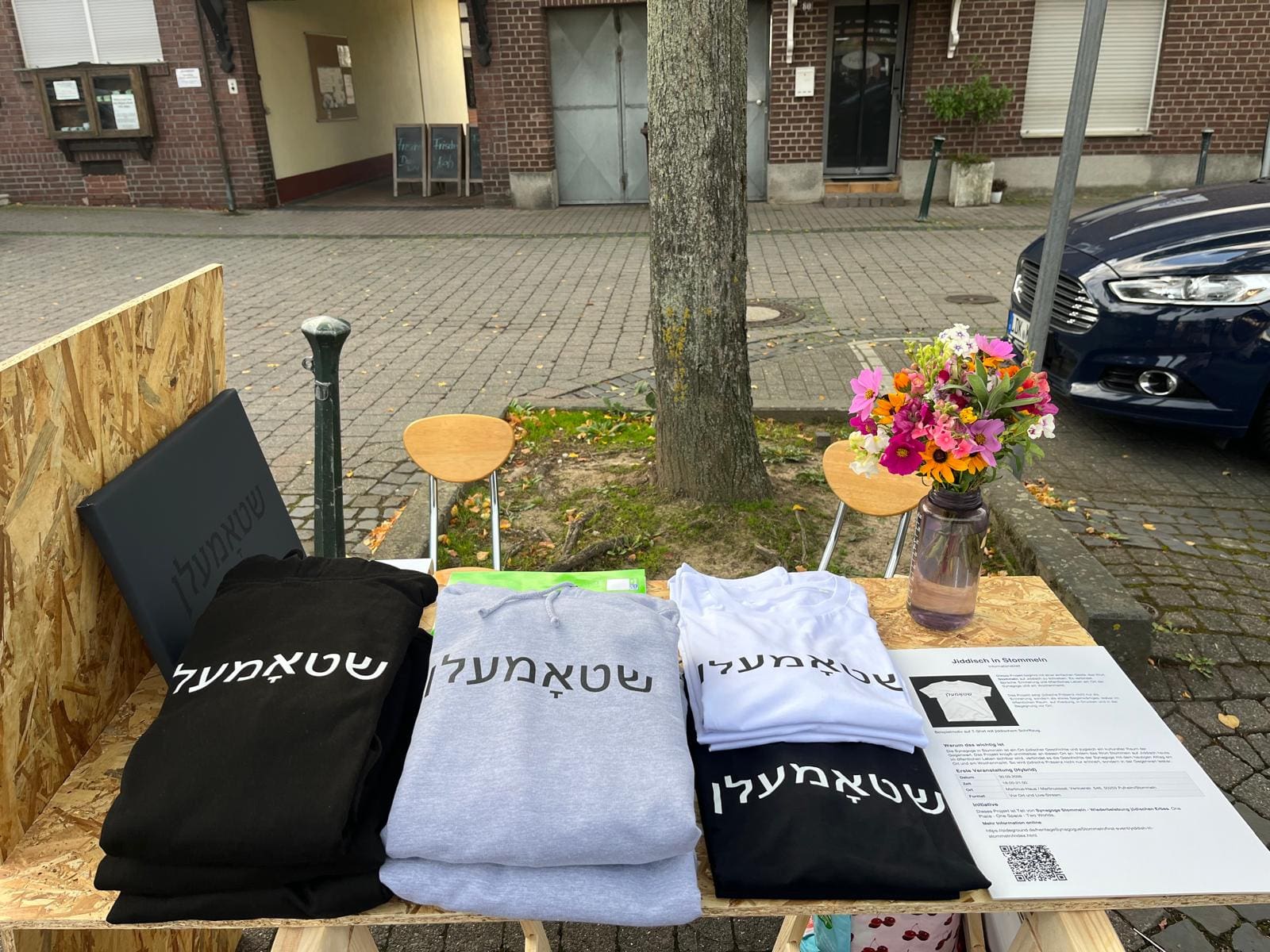
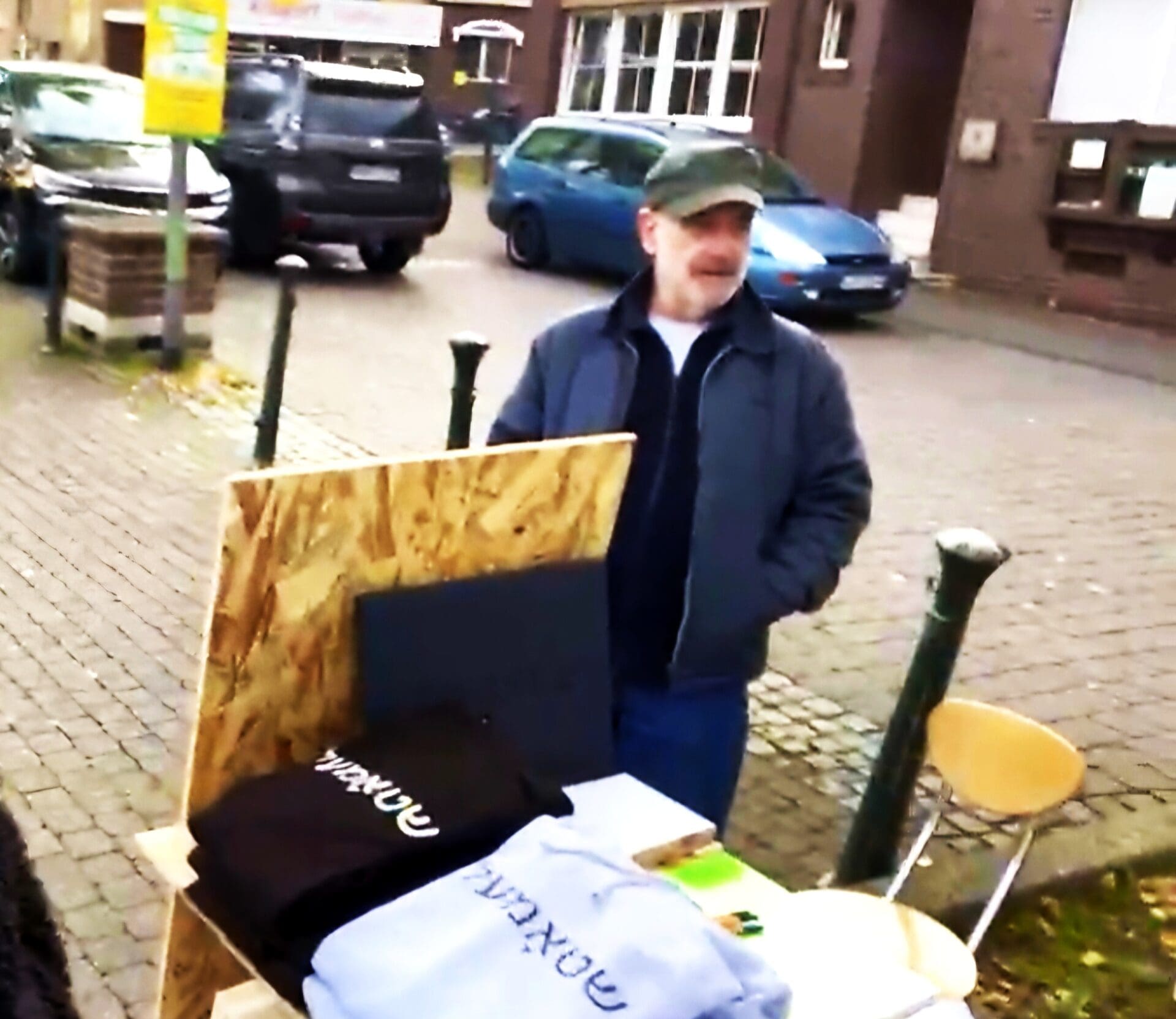
When Boaz Keizman wants to display the name Stommeln in Yiddish, in Hebrew letters, he doesn't just add an address to the sign, he proposes to change the landscape a little. Suddenly, the language that is no longer heard on the street becomes part of the street.
The name itself also has an almost literary irony: Stammeln, or שטמלען, means in Yiddish to stammer, to speak haltingly, with uncertainty or difficulty. This word comes from German, where it has the same meaning, but stammeln may describe not only a physical stuttering but also an incomplete attempt to express an emotion or thought for which it is difficult to find words. It seems hard not to hear in this a distant echo of the project itself: an attempt to give voice to something that was interrupted, and to say again something that perhaps seemed impossible to say.
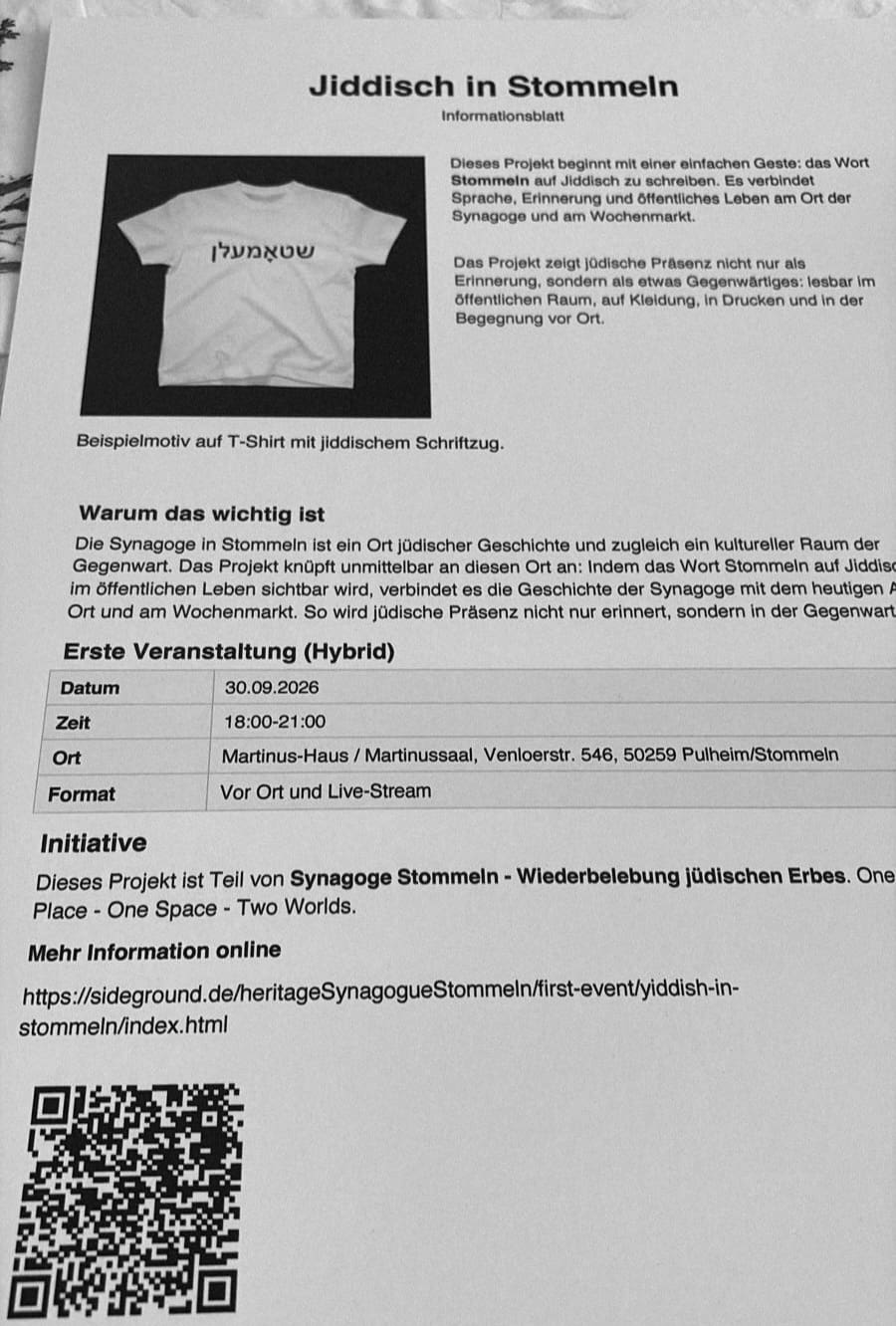
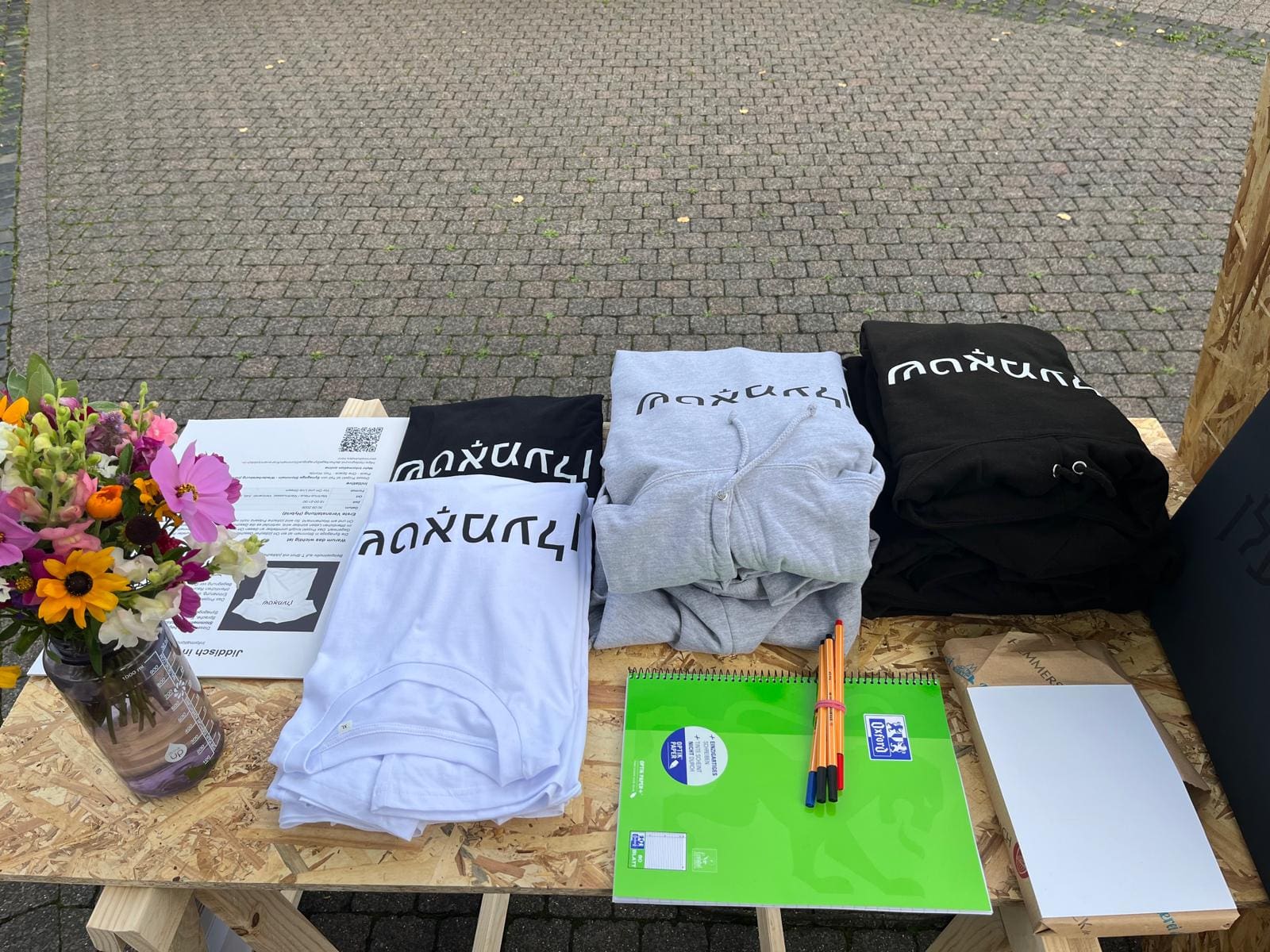
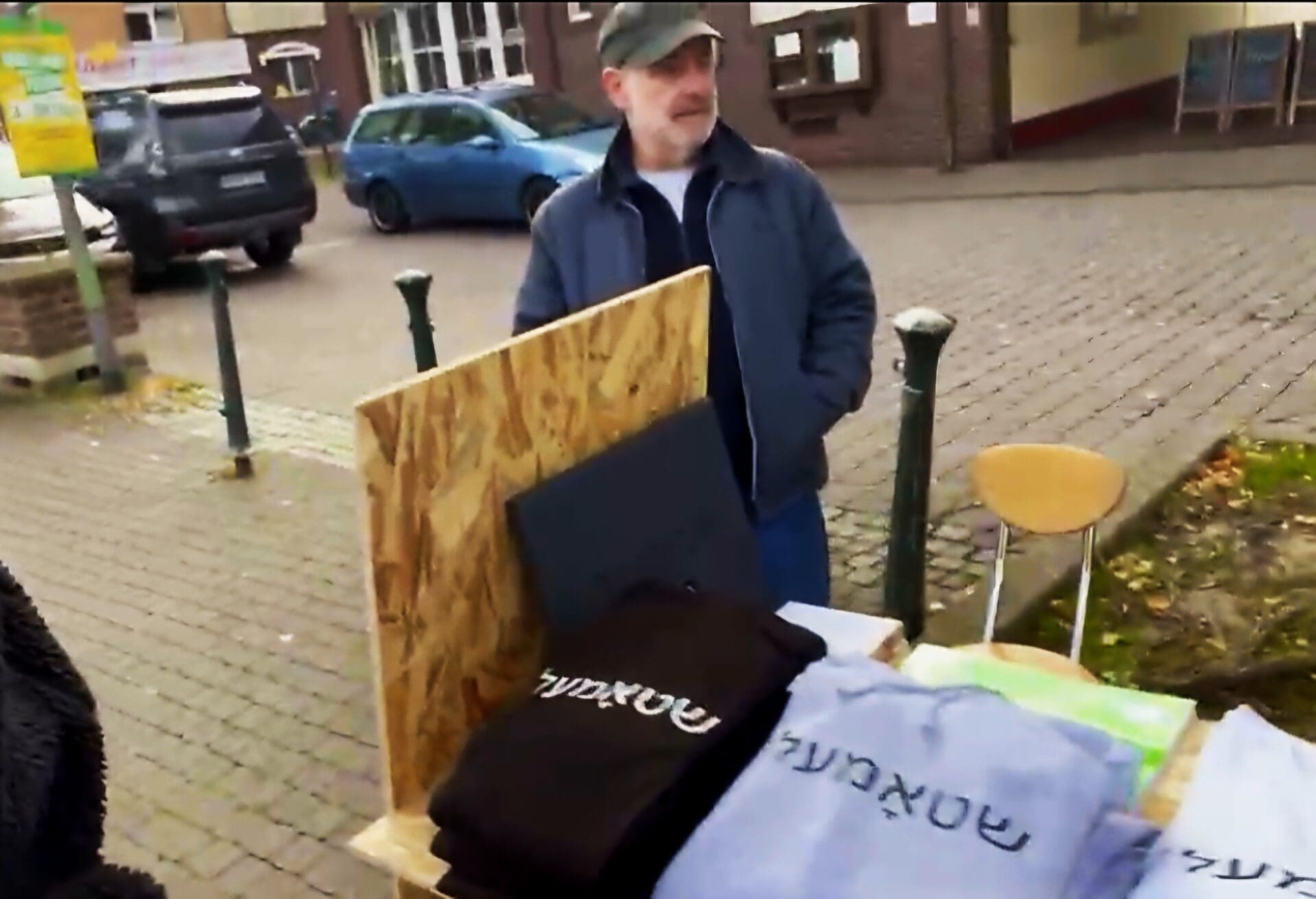
Under the title "Yiddish in Stomlen," the initiative begins with a seemingly simple gesture, writing the city's name in Yiddish, but this gesture carries a much broader idea. It seeks to bring the Jewish sign out of the archive of memory into public life, from the walls to the street, to the weekly market and to the daily encounter with non-Jews.
From memory to the weekly market
This is also the principle that recurs throughout the entire project: memory does not have to remain within the four walls of the synagogue. It can go outside, into the city, into the shops, into the streets, and into the people.
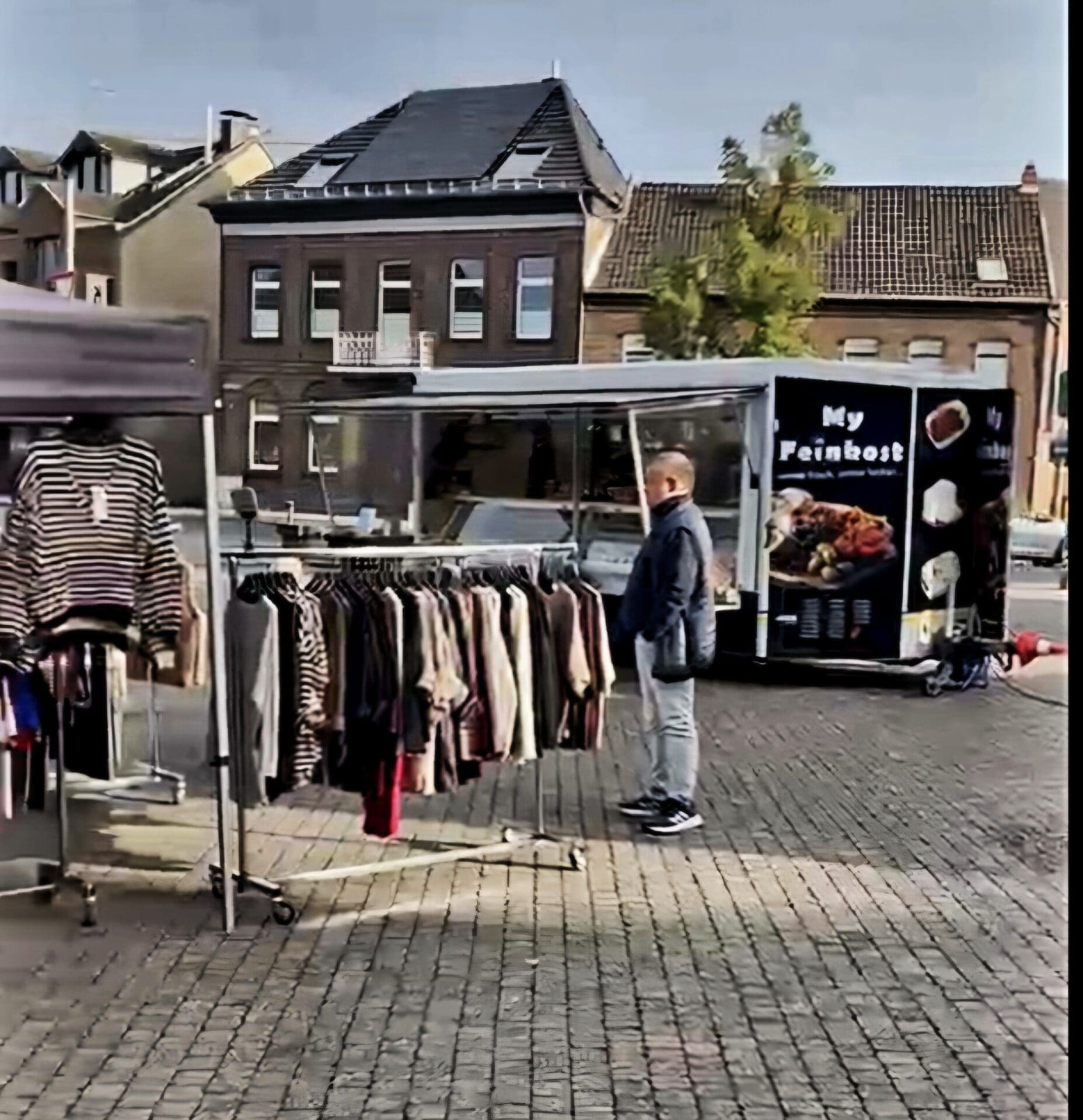
In the example provided on the project's explanatory page, the Yiddish word does not just appear on a wall or in a historical document, but is printed on a T-shirt. Thus, the language itself is transformed from something belonging to the past into a sign that can be worn, seen, and encountered in public space.
The Jewish presence is presented here not only as a memory of a vanished community, but as something that can also belong to the present: in clothing, in print, in the market, and in the encounter between people. In this way, the project seeks to connect two dimensions of the synagogue in Stommeln: on the one hand, a site of Jewish history, a tangible relic of a destroyed world; on the other, a contemporary cultural space, from which it is possible to open a new conversation about the meaning of a Jewish presence in Germany.
The first event of the project, which will take place on September 30, 2026, from 18:00 PM to 21:00 PM, at the Martinus-Haus / Martinussaal on Venloerstr. 546 in Fulheim-Stommeln, will be held in a hybrid format, with an audience and live broadcast. The initiative is presented as part of the broader project “Synagoge Stommeln-Wiederbelebung jüdischen Erbes”, “Stommeln Synagogue-Revival of Jewish Heritage”, and carries the slogan “One Place-One Space-Two Worlds”, “One Place-One Space-Two Worlds”. This formulation already contains the question that hovers over the entire process: can the synagogue be at the same time a site of memory for a destroyed Jewish world and a space where something of Jewish life can reappear, not as an imitation of the past, but as a cultural presence of the present…?
What is memory when there is no one left to remember?
This is where the project reaches its philosophical realm.
Memory is usually an action of the past. A person dies, a community disappears, a building remains and we visit it to remember.
But what happens when memory becomes so dominant that it obscures the very thing it seeks to remember?
One can spend a lifetime in twenty-first-century Germany in a culture of commemoration and yet remain without a real picture of Jewish life itself. One can know well what the extermination of European Jewry looked like, but know less about how Jews lived before the disaster. One can remember death and forget life.
Keizman is trying to reverse the direction. That is why his project includes not only means of memory but also music, language, holidays, creation and encounter. He wants to remind not only that there were Jews here. He wants to remind What is it like to be Jewish in the place?.
The empty chair
One of the ideas that appears within the initiative is a virtual map of moshavim related to the historic Stomlén community.
It's an almost theatrical idea.
The synagogue is a space of seats. Each seat can belong to someone. A person sits in a certain place, knows the person sitting next to him, returns there every Shabbat, and over the years the place becomes his. When the community disappears, the chairs remain. The people do not.
The virtual map attempts to turn this absence into something that can be actively addressed. Not just "looking at" the names. But participating in their memory.
This is a transition from observer to participant.
Then comes the conflict.
This is where the story becomes less convenient. Because Keizman's vision does not exist in a vacuum, and above all: the synagogue belongs to the municipality of Fuldheim.
The municipality manages the venue and the official cultural project of "Synagoge Stommeln".
And in September 2026, it issued an important clarification: it does not cooperate with Keiseman's initiative, did not approve the use of the building for the initiative, and does not support the fundraising associated with it.
This message draws a clear line.
Keizman can offer a vision. But the vision does not, because of that, become municipal policy.
And this is precisely the moment when the question of art becomes a political and cultural question.
Who has the right to decide what Jewish memory is? Can a German city manage a Jewish heritage site as a cultural event, even when there is no longer a local Jewish community? Can an Israeli artist come and say: This place needs not only art but also a Jewish presence? And is the very attempt to revive Jewish heritage a cultural act, or is it already a change in the public meaning of the place?
There is no simple answer to these questions.
Two Concepts of the Synagogue
Perhaps that is why the controversy surrounding Keiseman is more interesting than the question of whether a particular project of his is good or bad.
Because two different perceptions of the same building clash here.
According to one view, the Stommelen Synagogue is a historical site that has become a center for contemporary art. Art is the way in which today's Germany conducts a dialogue with the past. According to another view, the place is also a remnant of Jewish culture that cannot be reduced to the history of anti-Semitism and the Holocaust.
According to the first, the artist enters the site and asks what he can say about it. According to the second, one must also ask what is missing from the site when there is no longer Jewish life there.
The gap may seem small, but it is not small at all.
The Olaf Nicolai Affair
This controversy was particularly acute around the work of German artist Olaf Nicolai, entitled "Ein ungedeuteter Traum ist wie ein ungelesener Brief."
The work sparked criticism, including from Keizman and his initiative, regarding the way voices and sounds were used in the context of the synagogue.
The question that arose was not only whether the work was artistically successful. The question was what an artist is allowed to do within a space whose history is not just artistic material. Is it possible to take a sound, a voice, a language, or a gesture and give them an entirely new meaning? Or are there voices from the past in such a place whose baggage cannot be ignored?
This debate is almost a parable for Keiseman's entire project. He doesn't seek to close the door to art. He simply seeks to remind those who enter the door that the walls are already speaking.
Art that cannot be innocent
In a regular exhibition space, one can debate a work of art in terms of beauty, originality, material, form, idea.
In Stomlan, an additional sentence is always added: What does work mean here? This is a question that has accompanied the artistic project of the place since its inception. But Keizman pushes it a step further. He asks not only whether the art refers to history, but whether it leaves room for a Jewish present. It is a subtle difference.
Art can speak about the Jews. Keizman wants Judaism to be able to speak for itself.
Not to bring back the past, but to change the future
It might be easy to mistake the word "resuscitation" and understand it as if Keizman dreams of returning the synagogue to its original function.
That's not the point. After all, the past cannot be undone.
The community of Stommelen will not return to the way it was in 1930. The people are not the same people, Europe is not the same Europe, and today's German Jewry is also completely different from what it was before the Holocaust.
So what Keisemann is offering is not a historical reconstruction. He is trying to create New status.
A situation where the memory of the Holocaust is a starting point, not an ending point. A situation where the synagogue is both a place of history and a place where new music can be introduced. A situation where Jewish language is not just a museum object.
A situation in which a young person can come to the place not only to learn what happened to the Jews in Germany, but also to encounter a Jewish culture that does not speak to him only from the past.
The question that cannot be solved
There is something almost impossible about a project like this. To revive a legacy, you need people. But the people who built the legacy were murdered or exiled.
To bring back a language, you need speakers. But the local language is almost no longer heard on the streets.
To bring music back, you need an audience. But the community for which the music was played is no longer there.
And to bring a synagogue back to life, you need Jews. But is it possible to create Jewish life in a place where history itself has made the word "Jew" such a loaded word?
Keizman doesn't resolve this contradiction. He turns it into a project.
Maybe this is actually a test for Germany.
Therefore, it is difficult to see Keizman's initiative as just an artistic project.
It touches on a much broader question: What does Germany want to remember when it says it remembers?
Does memory mean preserving the traces of a vanished community? Does it mean presenting the Holocaust to future generations? Does it mean creating art that will confront the disaster? Or should the memory of Judaism also include the possibility that Judaism will be present again, not as a shadow from the past but as a culture in the present?
Keizman offers an answer that is debatable, but hard to ignore. He is saying, in effect, that commemoration without life could turn Judaism itself into an exhibit. And he does not want Judaism to be an exhibit.
One building, two ways of looking at time
You can stand in the synagogue in Stomlan and see a building that survived. You can also stand in it and see a community that did not survive.
And one can, following Keiseman, try to see a third thing: a place where these two things do not have to contradict each other.
The past remains. But it doesn't have to always be just the past.
Perhaps that is why the word "resuscitation" is so appropriate for this initiative. It does not promise a resurrection of the dead. It does not pretend to erase the disaster. It does not seek to turn back the clock to 1882. It merely asks whether it is possible to turn on a light where the light has already gone out.
Not the same light.
Another light.
Ultimately, the Stomlan synagogue stands within this contradiction.
It is a Jewish building that is not an active synagogue. It is a memorial site that is not a cemetery. It is an art space that is not a museum, and it is a German place whose Jewish story can never be just a German story.
The artist Boaz Keizman enters into this contradiction and refuses to choose one of the options. He does not say: Enough with art. He does not say: Enough with memory. He says, implicitly, that perhaps it is time to add one more word: Haim.
And this is perhaps the question that turns Stomlén from a historical place into a truly contemporary place.
It's not what happened here that we know. It's what we're willing to do here now, when we know.