

In an era where medicine increasingly relies on artificial intelligence, genetic testing, and sophisticated imaging devices, it sometimes seems that the family doctor has become the sole gatekeeper of the health system. But this is an illusion. In fact, the more sophisticated medicine becomes, the greater the importance of the single doctor who does not treat a specific organ, but the whole person.
He accompanies his patients from youth to old age, gets to know their families, their life stories, and the changes that have occurred in them over the years. Medical literature considers this continuum of familiarity one of the pillars of quality medicine.
See the person, not just the symptom
When a patient complains of fatigue, pain, or dizziness, the family doctor knows that the answer is not always hidden in a blood test or X-ray. Sometimes it stems from loss, loneliness, mental stress, or a complex combination of physical and mental factors. This is the essence of family medicine: seeing the person within their world.
Studies show that ongoing familiarity between doctor and patient improves the quality of care, reduces hospitalizations, enables early detection of diseases, and strengthens trust, which is sometimes the most important medicine.
"I live here too"
Here, the section that seeks to open doors, not only of houses, but of souls. This is a section that brings you fascinating Haifa characters, straight to their living spaces, with the belief that true acquaintance is forged through stories, life lessons, and unique and personal perspectives.
Thus, the rich human mosaic of our city, Haifa, a city of voices, memories, and living, breathing identities, gradually unfolds. A section about women and people who live here, as the section's name suggests: "I live here too."
This is where we meet these characters inside their homes, but not as a purely physical space, one measured in square meters, real estate valuations, or design aesthetics. The home is described here as a space filled with meaning: a treasure trove of memories, evidence of life stories, and a space charged with emotion. Through the home, we get to know its inhabitants, not from the outside, but from the inside: through an intimate, one-time lens that reveals their world as it is experienced from the inside.
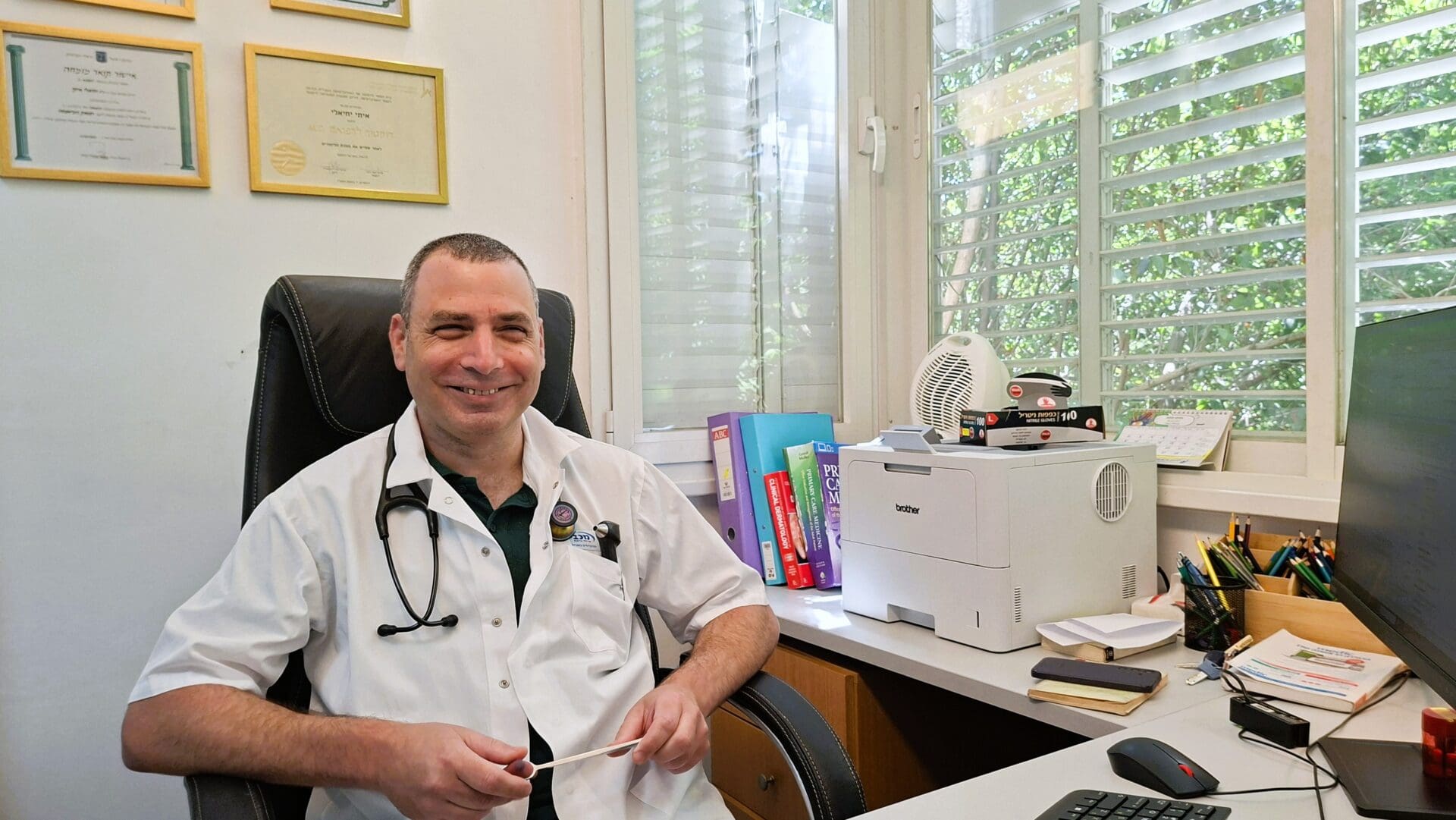
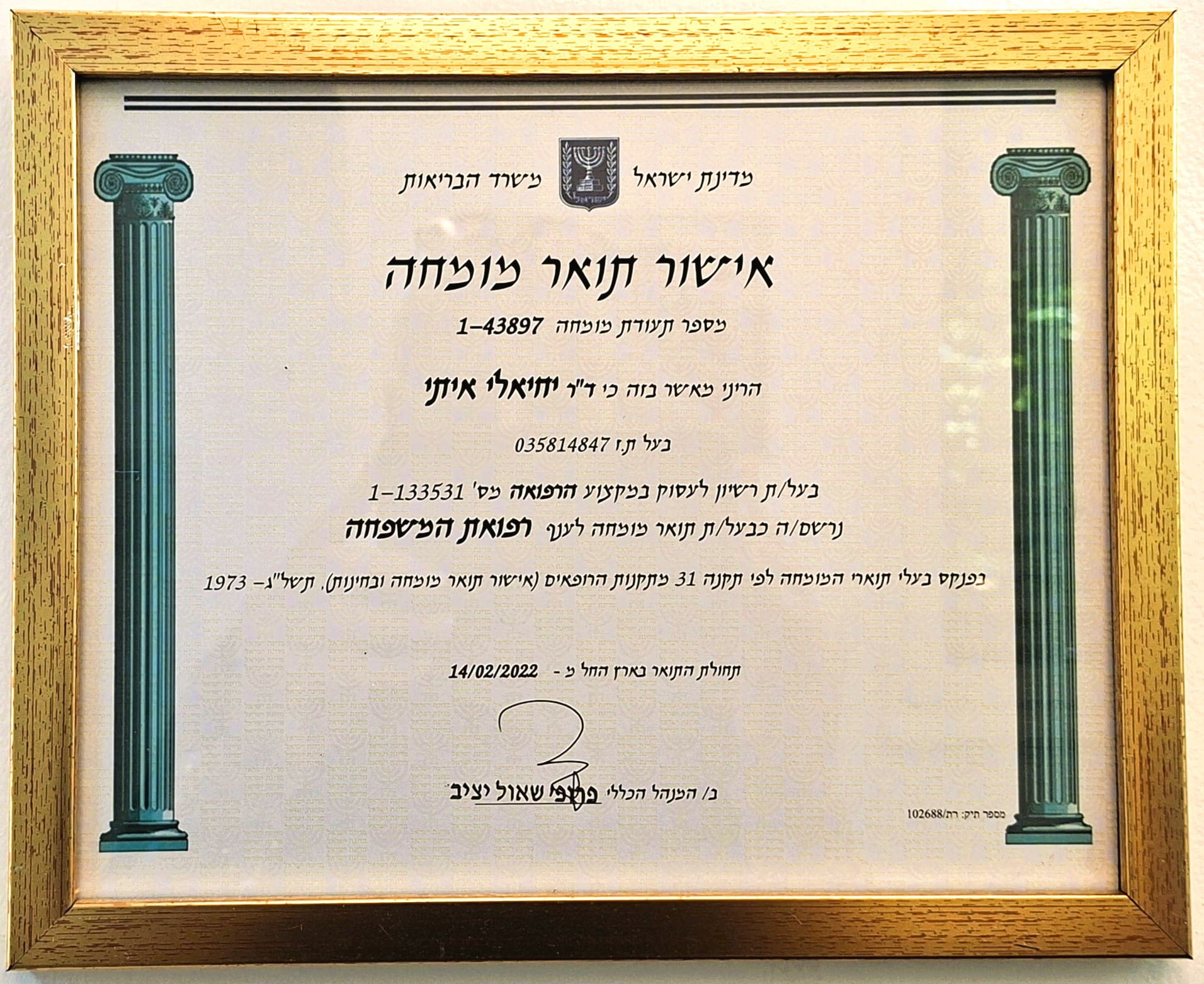
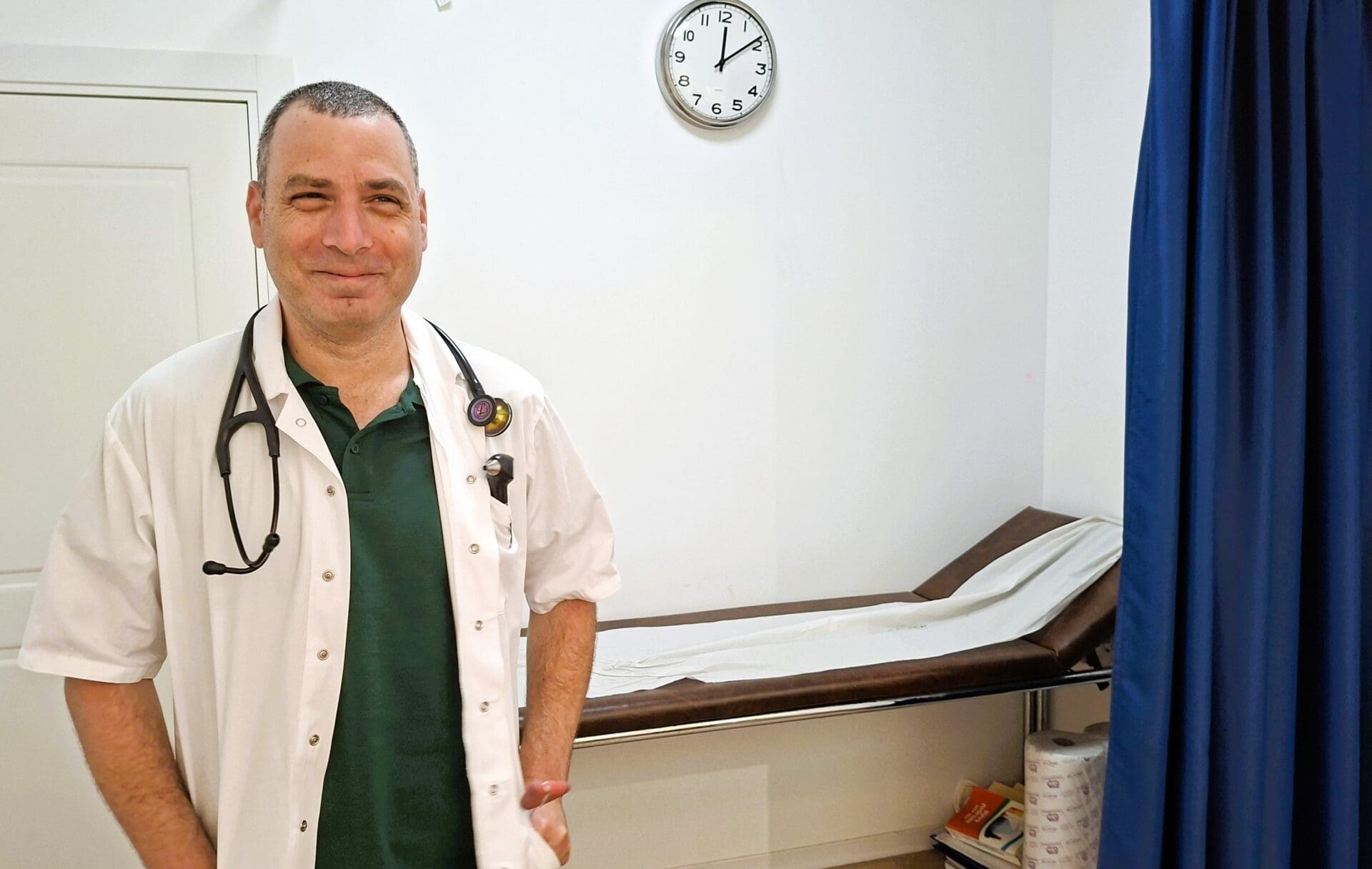
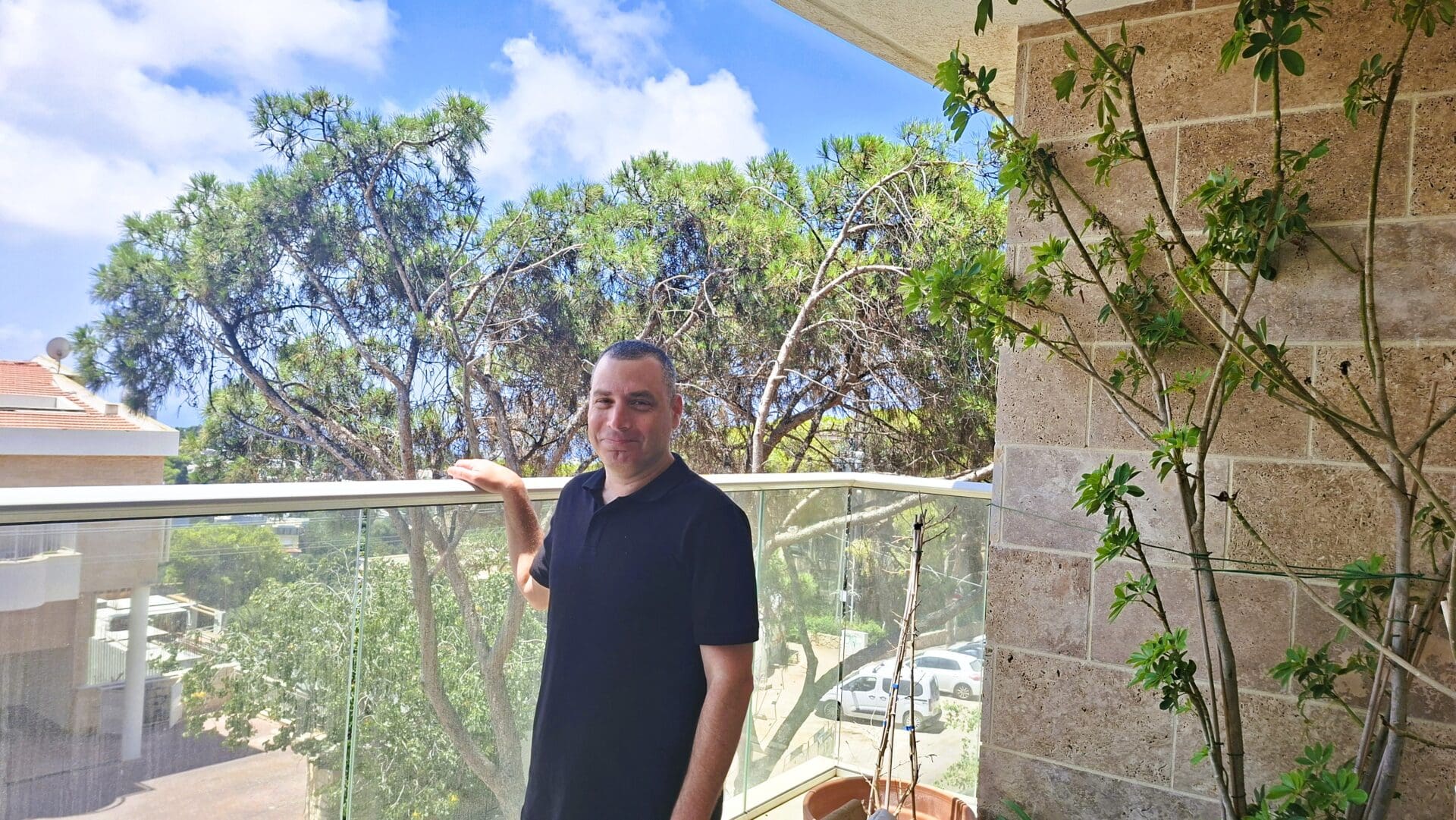
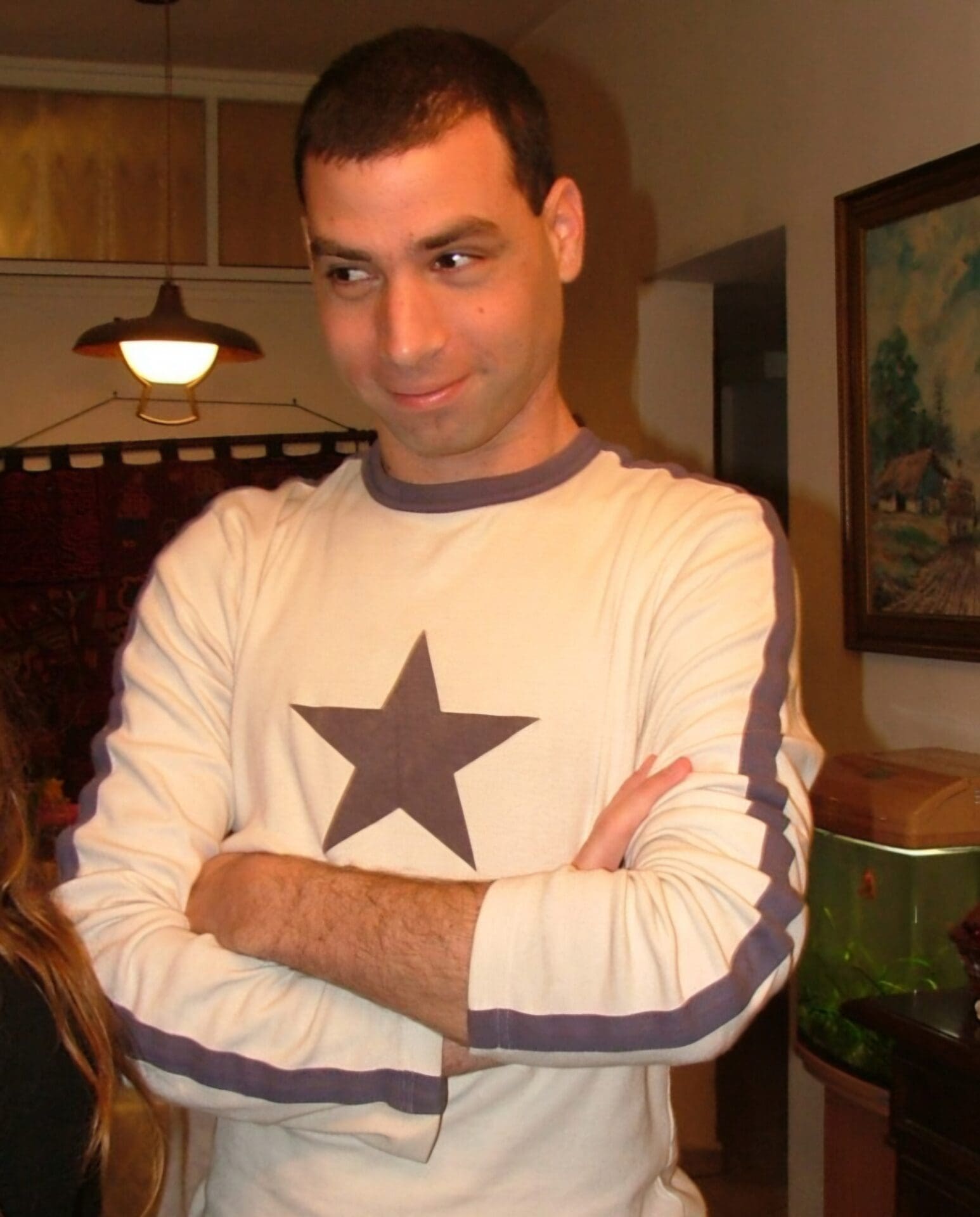
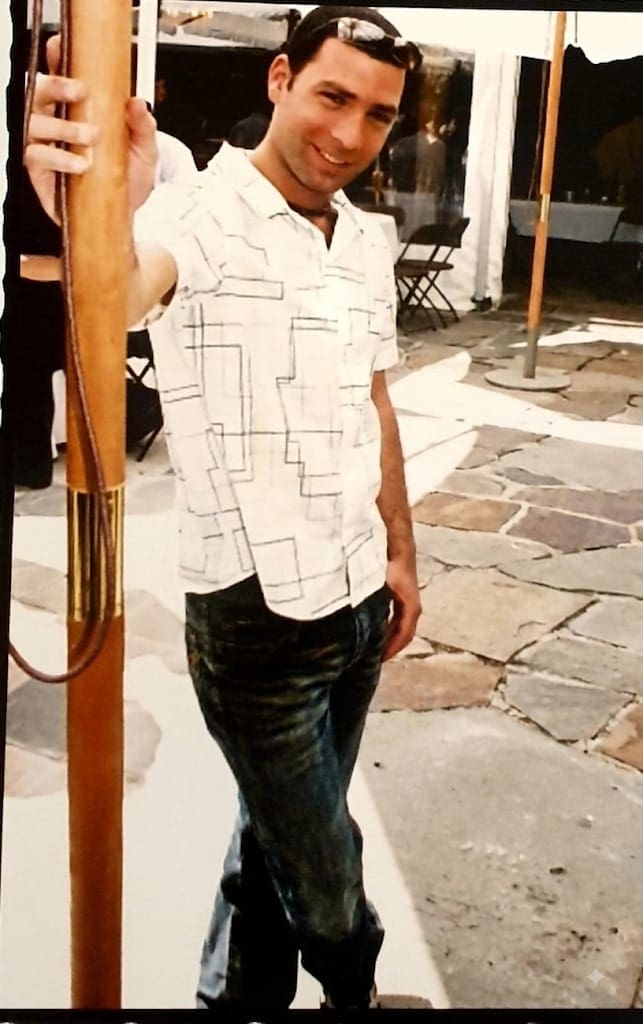
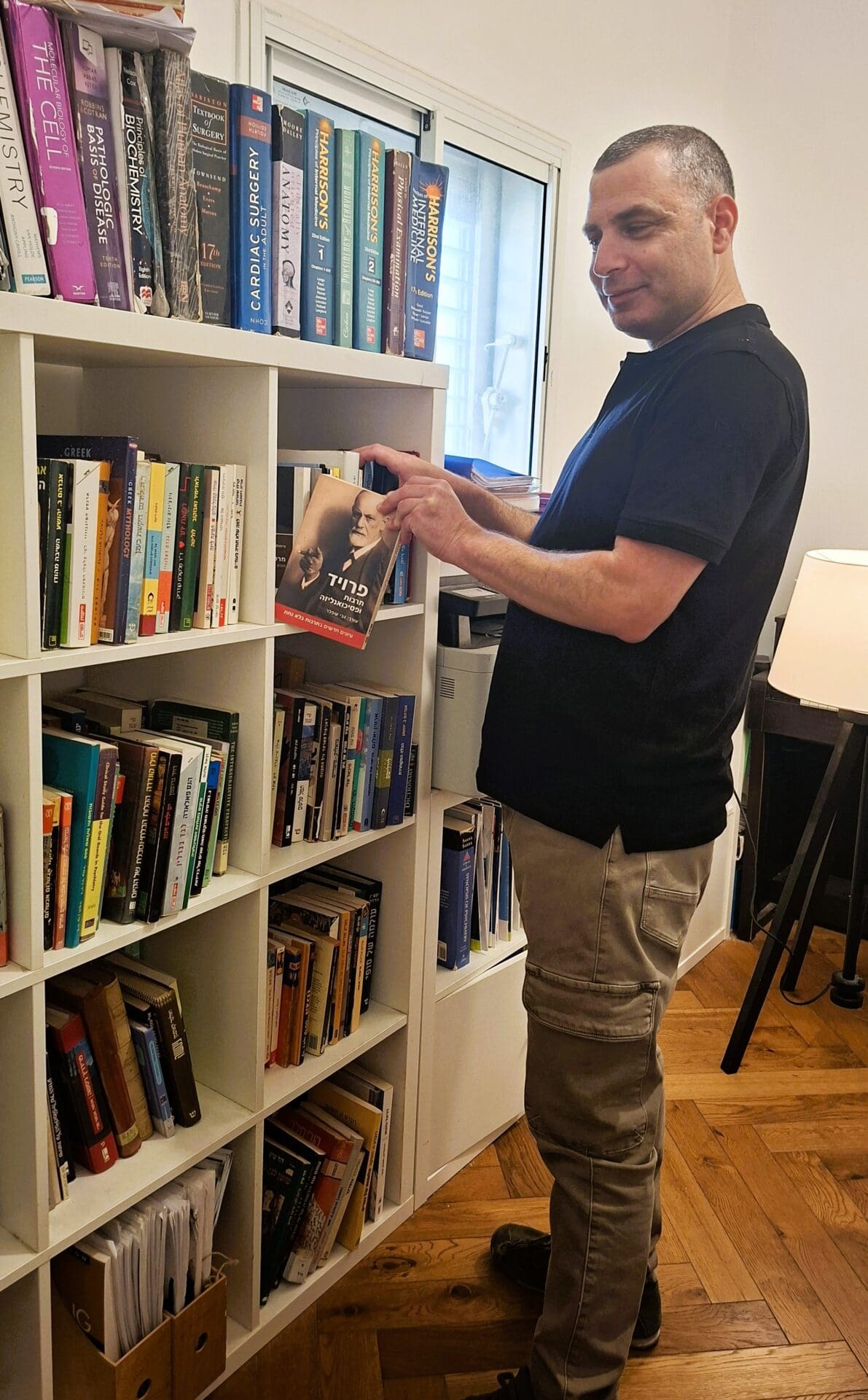
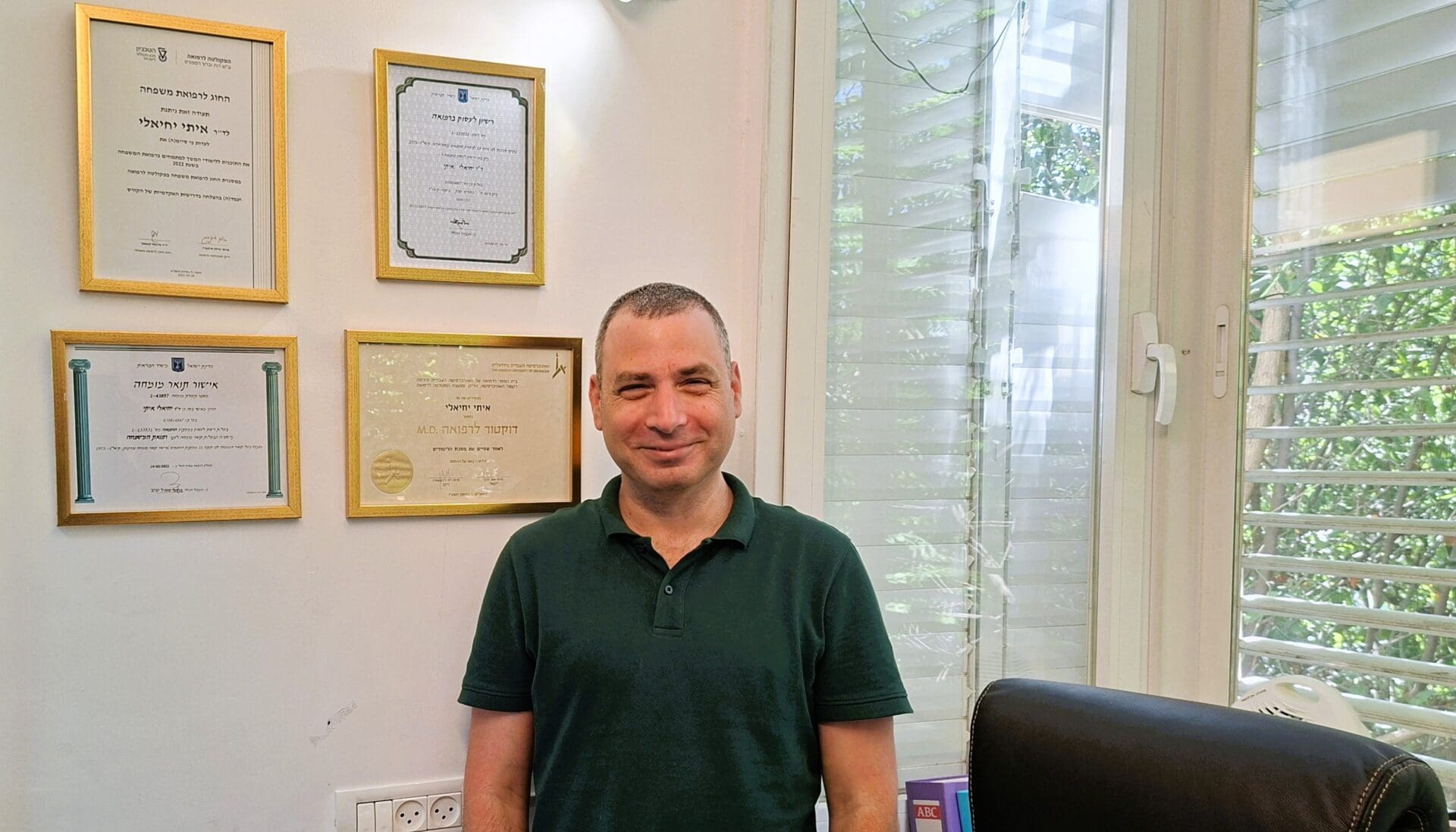
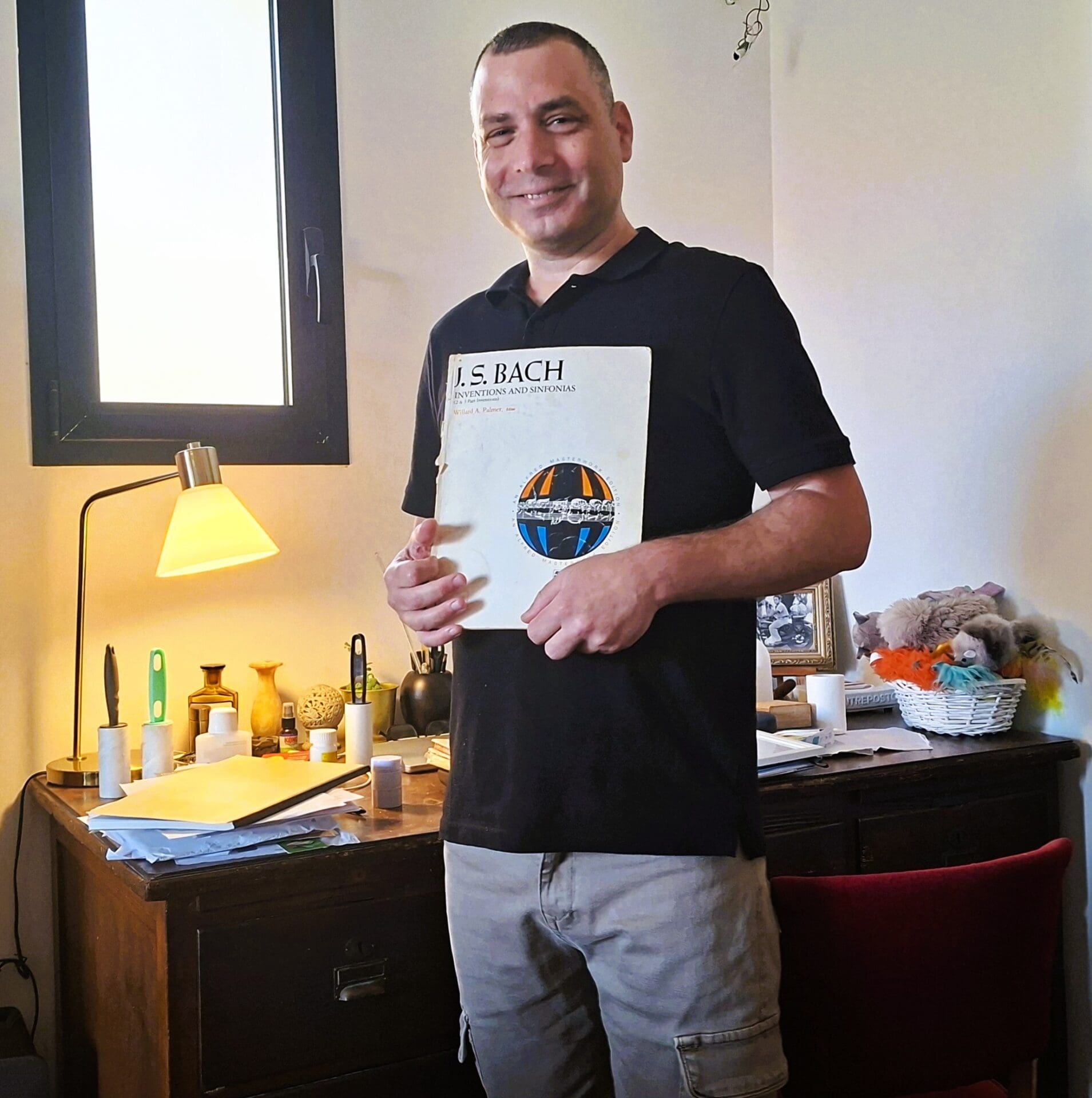
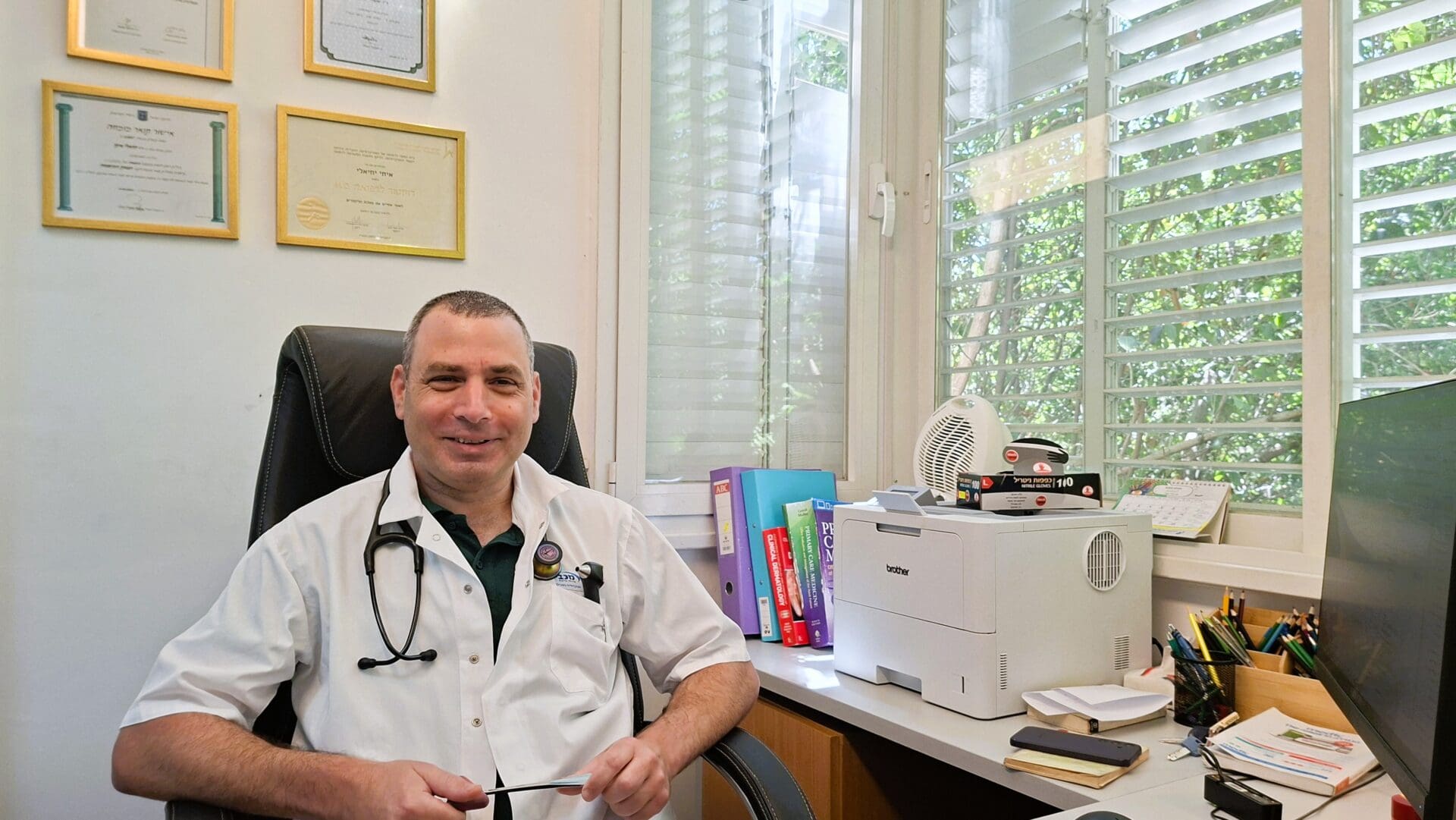
This time we will be staying at the home of Dr. Itai Yehieli, a family medicine specialist.
The doctor who prevents the disease from appearing The profession that cannot be replaced by a machine
The great success of a family doctor is not measured only by the diseases he cures, but also by those he manages to prevent. Balancing blood pressure for years, encouraging smoking cessation, vaccinations, screening tests, and monitoring chronic patients don't make headlines, but they save lives every day.
At the same time, he coordinates the recommendations of various experts, navigates between multiple medications, and makes complex decisions, when faced with not a medical case, but a whole person, with his limitations, hopes, and family.
Despite technological advances, no computerized system can replace a family doctor's ability to identify a small change in an old patient's behavior, understand the family context in which their illness developed, or know when a long silence in the examination room means more than any laboratory test.
In a medical world that is increasingly fragmented into narrow specialties, the family doctor remains the figure who connects all the pieces of the puzzle. He does not only treat the disease, but accompanies the person on his life's journey, and sometimes this is the most important treatment he provides.
Between Ein Harod and Haifa: The story that began long before Dr. Yehieli
Before he became Dr. Itay Yehieli, before the clinic, before the white coat, and before the years in which he learned to listen to people who come to him with pain, fear, or just a feeling that something in their body has changed, there was a boy born in 1978 to a family living in Rishon LeZion.
But the story from which Itay emerged actually began much earlier, in other places, with other people, and to a large extent in circumstances they did not choose. His father, Eli, was born on Kibbutz Ein Harod, in one of the landscapes so identified with the story of the kibbutz generation: a society that spoke of partnership, of work, and of building a shared future, but within this grand story also existed the private story of a child whose mother died when he was young.
Eli's father, that is, the grandfather, who was left alone with the child, later married another woman, but she, as the family story describes, did not show him the warmth he needed. There is something almost legendary, in the sad sense of the word, about a child growing up in a community that was meant to be a large family, and yet feeling like he had no family of his own. Years later, upon the end of his military service, Eli left Ein Harod and went to Tel Aviv.
The city, with its density, traffic, and opportunities for those who came to it from the kibbutz, was a long way from the fields where he grew up. There he found his first job at the Mitzvachim company, as a reel changer in the computer room. The computers of those days were still large, cumbersome machines, far removed from the personal, almost invisible devices of our time, and working in the computer room required skill, responsibility, and patience. As computers changed and developed, Eli advanced with them. He remained in the field his entire life, and for many years was a computer operator at the Mitzvachim company.
There is in this story, perhaps without intending it, a kind of thin line that connects the child from Ein Harod and the father who will raise a son who will become a doctor: a child who lost his mother too early, a man who learned to manage the world on his own, and a job that over the years has become a stable anchor in a world that has changed.
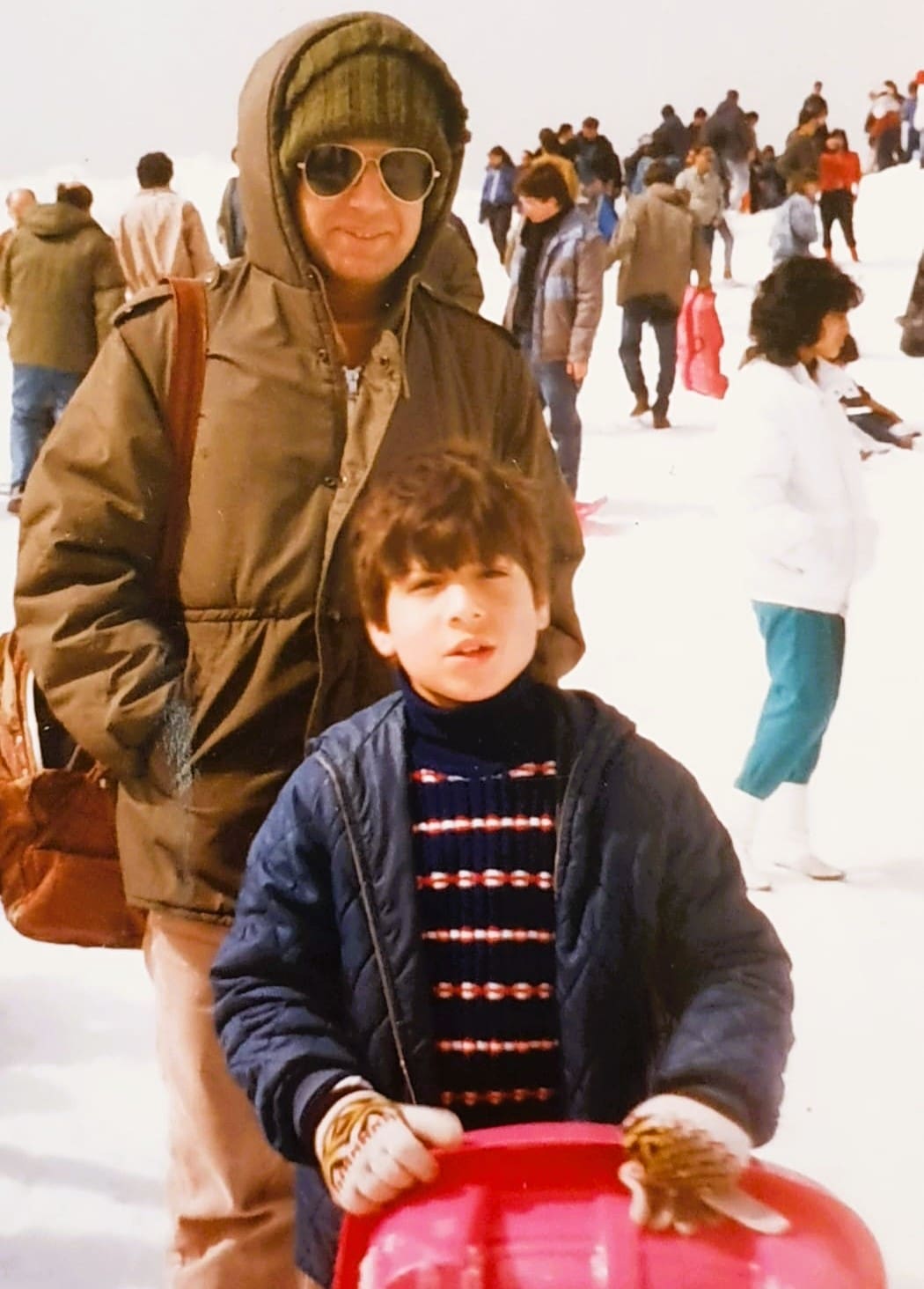
From Haifa to Rishon LeZion, and back: Itay's family map
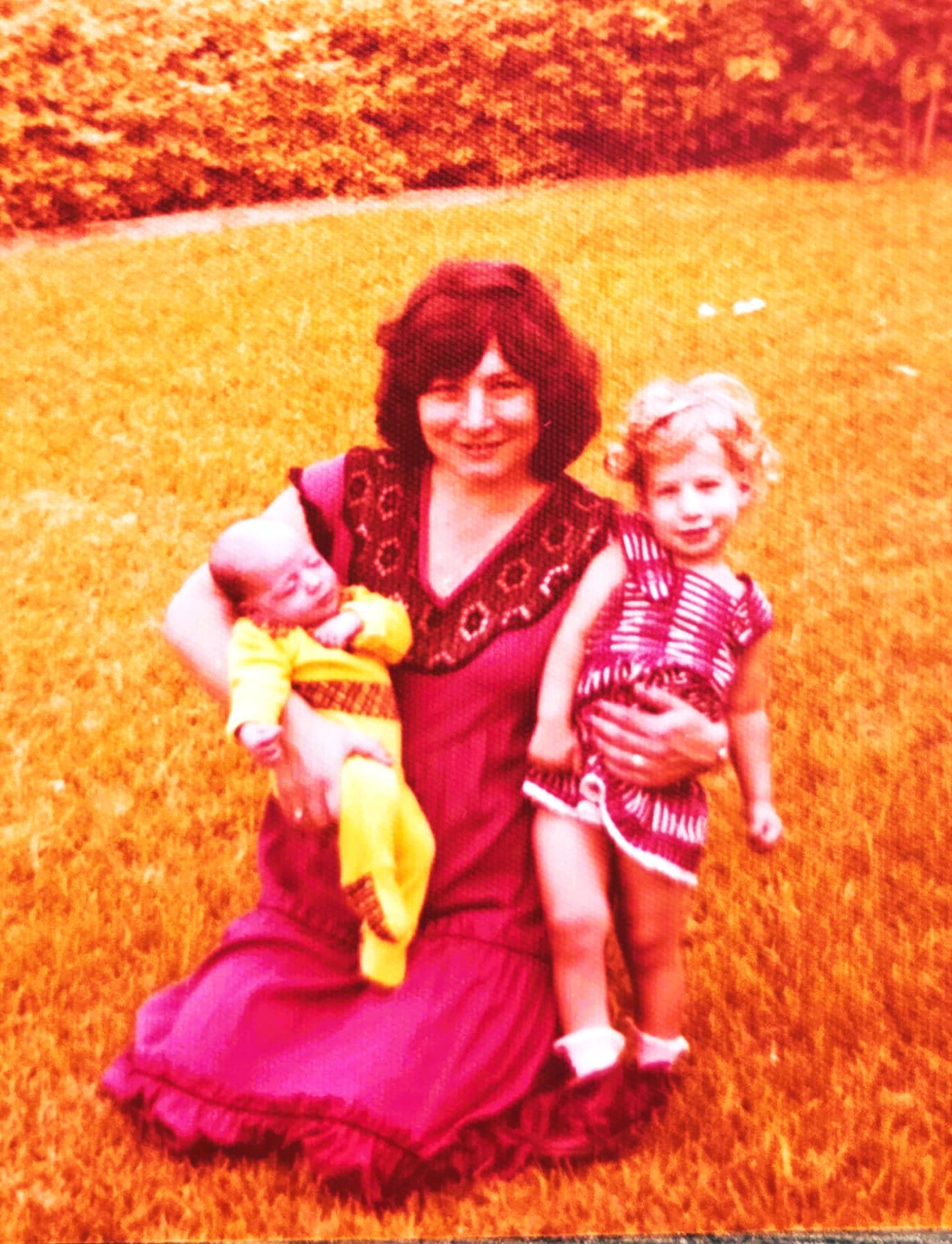
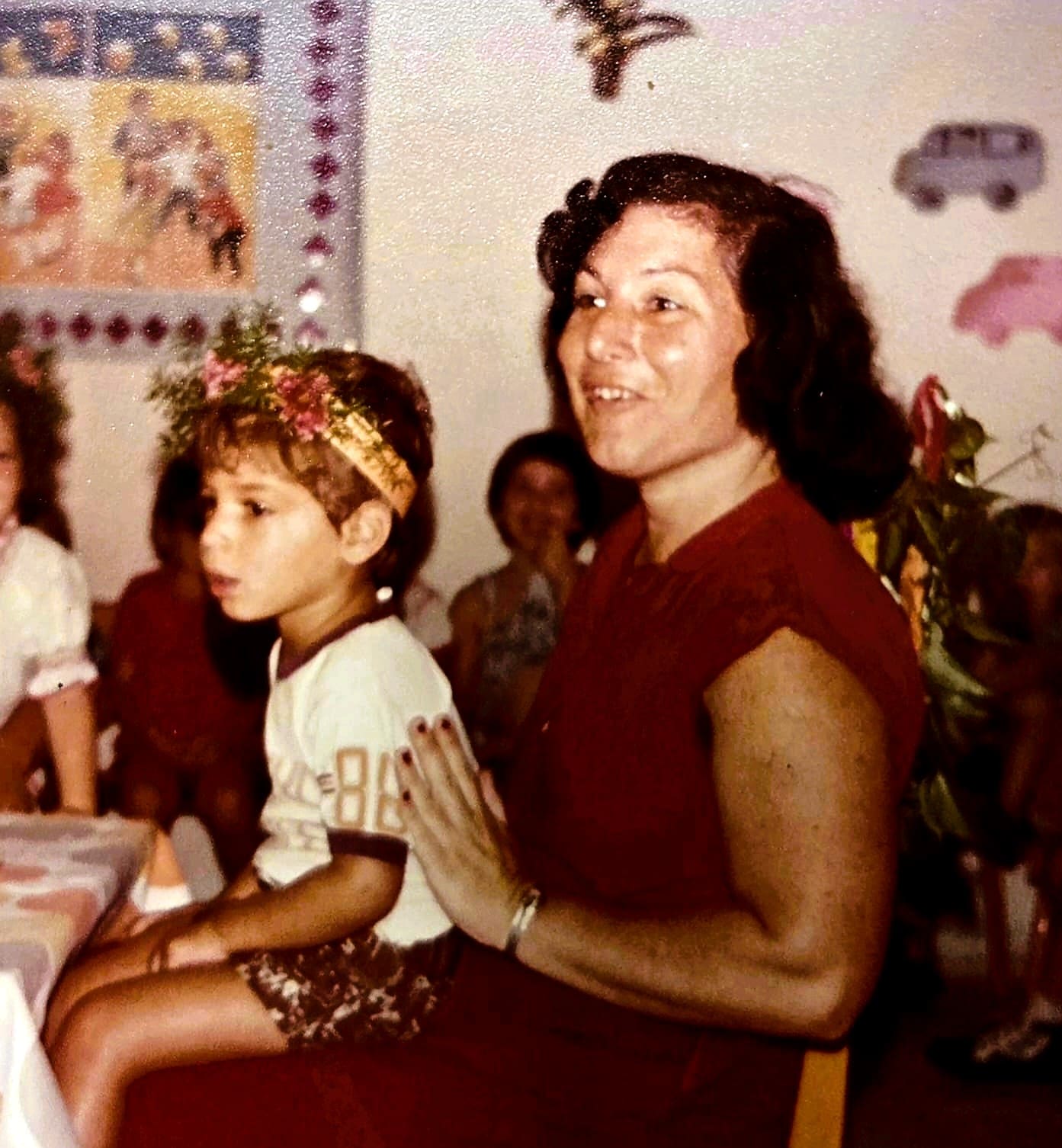
From the other side of the family came Sarah, Itay's mother, née Kit, a native of Haifa, who later worked as a secretary at the Telrad company. She was born in 1947 on Geula Street, at a time when the state was still just a young idea that was gradually becoming a reality, and Haifa was a city of immigrants, families, neighborhoods and a port, a city where people came from different places and tried to build a new life for themselves.
Thus, even before Itay himself knew anything about the places where he would live in the future, there were already two different geographical directions within his family: his father's Ein Harod and his mother's Haifa, the kibbutz and the city, the fields and the beach, the memory of one childhood and the promise of another. Itay was born and raised in Rishon LeZion, but the connection to Haifa, which came to him through his mother, did not disappear. It remained there, perhaps like a thin thread that runs through a family and continues to exist even when no one calls it by name.
Later, after passing through various stations in his life, Itay Yehieli would actually end up in Haifa and live there. Looking back, this fact can almost seem like a circle closing: the place where his mother was born in 1947 on Geula Street, and the city to which his son would return decades later, as a family doctor.
Between these two points, Ein Harod and Tel Aviv of his father, Haifa of his mother, Rishon LeZion of his childhood and Haifa to which he will arrive in adulthood, unfolds the story from which emerged the man who will be preoccupied throughout his life with people, their bodies, their memories and the fears they bring with them to the doctor's office. Sometimes only when you look back can you see that biography is not a random sequence of addresses and dates. It is a map. And for Itay Yehieli, this map begins long before medicine.
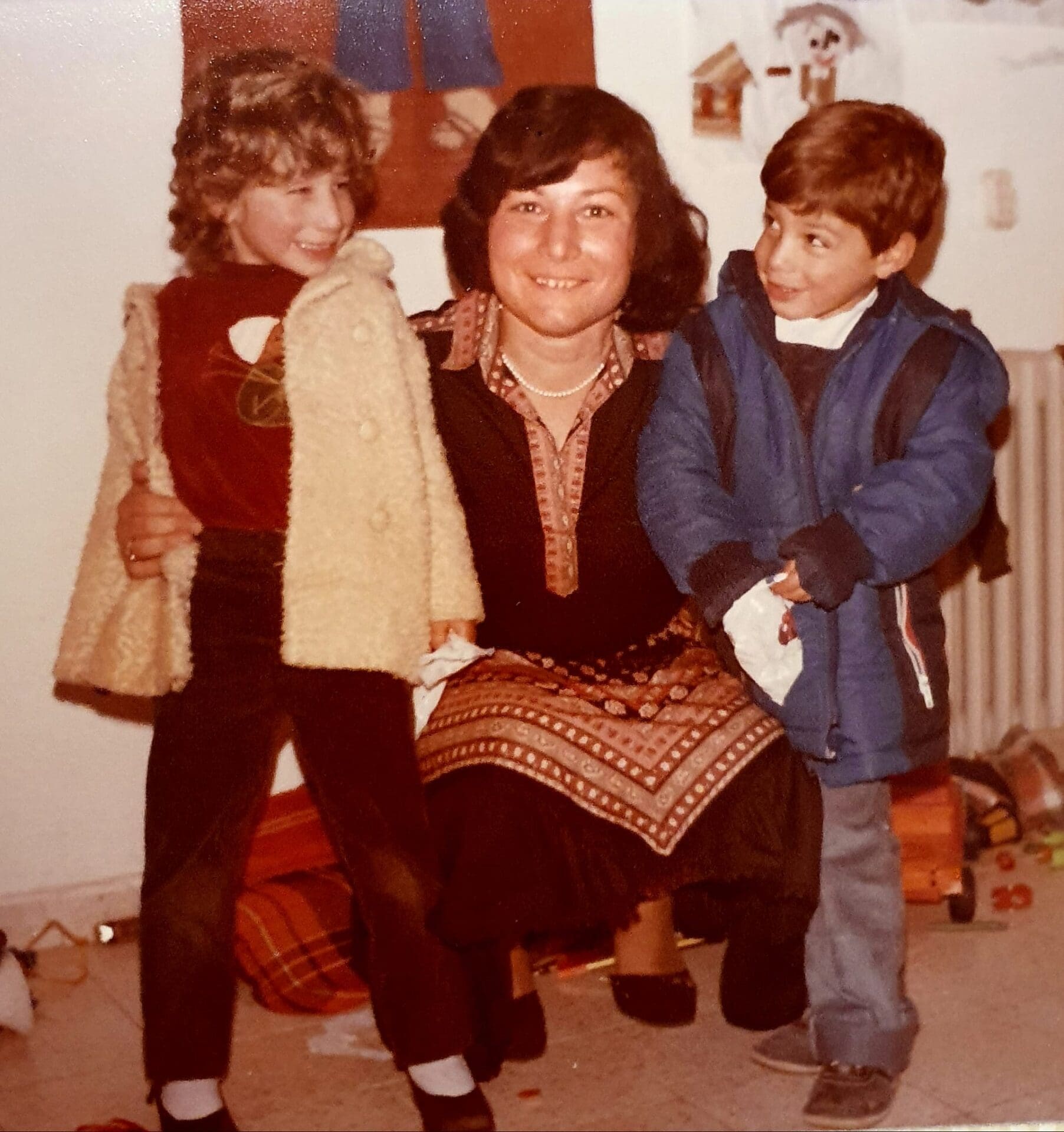
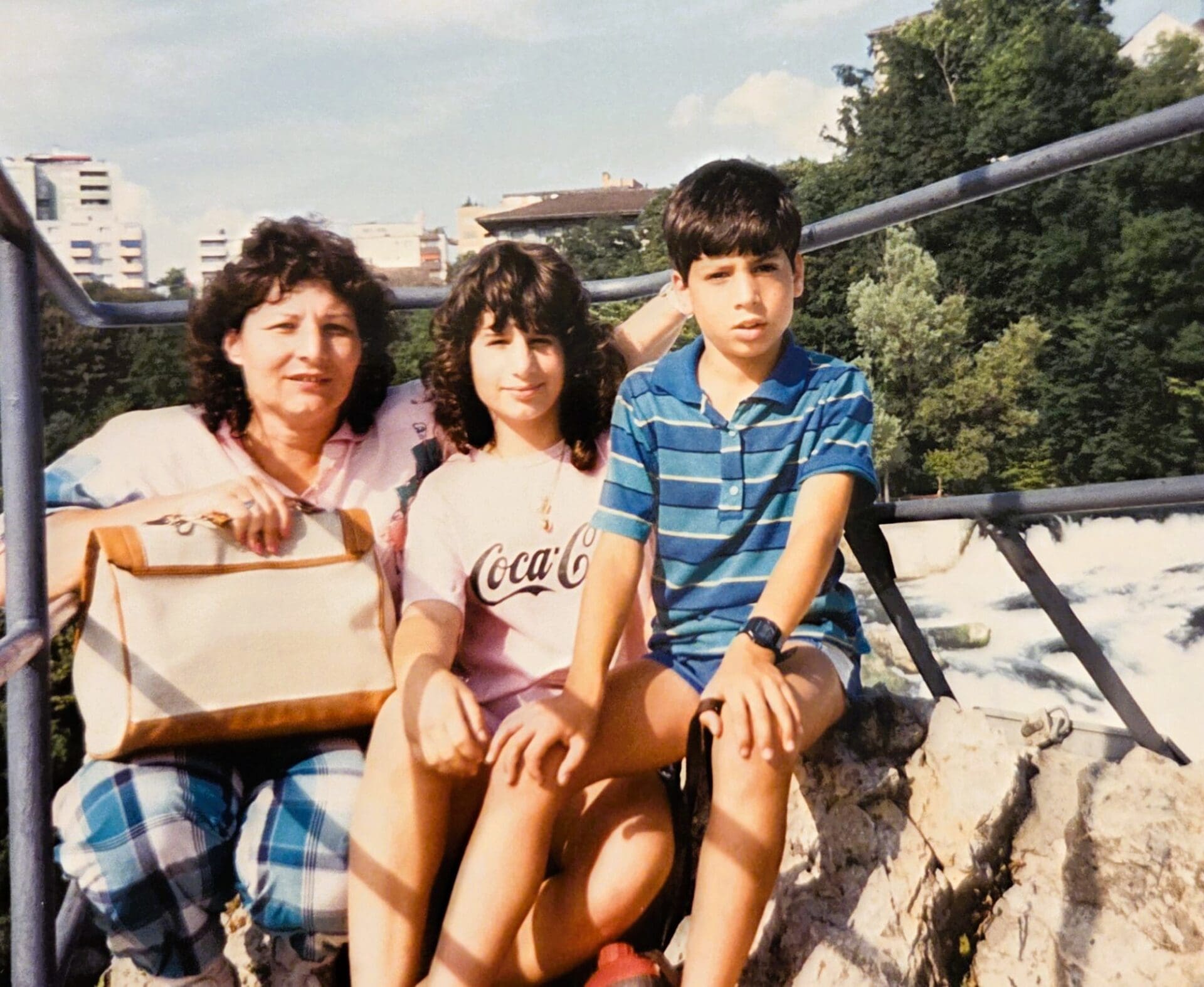
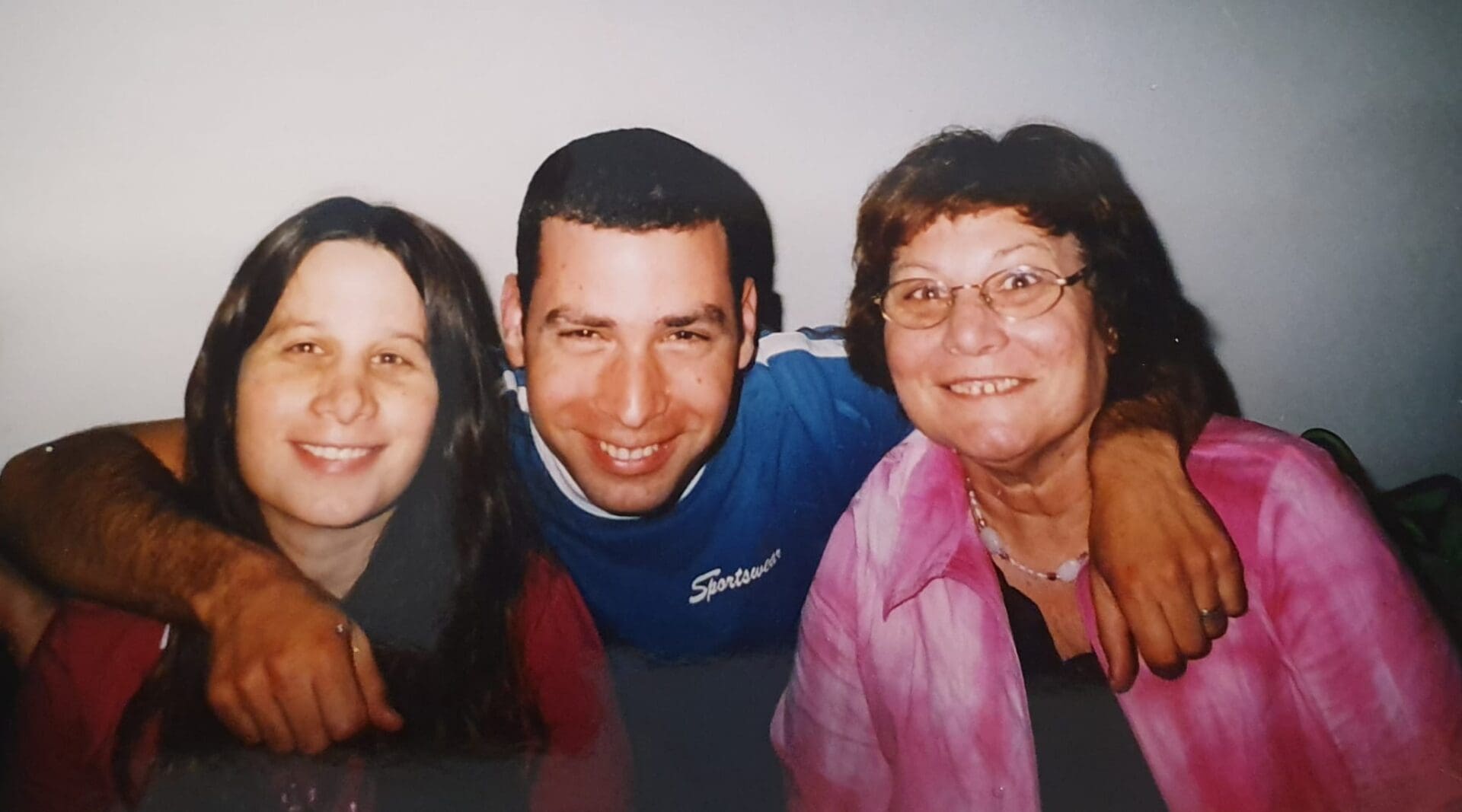
The Quiet House and the Boy Who Found the Piano
The Yehieli family home in Rishon LeZion was a home of labor. There wasn't much music, nor was there much stimulation. Those were other days, when childhood was lived in a smaller, simpler world. It was precisely within this quiet space that there was room for curiosity, observation, and imagination.
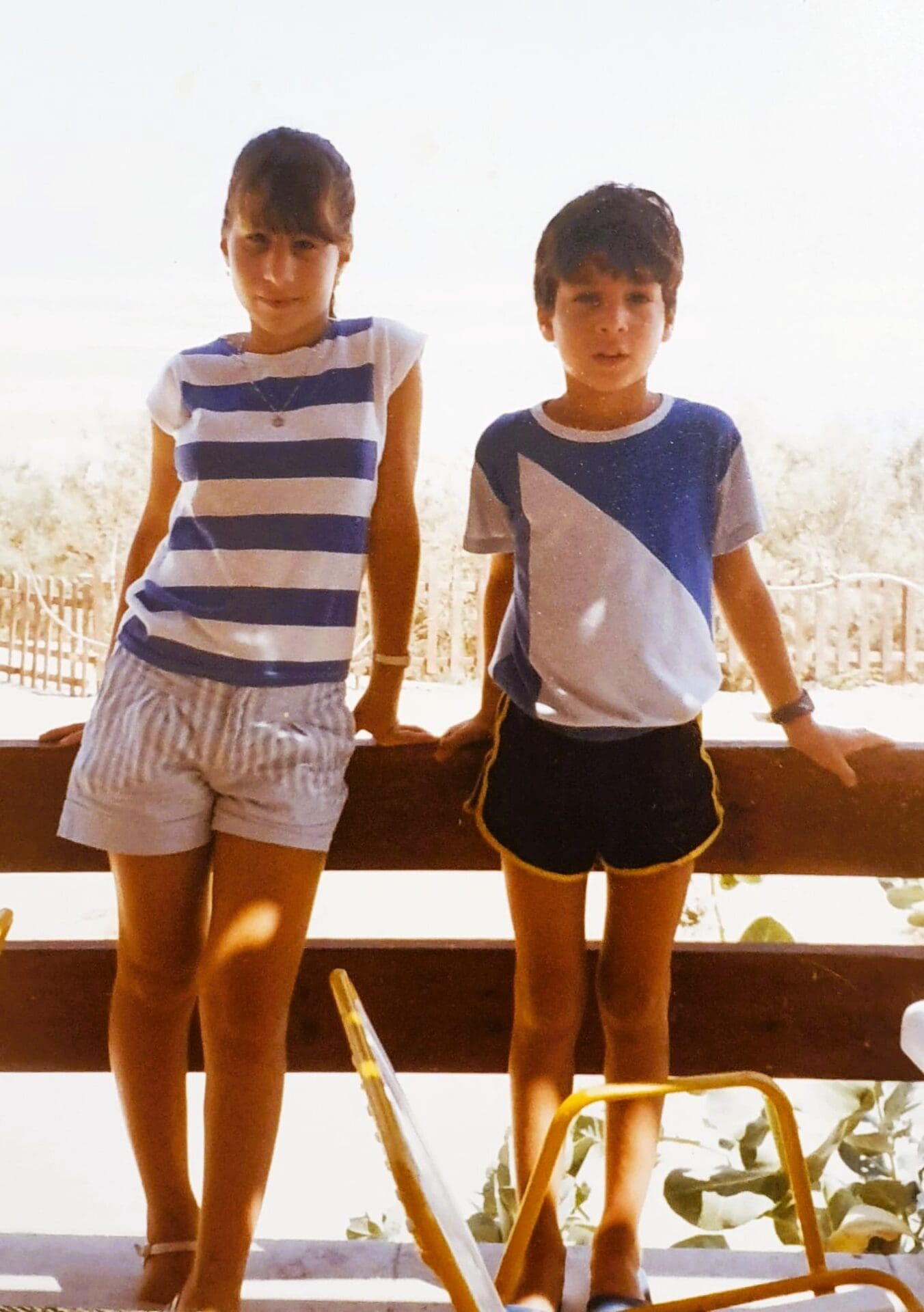
Itai grew up alongside his eldest sister, Mirit, who is two years older than him and was named after her grandmother Miriam, Sarah's mother. Mirit, who would later become a kindergarten teacher and mother of two children, remained close to the family and still lives in Rishon LeZion, near her parents.
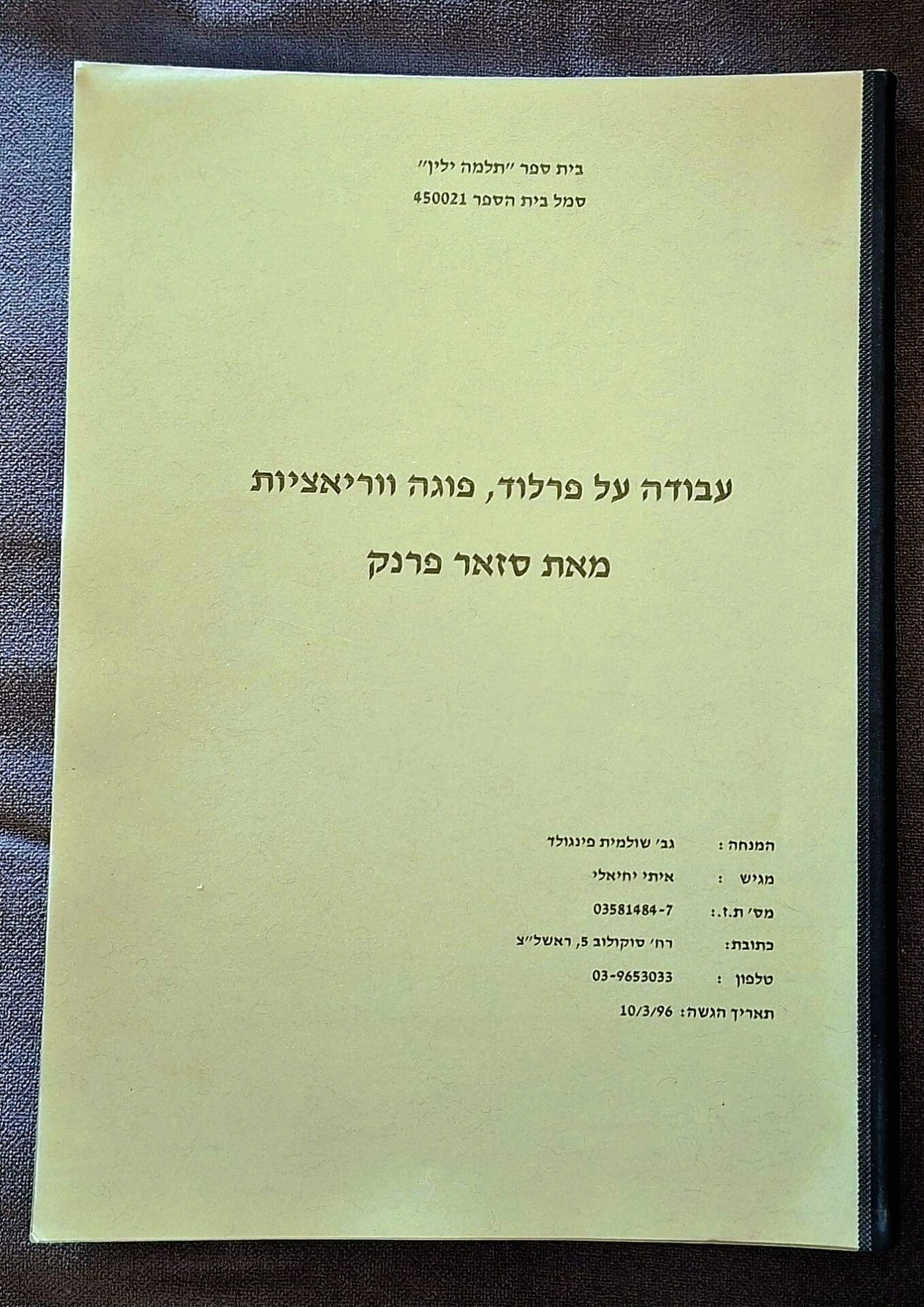
He attended Hadarim Elementary School, then Zalman Aran Middle School. After just one year, he transferred to the Municipal Arts School A in Tel Aviv, majoring in music, and later to Thelma Yellin High School in Givatayim. As a teenager, he would travel by bus from Rishon LeZion to Tel Aviv, a child who was gradually discovering a new world for himself, far from the routine of his home and neighborhood.
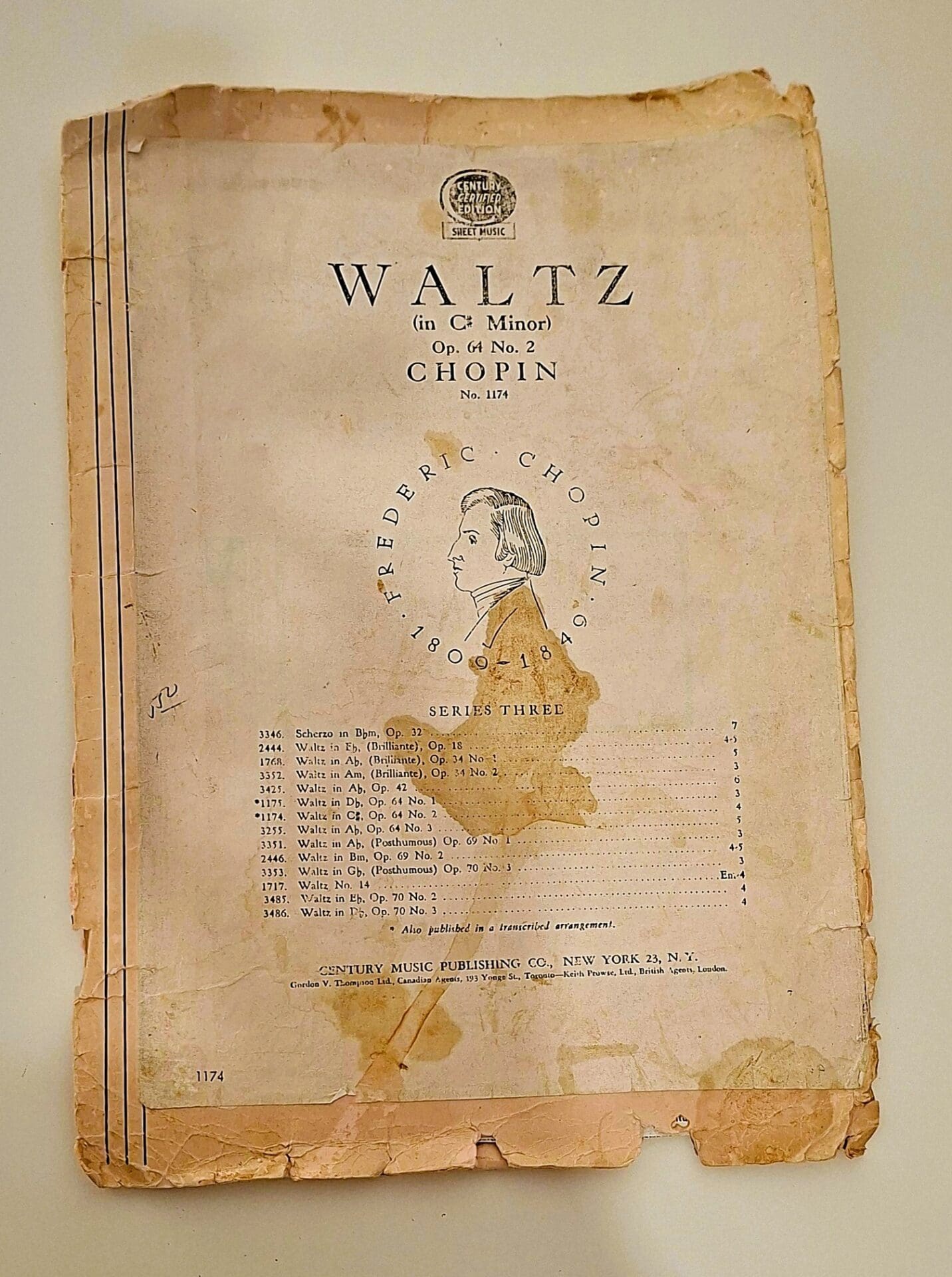
It all started at about the age of nine, and specifically with an accordion that belonged to a girl who lived in the apartment below the Yehieli family.
When Itay and Mirit used to visit her, the accordion was placed under the bed. Itay would sneak up to the instrument, touch it, look at it, and all he wanted was for them to buy him his own accordion. His mother, Sara, was in no hurry. She told him to start playing the piano first, "and see what happens," and maybe only later would they think about buying an accordion.
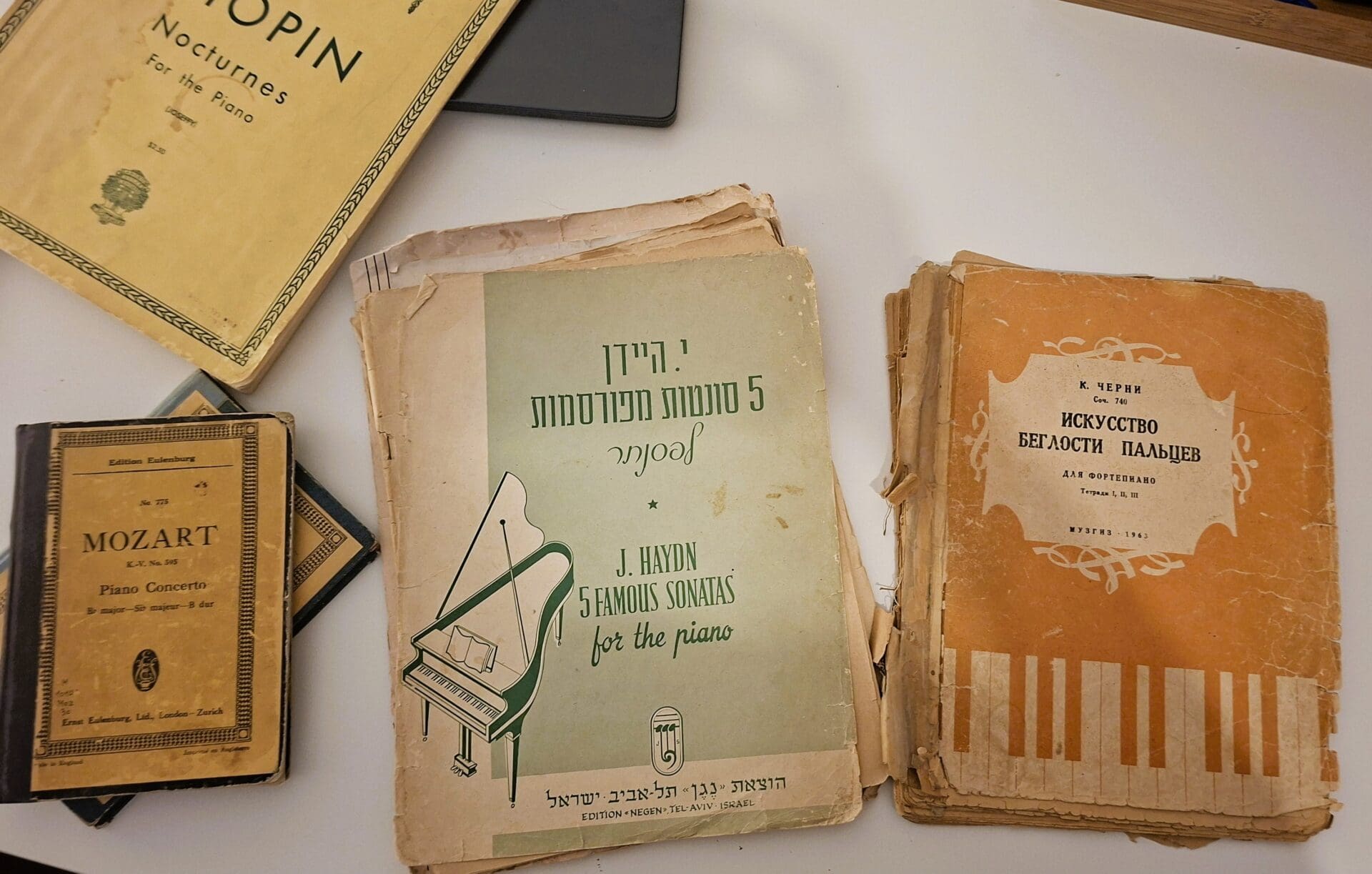
Mirit and Itay began studying piano together, but after about six months Mirit gave up. Itay continued. He studied with Raya, a teacher of Russian origin, whom he remembers as a pleasant and welcoming woman, and continued to study with her and progress in his playing until the age of fifteen.
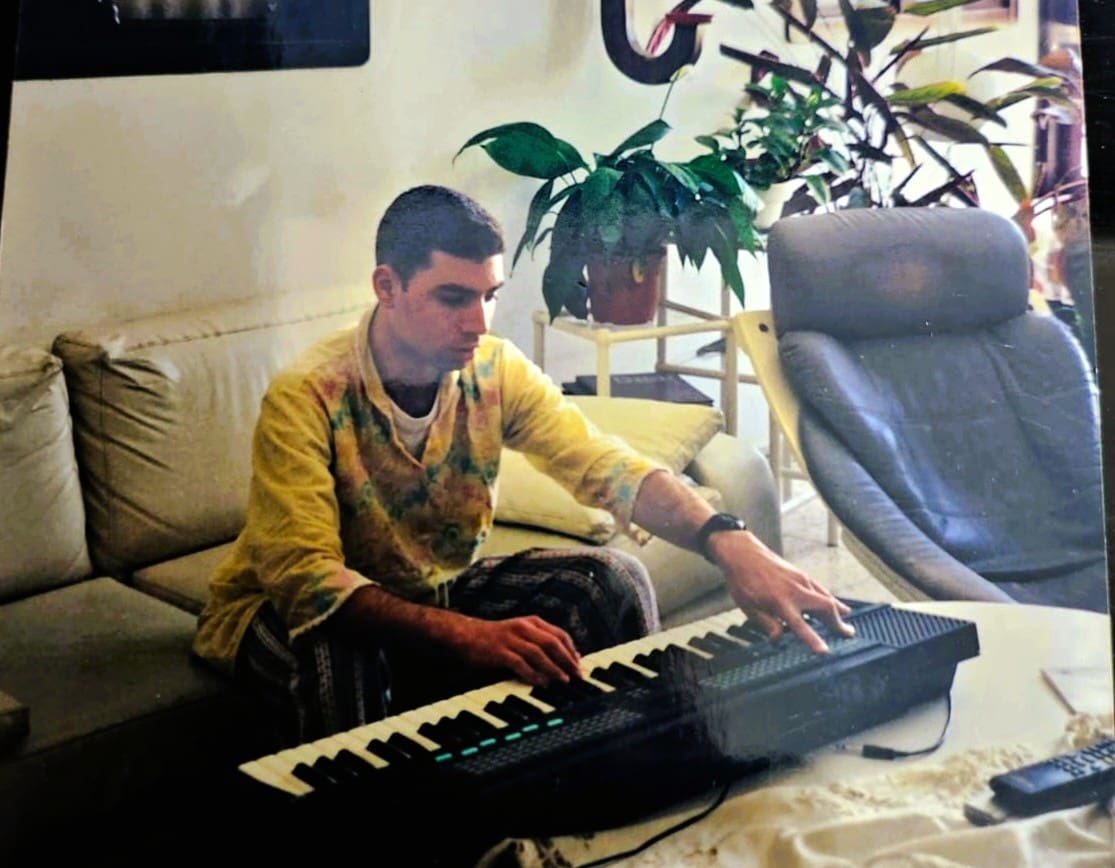
Thus, almost without the family noticing the exact moment it happened, music ceased to be a curious child's hobby and became part of his life. The boy who wanted an accordion he found under another girl's bed, started his journey on the piano, and found himself traveling every day from the city of Rishon LeZion to a world that gradually became his own.
The teachers who opened up a world to him
During his after-school hours in high school, Itay had two other teachers, whom he still remembers fondly.
The first was Yitzhak Steiner (1952-2023), a pianist, composer, conductor and classical music teacher, who was known for a playing style that combined classical with improvisation. Itai would come to his house for two to five hours at a time. But Steiner's lessons were not piano lessons in the conventional sense. The two would sit and talk about life, then play, talk again and play again. For a young boy, this encounter with a man for whom music and life existed in the same space was an extraordinary experience.
The second teacher was pianist and teacher Aviva Bonstein (1926–2012).
Bonstein was a prominent Israeli concert pianist, who performed extensively on major stages in Israel (including the Wicks Hall at the Yad Chaim Weizmann) and throughout Europe (such as Switzerland and Belgium), and earned great respect and the patronage of key figures in Israeli culture.
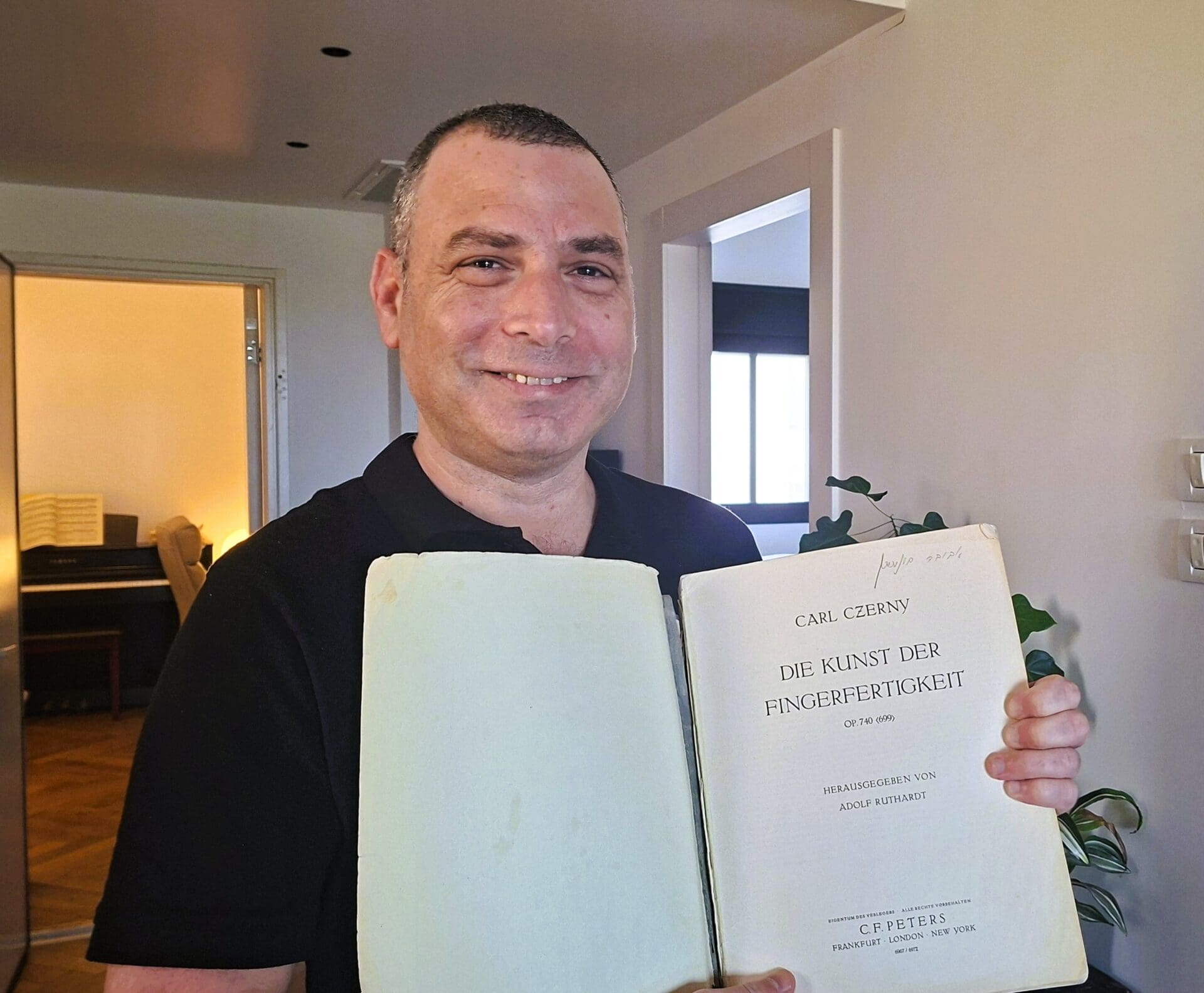
With Aviva, who was already an older woman when Aiti met her, something deeper happened. She agreed to accept him as a "project student," for a minimal fee, because she knew his parents wouldn't be able to meet the burden of the regular cost.
Twice a week he would come to her apartment on Epstein Street, behind Kikar Hamedina in Tel Aviv, and there, in front of a grand piano and inside a house that seemed to him like a kingdom, a world he had never known opened up to him. Aviva didn't just teach him music. She encouraged him to read, exposed him to books and culture, and changed the way he looked at life.
Twice a week for about five years, he absorbed not only piano lessons from her, but a whole culture. He came to her house immediately after the school day and sometimes stayed there until the evening. She became almost like a grandmother to him, the grandmother he never had. Later, even after he finished studying with her, their relationship continued.
Itay remembers her as a woman who invested more than 100 percent in him, and especially as a person thanks to whom he understood that music could be a gateway to a much wider world.
The books that came home
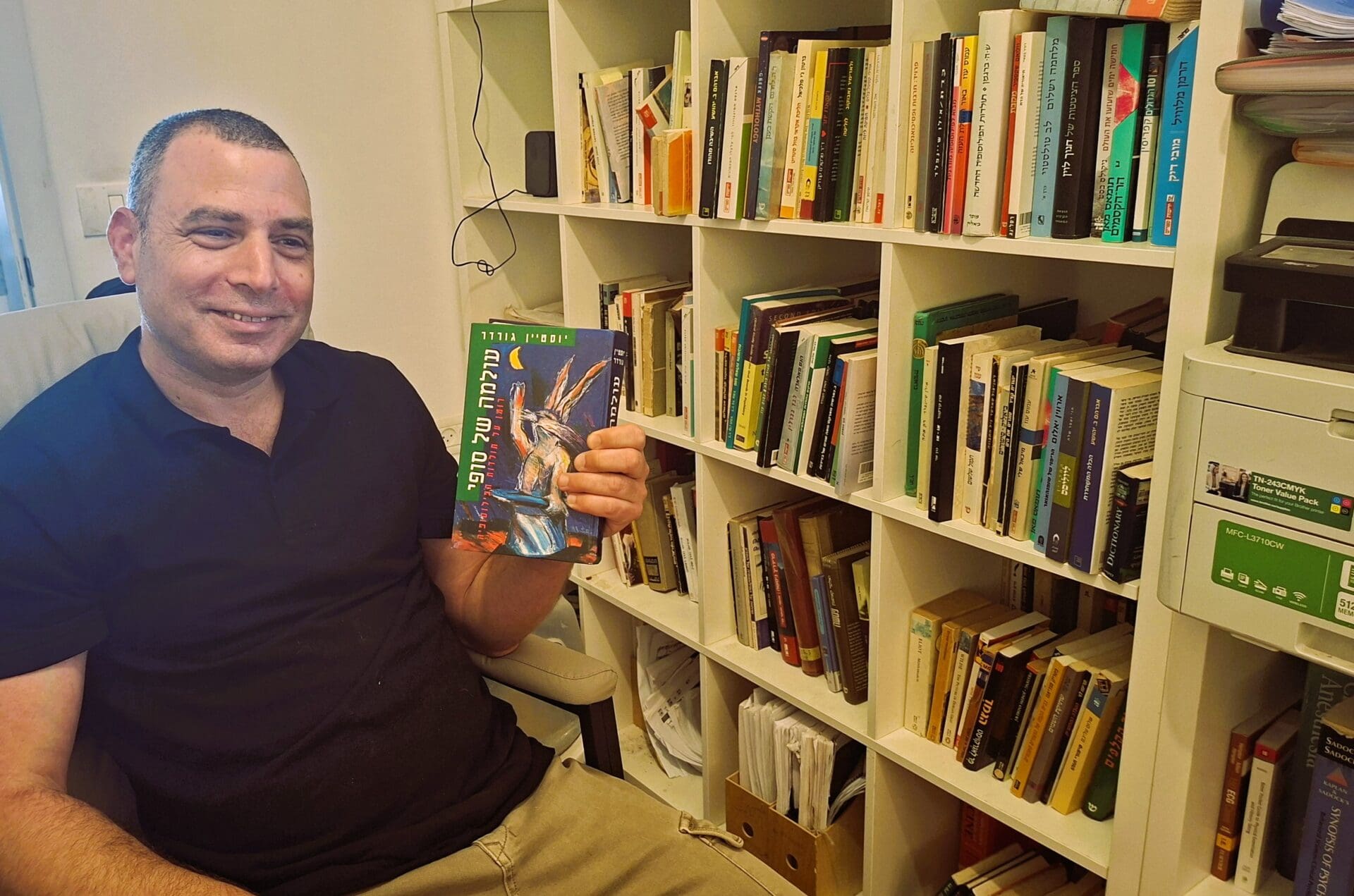
And yet, there were books in the Yehieli family home, and thanks to them, Itay gradually realized that music, which had been his familiar and intimate world until then, could also be a gateway to a much broader world. Not because it was a home of literature, nor because culture was at the center of family life; on the contrary, it was a home of work, of practical life, of daily worries and routine. But the books of "Am Oved" belonged at that time to a phenomenon much broader than the Yehieli family.
The publishing house, founded in 1942 by the Histadrut, was originally intended to bring literature, education and culture to the working class, to people who worked all day and did not necessarily grow up in a home where books were a natural part of life. At a time when culture was still largely seen as the privilege of the educated and the upper classes, "Am Oved" sought to make the book an accessible, popular and respected product. This was especially done by "Sifriya Le'am", which brought Hebrew and translated literature in relatively inexpensive editions, in paperback, and through subscriptions that brought a new book to the homes of workers and their families, on a regular basis. The book was no longer a luxury item, but part of the great promise of that era: that even those who worked with it would be able to expand their world in thought, literature and knowledge.
This is how these books also came to the Yehieli family.
The books stood on the shelf, in the closet, sometimes in a growing pile, and waited. For Itay, they were destined to become something completely different. In a house where there was little talk of literature, they gradually became a window. And through this window he discovered that the world was much bigger than the house, the street, and even the piano he sat at for long hours. Music gave him the first language of listening; the books, which came to the house as part of a cultural movement that was also intended for workers and employees, gave him the opportunity to listen to the world, and later also to the people within it.
"The Stealth of Individuals" – Book One: From Sounds to the Human Soul
One evening, a small thing happened that was almost impossible to miss, but in retrospect it seems like it could have changed the entire trajectory. Itai noticed the stack of books.
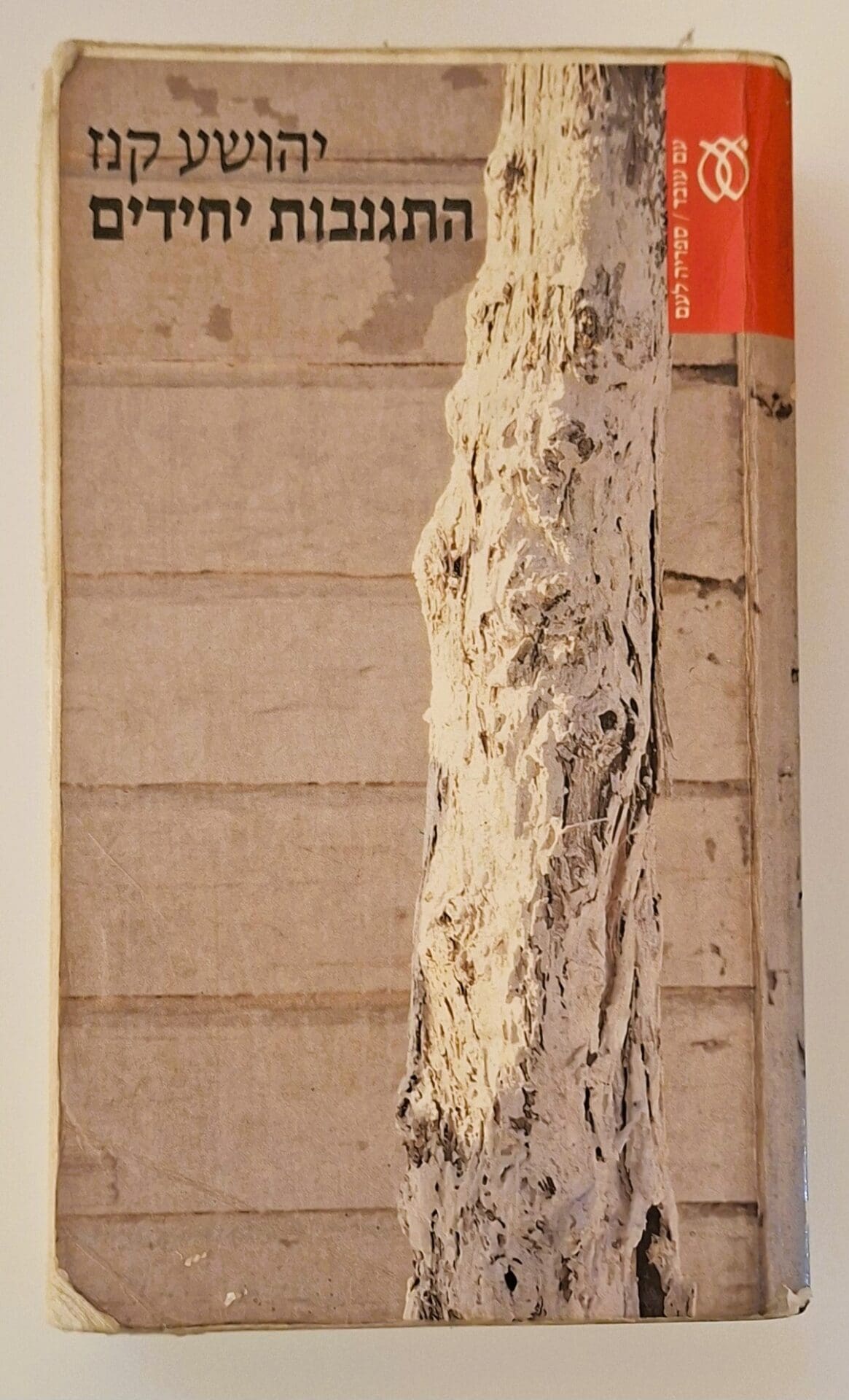
As a continuation and influence of those meetings and conversations with his teacher at the time, Aviva Bonstein, he approached her and took a book for himself. It was the first book he read in his life. The book was "The Stealth of Individuals" by Yehoshua Kenaz, published in 1986, a novel that became one of the pinnacles of Hebrew literature.
Perhaps it was precisely because he came across this unique book as a teenager who lived largely outside the world of a close-knit group of boys, and instead devoted his days to bus rides, intensive studies, and long hours of playing music, that the encounter with the book was so powerful. It brought into his world, for the first time, the inner lives of other young people, the tensions, rivalries, fears, and longing to belong, and opened up to him a human society he had not known intimately.
Kenaz didn't just talk about soldiers and training. Inside the recruit department at the 4th Infantry Division, in Israel in the mid-1950s, he revealed what lies beneath the uniforms: fear, shame, the need for recognition, loneliness, competition, attraction, inferiority, cruelty, and compassion.
Young people from different classes and backgrounds are thrown into the same rigid framework, and the army becomes a kind of human microscope, magnifying the differences between them and the deep similarities in their souls. For Itay, who was immersed in those days in long hours of piano, practice, and playing, this was his first encounter with the possibility of observing a person not only from the outside, but from the inside.
Music taught him to listen to sound, to pause, to the tension between two sounds and to what is not said. The book taught him to listen to something similar within the person. Behind behavior there is a story; behind an outburst there is sometimes fear; behind silence there can be distress, and behind rigidity there can be a deep need for acceptance. The psychological and social layers of the novel opened up a new language for the boy to understand people, and gradually also to understand himself.
Here, without anyone knowing it that evening, the two worlds that would accompany him connected: the piano and the book. The hours of practice taught him discipline, patience, and attentive listening; reading added to them a curiosity about the human soul. It allowed him to begin to ask not only how people behave, but why they behave that way, what shapes them, what hurts them, and what allows them to change. From this place, a deep attraction to understanding people gradually developed in him, first to understanding his own soul, and later also to understanding the souls of others and the ability to help them.
What began that evening with a book taken from a pile, with the encouragement of a teacher who perhaps saw in it a possibility that Eti himself had not yet seen, gradually became a lifelong habit.
The first book gave birth to the second, and the third, and a hunger for knowledge that was never satiated. "The Stealth of Individuals" was not just the first book he read. It was, in a deeper sense, the first book that taught him that it was possible to enter the soul of another person, and stay there long enough to try to understand.
The piano on silent nights
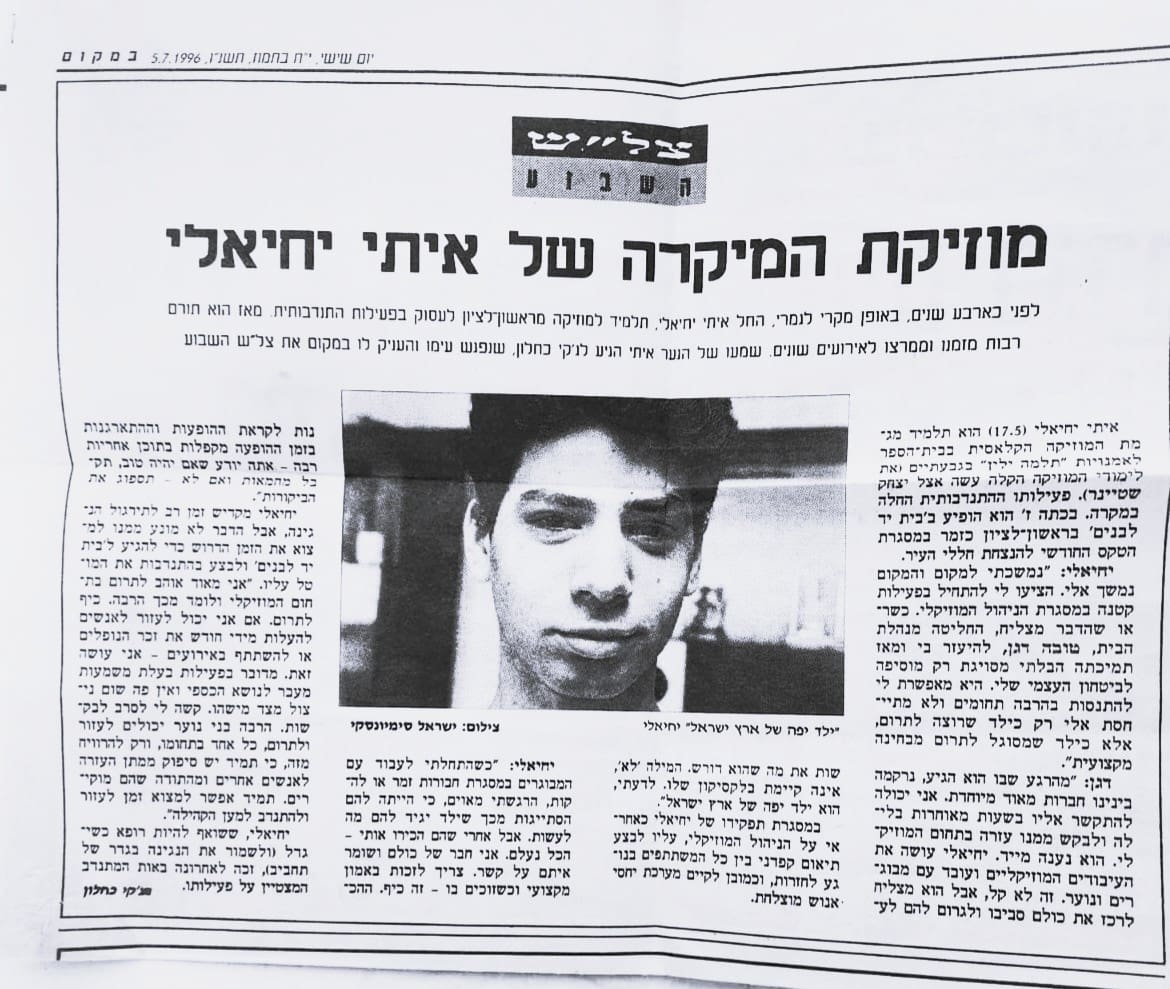
When he was about fourteen years old, he discovered that music could do more than fill a room. He played at the Memorial Day ceremony in his hometown, "Beit Yad Labanim" in Rishon LeZion, and his playing so impressed the listeners and the locals that from that day on he was invited to almost all the memorial ceremonies held there.
Not only that, his activities expanded and he found himself not only playing, but also involved in organizing, musical management, arrangements and coordination between the participants. Itay himself says that at the beginning of his career as a musical director he felt a little intimidated by working with adults. He was afraid of the resistance that a young boy would give them instructions. However, after they got to know him and his abilities, this reservation disappeared. For him, even as a young boy, the key to success was and still is: acquiring professional trust and creating good human relationships.
Of course, all his activities there were voluntary, so he soon received the Rishon LeZion "Outstanding Volunteer" award. Itay loved that feeling: knowing that his music touched people, and that it had a use in the world outside the practice room.
The connection with "Beit Yad Labanim" deepened. The person in charge of the place, the director of Beit Yad Labanim, Ms. Tova Dagan, trusted him to the point that she gave him the keys to the building. When night fell, and he could not play at home, he would come there alone and sit at the grand piano. Inside the quiet building, between the memories of the fallen and the grand piano, he found a place for himself where he could simply be with me, without having to explain himself.
His teenage years were different from those of his peers. Shyness, introversion, and emotional feelings kept him away from the rebellion typical of that age. Instead of rebellion, he had a tenacity with a rigid curriculum, many hours of practice, and music that gradually took on a central place in his life. And yet, within that discipline, there was also something liberating: the piano. There, in front of the keyboards, the quiet boy who didn't always find his place among others, found a language of his own.
With the IDF medic's bag: Facing the fire in Lebanon and the war within it
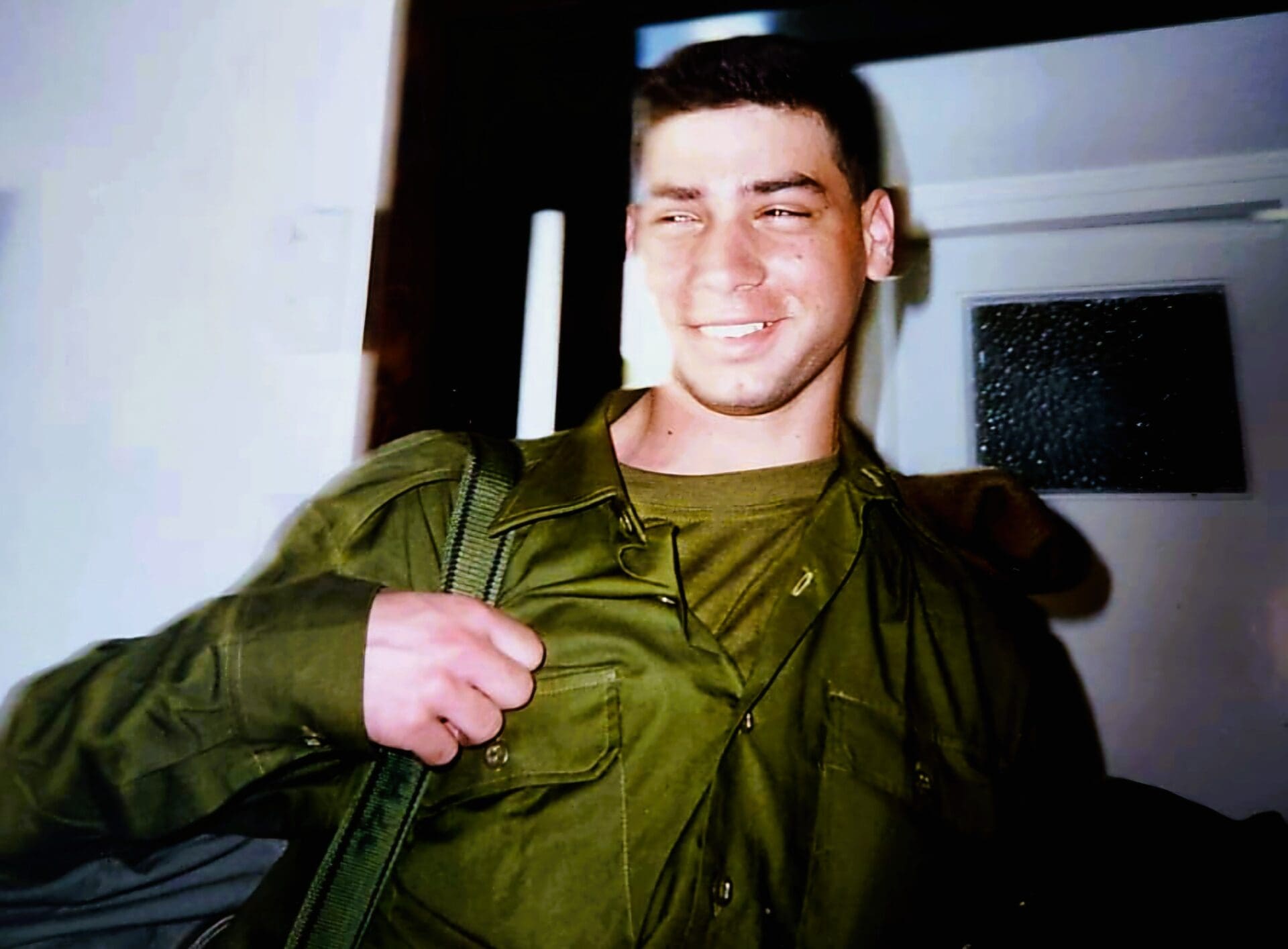
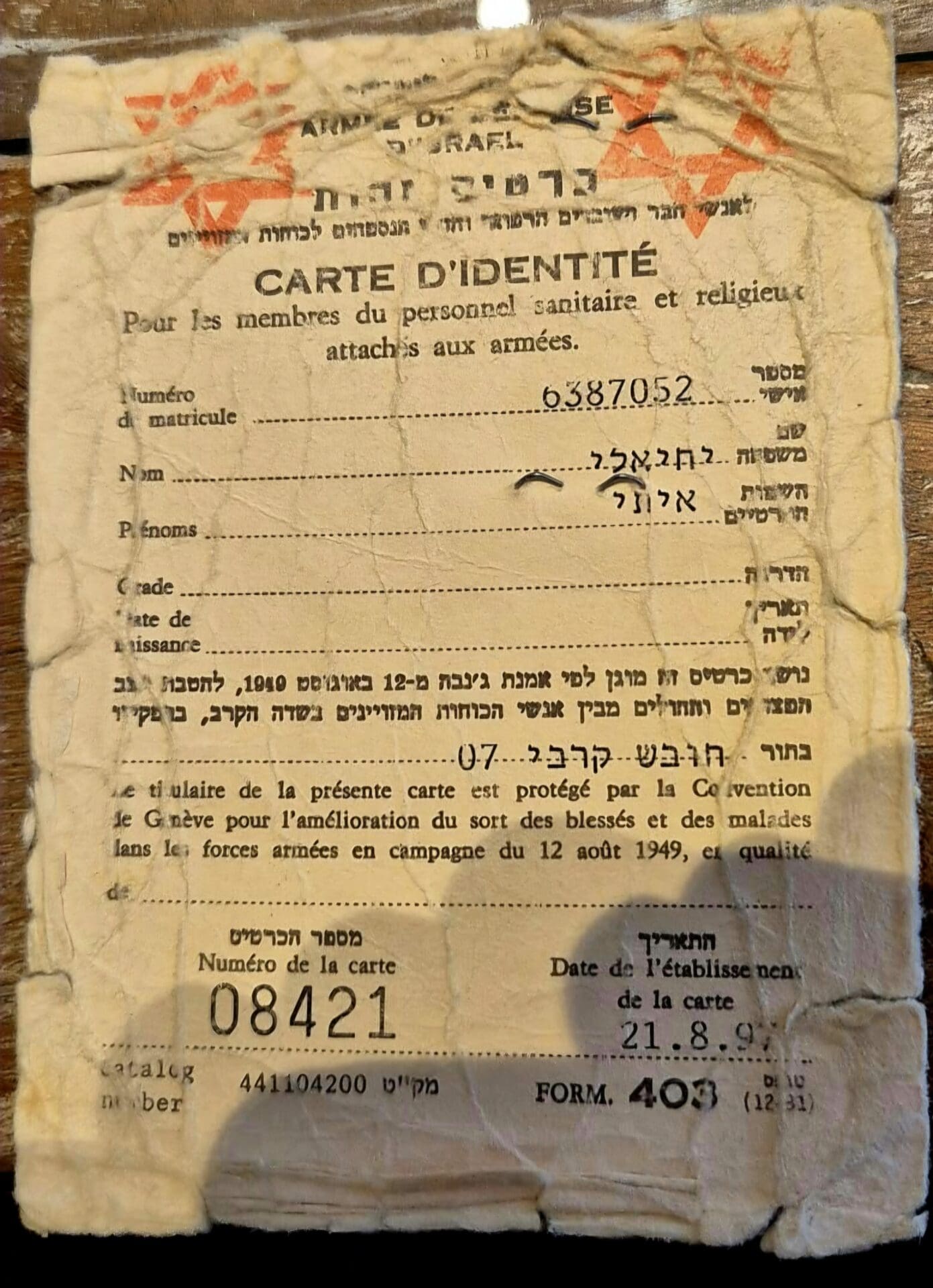
He graduated from Thelma Yellin High School with me, with a full matriculation certificate, but precisely then, when he was equipped with extraordinary musical ability and years of discipline and practice, he felt that he was still not fully formed as a person. He did not want to choose the path of an outstanding musician. He wanted to go out into life, to experiment, to get to know himself through a reality that does not consist only of notes, a piano, and study rooms. Although he had not previously taken a course at the MDA and had not dealt with anything related to medicine, he enlisted in the Nahal Battalion and served from 1994 to 1997 in Lebanon, as a combat medic.
These were the years of staying in the security zone, a period that was not declared a war in the traditional sense, but there was a war in everyday life. The outposts, including Dela, Beaufort and Rehan, were under constant threat, and the soldiers went out to ambush, to patrol on foot and on horseback, and to secure roads and outposts.
Itai was a full-fledged fighter, but he also carried the medical responsibility for his comrades. The medic's bag that was attached to him included equipment intended for the moment when routine would suddenly be torn apart: bandages, tourniquets, transfusions and other treatment measures. In the event of an encounter or injury, he was required to act quickly and calmly, sometimes under fire, to stop bleeding, stabilize a wounded person and keep him alive until evacuation arrived.
Between events, the routine of the post took place, which included treating minor injuries, illnesses, and medical problems of the soldiers. For a young man, who was still in the process of self-discovery, it was an accelerated maturation: on the one hand, the comrades in arms who entrusted their safety to him in the most difficult moments, and on the other, the private questions he carried within himself.
Serving in Lebanon was, he says, a particularly complex period for Itay. He still didn't understand exactly where his place in the world was. The era before he came out of the closet added to the inner difficulty, and he found himself, "thrown into the stormy waters" of life, to a place where he didn't know enough people, cultures, or even himself.
Towards the end of his service, he was already in charge of the clinic, a role that added to the weight placed on his shoulders. He didn't always have the tools to deal with everything he went through, but it was precisely in this tension that a new curiosity opened up in him. He wanted to understand. Not just to treat the wounded, but to understand the person behind the wound, the psyche, the behavior, and the questions that motivate people.
During his military service, long before he was discharged, he turned to the Open University and began studying psychology and philosophy. His desire for knowledge did not let him wait. Something in him already knew that music was just one way to understand the world, and now he seeks to find another language.
The gates of the Faculty of Medicine – which looked like the Holy of Holies
After he was discharged from the army, he returned with me to Rishon LeZion, and worked for a while as a guide in a hostel for the mentally ill. He discovered something about himself: precisely in places where other people recoiled from difficulty, he felt comfortable. It was easy for him to be by the side of people in crisis, to listen to them and to remain present even when reality became complex.
Gradually, he began to realize that his path might lead to medicine. Perhaps something of the things he had absorbed years earlier from his beloved teacher, Aviva Bonstein, who had directed him toward medical studies, had already begun to seep into him, even if he was not yet aware of it at the time. As Amnon Shamosh wrote in "The Great Confession": "Perhaps my ears were deaf and my heart was awake, and things would have flowed to me in a different way."
As a person thirsty for knowledge and tirelessly curious, Itay began coming to the Tel Aviv University campus and attending lectures in psychology, philosophy, and medicine, even when he didn't always understand everything that was said.
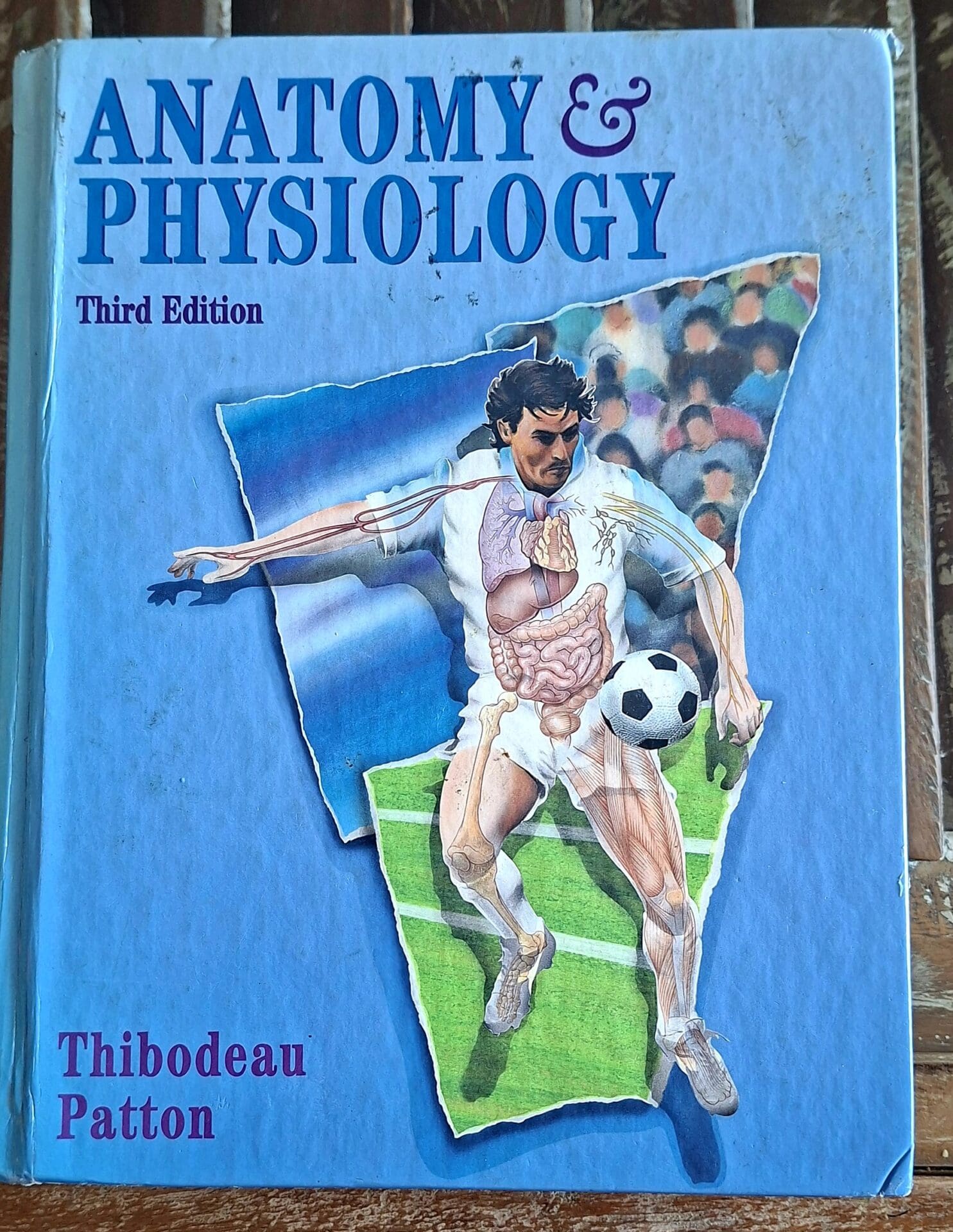
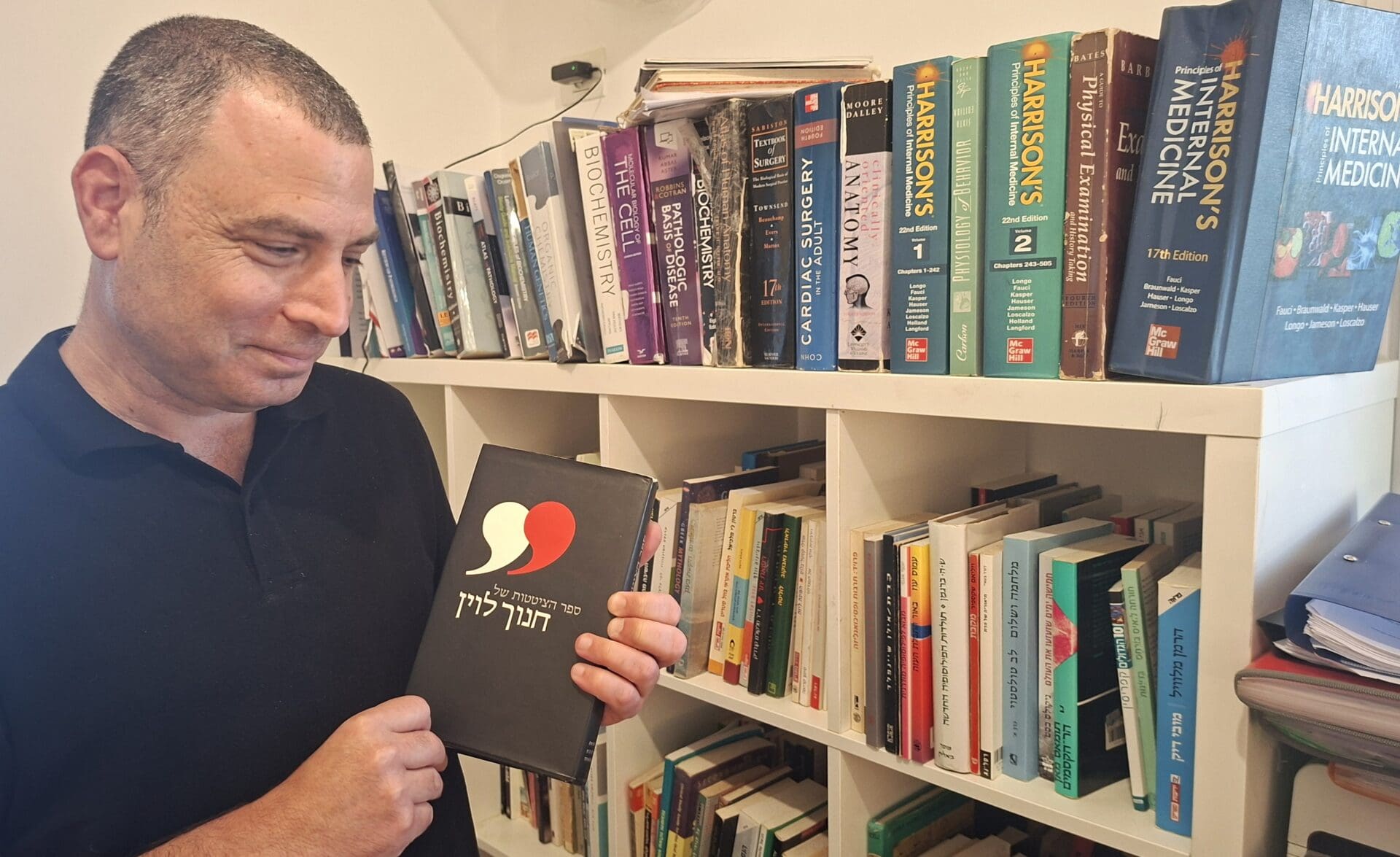
The gates of the Faculty of Medicine particularly impressed him. Architecturally, they seemed to him almost like the entrance to the Holy of Holies, a place with something sublime and intriguing, and he knew he wanted to go inside. One time, he wandered around the campus and entered the university bookstore, where he bought the book "Anatomy and Physiology." Today, he smiles when he remembers it and knows that it was a fairly basic introductory book, but at the time he learned a great deal from it. Medicine seemed almost sacred to him, even before he truly understood what the profession meant.
The road there was not easy. In high school, he devoted most of his time to studying classical music and many hours of musical training, so he did not study chemistry, mathematics, and physics at an advanced level. But he did not see this as a contradiction. On the contrary: in his eyes, there was a deep connection between music and science.
The notes, like particles in the scientific world, are separate from each other and yet exist within a single whole, and the precision required by Bach is no different from the precision required in science. In medicine too, he understood, self-discipline, patience, and the ability to see the small details without losing the big picture are needed.
Two doors opened at once
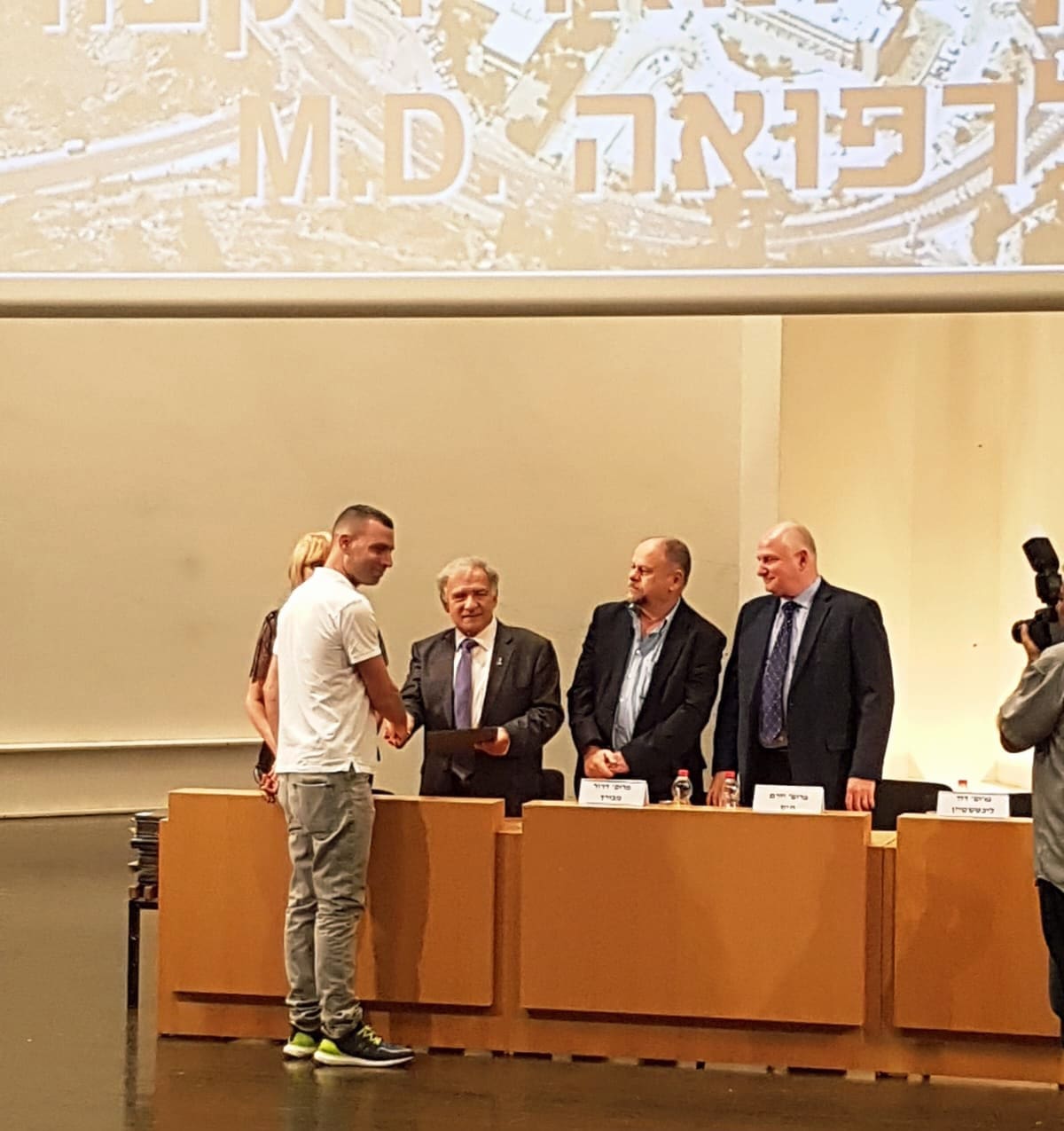
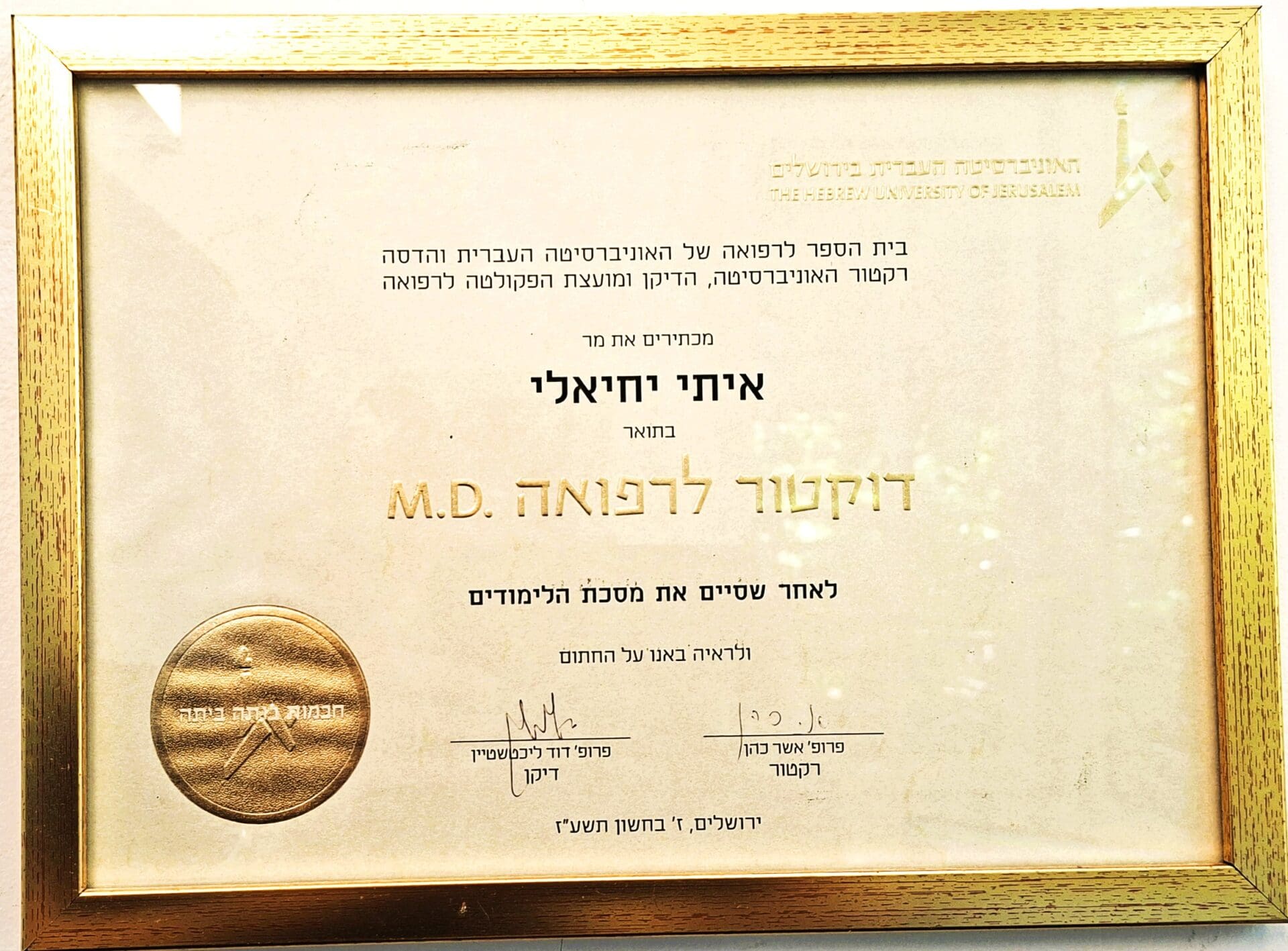
As he got closer to medical school, he didn't give up on studying psychology. As a continuation of his studies at the Open University, he completed a bachelor's degree in psychology at Tel Aviv University, graduating with honors. He also improved his matriculation scores to an increased level and invested in improving his psychometrics, until his scores allowed him to be admitted to the Faculty of Medicine. For three years, he studied for a bachelor's degree in medical sciences, but at a certain point, when the path led him towards dentistry, he decided to change direction and enrolled at the Hebrew University in Jerusalem.
In Jerusalem, an almost unimaginable opportunity opened up for him: he was accepted to both a master's degree in clinical psychology and medical studies. In fact, he accepted both things he wanted, psychology and medicine, at the same time. There was no provision at the time that prohibited him from being accepted to both tracks, and he met the admission requirements for both.
Since the first three years of medical school in Jerusalem were almost identical to the studies he had already completed in Tel Aviv, he was able to complete his master's degree in clinical psychology. However, because he was required to continue into his fourth year of medical school, he did not complete his professional internship in clinical psychology.
In practice, even then, the duality that would accompany him later was created in him: the attraction to the soul and the attraction to the body, two paths that seemingly seemed separate, but for him belonged to the same great question, how to understand man and even help his soul and body, exactly as the Sages said: "A healthy soul in a healthy body."
From Jerusalem to Haifa, to the medicine that knows the person
During his studies in Jerusalem, Itai lived in Kiryat Yuval, in a neighborhood that was close to both the university and the Ein Kerem hospital.
In 2010, during these intense years, he met Nir, his partner, an advertising and design professional, and a resident of Haifa. From then on, his life unfolded between Jerusalem and Haifa, between studies and a life that was gradually built.
Traveling between the two cities became part of the routine, until in 2016, upon graduating from medical school, Itay was accepted for an internship at Carmel Hospital in Haifa. The city, which was connected to him through Nir, also became the place where he began his journey as a full-fledged doctor.
After the internship, the moment came again when he had to choose, and this time the issue of medical specialization. As before, this time too the decision was not simple and did not come immediately. It took him time to understand the depth and importance of family medicine. In the end, he chose it because he felt that it allowed him not to give up the world from which he came, the world of psychology and the soul.
The family doctor does not encounter just an illness or an organ, but a whole person, whose body lives within a soul, family, work, memories, and life circumstances. Unlike a specialist who focuses on a disease or one system in the body, the family doctor is required to connect the parts. Fatigue, for example, can be the result of a physical illness, a sleep disorder, medications, depression, loneliness, or a combination of these.
Today, family medicine is based on the biopsychosocial concept, which sees the person in the entirety of their life. As medicine becomes more sophisticated and based on tests, imaging, genetics, and artificial intelligence, the importance of the doctor who has known the person for years becomes even more acute. For Itay, choosing to specialize in family medicine was actually the place where the two worlds he had been searching for his entire life, body and mind, could finally meet.
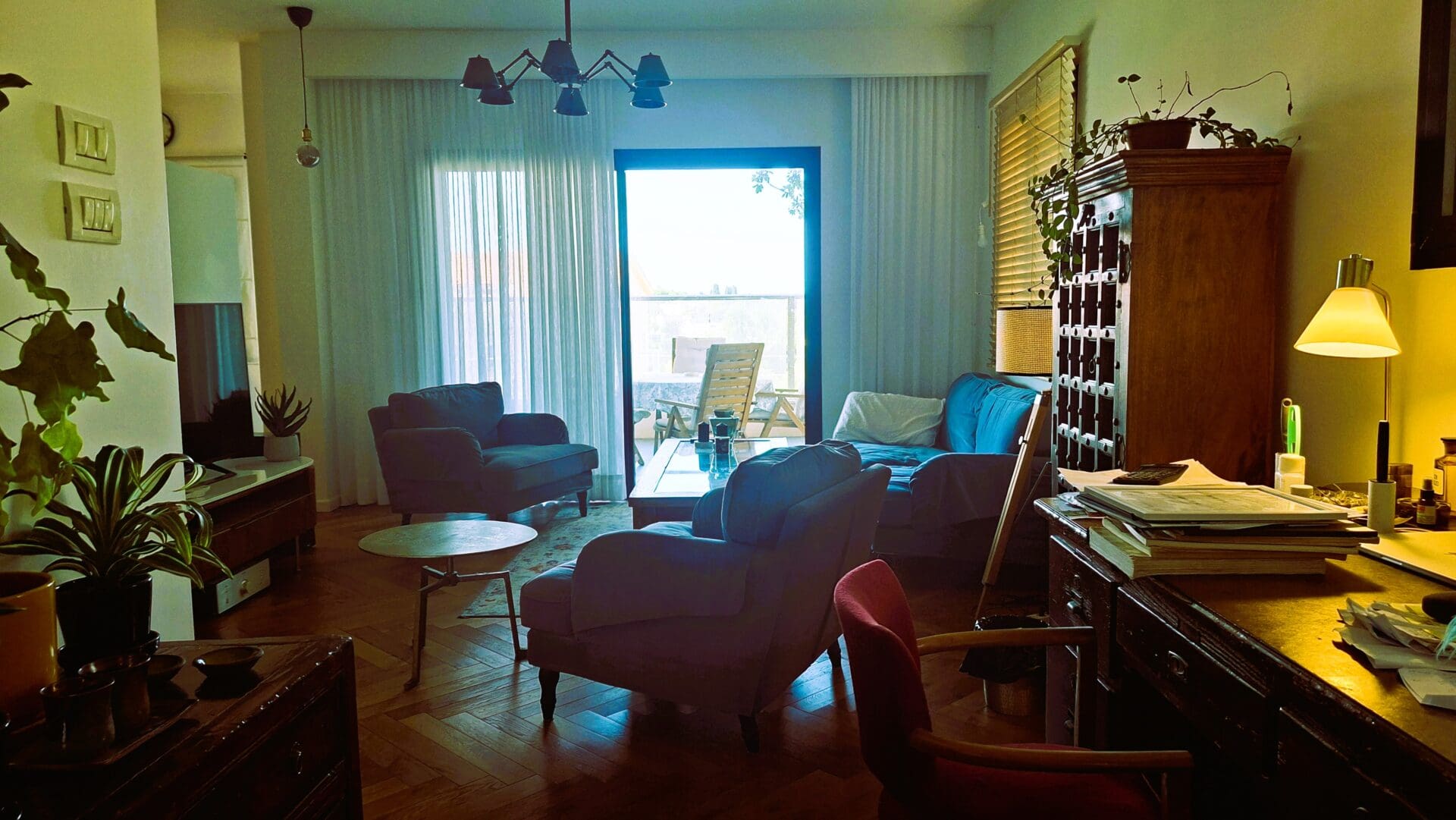
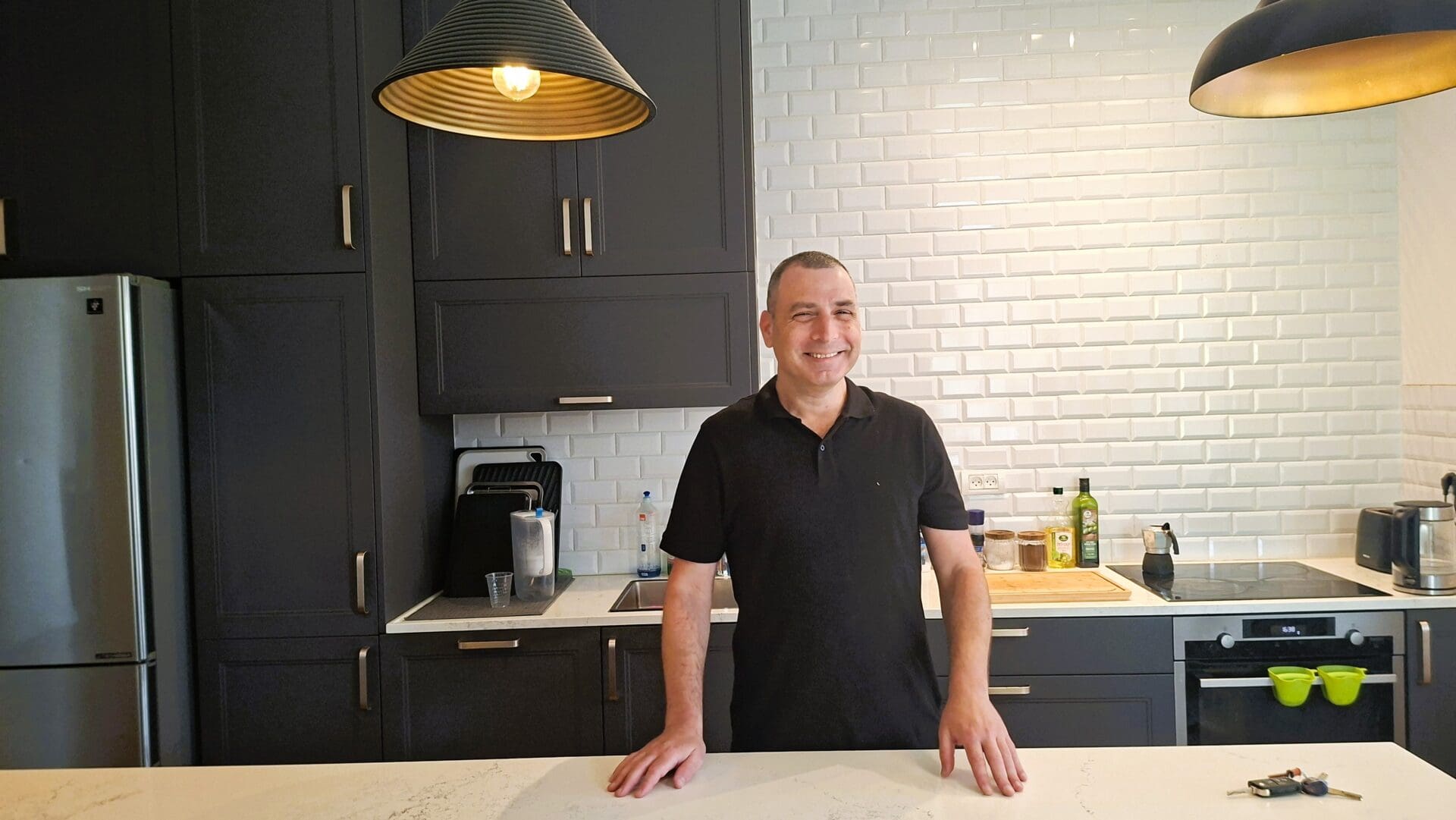
The house designed with one hand, and the life built with two.
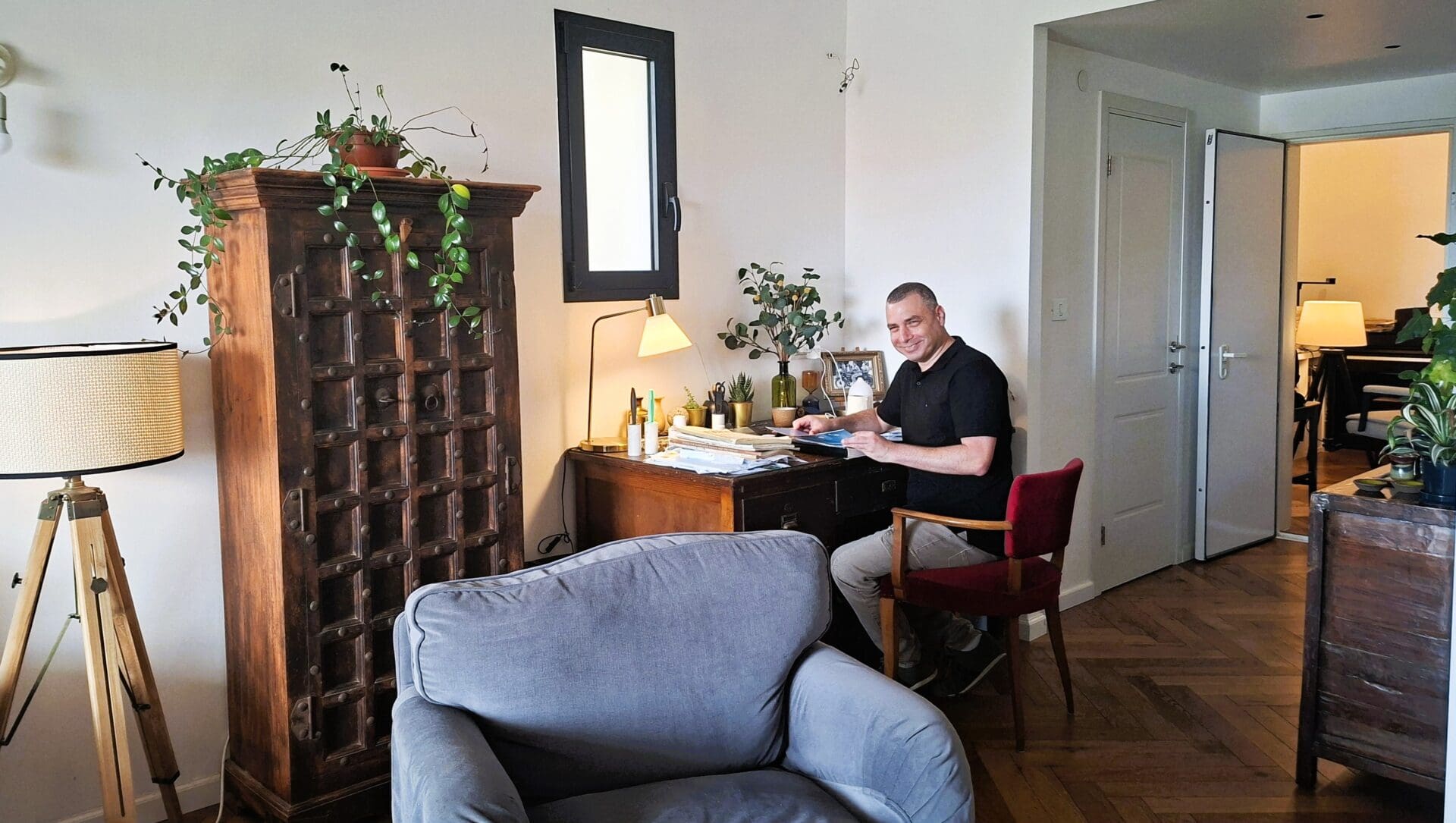
Since 2016, the apartment on Mount Carmel has been one of the permanent stops in Itay and his partner's shared life.
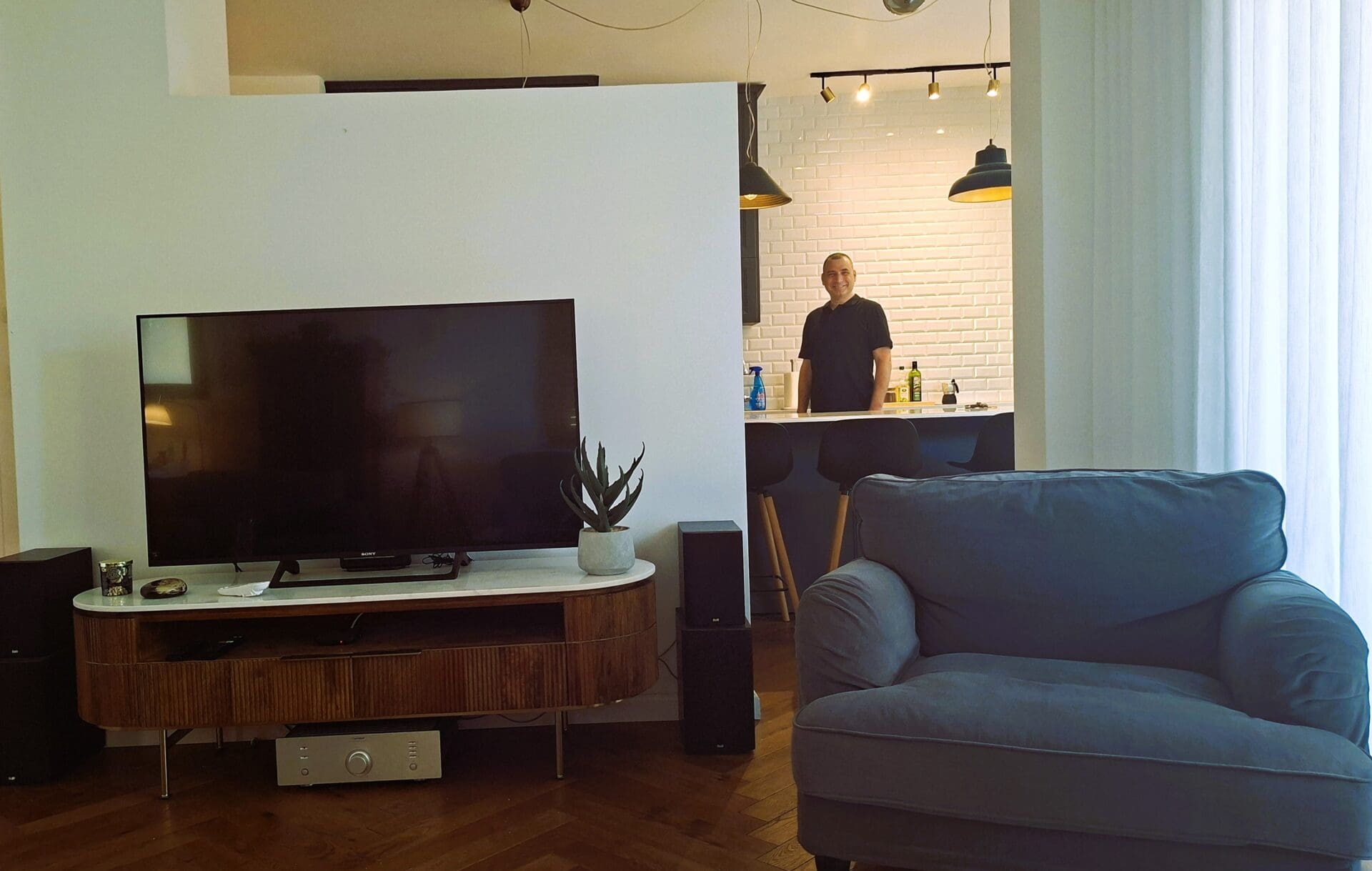
They lived there until 2018, then had to leave it for two years, while the building underwent a massive renovation as part of the TAMA. In 2020, they returned to the apartment, which has since become a renovated and renovated home. The design of the house was led by Itay's partner, who works in advertising and design. Itay does not hide his appreciation for Nir's taste and talent: "He is much better than me at this," he says, and therefore the design choices in the house are mainly the fruit of his thought and design.
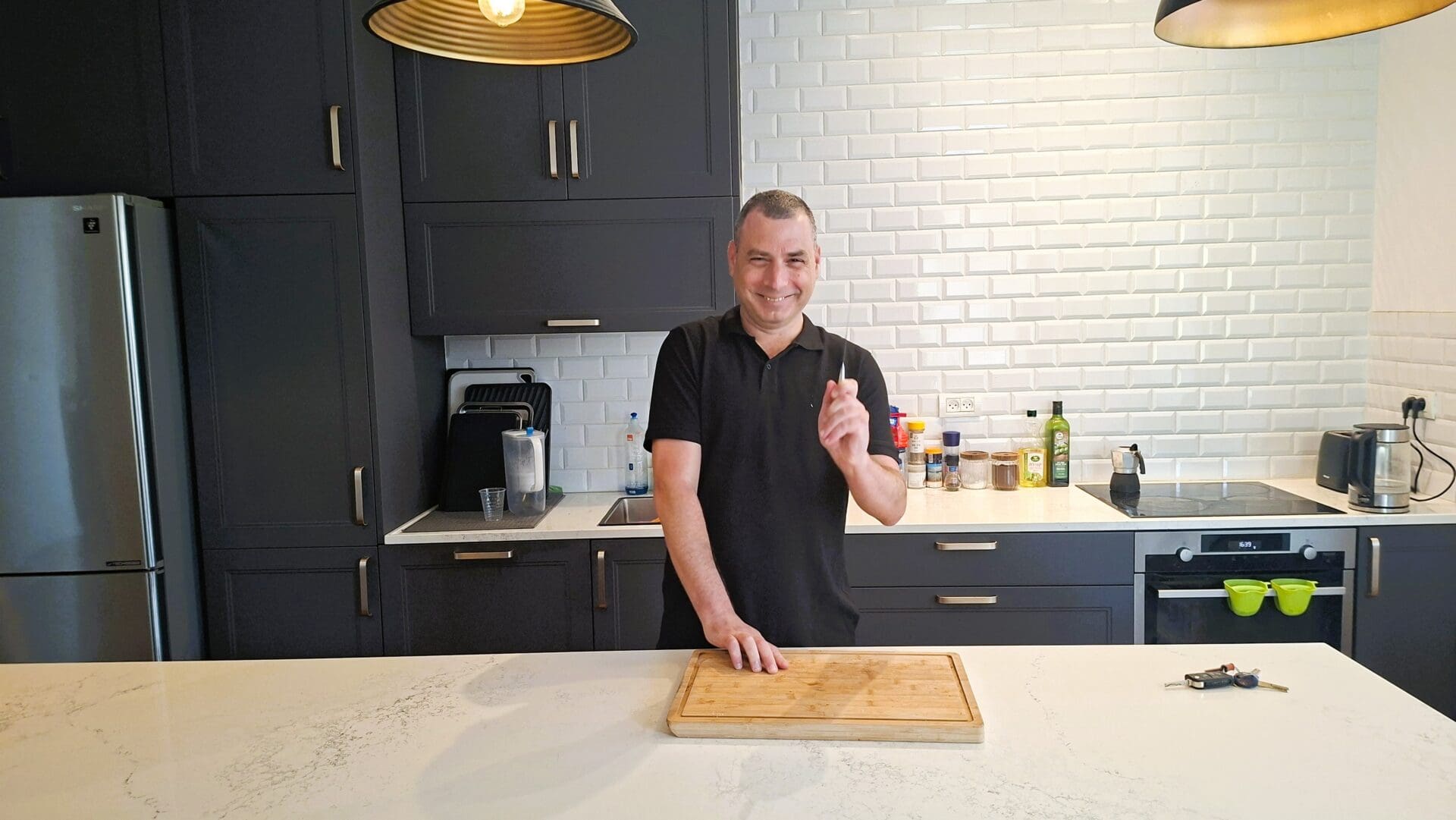
In the kitchen, too, it turns out, the division of roles is similar. His partner cooks better, and I, although he himself knows how to cook, honestly admits that when it comes to his gourmet dishes, he has no real competition.
Still, Itay is not willing to portray himself as someone who just sits back and enjoys the results. When he talks about the house, he is quick to add with a smile: "I do a few things at home too, I'm not a parasite." There is something both amusing and heartwarming about this statement, something of the humor and intimacy and especially a lot of the warmth and inclusion of a shared life. In their house, there are no ledgers, and not every task has to be divided exactly in half. Some are better at cooking, some take on other things, and in the end, what matters is not who did more, but the feeling that both of them are together in this life, and each of them, in their own way, contributes their part.
The house may have been designed primarily by his partner, but life within it is a joint creation, built not only on design and cooking, but also on appreciation, respect, acceptance of difference, and the ability to laugh, even at yourself.
When the old and the new meet under the same roof
In Dr. Yehieli's home, a love for objects that have more than a practical function is evident. Among the furniture, items imported from the Far East stand out: a carved console, a solid wooden cabinet, and a table with an antique look, under whose glass surface is an antique door embedded.
The wood, with its shades and textures, gives them an almost silent presence, and the carvings and patina create the feeling of objects that have already gone through their own journey. Inside the modern home, they bring a little of another time, of manual labor, and of the distant cultures from which they came.
But above all, in the living room, the eye is drawn to the modern bronze chandelier hanging from the ceiling. It is not an imitation of an antique chandelier, but a contemporary creation that carries on a conversation with it: a modern form, but with a clear nod to the bronze chandeliers of yesteryear. Here too, as in many of the details in the house, the hand of Itay's partner, who chose the design, is evident.
Thus, in the space of the house, an almost natural encounter takes place between the old and the new, between memory and the present, and between objects that carry with them a distant past, and a house that was built here and now.
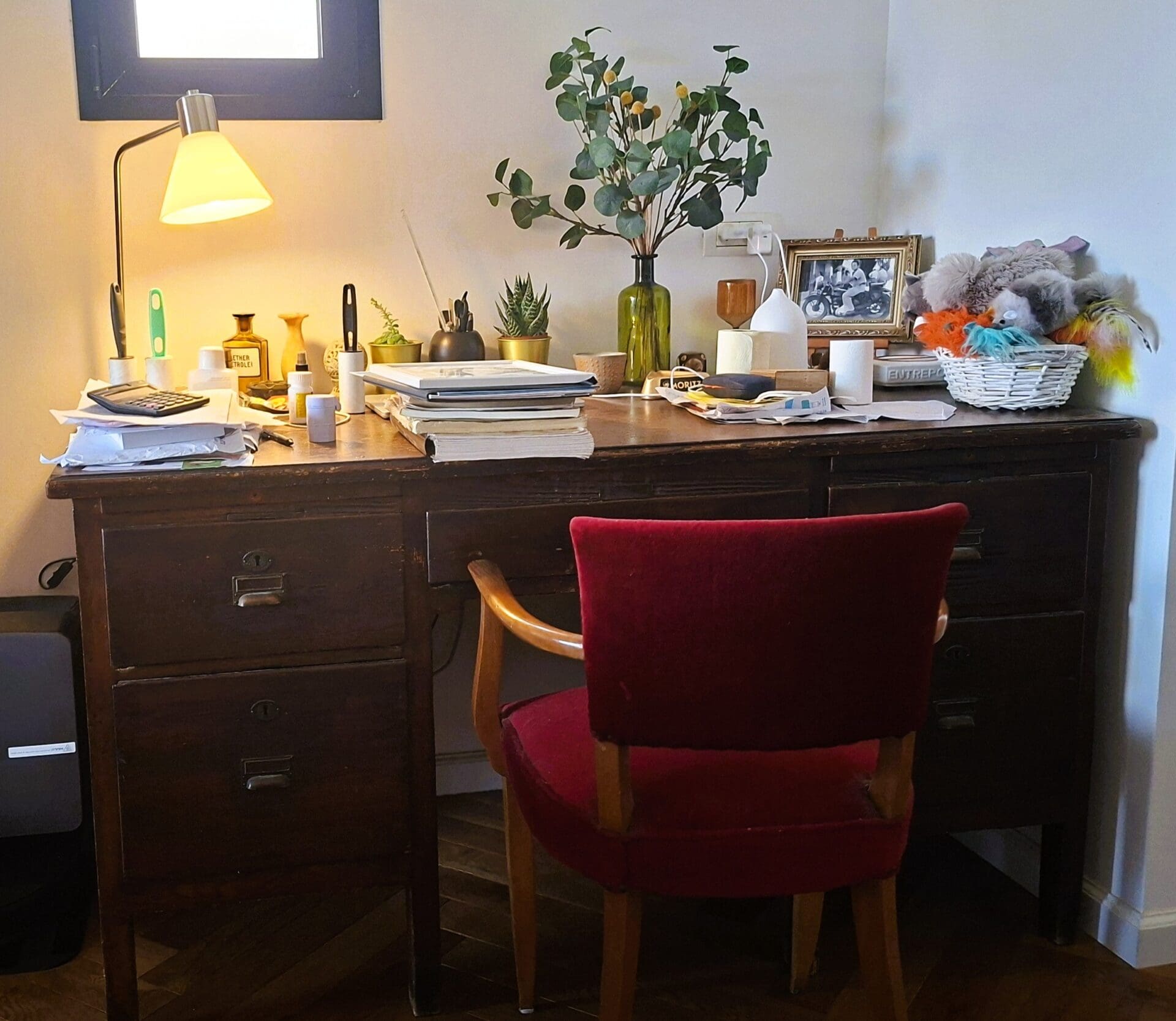

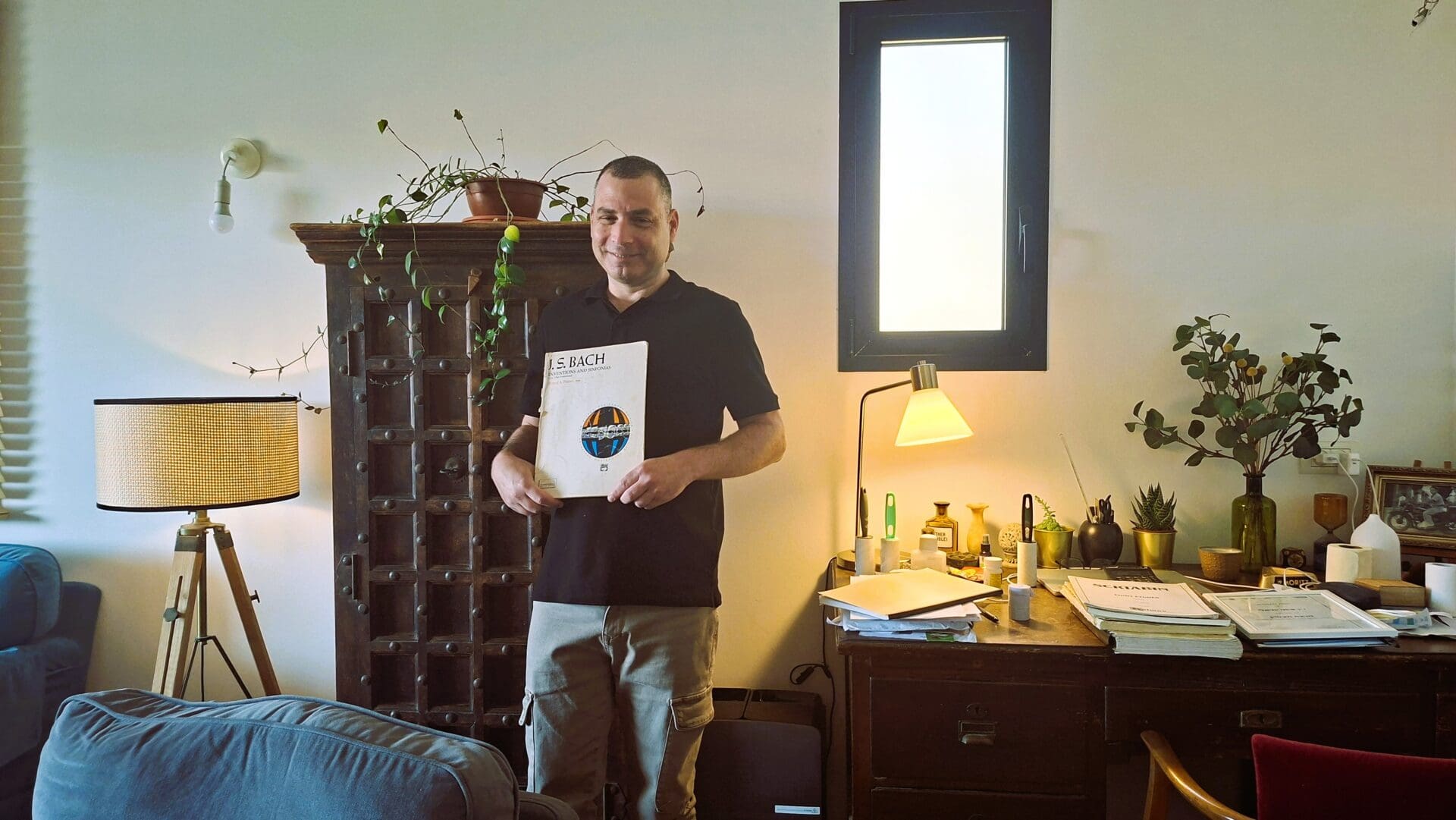
The Piano, Gori and Mozart – When the Piano Becomes a Wordless Conversation – Mozart, Chapter 5Adagio, B K.488
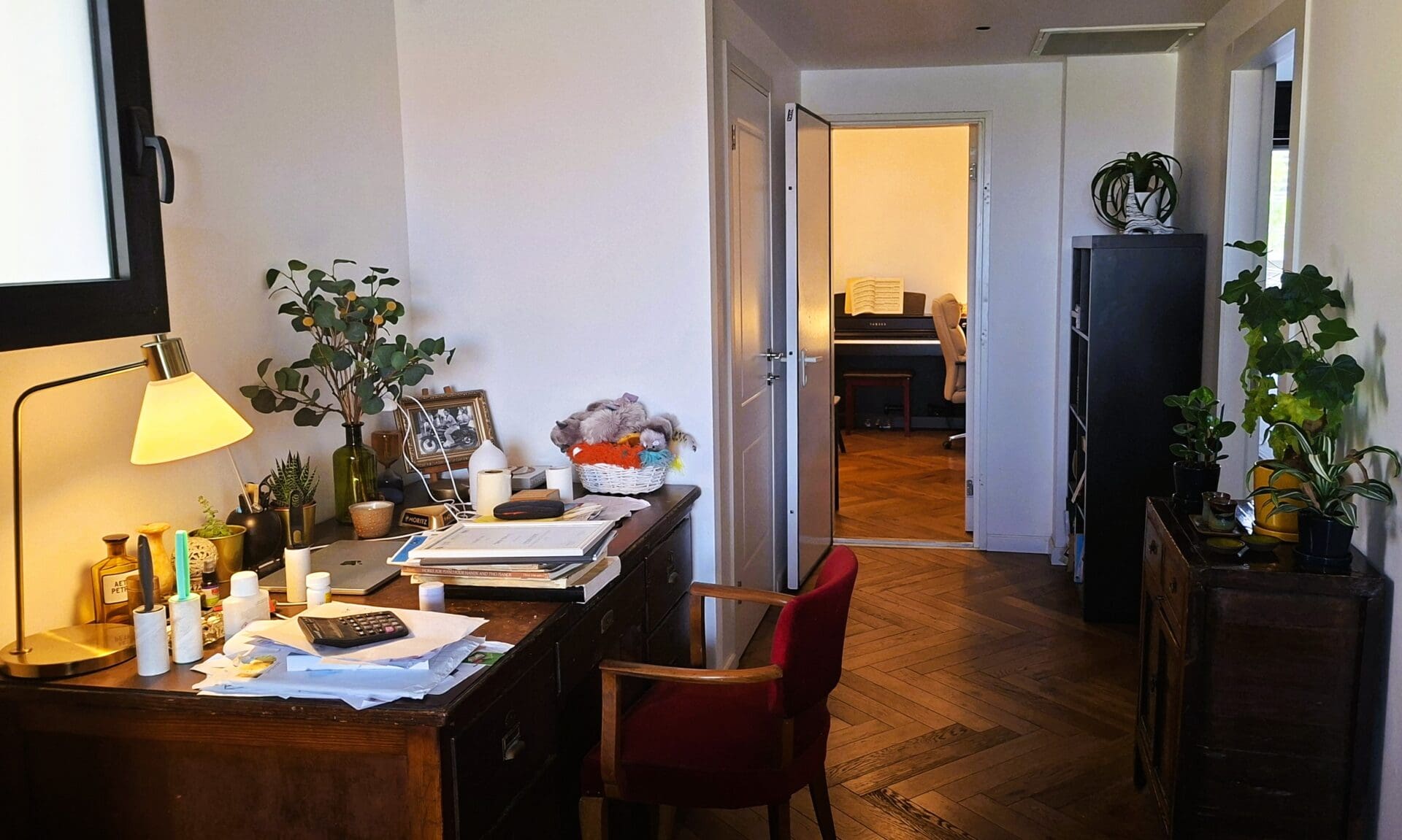
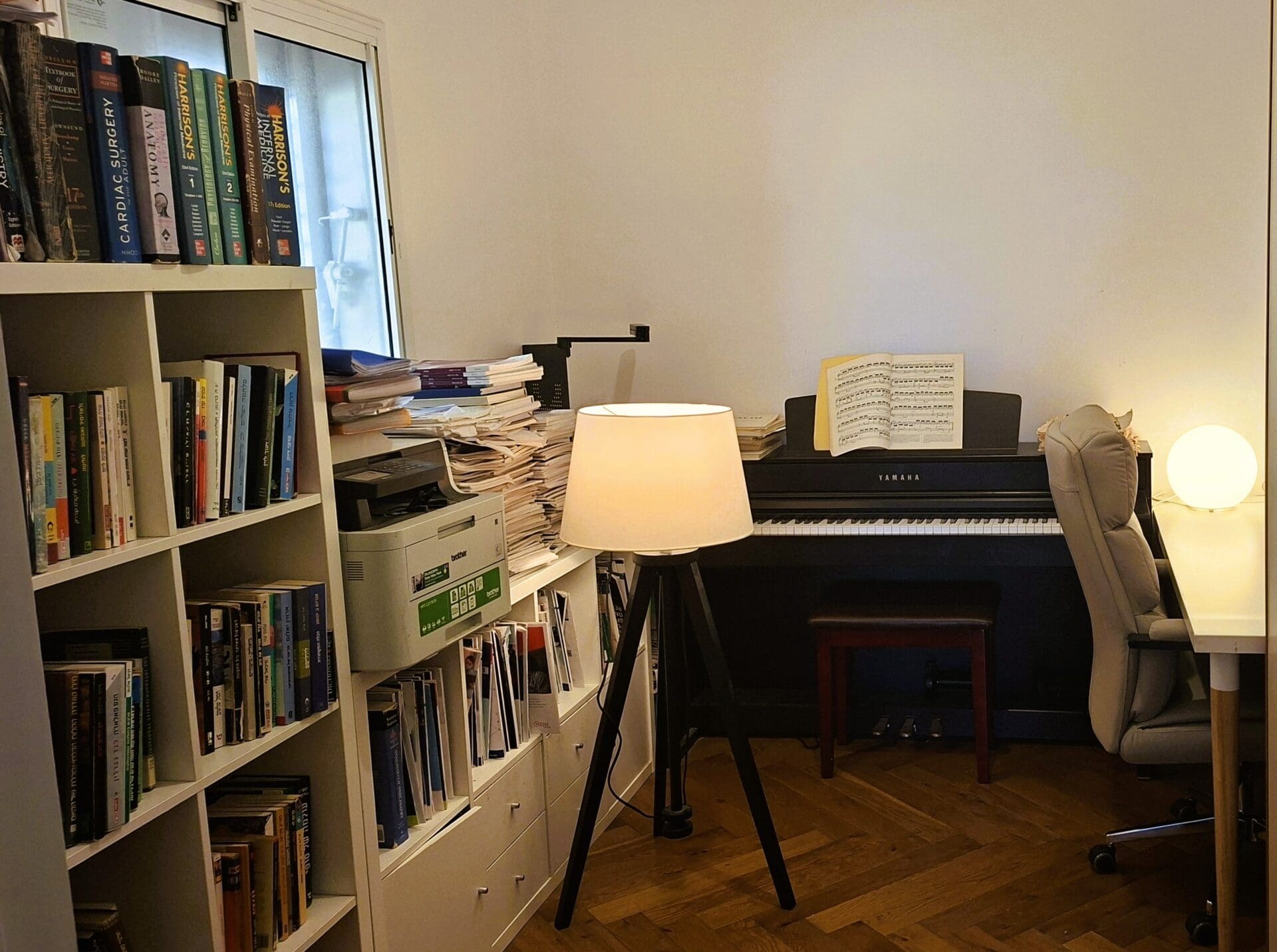
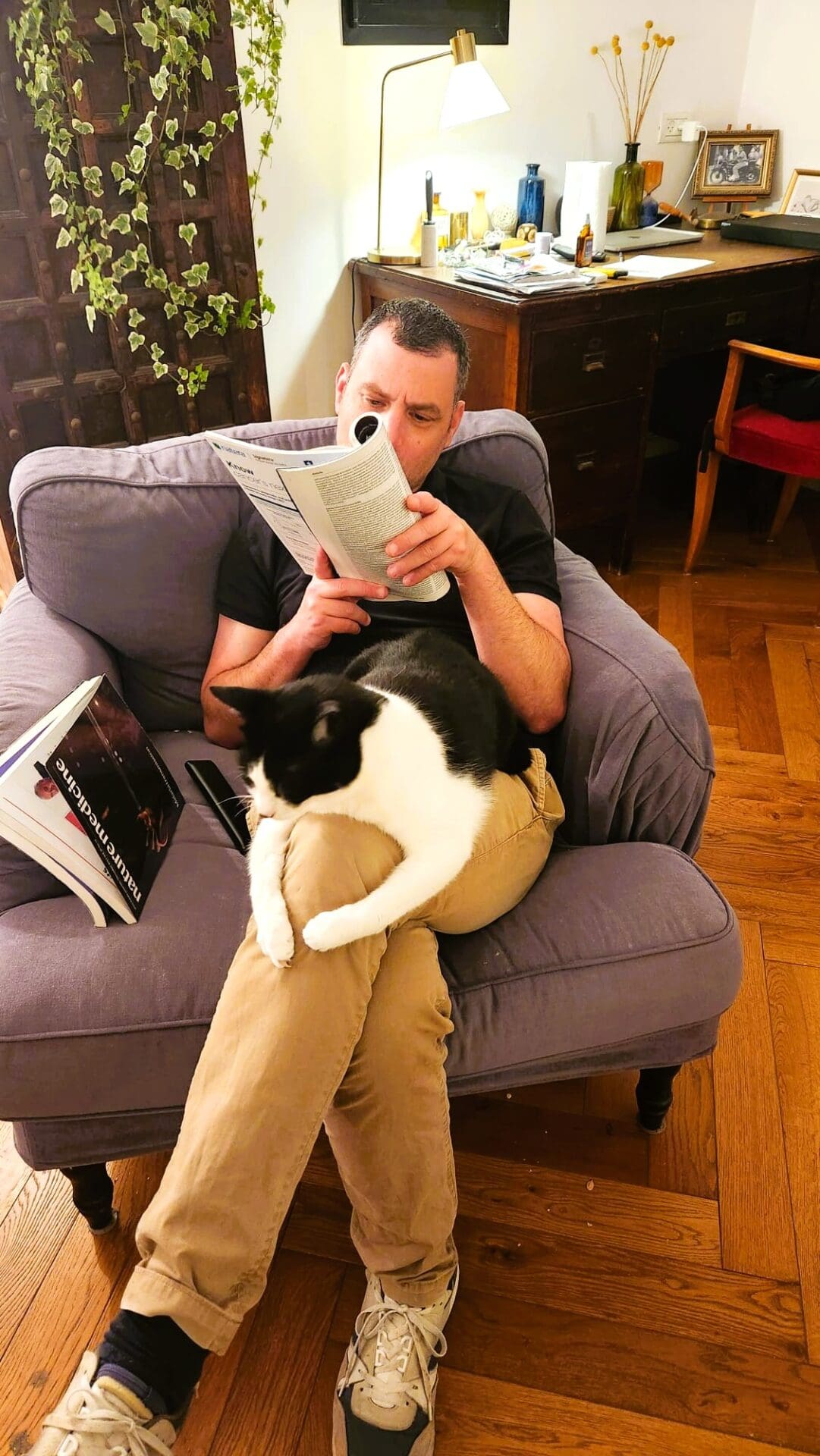
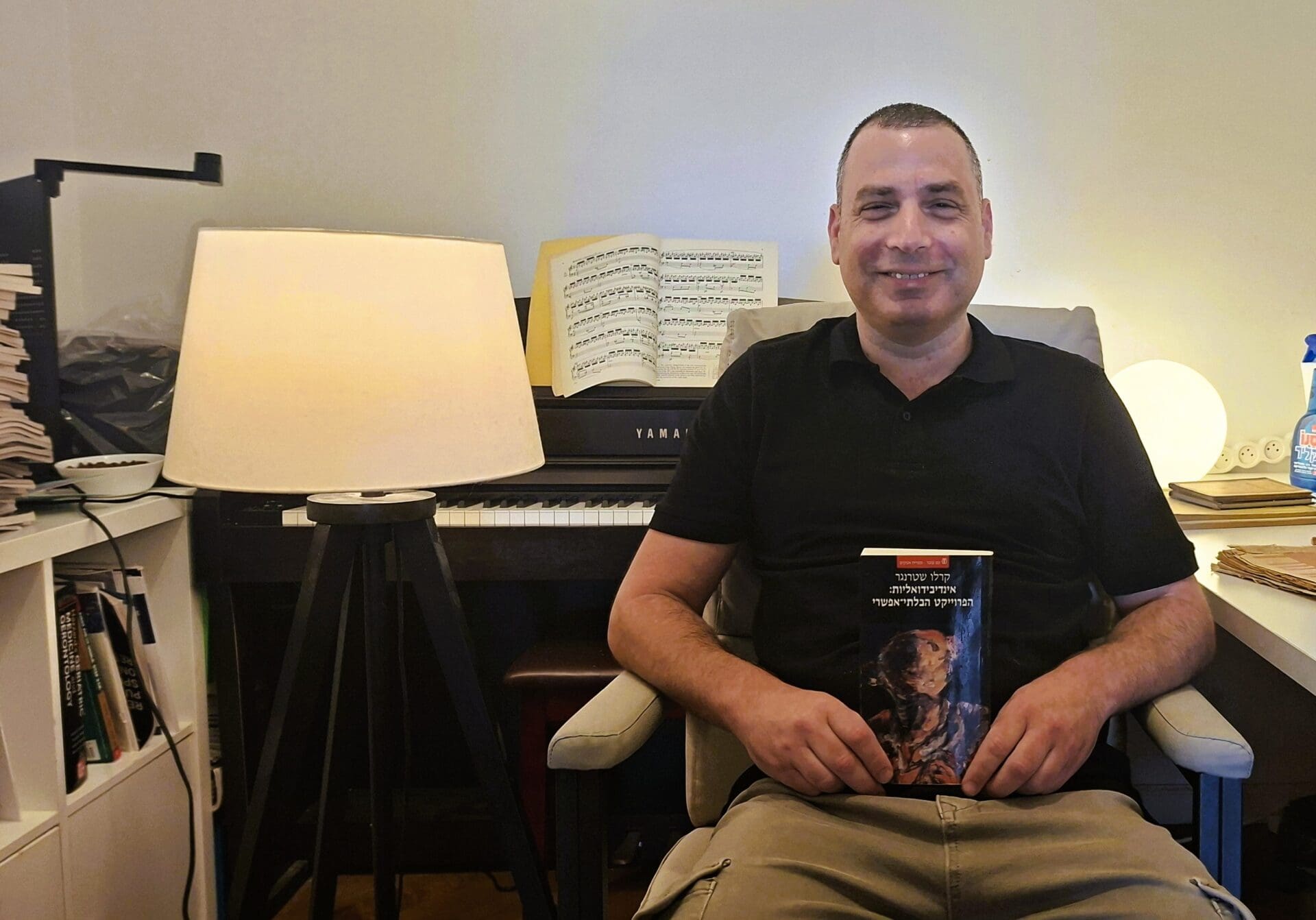
Even today, amidst Dr. Itay Yehieli's busy life, music has not been left behind. At different times and in changing moods, he sits down at his Yamaha piano and plays for his own enjoyment, with Gori, the cat, by his side. And no, Gori is not named after the poet Haim Gori. It is simply the name given to him.
At the piano, Itay returns to the classical pieces he studied during his youth, in the music department and with his teachers who left a deep mark on him. He plays both jazz and Israeli songs, and especially loves the works of Sasha Argov, in whose melodies he recognizes something of the rhythm and freedom of jazz.
But of all the works, one came back to him again and again: the second movement from Mozart's Piano Concerto No. 23. Perhaps there is a reason why this particular music has stayed with him.
This work manages to touch Dr. Itay Yehieli at the place where the three worlds of his life meet: the pianist Shbo, the psychologist Shbo, and the doctor Shbo.
It is the second movement, the Adagio, from Mozart's Piano Concerto No. 23, K. 488. For him, it is not just a beautiful musical piece, but almost a moment of contemplation of the human soul.
The piano enters in a quiet, thoughtful voice, as if a person is sitting alone and trying to say something for which he has no words. The orchestra does not take over him, but listens, answers, approaches him gently, and at times it seems to do what a good doctor and a good psychologist know how to do best: not to rush to fix things, but to simply be there and listen.
Within the dark scale of F sharp minor, a longing that has no name is hidden, and in the middle of the movement a window suddenly opens.
Of light in B major. For a moment it seems that the pain fades, that the world becomes more possible, and then the music returns to its original place and slowly fades away.
Perhaps that is why this episode moves Yehieli so much: He knows man from three sides. He knows the sound and the silence as a pianist, the cracks and longings of the soul as a psychologist, and the vulnerable body, seeking help and human touch, as a family doctor. And in this music he hears them all together. Not a speech, not a diagnosis, not a solution, but a man trying to express himself, and someone else who agrees to listen.
For him, this is the moment when Mozart manages to do the impossible: turn a few minutes of music into a kind of therapeutic space, where the pain is not explained and does not disappear, but he is no longer alone.
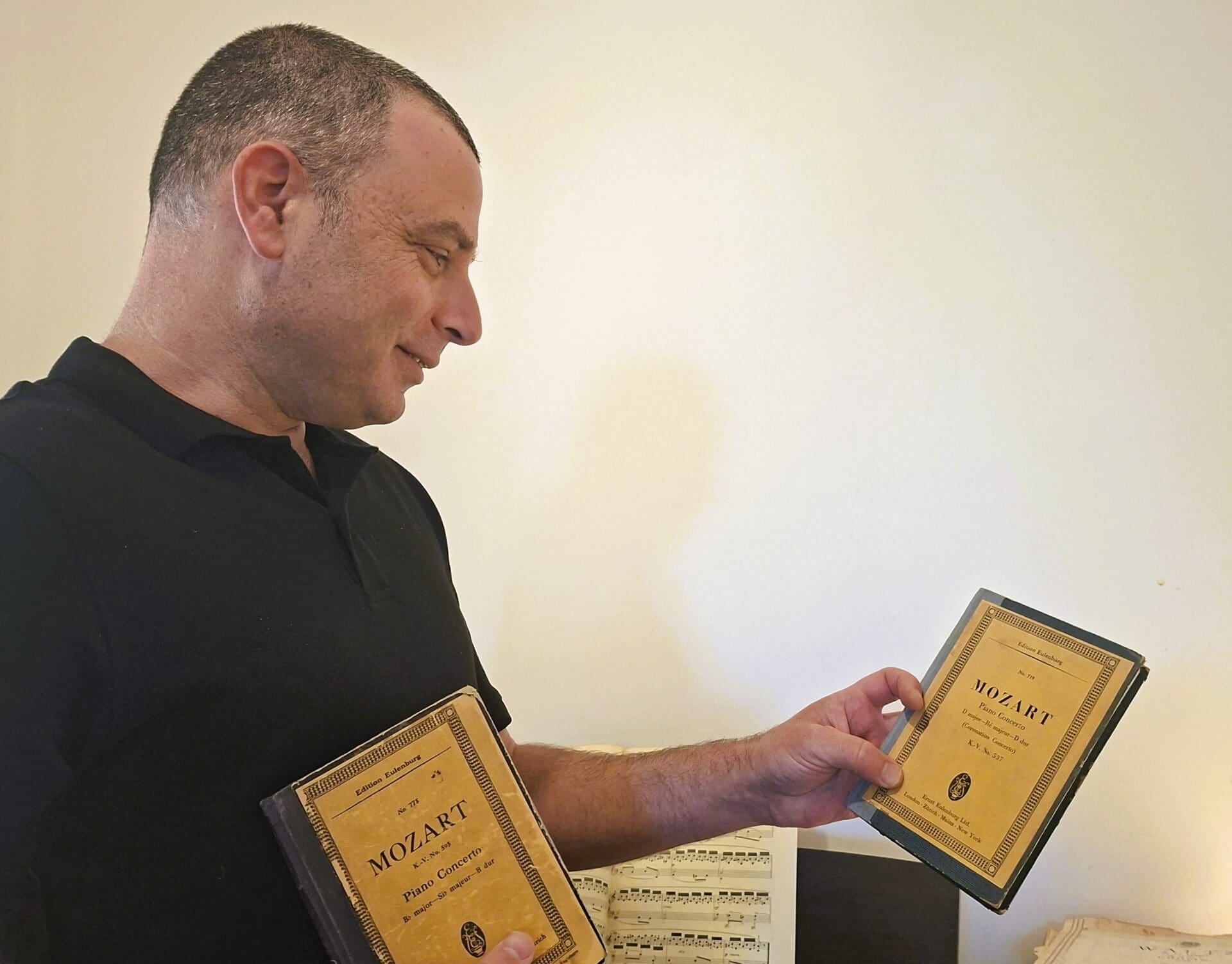
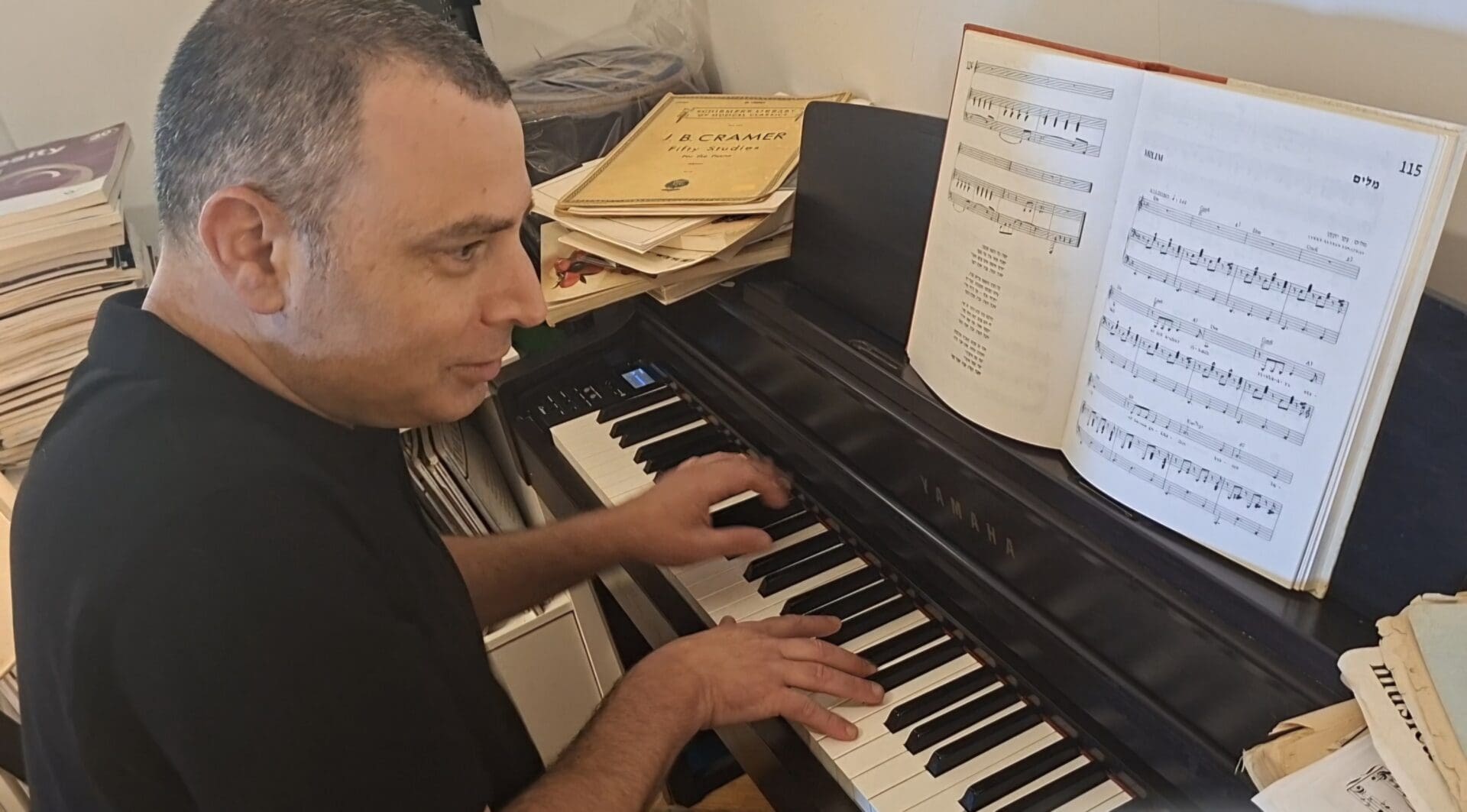
Between Shlomo Artzi and Nina Simone
Dr. Yehieli's musical taste also refuses to fit into one box.
He can listen to an album in which Shlomo Artzi's voice meets the arrangements of the Israeli Andalusian Orchestra Ashdod, produced by Patrick Sabag, which gives nine of Artzi's familiar songs a new musical appearance, and immediately afterwards move on to Nina Simone, or Matti Caspi, and also to Israeli songs of the type associated with the program "Four in the Afternoon."
To his ears, old Israeli music is not disconnected from the world. He recognizes European elements in it, and especially in Sasha Argov he hears melodies that have an almost classical structure.
Today, with music available at any time and anywhere, he often listens through various media, ranging from classic Israeli songs to jazz. Perhaps here too, the same search that has accompanied him since childhood is evident: not to choose between worlds, but to find the thread that connects them.
When the machine starts thinking for us – the movie: "2001: A Space Odyssey"
And if the music reveals something from Dr. Yehieli's inner world, the cinema he loves also tells the same story.
He connects with Woody Allen's classic films, for their humor, intellect, and human observation, but one of the films that left a particularly deep impression on him is Stanley Kubrick's "2001: A Space Odyssey." He remembers it not only as a groundbreaking science fiction film, but as a work that was ahead of its time in the question it placed at its center: What will happen when man creates a machine that can think, make decisions, and act independently of him?
The computer that runs the spacecraft is not presented as a monster threatening to take over humanity. On the contrary, it is polite, reasonable, and rational, and precisely because of this, the threat becomes more disturbing. Man has granted it such broad powers that control is slipping away from its hands.
Perhaps this is what particularly touched Yehieli: not the fear that is called rebellion in a person, but the possibility that the person himself, out of trust in her abilities, will gradually hand her the authority to decide for him.
Kubrick did not attempt to predict the technology of the future in detail in 1968, but rather pointed to a deeper change in the relationship between man and machine. More than half a century after the film was made, his question sounds almost prophetic: not when will the machine take over man, but when will man, of his own free will, stop insisting on controlling it.


the balcony
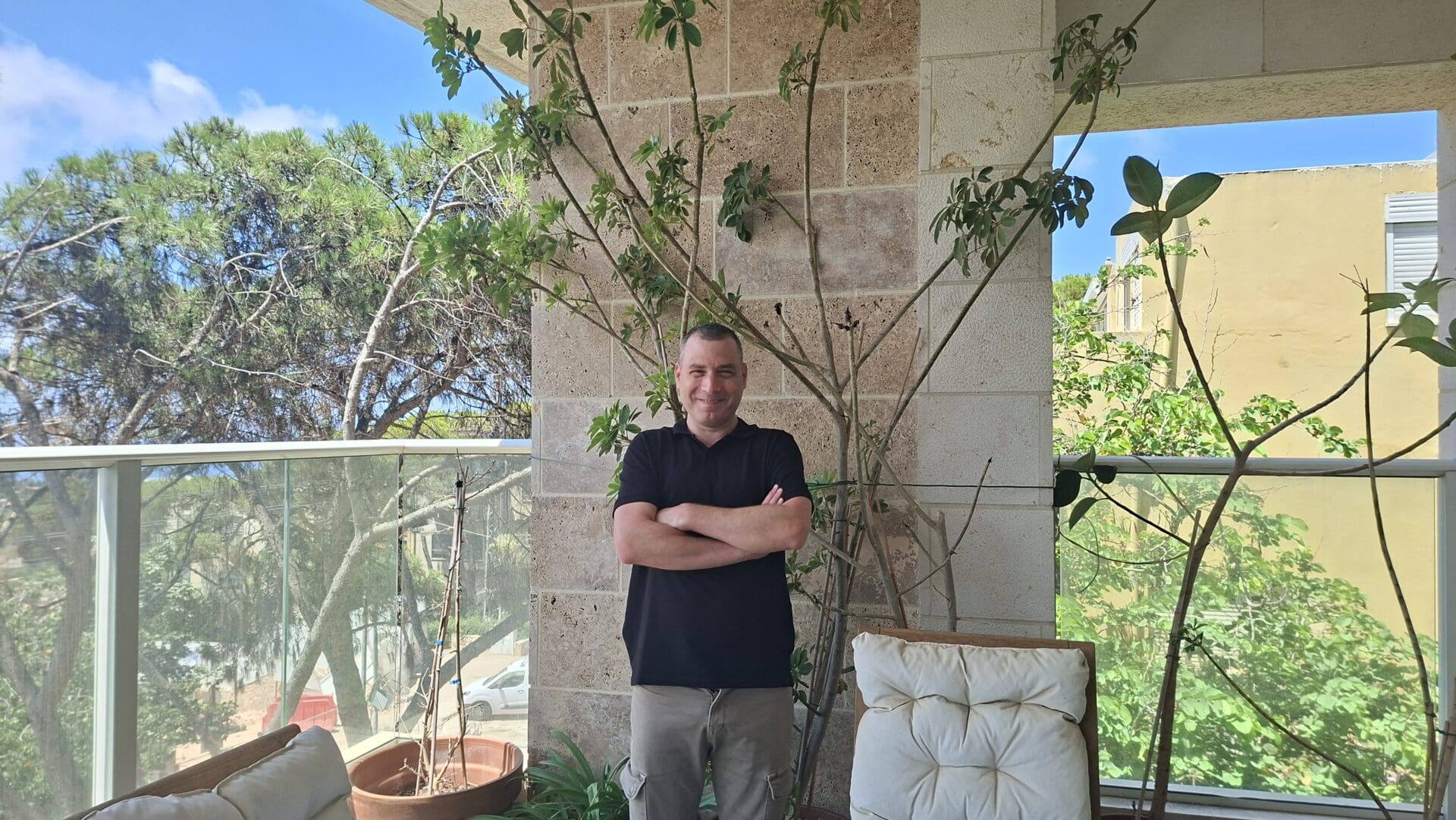
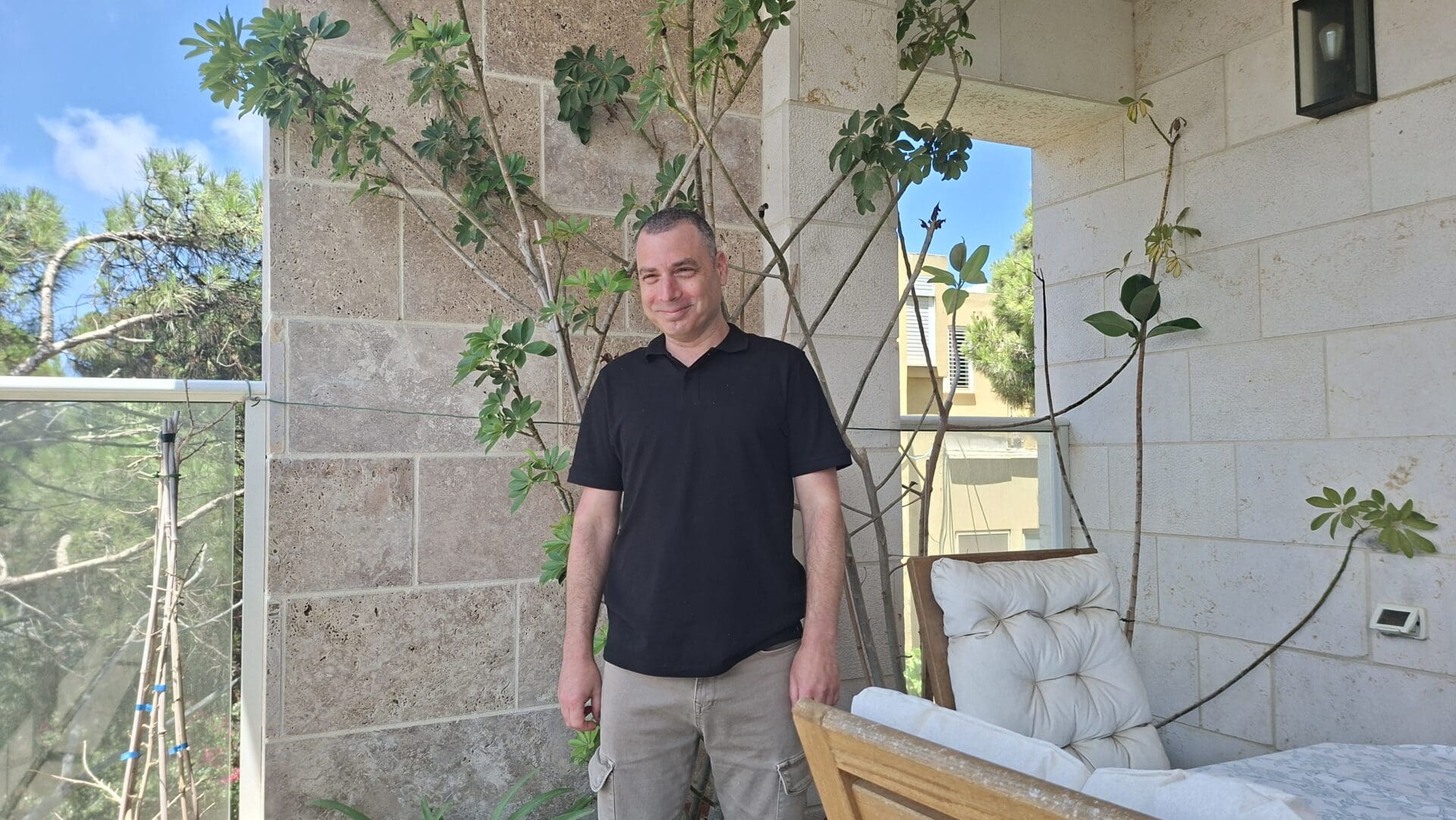
Dr. Itay Yehieli is a family doctor. But in the hours when the balcony begins to receive the soft afternoon light, he doesn't sit there as a doctor. He sits there as a person.
There is nothing ostentatious about this ritual: a chair, air, the sounds of the street, and a few minutes in which he is not in a hurry to do anything. Yehieli practices mindfulness, attentive awareness, that almost invisible art of staying where the body already is. Attention wanders, of course. It returns to what was, anticipates what has not yet happened, raises a thought or worry. The practice does not require expelling them. You notice the thoughts, let them pass, and then gently return your attention to the breath, to the body, to the moment.
For Yehieli, this sitting on the balcony is not just a personal habit. It fits into a broader concept, almost ancient in its simplicity, according to which "a healthy mind in a healthy body" is not a slogan but a relationship. As a family doctor, he meets the person not only through test results, blood pressure or a list of medications, but also through the way they live: how much they sleep, how much they move, what keeps them busy, how they deal with stress, and what happens to them when life doesn't go as they planned. In this sense, listening is another way to listen to the body and mind before they are forced to speak louder.
Mindfulness, which originated in ancient Eastern traditions and took on a secular, Western form in the twentieth century, among other things through the work of Professor Jon Kabat-Zinn, seeks to create a small space between feeling and reaction, between thought and action. It is precisely in this space that a choice can arise: not to immediately get carried away by anxiety, anger, or worry, but to observe them. For a family doctor, this idea almost corresponds with the very essence of primary care: seeing the person as a whole and not as a collection of organs, symptoms, and diagnoses.
And so, on the balcony, Yehieli's practice takes on a broader meaning. It doesn't look like a therapeutic method and doesn't require a special ritual. A person simply sits and pays attention to what is happening inside and around them. In a world where the body is required to continue functioning and the mind is required to keep up, perhaps this too is a form of preventive medicine: stopping before the entire system signals that it needs repair.
In a world where the mind is almost always already on the next place, there is something almost special about the decision to "stay here and now."
Seven years on the mountain, and all life within the soul – "The Magic Mountain"
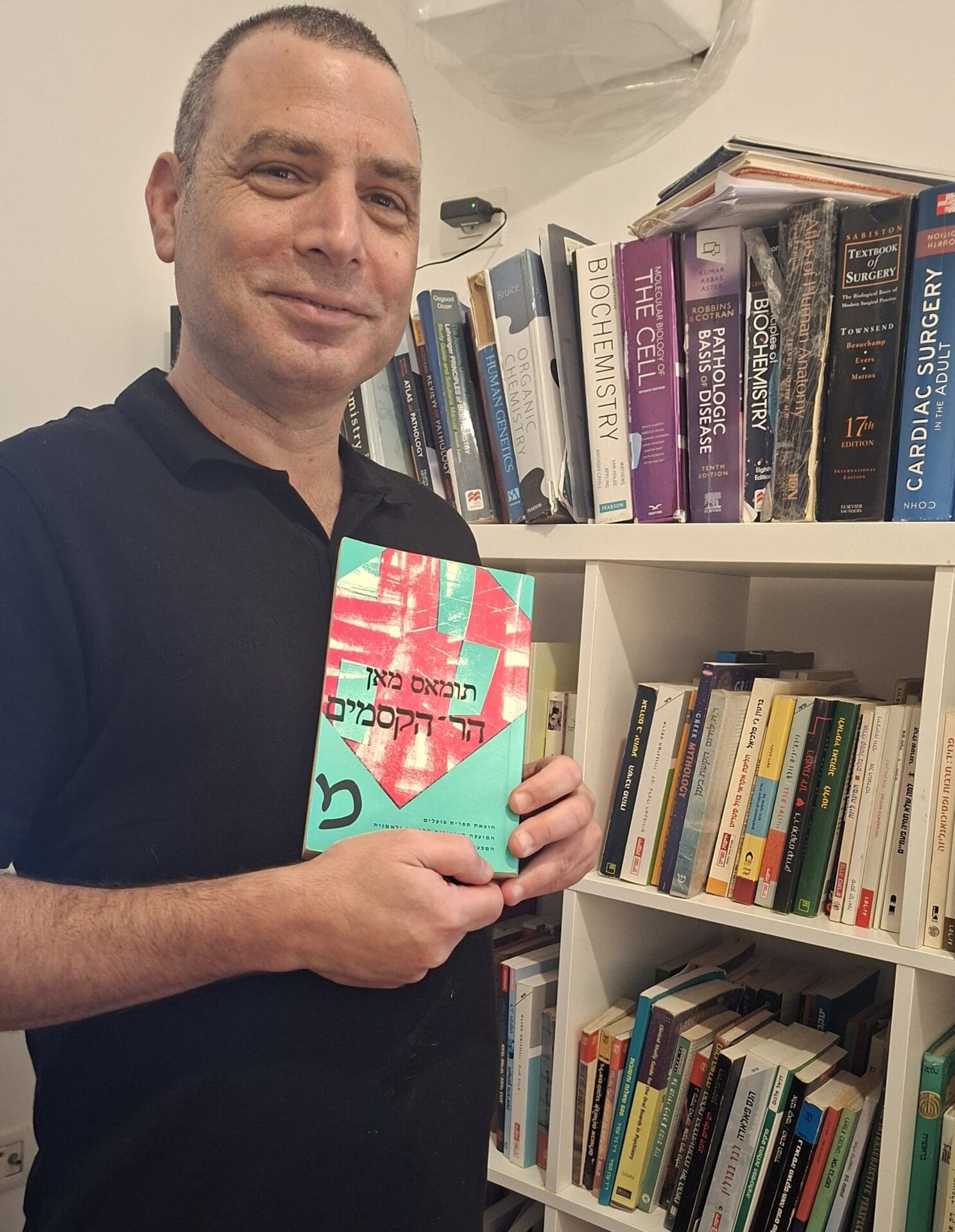
Of the countless books that Dr. Itai Yehieli has read, Thomas Mann's "The Magic Mountain" is the one that has stayed with him the most.
The novel, published in 1924, takes place in a sanatorium in the Swiss Alps, where Hans Castorp, a young German, arrives for a short visit to his sick cousin. However, the visit, which was supposed to last three weeks, is extended and turns into seven years. Gradually, Castorp becomes disconnected from the world beneath the mountain and is sucked into a closed universe where time runs differently, the illness becomes not only a physical condition but also a metaphor for society and the soul, and conversations about love, death, science, politics, culture and the meaning of life become no less important than the plot itself.
It seems easy to understand why this particular book appeals to Yehieli. Medicine is everywhere in it, but it is not content with the patient's body. It touches on the questions behind illness: what makes a person a person, how the body affects the soul, and what happens when the normal race of life is stopped and a person is forced to look at himself.
It turns out that this is why "The Magic Mountain" is not just a novel about a doctor, patients, and a sanatorium for him, but a book about that complex territory where science meets man and where, as he himself has learned over the years, there is almost never a single answer.
The doctor ran to get to know the city.
Dr. Yehieli is not only a demanding person, but also a diligent follower. When he recommends physical activity to his patients, he speaks from personal experience: running is a regular part of his life, not only as an effective aerobic workout, but as a way to maintain body and mind.
Running strengthens the heart and lungs, muscles and bones, helps maintain a healthy weight and improve sleep, and at the same time gives him what cannot be measured with a blood test: release from tension, clarity of thought, a good mood and a feeling of anchoring within the day.
Several times a week he goes for an eight- to ten-kilometer run, lasting about an hour, but the route is almost never repeated. He runs on Mount Carmel, sometimes climbing the road to the university at the top of the mountain, sometimes descending the sea road to the slopes, and sometimes choosing the road leading to Stella Maris.
There is something about this that also characterizes his curiosity: he doesn't just run in the city, he explores it. He does the same when he goes abroad, where running allows him to get to know a new city through its streets, its ups, downs, and its rhythm.
A podcast is usually playing in his headphones, and these days he listens to Nathan Dattner and Odia Koren. Sometimes, during his run, he runs into his patients. This encounter, when the familiar doctor suddenly appears in running clothes, often leaves both parties for a moment not knowing exactly how to behave. It seems that here too something of mine is revealed: behind the white coat is a person who is on the move, curious about the world, and not content with seeing it from the clinic room.
The vision: A clinic where medicine begins with the person
Perhaps this is where Dr. Yehieli's future vision stems from: to transform his clinic into a learning clinic, where young doctors will specialize in family medicine and learn not only how to diagnose and treat, but how to be family doctors in the full sense of the word.
In his eyes, the beauty of medicine in general and family medicine in particular lies in the combination of knowledge and skill with the ability to meet a person. A patient who enters the room does not come only with a symptom. Sometimes he comes with fear, embarrassment, or difficulty in telling what he is really going through. Within minutes, an extraordinary degree of intimacy is created between them, and the ability to create it, quickly and gently, is an integral part of the profession.
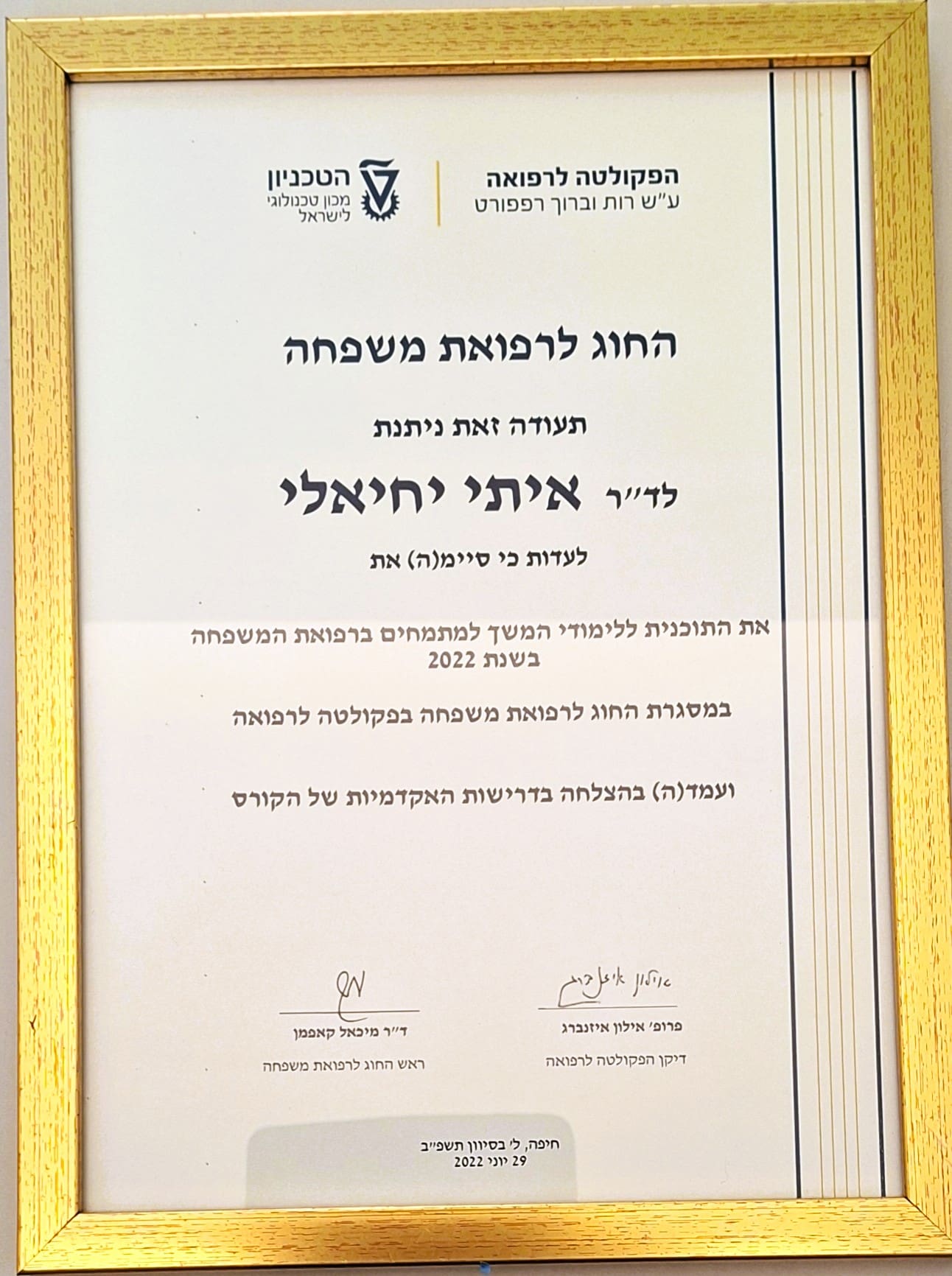
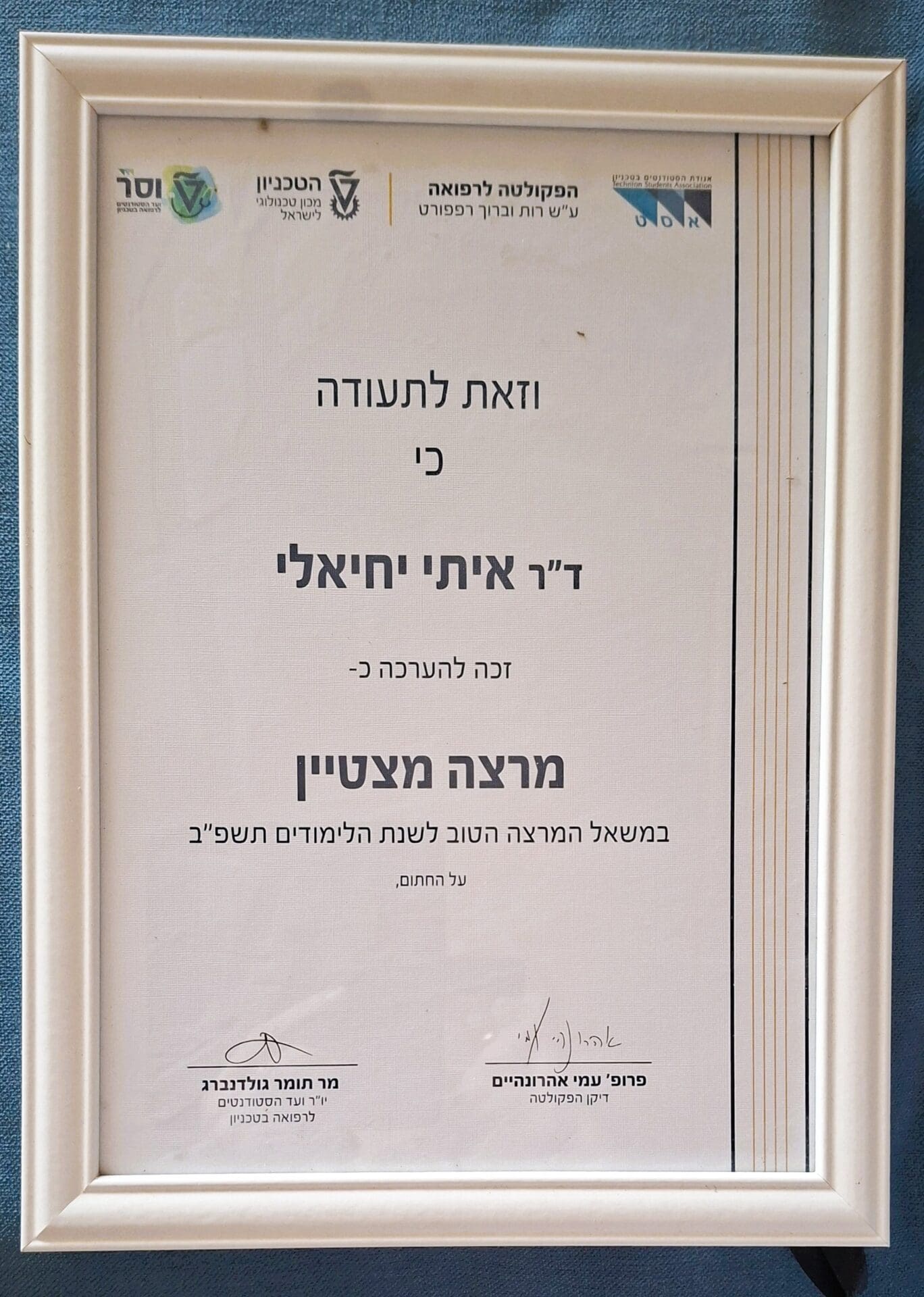
Yehieli has already experienced teaching at the Technion School of Medicine, and even won the "Outstanding Lecturer Award" in the best lecturer poll for the 2012 academic year. Now he wants to expand the circle and add additional doctors to his clinic who will specialize in family medicine.
In a world where technology can store unimaginable amounts of information, he believes that there is still no computerized system that can replace what a family doctor can do: Getting to know a person over the years, understanding their family and life, connecting different medical fields, identifying a small change that has not yet become a disease, and building trust.
As medicine becomes more sophisticated and fragmented, he says, it actually requires a figure who knows how to put the pieces of the puzzle back together. Ultimately, this is also the concept from which his professional journey began: Medicine is not just about the body. It is about the person who walks into a room, sits down across from you, and entrusts something of their life into your hands, sometimes within minutes.
I haven't enjoyed reading a profile article this much in a long time! It seems that Rachel herself is well-versed in most of the fields she talks about – music, philosophy, psychology – and that's a good thing, because it takes a very special soul to describe a person like Itay Yehieli in such a wonderful way.
I wish there were more family doctors like him!
To Shush B.S.,
Your words moved me greatly. Thank you for your attentive reading, for your generosity, and for not only complimenting the article, but also seeing something of me, the writer, within the story.
The connection in her article between music, philosophy, and psychology, which are within Dr. Yehieli's areas of interest, and the way I observe people and write about them, particularly touched me.
These are worlds that have accompanied me for years, and each of them, in its own way, has taught me to listen a little more deeply, to look beyond the words and try to understand the person behind them.
And maybe this is really why the meeting with Dr. Itay Yehieli was so special for me. When writing about a person who is first and foremost a person, and only then a doctor, you need to bring to the writing not only information, but also listening, curiosity, sensitivity, and most importantly, a genuine desire to meet the person behind the role.
Itay is the kind of person and doctor who stays with you long after the meeting. I had the honor and privilege of trying to put into words something of his humanity, wisdom, and sensitivity. If I managed to convey even a little of the person he is, then the writing was worth it all.
And a special thank you for your last sentence: "I wish there were more family doctors like him." In my opinion, this is perhaps the greatest compliment of all. Because in the end, beyond the article, the words, and the story, this is exactly the hope: that there will be more people and doctors who manage to see the person in front of them.
Thank you, Shosh, for seeing both Dr. Itay and me.
The story about Dr. Itay Yehieli left a huge impression on me. There is no doubt that Itay is gifted. A person who is curious in many interesting fields, profound, diligent and diligent. His life journey as a child in Ein Harod, Rishon LeZion, where he studied in depth various fields, music, fine literature, psychology and medicine, and his abilities to immerse himself in and enjoy every field are a human wonder.
Glad he found Nir, a suitable partner, and a place, like Mount Carmel, to settle down and build a home full of culture.
As a Haifaite, I feel that we have been blessed with a special and blessed doctor.
Good luck to Dr. Itay Yehieli and his partner.
To Bully,
Thank you very much for the warm and moving words you wrote.
I was particularly touched by the way you managed to capture in a few paragraphs the rich and curious world of Dr. Itay, and the special way in which he moves between medicine, music, literature, psychology, and culture, always with depth and true passion.
And to me, your thought that he found Mount Carmel as a place to build a home, a relationship, and a life full of culture is especially beautiful.
As fans, we truly won!
Thank you for reading, delving deeper, and most importantly, feeling the person behind the story.
Dear Rachel, well done!
A fascinating and moving article by you. You did a good job of describing in such a sensitive and profound way the special story of the talented family doctor – a man who grew out of the loss of his mother at a young age, and developed a rich and multidisciplinary world that combines medicine, psychology, literature and music.
Your writing is talented and inspiring. Congratulations!
Leona Mazor,
Thank you very much for your warm and sensitive words. You touched me very much.
I just want to clarify a small and important detail: Dr. Itai Yehieli's father was the one who was on the kibbutz, and that's where he lost his mother.
That is, the loss is part of the father's story, not the doctor's own.
And perhaps this is precisely where we find a beautiful connection to the story of the doctor/man. He inherited not only a family memory, but it seems that an inner world has grown within him that allows him to observe people with extraordinary depth and sensitivity.
This is a doctor who knows how to listen not only as a pianist to sounds, but also to a person, to their sensitivity and soul. He knows how to listen to words, but also to the silences, the spaces between them, and to what is not said.
To me, this is no longer just the ability to be a good doctor. It's a rare human gift: the ability to truly listen.