
When Rome falls, who really falls with it??
On Saturday night, October 3, 2026, when the audience sat down at the "City Center Theater" at 36 Masada Street in Haifa, it seemed for a moment that they were about to watch a historical play about a Roman emperor, a collapsing empire, and a Gothic army approaching the gates of the capital.
Rome is far away, the Goths belong in the history books, and a Roman emperor is not exactly a figure that life in Israel in 2026 is supposed to know intimately. Fifty minutes later, when the lights came up, it was much harder to stay inside ancient Rome. Something about the play, written in Switzerland in 1949, just four years after the end of World War II, insisted on bringing viewers back to the present, and to the questions that the Israeli present can no longer postpone.
Yigal Amitai's free adaptation of Friedrich Dürrenmatt's play
"Romulus the Great", or in its full name "Romulus the Great – The Last Hours of the Roman Empire", is a free adaptation by Yigal Amitai of the play by Friedrich Dürrenmatt.
Amitai wrote the adaptation about a month after October 7, and he also directed, translated, adapted, and starred in it alongside his son, Danny Amitai. Danny is also responsible for the illustrations, lighting, set design, and construction, and is involved in virtually every layer of the production.
Eshel Bar Ilan operates the sound and lighting, and additional characters are voiced by Carmel Ben Ephraim, Yigal Amitai, Danny Amitai, and Tamara Amitai. Tamara Amitai also serves as assistant director and language consultant.
The fact that this is a family production is almost imperceptible in the conventional sense of the word. There is no attempt here to turn family closeness into an embellishment or a side story. It is made part of the fabric of the work, of the way this theater exists: in a small space, with limited means, from the accumulation of talents, handiwork, memories, and experience.
In a certain sense, this small, independent production is particularly appropriate for a play about an empire that is at a moment when all of its major mechanisms are beginning to stop working.
What is Fringe Theater?
Fringe theater generally grows outside of large venues and the theatrical establishment, offering creators a freer space to experiment, explore, and dare.
It is a place where one can stage original plays, experiment with other theatrical languages, and deal with subjects that do not always find their way onto the repertory stage. In Israel, the fringe has become a significant part of theater life over the years, not only because of the modest budgets or small venues, but mainly because of the artistic freedom it allows.
In this sense, Fringe is less a question of stage size and more of a stance: the desire to make theater in an independent way, even when there are still no clear answers to where this path leads.
Yigal Amitai's Fringe Theater
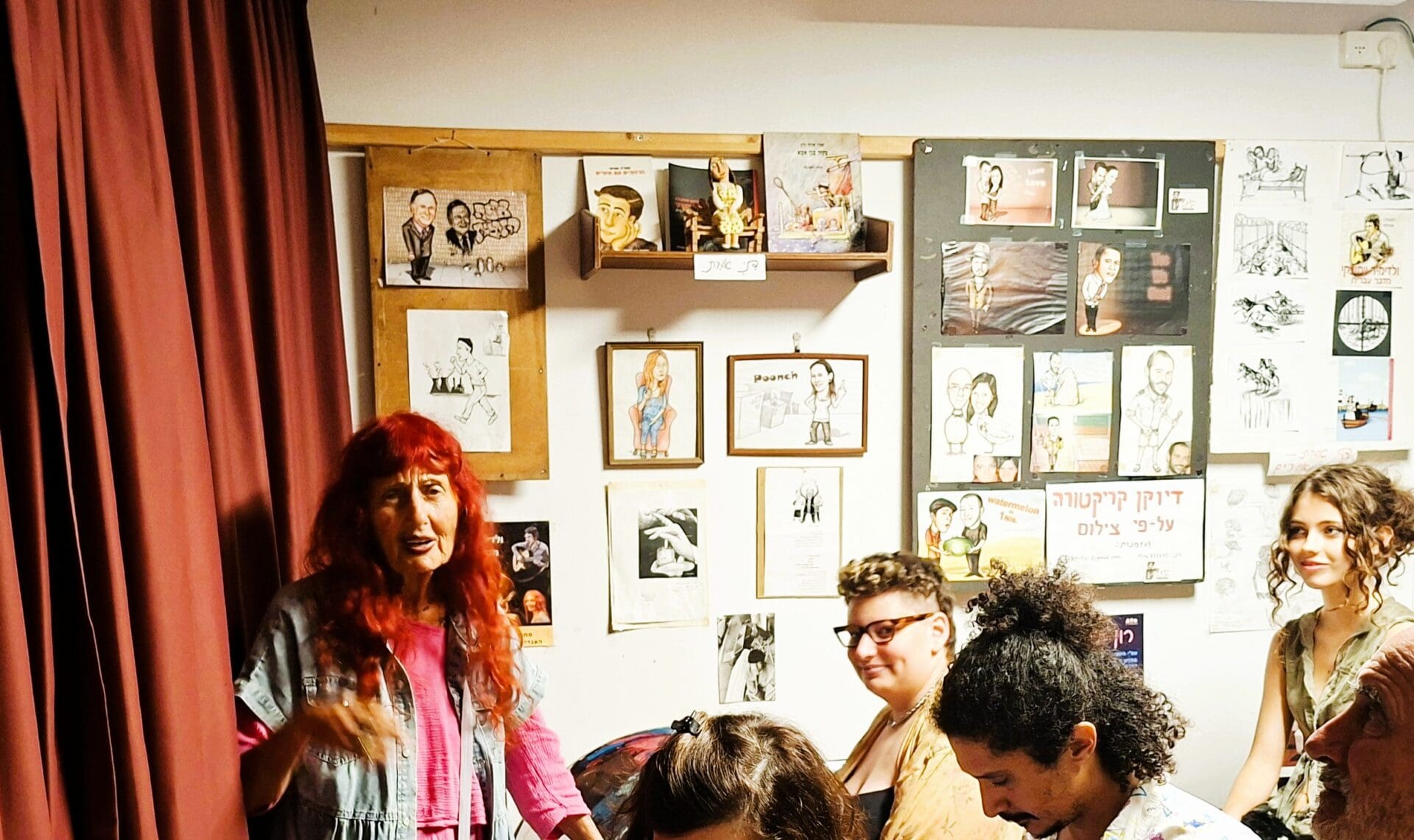
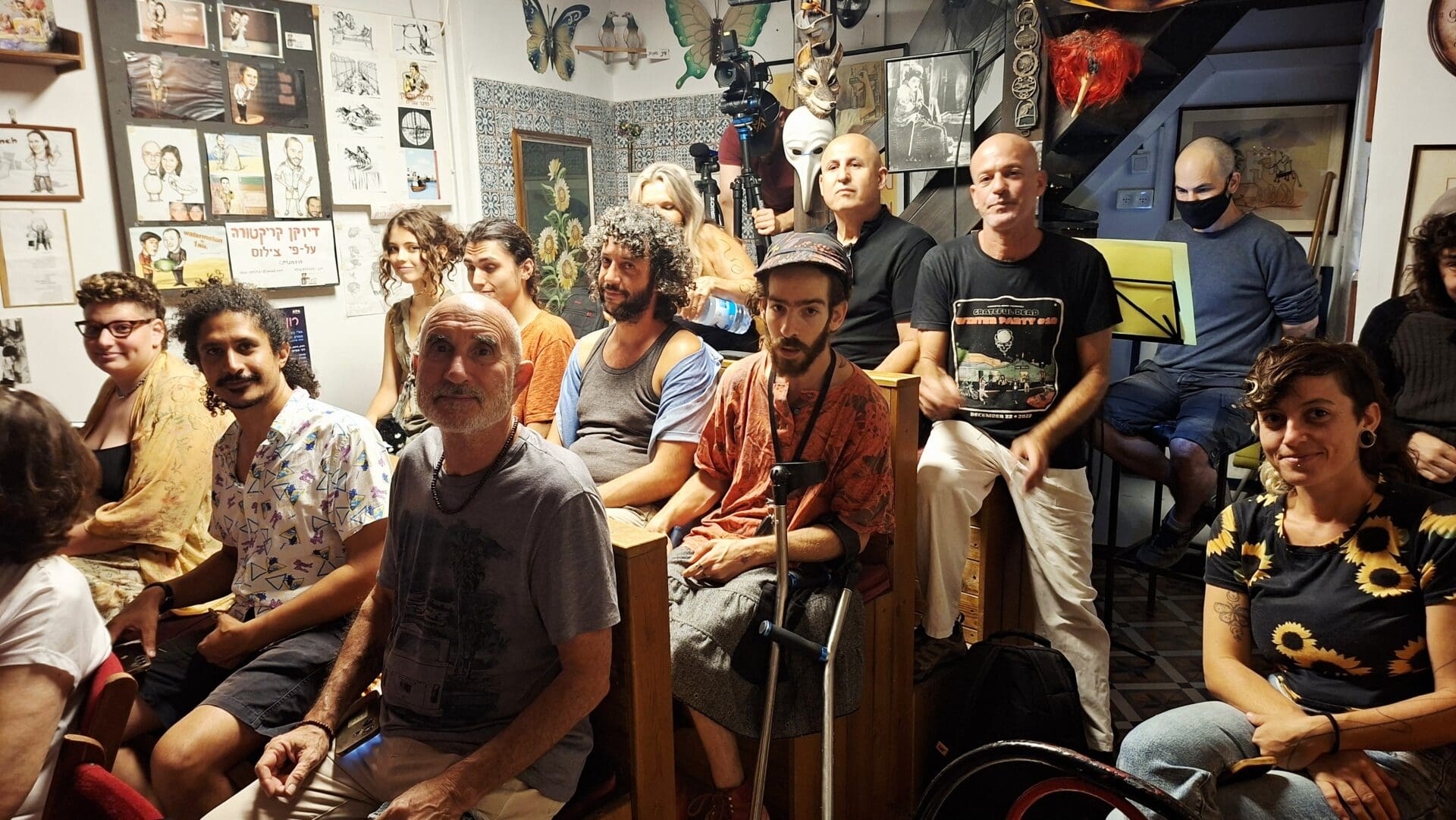
In Haifa, this idea found its own home. In 1996, Yigal and Tamara Amitai founded the "City Center Theater," the first independent professional theater in Haifa.
Yigal Amitai, a director and actor, who served as the artistic director, wanted to create much more than a place where plays were performed. He wanted to establish a Haifa-based creative troupe and connect the theater to the streets, people, and cultural life of Hadar and downtown Haifa. Over the years, it has staged plays for adults and children, original plays and adaptations, and some of the productions have even gone beyond Haifa and to festivals abroad.
Thus, a theater was gradually built around Amitai, which was a stage but also a local and cultural act: an attempt to create from Haifa, for its audience and in the same free, independent, and non-establishment spirit that characterizes the fringe world.
Dirnmat comes to Haifa
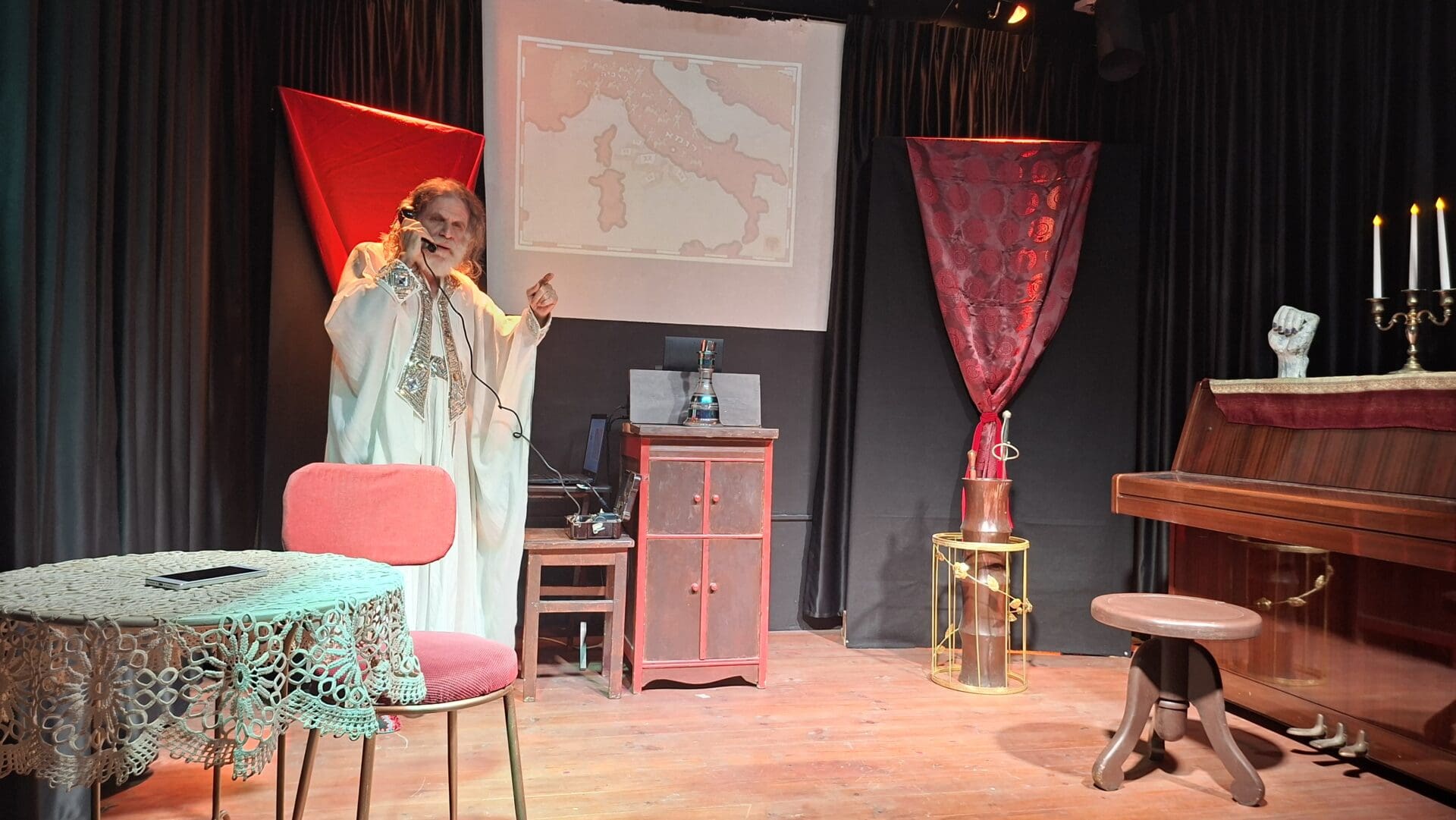
Dirnmatt's original play is a large-scale work: four acts, 18 characters, no extras, and a run time of more than three hours. Amitai took this world and reduced it almost to a skeleton. Instead of eighteen characters, only two remained on stage: Romulus, the Roman emperor, and Odoacer, the leader of the Goths. Four additional characters, the Minister of the Interior, the Minister of Defense, the Empress Julia, and the Sforza envoy Titus, are heard in the recordings. The time dimension has also changed: the entire drama takes place during the last hours before the conquest of Rome.
This is a change that is not just technical. When most of the people, armies, and mechanisms are removed from the stage, it is no longer possible to hide behind the crowd. Empire becomes a conversation. War becomes a voice heard behind the scenes. All of history is compressed into one palace and into two people, each of whom is supposed to play a perfectly clear role, but who gradually discovers that the identity that history has given him is not necessarily the identity with which he knows himself.
Initially, there were three characters on stage, but now there are only two. Amitai says that after giving performances to invited guests, including theater and writing professionals, he decided to further reduce the adaptation and transform Yulia from a stage character into a recorded character. This made the play more concentrated, sharper, and more exposed. The voices that come from outside are not just the voices of characters. They become the voices of the system itself, of that political machine that continues to demand, warn, command, and speak in the name of the homeland even when the person who is supposed to obey it has already stopped believing the words it uses.
The emperor who brews liqueurs while the world collapses
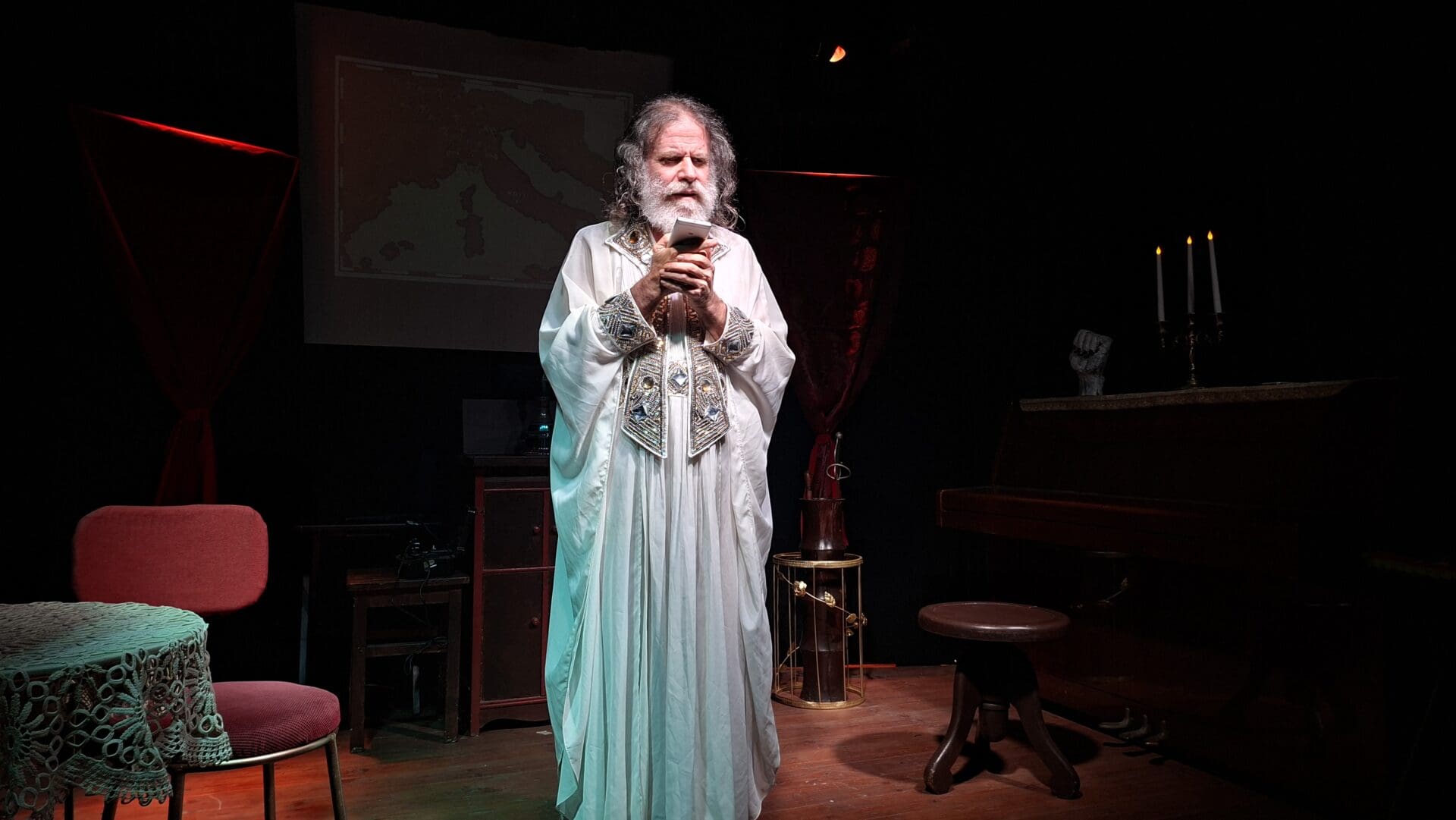
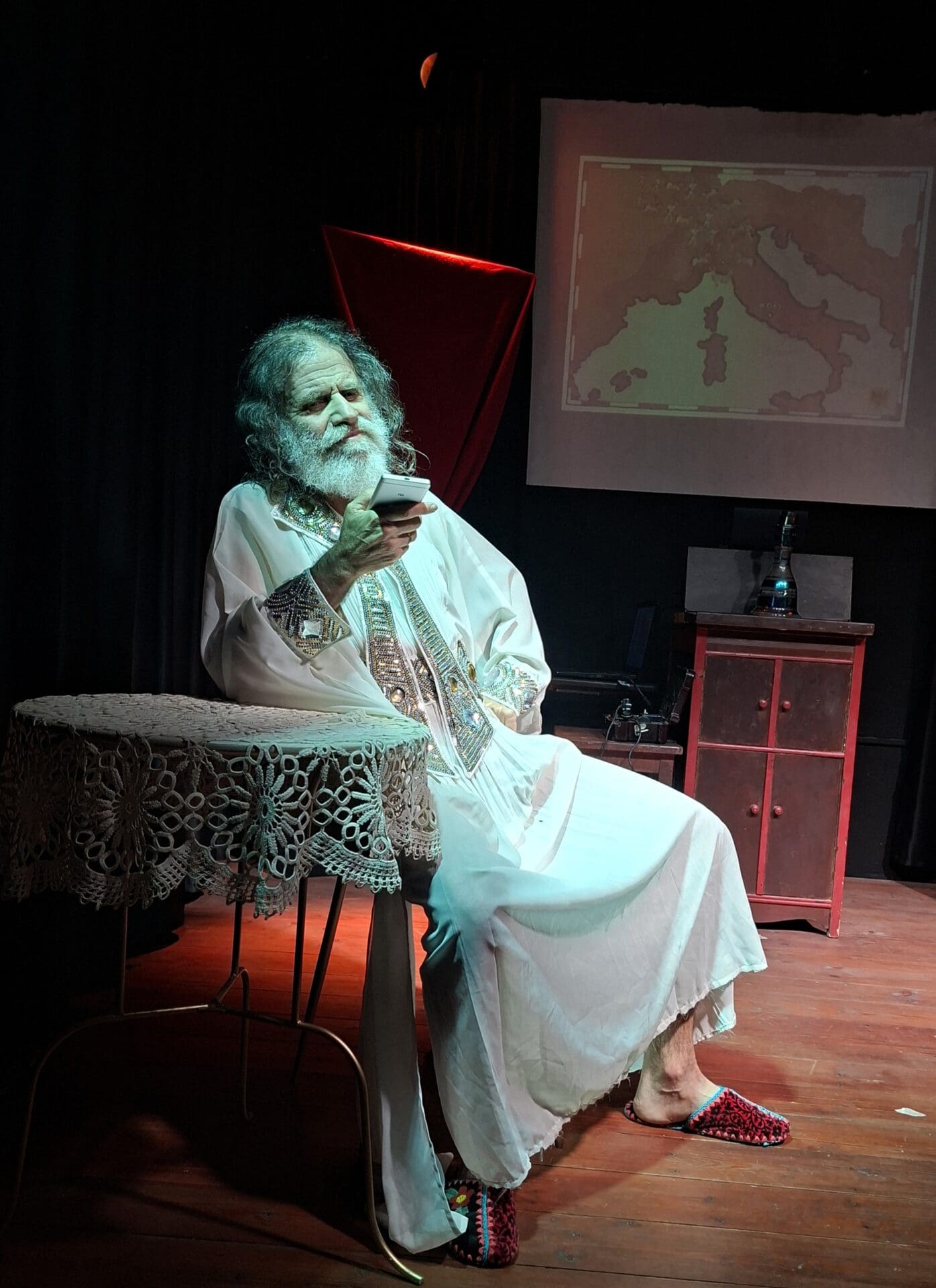
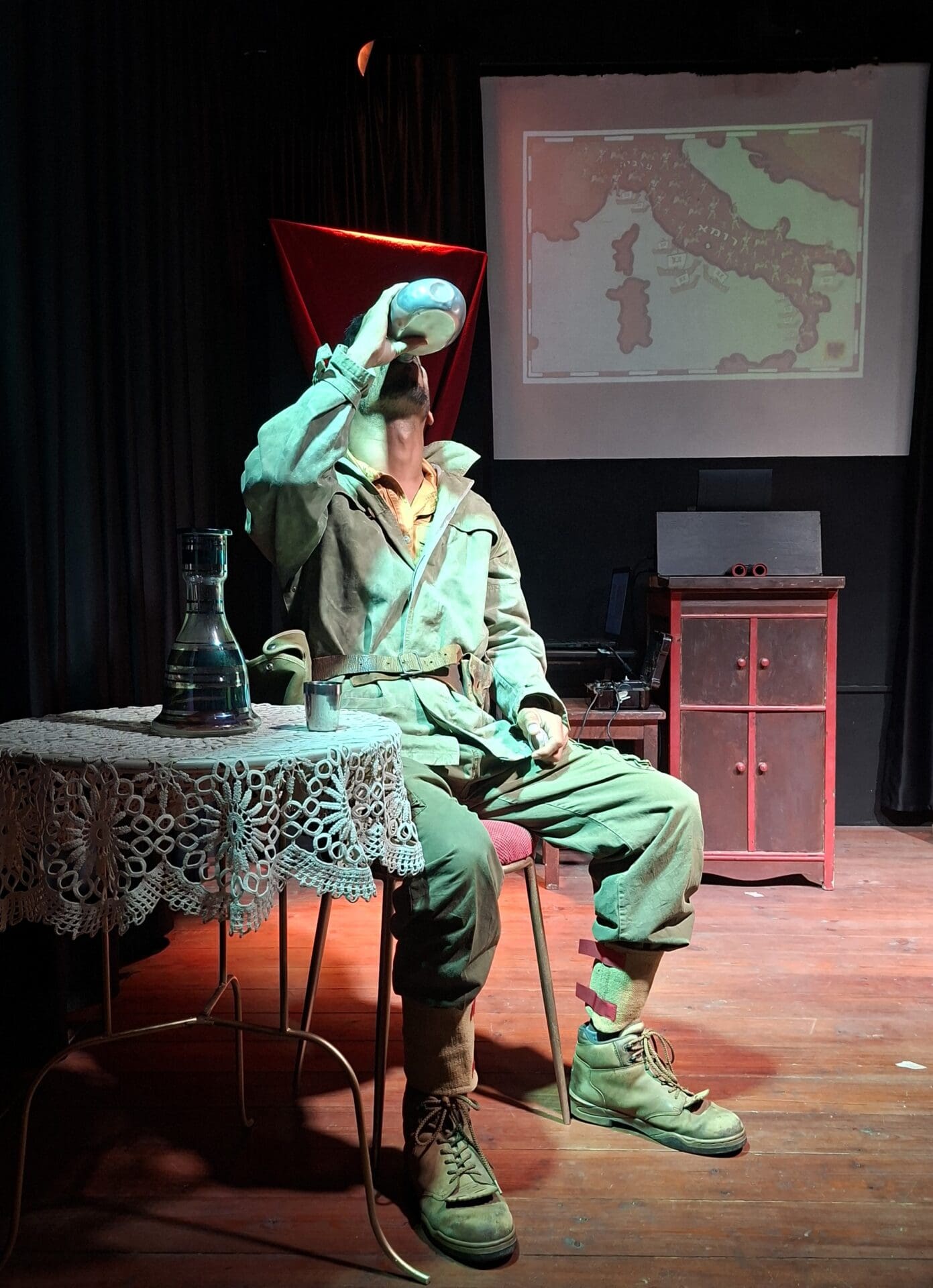
Amitai's Romulus is not an emperor struggling to save his kingdom, quite the opposite. While the empire is crumbling, the city of Pavia falls, the army is defeated and its commander is taken prisoner, the emperor sits in his palace, brewing liqueurs and trying to play the piano. In Dirnmatt's version, Romulus raises chickens. In the new adaptation, the chickens have been replaced with music and making liqueurs, a seemingly small change that transforms the character into a man with a private, almost bourgeois, contemporary inner world, who insists on continuing his pursuits precisely when the world outside his window is collapsing.
At first it is easy to interpret this behavior as indifference, perhaps even cowardice. An emperor who does not rush to the battlefield when the enemy approaches does not seem like a hero. But Dirnmat, and after him Amitai, refuse to give the viewer the comfort of a simple division between hero and coward. Romulus does not escape reality. He observes it and refuses to participate in it.
The piano and the liqueurs gradually become not just comic details, but signs of rebellion. In a world where the state demands that man prove his loyalty through action, Romulus chooses inaction. He is unwilling to do what is expected of him, just because the system expects him to do it.
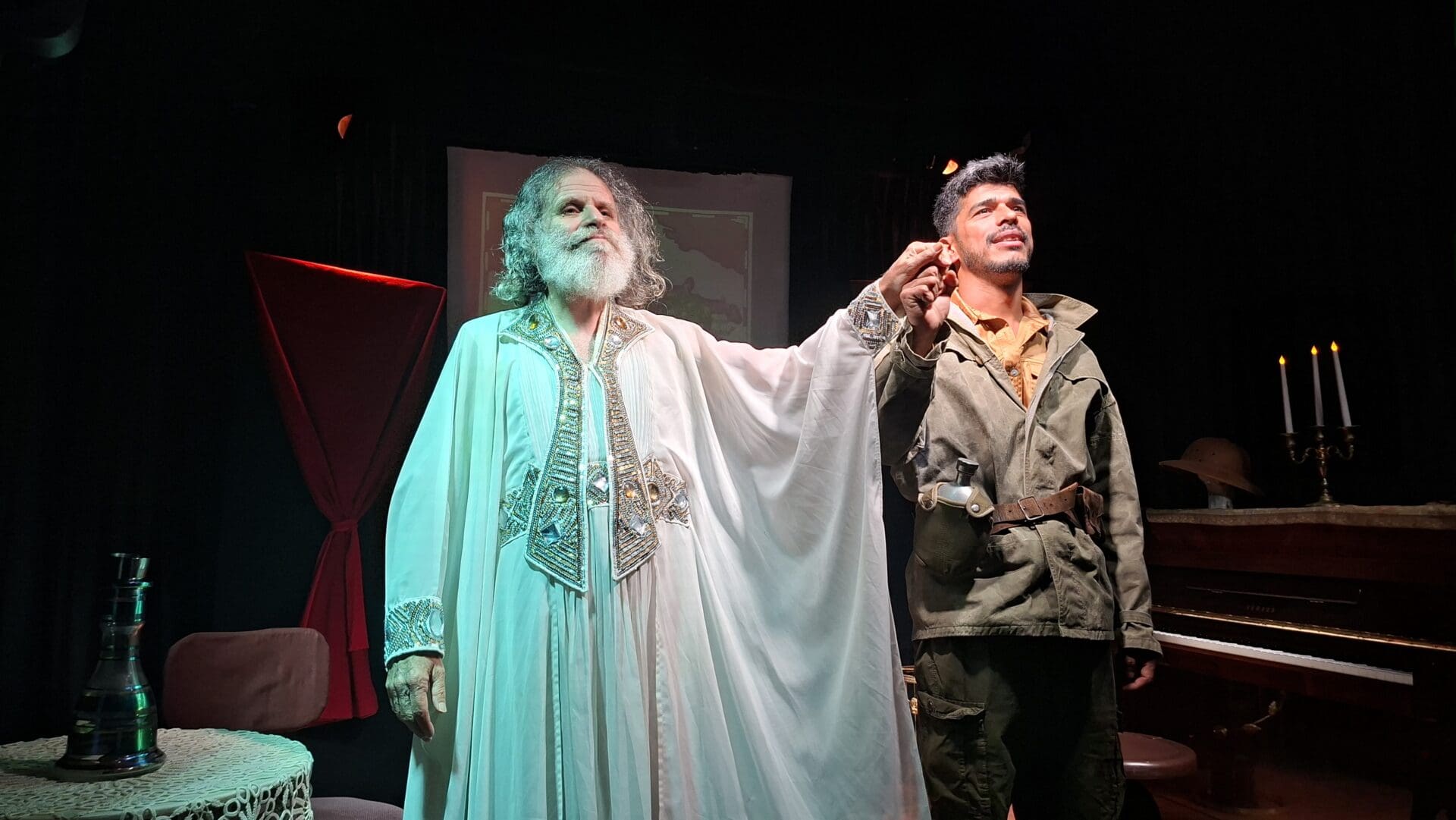
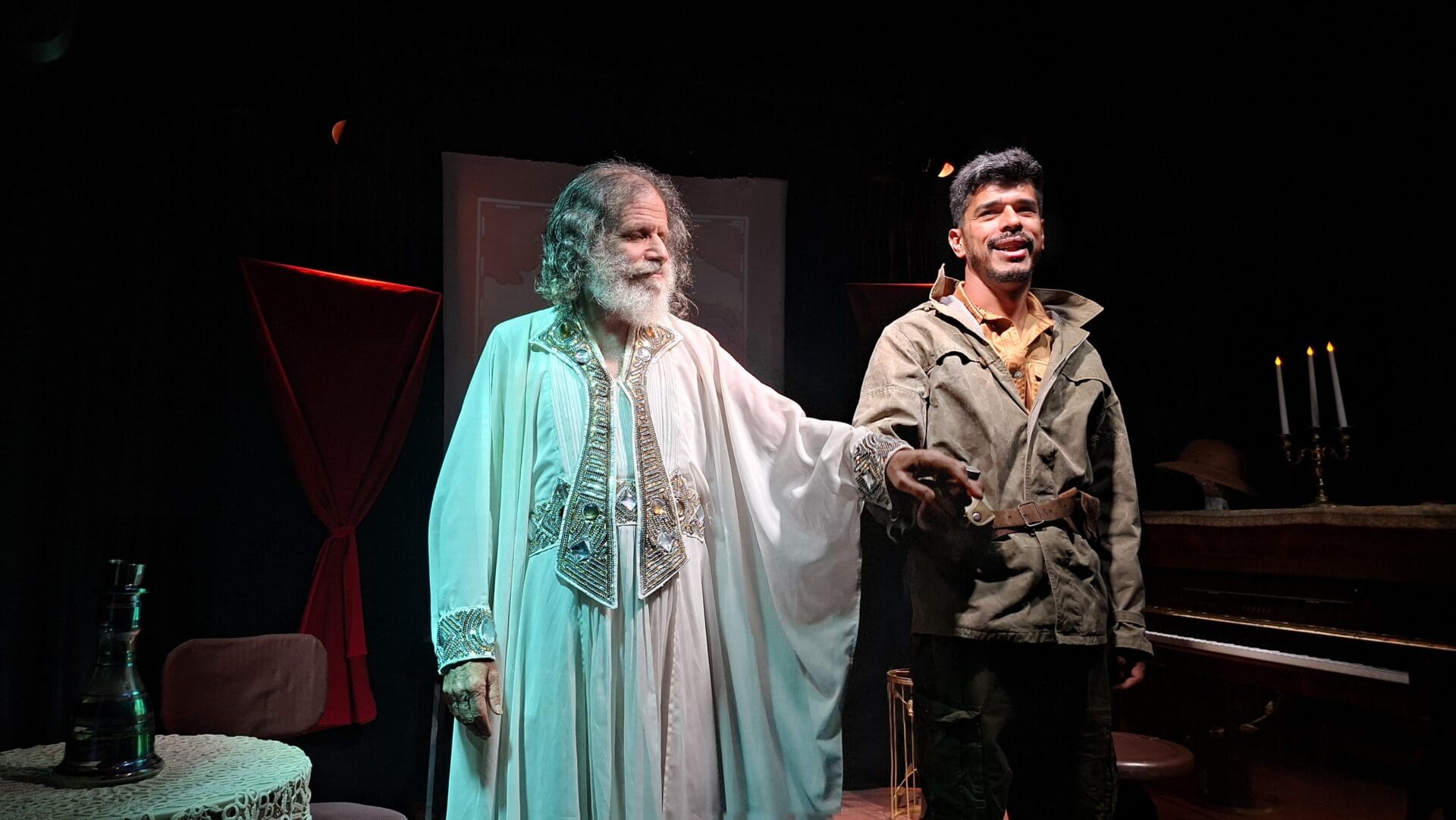
"Romulus the Great" - "City Center Theater" - News to the Emperor from the battlefield (Photo: Racheli Orbach)
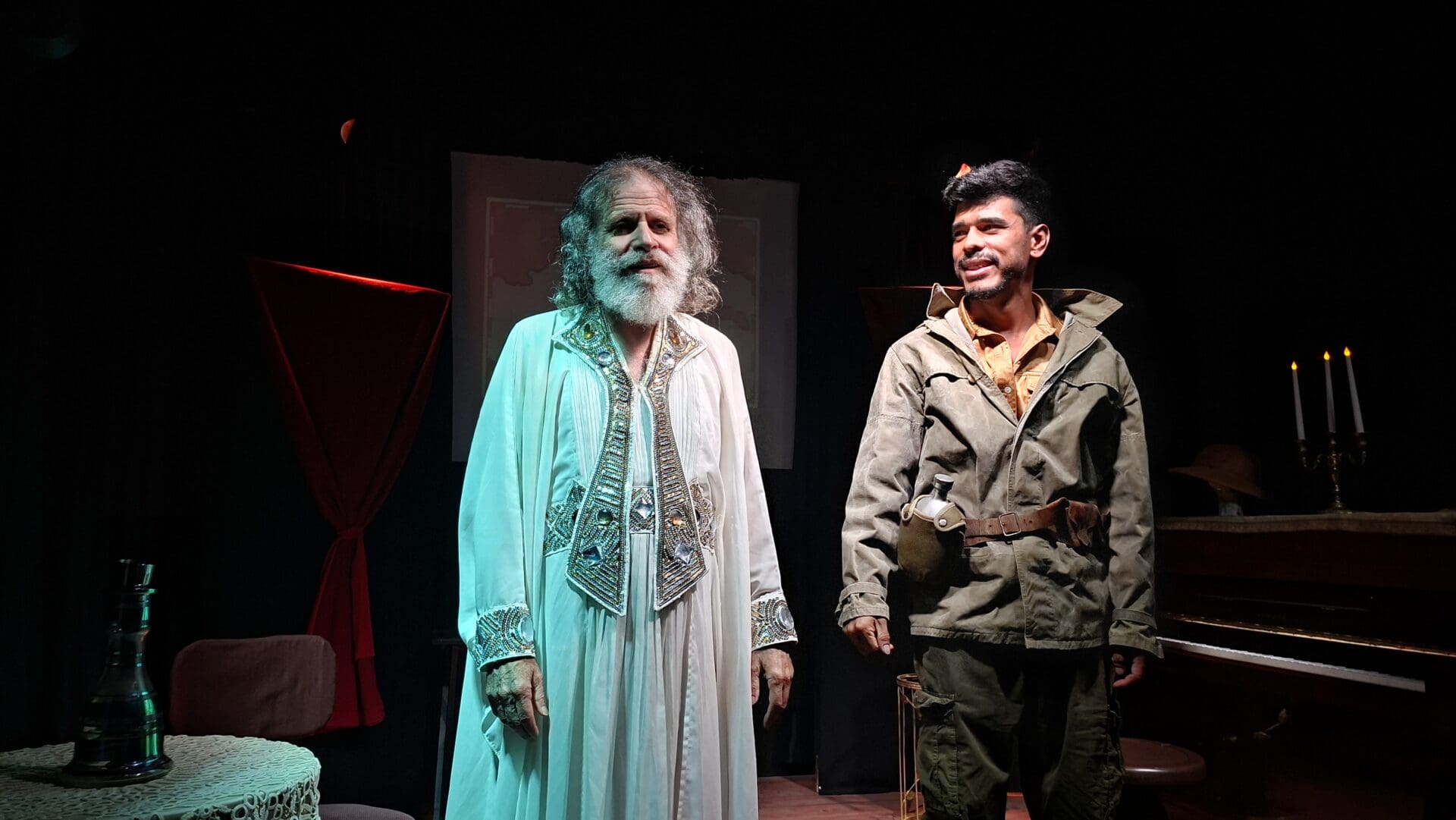
Julia: Faith in the country
His wife, Empress Julia, is his complete opposite. She is militant, believes in the state and the ruler's duty to save the empire. She demands that he do something.
"You must do something, Romulus, the homeland is in danger," she cries.
But Romulus does not accept the premise on which her demand is based. He responds with a sentence that has become one of the cornerstones of the adaptation: "A state always calls itself a homeland when it intends to commit mass murder."
This sentence is the kind of sentence that a play can survive because it refuses to remain imprisoned in the time and place in which it was written. It can be heard in Rome. It can be heard in the Switzerland of 1949. And it can be heard, with disturbing force, in the Israel of 2026.
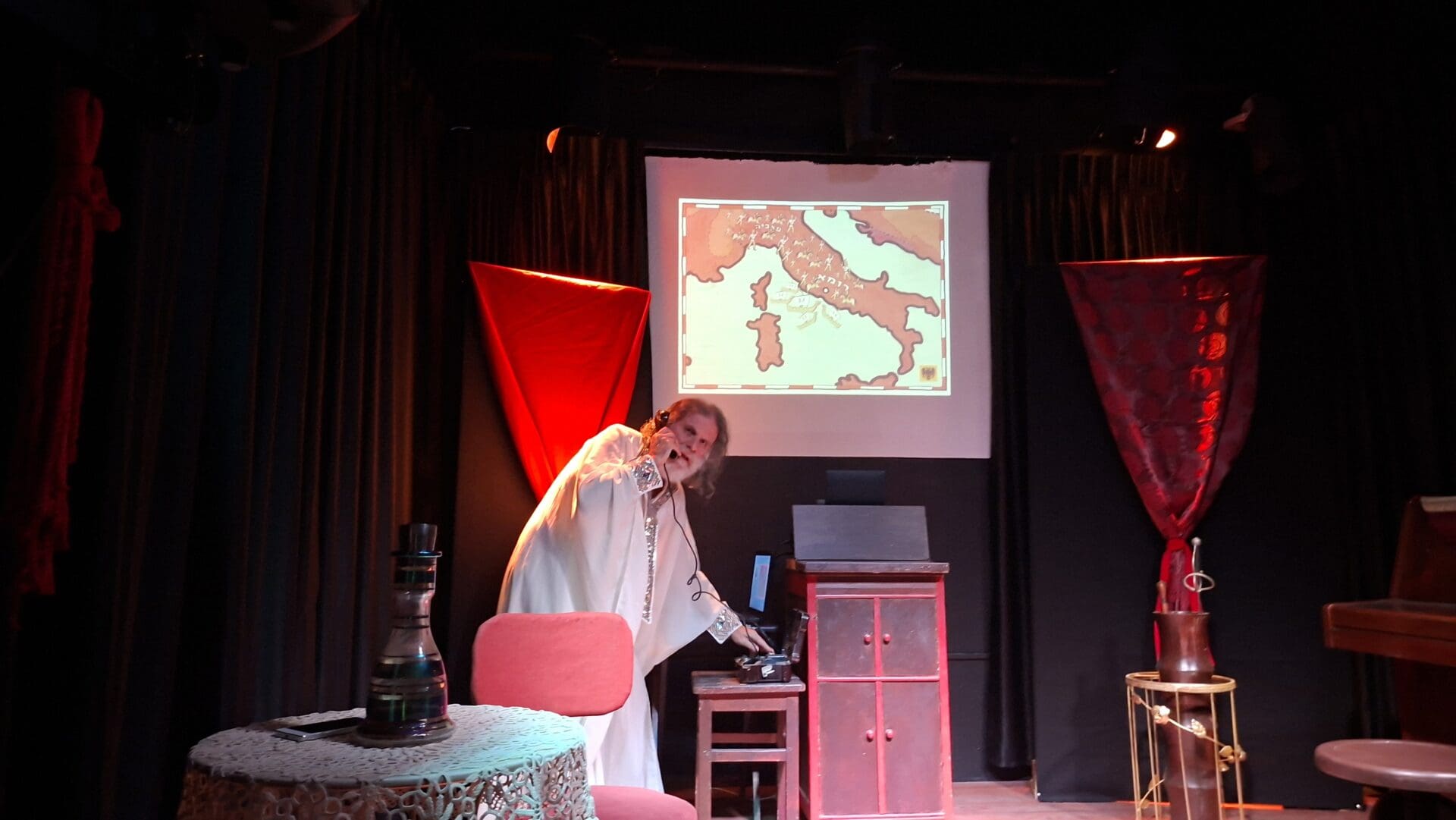
The emperor who rules the empire
Behind the apparent indifference, it gradually becomes clear that a radical decision is hidden. Romulus has come to the conclusion that the Roman Empire has become an "evil empire." He has no intention of saving it because, in his opinion, there is nothing left to save. Through a series of passive actions, and especially by refraining from actions that could have protected it, he effectively allows its downfall.
He does not draw a sword, does not go into battle, and does not order his soldiers to fight to the death. He simply ceases to participate in the mechanism.
For Julia, it's betrayal. For Romulus, it's judgment.
This dialogue is the moral heart of the play. It transforms Romulus from a passive ruler into a figure who seeks to judge the very system within which he rules. He doesn't just say that Rome is going to lose. He argues that it deserves to lose.
When Julia accuses him of killing his own people, he replies: "Rulers don't kill people with their own hands... usually." The sentence, which was said twice, once by Romulus and once by Odoacer, is one that Amitius especially wanted to preserve. Along with the other sentence, which was taken directly from Dyrnummat, "A country always calls itself 'the homeland' when it intends to commit mass murder", he formulates the main criticism of the play on the political apparatus.
The country, According to this logic, It does not necessarily require a cruel ruler to generate violence. It is enough for the person operating the mechanism to convince himself that he is acting on behalf of something greater than himself.
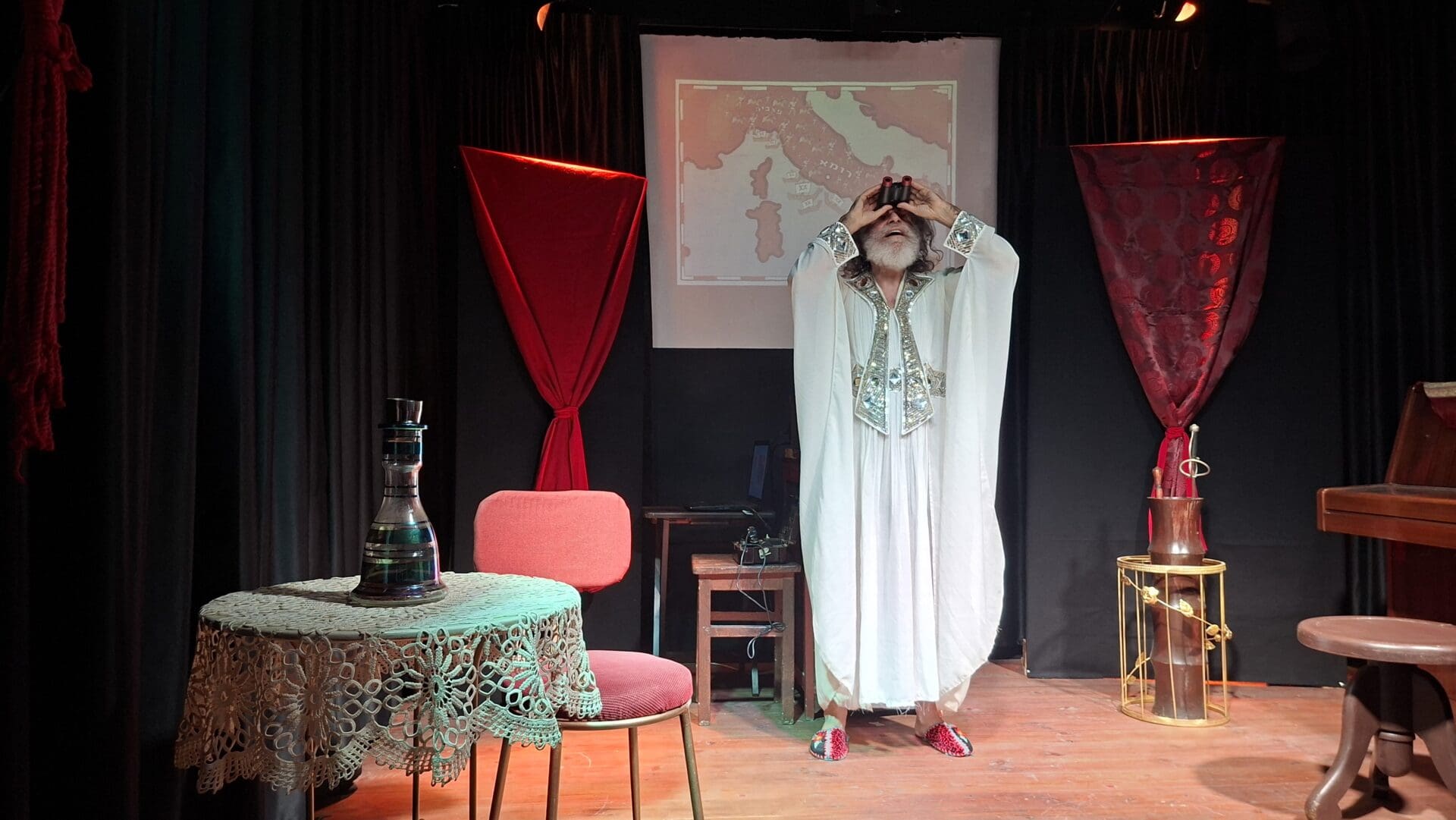
Then comes the enemy.
But precisely then, as the emperor prepares himself for death and awaits the invaders, a turn comes that does not allow the play to be content with a simple parable about a ruler facing his people.
Odoacer, the leader of the Goths, arrives at the palace. Romulus probably expects death, but Odoacer has no interest in killing him. He is also unfit for the role that history has assigned him. The leader of the conquering army reveals himself to be a man who longs for peace and hates war, a man who has fallen into his leadership position against his will.
Moreover, he admires Romulus. From his place of residence in his homeland, he followed the emperor's teachings and found no sharers in his thoughts.
This is one of the most beautiful and strange moments in the play: The enemy is coming, but he doesn't want to be the enemy.. The defeated ruler awaits execution, but the man standing in front of him does not want to kill him. Both men should know exactly what to do, because history has already written the roles for them. And yet, both refuse the text they have been given.
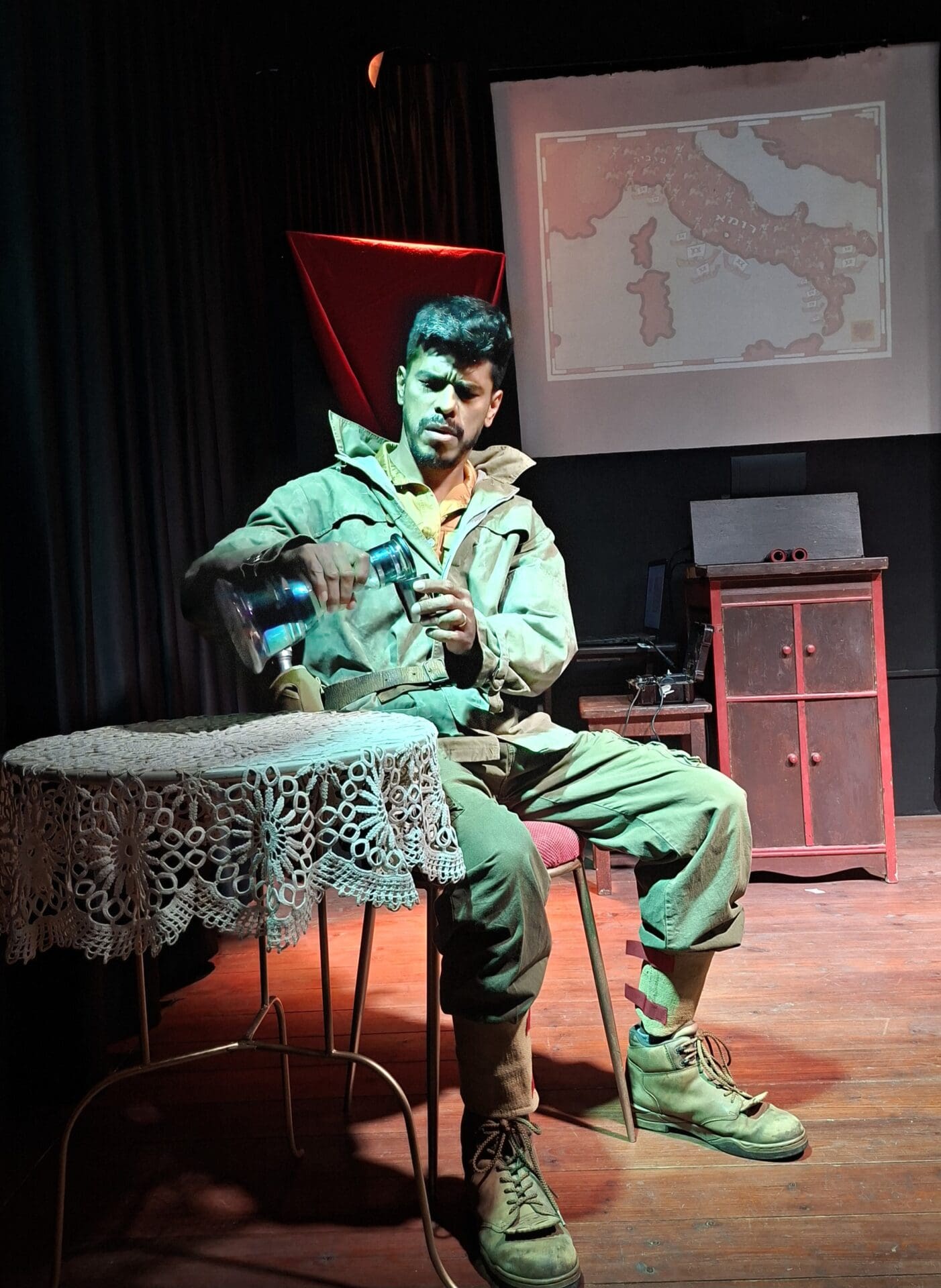
Two enemies who discover they think the same thing
Thus, two leaders who should be enemies stand opposite each other. One is the ruler of the empire about to be conquered, the other the leader of the army that conquers it. Both discover that the positions that history gives them are not necessarily the same as their positions as human beings.
Odoacer also understands something that Romulus already knows: victory is not the end of war. He who conquers today may become the conquered tomorrow.
"In the endless competition over who will be the victim," he says, "we have won so far, even when in practice we had tens of thousands of fighters at our disposal, but soon the tables will turn, and we will be defeated, just as you were defeated, by another victim, who will be no less cruel than us or you."
This is a moment when the Roman story moves even further away from history and becomes a parable about a circle that never stops turning. Today's enemy becomes tomorrow's ruler, the victor becomes the victim, and the future victim is already waiting around the corner. Violence does not resolve the conflict, but rather passes it on., to the next generation and to the next country.
Odoacer's sentence is not just a description of a historical cycle. It is almost Psychological diagnosis of humanity. Each side can prove that it was a victim. Each side can present its wounds. Each side can explain why its war is a defensive war, and why the violence it used was inevitable. And then, almost always, the next side comes along with the exact same claim.
"The Great Romulus" - "City Center Theater" - The State's Intentions (Photo: Racheli Orbach)
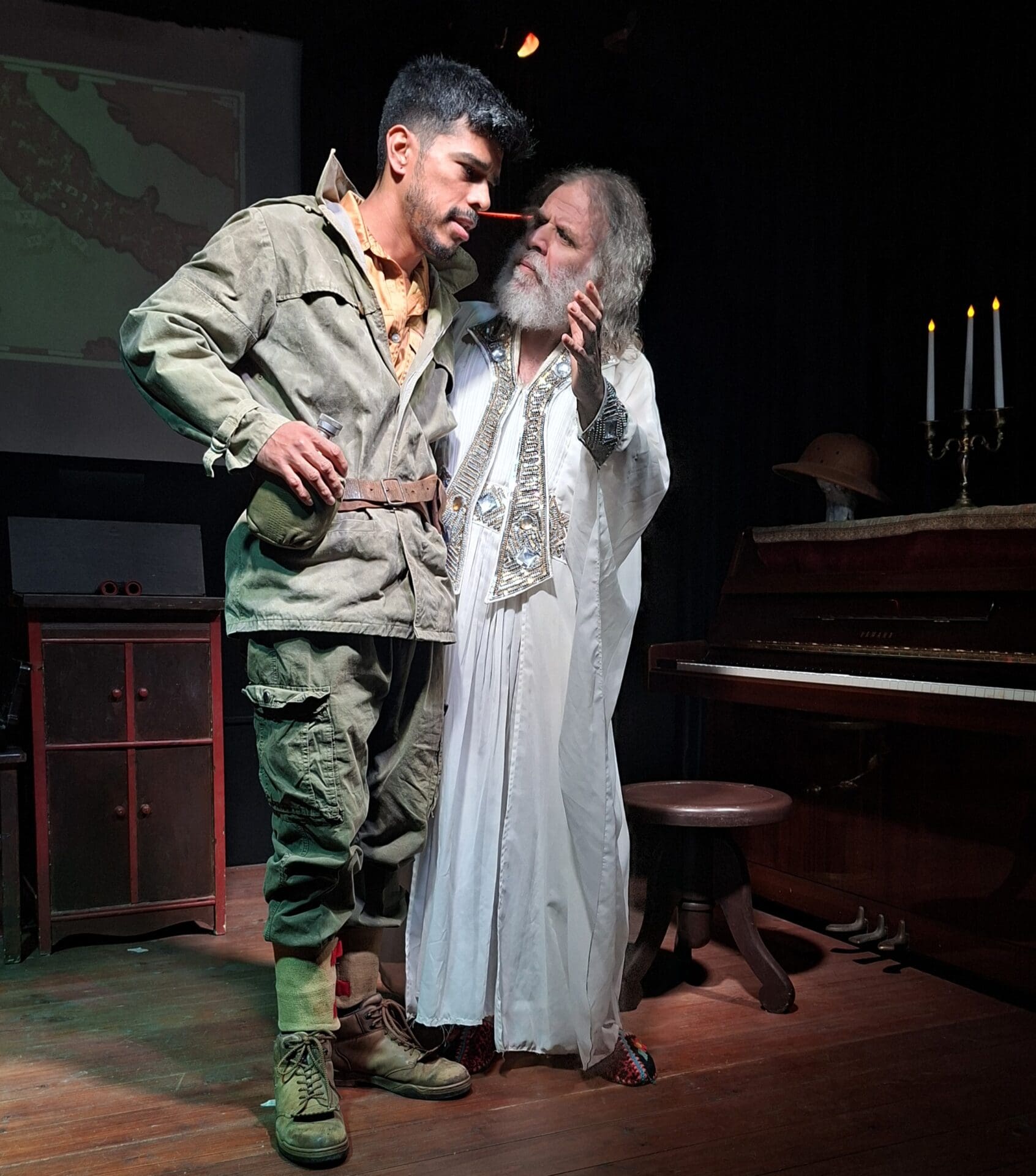
A small, almost invisible empire
This is where the play's utopian solution is born. The two men, each seemingly on opposite sides of the barricade, Seeking to get out of the game of killing and destructionThey are aware of their responsibility as leaders, and yet they decide to try and build a new empire, a kingdom as small as possible in historical memory, one to which world history will perhaps devote only a few lines. Odoacer will be the leader, and Romulus will serve as his secret advisor.
There is a characteristic Dirnmat irony here. Two people who come from a political system based on the aspiration for greatness, end up dreaming of a country that hardly anyone will remember. They do not ask for a monument. They do not ask for fame. They do not ask to enter the history books. On the contrary: perhaps the only way to avoid history is to be small enough that it is not worth fighting for.
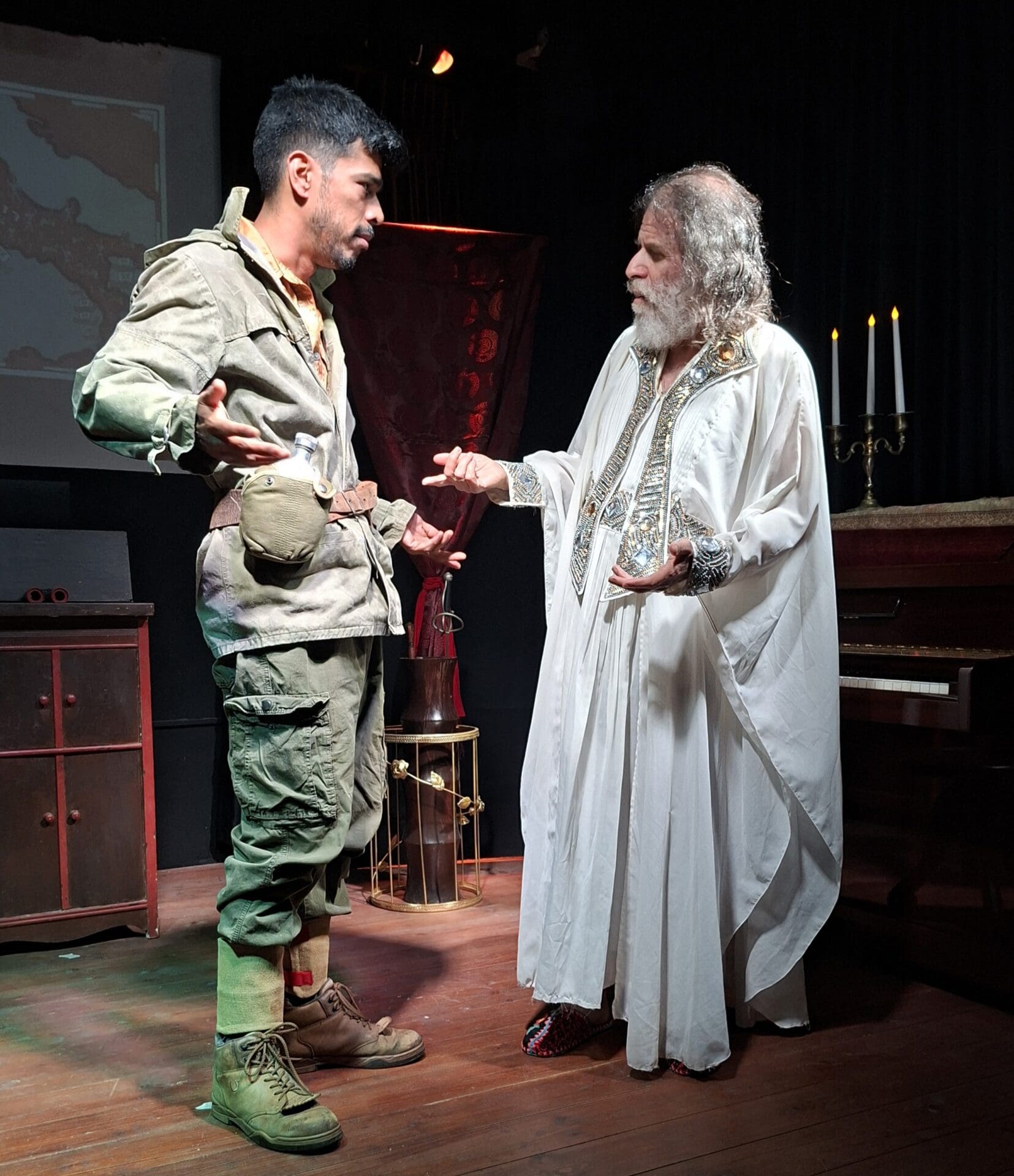
Imagine – When utopia remains only in the imagination
The ending does not seek to convince that a political solution has been found. On the contrary. It is genuine, emphasizing the dreamlike nature of the idea. The melody of John Lennon's Imagine is heard in the background and utopia becomes a wish, more than a work plan.
In a world where states, borders, armies, and national myths are hard facts, imagination remains the last place where another world can be proposed.
There is something almost naive about this moment, but it is precisely the naivety that gives it its power. After all practical options have proven to be failures, the option of imagination remains. Not because imagination can replace policy, but because without it it is impossible to even begin to think about another policy.
"The Great Romulus" - "City Center Theater" - The essence of the connection between countries during wartime (Photo: Racheli Orbach)
The play born from ruined Europe
This choice brings Dirnmatt himself back to the center of the play. "The Great Romulus" was written in 1949, just four years after the end of World War II. Sitting in neutral Switzerland, Dirnmatt looked at Europe, which had just emerged from one of the greatest catastrophes in its history. His play is a satire on the myths, slogans, and justifications that every country knows how to mobilize to convince its citizens that its war is justified, necessary, and always waged in the name of defense.
The choice of ancient Rome is not accidental. Rome allows Dirnmat to distance the story from the present, and at the same time bring it back to it with greater force. The more historical the story, the more universal it can be. Rome is no longer just Rome. It becomes a kind of historical mirror in which every country can recognize itself, provided it is willing to look.
Dirnmatt is in no hurry to propose an alternative political system. He prefers to cast doubt. He asks the viewer to reexamine the big words, and especially the way countries talk about themselves and their enemies. His empire is not just Rome. It can be any political system that believes that its very survival gives it a moral license.
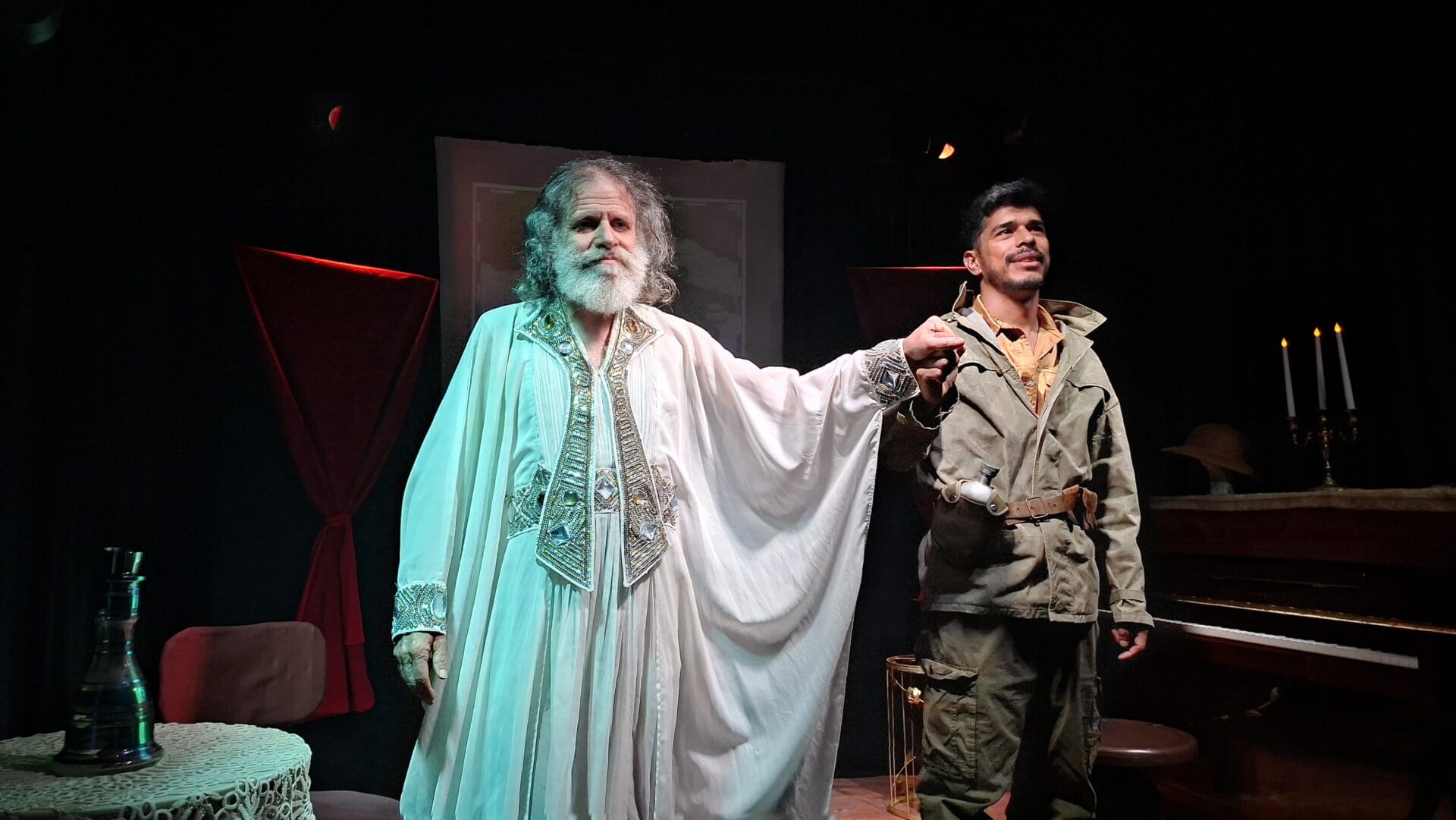
"The Great Romulus" - "Downtown Theater" - "I decided to put an end to the evil empire" (Photo: Racheli Orbach)
Yigal Amitai's zoom out
In this sense, Amitai's adaptation does not try to turn Romulus into an Israeli figure and Odoacer into a parallel figure from the local reality. Amitai emphasizes that there is no attempt here to create a direct parallel between the characters in the play and the decision-makers in Israel. His perspective is broader. He seeks to perform a kind of "zoom out" on the world divided into nation-states and the price that the idea of nationalism exacts from the individual.
This zoom is important. Because it is all too easy, especially in a time of war, to turn a political play into a game of identification: who is Romulus here, who is Odoacer, who is Julia, who are the invaders. But as soon as the characters become symbols, there is a danger that the complex question the play seeks to ask will be reduced to a slogan.
Amitai tries to avoid this. He doesn't ask the viewer to identify a particular figure, but to look at the entire mechanism. Not at one leader, but at the moment when a country, society, and individual begin to believe that the words "security," "homeland," "victory," and "survival" exempt them from the need to ask moral questions.
"The Great Romulus" - "City Center Theater" - The encounter with the Gothic leader (Photo: Racheli Orbach)
Amos Oz enters Rome
To this end, the adaptation also included sections that do not exist in the original play and correspond with Israeli reality and with the questions that Amit carries with him regarding the way the state operates, in his name and in the name of all of us.
One of the sources of inspiration that went into the play is Amos Oz's "Here and There in the Land of Israel," and especially the chapter "A Debate on Life and Death" from 1982. In Oz, the national state is seen as a necessary tool for the return to Zion, but not as an object to be loved or worshipped. The state, with its flag, symbol, passport, anthem, and weapons, is an instrument to be used wisely and cautiously. In Oz's words, nationalism itself is "the curse of humanity."
The inspiration of the connection between Oz and Dirnmat gives the arrangement another layer. Two voices, written in different times and places, meet around a shared suspicion of the moment when the state becomes a necessary human entity and an object of worship. For both, the question is not whether a state should exist, but what happens when people begin to admire the tool instead of examining the way they use it.
This is an important distinction. Criticism of the state is not necessarily a negation of the state. Skepticism of nationalism is not necessarily an opposition to the existence of a nation. On the contrary, for Amitai, as for Dirnmatt and Oz, doubt may actually be a form of responsibility. A person who is unable to ask whether the state is right is not necessarily a more loyal citizen. He may simply have stopped examining the thing he seeks to defend.
Three decades between theater and journalism
The choice to stage the play now is inseparable from Yigal Amitai's biography. Amitai, born in 1955, studied acting and directing at the theater department at Tel Aviv University and was one of Nola Chelton's students. Since 1996, he has directed the "City Center Theater", the Haifa fringe, and since 2020 the theater has been operating on its home stage at 36 Masada Street, in a space built from two connected stores.
For three decades he was active as a theater person, and for 15 of those years he combined his theatrical work with journalistic writing. He wrote for "Al Hamishmar", "Haaretz", "Kalbu" and in Russian-language newspapers.
This combination of theater and journalism is not a side biographical detail. It is present in the way "The Great Romulus" is structured: on the one hand, dialogues, characters, rhythm, music, and images; on the other, a critical look at reality, an attempt to break down slogans and ask what lies behind them.
For Amitai, theater and journalism meet in the same place: the desire to observe. The journalist looks at reality and tries to find out what happened. The theater person looks at that same reality and tries to find out what it says. "The Great Romulus" is located precisely in the area between these two questions.
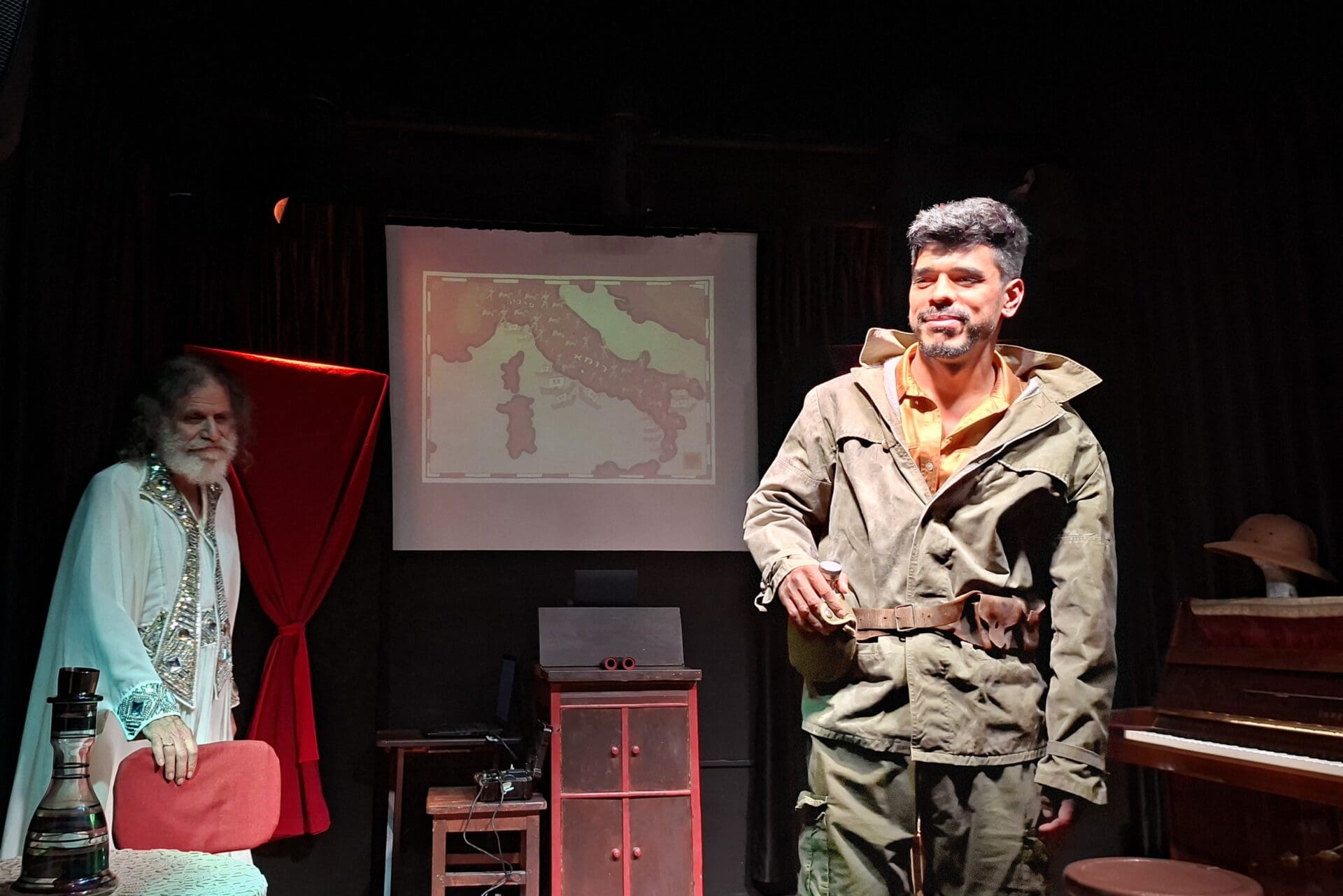
A theater built from the hands
Over the years, Amitai has directed and acted in a long line of productions, including "Pitzfonat and Anton" based on Erich Kastner, which was presented at the Haifa Children's Play Festival in 1996, "Emil and the Detectives," which was presented at the festival in 2004 and received a commendation on Galei Tzahal, "Golda and the Three Bears" by Tamara Amitai, "I Have a Friend" by Tamara Amitai based on Oscar Wilde, which was presented, among other things, at the Haifa Municipal Theater, Beit HaGefen, and at the International Theater Festival in Sassari, Sardinia, as well as the opera "I Want to Be an Opera Singer," "Vladimir Vysotsky Speaks Hebrew," and "Ron and the Pencil."
These details are important precisely because "The Great Romulus" is not born from a large theatrical system. It comes from a tradition of theater in which one person can be simultaneously an actor, director, arranger, translator, writer, and producer, and in which the boundary between one artistic role and another remains open.
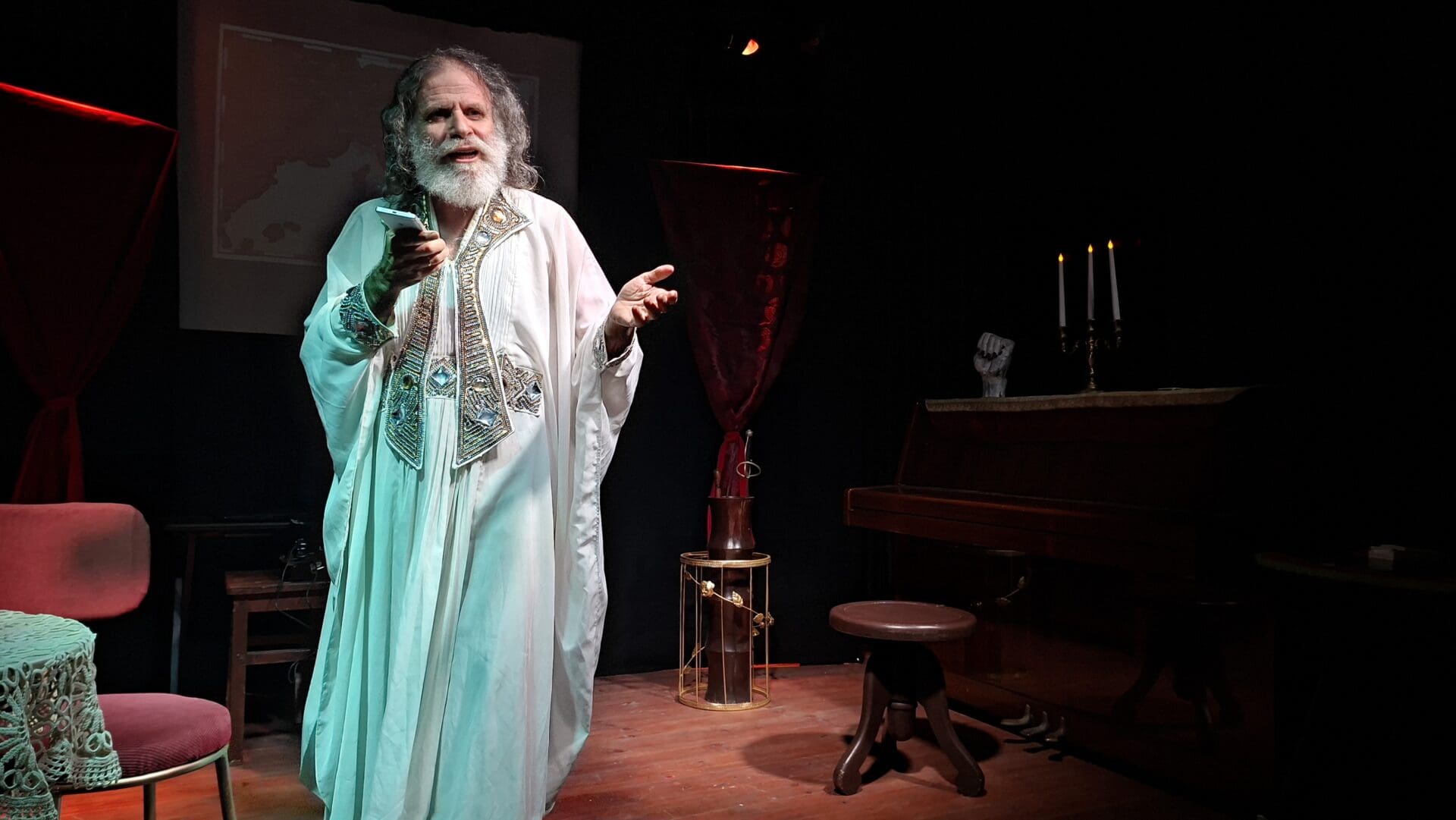
Danny: The next generation within that space
Yigal's son, Danny Amitai, his partner on stage and in the work, brings his own artistic world to the production. Born in 1987, Danny studied singing at the Jerusalem Academy of Music and at the "Body Theater" in Tel Aviv. He has been a singer in the Israeli Opera Choir for 16 years, and has also served as an actor in some of the productions. In 2006, he won a scholarship from the America-Israel Foundation as a classical singer.
At the same time, he is an illustrator, musician, actor, designer and set builder, a member of the Illustrators Association and exhibits his work in group exhibitions.
Danny illustrated "Vladimir Vysotsky Speaks Hebrew", paints and sculpts in wood, and has acted in productions at the City Center Theater since a young age, and has participated in "Pitzfonat and Anton", "Emil and the Detectives" and "Golda and the Three Bears". In "Want to Be an Opera Singer" he sings and acts in the lead role. He plays guitar, mandolin and trumpet, participates in the show "Vladimir Vysotsky Speaks Hebrew", and appears in the "Tipat Rum" ensemble, which he founded with Yoni Israel, and which performs original songs he wrote.
His current work is also not limited to one field. In the children's play "Ron and the Pencil" he built the set, wrote the music, designed the sound and lighting, draws during the performance and operates a puppet he created on a glass plate. In fact, he designs lighting and builds sets for all the plays and performances staged on the home stage of the "City Center Theater."
There is something here that connects unexpectedly with “the great Romulus.” Empires are built of stones, institutions, armies, and mechanisms. A small theater is built of other things: hands, ideas, objects, voices, talent, and time. And when those same people do almost everything, the audience sees not only the play but also, to some extent, the handiwork behind it.
When the little one becomes big
Amidst all this activity, "The Great Romulus" was born as a work small in its dimensions, but very broad in the questions it seeks to leave with the viewer. Dirnmatt's original play lasted more than three hours and required 18 characters to tell the story of the fall of Rome. The Haifa adaptation does the opposite: it shrinks the world in order to enlarge the question.
Two actors, several recorded voices, a piano, liqueurs, a palace about to be conquered, and a conversation between two people who are supposed to be enemies.
This reduction gives the play an almost paradoxical power. The fewer people on stage, the more people seem to be off it. All the soldiers who are not seen, the civilians who are not heard, the politicians who speak in recorded voices, all of history, they are all there precisely through their absence.
Rome does not need to appear to be present. It exists in the same way that a state can be present in a person's life even when he is sitting in his room making liqueur. It is present in language, in memory, in fear, in expectation and in the demand to do the right thing.
"The Great Romulus" - "Downtown Theater" - A strange conductor, who wants to drink liquor (Photo: Racheli Orbach)
The question that doesn't end with the fall of Rome
Ultimately, Romulus and Odoacer understand what the systems they lead have difficulty understanding: You can win a war and still lose the world. You can conquer a city and immediately become a prisoner of the role that victory has bestowed upon you. You can save a country and destroy the people in whose name you sought to save it.
So "Romulus the Great" is not really a play about the end of the Roman Empire. Rome is just the place where the question takes place. Beneath the robes, the ancient names, and the jokes, lies a much less historical and much more disturbing question: What happens when a state becomes an end in itself, and when people are required to sacrifice their lives for the sake of the myth that is created to explain to them why they must fight?
Dirnmat's answer is not optimistic, and Amitai does not try to embellish it either. And yet, at the end, the melody of "Imagine" is heard not as a promise or a political plan, but as a brief moment in which two enemies can imagine a world that does not have to continue on the same path.
"Romulus the Great" - "City Center Theater" - "Every war is a horrible thing" (Photo: Racheli Orbach)
After the music stops
That is why the last moment of the play is not really its last moment. The lights come on, the audience stands up, the chairs become chairs again, the palace becomes a small space on the street of Masada again, and Rome returns to where it existed before: to books, to history, to imagination. But the question that Romulus left behind does not return with it.
The audience exits the hall onto Masada Street. Haifa continues to exist around him with all its usual noise and light. People go home, cars pass by, cafes are open, and above all, the city continues its life, as if no empire had just fallen. But the play does not allow for this comfort entirely. It leaves sentences in the head that do not easily fit with the way countries tell their own stories.
Romulus doesn't ask us to love the place we live any less. He Asks us to be able to distinguish between love of place and obedience to the mechanism. Between loyalty and admiration. Between protecting people and sanctifying the system that is supposed to protect On them. And most importantly, he I would like to leave open the possibility that a person living within a country may also judge it.
This is perhaps why the play, written in 1949, does not feel dated. Quite the opposite. The years that have passed since have not resolved Dirnmatt's question, but only added layers to it. Empires have changed, borders have changed, names have changed, weapons have changed, but the human capacity to give violence respectable names has remained the same.
And every time someone says "homeland," the play reminds us, we should perhaps ask what else is hidden within that word. Who is required to sacrifice for it. Who is allowed to speak on its behalf. Who decides when the danger justifies everything. And most importantly, who will ultimately stand before history and say: I failed to save the country, because I realized that I had to save something from it.
Romulus chooses not to save Rome. This is an act that initially seems like a concession, but the play turns it into a moral question. Is sometimes the refusal to participate the last form of resistance left to a person who is in a system he cannot change?
Odoacer, for his part, discovers that even the victor is not necessarily free. The victor also inherits fear, boundaries, the need to protect what he has already conquered, and the temptation to become the next victim of the same game. Both understand, each from his own side, that history does not assign moral roles forever. It only alternates them.
And then the music starts.
"Imagine" does not erase war, does not abolish the state, and does not propose a political system. It does something more modest, and perhaps therefore more difficult: it seeks to imagine. In a world where all possibilities seem already known in advance, The very possibility of imagining another possibility is an act of freedom.
And so, when the audience takes to the streets, Rome is left behind, at least seemingly. But it is then that it becomes clear that the ancient city was never the real subject of the play. Rome was only Another name for any place where people give the state so much power that they begin to forget that the state is meant to serve them and not the other way around..
The question that Romulus leaves is not whether we need a state. Nor whether we need an army, borders, or power. The question is more difficult, because it has no single answer: How do we live within a state, love it, need it, protect it, and at the same time reserve the right to say no to it!?
This is a question that has no happy ending, or perhaps no ending at all. It continues after the last curtain, after the applause, after the hall empties and after the lights go out. It goes with the viewer home, to the street, to tomorrow's news, to the country itself.
And in this sense, the last hours of the Roman Empire do not end with the show in the city of Haifa.
They are just starting there.
"The Great Romulus" - "Downtown Theater" - Let's imagine that the human spirit has triumphed! (Photo: Racheli Orbach)
Next show: Election Day
It is no coincidence that the next play, "Romulus the Great," is set to be performed precisely on Election Day. After all, at its center stands a ruler facing the end of an empire, at a moment when an entire political order is shaken, and questions about power, rule, responsibility, and the possibility of starting over become inevitable.""Romulus the Great" will be shown on Tuesday, 27.10.26, at 20:30 PM.
The entrance is in the form of a "hat show", And with pre-registration By phone number 054-7335346.
When the play meets the audience on an evening when Israeli society will also face a political decision, the line between stage and reality may blur a little.
This choice is not accidental: A play dealing with a government on the verge of collapse will be performed on an evening when the public will be called upon to decide what future it wants for itself. In this way, the performance may become, even for one evening, not only an encounter with a work on stage, but also a civic and political gesture stemming from the reality within which it takes place.