


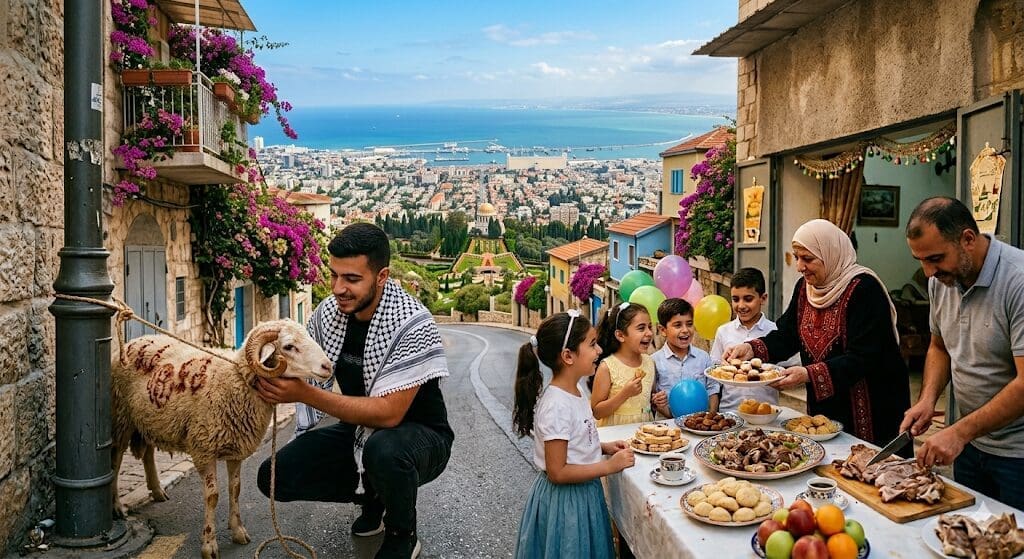
The city that wakes up before the sun
There are mornings in Haifa where you can recognize the holiday before you even see it.
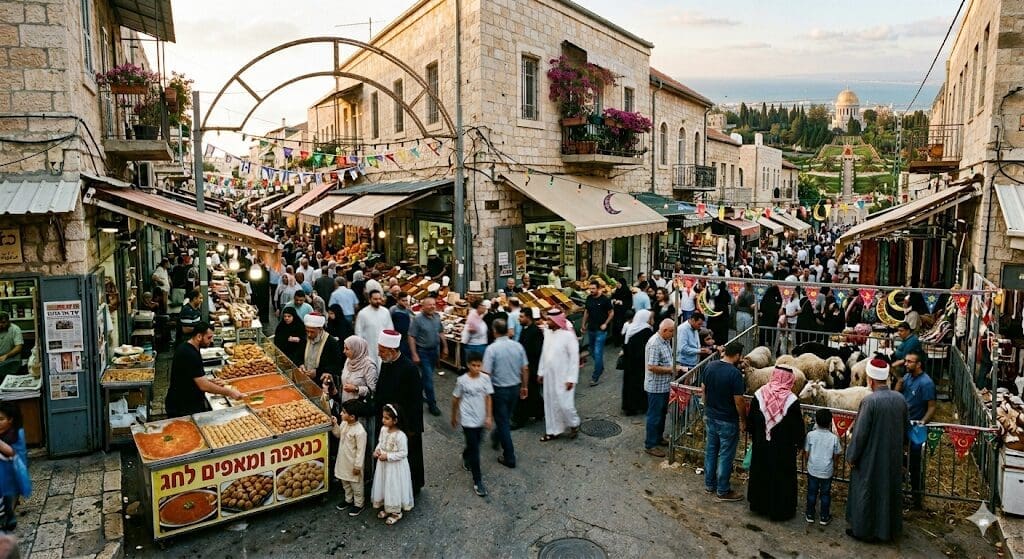
It begins with distant sounds. A metal door opening in a small grocery store in Wadi Nisnas. Trays of sweets placed carefully on a sidewalk wet from the night's humidity. A car loaded with festive children speeding down a narrow street. Then comes the smell: coffee with cardamom, meat simmering for hours, cinnamon, burnt sugar.
Then, almost all at once, the city begins to change.
Not the whole city. That's exactly the point.
In the Upper Carmel, there are those who take their dogs out for a morning walk without even knowing that this is one of the holiest days of the year for the hundreds of thousands of citizens living around them. In the center of the Carmel, the cafes are still arranging chairs. The sea looks the same. But below, in the lower city, in the wadi, in the Arab neighborhoods, something else is happening.
Many people make their way to the holiday prayer.
Children dressed in white hold their fathers' hands. Women carry trays of sweets wrapped in foil. Older men stop each other in the middle of the street to hug. Someone calls out "Eid Mubarak," and another person responds with an almost ceremonial smile.
This is how Eid al-Adha begins.
Not as a sudden noise but as a slow, deep wave of collective memory.
This year in Israel, the holiday will take place from Tuesday evening, May 26, 2026, to Saturday, May 30, 2026.
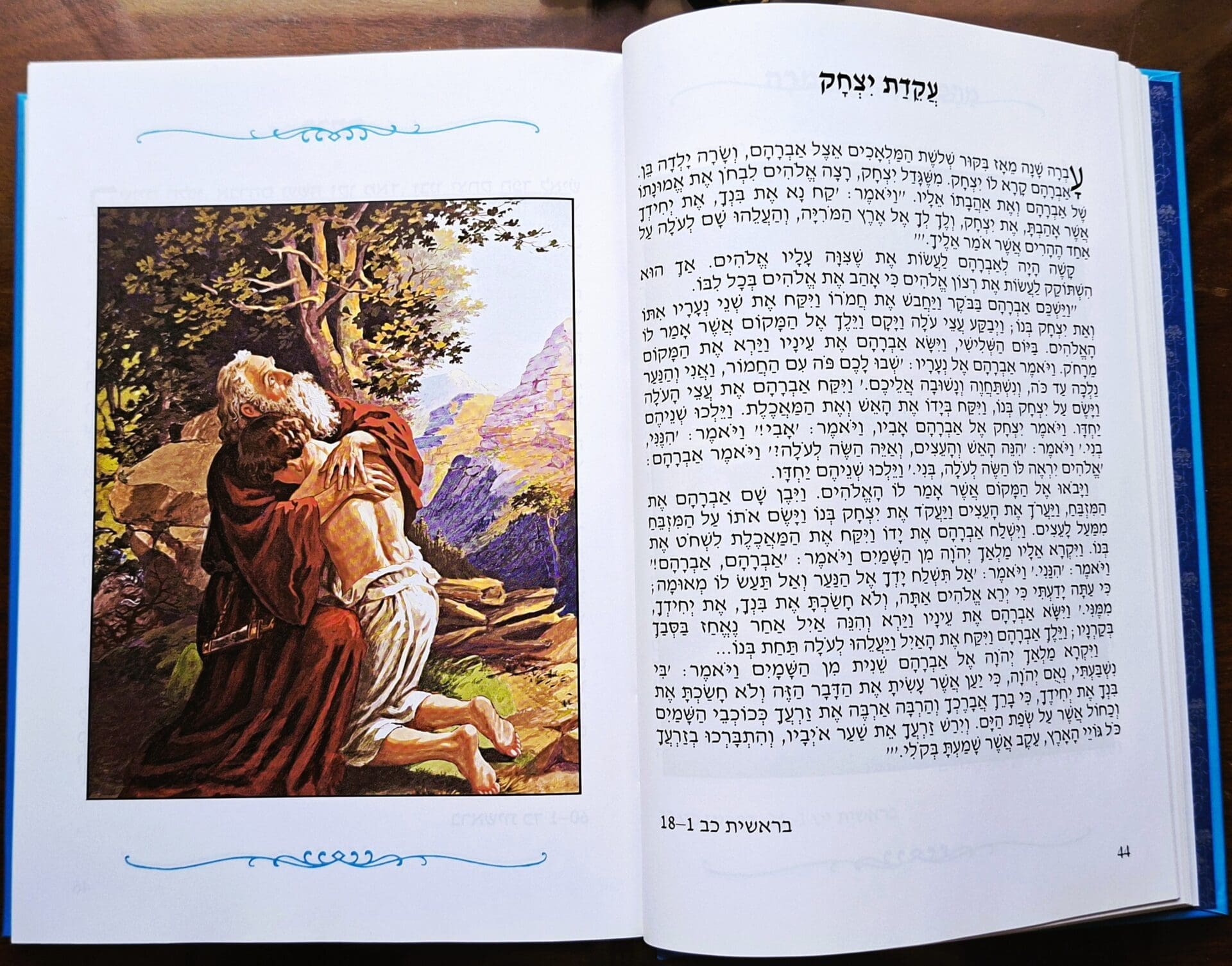
The man who was willing to sacrifice his son
Almost every culture that knows the figure of Abraham also possesses the story of sacrifice.
But like truly great stories, this one too changes face depending on who tells it.
In Islamic tradition, Abraham is not just the father of faith. He is the man who agreed to give up what was most precious to him out of complete surrender to God. The son in the story is Ishmael, not Isaac, and the drama is not just a question of life and death but the very willingness to sacrifice.
At the last minute, the son is replaced by a ram.
And thus the Feast of Sacrifice was born.
But the word "sacrifice" is sometimes misleading to Western ears. It immediately evokes associations of blood and ancient ritual. In fact, for most contemporary believers, Eid al-Adha is actually about what is given to others.
How much a person is capable of giving.
How much is he able to share?
How willing is he to acknowledge that his life does not stand alone at the center of the world?
This is perhaps why the holiday does not end at the mosque. In fact, it only begins there.
Faith on the verge of sacrifice
The Feast of Sacrifice, Eid al-Adha, stands at the heart of the Muslim calendar as a crossroads where faith, memory, and community come together into one large-scale ritual.
It marks the culmination of the pilgrimage to Mecca, but it also takes believers back to an earlier story than that of the journey: the test of Abraham, who was required to sacrifice his son and was willing to obey to the end. At the last moment, according to Islamic tradition, the human sacrifice is replaced by the sacrifice of a lamb, and terror becomes an ethic of devotion.
From this story is born a system of social and spiritual meanings that extend far beyond the ceremony itself.
Eid al-Adha places obedience to God as the supreme principle, but at the same time translates it into the language of charity and sharing: the sacrificial meat is divided among the household, relatives, and the needy, as a gesture that seeks to break down economic differences through ritual action. It is a holiday that emphasizes not only the individual before God, but the individual's responsibility towards the community around him.
The time when the Muslim world moves together
To truly understand Eid al-Adha, you need to imagine movement.
Not of one city, but of an entire world.
At that very moment, millions of Muslims are in Mecca. The pilgrimage, the Hajj, is one of the five fundamental commandments of Islam and for many is the pinnacle of spiritual life. People save money for decades to make it just once.
They come from Indonesia, Nigeria, Turkey, France, Kazakhstan and the United States. Some are farmers, others are wealthy businessmen. Among them are excited young people and old people who fear they will never get to come again.
Within a few days, all differences are almost completely erased.
Everyone wears white.
Everyone moves together.
Everyone surrounds the Kaaba.
Everyone is standing on Mount Arafat.
There is something almost incomprehensible about the human scale of the Hajj. In an era when the world seems fragmented into political tribes, nationalities, and social networks, the Hajj creates for a moment a sense of a vast collective that is not cynical.
The holiday itself, Eid al-Adha, comes at the height of these days.
For many Muslims, these are not just days of worship but a reminder that man is part of something much greater than himself.
Between prayer and family abundance
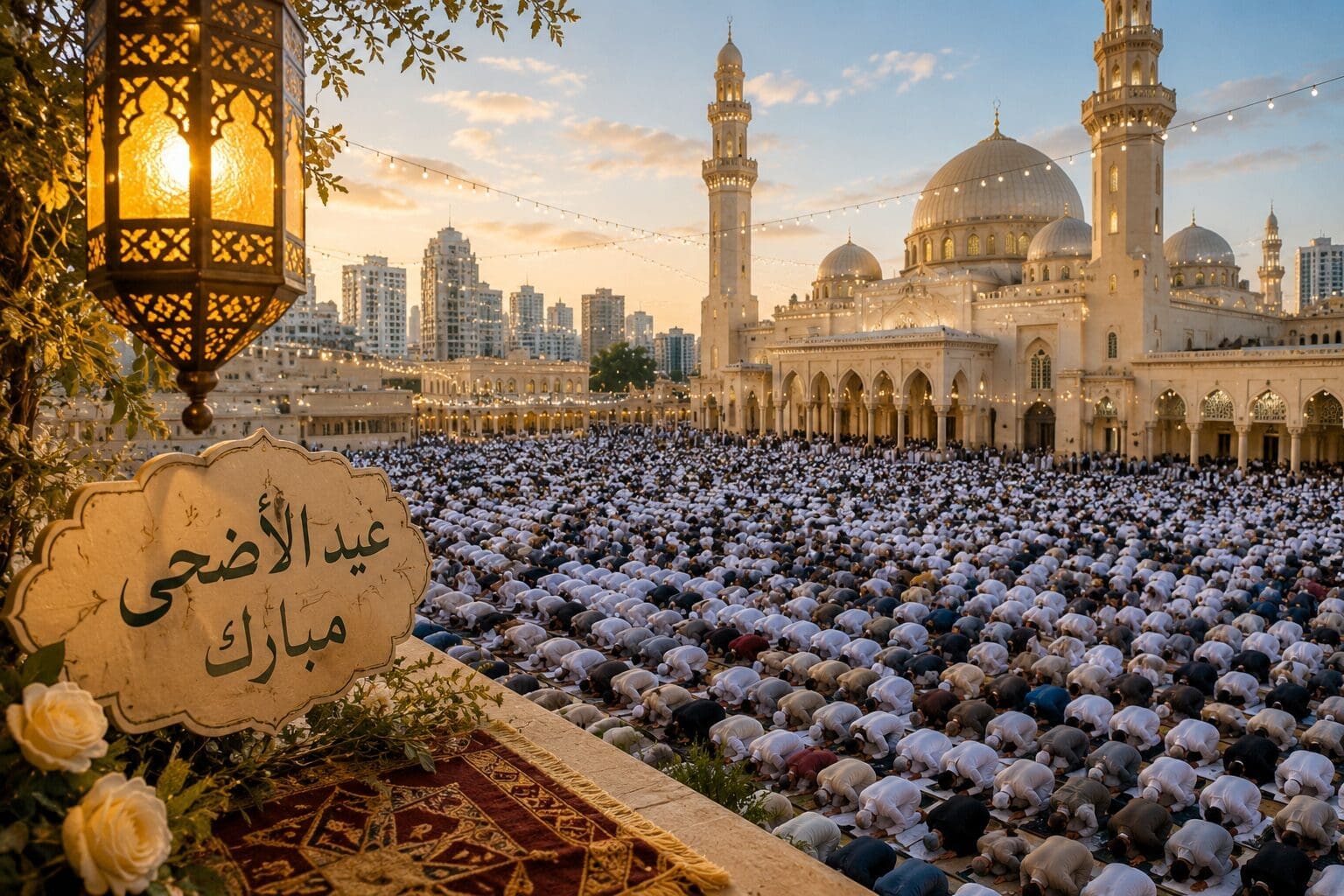
On the morning of the holiday, the mosques are filled with festive prayers, followed by rich family feasts that combine joy, reconciliation, and reunions between relatives.
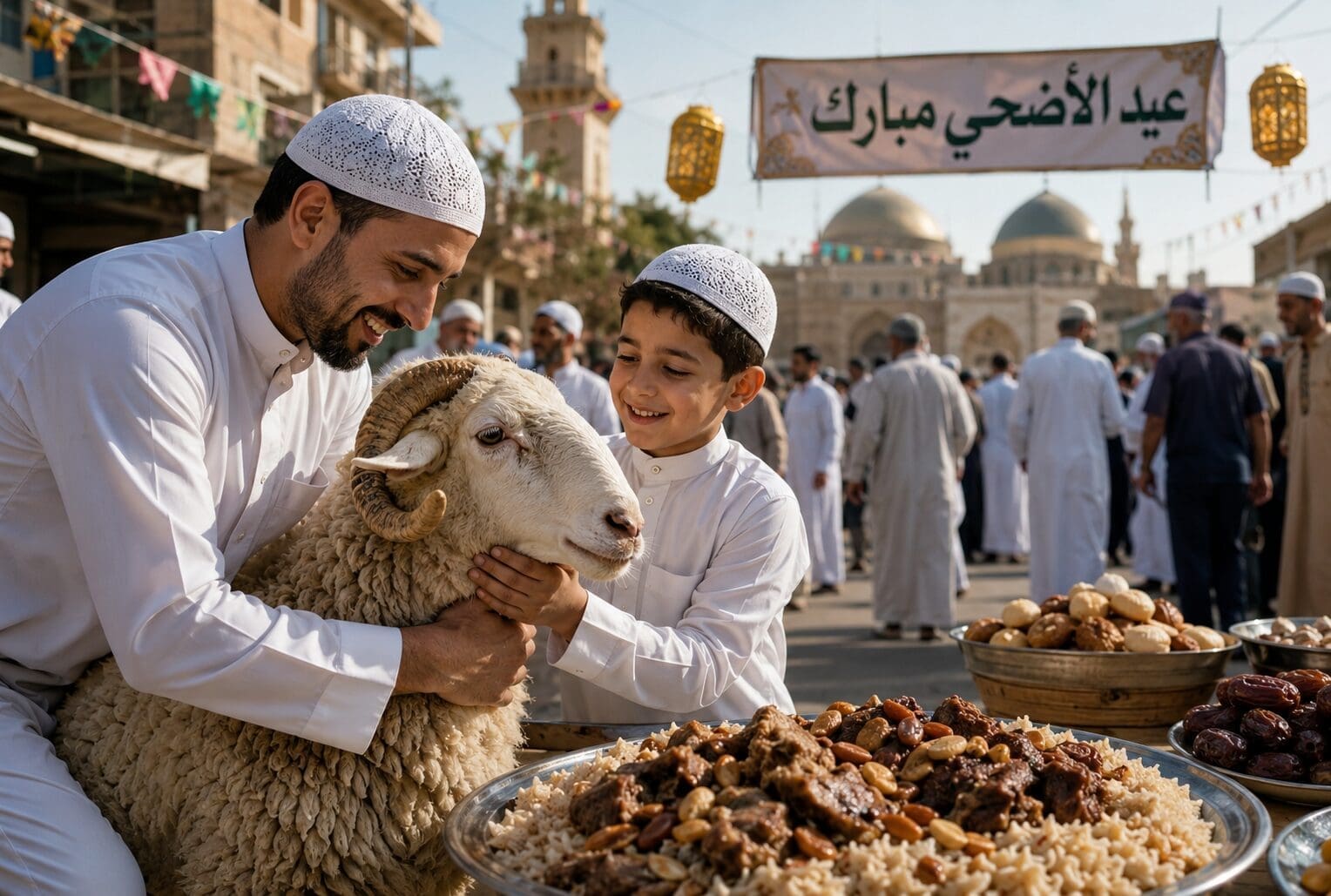
Those who can afford it sacrifice a lamb or other animal, children wear new clothes, and the greeting "Eid Mubarak" is exchanged with a quick smile between neighbors.
Amid this routine of controlled abundance and meticulous ritual, the holiday seeks to articulate a moment of temporary unity, in which the memory of the bond becomes not only a story about sacrifice, but also about the possibility of a shared life.
The Lamb, the Market, and the Kitchen
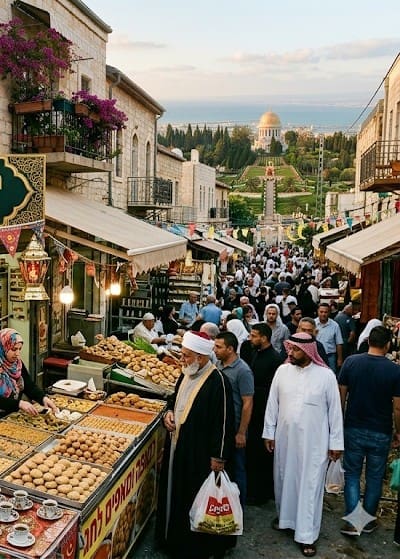
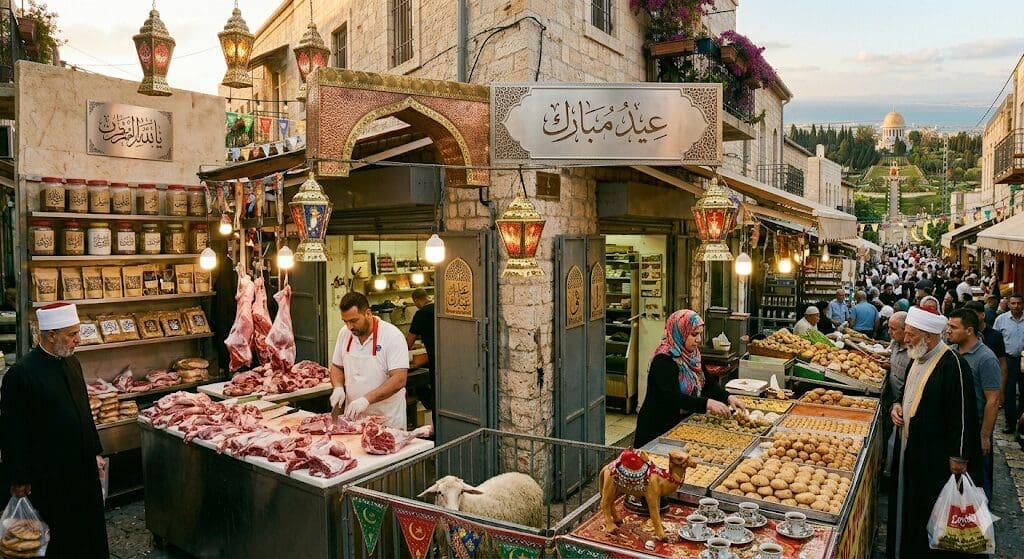
A few days before the holiday, the markets begin to change.
In Morocco, Turkey, Jordan, Egypt, in villages in the Galilee and cities in the West Bank, temporary pens suddenly appear. Sheep are tied up near vegetable shops. Children examine them as if they were pets. Fathers haggle over prices.
For many families, buying the sacrificial lamb is also an emotional affair. Some take care of the lamb for a few days before the holiday, feed it, and give it a name.
Then morning comes.
Animal sacrifice is still a central part of the tradition, but the modern Muslim world is gradually changing the way it is carried out. In many large cities, slaughtering is almost never seen on the streets. Charitable organizations centralize the process, and the meat is packaged and sent to needy families.
In fact, one of the least talked about aspects of Eid al-Adha is its charitable nature. In just a few days, vast amounts of food are distributed around the world.
The holiday is also a huge culinary celebration.
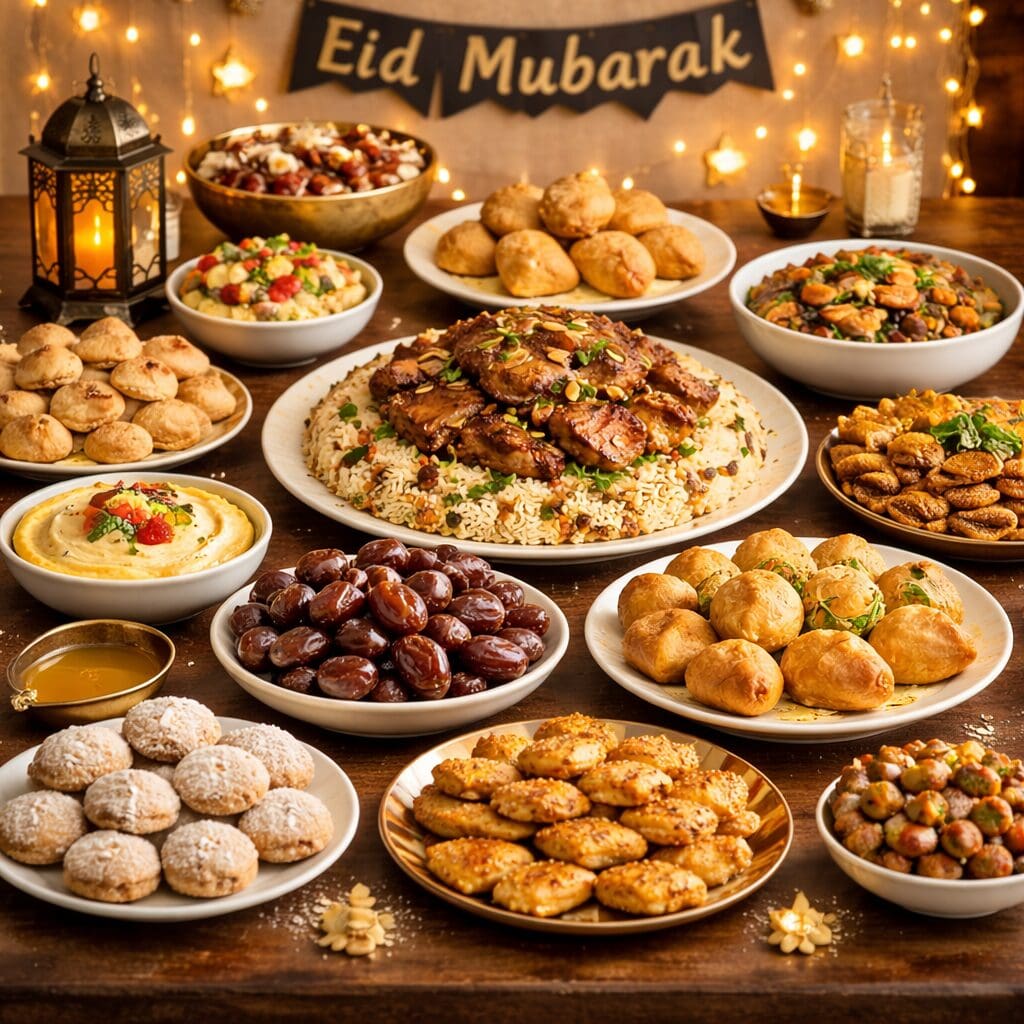
In Jordan, they serve mansaf: rice, dried yogurt, and lamb that falls apart on contact. In Iraq, they prepare deep, spicy rice dishes. In India and Pakistan, biryani becomes the centerpiece of the meal. In Morocco, they serve heavy tagines with plums and cinnamon.
Almost everywhere, sweets arrive.
Baklava. Maamoul. Kanafeh. Sweet tea. Dark coffee.
A lot of coffee.
In the Druze community – the holiday deals with the idea of devotion, the oneness of God, and spiritual anticipation.
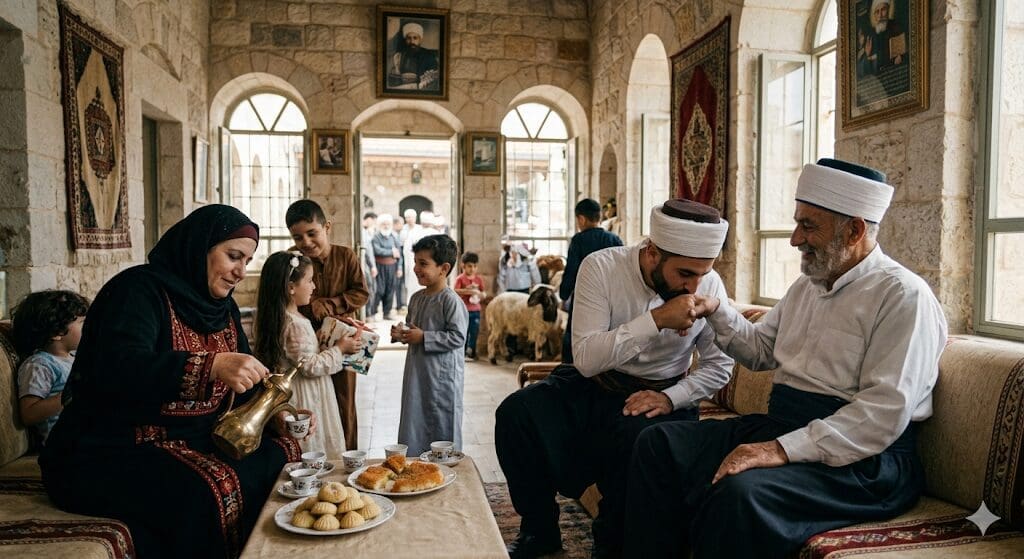
For the Druze community, Eid al-Adha is not only an important holiday but the heart of the entire spiritual year. It is sometimes simply called "the Great Holiday," and lasts four days during which the Druze villages in the Galilee and Carmel change their appearance.
But unlike Islamic tradition, in which the holiday is directly linked to the pilgrimage to Mecca and the ordination of Ishmael, among the Druze, Eid al-Adha takes on a different, more internal and mystical meaning.
The holiday is not about the Hajj or even the ritual sacrifice itself, but rather about the idea of devotion, the unity of God, and the spiritual expectation associated with the appearance of the Messiah in the end times according to Druze belief. Perhaps for this reason, the atmosphere in Druze villages during the holiday is quieter and more collected, even when the streets are filled with visitors.
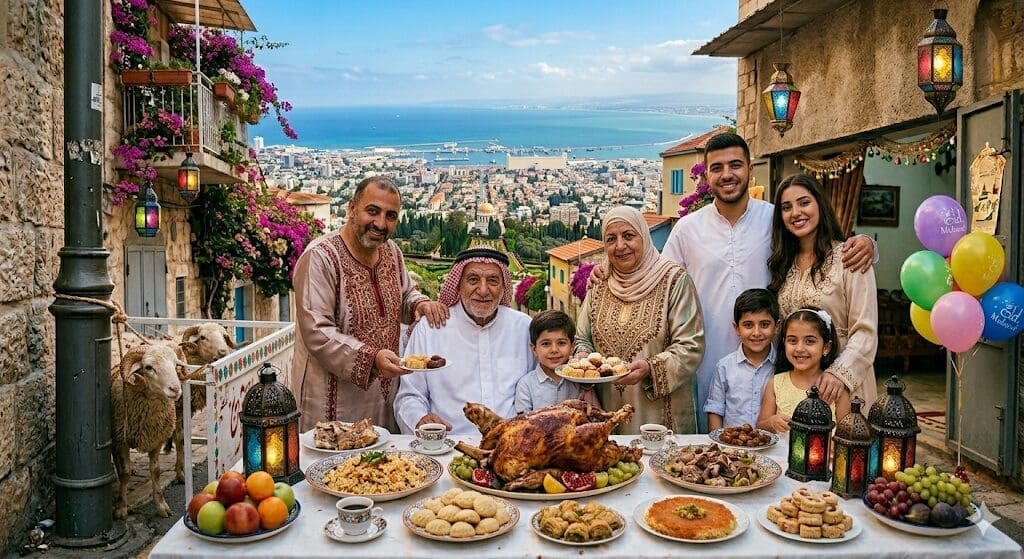
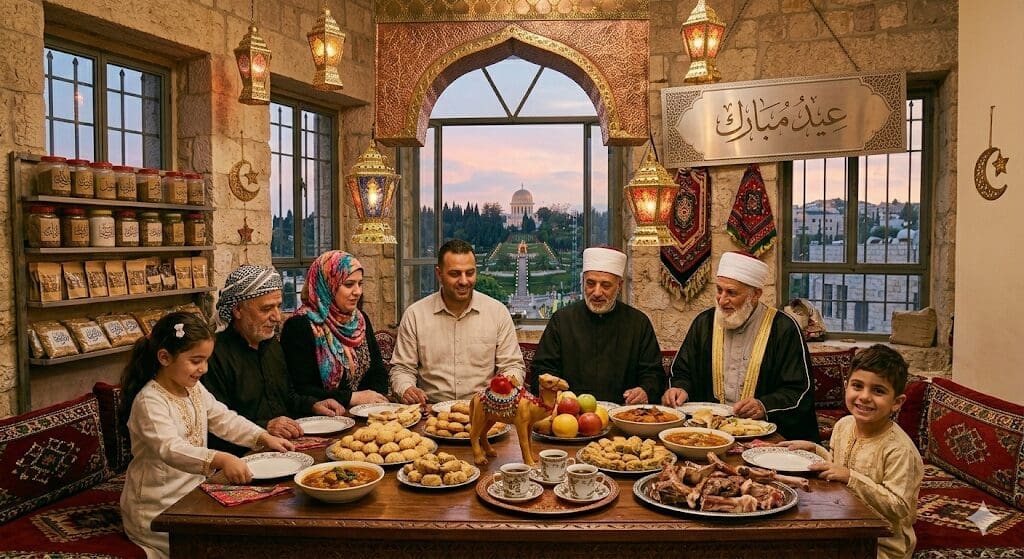
Preparations are hectic in preparation for the holiday: homes are thoroughly cleaned, families buy new clothes for their children, and tables are filled with trays of sweets, fruit, and crackers. At the center of the holiday meal is the dish most associated with the Druze tradition of Eid al-Adha: stuffed lamb, served to the extended family table as a symbol of abundance, honor, and continuity.
In Dalit El Carmel and Usafia, especially in the evening hours of the holidays, you can see entire families strolling through the illuminated streets, visiting each other and exchanging the traditional greeting: "May you all be well," a simple and profound wish that wishes you all a year filled with goodness, health, and peace.
The holiday that passed into the "Instagram kingdom"
There is something almost ironic about the fact that one of the world's oldest holidays has also become an aesthetic event on social media.
Young people are taking pictures in new clothes. Families are taking pictures of packed tables. Muslim fashion bloggers are posting color combinations for the holiday. On TikTok and Instagram, you can find millions of videos under Eid al-Adha tags.
Some people joke and call it the "Muslim Met Gala."
But behind the glitter lies a deeper change.
A young generation of Muslims in the West is trying to build a new identity: both religious and modern, both connected to tradition and completely global.
In London and Paris, there are city festivals. In Berlin, the holiday becomes a huge community event. Second- and third-generation immigrants use it to say: "We are European and we are also Muslim at the same time, and for us there is no contradiction between the two."
In a sense, Eid al-Adha has become a new cultural language.
Israel: A holiday amidst a tense reality
In Israel, a holiday is never just a holiday.
It exists within a space filled with visible and hidden borders: religious, national, cultural, and political.
Nevertheless, precisely because of this, it sometimes has a particularly strong human dimension.
In Arab communities in the Galilee, the Triangle, the Negev, and the mixed cities, a great excitement is felt days before it begins. Clothing stores are packed with shoppers. Bakeries are open until midnight. Children run around with bags of candy. Families prepare to host dozens of relatives.
In Druze villages, such as Dalit El Carmel and Osafia, the holiday takes on its own unique flavor. The streets are filled with visitors from all over the country. Restaurants are packed. Markets are crowded. The smell of grilled meat and spices in the mountain air.
In mixed cities, an atmosphere sometimes occurs that is something more subtle.
Jewish neighbors send greetings to their Muslim friends.
Employees exchange boxes of sweets in offices.
Children hear at school about their classmates' holiday.
These are very small moments. Almost invisible. But in Israeli society, sometimes it's the little things that are the most radical.
Haifa: The place where the holidays live side by side
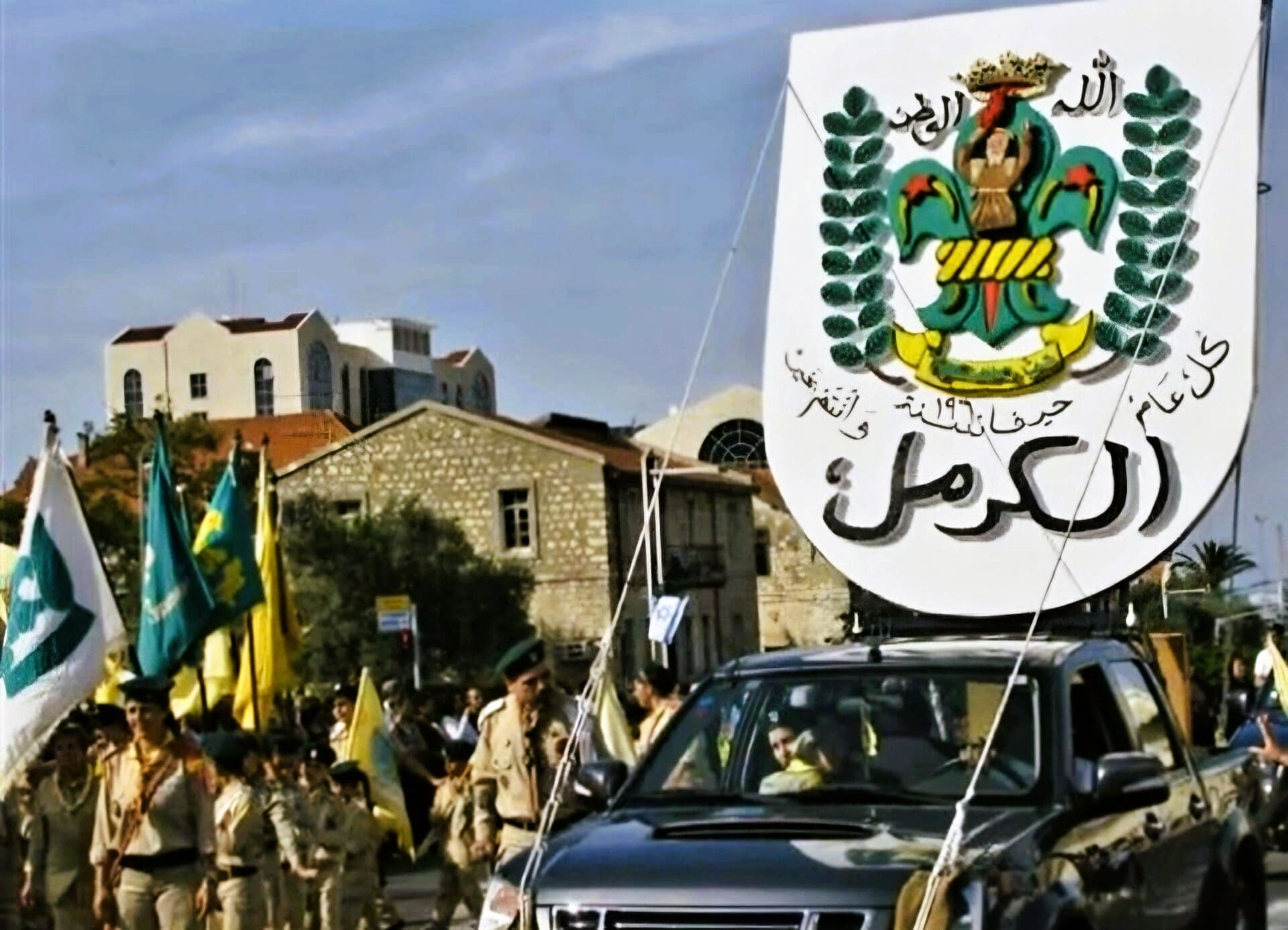
In Haifa, it is sometimes difficult to understand where one community ends and another begins.
As we know, this is not perfect harmony… In reality, there are tensions, gaps, difficult memories, and deep differences. But there is also a daily life together, and when the holiday arrives, this life becomes more visible.
In Wadi Nisnas, for example, Eid al-Adha is felt in almost every corner.
The cafes are full until late at night. Families walk among the shops. Children hold colorful balloons. The mosques fill with worshippers, then empty into the streets.
Many Jews come to eat.
Some out of curiosity.
Some out of true love for the place.
And some simply because the food is excellent.
But beneath all this there is also something deeper: the possibility of seeing the other not through a television screen or a news headline, but through a dining table.
Through a plate of knafe.
A simple greeting on the street.
What remains of the sacrifice in the modern world?
Perhaps this is the biggest question of Eid al-Adha in the 21st century.
What does "sacrifice" mean in a world that celebrates personal success, self-consumption, and the relentless display of self?
For many believers, the holiday is an attempt to respond to this through small acts: donating to those in need, visiting relatives, distributing food, and reconciling after a conflict.
In this sense, Eid al-Adha is not a holiday of sadness but of correction.
Repairing the relationship between man and God,
Between a person and his family,
Between a person and his community.
And perhaps in some places, despite everything, even a reconciliation between the communities living side by side!
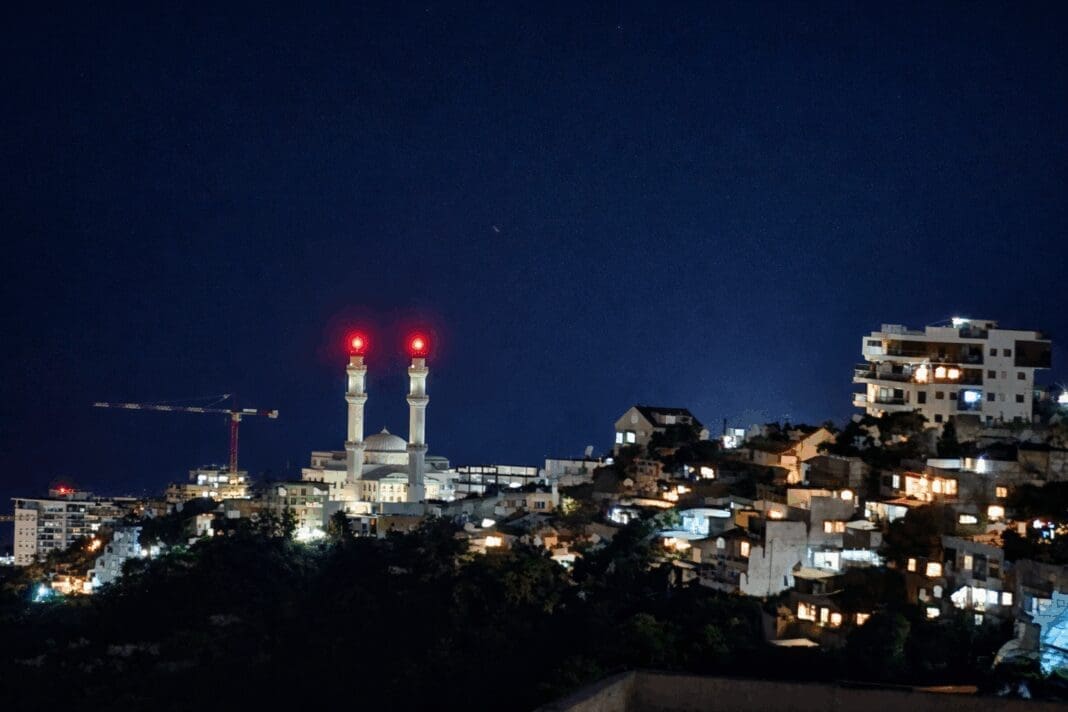
In Haifa, just before nightfall, you can sometimes see a family leaving a restaurant in Wadi. In the older generation, there is a natural encounter of two languages, Hebrew and Arabic, moving between them with the gentleness of everyday life, without the need to explain or translate themselves to the end. And in the children's generation, the combination is already deeper, almost in one breath: they speak Hebrew and Arabic within the same sentence, switching between them as easily as they laugh or point at something on the street.
Behind them, golden holiday lights come on, spilling over the alleys, like a quiet promise of a city that contains more than one voice. In this moment, Haifa appears as it sometimes knows how to be, a place where coexistence is not a slogan but a living, daily movement, passing from parents to children, from conversation to the street, from the restaurant to the descending night.
At that moment, it seems that the entire city, with all its complexities and cracks, holds for a very brief moment another possibility of living together.
I wish the pastoral description of the holiday and coexistence were reflected in reality:
January 1995 Attack on a house near 21 martyred soldiers murdered on the Feast of Sacrifice……
During 2000-2005, attacks on the Feast of Sacrifice...
August 2019 Severe violent incidents on the Temple Mount, on the Feast of Sacrifice…
And more and more
Alchemy culture…Luckily, there is no shortage of morsels in the world