


On an evening when the news headlines change at the rate of a heartbeat, and a scenario of a confrontation with Iran hovers over the political discourse like a low, stubborn cloud, one that does not promise rain but also refuses to disperse, the same old question creeps into consciousness: What will happen and what will happen. Will an escalation come in our region? And if so, who will be remembered in retrospect as someone who could have stopped it and who will be described as someone who merely fulfilled a role that was dictated in advance.
Amidst the sea of assessments, maps, briefings, and well-tailored phrases, a quiet but meaningful movement is taking place: the word "luck." A word that has reclaimed and claimed a place of honor. Not as a mystical outburst in rational discourse, but as a semi-embarrassing admission that even in an era of advanced intelligence and data-intensive algorithms, there remains a stubborn space where history leans to the right or left, not because of brilliant planning but because someone delayed for a minute, a message was misunderstood, or a small mistake did not become a major disaster.
Luck, it turns out, does not negate responsibility or strategy, but rather it merely reminds us with disturbing consistency how narrow the limits of human control are and how much the future depends on circumstances that no one is willing to admit are still, to a considerable extent, accidental.
Amid this web of security assessments, anonymous leaks, and overly cautious or overly decisive interpretations, a word that seemed to have long been banished from serious discourse resurfaced: luck. Not as a popular cliché or as a talisman of the weak, but as a quiet but persistent variable, one that creeps into the gap between intention and result, between decision and execution. Luck, it seems, does not eliminate strategies and does not replace power, but it claims a place of honor precisely in moments when everything seems to be calculated down to the last comma… and then, as usual, proves how little is really under our control.
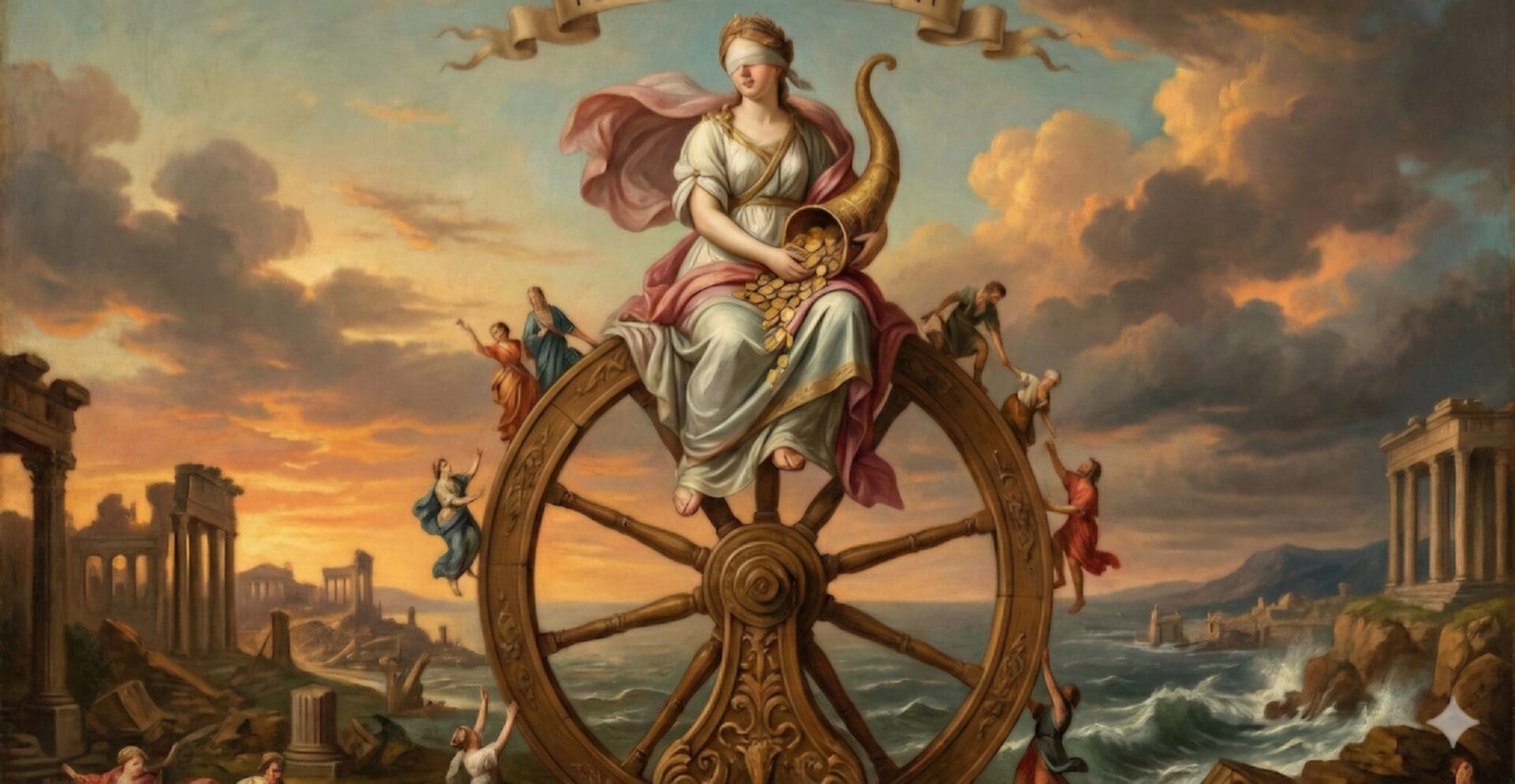
Not luck as a talisman or a hasty blessing, but that elusive force that the Romans gave a face and a name to: Fortuna, the goddess of the spinning wheel, the one who raises empires and topples them as easily as she flips a coin in the palm of her hand.
In an age of satellites, intelligence, and algorithms, it seems that it is precisely in moments of global tension that the ancient question returns: to what extent is our fate subject to planning and to what extent does it depend on one random, almost arbitrary moment.
The Thin Gap Between a Traffic Light and an Alarm: On Fate, Luck, and Coincidence
At 06:29 a.m., at a small intersection in the center of the country, a man named Eyal stopped at a red light. He was delayed. Not out of extreme civic discipline, but because he had read a last WhatsApp message, before a long day of work. Behind him, someone honked their horn nervously. Seconds later, a speeding car crossed the intersection through a red light and hit the first car in the line. Eyal remained standing. Later, in the hospital, someone told him: "That was your luck." Eyal nodded, but he wasn't sure exactly what they meant.
In Israel, the conversation about fate is not a theoretical matter. It is present in everyday language, in news headlines, in living room conversations, and in a quick glance at the sky after an alarm. "It wasn't meant to be" is said of a terrorist attack... "It was written" is said of survival. Between these two sentences there is a constant, almost unbearable tension, between belief in a hidden order and recognition of utter chaos.
Daily life in Israel is made up of a dense sequence of coincidences.
The word "fate" It is especially heavy here. It is loaded with religion, history, and the collective memory of disasters and rescues. "luck", is a softer, almost cheeky concept, one that can be said even after a good parking spot in Tel Aviv or getting a surprise appointment with a specialist. And"chance", then this cold, scientific word has difficulty fitting into a landscape where every event immediately has an interpretation, an explanation, or at least a verse.
And yet, everyday life in Israel is made up of a dense sequence of coincidences. A bus that was changed at the last minute. A soldier who went on leave in his friend's place. A meeting that lasted one minute longer than planned. Tiny, almost invisible details that distinguish between "I was there" and "I heard about it on the news." In retrospect, these details are colored with meaning. But in real time, they just happen.
There is something about this country that accelerates the need for a story. Perhaps because reality here tends to defy logic, perhaps because the security tension creates a constant sense of dependence on forces beyond our control. When there is no certainty, we rush to create meaning. Not always out of deep faith, sometimes out of a simple psychological need: not to collapse.
Talking about fate
Science, of course, offers a different interpretation. Probability, statistics, chains of cause and effect. But even here, in Israel, the numbers have difficulty reassuring. Because statistics cannot comfort if they don't talk about the specific person who was there, or wasn't there, or was a minute late, they don't explain why it was him in particular.
Perhaps that is why even the most secular find themselves using the language of fate. "It probably had to happen," "something kept me," these are not necessarily sentences of faith; sometimes they are sentences of survival, a way of introducing minimal order into a reality that refuses to be reasonable.
And on the other hand, there are moments when talk of fate sounds harsh, almost violent. A child killed by a rocket strike, a family wiped out in an accident. Here, any attempt to attribute a higher meaning may sound like moral abandon, as if the story itself seeks to cleanse reality of responsibility.
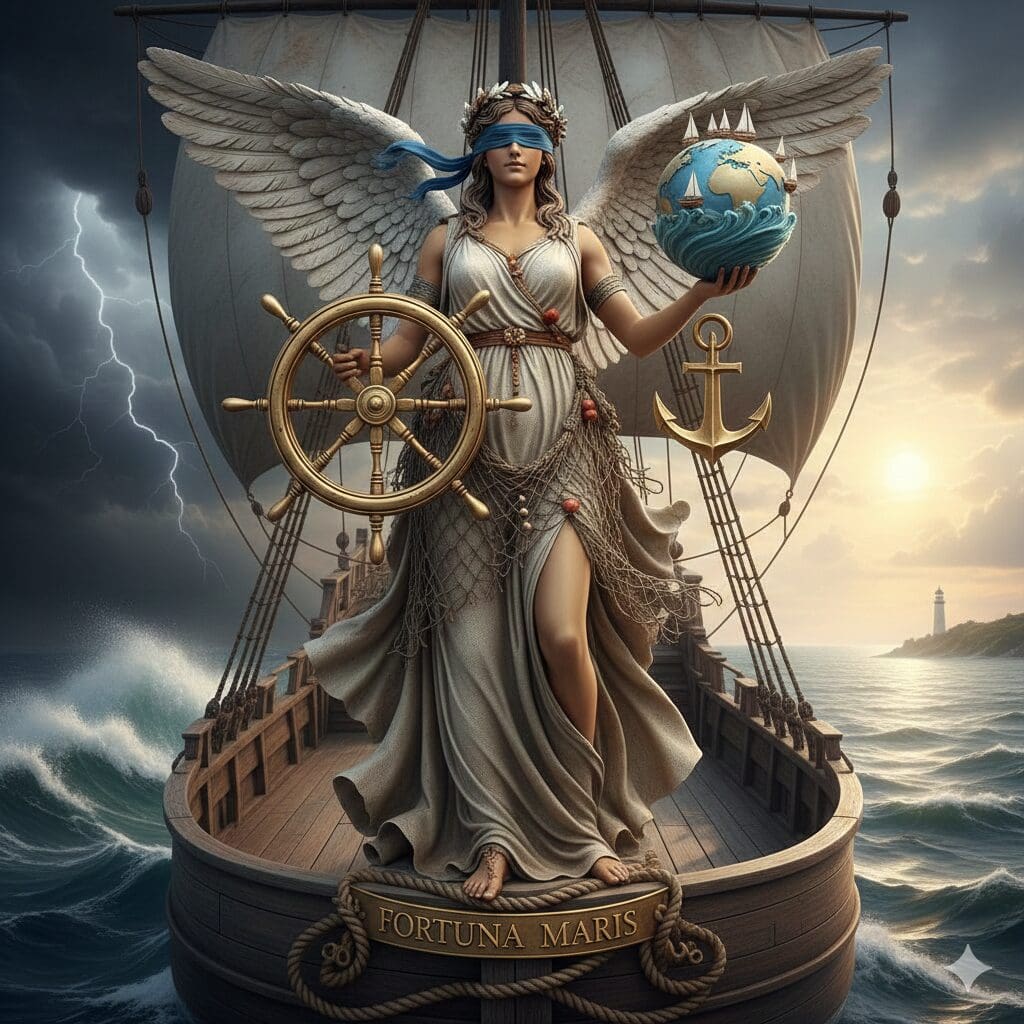
Life is a mixture of pure chance and human interpretation.
And perhaps, as is often the case in Israel, the answer lies precisely in the lack of decision. It is possible that life here is an inseparable mixture of sheer chance and stubborn human interpretation. This is because the events themselves are random, but the way we handle them is not. Fate, if there is such a thing, is not an orderly plan but a story we construct from fragments.
Eyal, the man from the traffic light, returned to his routine a few days later. He still stops at red lights, still reads messages at the wrong moments (despite the explicit prohibition…) and sometimes he thinks about those seconds. Not a moment, not as a providence but as a thin, almost imperceptible gap, between life as it is and a life that could have been completely different.
In Israel, this gap is always present: between whether war will break out again? between alarm and silence, between a headline and a personal name, between "it happened" and "it could have happened."
You can call it fate, you can call it luck, and you can, uncomfortably, call it coincidence.
Either way, we continue to live within being, telling ourselves stories not to understand everything, but to continue breathing amidst uncertainty.
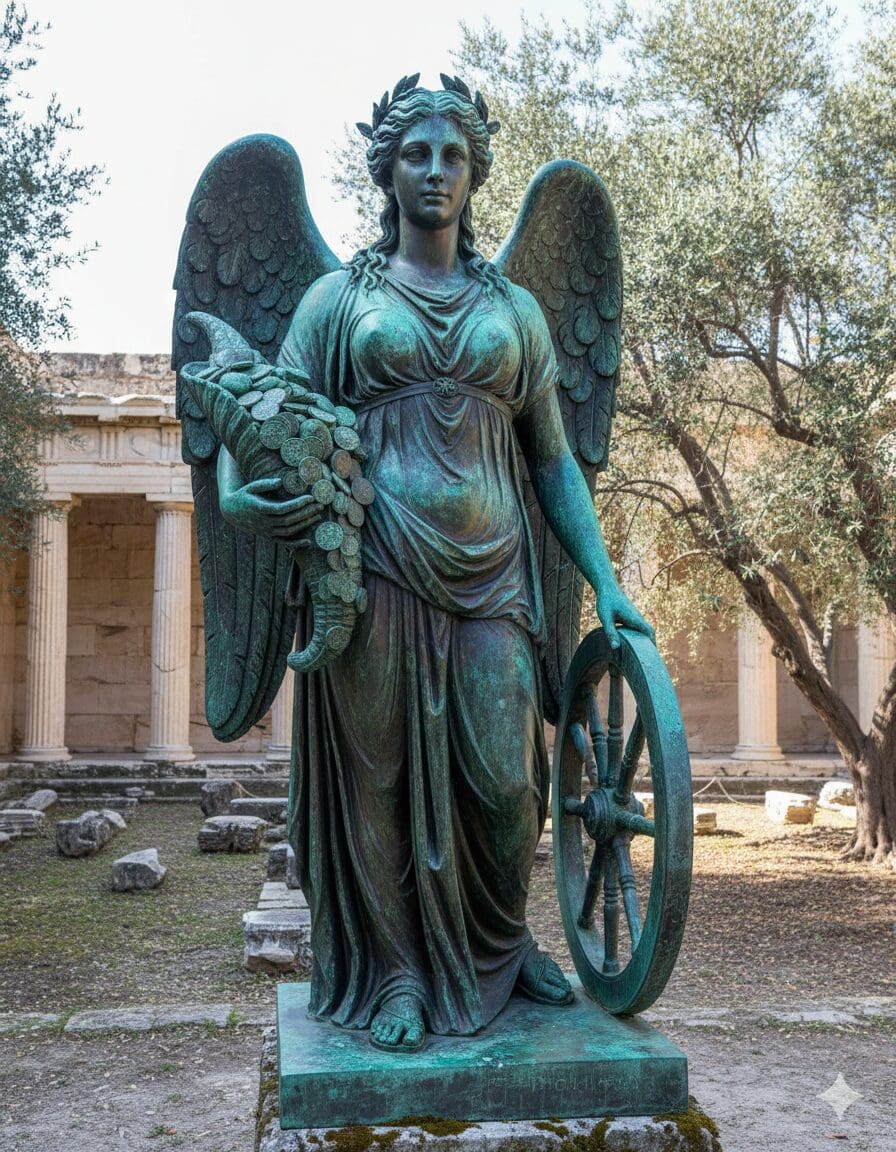
Mazal Tov vs. Bish Gada
Luck, it seems, always comes without warning. It sneaks onto a side street of life, sometimes smiling, sometimes stinging, and always leaving us wondering if it was pure chance or an unseen hand that arranged the cards.
One morning it is embodied in "Mazal Tov" said over a glass of wine, and another morning it appears as "Baish Mazal," a kind of short word that tries to explain why everything went wrong right now. Between blessing and downfall, luck is a story that people tell themselves, to give shape to what has no shape: randomness.
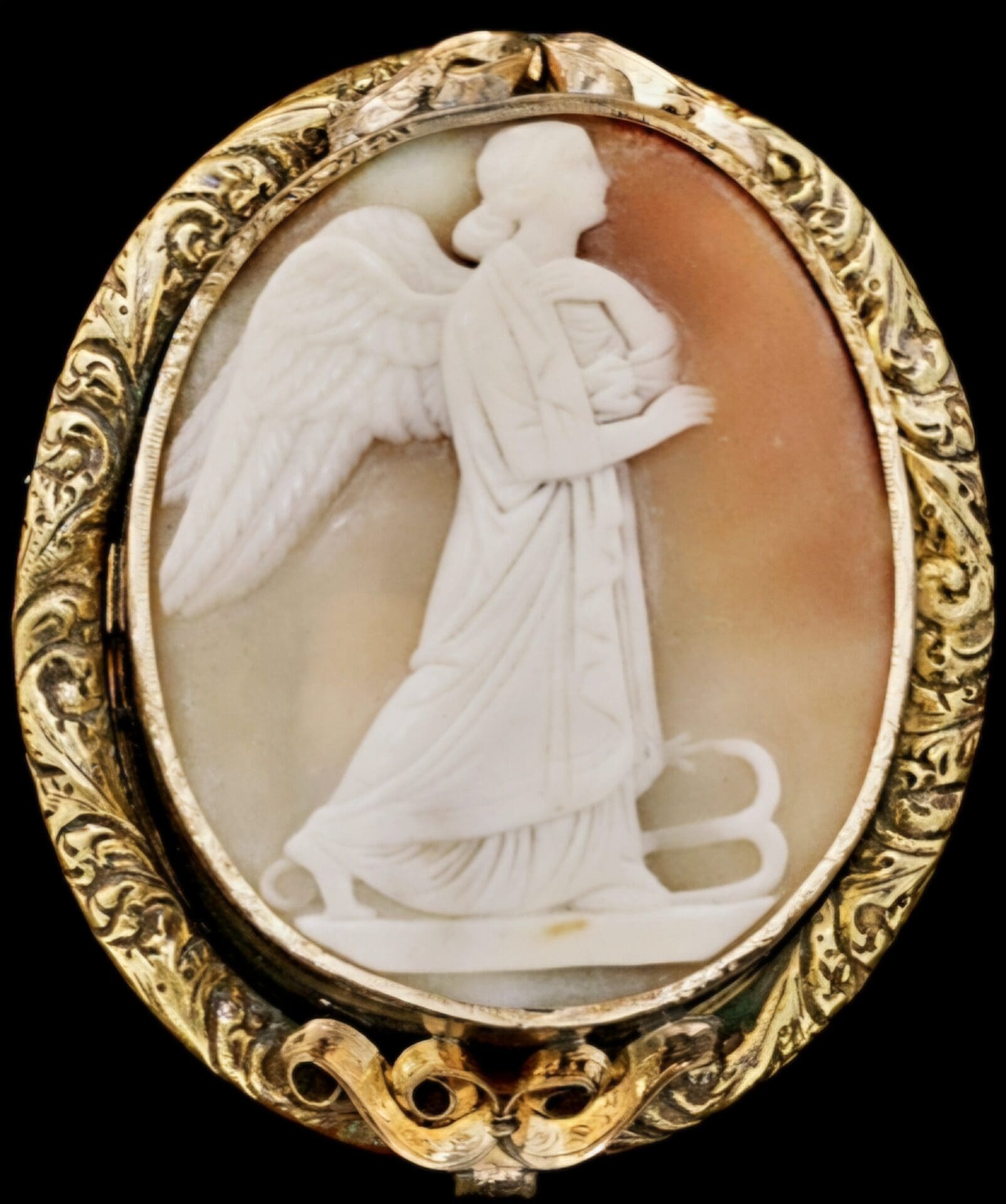
Luck is not satisfied with the stars
Long before it became a personal name or a festive wish, luck was associated with the sky. Twelve constellations, arranged in a seemingly fixed wheel, were proposed as an explanation for character traits, dates, and sometimes even fateful decisions. Taurus, Leo, Gemini… These are not just names but a hidden promise that there is order, that there is a map, that one can understand why one person likes risks and another shys away from them. Even those who raise an eyebrow at astrology sometimes find themselves checking, almost guiltily, what is "written for them."
And yet, luck is not content with the stars. It lives in games of chance, in the throw of the dice, in a scratch card bought by chance, in the hope that Gad will be kind. It crosses between science and faith, between statistics and intuition, between what can be calculated and what always remains beyond control.
Here, where chance meets the human story, Fortuna enters, not only as the goddess of luck from mythology, but as a figure who embodies the oldest question of all: to what extent is our life the result of choice, and to what extent of luck.
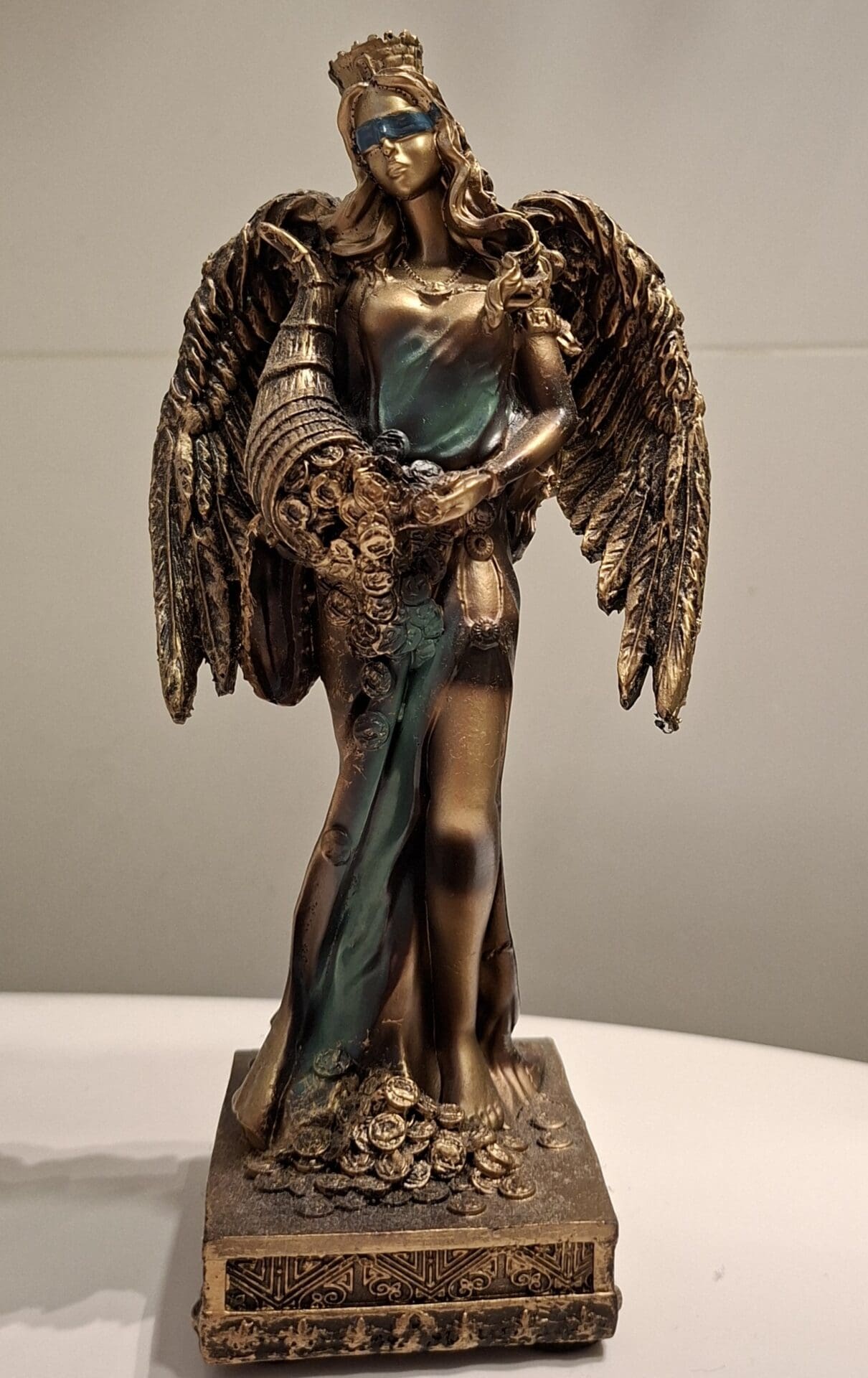
Fortuna – the goddess suitable for Israeli existence
Perhaps that is why, even without mentioning her name, the ancient figure of Fortuna, the Roman goddess of luck, returns to the heart of the discussion. Fortuna was neither a goddess of justice nor a goddess of truth, but rather she was the goddess of unexpected movement.
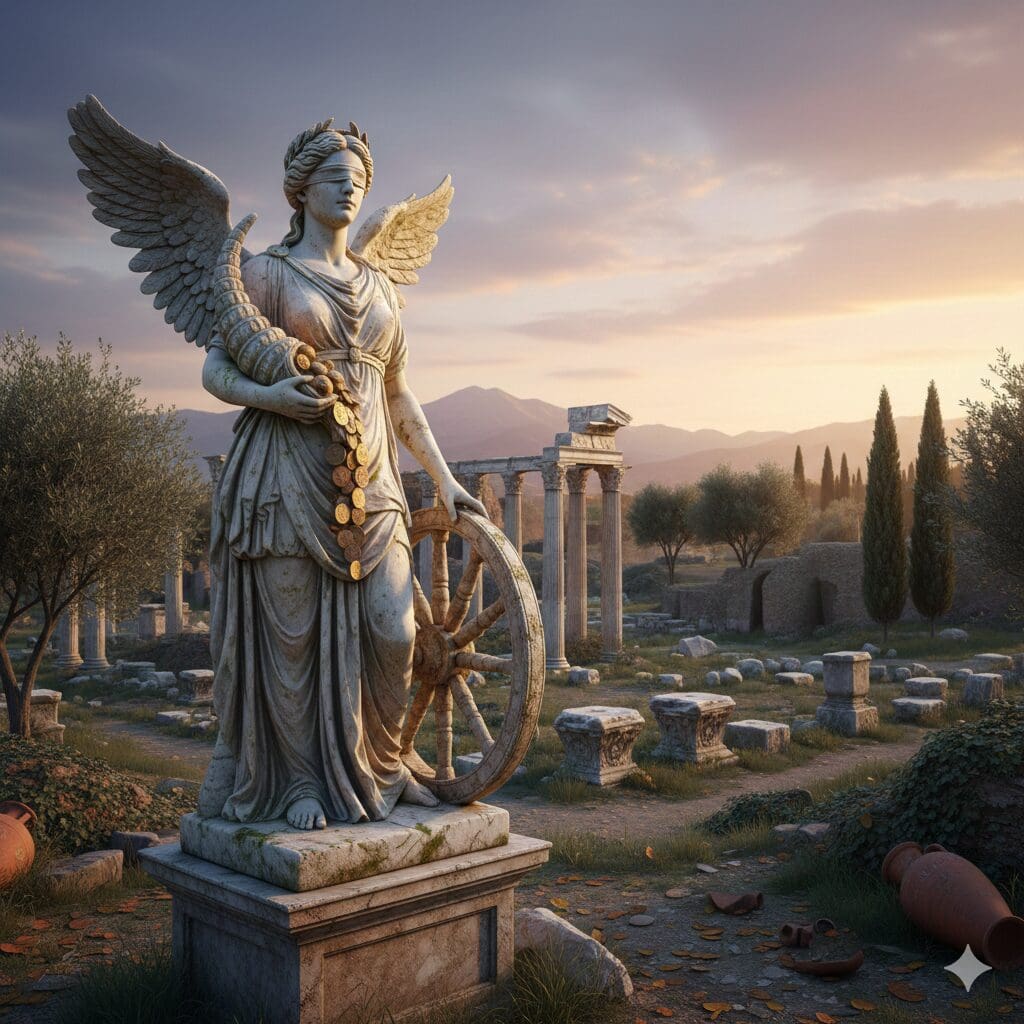
Sometimes depicted with a spinning wheel, sometimes blindfolded, and sometimes holding a cornucopia in one hand and emptiness in the other. She did not promise order, only change.
In many ways, Fortuna is more suited than any other mythological figure to Israeli existence: a reality in which the wheel turns at dizzying speed, in which those at the top know how temporary the situation is and those at the bottom know that it is not necessary.
Fortuna is not that of a pre-written fate, but of moments: of a single second at a traffic light, of an alarm that comes or doesn't come, of a bus that stops or passes. Perhaps that's why it's easier to think of her not as a force that governs our lives, but as a reminder of their fundamental instability and of the stubborn human effort to continue living, choosing, and telling stories even when the wheel keeps turning without us having to ask.
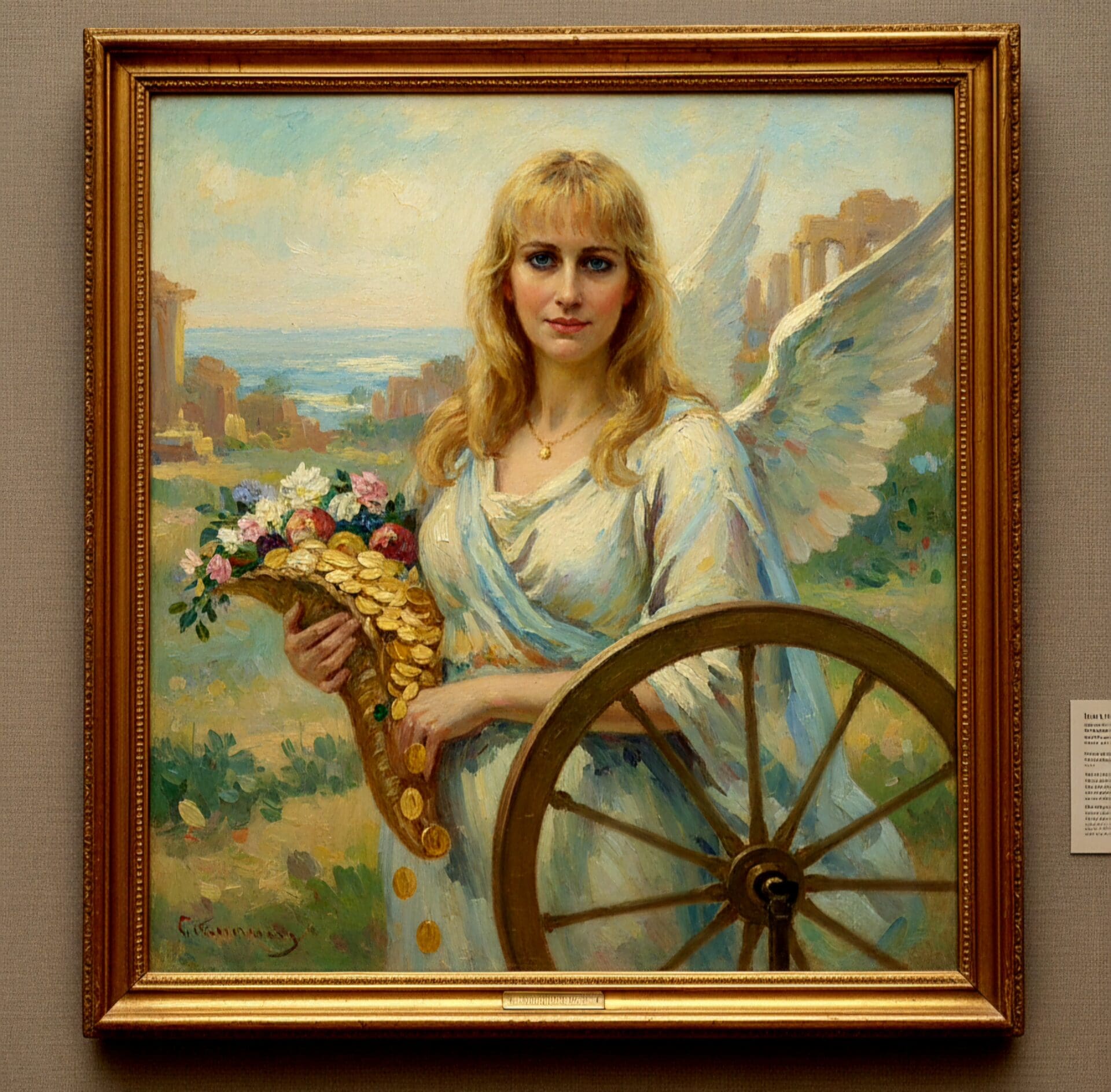
The Goddess of Fortune has no fixed appearance – because she has no stable character.
She doesn't make a splash. She has no fanfare, and she has no dramatic origin story. She's just there. Sometimes next to you, sometimes behind you, and usually right where you're not looking.
This is what Fortuna, the Roman goddess of luck, looks like: always present, always hidden, eluding definition the moment you think you've already understood her.
Ancient art tried to capture her again and again, but never managed to establish her image.
She has no fixed appearance, perhaps because she has no stable character. Sometimes she is young, almost a maiden, sometimes a mature woman, her eyes heavy with knowledge. Sometimes her face is beautiful in the classical sense: symmetry, tenderness, peace, and sometimes there is something distant about it, almost indifferent. Fortuna is not ostentatiously cruel, but she is not merciful either. She promises nothing and certainly does not explain herself.
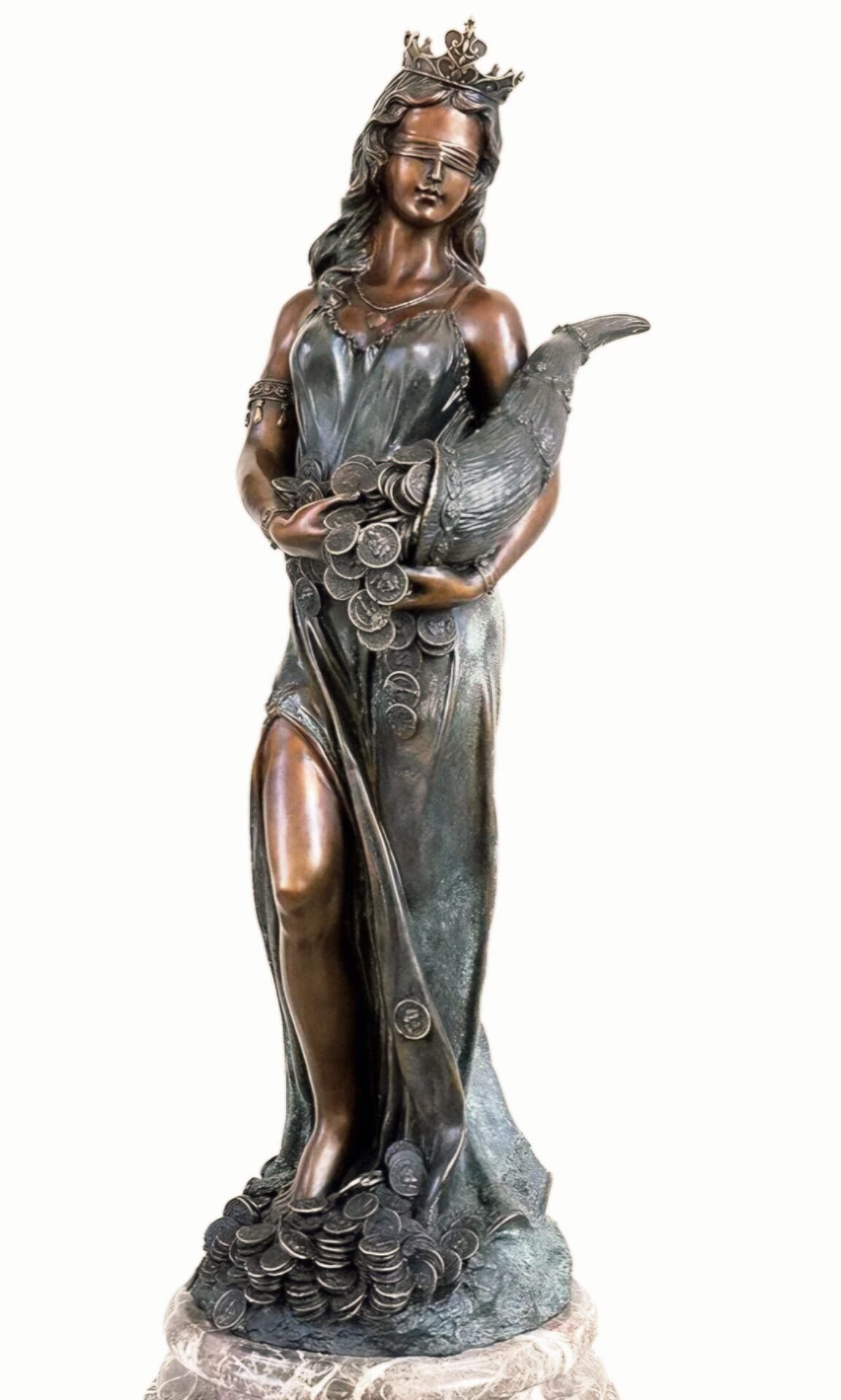
Abundance versus ship navigation
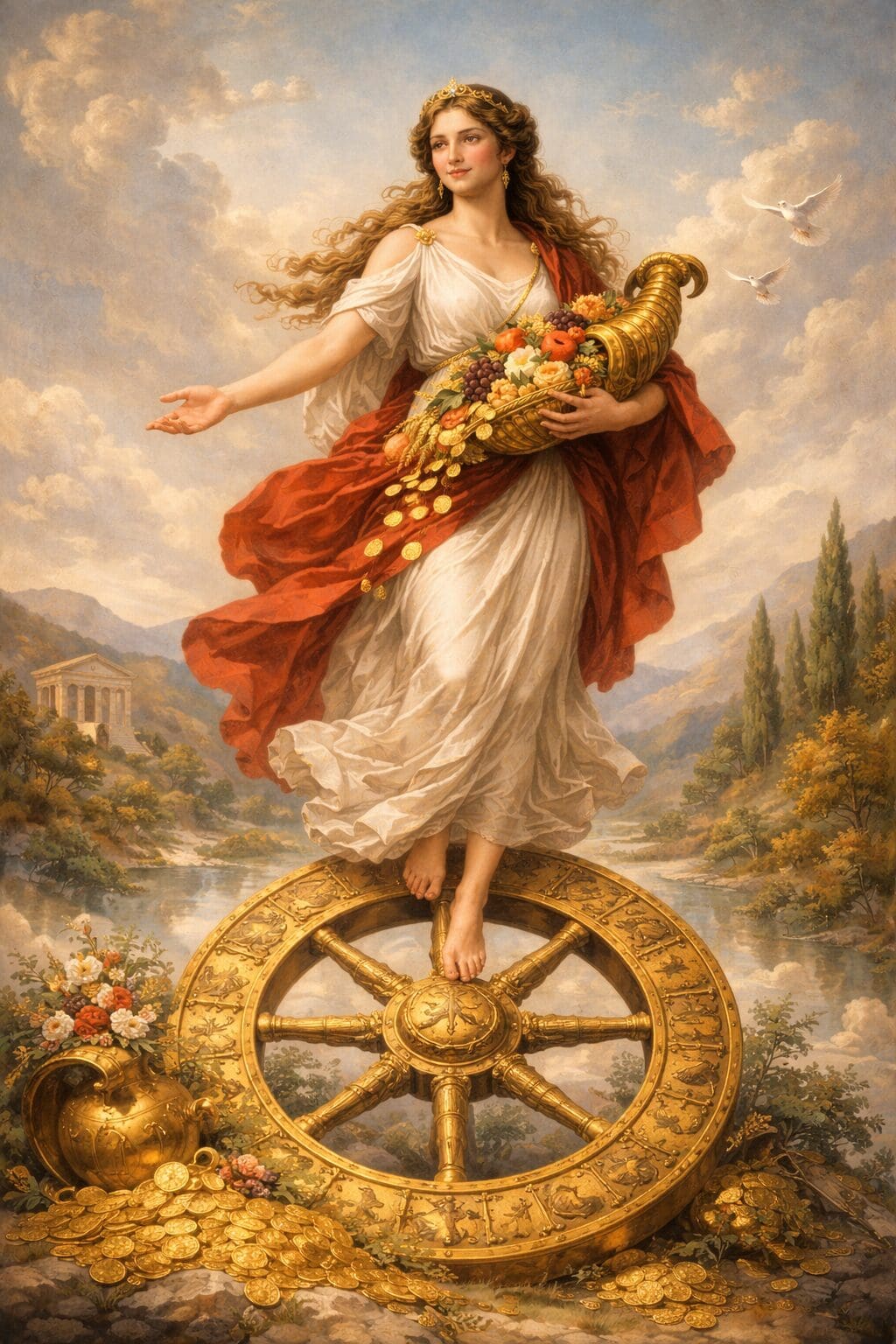
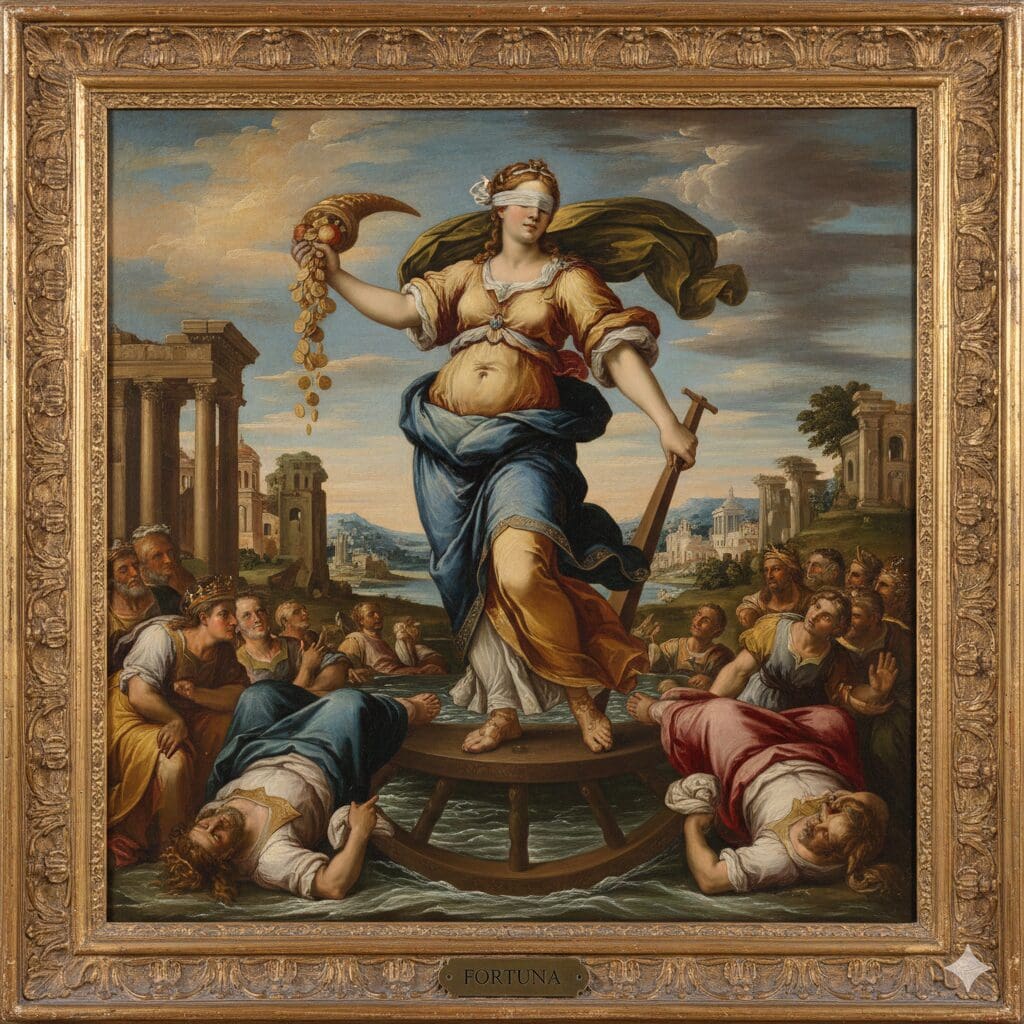
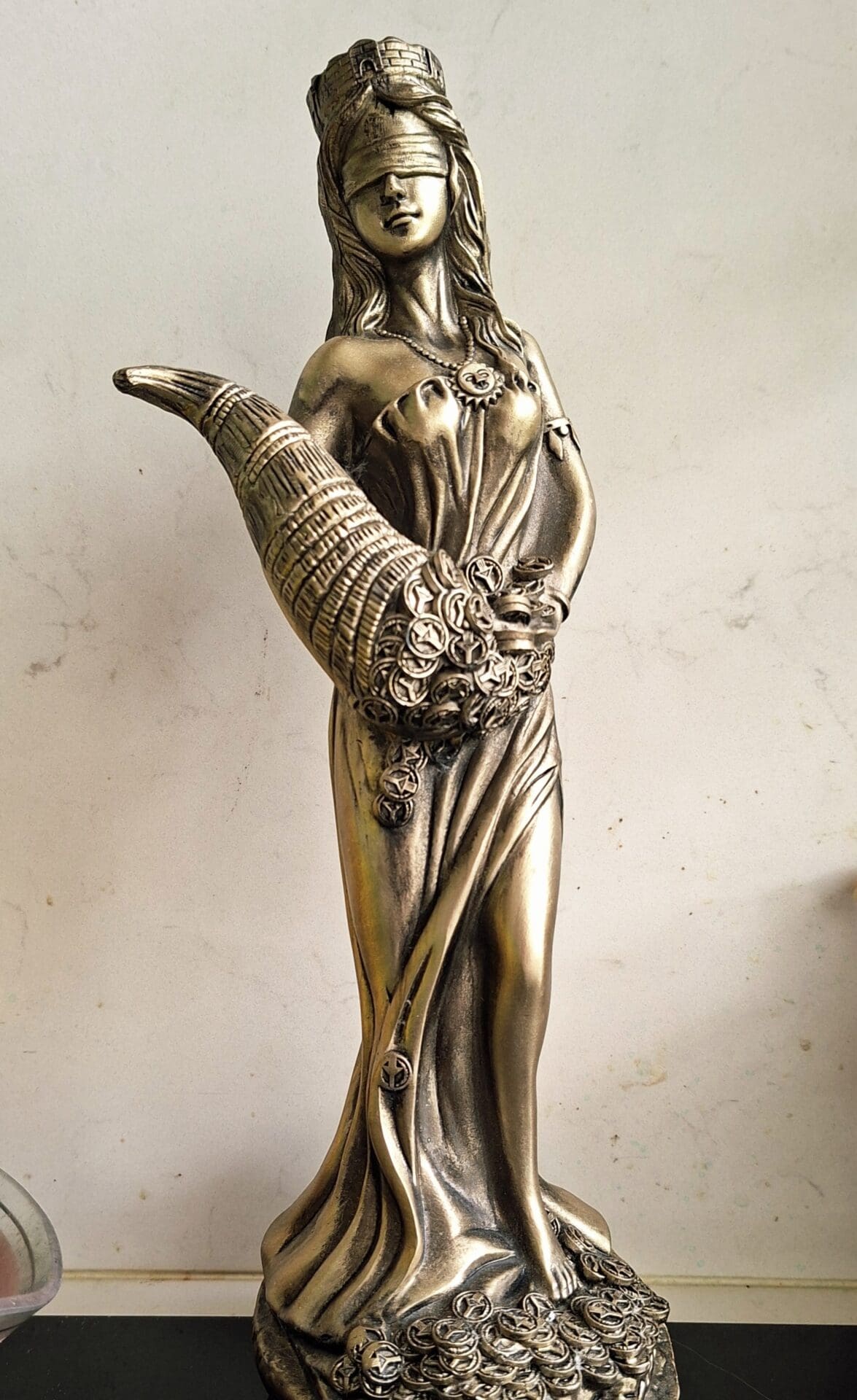
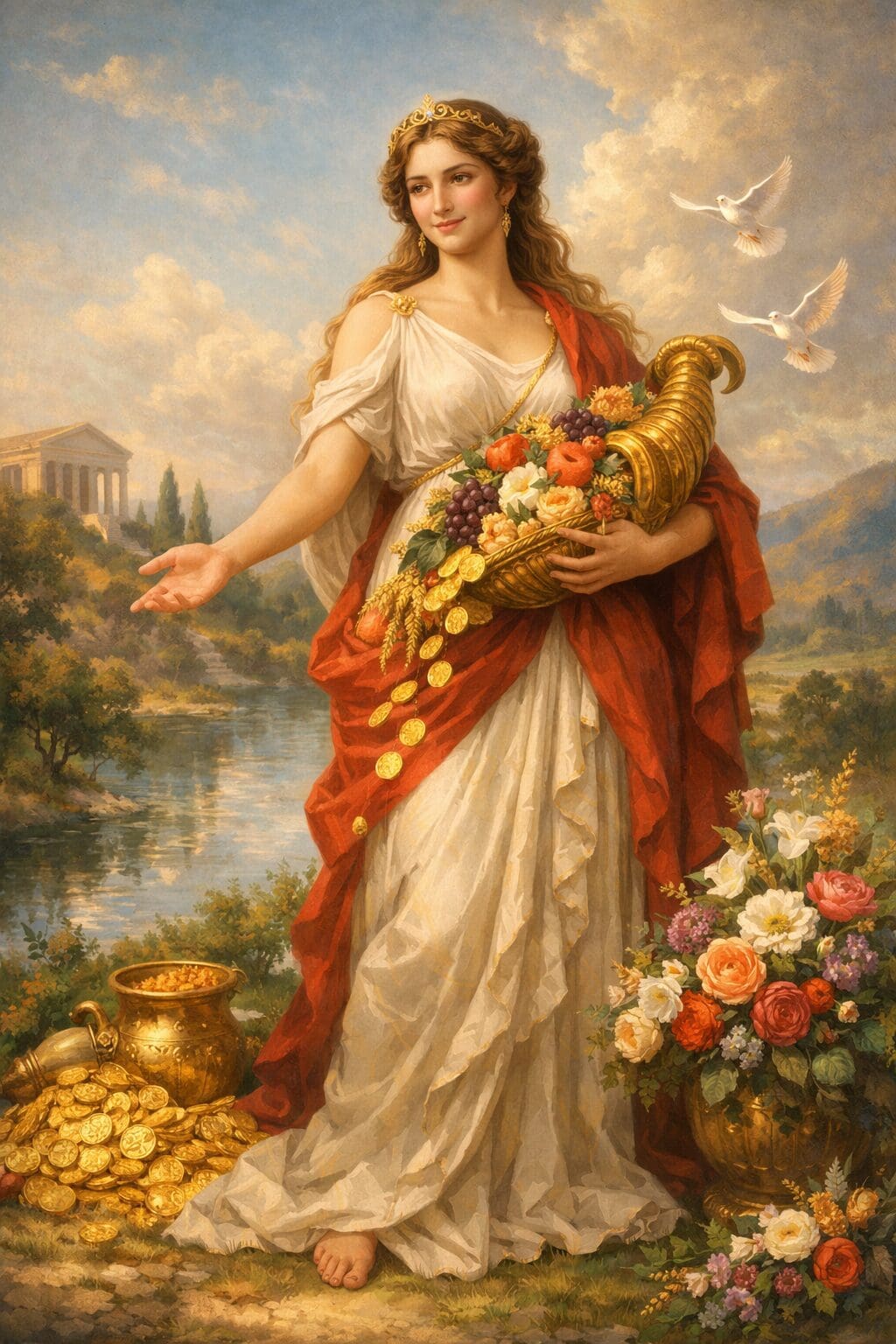
In most images, she holds a cornucopia with fruits, coins, flowers, a generous abundance that pours out indiscriminately. This cornucopia, which initially seems like a promise, is also a warning. What is poured out can be gathered up, and what is gathered can also pour out again, this time in a different direction. Beside her, the Wheel of Fortune sometimes appears, that spinning hoop on which kings, slaves, warlords, and marginalized people ascend and descend. The wheel does not stop to explain, it does not examine intentions or rights, it simply moves.
Sometimes a ship's rudder is attached next to it, this is one of the more disturbing images: Fortuna as navigator.
It is not the storm that is responsible for the deviation from the course, not human error, but a quiet, almost elegant hand that tilts the direction by just one degree. Sometimes that is all it takes to change an entire life. In other versions, she stands on a ball or a wobbly surface, as if the artist were whispering to the viewer: Don't settle. Those who feel too confident, those who believe their ground is solid, are usually the ones who fall. And in rare cases, a blindfold also appears, a disturbing hint that luck is distributed randomly, without moral discernment, without inner justice.
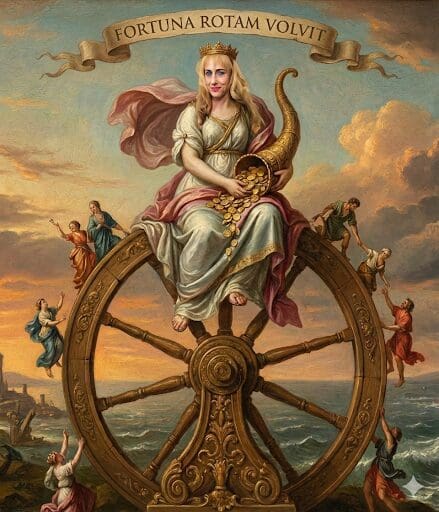
The desire for control in life versus existential instability
But Fortuna is interesting not only as an artistic representation. She is interesting because she embodies something much deeper: our inability to attribute stable meaning to the course of life.
The Romans worshipped her, but they didn't really believe in her as a personal being. They built temples to her, swore oaths in her name, turned to her in times of trouble, but they never trusted her. She was not a goddess of law like Jupiter, not a goddess of morality, not a goddess of order. She operated in the twilight zone between order and chaos. The goddess of the rift.
The Romans, unlike the Greeks, did not seek harmony, they sought control, and Fortuna was the uncomfortable reminder that even the most organized empire, one with straight roads, precise legions, and a timed calendar, ultimately rests on something unmanageable, a small mistake, a tiny delay, a soldier who stumbles, a messenger who is late. Fortuna is not the grand drama; she is the micro-event with the catastrophic outcome.
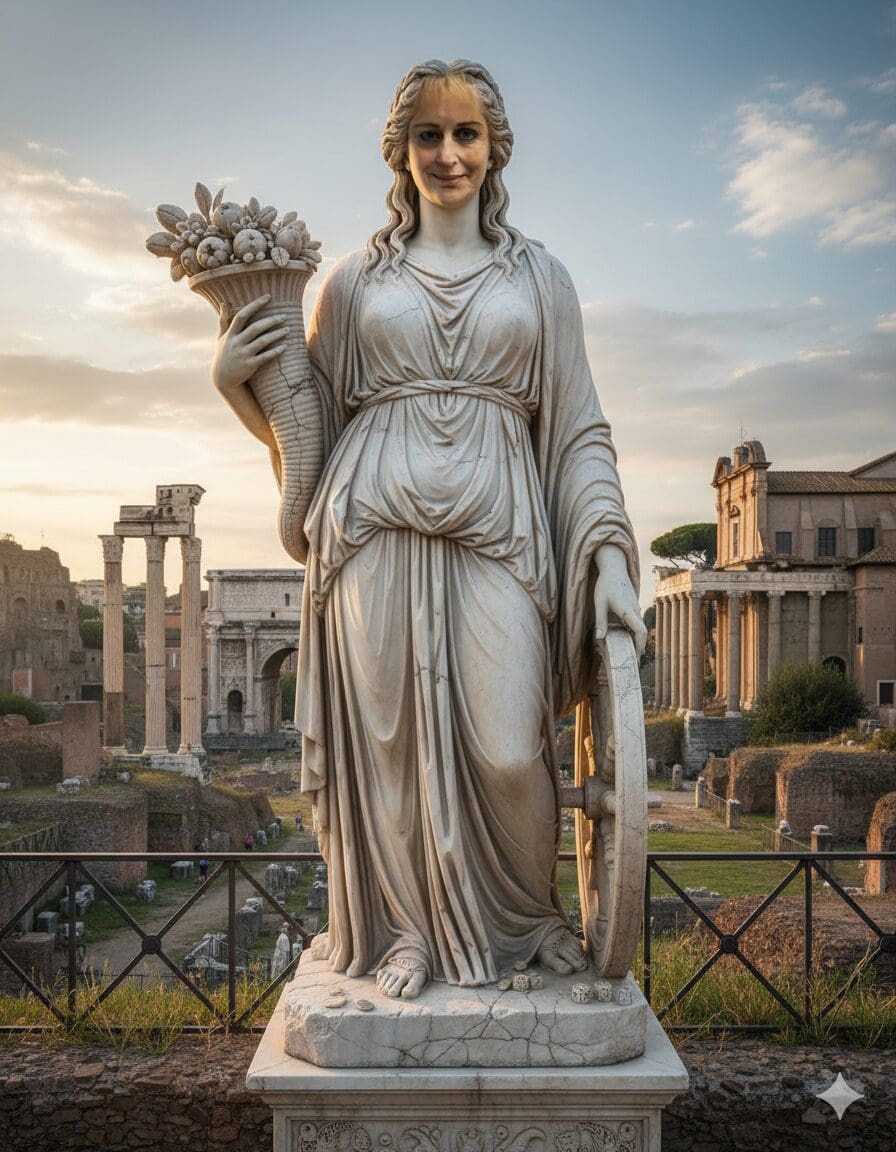
The Goddess of Luck – in Art
In art, it often appears at a moment of potential, not of realization; the horn is full, but not yet overflowing; the wheel is in motion, but not stopped; the rudder is held, but the final direction is unknown; this is an accurate representation of the human experience: we always live in the moment before: a moment before success, a moment before fall, a moment before understanding, Fortuna resides right there.
The Middle Ages feared her. She undermined the idea of an orderly divine justice: if everything is predetermined, what is the place of Fortuna? The theological solution was elegant, but unconvincing, which explained her as a tool.
God permits her to act, but does not identify with her, thus making her a suspicious figure, almost satanic, but not quite. The sin she encourages is not lust or violence, but excessive self-confidence: the belief that your success is yours alone.
The Renaissance, however, embraced it, Machiavelli wrote about it with brutal clarity: Fortuna rules half of our lives, but the other half we must conquer by force, by ingenuity, by courage. This is a remarkably modern, almost capitalist conception of luck as a resource that can be exploited, if you are sharp enough, bold enough, strong enough. Fortuna, for Machiavelli, is no longer just the goddess of chance, she is a woman to be "tamed."
But here the paradox emerges: the more they tried to domesticate her, the more elusive she became.
Statistics, probability, market, algorithm
In modern times, it has come down from the altar, but it has not disappeared. It has simply changed names: statistics, probability, market, algorithm. We continue to talk about it without mentioning it. "It was a matter of luck."
"He was in the right place at the right time" or "Everything turned upside down in an instant," these are secular prayers. There is no God in them, but they contain an admission of lack of control.
And perhaps the most disturbing thing about Fortuna is this: she is not interested in your character, she does not respond to effort, to intention, to morality, she can give a life of abundance to an empty person and take everything from someone who lives right. Not out of malice, but out of indifference; a cosmic, quiet, even polite indifference, she does not bother to justify herself, because she does not see herself as someone who needs.
The goddess of the rupture between meaning and consequence
Therefore, when we truly look at Fortuna, we realize that she is not the goddess of luck, but rather the goddess of the rupture between meaning and consequence. The place where the story we tell ourselves about our lives stops working, the place where logic gets tired, the place where we are forced to admit: not everything can be explained and not everything can be controlled.
And yet, we continue to paint her beautifully, perhaps because man is incapable of looking at chaos directly. He must give it a face, a body, grace, femininity. Fortuna is beautiful not because she is benevolent but because without her the world would be unbearable. She gives shape to injustice, sometimes, that is all that allows us to continue living, one more moment, between turns of the wheel.
The wheel of fortune continues to spin – and the headlines are preparing themselves for tomorrow
Ultimately, as the wheel of fortune continues to spin above us and the headlines are already preparing themselves for tomorrow, the question is not just whether there will be a war with Iran, but whether we will be able to bear the knowledge that we do not know.
Fate may have already been written in conference rooms and intelligence maps, and it may still depend on that tiny deviation of the steering wheel, that moment that didn't make it into the report. As always here, we live on the seam line between scenario and possibility, between a decision that seems inevitable and a future that can, in an instant, unfold completely differently. Perhaps this is the true essence of Fortuna in our time: neither a promise nor a threat, but a sharp reminder that even in an age of power, knowledge, and cold calculation, there is still one night when everything is open and the morning after may be different.
And in the meantime, before we know whether the cloud will thicken into war or disperse into another temporary sigh of relief, we remain in the same familiar state: living in the pause. Not in the day after, but in the minutes before. In a place where history has not yet decided, in a place where Fortune still holds the helm, without tilting it, and where every nation, every person, looks ahead and asks, not what will happen but what the story we tell ourselves will look like if everything changes and… if not.
If the low, stubborn cloud turns into a real storm
And perhaps precisely from all this knowledge of uncertainty, we are allowed to allow ourselves one thought that is neither strategic nor overly mystical: if a confrontation is indeed required, if the low, stubborn cloud turns into a real storm, then Fortuna, that goddess of moments and tiny deviations, will tilt the rudder one degree in our favor.
For our benefit, not as a complete victory, not as a promise of cleansing from pain, but as a thin, almost invisible defense that will minimize the harm, that will keep the story within the realm of the possible and not the unbearable.
This is not because we deserve more, but because that is how luck sometimes works: not as a moral decision but as a quiet relief. Perhaps that is all we can ask of Fortune in our time: if she turns her wheel again, it will be so that we remain here to continue telling, analyzing, doubting and living.
What's great about articles like this is that they absolve us of responsibility for our fate.
To Avi Harel,
thank you for your response.
However, there seems to be confusion here between the directions of things.
The article "The Goddess Fortuna, Luck, Fate, and Randomness • Who 'deals the cards to us, the Iranian people, and the rest of the universe'?"
It is not about taking responsibility for our fate or freeing ourselves from it.
It deals with the concepts of chance, fate, and luck - that is, in an attempt to understand the forces, or uncertainties, that shape the reality around us.
Any discussion of personal or collective responsibility is outside the scope of the article, and therefore such an interpretation goes beyond the perspective presented by the article.
😍A more "interesting" & less "routine" article...
And what surprised me most was the "smile" without a smirk and/or laughter on the side...
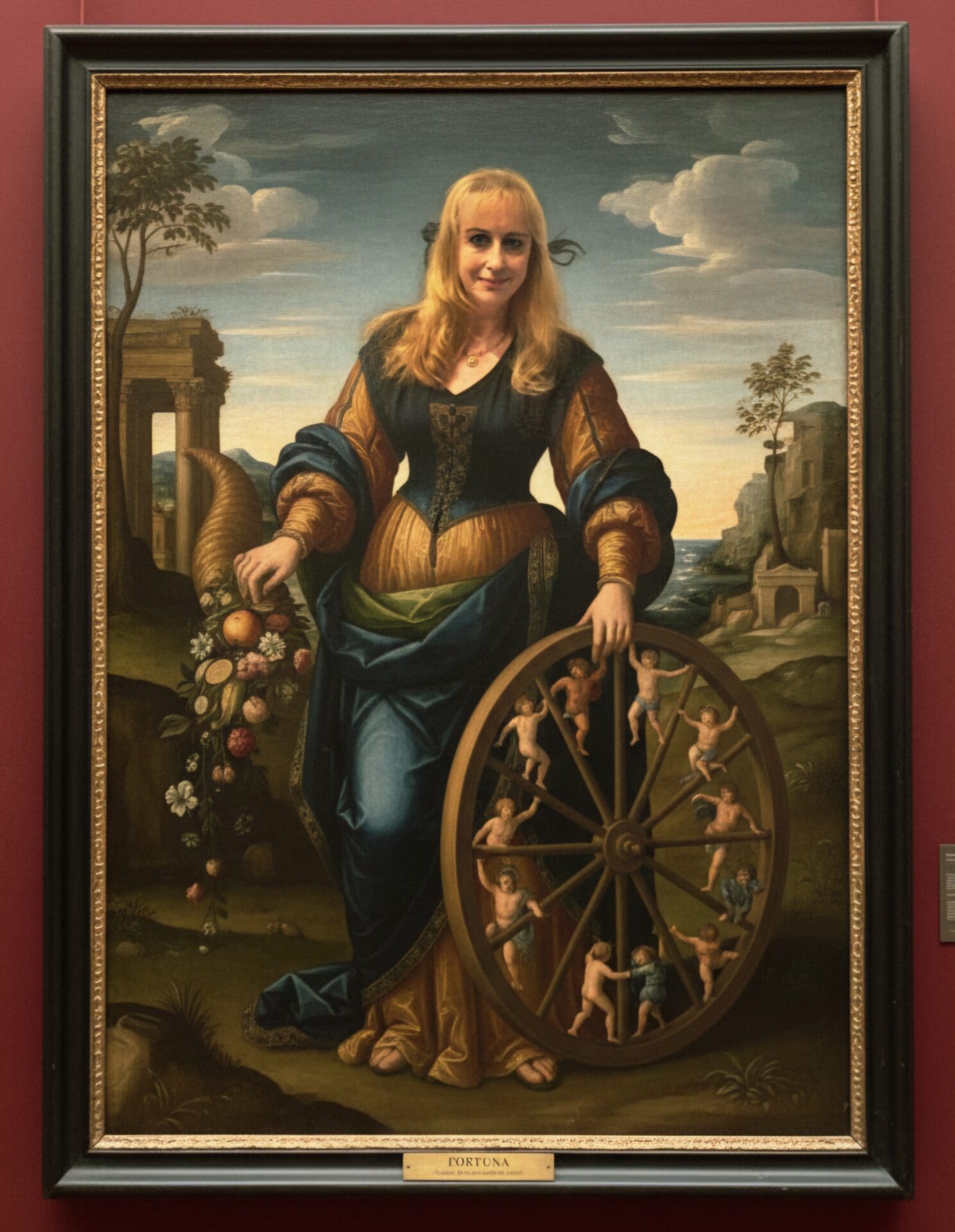
* "Rachel" in the form of FORTUNA 😂
= AMAZING RACHELI✨️
"You shall not make for yourself a carved image or any image..."
Why give a platform to superstitions in the Land of Israel?
*Nurse
To the bird,
The essence and roots of the article in Greek and Roman mythology – and the topic is:
"The Goddess Fortuna, Luck, Fate and Randomness • Who "deals the cards to us, the Iranian people and the rest of the universe"
Therefore, there is no connection to beliefs, one way or another, in the State of Israel.
Interesting and in-depth
Gives another perspective on the events that happen to us throughout life
Thanks!
To Shlomo,
Thank you for your response.
It's great to know that you found the article interesting and insightful, and that it was able to offer another angle for observing the course of events in our lives.
To me, the mere openness to such a reading already broadens one's perspective, so thank you.
Hi Rachel,
I really liked this article. A. I know both Ionian and Roman mythology. B. My curiosity got the better of me because I already wanted to know where the images you created using the goddess of abundance, "Tycha," and the goddess of luck, Fortuna, would lead, both of which have close attributes, similar in that Fortuna also appears with a wheel of the zodiac, unlike Tycha, who appears only with the horn of plenty. All of these in contexts for the current difficult times in Israel and the world. It was also cute that you inserted your face into the goddess portrait using AI. I eagerly read the article until the end, where the longed-for context was revealed to me.
To Ayla Steinberg,
It really warmed my heart. I felt like you read me - not just the article.
I loved the way you saw the connections, the interplay between the goddesses, and the little wink in bringing my character in.
This is exactly where writing meets me.
Thank you for your curious, generous, and knowledgeable reading, and for the kind words.
The reasons for choosing the images are indeed fictional, just like the subject of the article itself and the choices made by the AI software…
But in addition to that-
I'm glad to know that they sparked your thought and interest.
🙏