


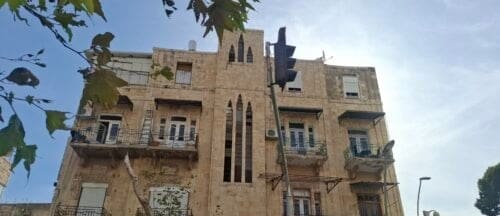
(haipo) – Yesterday (Tuesday, November 18, 2025), in the afternoon, a conference was held in the German Colony, which dealt with the urban and architectural heritage of the city of Haifa. The conference sought to examine whether Haifa is giving up its urban and architectural heritage. The conference was held at WIZO College, which merged with the University of Haifa about a year and a half ago, and was dedicated to the importance of urban and architectural preservation of Haifa. The speakers at the conference emphasized the increasingly deepening understanding in recent years that if we do not preserve the unique buildings in the city, we will lose what makes Haifa a city with character and will be left with a gray city, lacking uniqueness and identity.
The conference opened with remarks by Omri Shalmon, CEO of the Council for the Preservation of Heritage Sites in Israel, who humorously recounted the confusion caused by the wayside signposting between HaGanim Street and HaBanim Street. Shalmon continued his remarks by emphasizing that the very existence of the conference was an act of courage. He quoted a text describing the beauty of Haifa, and emphasized the role of professionals and residents in preserving the beauty of the city through cooperation, preparation of policy documents, and preservation surveys. Shalmon announced that a course for preservation trustees would open on December 11 at the University of Haifa, with the aim of training citizens and professionals in the field.
WIZO's integration into the University of Haifa – an opportunity for change
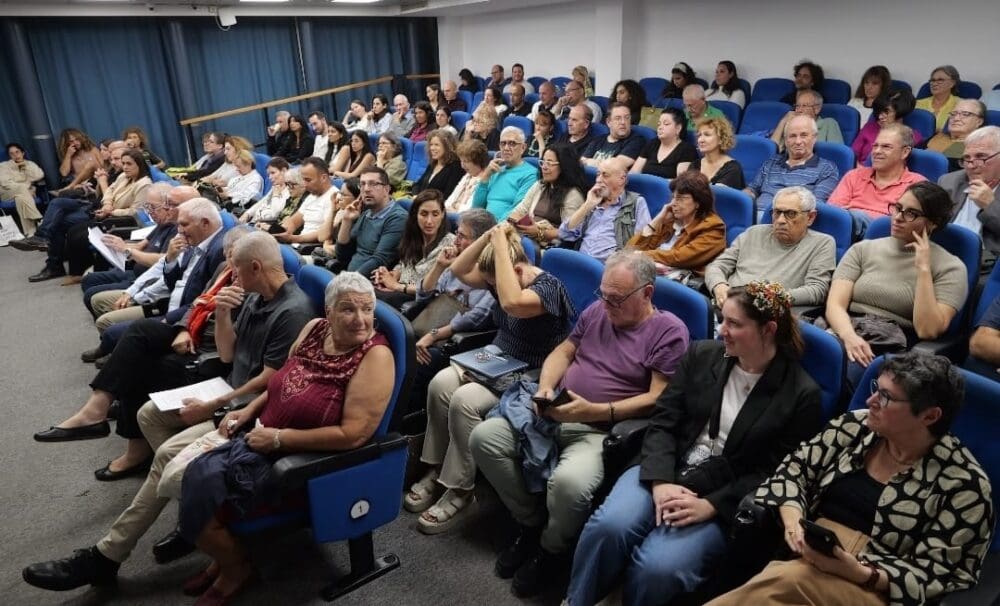
Prof. Leah Peretz, Head of the School of Design, welcomed the conference and noted that this was the first non-school conference since the merger between WIZO and the University of Haifa. "I live in Tel Aviv, and I was called by the then rector of the University of Haifa, Prof. Gur Elroy, to absorb WIZO into the university," she said. "We are only a year and two months after the merger, and we were very happy to host the conference at the school, because I believe in institutions that influence the environment."
Is Haifa losing its heritage?
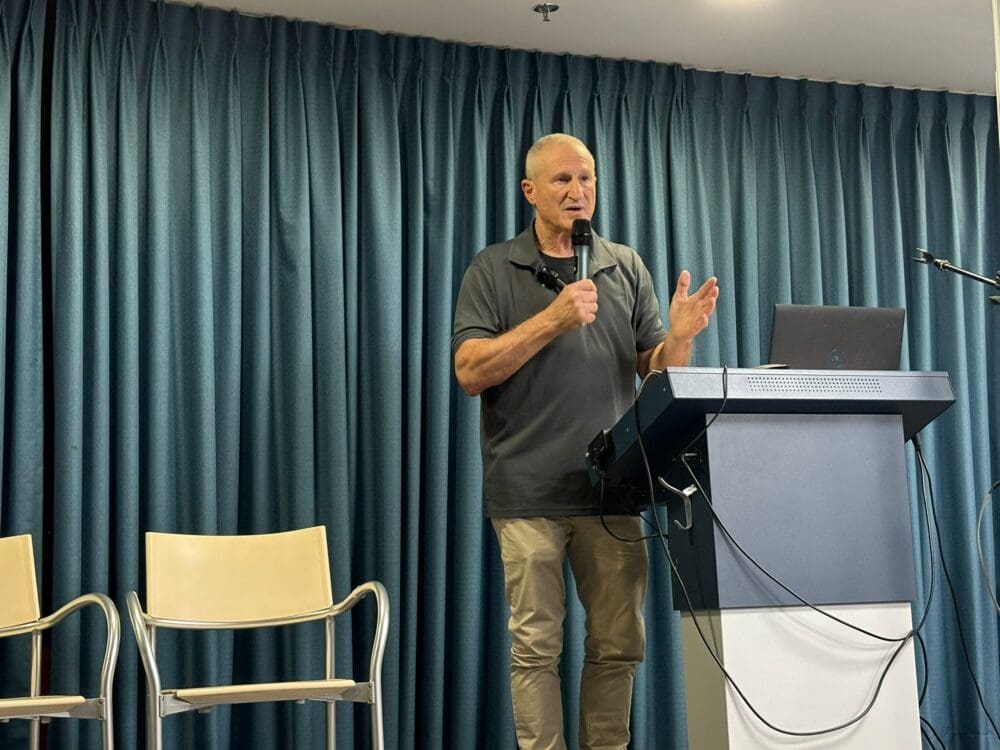
Prof. Yossi Ben Artzi, chairman of the Haifa District Public Council, on the Sites Preservation Council, presented a complex picture of the city's condition. "Haifa has a sea and a mountain, but it is flat," he said. "It has a cultural and natural landscape, and everyone involved in planning and construction must understand this." Ben Artzi praised the Sites Preservation Council for its work, but emphasized that without real action from the authorities, the councils and bodies have no value. According to him, Haifa holds tremendous potential, but instead of developing it, the municipality is promoting more and more roads and saturated construction, which is erasing the heritage.
Ben-Artzi mentioned the preservation struggles of the 80s, in which Yona Yahav, then a young man at the beginning of his public career, also participated. He described how the German colony was saved thanks to a public struggle by academics and residents. "Today we see meetings of the preservation committee, in which they talk about the construction of buildings that were declared for preservation. It's a battle between the developers and the public interest," he said. "The municipality sees construction as a source of income, but forgets that it is about the identity of the city."
The destruction of Neve Sha'anan, the High Court and the lack of policy
Ben Artzi sharply criticized the demolition of the Red Roofs neighborhood in Neve Sha'anan, which he said was completely demolished with the municipality's approval. According to him, only the High Court of Justice stopped the demolition, when it demanded that the municipality present a policy document, a document that was never completed. "They worked on this for so long, where is the policy document?" he wondered. He called for a focus on streets such as Hermon, Bezalel and Shiloah in Hadar, where an ultra-Orthodox population lives, and to ensure that the buildings there are preserved.
Ben-Artzi emphasized that there are currently over 2,000 buildings and dozens of conservation areas in the city. According to him, TAMA 38 is no longer relevant, and tools such as rights transfer, a planning tool that allows developers to transfer building rights from buildings for conservation to other sites, should be used. "We are going backwards," he said. "The Conservation Department will not be able to stand alone in the face of the pressures. Conservation is not an obstacle, it is a lever for development."
Hadar is in terminal condition – and public parks are in danger
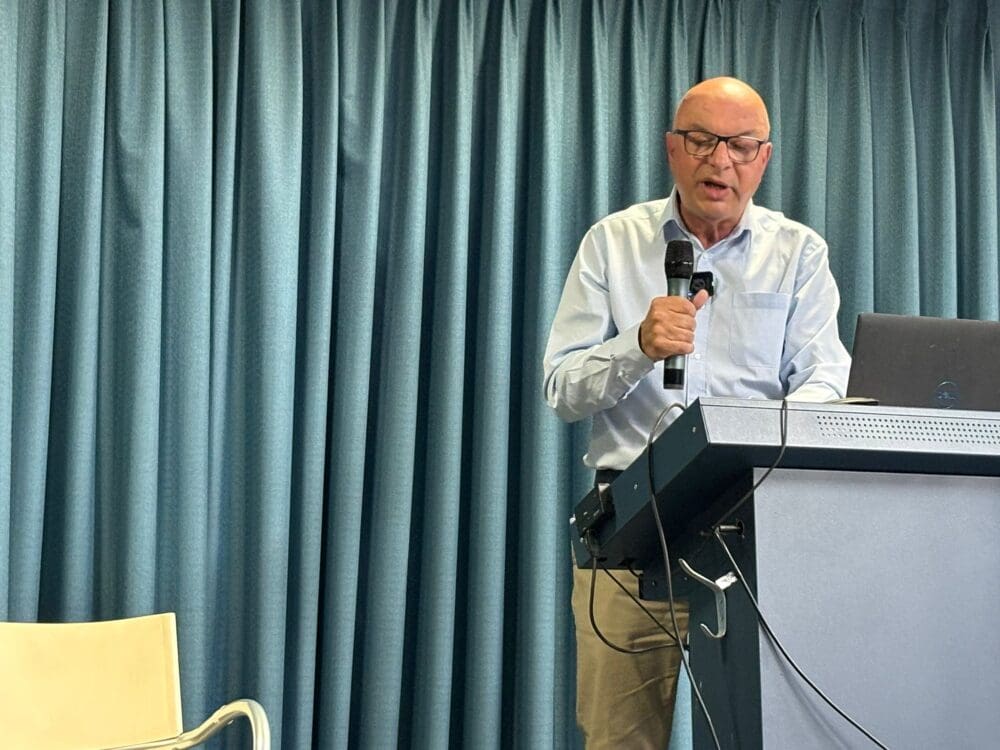
The architect, Walid Karkabi, who was responsible for conservation in the Haifa Municipality for years, addressed the condition of two central parks in the city, the Sculpture Garden and the Benjamin Garden, and accused the municipality of poorly taking care of them. According to him, Benjamin Garden, built in 1923 and designed by Yechiel Segal, was a garden of relaxation, but as part of the renovation of the Haifa Theater, it was expanded in a way that damaged its character. Now, the municipality plans to invest 17 million NIS in a project that will include an artificial stream and other elements, which he says will destroy the garden.
Kerkevi praised journalist Naama Riva of Haaretz, whose article on the Sculpture Garden led to its restoration to its original state. He noted that Hadar is in a terminal state, but it has unique Mandatory architecture. He said it is hoped that the renovation of the Talpiot Market will be completed and that the conservation survey conducted at the site will lead to proper conservation. "If there is no conservation, Haifa will be a city without a soul," he concluded.
Preservation struggles versus real estate entrepreneurship – the position of the deputy mayor
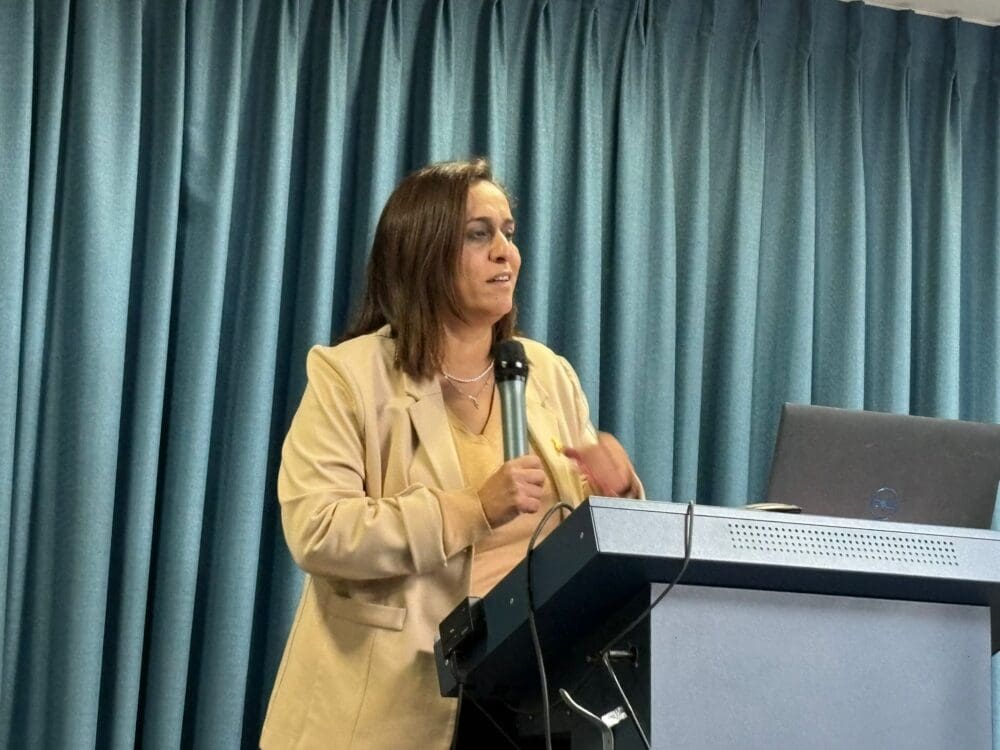
Deputy Mayor, Attorney Sarit Golan Steinberg, The head of the Planning and Building Subcommittee, said that when she was appointed to head the Engineering Department, her core inclination was to work in education. However, she took on the role and is working to approve projects while fighting problematic projects. She mentioned her fight to save Beit Hamavi, in the Bat Galim neighborhood, and said that the building was not destroyed, but it was not restored either.
Golan Steinberg addressed the struggle over the Mount Carmel Hotel, noting that the appeals committee adopted the position of the local committee, which allows for dialogue with the developer. She expressed hope that the building will be preserved, and the nearby grove will not be destroyed. According to her, 90% of the land in Haifa is privately owned and the municipality is limited in its ability to apply transfer of rights in each project. She emphasized the need for a municipal preservation plan with statutory validity, which would clarify what is permitted and what is prohibited in each building for preservation.

The need for a clear conservation policy – words of Avihu Hahn
Acting Mayor and Chairman of the Municipal Preservation Committee, Avihu Hahn, concluded the conference with firm words: "I believe with all my heart that preservation is of great importance, since it allows us to preserve the city's historical and architectural assets." According to him, preservation has become the enemy of developers, but it is the tool of residents to preserve the city's uniqueness. "Preservation can be a significant lever for Haifa," he said, "but real estate developers fight it because they believe it reduces profits."
Hahn called for advancing a city conservation policy, which has been delayed for over a year, and for approving more than a dozen conservation surveys that are awaiting approval. He emphasized the need for cooperation with the Sites Preservation Council to convey the message to the public and developers alike.
Questions about the boundaries of conservation – and what is truly worthy of conservation
The issue of preservation in Haifa is not only a matter of cultural and historical values, but also of professional interpretation. There are buildings whose need for preservation is clear to everyone: the Mount Carmel Hotel, buildings in the German colony, or the stone houses of Wadi Nisnas. But there are also buildings that appear simple, but were designed by renowned architects or represent a rare style. For example, the building at 5 Yitzhak Boulevard in Carmel, which was declared for preservation due to the identity of the architect who designed it. However, an external view or a visit to the balcony does not provide a clear explanation to the public as to why this particular building deserves preservation.
The gap between the declaration and public understanding sometimes creates resistance or distrust. Information needs to be made accessible, with explanation and transparency, so that residents understand why a particular structure is included in the preservation list and what the decision means for their lives and their environment.
Economic Implications of Conservation – Between the TAMA Dream and Reality
Beyond the cultural aspects, preservation also has significant economic implications. When a building is declared for preservation, it means that the process of TAMA or urban renewal will be prolonged, will require special permits, and will sometimes be limited in terms of building additions. For developers, this means additional costs, and sometimes also a loss of profit. The person who ultimately bears these costs is the buyer of the apartment, which raises housing prices.
There are also cases where neighbors use the preservation declaration of a nearby building to delay or make projects more difficult. The declaration of a conservation area, as in the case of the Shambor neighborhood, creates extensive discussions about the meaning of the decision, building rights, and the future of development in the neighborhood.
The Haifa dream of many is to see their old house pass a comprehensive development plan, the value of the property increases, and they get to live in a new apartment with an elevator, a parking lot, and a balcony. But alongside this dream, there is also reality: a long-running construction site, noise, dust, and sometimes even conflicts with neighbors. Into all of this comes conservation, which sets boundaries, but also offers an alternative, development out of respect for the past.
The need for balance – between urban development and identity preservation
The conference in the German Colony illustrated the constant tension between urban development and identity preservation. Haifa, a city with rich historical layers, diverse architecture, and a unique cultural landscape, faces a challenge: how to develop, innovate, and build, without erasing what makes it what it is.
The speakers at the conference, professionals, elected officials, architects and activists presented a complex picture, but also hope. There are plans, there are surveys, there is growing public awareness, but there is also a need for clear policies, budgets, cooperation and a willingness to stand up to pressure.
Preservation is not just a matter of nostalgia, it is a tool for development, it is an economic lever, and it is mainly the way to preserve the soul of the city. Haifa can be a progressive, innovative and developed city, but it cannot afford to be a city without an identity.
A few weeks ago I was on a tour of Bat Galim. I came back shocked by the new real estate monsters that were built in the beautiful neighborhood. I am not a Galimite, but just as Shabta found a way to preserve buildings alongside a new addition that was thoughtfully planned, Haifa can also make an effort... ugly construction with no vision. Destroying beautiful houses without batting an eyelid. A city with no past (like many places in the world) has no future!!! Look at what is being done in Ramot Remez.... Overcrowding = urban catastrophe!
It's not too late, someone should wake up...
Out of a desire to preserve, we see houses that are prone to collapse, that it is not economically viable to renovate/preserve them, so they remain in ruins.
Right now, the character of Hadar is ruin and poverty.
And there is no need to preserve this.
Mrs. Samar, the picture you posted is of a building that is neither International Style nor Bauhaus.
And more in the article about conservation. Embarrassing.
Avihu Han and Sarit Golan are acting as if they are in the opposition and fighting the evil municipality that does not do conservation. They forgot that they are already the mayor and they are now the bad ones who do not promote conservation plans. It is embarrassing that a deputy mayor calls for plans to be promoted and approved and who is preventing it? Why are you afraid? Avihu, maybe you can tell me which contractors the mayor owes money to are pressuring him not to approve plans and he is trying to oust Sarit Golan and put in Hedva Almog who will try to weaken conservation and further freeze the approval of plans in favor of close contractors... Who doesn't understand that there is terrible corruption in all planning issues in city committees because of the connections between contractors and council members???
The article about the conference is good and deserves the attention of all those involved in preserving Haifa's heritage, primarily the Haifa Municipality and the planning authorities. The detailed report illustrates the challenges and goals in preserving and developing Haifa. Compared to other conferences that remain as an event and discussion without continuation, this conference must lead to the establishment of a preservation plan in Haifa, with defined stages and timetables. Thanks to everyone who contributed to the organization and success of the conference.
There are more buildings in Haifa that are sold as "houses" than in Tel Aviv!!!
In Tel Aviv they are a World Heritage Site (!!!) In Haifa they are designated for demolition
The pressure and lobbying of real estate developers, large and small, is very noticeable in the current term and also in the one preceding it in the Haifa municipality. An almost absolute majority of council members from the opposition and the coalition support without batting an eyelid the demolition of buildings for preservation, and they also constitute a majority in the preservation committee and the local committee. On the other hand, residents do not always follow in real time the plans for the demolition of buildings for preservation and often discover too late that another coveted piece of Haifa's architectural and historical heritage has disappeared from our landscape. Many do not know that Haifa is considered a rare architectural site in the world, with a diverse architectural heritage, and unfortunately there is no public lobby that balances the real estate pressure on the other side.
Hello. As a conservator of ancient buildings, I read and know a little about what's going on. Preservation is a nice word. It's also an important profession, like many other good ones. It's a profession, and therefore professional preservation needs to be learned. We're talking about TAMA here. That's not preservation. Unprofessional contractors are brought in, and the "preservation" is just more damage to the structure. Let professional conservators work on preservation, and leave the excavators and all sorts of contractors who don't understand preservation out. Talking is nice. We also need to enact laws.
Avihu Han, who exactly are you calling??? You head the conservation committee, you clown.
😍Most important is "preservation of historical buildings" first and foremost...!!!@@@
And in addition, every ✨️"architecture" is unique... not according to the "attribution" but, according to the true "visuals", which are evident in its "uniqueness", "originality" and simply "beauty" for the 👀
It's a shame you didn't bring up all the things Sarit Golan and the speakers who talked about building additions, for example, on Jerusalem Street, and she admitted that there is no enforcement, or in other words, that there is selective enforcement. The municipality chooses what to enforce and what to sue for. In other words, there is no equality before the law and there are sectors that are above the law. So what conservation and what confusion of mind. The lady said that conservation would cost billions in lawsuits from developers, so they simply give up in advance or let it be demolished. That's it. There is no conservation.
This is a multi-layered battle – between the old and the new, between the desire to grow and the desire to preserve, and especially between the developers and the money and the environment. One of the problems is that there is no plan. Building house after house is bad for everyone. Neighborhood plans need to be made – then some of the buildings can be preserved, crowded at the expense of height, and rights within the neighborhood can be transferred in order to maintain proper aesthetics. There are ways, you don’t have to invent new wheels, but you do need the will, to take the time, listen, consult, and then execute, and not hand out permits haphazardly.
"Sculpture Garden" = special "art", made by a special "artist" from "Ein-Hod" and donated by her to the special city: ✨️"Beautiful Haifa" for decades...!!!@@@
I enjoy visiting and am fascinated every time…!@
If it were re-located in the "Carmel Center" opposite the "Port View", then "Haifa residents" would enjoy it much more & help "domestic tourism" of all Israeli citizens and even tourism from abroad... in the sense of: ❤️"Haifa on the map"...!!!@@@