


In the heart of Odessa, on the corner of Yabryska ("Jewish Street") and Ryshlievska streets, stands the city's central synagogue, a building that at one time reflected the flourishing of Odessa's large Jewish community, underwent dramatic transformations during the Soviet period, and after decades returned to its original purpose.
The beginning of the Jewish community
Odessa was founded in 1794 by order of the Empress Catherine II, as a new port city of the Russian Empire on the Black Sea coast, on the site of the Ottoman settlement Hajibey.
The organized Jewish community in Odessa was founded as early as 1798. At the beginning of the 19th century, a prayer house operated there, but with the rapid expansion of the community, the need for a larger and more representative synagogue arose.
In 1847, the Italian architect prepared Francesco Morandi (Francesco Morandi) Plan for a new synagogue. Morandi, who worked in Odessa for years and was one of the architects who shaped the European image of the city, also designed public and religious buildings for the various denominations.
Morandi's first design was neo-Gothic, but in the plan approved for execution in St. Petersburg, as required in the Russian Empire at the time, the Gothic elements disappeared. The building that was erected took on a neo-Gothic character. Romance-Italian, of the type sometimes called the "round arch style".
on the building
The synagogue is a monumental two-story building, with a symmetrical facade characterized by tall openings decorated with round arches, in the spirit of mid-19th-century European architecture. The prayer hall was designed as a spacious central space, surrounded by a women's sanctuary on three sides, with space for the cantor, the choir, and the Holy Ark.
The synagogue was also unique in that it was one of the first in the Russian Empire to be designed as a synagogue. Choral, where the choir and music played a central role in the prayer, an expression of the spirit of modernization that characterized Odessa Jewry in the 19th century.
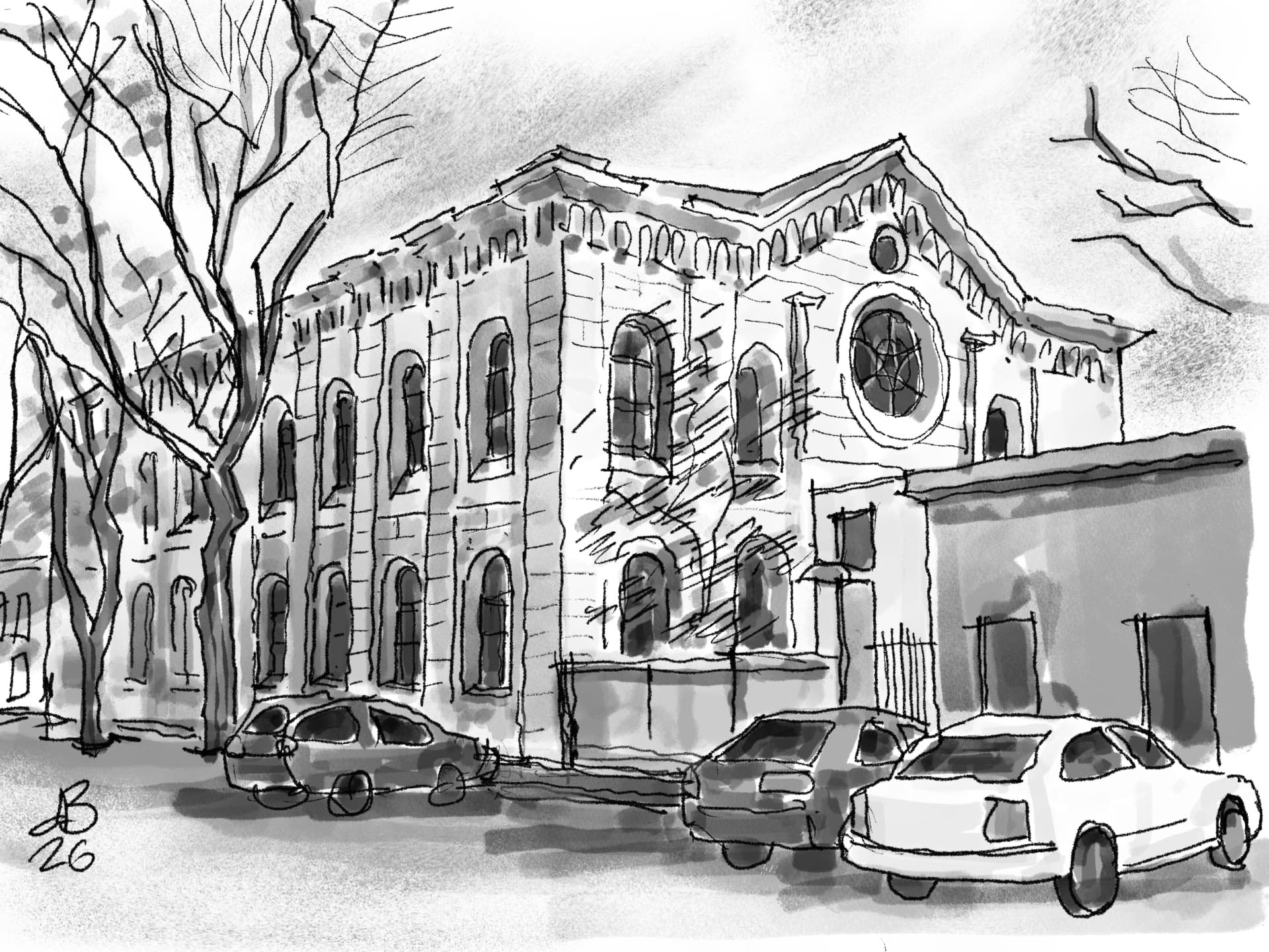
Turning the synagogue into a basketball arena
In 1923, during the Soviet period, the synagogue was closed and the building was converted to secular uses. The building first served as a zoological museum and later as a children's musical theater.
After World War II, it was transferred to the use of the Odessa Pedagogical Institute.
The high prayer hall was divided into two floors by a new ceiling: in the lower part a Basketball hall, and on the floor above it, there were Exercise classesOpenings were sealed, and the galleries formerly used by the Women's Auxiliary and the choir were converted intoכיתות לימוד.
Return to the synagogue
In 1996, after more than seventy years, the building was returned to the Jewish community of Odessa. On Rosh Hashanah of that year, a prayer service was held there again. In the following years, a lengthy restoration process began: the Habima was repaired, a mikveh was built, and in 2008, restoration work on the facade was completed.
Today, the building once again serves as a synagogue and as a center of Jewish community life in the city, and also houses educational and community activity frameworks.
The synagogue in the current war
The war that broke out following the Russian invasion of Ukraine in 2022 also did not spare the synagogue. In January 2026, a nearby explosion damaged the building's windows and doors, and a guard was injured. In March of that year, the synagogue was hit again by the blast wave of an air raid on Odessa; stained glass windows were shattered and glass fragments penetrated the prayer hall.
Thus, the building, more than one hundred and seventy years after its construction, continues to bear on its walls the vicissitudes of Jewish history. The Lord.
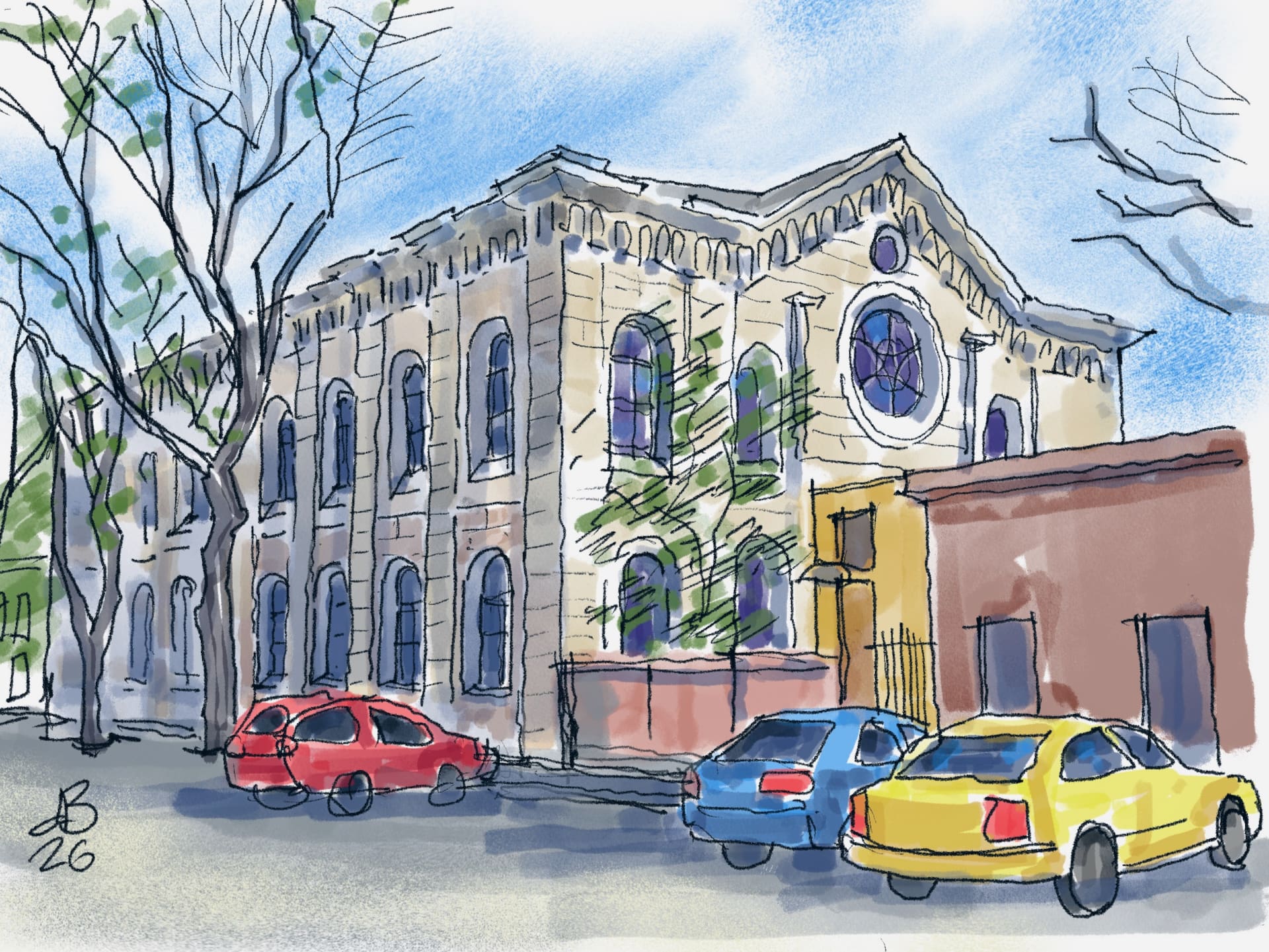
Dear readers,
The articles in this section are based on open information published in sources such as Wikipedia and other websites and may include various historical inaccuracies arising from the aforementioned sources. The illustrations accompanying the article were made based on photographs from various sources published online.
We invite our readers to suggest buildings as subjects for articles and if interesting stories are found behind them we will be happy to review them in this section.