


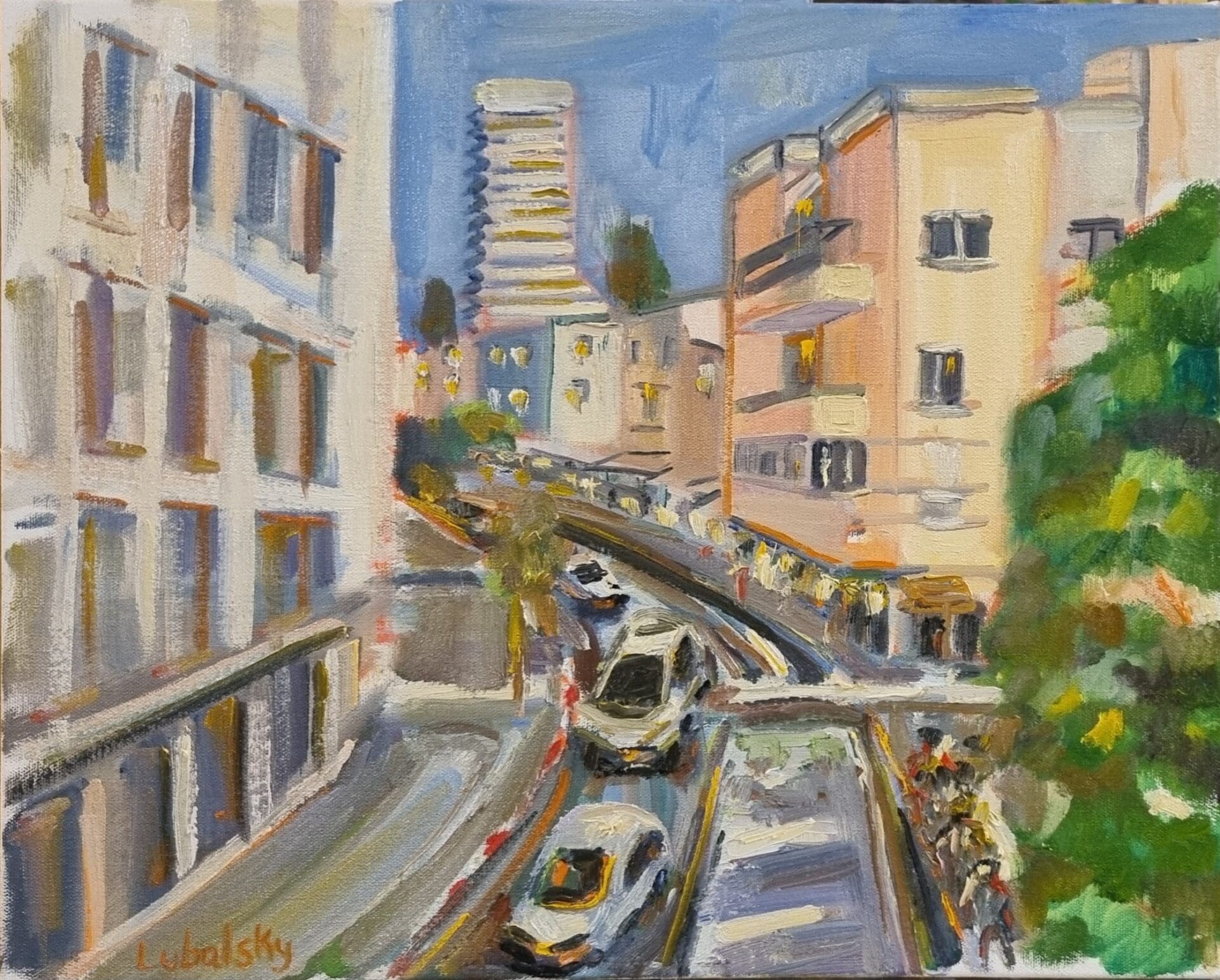
There is something about Haifa that makes me look back at it. Maybe it is the old buildings, the facades that bear the signs of time, the streets that slope down to the sea, or perhaps it is the life that happens between them. As a painter who lives and creates in Haifa, I return to the same places, and each time I discover something different in them.
Bauhaus Week in Haifa is an opportunity for me to take a fresh look at the city's architectural heritage and how buildings left over from different periods continue to be a part of our lives.
Bauhaus – a design concept in the fields of art, design and architecture
Founded in Germany in 1919 as a school of art, design, and architecture, the Bauhaus sought to combine aesthetics, simplicity, and utility. Its ideas influenced the International Style, which was characterized by clean lines, geometric shapes, flat roofs, and balconies, sometimes with rounded edges.
In the 30s, these ideas also reached the Land of Israel, and in Haifa they were integrated into the unique topography between the Carmel and the sea.
In my opinion, the importance of Bauhaus Week is an opportunity to pause and reflect on the periods that shaped Haifa. The remaining buildings are part of the city's roots and foundations, and their preservation is not just about preserving walls and facades, but also the memory of the place and the continuity between the past and the present.
Between architectural drawing and painting
Even during my architectural studies, I was drawn to freehand drawing, to the initial sketch in which the hand searches for the line, shape, and volume, even before the idea is translated into a precise drawing.
Even today, when I paint a building as part of an urban scene, I do not seek to analyze it architecturally or to be precise in its details. I am interested in the relationships between the horizontal and vertical lines, the sense of depth and three-dimensionality, and the way in which the building takes place within the pictorial story. All of this is done with loose lines and brushstrokes, with the understanding that a building is part of the social fabric with a past, present, and future. The buildings serve and stand in their place for decades as a permanent backdrop to the changing and dynamic life around them, and it is only the people and the trees that change their appearance in the urban space.
From bustling Sirkin Street to Ekron Street – between lines and blacksmiths
In one of my paintings, from the perspective of a building at 21 Sirkin Street, Ekron Street stretches out before me, sloping down toward the sea. Opposite are buildings from the International Style period. Some have preserved balconies with rounded edges, while others are characterized by straight, restrained lines.
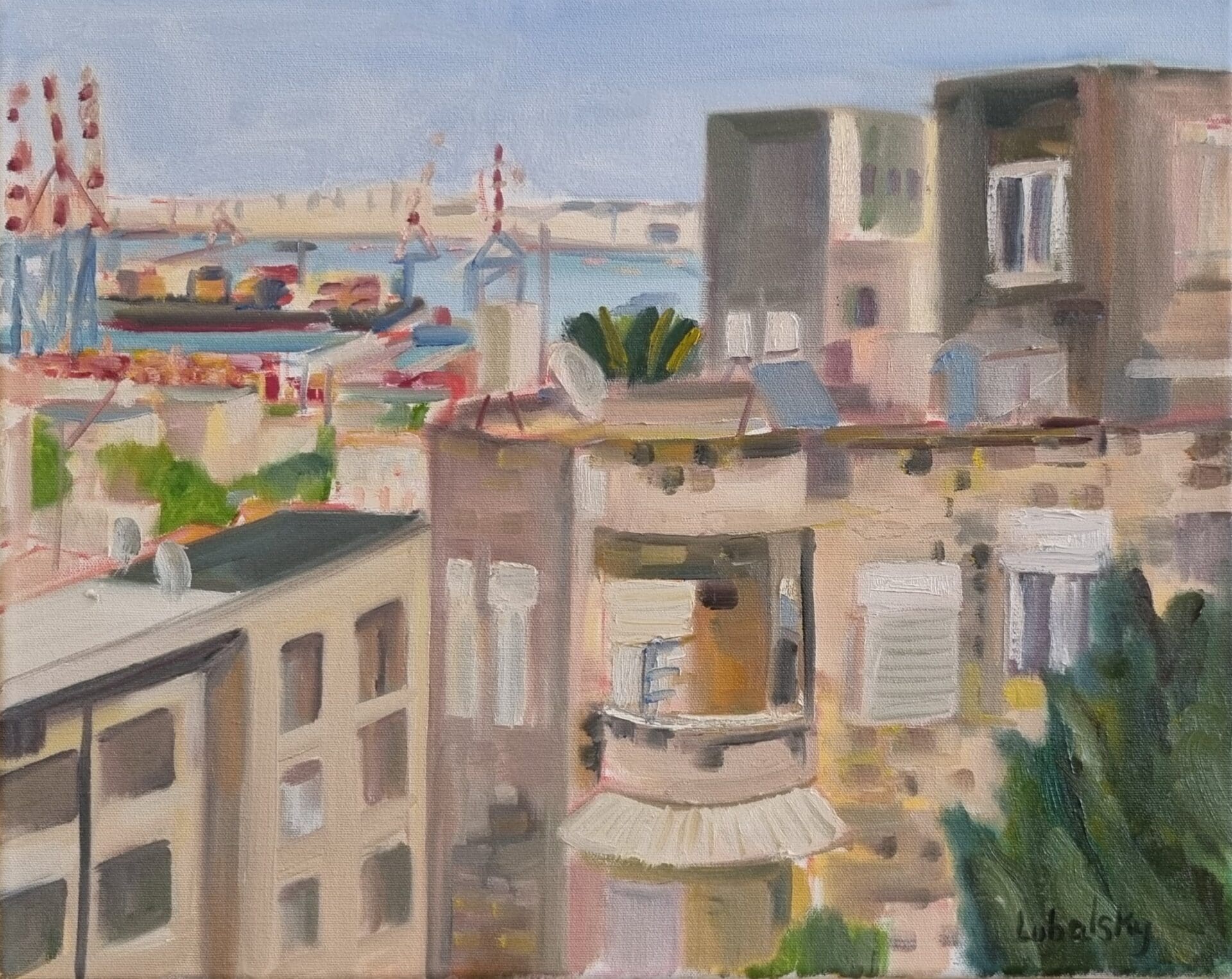
It was the meeting of these shapes that caught my eye. The rounded balconies, horizontal lines, and straight facades create a rhythm of volumes, light, and shadow. The buildings retain their character, but together they create an urban continuity with a common language.
I am drawn to the sense of depth created by the sloping street and the meeting between the building blocks and the space that opens out towards the sea and the view of Haifa Port. This view expresses Haifa for me, a city where the architectural past continues to be present within the present.
Talpiot Market, Hehalutz Street and the Flea Market – Layers of Time
Not far from there stands Talpiot Market, one of the most prominent buildings of the International Style in Haifa. The historic building and the streets around it tell a story of commerce, human encounters and urban life that has changed over the years. Hehalutz Street, which is a main artery in the Hadar neighborhood, is lined with buildings from the International Style period.
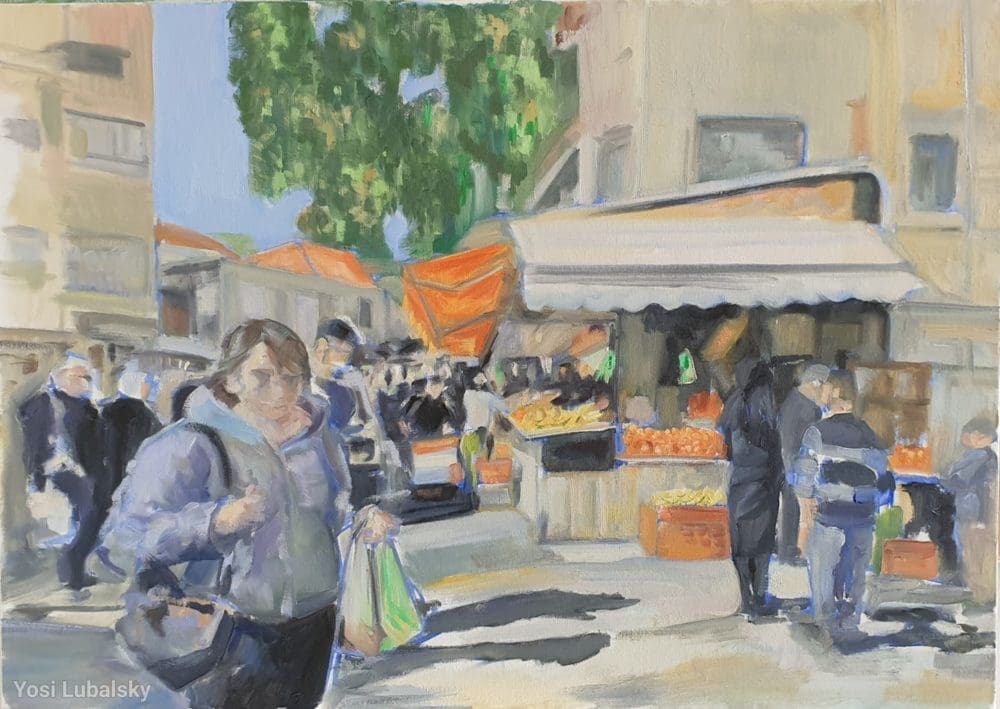
The flea market also draws me to the meeting of eras. The old buildings, shops, and old objects carry with them memories of people and lives that existed there.
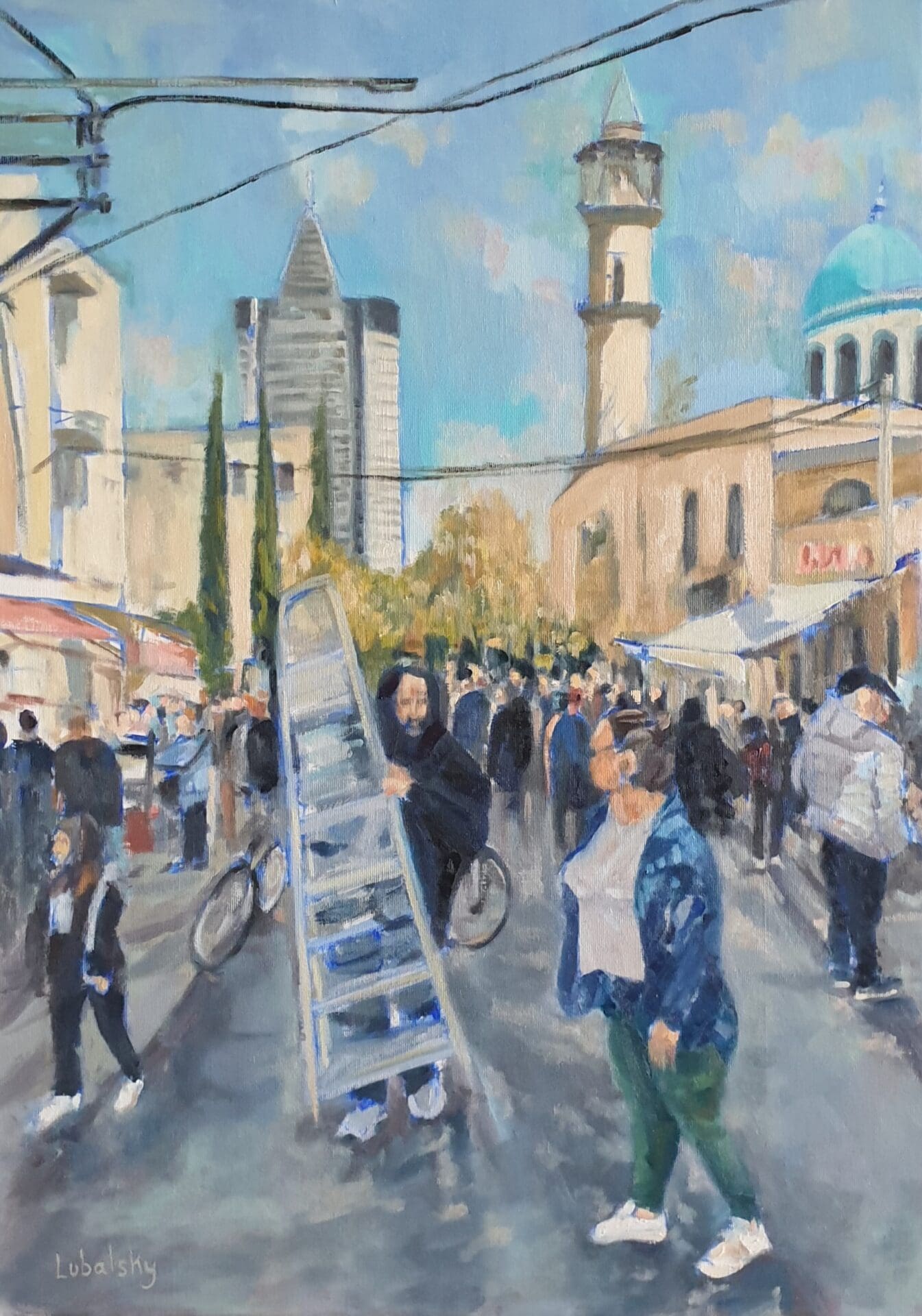
There is something beautiful about the past not disappearing, but continuing to exist within the present. For me, this is also the essence of painting: an attempt to capture a fleeting moment without losing the memory from which it grew.
Haifa's Courtyards – When Residents Bring Life to the Surroundings of the City's Buildings
A clear example of a welcome initiative is the community garden located on the steps leading down to Rabbi Markus Street, which received a facelift at 1-5 Sirkin, under the initiative of the New Acropolis. The drawing of the courtyard, which is related to the renewal of courtyards in Haifa, shows a building in the International Style. One of its most striking features is the vertical window that runs the length of the stairwell, an element that was associated with many buildings from that period.
Over the years, the building's owners painted the windows yellow, adding a new layer to the original appearance. The building was not declared for preservation, and some of the surrounding buildings show signs of age and lack of maintenance.
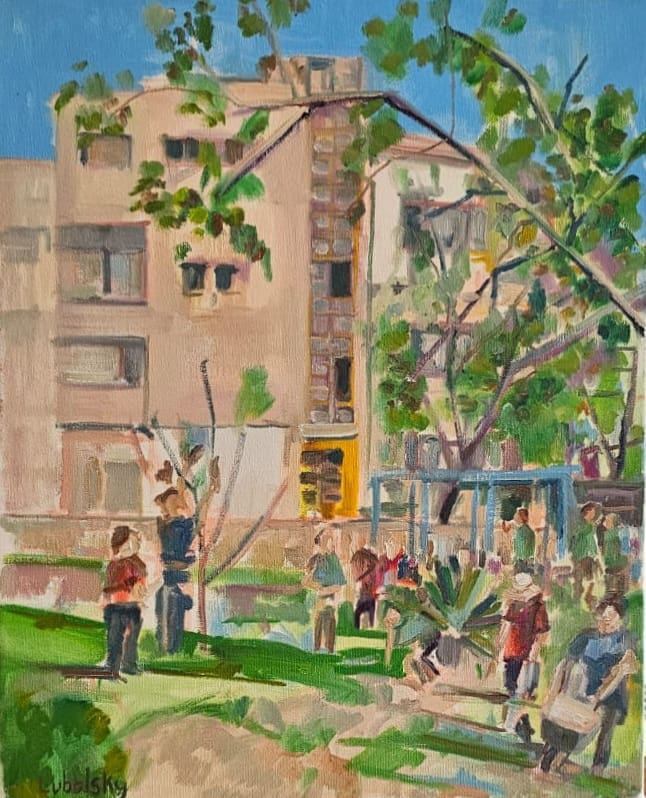
But it is here that a different story emerges. The courtyards around the buildings were cultivated at the initiative of the residents, and the vegetation and gardening gave the environment renewed life, and today a new mix has been added to it, with an Italian food truck set up in the center of the community garden for the benefit of the neighborhood.
As a painter, I am interested in how a well-kept environment strengthens the presence of an old building, even when it itself has not undergone a conservation process. This is a statement about conservation that does not exist solely by virtue of an institutional decision. Sometimes it is precisely the residents who preserve the spirit of the place and give it continuity, and in this way I express the encounter between the static building, which bears the signs of its time, and the life that is being renewed around it.
Bat Galim – When architecture is built near the sea
Bat Galim, a neighborhood that I particularly love and often paint. The old buildings, the balconies, Bat Galim Boulevard, and the streets leading to the sea create a rich visual language for me.
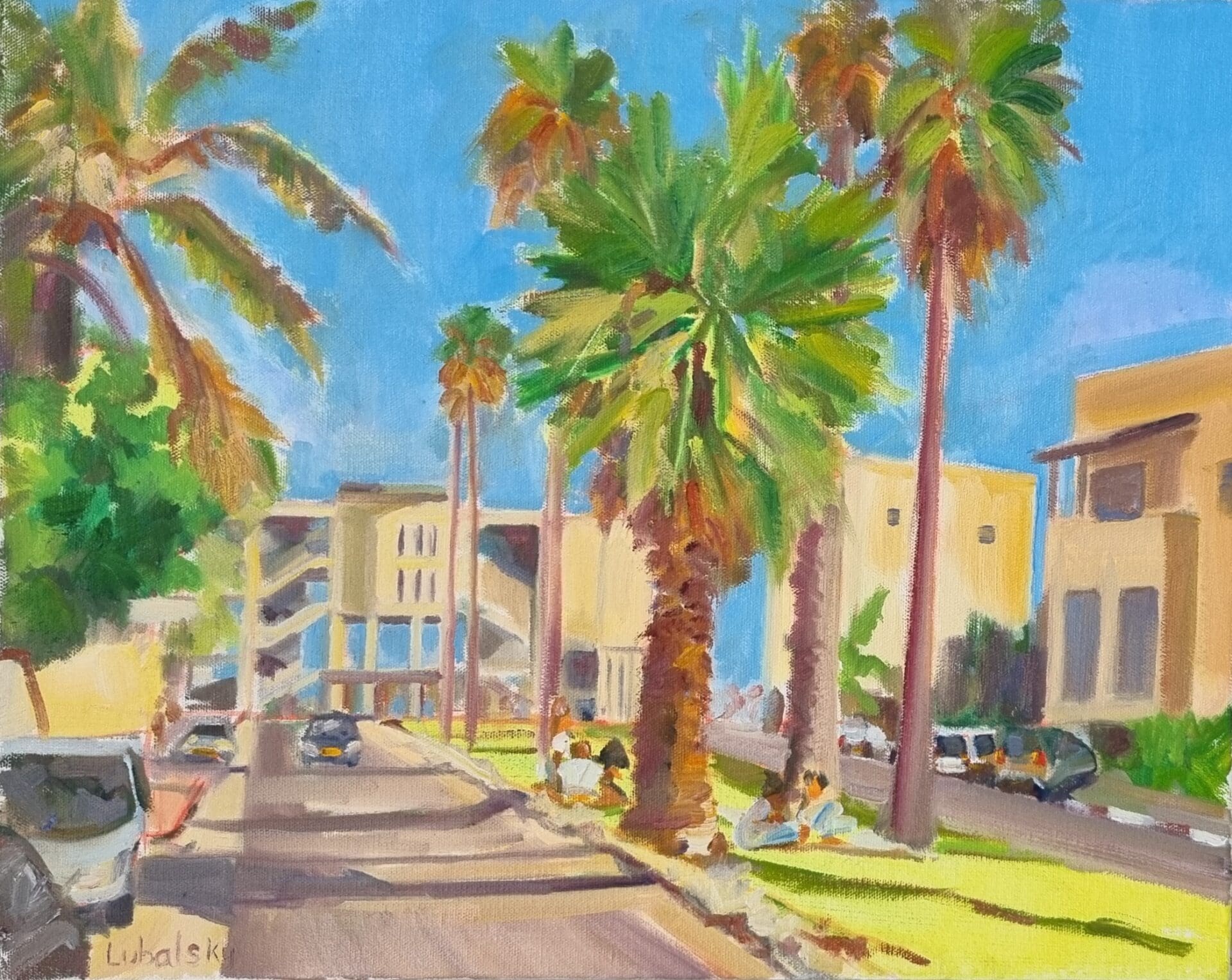
The old casino building, standing in front of the sea, makes me think of the past and the different roles that buildings play in the life of a city. Its architectural presence is strong, but it also carries with it the memory of another era.
I look at the buildings along the boulevard, such as Beit Caspi 7, the compound of the homes of the Rachel and Dr. Yitzhak Samsonov family, at the horizontal lines of the balconies, the windows and the bright surfaces. Life moves around them: people pass by, trees cast shadows, the vegetation changes and the light coming from the sea gives the facades a different look each time.
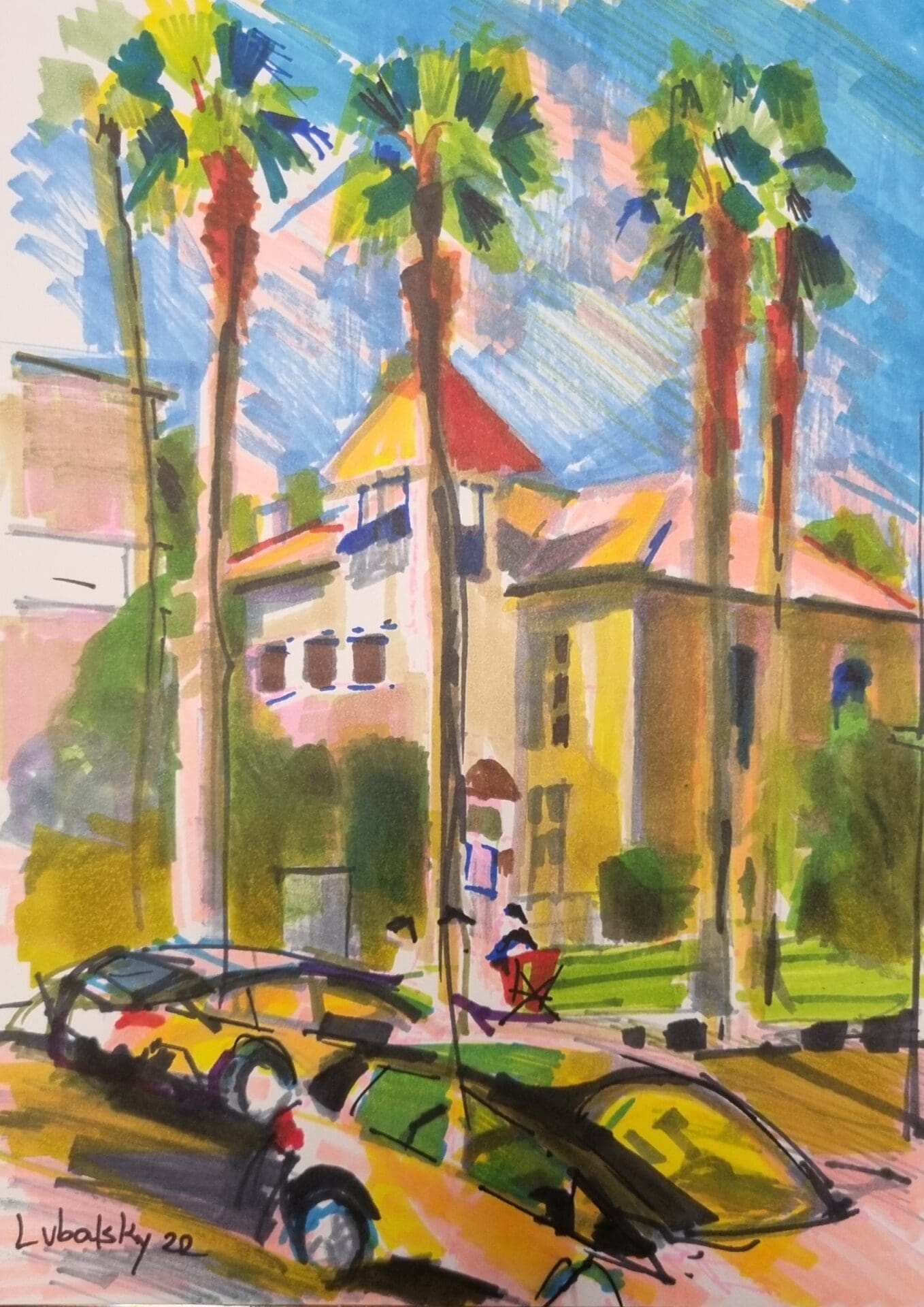
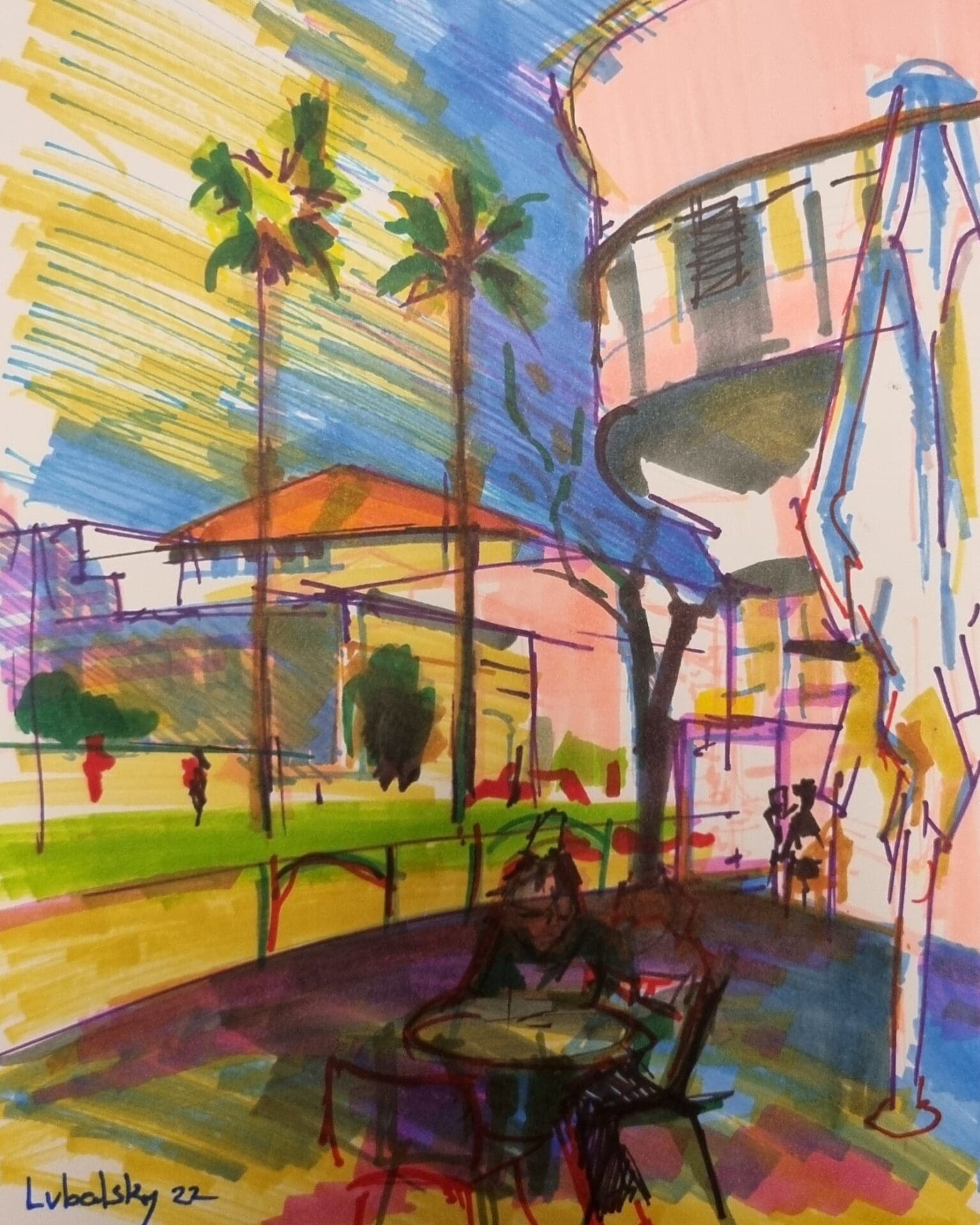
I don't want to copy Bat Galim as it is. I'm trying to convey the feeling it evokes in me, the relationship between the buildings and the open space, and the moment when the permanent and the changing meet.
Haifa – Between Matter and Spirit
When I look at my paintings, from the Talpiot Market and the flea market, through the view from the Sirkin to Ekron Street and the sea, the Haifa courtyards to the casino building and the buildings in Bat Galim, I discover a connecting thread.
Not all of these places were built at the same time or belong to the same architectural style, but they all carry part of Haifa's story.
As a painter from Palestine, I find a connection between the city paintings and the landscapes of the Jezreel Valley that I paint. In both, I seek the sense of place, light, volume, and personal memory.
Bauhaus Week allows us to shine a light on Haifa's architectural heritage and remind you that observing the different periods and preserving the buildings is part of understanding the city's roots and identity.
The buildings may remain in place, but life alongside them continues to change. For me, it is precisely this encounter, between architecture, nature, and man, that makes Haifa a city I keep painting.
Wow, stunning paintings
Question that you drew Sirkin's tour 21
So you were
I had a penthouse apartment at 9 Blonz, corner of Sirkin, and it looked as if you were standing on the balcony of the house that was mine.