

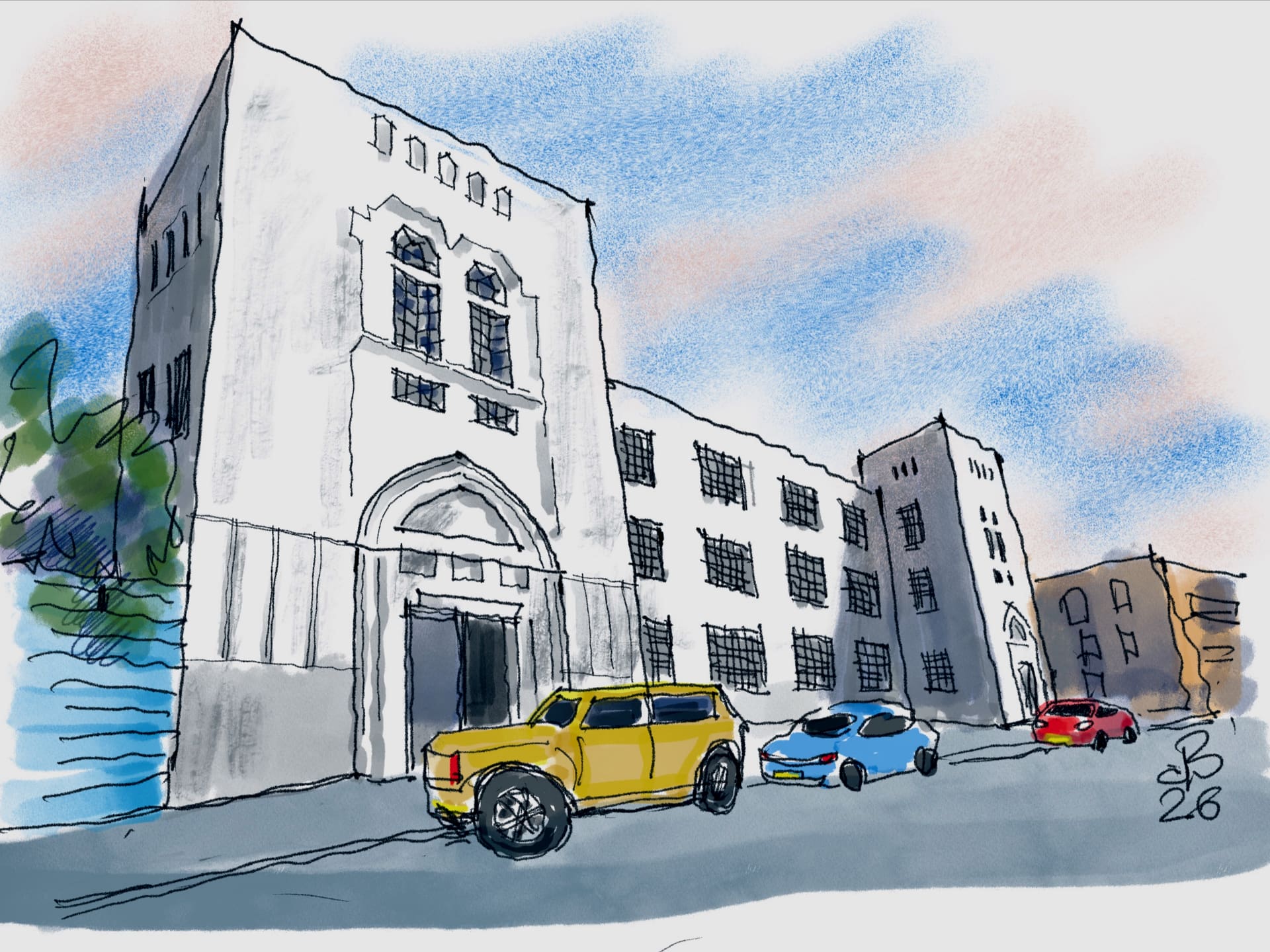
At 24 Bar Yehuda Street stands an industrial building with an unusual appearance. It is one of the two cigarette factory buildings established in Haifa by an Arab tobacco company. Later, the building became part of Dubek's operations in the city, hence its nickname "Dubek Building."
The enterprise of Kerman, Dick and Salty
The building was built in the early 20s for the company Karaman, Dick & Salti Ltd, founded by Taher Kerman, Hassan Dick and Farah Salti. The company operated in Haifa and manufactured cigarettes.
Taher Kerman, a Muslim Arab familiar to readers from previous articles, was a prominent entrepreneur and public figure in the city. He was elected to the city council in 1931 and in 1940 was appointed deputy mayor. At this point, we know of Hassan Dik and Farah Salti mainly because they were partners in the enterprise.
A British government report from 1930 described the Haifa tobacco factory as employing more than 500 workers, the vast majority of whom were Arabs, and as a manufacturer of cigarettes for the local market.
An advertisement by the company, apparently published during the Mandate period in the yearbook The Anglo-Palestine Year Book(the exact year of publication is unknown), presented it as “the first and largest tobacco manufacturer in Palestine.” The ad mentioned several of the company’s cigarette brands, including Friends, Victory, Jeune Turque, Anchor Special, Anchor, and Ottoman.
The cigarette factory
The factory's operations were conducted in two buildings: in number 24, the tobacco leaves were stored and dried, and in the adjacent building, number 20, the cigarettes were manufactured.
In the historical photo of the complex, the two buildings appear to be part of one factory. During its operation, there was probably an open passage between the warehouse at number 24 and the production hall at number 20, which allowed the tobacco to be moved between them. Today, another building stands between the two. It may have been built at a later stage, but we have found no documentation to confirm this.
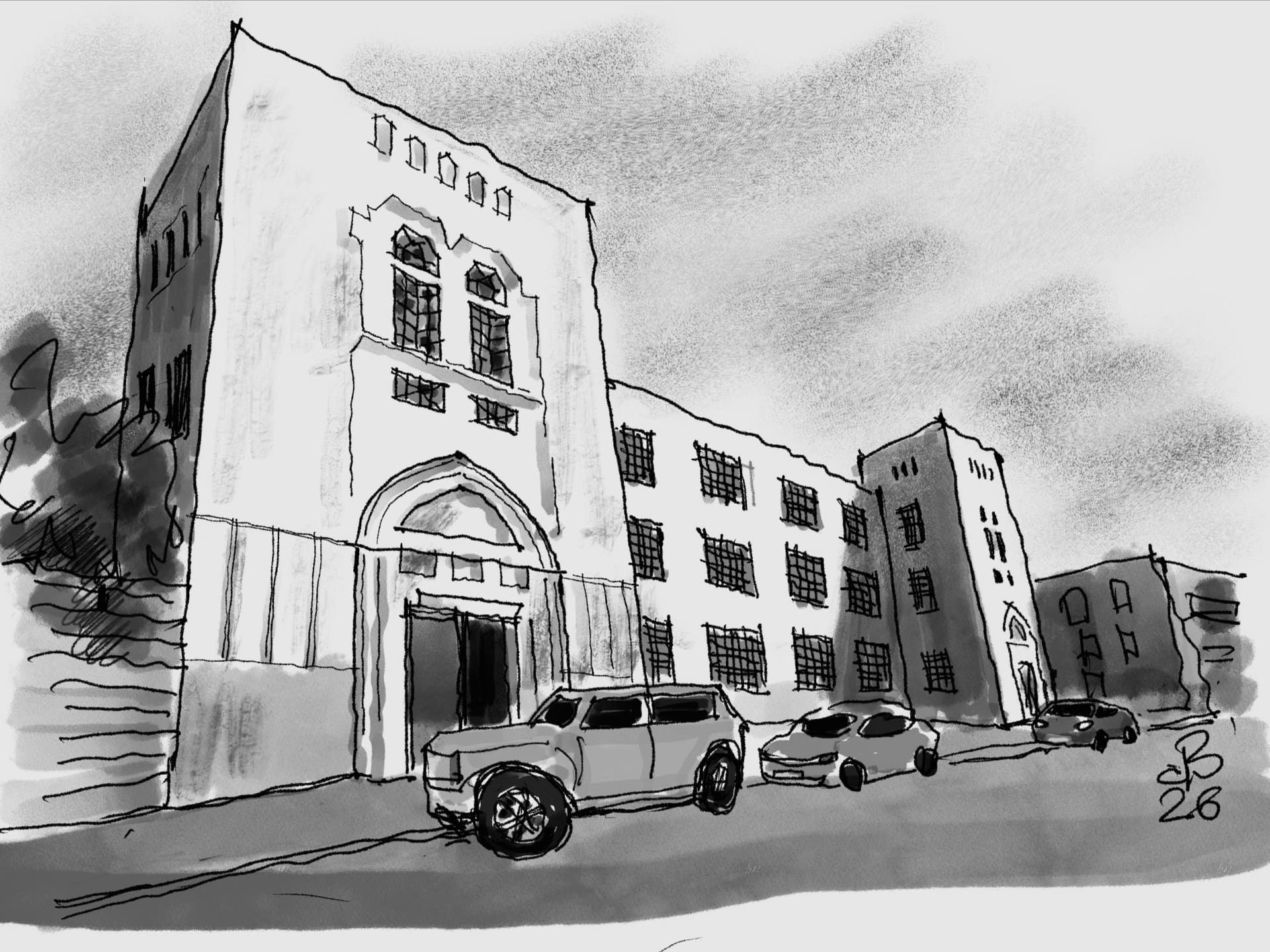
Tobacco warehouse building
The tobacco warehouse building, which currently stands at 24 Bar Yehuda Street, on what was then Nazareth Street, is characterized by a wide facade, consisting of a horizontal central wing flanked by elevated tower-like wings. The central wing has three rows of square windows, equal to the number of floors. The elevated wings have large entrances decorated with pointed arches, and next to them are tall windows decorated with polygonal arches. In the stucco cladding of the towers, relief frames were designed around the window openings and entrances, which follow their contours and emphasize their shapes. The square windows in the central wing emphasize the industrial character of the building, while the designed entrances give it a representative appearance.
As mentioned, the structure was used to store and dry tobacco leaves. The interior space is open and supported by columns, suitable for hanging the leaves and drying them with free air flow.
It is interesting that it is the warehouse building, and not the building where the cigarettes were manufactured, that has the more impressive architectural appearance.
Who was the architect?
The identity of the architect who designed the tobacco warehouse is unknown. Architect Walid Karkabi, former director of the conservation department at the Haifa municipality, has suggested that the building at number 20, which was used for cigarette production, was designed by architect Yosef Barsky.
We do not have a source that allows us to attribute the design of Building 24 to any architect, and therefore the identity of its designer remains a mystery. We would be happy to receive information from our readers on this issue.
Dubek activity in the complex
Dubek was founded in Ramat Gan in 1935 and was one of the most important cigarette companies in Israel. After the establishment of the state, the original factory was confiscated and nationalized and the activity was divided between the tobacco companies operating in the country at the time, including Dubek. Later, both buildings were used by the company: cigarettes were manufactured in number 20, and tobacco was stored and dried in number 24. According to an article published on Haifa Radio, Dubek's activity in the complex ended in the 70s.
We found no documentation identifying which Dubek brands were specifically manufactured in the Haifa factory.
The complex today — renovation and preservation
After the cessation of activity, the buildings stood abandoned for years. In recent years, initiatives have been taken to restore the complex and adapt the buildings for new uses. The tobacco warehouse building was included in the municipal preservation list.
The tobacco warehouse at 24 Bar Yehuda Road is a remnant of an industrial plant that combined the storage and drying of tobacco with the production of cigarettes in the adjacent building. Its story connects the initiative of Kerman, Dick and Salty with the complex's later incarnation as part of Dubek's operations in Haifa.
Dear readers,
The articles in this section are based on open information published in sources such as Wikipedia and other websites and may include various historical inaccuracies arising from the aforementioned sources.
We invite our readers to suggest buildings as subjects for articles and if interesting stories are found behind them we will be happy to review them in this section.
The building is very similar to the one that was the Dubek building in Bnei Brak,