

In honor of the upcoming Rosh Hashanah, we will take a look at one of Europe's most magnificent synagogues - the Great Synagogue of Florence.
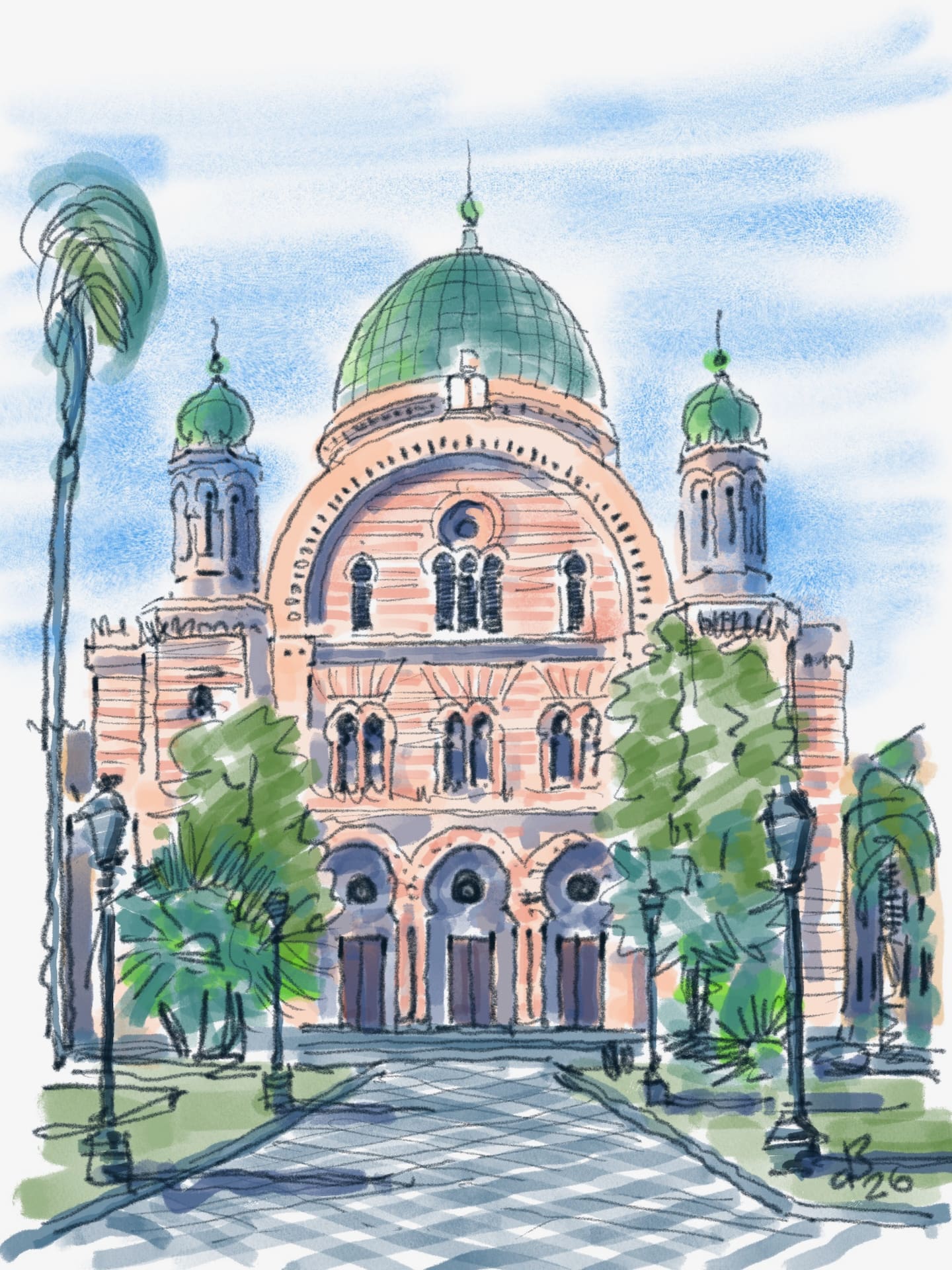
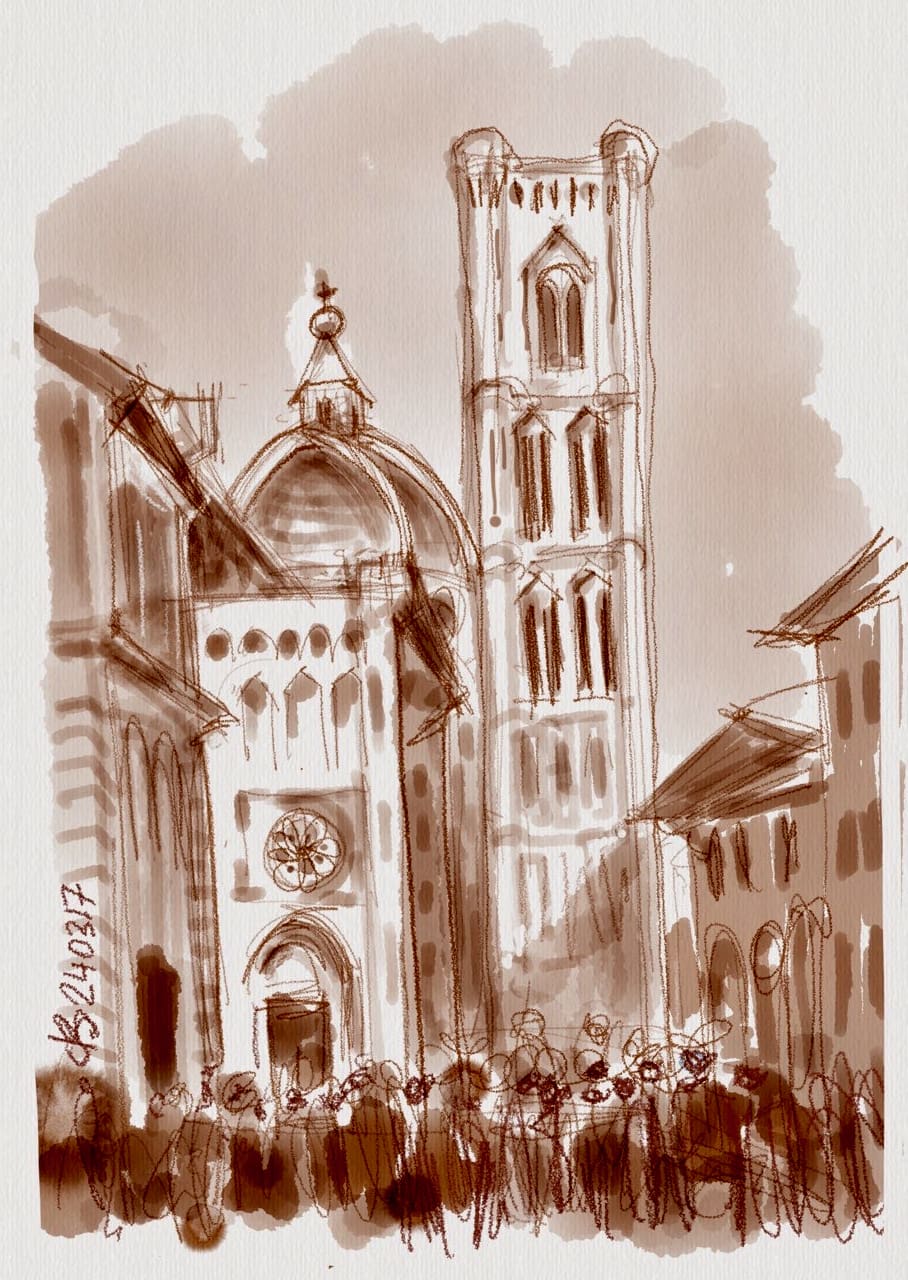
Above the red roofs of Florence stands a large green dome, belonging to the city's great synagogue – Tempio Maggiore Israelitico. The synagogue, inaugurated in 1882, is one of the most impressive in Europe and to this day serves as the beating heart of the Jewish community in Florence.
Brief history of the community
A Jewish presence in Florence is documented as early as the Middle Ages. In 1571, a ghetto was established in the city, where Jews were forced to live for centuries.
During the 19th century, the status of Italian Jews gradually changed. In 1848, the Jews of Tuscany were granted equal civil rights, part of the process of Emancipation, meaning the abolition of restrictions imposed on Jews due to their religion and the granting of equal civil rights.
The change in the status of the Jews was also reflected in architecture: instead of houses of prayer hidden within the ghettos, large synagogues began to be built, visible in the urban space.
As early as 1847, the community in Florence began discussing the establishment of a new synagogue, but the lack of financial resources postponed the realization of the idea for years.
David Levy – The Man and the Vision
The turning point came in 1868, when David Levy David Levi, one of the leaders of the Jewish community in Florence, left a significant portion of his property in his will for the construction of a new synagogue. His request was to build a “monumental temple worthy of the city of Florence.”
This request expressed more than a desire to build a magnificent house of prayer. It expressed the new status of the Jewish community: a community seeking to be a visible and prominent part of the city, after centuries in which its life was largely conducted behind the walls of the ghetto.
the architects
In 1870, the planning was entrusted to three architects: Marco Treves (Marco Treves), Mariano Palcini (Mariano Falcini) andVincenzo Miceli (Vincenzo Micheli).
Of the three, Treves was the only Jew, and he had already been involved in the community's attempts to formulate a plan for the new synagogue. The collaboration between the three gave rise to an extraordinary structure that combines various sources of inspiration – Moorish, Romanesque, and Byzantine.
on the building
The synagogue was inaugurated on October 24, 1882. The building is one of the most prominent examples in Europe ofNeo-Moorish style, Which drew inspiration from the Muslim architecture that developed in Spain during the period of Muslim rule, which ended with the conquest of Granada in 1492 by the Catholic Monarchs Ferdinand and Isabella (the year of the expulsion of the Jews of Spain).
The impressive facade is clad in white travertine and pinkish limestone. Above it rises the large central dome, and two towers stand on either side of it. The dome and towers are clad in copper, which over the years has acquired its characteristic green hue and has become the synagogue's hallmark on the Florence skyline.
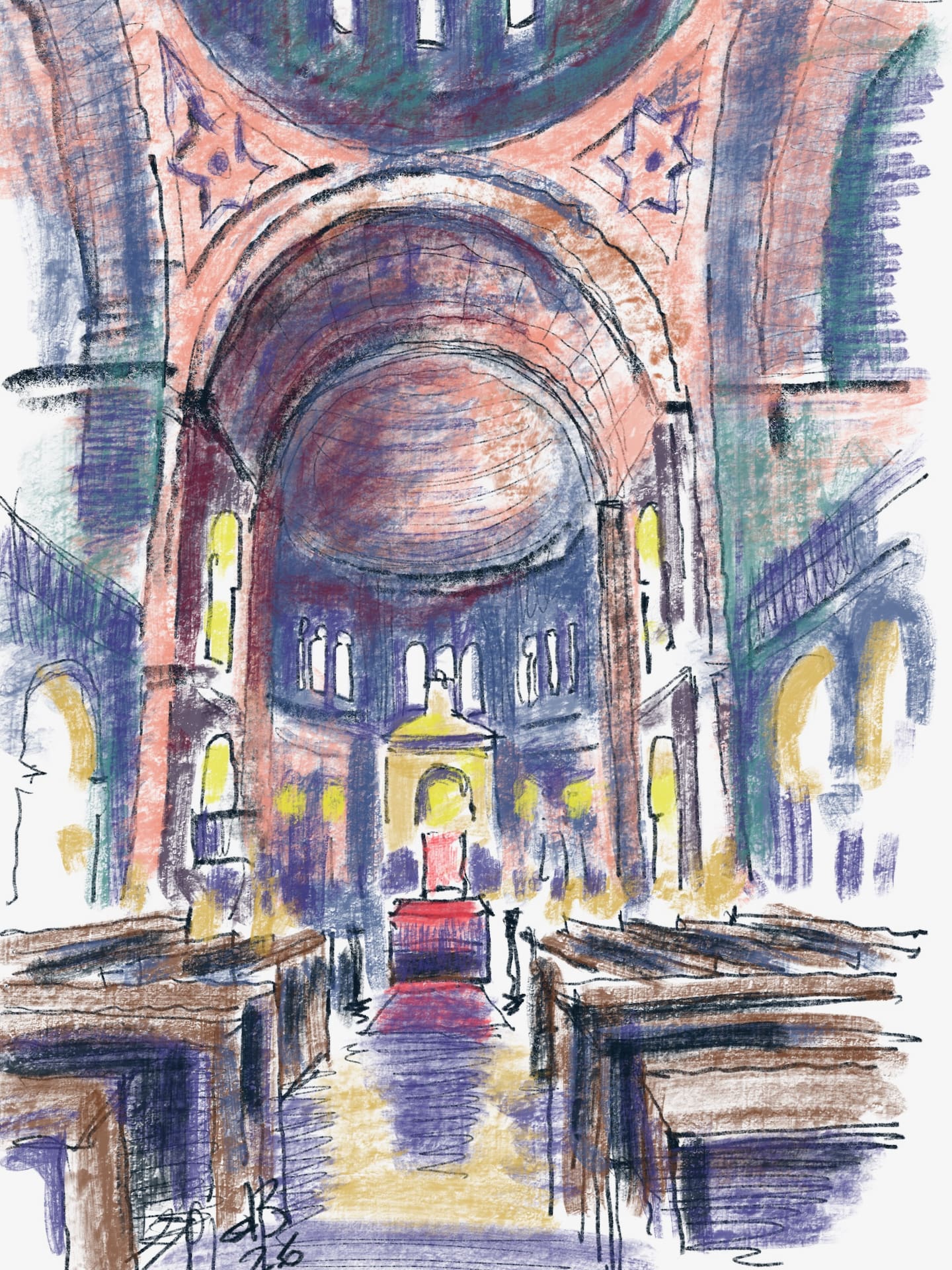
The interior is particularly rich: high-quality woodwork and carvings, colorful and gilded decorations, and geometric and floral arabesque patterns, also inspired by the Muslim art of Spain. The decorations lead the gaze upward to the large dome that covers the center of the prayer hall.
Jews and Italians facing the Nazi occupation
After Italy's surrender to the Allies, led by Britain and the United States, in September 1943, and the occupation of the center and north of the country by Germany, the Jews of Florence were in danger of arrest and deportation.
The city mayor, The rabbi Nathan Cassuto (Nathan Cassuto), son of the renowned Bible scholar Umberto Cassotto (Umberto Cassuto), whose Bible commentary is familiar to generations of Israeli scholars, was one of the central figures in organizing the rescue operations in the city. Working alongside him were the Archbishop of Florence, The Cardinal Elia Della Costa (Elia Dalla Costa), who was later recognized by Yad Vashem as "Righteous Among the Nations," and other church members and Italian citizens.
Among the participants in the rescue network was also the cycling champion. Gino Bartelli (Gino Bartali), winner of the Tour de France, who, under the guise of cycling training, provided forged documents and certificates. He, like Cardinal Della Costa, was later recognized by Yad Vashem as Righteous Among the Nations.
During the German retreat from Florence in August 1944, explosive devices were planted in the synagogue. The Italian resistance members managed to neutralize a significant number of them, and additional devices that did not explode were disposed of after the city was liberated.
The Florentine community today
Almost one hundred and fifty years after its inauguration, the Synagogue of Florence continues to serve as an active center of Jewish life, not just a historical site. The building and grounds also house the Jewish Museum, which displays sacred objects, silverware, textiles, and documents that tell the story of the community and its relationship with the city.
The synagogue is used for prayer, cultural and educational activities, and community events. The official website of the Jewish community of Florence defines it to this day as “the beating heart of the Jewish community.”
Thus, the green dome, which David Levi requested to be placed in the Florence skyline more than a hundred and fifty years ago, continues to symbolize not only the community's past, but also the continuity of Jewish life in the city.
Thanks
My thanks to architect David Palterer, a teacher at the Faculty of Architecture of the University of Florence and vice president of the Department of Architecture of the city's Accademia delle Arti del Disegno, and to Ms. Monica Hagen from the Jewish Museum of Florence, for their assistance in obtaining the photographic material for the article.
Dear readers,
The articles in this section are based on open information published in sources such as Wikipedia and other websites and may include various historical inaccuracies arising from the aforementioned sources.
We invite our readers to suggest buildings as subjects for articles and if interesting stories are found behind them we will be happy to review them in this section.
To all readers of the section, a Happy New Year is extended, with the prayer that "the year and its curses will end, and the year will begin with its blessings"!
Happy New Year and good health.
I enjoyed reading the articles and learning about the history of the buildings.
Happy holiday
Thank you very much for your kind words. Happy and healthy New Year, I hope you continue to build in the new year.
My friend, the scholar Dr. David Bar On, wrote and described it very beautifully, "And I will be a little sanctuary for them in the lands where they came." Happy New Year to you, my friend David.
Thank you very much, dear Dobi, Happy New Year, health and happiness!