


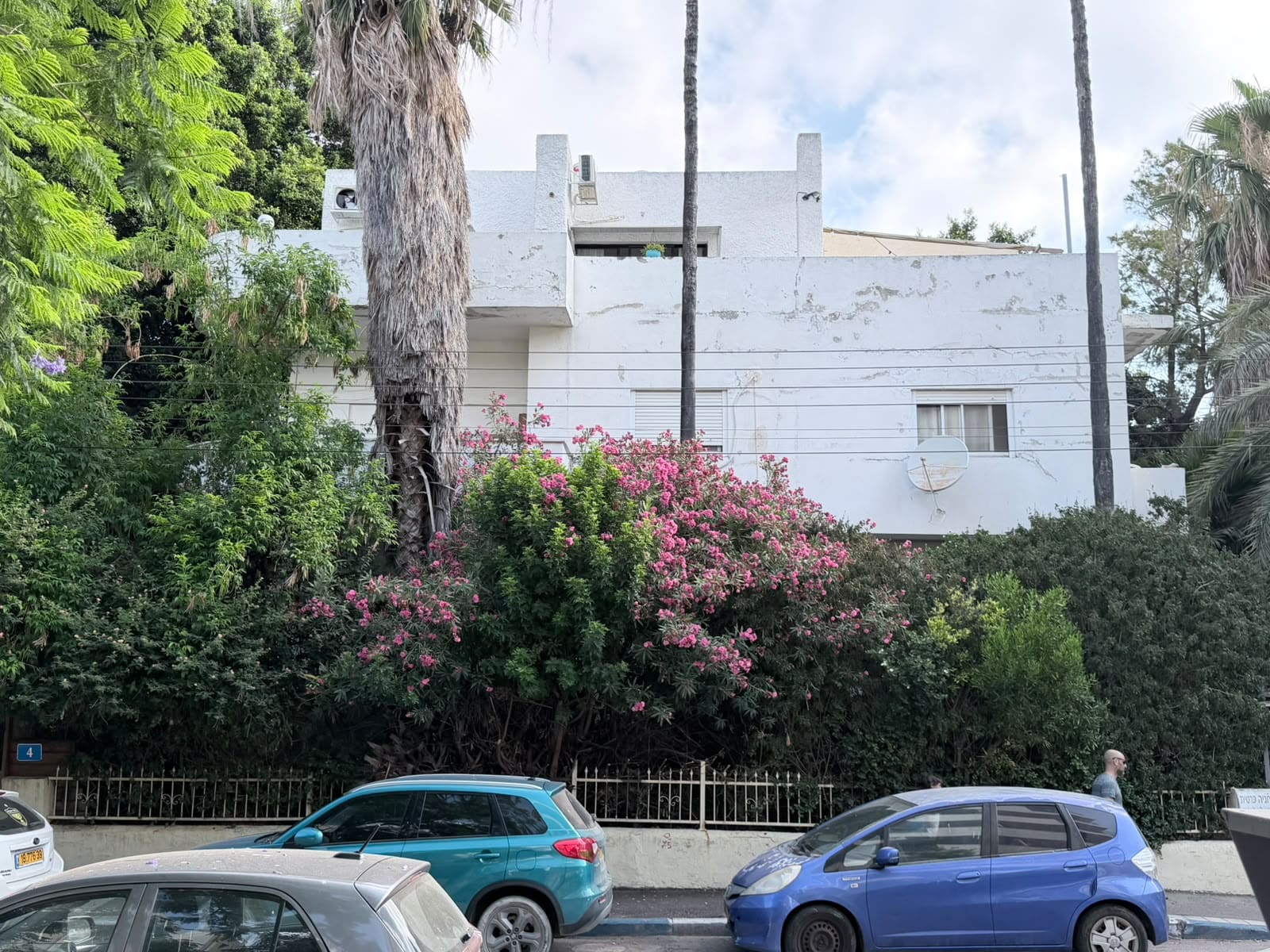
(haipo) The Haifa Municipal Preservation Committee convened yesterday (Sunday, June 28, 2026) for a significant discussion of a number of buildings that are at the heart of public and planning controversy. Two of the main buildings that came up for discussion were the building at 4 Caspi Street in the Bat Galim neighborhood and the hotel building at 90 Shoshanat HaCarmel Street in Western Carmel.
After a lengthy discussion, the committee decided to reject the developer's request to demolish the building on Caspi Street, as well as to reject the request to remove the hotel building from the municipal preservation list. The decisions join a series of rulings in recent years that have heightened the tension between accelerated urban development and the desire to preserve Haifa's architectural heritage assets.
Committee decisions: Rejection of requests to demolish and preserve the buildings

The Municipal Preservation Committee, headed by Deputy Mayor Avihu Hahn, examined the request of the developer at 4 Caspi Street to demolish the building and erect a new building as part of an urban renewal project. At the end of the meeting, Hahn wrote that an important discussion on the building for preservation at 4 Caspi Street had concluded and he was pleased to announce that the preservation committee he chaired had made a unanimous decision to preserve the historic building from 1937 in its entirety. He noted that in his view this was an important milestone in the development of the complex in the Bat Galim neighborhood. He thanked everyone who cares about Haifa's architecture and history and promised that the committee he chaired would continue to monitor it.
The developer claimed that in order to establish a shared underground parking lot for all residents in the complex, the building needed to be demolished. The committee rejected the request and determined that the building would remain standing. The request to remove the hotel building at 90 Shoshanat HaCarmel Street from the conservation list was also rejected, despite the developer's claims that the building has no significant architectural value. After the meeting, she wrote Deputy Mayor and committee member, Sarit Golan Steinberg, That the committee will continue to lead a balanced line between urban development, preventing infringement of property rights, and preserving historical textures.
Preservation of buildings in Haifa: An ongoing public controversy
The issue of preservation in Haifa has been deeply controversial for years. On one side are preservationists, who claim that a city that does not preserve its historical assets loses its identity and uniqueness. They claim that architectural structures from the past are part of the city's cultural landscape and tell its historical story. An example of this is the long struggle over the Sea Road Hotel, in which preservationists claimed that it was an iconic building of architectural and historical importance, and that its demolition would severely damage the city's appearance.
On the other hand, there are residents and developers who believe that old, neglected buildings do not contribute to the urban environment, and that new, modern construction will give the city a fresh look and improve the quality of life. They claim that some of the buildings designated for preservation have no real value, but only bear the name of a famous architect or a partial history that does not justify the planning restrictions.
The impact of preservation on urban renewal and entrepreneurs
One of the main arguments against building preservation is that it delays urban renewal projects. Once a building is on the preservation list, the possibility of implementing TAMA 38 or evacuation-construction is significantly impaired. Full or partial preservation of a building requires consideration of architectural elements, which extends the duration of the project and makes it more expensive. The high costs may be passed on to the buyers of the new apartments, because the developer is obligated to the owners of the existing apartments and cannot raise the price indefinitely.
Developers claim that in many cases, preserving old buildings hinders the ability to produce effective planning solutions, such as underground parking garages or uniting plots. On the other hand, preservation professionals claim that creative solutions can be found that combine preservation with new construction, and that the values of preservation are not in complete contradiction with development.
Is every old building worthy of preservation?

A central question that arises again and again is whether every old building is worthy of preservation. There are buildings for which the struggle to preserve them has lasted for years, but when you examine them in depth, it is difficult to understand what architectural or historical values justify this. Sometimes these are neglected buildings that have not been inhabited for many years, and the public has difficulty seeing their importance. On the other hand, there are buildings whose preservation adds significant aesthetic and cultural value, allowing residents to enjoy the architecture of the previous century. Among the buildings over which struggles have been waged for years in Haifa are the house at 8 Noga Street, the Mount Carmel Hotel on the Sea Road in Western Carmel, and of course houses on the Margolin Wharf in Bat Galim, which are located a few meters from the sea.
Partial preservation: a solution or a problematic compromise?
In many cases, developers propose partial preservation of buildings, preserving a facade or certain architectural elements, while building many floors above them. This solution allows compliance with conservation requirements, but sometimes the end result does not contribute to the urban environment. The building to be preserved becomes a small part within a large modern building, and the original architectural context is lost. Professionals argue that partial preservation should be carried out with great care, and only when it preserves the significant architectural values of the building.
The tension between residents' rights and conservation values
Preservation of buildings creates tension between the rights of residents and the values of preservation. It is impossible to ignore a resident who lives in an old apartment without a permit and wants to improve his quality of life through urban renewal. On the other hand, it is impossible to give up Haifa's history and the buildings built by leading architects more than a century ago. The Preservation Committee is required to balance the various needs and ensure that the city develops without losing its cultural assets.
Similar cases in other cities: struggles over heritage versus development
The Haifa debate is not unique. Similar struggles are taking place in many cities in Israel over the preservation of historic buildings. In Tel Aviv, for example, there was a long struggle over the preservation of buildings on Rothschild Boulevard and Neve Tzedek, when developers sought to erect towers instead of buildings for preservation. In Jerusalem, there was a public struggle over the preservation of buildings in the Rehavia neighborhood, and in Holon, a controversy arose over the preservation of old industrial buildings. In all cases, the question arose of how to balance the need to develop the city with the desire to preserve its historic assets. These struggles show that preservation is not just an architectural matter, but a broad social, cultural, and economic issue.
Public struggles: residents versus developers and authorities
In many cases, the struggles over the preservation of buildings become broad public struggles. Residents organize in groups, submit objections to planning committees, go to the courts, and exert public pressure on the authorities. On the other hand, developers claim that these objections hinder development and harm the ability to produce modern housing solutions. Local authorities find themselves caught between the two sides, forced to make complex decisions, and sometimes facing public criticism from all sides. The public struggles show that the preservation of buildings is a charged issue, in which every decision affects the fabric of urban life and the future of development.
Caspi 4: A 1937 building at the center of controversy
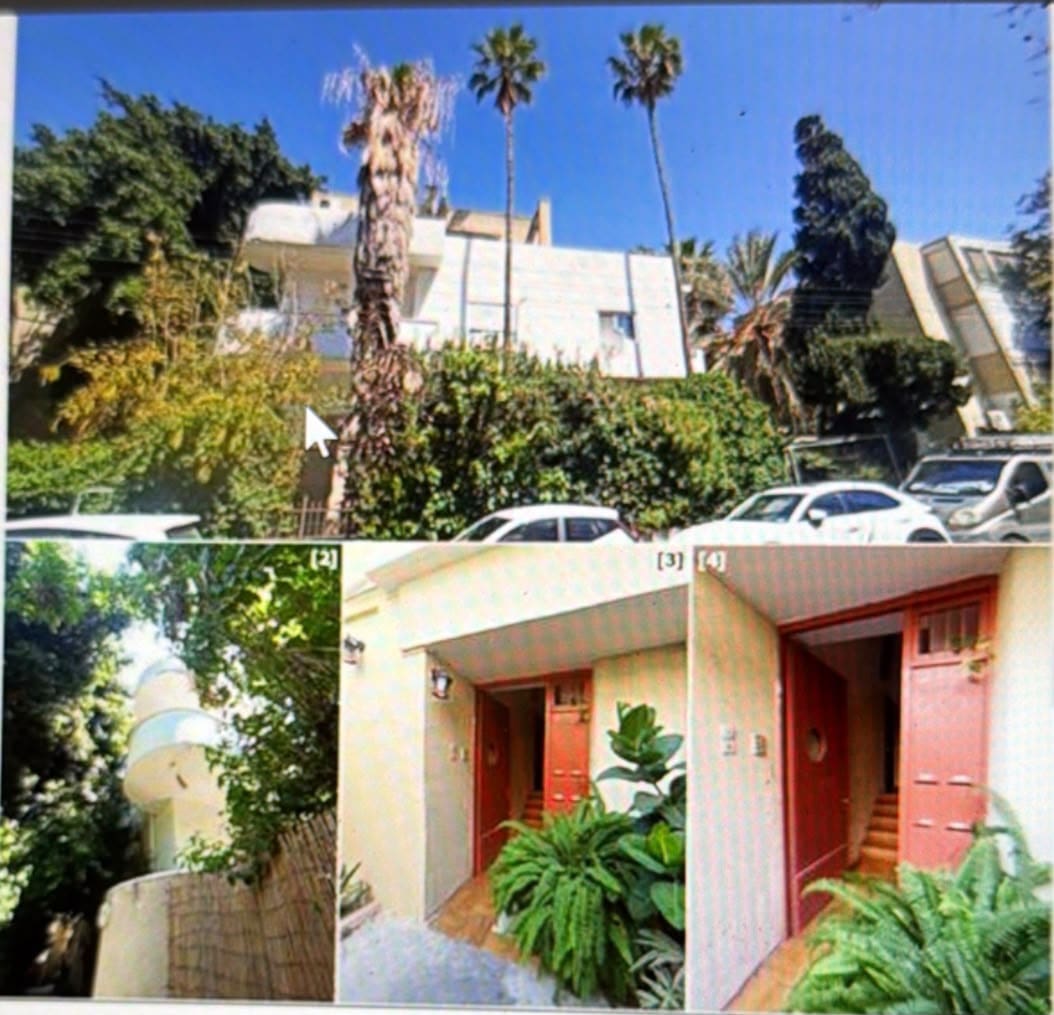
The building at 4 Caspi Street in Bat Galim, built in 1937, was at the center of the committee’s discussion. The developer wanted to demolish the building and erect a new six-story building with 20 residential units and a shared underground parking garage. The conservation department recommended preserving part of the building, especially the main facade and the rounded balconies that characterize the international style. Local activists claimed that demolishing the building would be “a cry for generations,” because it is part of the early construction layer of Bat Galim and is included in the conservation area. The committee determined that the building will not be demolished.
Shoshanat Carmel 90: A controversial building
The building at 90 Shoshanat HaCarmel Street, built in 1947, has been on the Grade B conservation list since 2017. The developer requested its removal from the list, claiming that its architectural values are low. The documentation file indicates that the building was designed as a boarding house called “Pension Arad,” but it has no stylistic uniformity or significant historical importance.
Architect Amir Freundlich He stated in his opinion that there is no justification for preserving the building. On the other hand, previous decisions of the committee have determined that it has historical architectural values.
The committee rejected the request to remove it from the conservation list.
There are few buildings of historical value worthy of preservation.
There are few iconic buildings that deserve preservation. It is unacceptable to leave neglected, shapeless, and falling-down buildings in the name of preservation.
I have pity on this city as a Haifa native who comes from Tel Raviv to visit from time to time. I see how the beautiful city freezes over. Its streets are empty and desolate. What a shame.
Conservation ruins the fun for greedy entrepreneurs
A big shout out and congratulations to the Haifa City Conservation Committee. Preserving heritage is a cultural and public asset. It is true that it needs to be professionally and intelligently integrated into modern development and put into proper uses. And there are many creative and good ways to do this. See our neighbor Tel Aviv…
It's refreshing to finally read a balanced article on the subject that presents the true complexity.
It's a shame there aren't more newspapers/sites at this level...
and for that matter,
This municipality is afraid of its own shadow, of development, and a few clownish tweeters.
Not every old building needs to be preserved. And here we are talking about buildings without any value.
The city will continue to lag behind at this rate.
So what's the conclusion? Build disgusting. Yes, yes, take an average architect and build a building that has no uniqueness or value. That way, future property owners can easily demolish it and rebuild.
The Haifa Municipality is preserving ruins. If you want to preserve them, give them proper building rights. There is a very large collection of abandoned manors in Haifa. If the city wants to preserve them, it should restore the buildings to their full value and preserve them.
Entrepreneurs only see money!!!
The cheapest thing today is to demolish and build a new one.
They don't care about preserving history or the well-being of the residents!!!
Preservation should include granting a license to renovate the structure, not neglecting it.
If there is no preservation entrepreneur, the residents' taxes are supposed to finance it and then rent it out for long-term residences, including a preservation agreement for the building with the landlord.
More of the damage done by the preservationist cult... leaving buildings that are dangerous scraps for living, falling apart, and a breeding ground for the homeless, and instead of saving natural areas for construction and effectively providing high-rise housing, they only cause further destruction of nature. Repulsive