


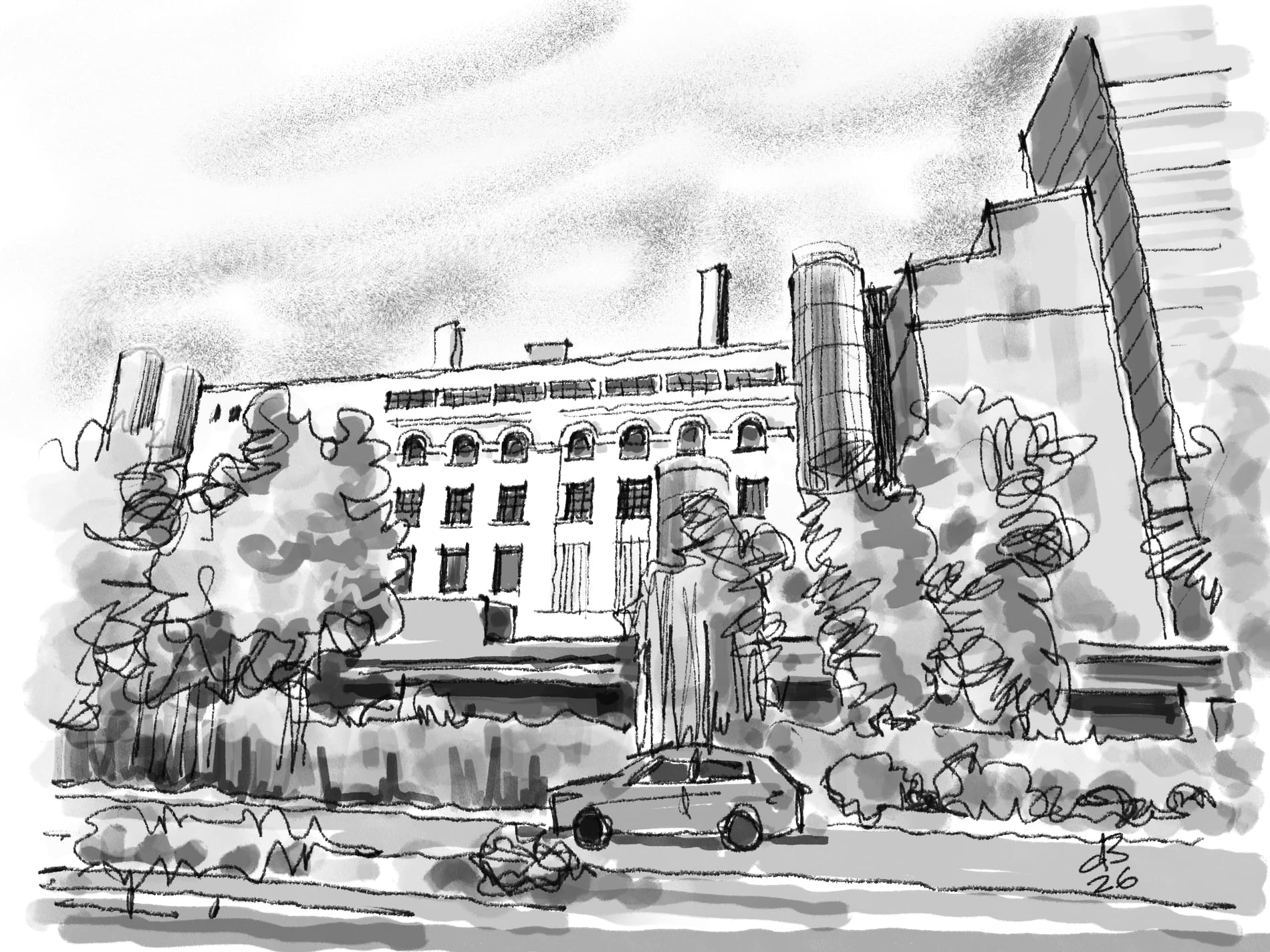
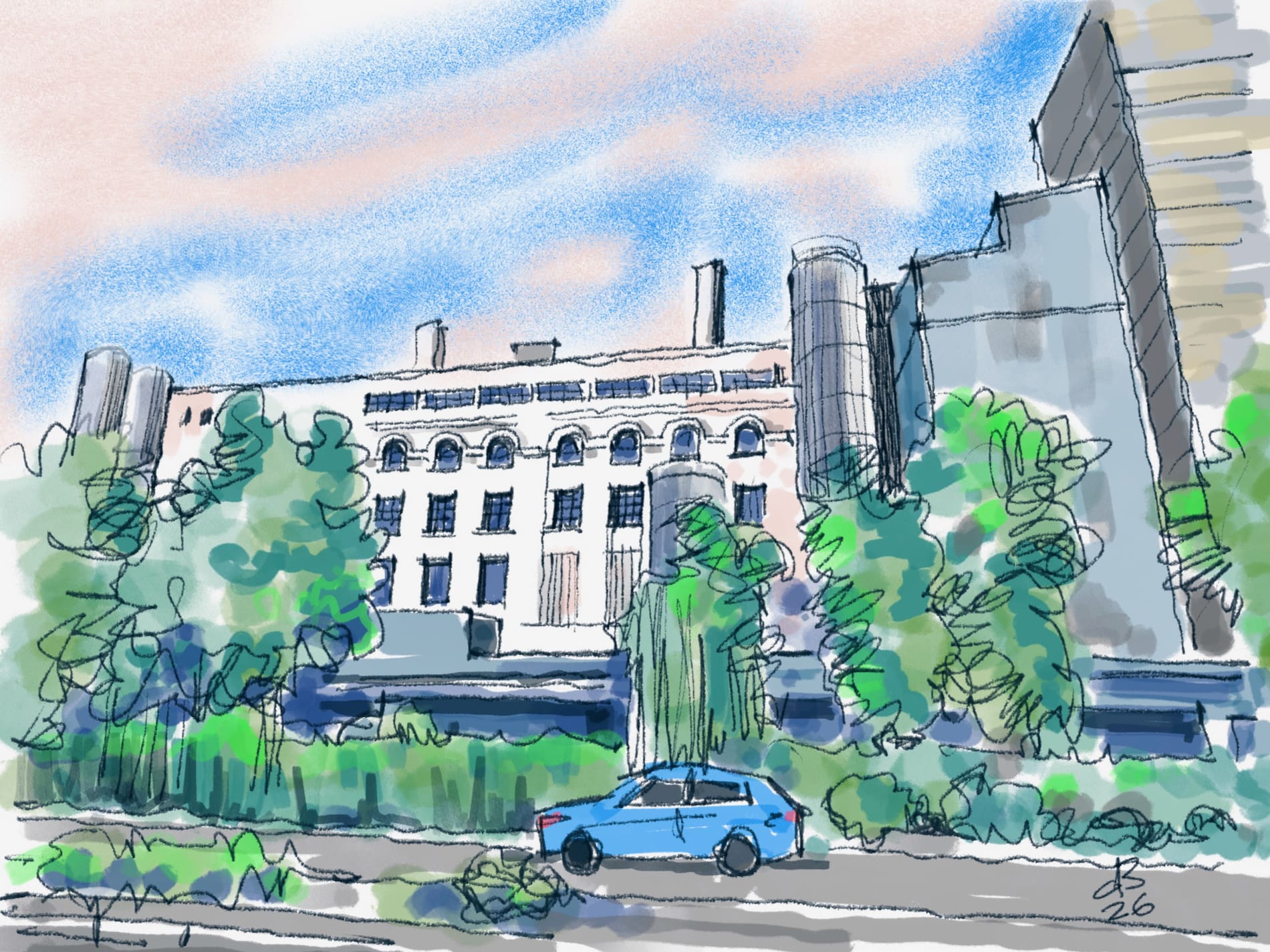
At 40-42 Golani Brigade Road, near the railway and Haifa Port, stands the historic building of the "Great Mills" - flour mills that were established at the initiative of Baron Rothschild more than a century ago and are still operating and used for their intended purpose.
Baron Rothschild's initiative
Baron Benjamin Edmond de Rothschild, known as “the famous benefactor,” began helping the Jewish colonies in Israel in the 19s. He supported the purchase of land, the development of agricultural industries, and the establishment of factories for processing produce, including the wineries in Rishon LeZion and Zichron Yaakov. Just as the wineries gave winegrowers a place to process their crops, so the flour mills were intended to provide wheat growers with a market for their produce and a place to process it into flour on an industrial scale.
In December 1920, Baron Rothschild registered in Paris the company that later established the "Grands Moulins de Palestine". Construction work in Haifa began in 1921, and the building was completed in September 1922. The proximity to the railway station (today's Haifa East) facilitated the distribution of flour, and the proximity to the old port dock facilitated the transfer of wheat from ships. A railway extension that reached the factory yard allowed the grain to be unloaded directly from the wagons.
According to the company's history, in July 1923, the milling machines were powered by diesel engines. The flour ground in the large mills was marketed in Israel and neighboring countries.
PICA and the big mills
In 1924, Baron Rothschild founded the PICA company - the Company for Jewish Settlement in Israel and placed his son James at its head. The company took over the management of his assets in the country, including the large mills. In 1925, PICA also established a matzo factory alongside it, the products of which were sold abroad.
Engineer Arpad Gut and the original building
The skeleton of the large mill building was designed by the Hungarian-Jewish engineer, Arpad Gut, who also supervised the construction. Gut qualified as a civil engineer in Budapest in 1901, specialized in building bridges and designing large structures made of reinforced concrete and steel, and arrived in Israel in 1921. For the purpose of designing the large mills, he was also sent to Paris to consult with the company's professionals. After his work in Haifa, he participated in the planning and construction of the "Nesher" cement factory. The identity of the person responsible for designing the facades of the large mills has not yet been clarified.
The original building was four stories high and rose to a height of about 20 meters, a prominent height in the Haifa landscape of the early 1920s. Gut designed a reinforced concrete frame, with ceilings resting on beams with large openings. This constructive solution made it possible to create wide production halls, without support columns in their center, according to the need to place and operate the milling machines.
The organization of the interior spaces was also dictated by the flour production process. The wheat that arrived at the factory underwent a series of operations of selection, cleaning, washing, milling, and sifting, using a system of machines that extended across the floors of the building. The grains and milling products were transferred between the processing stages using vertical conveyors, until flour and semolina were obtained. In this way, the constructive and spatial design of the building was adapted to the needs of industrial production.
The building's facades were designed in a local eclectic style. Reliefs emphasized the window arches on the upper floor, and the jagged roof railing was reminiscent of a city wall. The names of the large mills appeared on the facades in four languages: French, English, Hebrew, and Arabic. The monumental appearance gave the industrial building a representative character, beyond its functional purpose.
The expansion in the 1950s
In 1952, PICA initiated the expansion of the large mills. As part of the work, a grain storage silo was built and wings were added that concealed a significant portion of the original building.
Today, only one block of the historic building remains visible, with rectangular windows and a row of arched windows on the upper floor. The roofline is different compared to historical photographs, and cylindrical installations related to industrial activity have been added to the facade.
The largest mills today
Over the years, the milling equipment has been improved, the production area has expanded, and the building's surroundings have changed. The historic structure of the large mills is mentioned in publications as a building for preservation, even though a significant portion of its original facades has been obscured by later additions.
More than a century after the first diesel-powered milling machines were put into operation, the large mills continue to produce flour and semolina. The historic facade of the original building continues to testify to the beginnings of modern industry in Haifa and its engineering and architectural achievements during the British Mandate.
Dear readers,
The articles in this section are based on open information published in sources such as Wikipedia and other websites and may include various historical inaccuracies arising from the aforementioned sources.
We invite our readers to suggest buildings as subjects for articles and if interesting stories are found behind them we will be happy to review them in this section.
My great-grandfather, Moshe Dzelowski, worked there from the moment he immigrated to Israel. He was a Gur Hasid, and was responsible for the local kashrut, and of course the strict training for Passover.
It turns out that the "ultra-Orthodox" at that time worked.
He was one of the founding members of Kiryat Haim!, which was established as a secular settlement. Indeed, a paradox.
I assume that the Arab riots in Haifa in 1929 tipped the scales in favor of coming and living in quiet Kiryat Haim.
The articles and the addition of illustrations are always enriching. I remember my grandmother telling me that there was an attack on the mills.
Sachatin. David, about the next stop on your story journey