


On Monday, June 16, 2014, the 54th Shoresh meeting was held. Shoresh is a group of people with a connection to Haifa. Some were born there, some live there, and some are just 'crazy' about the city. We meet once a month for social activities for Haifa residents. We gathered at the designated time near the refinery parking lot and from there we entered the factory in a convoy. We arrived at one of the buildings called "Livniyot" and were one of the symbols of Haifa.
A building for one of the buildings was cleared of its equipment, renovated, and a visitors' center was established, which is particularly impressive due to the computerized guidance systems for students visiting the site. We were greeted by Daria, a chemistry student, who guided us very successfully.
We learned from her lecture that the refineries were established by the British, who began construction in 1938. The goal was to pump oil discovered in northern Iraq (Kirkuk) to the Mediterranean coast. At issue was the fear of predictions of an impending war. In 1934, the pipeline that brought the oil to the Bay of Haifa was completed, and the British government decided to establish a refinery on the banks of the Kishon, adding the British-Dutch company SHELL as a partner in the project. The location was chosen due to Haifa's port and transportation infrastructure and the possible use of the Kishon's water for cooling the facilities.
During World War II, the refineries fulfilled their purpose and supplied petroleum distillates and industrial oils needed for the war effort, mainly to the British Navy and the British and American armies in North Africa, which led the Axis powers to try to damage it, with the Italian Air Force launching over 20 attacks in the years 1940-1942, but they were unable to actually stop the work.
The British defended themselves mainly by means of cannons placed at high points, helium balloons that were released into the air while tied to steel cables, and a system of brick ovens in which diesel fuel mixed with water was burned, creating thick smoke that made it difficult for enemy pilots to see. Our friend Mickey Gottschalk showed us the few remains of one of the ovens during another tour of Shoresh at the Kishon Port.
After the end of the war, the refineries were attacked twice by Lehi members, with one of them in 1945 causing significant damage to the plant, resulting in the burning of eleven fuel tanks and flames visible from afar. After the establishment of the state, the refineries were a government company, and since 2004 they have been privatized in several stages, and since 2007 the Ofer-Federman Group has held the majority of the shares. The refinery covers an area of approximately 1,700 dunams and has a refining capacity of approximately nine million tons of crude oil per year.
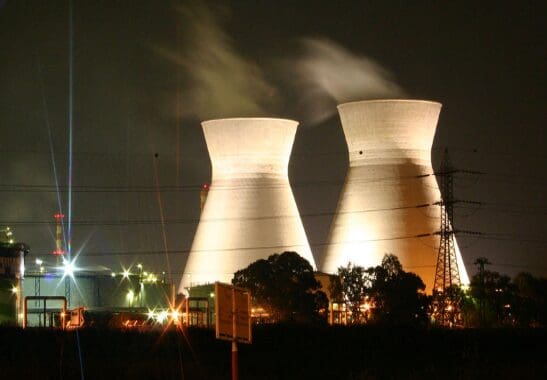
The visitor center was built inside the renovated building of one of the 'bricks' that were used for years to cool water to the required temperatures. The transition to advanced methods has made them unnecessary. The impressive visitor center includes a unique botanical garden and water fountains and even won first place in a green architecture competition. The win highlighted the boom of recent years and the focus on environmental awareness, which was expressed in raising chimneys, establishing an electrostatic precipitator, using low-sulfur fuel oil, establishing facilities to streamline sulfur removal, and using flares to burn excess gas.
Another topic that sparked interest are the computerized control systems, which are of a very high level and allow for regulation of product flows, monitoring of temperature and pressure data, and alerts about malfunctions in the various facilities.
The group went through the entire training course, which is usually intended for students and contains interactive computer systems, starting with a facility that allows participants to learn, in the form of a computer game, about the variety of products derived from petroleum, such as helmet materials, wheels, various sporting goods, and in fact all soft and hard plastic products.
Then, each pair of participants sat down next to a screen that simulated part of the control systems of the processes in the factory, and the participants performed simulations of control operations according to the instructor's instructions. In the next stage, the participants took an American test in which they were required to answer questions related to the operation of the facilities in the factory and activities to preserve environmental quality.
The professional explanation announced that all the residents of the area had nothing to worry about regarding the pollution. It is true that money and effort were invested in making the factory green. The smell and pollution in the area tell a different story. Did the polite explanation with such a good face convince any of the local residents? I doubt it!

Most of the story is technical details as told to the group during the tour of the place, so I thought of some kind of relaxation compensation for the readers and chose Patrick Fury. Singer and composer born in 1969. His father is Armenian and his mother is from the French island of Corsica. Patrick wrote songs and performed songs from old films, including the theme song from 'Borsalino' with Alain Dillon in the role of the gangster. I chose a moving song with many performances, but Patrick's performance is most amazing of all. The special song 'Corsica' awaits your listening.
Did the article interest you?