


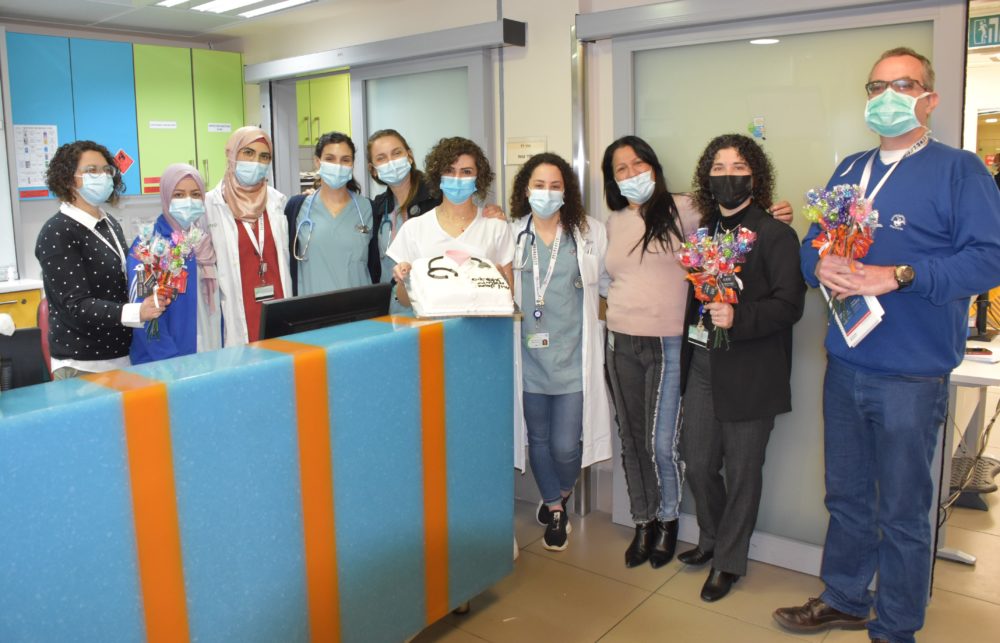
(haipo) – Against the backdrop of the wave of incitement against Arab medical staff, Dr. Zahi Said refutes the claims of affirmative action in admission to medical school and emphasizes: "The health system in Israel is one of the best in the world. Without Arab society, this system fails."
Dr. Tamar Etzioni Friedman calls on the management of the health system not to be satisfied with condemnations, but to act against racism and incitement. The Bnei Zion Medical Center also clarifies: Employees are hired on a professional basis, regardless of their sectoral affiliation.
From allegations about medical education to serious accusations against doctors
The Israeli healthcare system relies daily on a professional partnership between Jews and Arabs, doctors, nurses, pharmacists and other professionals. In hospitals and clinics, they work side by side, dealing with emergencies and treating people regardless of religion, nationality or outlook. However, recently, against the backdrop of polarization in Israeli society, public discourse against Arab medical staff has been intensifying.
The incitement began with allegations of easier admission of Arab students to medical schools and preference in hiring Arab doctors and staff. The discourse later expanded to the issue of the Arabic language in hospitals and from there to allegations of hostile treatment of patients. At its peak, the discourse reached serious accusations that Arab doctors were poisoning Jewish patients inside hospitals.
These are serious accusations that were made and broadcast on national media channels, and therefore should not be considered a debate on social media anymore. When serious accusations are made against medical staff based on their origin, without solid evidence, the damage goes beyond personal injury: it may undermine public trust in the health system, harm the workers' sense of security, and erode the Jewish-Arab partnership, which is a central pillar in the functioning of the system and its ability to provide professional and equitable care to every person.
Precisely because of the seriousness of the issues and the media platform they were given, a responsible and unequivocal response is required, one that will establish a clear boundary between legitimate criticism and racist incitement.
The problem is not just about saying things, but also about what is being done to stop them. Condemnations are important, but when they are not accompanied by clear steps, employee support, and enforcement against threats and harassment, the message to the public may be that the line between legitimate criticism and dangerous incitement remains blurred.
Dr. Zahi Said: "Without Arab society, this health system fails"
Dr. Zahi Said, a veteran family physician with a wealth of experience and a partner and leader of the academic and professional activities of the Academic Forum for the Promotion of Health in Arab Society And with about 40 years of experience in the healthcare system, who has held management positions over the years and also worked in providing medical services, he does not hide the personal and professional harm he feels, in light of the things directed at the Arab teams.
"As a doctor who has been in the health system for 40 years, in many management positions and also as a doctor who provides service, I felt very hurt. It is a very difficult feeling to hear harsh descriptions and a lot of lies about the Arab teams," he says. According to him, it is precisely in light of the wave of accusations that it is important to present the data and the professional reality, and not allow unfounded claims to become facts in the eyes of the public.
Dr. Said rejects claims that Arab candidates enjoy preference in admission to medical school in Israel. According to him, the rate of Arab doctors admitted to medical school in Israel is approximately 9%–10%, while the rate of Arab society in the population is approximately 21%.
"These data unequivocally contradict the claim of affirmative action or concessions in admissions," he says, adding that according to the data he presents, the average grades of Arab students accepted to medical school are higher than the average of all those accepted.
Even when it comes to hiring doctors, Dr. Said emphasizes that professional experience and qualifications are what should determine. "When I served as a manager and interviewed doctors for jobs, the criterion was professional, based on objective data, regardless of the origin of the employee or doctor."
Referring to the claim regarding the high rate of Arab doctors with Israeli licenses, he notes that a significant portion of Arab doctors studied abroad, self-funded and with the help of their families, and were then required to meet the licensing requirements in Israel. According to him, one should not conclude from the rate of doctors who received a license that there is a preference in admission to study in Israel.
Dr. Said also wishes to mention the share of Arab staff in other health professions. According to him, they constitute about 50% of pharmacists and about 30% of nursing staff. These are figures that he presents as part of the broader picture of Arab society's contribution to the health system.
But for him, the contribution is not limited to numbers. It is also measured in moments when the system is required to withstand an unusual load. "I always say: The health system in Israel is one of the best in the world. Without Arab society, this health system fails," he emphasizes.
He said that during the Corona period and during the war, Arab staff members reported to work, took part in providing medical response and helped maintain the continuity of service, including during periods when other staff members were called up for reserve service.
"The system is one of the best in the world because of the fabric and mutual respect found in it. We all work together, Arab Muslims, Christians, Druze and Jews, who respect each other. We don't look at the patient's origin, I come to treat the patient and treat every person with respect."
Dr. Said strongly rejects the attempt to portray Arab staff members as acting out of hostility toward Jewish patients. According to him, the professionals come to the system out of a sense of mission and a desire to contribute to the community, and racist generalizations harm entire teams whose work is based on professional responsibility and saving lives.
"The Arab teams are in the system on their own merit. No one is doing them any favors. Everyone who works in the health system should be proud of themselves. We are part of this good health system, and we cannot destroy the only sane system in the country," he concludes.
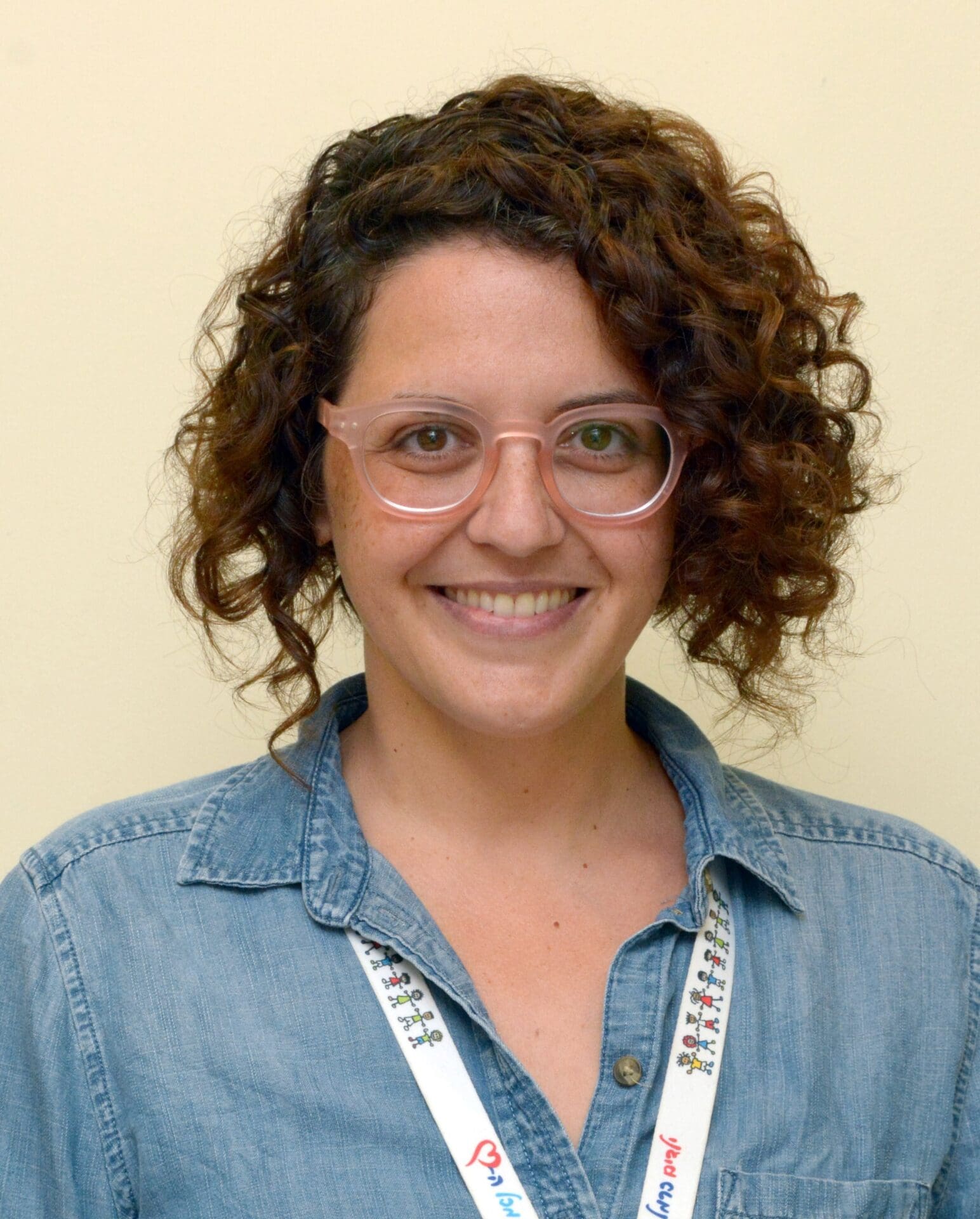
Dr. Tamar Etzioni-Friedman: "They don't have to prove their belonging"
Dr. Tamar Etzioni-Friedman, Director of Quality and Safety at Carmel Hospital and Chair of the Committee for Promoting Jewish-Arab Dialogue at the Hospital, emphasizes that partnership between Jewish and Arab staff is not a slogan, but a daily reality that requires ongoing investment, especially in times of fear, pain, and polarization.
“We believe that the hospital is a space of true partnership. Jewish and Arab staff members share a single professional responsibility, deal with crises together and treat every person regardless of color, religion or outlook,” she says. She says that, precisely at a time when the discourse outside hospitals is becoming more extreme, deliberate work is needed to ensure that every employee feels included, valued and safe.
"Saying that we are all in partnership is not enough. We need to work on it. It is clear to all of us that there is zero tolerance for racism, but on the other hand there is a willingness to listen. It is possible to hold different positions, even on painful issues, but opinions must not become incitement, harm, or delegitimization of one society or another."
Dr. Etzioni-Friedman says that Carmel Hospital began, even before October 2023, a dedicated activity to strengthen the dialogue and partnership between Jewish and Arab employees. As part of this, a team for professional dialogue was established with the participation of staff members from a variety of professions and positions, and group processes and workshops were held that were intended to enable open dialogue about tensions, concerns, and cultural differences.
The activity continues today, including through initiatives related to language, culture, and holidays. According to her, the hospital is also promoting the establishment of a multilingual choir, based on the concept that true partnership is not created following a media event or a condemnation message, but through an ongoing organizational process.
She said that the hospital management has conveyed a message to employees, and at the same time, work is being done to formulate a more orderly procedure for dealing with cases of racism and incitement. The goal is not to be satisfied with responding after an incident, but to prepare in advance for situations in which employees may encounter offensive behavior.
"No one should apologize for their identity"
One of the sore points that Dr. Etzioni-Friedman points out is the concern that arises when staff members are required to deal with doubts about their loyalty, simply because of their origin. "It is impossible to ignore the public discourse that questions people's loyalty simply because of their origin. It is very understandable if this leads to a feeling of insecurity and lack of belonging," she says.
She says that not every employee experiences reality in the same way, so it's important to listen and not presume. Sometimes, she explains, a person is unaware of the fear or hurt that their coworker is experiencing, and the ability to recognize this experience is an essential part of creating a safe work environment.
Her message to Arab employees is clear: "They are not alone. We are an integral part of this organization. Our successes are shared, and much of our identity is shared. I want every employee to know that they don't have to prove their belonging or apologize for their identity. They need to continue to be who they are and do the amazing work they know how to do."
She emphasizes that partnership does not require everyone to think the same way. Employees come from different backgrounds, with different and sometimes opposing life experiences and attitudes. The challenge is not to erase the differences, but to allow each person to feel seen, respected, and allowed to do their job with confidence.
"We all came to give the best care to our patients," she says.
"A statement without action means nothing"
Dr. Etzioni-Friedman believes that healthcare system management has a clear public and moral responsibility to speak out more forcefully against racism and incitement. However, in her view, even an unequivocal statement is not enough without practical steps.
"Those who are at the head of the health system have a responsibility not only to provide the best medical services, but also to protect the people who work within this system. It is a difficult system, with high attrition rates, and it is important to protect the people who keep it functioning," she says.
"A clear and unequivocal statement against racism and incitement is essential, but a statement in itself is not sufficient. We need to see how it is expressed. A statement that is not backed by action means nothing."
According to her, as part of the dialogue promotion activity, principles for respectful discourse and procedures for dealing with manifestations of racism are being formulated. The goal is to define what behaviors are unacceptable, how to respond to them, and what steps should be taken in cases of harm to employees. She wants to clarify that patients are allowed to express concerns, difficulties, or positions, but this does not allow them to harm staff members because of their origin or identity.
"We need to ensure the best and most professional care for every patient, but equally protect the dignity and safety of employees."
It also sends a message to the general public: Those who come to the hospital expect to receive care from the best professionals, with dedication, professionalism and humanity, and this is exactly what the teams are required to provide, regardless of nationality or outlook. "Behind every worker in a lab coat or uniform is a person, a family, a background, fears and hopes, just like everyone else. It is permissible to have different opinions and it is permissible to argue about them, but the argument must not become an attack on a person's dignity or safety."
And to those who spread incitement against Arab medical teams, she has one message: stop and think before you generalize a person based on their origin. According to her, incitement harms not only Arab workers, but the entire system, the teams' ability to function, and the social fabric on which the partnership is based. "A person who harms another ultimately harms himself."
Bnei Zion: "Employment is done on a professional basis"
Bnei Zion Medical Center also wishes to clarify its position in light of the public discourse surrounding the employment of Arab medical staff. A response provided by the hospital stated that for years, staff from all sectors and sectors have worked at the medical center, in cooperation and in good professional working relationships, with a common goal of providing patients with the best care.
The hospital emphasizes that employees are hired on a professional basis, regardless of their sectoral affiliation. "The position of the Bnei Zion Medical Center is clear: all employees work together for the benefit of the patients," it said. It was also stated that the medical center condemns sectoral incitement and manifestations of racism of any kind, and works to maintain a professional, respectful and equal work environment.
The message that needs to be heard throughout the healthcare system
The words of Dr. Said and Dr. Etzioni-Friedman, alongside the position of the Bnei Zion Medical Center, place at the center the question that the health system and Israeli society must not evade: Is it possible to continue to demand that medical staff save lives, while at the same time allowing a discourse that questions their legitimacy to do so simply because they are Arabs?
The answer should be unequivocal: no.
There is no place for racist generalizations, serious unfounded accusations, or attempts to turn a staff member's origin into a question of their professionalism and loyalty. Any concrete suspicion of misconduct should be examined objectively, on the basis of evidence and within the framework of appropriate procedures, not through campaigns of incitement against an entire public.
Hospital management, the Ministry of Health, and authorized entities are required to make it clear that racism, threats, and harassment will not be accepted as part of the work routine. Condemnations must be accompanied by protection for employees, clear reporting mechanisms, and determined handling of appropriate cases.
Ultimately, the health system cannot exist without the people who operate it. The Arab doctors, nurses, pharmacists and other staff members are not guests in the system and do not benefit from anyone's favor. They are full partners in its success and their function is an integral part of the ability to provide medical care to the entire public.
Without Arab teams, the health system will have difficulty functioning as it does today. Without partnership, trust, and mutual respect, we will all pay the price. It is time to stop the incitement, set clear boundaries, and back up those who come to work every day to save lives.
Wait, so what do we do against doctors and pharmacists who tried and are trying to poison Jews? How can we be calm??????
מרעילים בארות ומלווים בריבית בתגובה!
רק עם הזהב התקשורת והבנקים ננצח את הגויים…
Unfortunately, things need to be said and done. It goes without saying that Arab citizens are part of the Israeli residents of the country.
In my opinion, they are much more loyal citizens than the Haredim, with whom we have nothing in common except circumcision.
It's crazy how a country conducts itself when it sees and hears waves of open incitement from media channels and public figures, and the law is irrelevant and nonexistent.
Shame and disgrace. The country is expanding its values day by day.
We all support doctors wherever they are!
For more information, it is worth reading the report by Physicians for Human Rights on the situation of workers in the Israeli healthcare system after October 7.
אין לי ביקורת על מיומנותם של העובדים הערבים שלאחרונה סייען לי הרבה בזמן השהות בביה"ח, הדבר היחיד שאני דורשת כי בזמן משמרת של רופאים ואחיות ערבים ידברו -גם ביניהם – רק עברית. כאן זו מדינת ישראל והשפה הרישמית היא עברית, לכן חייבים לדבר רק עברית בין כותלי בית החולים. ולא רק ערבים, גם רוסים, ושאר עובדי רפןאה שמדברים שפות אחרות.
למה לא לדבר רק יוונית ולטינית? אלו השפות הרשמית של מקצוע הרפואה!
אההה, כי העניין הוא גזענות ולא הגיון…