


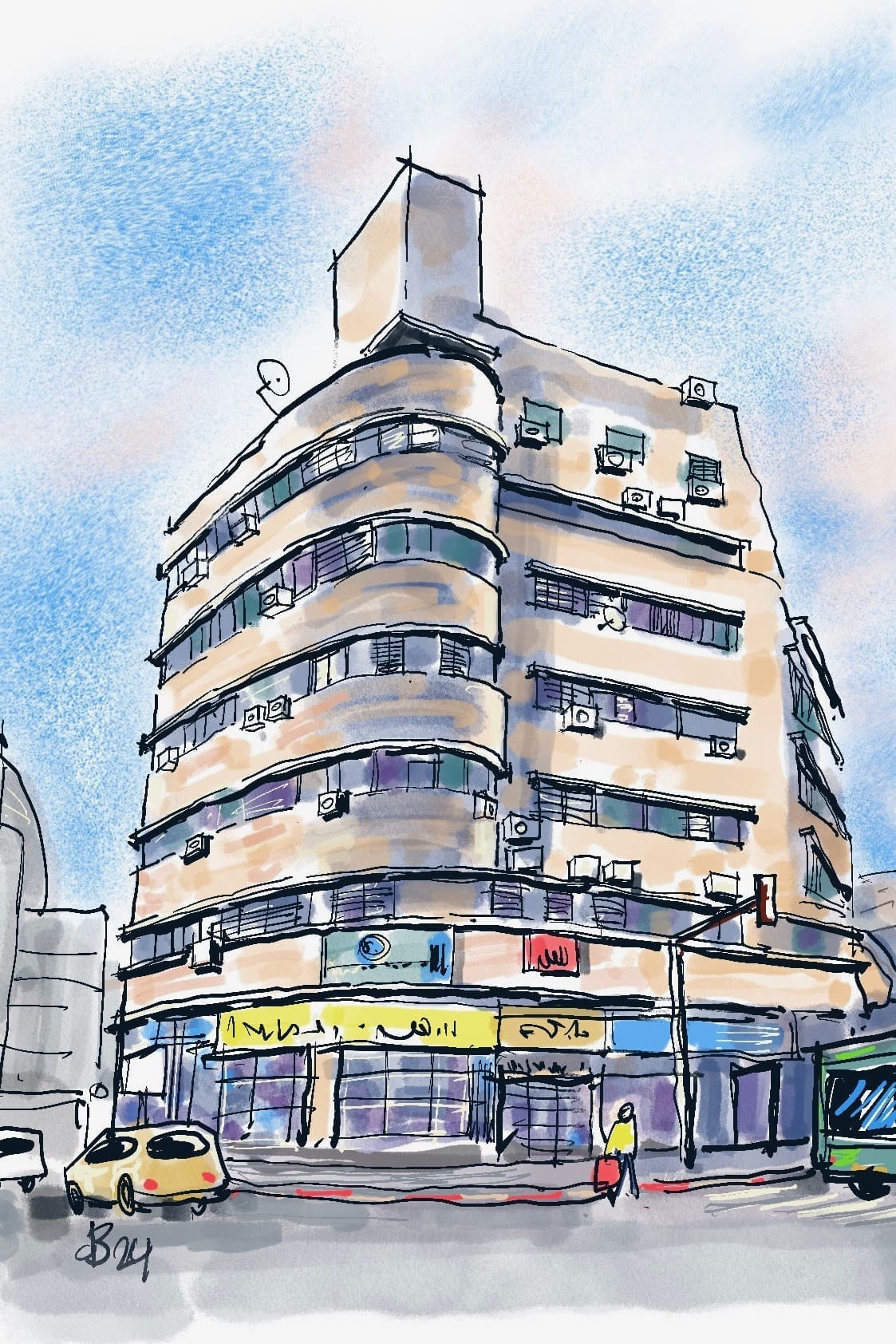
The Salim Bay Salam House, on the corner of Shivt Zion and Maginim streets in the lower city, is known to architecture enthusiasts as one of the city's impressive International Style buildings, and I published an article about it in April 2024.
However, new information recently published about the Lebanese Salam family gives the building and the story of its construction an additional historical layer and invites a fresh look at the connections that existed in the past between Haifa and Beirut during the British Mandate.
Salim Ali Salam — the Lebanese entrepreneur behind the building
The building developer was Salim Ali Salam (1868–1938), known as Salim bey Salam, was one of the most prominent figures in Sunni Muslim society in Lebanon during the late Ottoman period and the beginning of the French Mandate.
The title “Bey” attached to his name was an Ottoman honorary title, given to those of status and influence.
Salim Salam was an influential public figure, politician, and businessman in Beirut. He served as mayor of Beirut, was a member of the Ottoman government institutions, and later was among the Arab leadership in Lebanon during the French Mandate. Alongside his political activities, he was also involved in commerce, real estate development, and various public initiatives.
The Salam family is still considered one of the most prominent political families in Lebanon. Over the years, it has produced prime ministers, ministers, members of parliament, jurists, and senior public figures. The current Prime Minister of Lebanon, Nawaf Salam, is the grandson of Salim Ali Salam.
Salim Salam's investment in Haifa is no coincidence. In the 30s, Haifa was the most developing and important city in Mandatory Israel—a port, industrial, commercial, and transportation center on a regional scale. The British development boom, the construction of the port and refineries, along with the expansion of the Jewish settlement and new construction in Hadar al-Karmel, also attracted Arab capitalists and investors from Lebanon and Syria to Haifa.
Against this backdrop, the collaboration between Salim Salam and the Haifa architectural firm of Benjamin Orel and Yehezkel Zohar was created, who designed for him the impressive building on the corner of Shivt Zion and Maginim streets, a building that still bears his name today.
Slim Bey Slim House
The building, at 1 Shivat Zion Street, was designed in 1939 as a four-story residential structure above a commercial ground floor. It stands at the corner of Shivat Zion and Maginim Streets, at the entrance to the lower city, and its prominent location gives it an impressive urban presence to this day.
The structure has distinct characteristics of The International Style, with horizontal sash windows, rounded balconies, and bold concrete cornices. However, unlike the whitewashed Bauhaus buildings built in Tel Aviv, the Salim bei Salam house is clad in finely worked stone, a distinctly Haifa characteristic.
The building was designed by the architects Benjamin Oral וYehezkel Zohar, one of the most prominent offices that operated in Haifa during the Mandate period.
A detailed description of the building and the architects appears in the article “The Salim Bay Salam House in Haifa, the fruit of collaboration between an Arab entrepreneur and Jewish architects,” which was published here in April 2024.
Building preservation
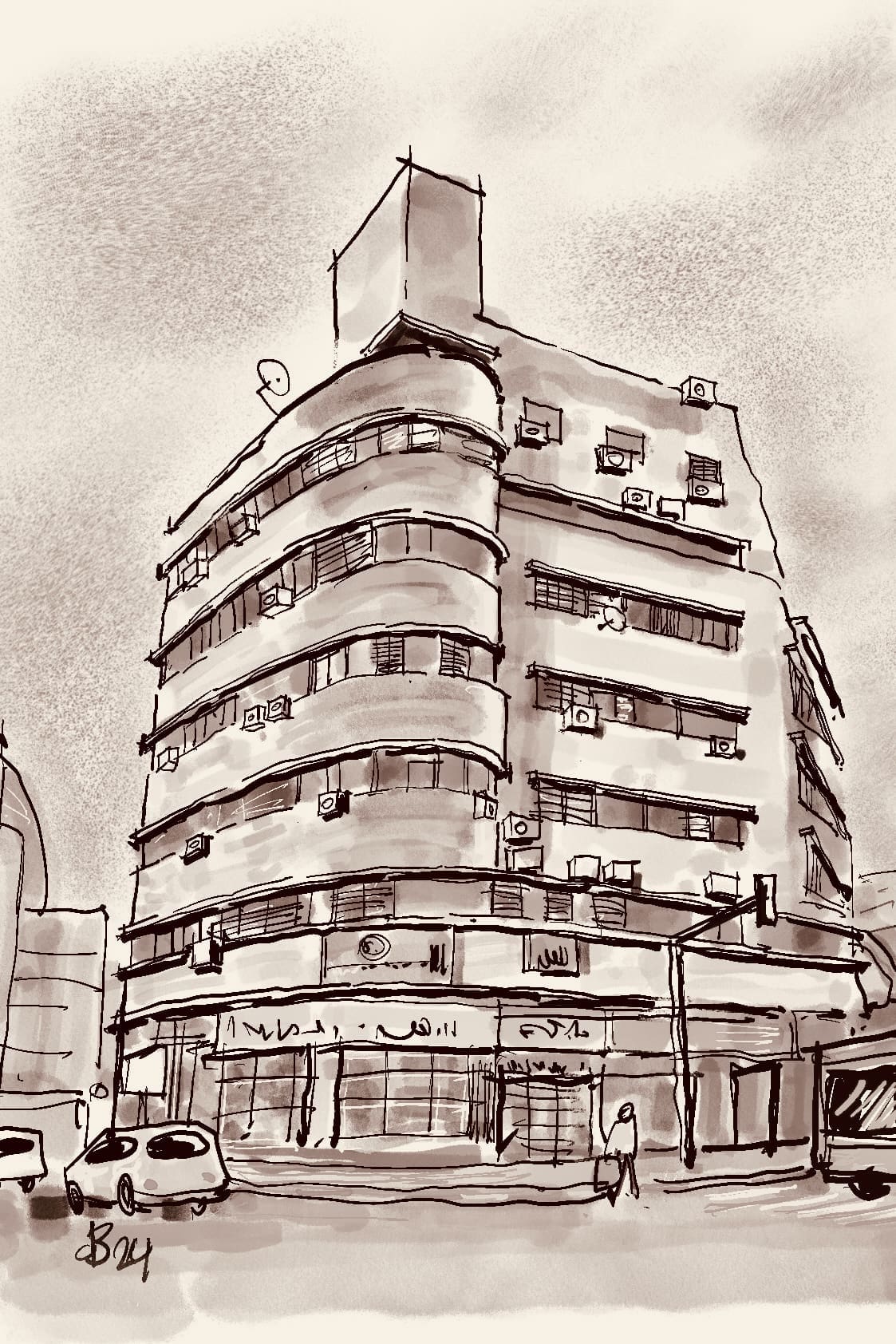
In 1991, the Salim Bay House was declared aBuilding preservation By the Haifa Municipality, recognition of its architectural and urban importance as one of the impressive buildings of the International Style in the lower city.
However, over the years, the building's facades have been damaged by various additions that did not always take into account its original character: air conditioners installed haphazardly, replacement windows in different styles, and uneven commercial signage on the ground floor. All of these now obscure its architectural qualities and make it difficult to appreciate the original beauty of the building.
And yet, even today, the Salim bei Salam House remains an impressive testament to a time when Haifa was a cosmopolitan Mediterranean city—a place where Lebanese entrepreneurs, Jewish architects, and local workers worked together to create modern architecture with a distinctly Haifa character.
Thanks
My thanks go to Dr. Bashir Karkabi And for the architect Walid Karkabi, whose posts on social media helped reveal the family connection described in this article.
Dear readers,
The articles in this section are based on open information published in sources such as Wikipedia and other websites and may include various historical inaccuracies arising from the aforementioned sources.
We invite our readers to suggest buildings as subjects for articles and if interesting stories are found behind them we will be happy to review them in this section.
Indeed, during the Mandate period, relatives of my late family, brothers and sisters of my late grandfather, were often able to travel, enjoy, and study in Beirut and Damascus.
My grandfather had a butcher shop in the building from the 30s to the 60s.
This building housed the headquarters of the British CID and was blown up by the Irgun in 1945.
Before the explosion, the building was moved in a major engineering operation to Independence Road (then King George V Boulevard) and afterwards it was returned to its place here.
Thanks for the historical information.
I grew up in Haifa but I didn't know.
Today there are offices there.
Thanks for the historical information.