



(haipo) – Citizens’ sense of ability to influence government policy is one of the key indicators of the strength of a democracy. New data from the Central Bureau of Statistics, based on the 2022–2023 Survey of International Alumni Skills (PIAAC), paints a worrying picture: Most Israeli citizens feel they have little influence on government policyHowever, a geographical examination of the data reveals gaps between districts, with the Haifa District displaying a relatively high sense of influence and belonging to the group of leading districts in Israel.
Israel below the OECD average
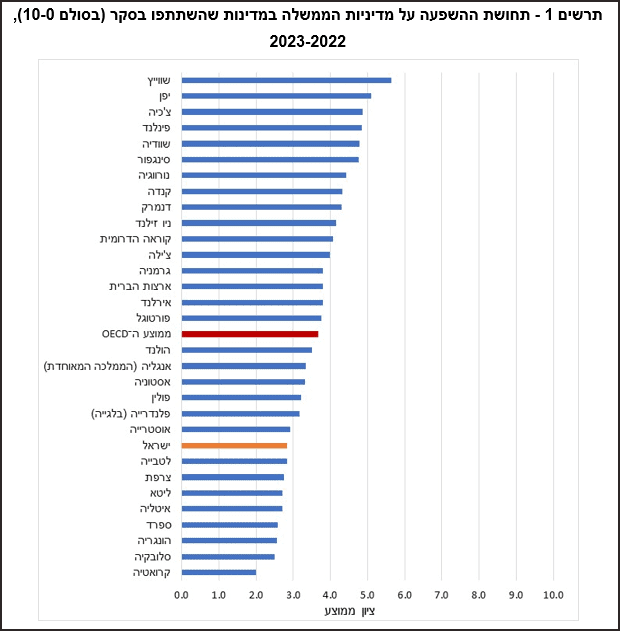
According to the survey findings, the average sense of influence over government policy in Israel is only 2.8 on a scale of 0–10, a figure that places Israel in 23rd place out of the 31 OECD countries that participated in the survey.
About 62% of the population aged 16–65 in Israel reported feeling little influence, and only 11% indicated that they felt a great deal of influence over government decisions.
Gaps between population groups
The survey indicates sharp gaps between different groups in the population:
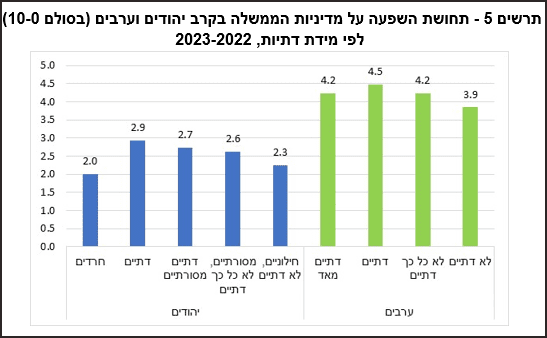
- The sense of influence among the Arab population is significantly higher than that of the Jewish population (average 4.3 compared to 2.4).
- Men report a slightly higher sense of influence than women.
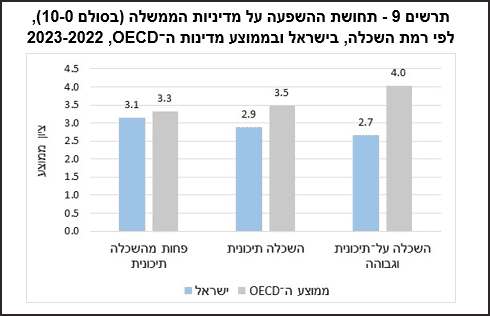
- Unusually compared to OECD countries, in Israel, those with higher education and higher skills feel less influence on government policy than those with lower education and skills, a phenomenon almost entirely unique to Israel.
Geographical perspective: Haifa above the national average
Segmentation by district reveals a complex but encouraging picture for the Haifa region.
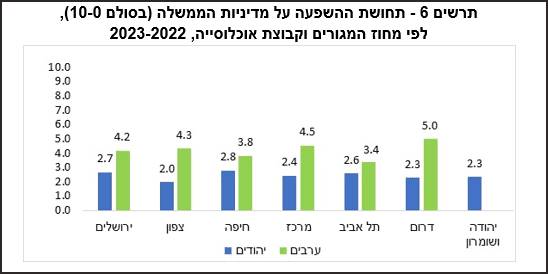
The average sense of influence over government policy in the Haifa District is 3.0, a figure that is significantly higher than the average in the Central, Tel Aviv, and Southern Districts (2.6), and higher than that of the Judea and Samaria region (2.3).
Along with the Haifa District, the Northern Districts (3.3) and Jerusalem (3.2) also exhibit a relatively high sense of influence, while the more urban and central areas report a greater sense of distance from the governmental system.
Haifa: A mix of populations and a sense of involvement
A closer look reveals that in the Haifa district, similar to the other districts, there are gaps between Jews and Arabs, with the feeling of influence among the Arab population being higher. However, the Jewish population in the Haifa district also reported a relatively high feeling of influence compared to other districts, including the north and south.
This figure may indicate unique characteristics of the Haifa area: a mixed metropolitan city, active civic frameworks, academic and community institutions, and relatively high civic involvement.
Democracy, skills and a sense of influence
According to the CBS, the feeling of influence over government policy, also known as "political influence," is a central component of civic participation, trust in state institutions, and democratic resilience. The survey findings indicate a significant challenge for the State of Israel: strengthening the sense of influence specifically among educated and highly skilled populations, which should constitute a central engine for civic engagement and public leadership.
A complex situation – and an opportunity for action
The data paints a complex picture of Israeli society: a low sense of influence at the national level, alongside regional hubs where citizens feel greater involvement and influence. These findings emphasize the importance of strengthening the connection between citizens and decision-makers, developing local initiatives, and deepening civic education, as the basis for an active and engaged democratic society.
Did the article interest you?