


The main purpose of International Children's Day is to remind us of what we must not forget even for a moment: the right of all children to a safe, respectful and enabling life, which combines emotional well-being and appropriate conditions for meaningful learning. International Children's Day is celebrated around the world on different dates due to local traditions and histories. In Israel, it is celebrated on November 20, in accordance with the UN recommendation of 1954.
A symbolic day is not enough. Awareness is a necessary starting point, but it is not enough. If we truly believe in the rights of girls and boys and the need to ensure their well-being, we must demand from ourselves constant and active action in educational institutions, families, welfare systems, and the entire public sphere.
In preparation for International Children's Day 2025, I would like to address two issues, one focused, burning and painful, and the other broad and systemic:
- The need to continue to keep the Haymanot Kassau in the public consciousness until it is found.
- The obligation to ensure that every kindergarten, classroom, and educational institution conducts a thorough and ongoing examination of the well-being of all children.
Don't forget the Haymanot Kassao until you get home.
Before we talk about principles, beliefs, and educational applications, it is necessary to pause and recall: Haymanot Kassau, nine years old, disappeared from the Safed absorption center in February 2024 and has not been found since, despite extensive searches and monetary rewards offered. It is unacceptable that Haymanot's absence is increasingly receding from public consciousness. The struggle of the families of the abductees after October 7th demonstrated to us the power of social solidarity and the power of consistent public pressure. Therefore, it is impossible for a child in Israel to disappear without the entire society raising its cry.
One of the goals of International Children’s Day is to call for the mobilization of the media to promote children’s rights. In the case of Haymanut, the media and the public must continue to make their voices heard. I propose promoting a public movement similar to that of the kidnapped bracelets: to design and distribute a bracelet with Haymanut’s name and the date of her disappearance and to place a prominent digital clock in the center of Tel Aviv that will count the days since she disappeared. The Jewish Agency, which has already invested efforts and resources in the search, can lead the movement. One look at the bracelet and the flashing of the clock will be a reminder that a girl’s life is at stake.
Constant vigilance: Children's rights begin in the daily encounter
Beyond the private and important case of Haymanut, International Children's Day invites us to look inside the kindergarten, the classroom, the home. Children's rights are violated not only in extreme situations. They are also violated by looks, words, habits, and structures that seem obvious to us.
In my years of professional experience in early childhood education and care, I have often been exposed to reports from female education students, who are conducting practical experience teaching in kindergartens as part of their training as future kindergarten teachers, regarding situations that require immediate educational intervention.
A student identified the social exclusion of a girl of Ethiopian origin in a preschool, and within five weeks of a systemic program that she built together with the team, the reality changed and the girl became a part of and protected, and the excluding children learned and apologized.
In another case, a student intervened when girls were told they had no place in a soccer game, opening not only the field but also consciousness for equality.
A child who has difficulty sitting in a noisy classroom is given a real opportunity to learn through a simple adjustment such as a quiet corner, a tutor, or a seating arrangement. Verbal abuse from staff members, which sometimes stems from stress and frustration, also requires vigilance and a respectful professional culture to prevent harm to children.
International Children's Day is a reminder, but the responsibility is daily. Educators, parents, policymakers, we are all partners in a process that begins with self-examination and moves to public solidarity. A strong society is not measured only by its economic capacity, but by the degree of protection it provides to the weak and its commitment to children.
Haymanot Kassao It is not a distant story. She was nine years old when she disappeared a year and a half ago, an Israeli, a child. Until she is found, her name must not be forgotten. And within every kindergarten, classroom, and home, we must ask: Does every girl and boy receive what the covenant promises, and what conscience requires? This is the mission. This is the commitment. This is the hope.
background
Since 1989, with the adoption of the UN Convention on the Rights of the Child, which was ratified by Israel in 1991, five principles have been established that guide children's rights around the world: equality and non-discrimination, participation - the right of children to be heard, the best interests of the child as a supreme principle, the right to life, survival and development, and developing skills, in accordance with age and ability. These principles derive rights to education, security, health, family, leisure, protection from violence, the right to identity, self-determination, and more. Israel has laws that protect children's rights, such as the Student Rights Law. But international reports have pointed out for years that there is no systematic mechanism for examining the implementation of rights in practice.
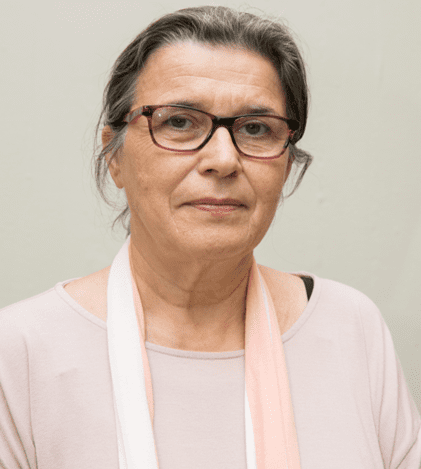
Prof. Claudie Tal, A developmental psychologist and lecturer at the Levinsky-Wingate Academic Center and Hemdat Academic College, she writes a blog about early childhood education.
Did the article interest you?