


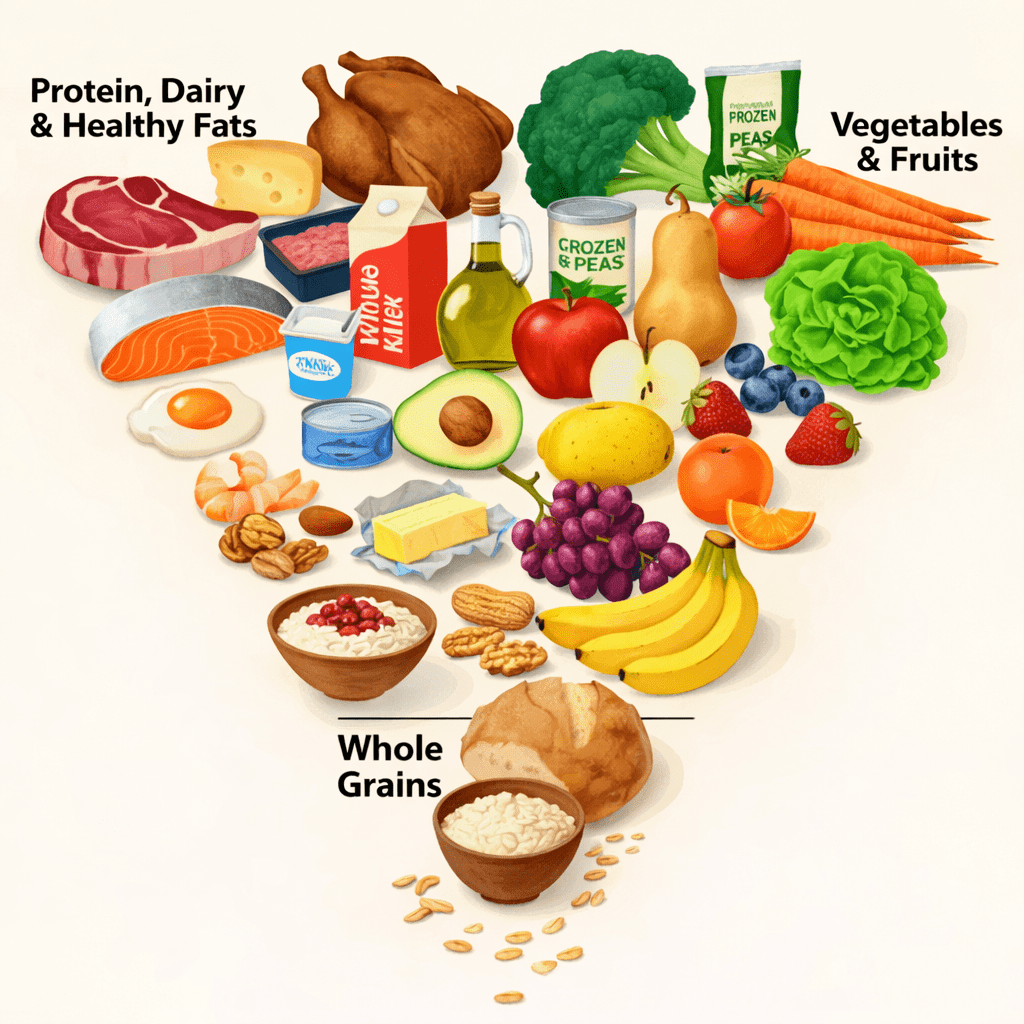
(haipo) The United States has made a dramatic change to the National Dietary Guidelines for 2025–2030, a move that is shaking up the world of nutrition, health, and the entire food industry. For the first time in decades, the American food pyramid is undergoing a “reversal”: grains are moving from the base of the pyramid and are being replaced by proteins such as meat, poultry, fish, legumes, and whole dairy products, along with an unprecedented emphasis on natural foods and a sharp reduction in ultra-processed foods and sugar. The new message is clear: fewer carbohydrates, more “real” food.
The new guidelines are based on a profound change in perception: Whereas in the past, the daily diet was based mainly on grains and carbohydrates, American policymakers now recommend placing protein at the center of the plate. The updated guidelines emphasize higher consumption of high-quality proteins, including meat, poultry, fish, legumes, eggs, and whole milk and its products, alongside a significant reduction in the amount of grains, including whole grains that were previously considered a cornerstone of the diet.
At the same time, a strong emphasis is placed on “real food”: vegetables, fruits, and natural, unprocessed foods, while combating ultra-processed foods, sugary drinks, and high-sugar products. The approach to fat is also changing, with less fear of saturated fat and more focus on the quality of fat, along with a drastic reduction in added sugar. All of this is summed up by one slogan that drives the entire movement: Eat Real Food – Eat real, simple, and nutritious food.
why now
According to the US administration, the change is intended to deal with worrying data: a sharp increase in obesity, diabetes, heart disease and other metabolic problems. According to decision-makers, the previous guidelines, which were based largely on carbohydrates and grains, contributed to a diet that is not adapted to the health realities of recent decades. The move is being promoted under the leadership of President Donald Trump and Secretary of Health and Human Services Robert F. Kennedy Jr., who declare that this is an attempt to “correct decades of nutritional mistakes.”
Influences and criticism
The dramatic change in American dietary guidelines is not going away quietly and is provoking heated debate in the economic, professional and scientific arenas. Industry sources estimate that a broad economic impact is expected on the food and agricultural industries, retail chains and importers, with demand for products high in carbohydrates and sugar likely to decrease, while at the same time there will be an increase in the consumption of protein and natural, unprocessed foods.
At the same time, there is criticism from nutritionists and researchers who warn of possible bias in the formulation of the guidelines, due, among other things, to alleged ties between some members of the recommendations committee to the meat and dairy industries, as well as the blanket application of the recommendations without individualization. At the same time, the scientific debate remains open: the place of grains, the question of saturated fat, and the proper nutritional balance continue to be at the center of heated controversy in the research community.
And what about Israel?
In Israel, official recommendations are still based on the principles of the Mediterranean diet: plenty of vegetables, fruits, whole grains, legumes, fish, and olive oil. However, the American change is already seeping into public and professional discourse.
Olga Schneider, a clinical dietitian at the Haifa and Western Galilee District Clinics, explains in an interview with Ha'ifah about the new pyramid and the differences and distinctions between the two.Food in Israel and the USA:

What do you think is behind this move in the US? Is it new scientific knowledge, economic pressures, or a broader change in perception?
I want to believe that the public good is before the eyes of elected officials. As a rule, the US Department of Health and Human Services reviews the dietary recommendations for the public every 5 years and updates them as necessary. A lot of scientific evidence has accumulated on the connection between diet and chronic diseases such as obesity, heart disease, diabetes, and more. The approach in recent decades has been to reduce saturated fat and increase carbohydrate consumption without regard to their place.
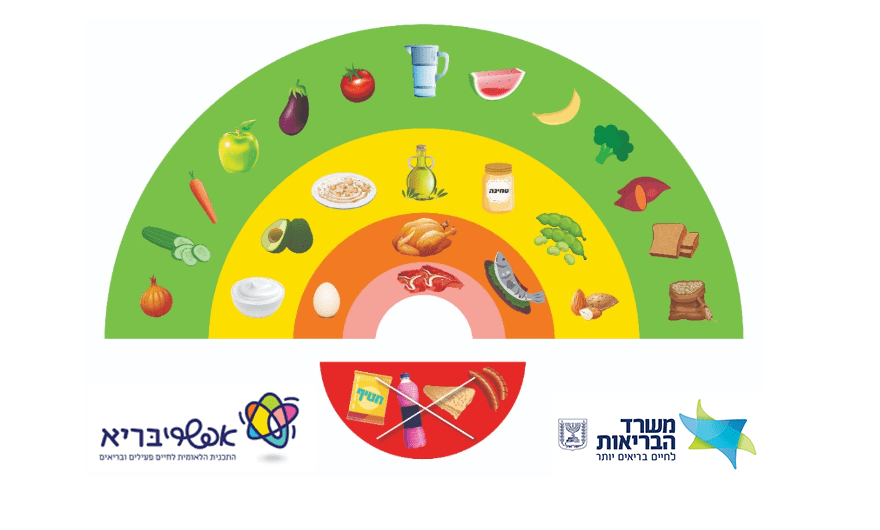
That is, as long as a person eats the right amount of calories, it doesn't matter whether it's from salad or fries. These recommendations have not shown any improvement in public health in epidemiological studies. Compared to the Israeli pyramid or more accurately the Israeli food bar (a pyramid and a bar are visual tools for illustrating nutritional recommendations), the inverted pyramid presents a hierarchy of food groups, while the Israeli bar emphasizes colorful diversity and balance.
Different nutritional approaches
The graphic hints at differences in dietary approaches. The Israeli rainbow is based on the Mediterranean diet, which studies have found to be an anti-inflammatory diet that is inversely associated with obesity, heart disease, and diabetes.
The new US pyramid emphasizes eating real food, quality protein, healthy fat, reducing
Significant in processed carbohydrates and ultra-processed foods. This change distinguishes between real food and processed food.
The change in approach also includes moving away from focusing on specific food components such as salt, sugar, and protein and moving towards recommendations on a general eating pattern. The US inverted pyramid corrects the previous recommendation that simply did not distinguish between natural and processed foods. This correction is critical. In terms of protein sources, the Israeli pyramid focuses on fish, legumes, and low-fat dairy products, compared to the US inverted pyramid, which recommends unsweetened dairy products from whole milk (higher fat percentage).
There is also a general recommendation for animal protein with a quantitative target of 6.1-2.1 grams of protein per kilogram. There is no reference to the percentage of saturated fat in the above products, but only a general recommendation that fat be increased to 10% of total daily calories.
In Israel, there is a clear preference for consuming fats from plant sources, mainly olive oil and fish. It is important to note that the Israeli request also includes reference to physical activity, social connections and environmental sustainability. The Israeli Ministry of Health continues to lead a diet based on the Mediterranean pyramid.
How do you compare the two approaches?
I think the change being led in the US is a big and significant step for US citizens. It is a step that puts processed food in the right category, an industrial product engineered by economic interests that harms health.
The Mediterranean diet that has been practiced in Israel for years includes the recommendation to reduce, to the point of avoiding, ultra-processed foods. It is important to understand that the food selection in Israel is not similar to the food selection in the United States. Citizens of the United States eat much more processed food than citizens of Israel. For example, the percentage of obesity in Israel is 24% of the population compared to 42% in the United States. Today we know that obesity is a disease that leads to other diseases such as diabetes and heart disease.
The variety of vegetables, low-fat dairy products, fish, and the Mediterranean diet in general keeps us healthier. I hope that step by step the recommendations of the American Ministry of Health will reach the recommendations of our Ministry of Health.
In your opinion, is the Mediterranean pyramid still relevant in the current era?
Unambiguously. I don't want to refer to the pyramid because I'm not sure that the shape for visual illustration is actually a pyramid, there are also plates and arches and so on, but the Mediterranean eating pattern based on vegetables, fruits, legumes, whole grains, olive oil, fish, and low-fat dairy products has been found to be an anti-inflammatory eating pattern and reduces the chances of developing heart disease, diabetes, and obesity.
This eating pattern, like the new US recommendations, emphasizes minimal consumption of ultra-processed foods, but also fatty meat and high-fat dairy products, unlike the US's inverted pyramid.
As a nutritionist, what is your personal and professional opinion on the new American pyramid?
I am happy for her because the US leads the world in the industry, trends and health fashion. Therefore, if the US takes a step in a healthier direction, the entire world can only benefit from it. In addition, policy changes raise the issue of nutrition to the media agenda and cause people at home to reflect on their diet and their choices. Perhaps this step opens the door to what is to come: addressing physical activity, environmental sustainability, choosing sources of fat, and more. I am optimistic.
Are there any positive innovations or points that should be adopted here as well?
Of course! It's very important to eat real food and stay away from ultra-processed food, it's a huge innovation in the world. For us it's a bit obvious. But, not everywhere in the world it's obvious.
What are the main advantages of the new pyramid, if any?
The main advantage is the emphasis on eating real food. This slogan is strong and has received a lot of headlines, so perhaps it will permeate the consciousness and influence the choice of supermarket. In addition, there is hope that health policy will also influence economic policy and perhaps even lead to a change in the prices of real food such as vegetables, fruits and milk.
Are there certain populations that might benefit from it?
First of all, people who eat from institutional kitchens, such as people staying in hospitals, military bases, schools and government workplaces, which are subject to Ministry of Health guidelines. A change in health recommendations would require these institutions to align themselves and serve real food at meals, in the hope that school children will get milk and not juice and soldiers will get vegetables and not ketchup.
What are the main disadvantages of the new pyramid?
I think the shortcomings will be overcome over time. But one of the problematic issues is the recommendation for animal fat consumption without reference to the amount, but rather to the overall percentage of fat in the diet. One of the main criticisms concerns the fact that the new recommendation does not have a clear limit on animal food consumption and saturated fat consumption.
Why might this be problematic?
The recommendation to eat real food, animal protein sources without regard to fat percentages, ignoring the importance
The consumption of vegetable fats such as olive oil, tahini, avocado, nuts, and seeds can lead to an imbalance of inflammatory factors and increase the body's overall inflammation.
High levels of inflammation are linked to the chronic diseases mentioned in the article. A person who wants to maintain their health may take things for granted and eat entrecote steak and butter, and because the amount of fat there is very high, there will be no room in the diet for vegetable fats such as olive oil, tahini, and nuts. That is, they will stay within the 10% fat range of total daily calories, but most of them will be from animals.
Do you think the new American pyramid is appropriate for the entire population?
A recommendation given to the general population requires adjustment to special populations such as children, pregnant women, etc. The changes can be confusing, so it is worth contacting a dietitian to receive an explanation and adjustment to the lifestyle and personal nutritional needs of each individual.
Who might be harmed by adopting these recommendations without professional guidance?
Some populations may suffer from worsening symptoms of their diseases because they accept the recommendations at face value and do not seek personalized advice. For example, a person suffering from heartburn may feel a worsening in the frequency and intensity of attacks with a high intake of animal fat, and a person suffering from inflammatory diseases such as gout may experience a severe attack after a steak meal. But these are just two examples of situations that can happen. The picture is much more complex and it is worth seeking advice from a nutritionist or family doctor.
What is currently known about the long-term effects of a diet based on animal foods and saturated fat?
It is difficult to refer to animal-based nutrition in general, even fish, eggs and low-fat dairy products are animal foods. The scientific consensus today insists that we should minimize the consumption of saturated animal fat and prefer unsaturated plant fat. There is evidence of the effect of red meat on types of cancer, such as colon cancer or prostate cancer in men, and on cardiovascular disease, this is one of the weaknesses of the new pyramid.
Red meat is classified by global health organizations such as WHO and the International Agency for Research on Cancer as "probably carcinogenic" and processed red meat as "definitely carcinogenic" to humans, mainly in the context of colon cancer. The Israeli Ministry of Health recommends limiting red meat consumption to 200 grams per week, especially for sensitive populations, such as children, pregnant women, the elderly, and patients with chronic diseases.
Is there a concern about an increase in heart disease, cancer, or metabolic diseases following such a dietary approach?
I think that if the emphasis is in the right place, our health will improve. Instead of emphasizing the recommendation to eat meat and animal fat, let's emphasize the recommendation to eat real food! We will push to adopt an eating pattern that promotes eating natural foods, such as vegetables and fruits, fish, dairy products, legumes and whole grains, and also meat. Sometimes, because we are so afraid of something, we put it in the center and confuse ourselves. Let's focus on the excellent recommendation, to eat real food!
Given the confusion and conflicting information, how do you recommend the public choose a healthy diet?
I recommend that the Israeli public adhere to the recommendations of the Israeli Ministry of Health, which is the Mediterranean diet as they have recommended so far. We have an opportunity here, created thanks to the media coverage of the issue, to leverage the recommendation to choose real food and abandon processed food. There is no need to be confused by the new US pyramid, it is very important for US citizens, but it is not so new to us, in Israel. The Mediterranean diet is the eating pattern recommended in studies.
If you had to formulate one "rule of thumb" for the average person, what would it be?
If we're talking about the new pyramid, then I say "Eat real food."
The Ministry of Health informed Lahi Pa: The Ministry of Health's national dietary recommendations are based on a broad body of scientific evidence and rely on the Mediterranean dietary pattern, which has been proven to contribute to human health and reduce the risk of chronic diseases, including cardiovascular disease, diabetes, obesity, and certain types of cancer.
These recommendations emphasize the consumption of raw or minimally processed foods, along with reducing the consumption of ultra-processed foods. The diet is based primarily on plant-based foods and includes daily consumption of vegetables, fruits, legumes, whole grains, with a balanced combination of animal foods.
The Ministry of Health's recommendations reflect the Ministry's concept of promoting public health and incorporate sustainability considerations and consideration of social, environmental and economic aspects, from a broad and long-term perspective of the population's health."
I got the impression that in terms of the rules dictated to the public on nutrition and health, there is still much that is hidden from the public. It is not only the quality of the food that determines, but also the amount of consumption and eating habits... A person who is not settled in mind most of the time and does not eat his meals in peace and quiet is sooner or later expected to suffer from various illnesses. Food combinations and the stress of the social environment during meals certainly also have an effect. It is important to eat according to the season and sometimes to avoid meals according to the person's own feelings. Avoiding food that lacks vitality or liquids also causes an increase in blood acidity. The quality of water and air is of great importance.
A. There is no such thing as real food, all food today is processed and some agricultural produce is more processed than a bag of chips. Genetic engineering, artificial irrigation with growth enhancers, spraying, freezing, and more.
B. The US has caused a situation in the world where products full of fructose and cheap sugars and corn flour, of which it is a huge producer, are very cheap. This is not good for it and it wants to encourage its farmers to switch to more "luxurious" agricultural production also to raise the prices of grains and fructose in the world.
C. That arch or pyramid or food snail or whatever shape you make in Israel leads to the highest percentage of heart attacks, strokes and diabetes. Apparently that Mediterranean diet is nothing at all. On the contrary, the public in Arab countries and the sector has a low life expectancy. Who has a high life expectancy? Specifically the Ashkenazi public who did not eat a Mediterranean diet but an Eastern European diet based on fish, cooked and pickled, fermented foods, soups, chicken, mushrooms and root vegetables.
The wonder and wonder of it all is that all peoples with high life expectancies share not a Mediterranean menu, not at all. But the same cuisine of fish, cooked food, soups, chicken, mushrooms and root vegetables.
Here's the whole secret. Sauerkraut is healthy, chicken salad is healthy, and fish soup is healthy. Not hummus or beans.