


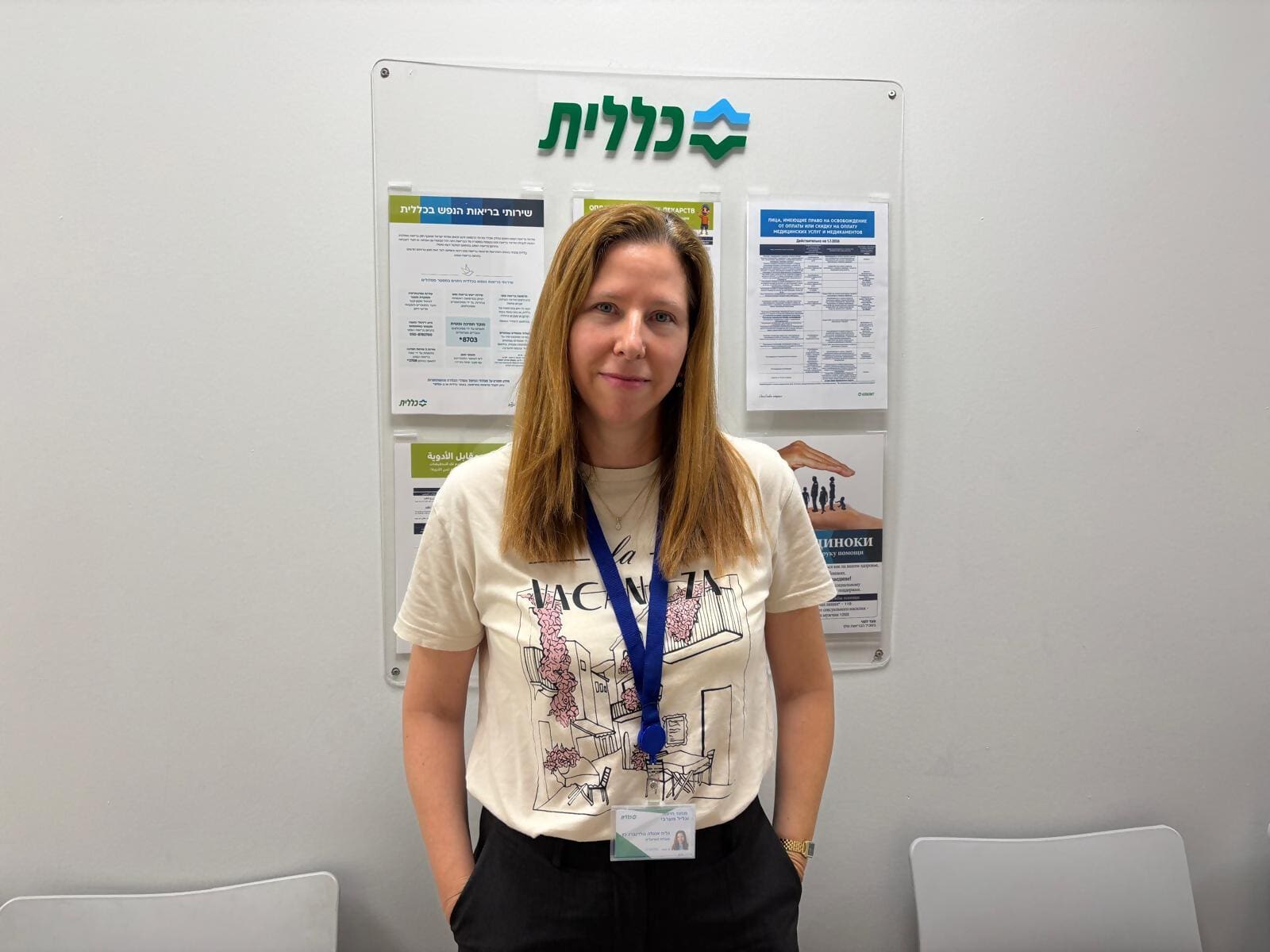
The story of Galia Goldenberg-Katz, social worker and psychotherapist at the Children's Mental Health Clinic in Klalit, Haifa and Western Galilee District, Reveals another angle of the Black Sabbath: Children who were not in the shell, did not hear gunfire or see terrorists, but one image, one moment in front of an open screen, was enough to undermine their sense of security. On National Remembrance Day, alongside the murdered, the fallen, and the kidnapped, there is also a place for the silent stories that were burned into the world of children from afar.
The memory created at home: One photo that changed everything
Three years have passed since the Hamas attack on October 7, 2023. While the country mourns the memory of those murdered and kidnapped, there are children who experienced the events through screens and reacted with no less force.
Noam (not his real name), a first-grade student, was briefly exposed to harsh images broadcast on television that morning. He was not in a shelter, was not evacuated from his home, and did not experience the threat up close. But the first question he asked his mother after she had managed to turn off the screen was: "Do you want to kill us?"
This question was just the beginning of a complex emotional journey.
The fear that is not visible from the outside
In the weeks that followed, Noam began to cry more, had difficulty getting away from his mother, and was afraid to leave the house. At night, he moved to his parents' bed, and during the day he returned repeatedly to make sure his mother was next to him. He had difficulty concentrating on learning and playing, and the thought that his family members might die did not leave him.
It was difficult to identify the distress at school. Noam continued to come, separated from his parents, and seemingly functioned normally. The gap between external functioning and internal fear is part of the complexity of children coping with threatening experiences, even when they occur from a distance.
In the treatment room: When the game stops
When he arrived at the crisis intervention clinic, the difficulty also appeared in the game. Instead of making up stories and using his imagination, he arranged the Playmobil figures exactly as they appeared on the packaging. Everything was neat and organized, but the story did not begin.
After a professional assessment and psychiatric consultation, it was decided to focus on brief emotional therapy and guidance from his parents. The initial goal was not to revisit the frightening memory, but to rebuild a sense of security.
Building a protected space: the people, the activities, and the lion that protects
In the first stage, Noam and I identified the people, activities, and things that gave him a sense of protection. All of these became a safe space to which he could return in difficult moments.
His parents were a significant part of the process. His mother attended the sessions and learned the therapeutic tools to continue the work at home. In young children, the sense of protection is not created only in the therapy room, it is built within the family bond.
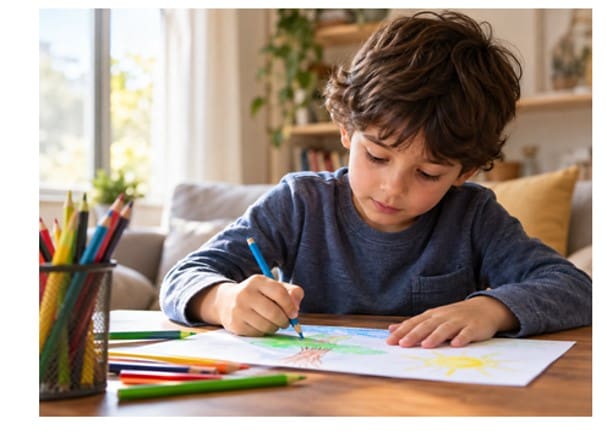
At one of the meetings, Noam was asked to draw animals he would like to adopt. When he got to the lion, he said: "He's watching over me." Later, together with his father, he made a worry doll in the shape of a lion, which accompanied him at night and helped him fall asleep in his bed.
Processing Fear: Play, Creativity, and EMDR
Only after a solid foundation of confidence was created could the frightening memory be gradually approached. Noam drew his worries in clouds, rated the intensity of the fear, and later processed his thoughts through conversation, play, creation, movement, and EMDR therapy—a method that helps process traumatic experiences through eye movements or bilateral stimulation.
The work was done at his own pace. In sessions where he was not ready to touch on the memory, the therapy returned to play, breathing, and strengthening the sense of protection.
At a later stage, Noam was able to draw the picture he was exposed to on October 7 and look at it as part of the treatment.
Return to routine: Fear hasn't gone away — but it has stopped managing
After 12 sessions, his parents reported that he was calmer, sleeping in his own bed again, able to concentrate on learning, and enjoying playing again. The fear did not disappear completely, but it stopped controlling his life.
National memory, quiet distress
Three years later, Noam's story reminds us that October 7th was also burned into the world of children who were not at the scene of the events. Sometimes the distress is not expressed in words, but appears in fears, difficulty sleeping, or changed play.
On National Remembrance Day, alongside the memory of what happened, it is also important to remember those who continue to bear its consequences and to make room for the distress that is not always visible.