


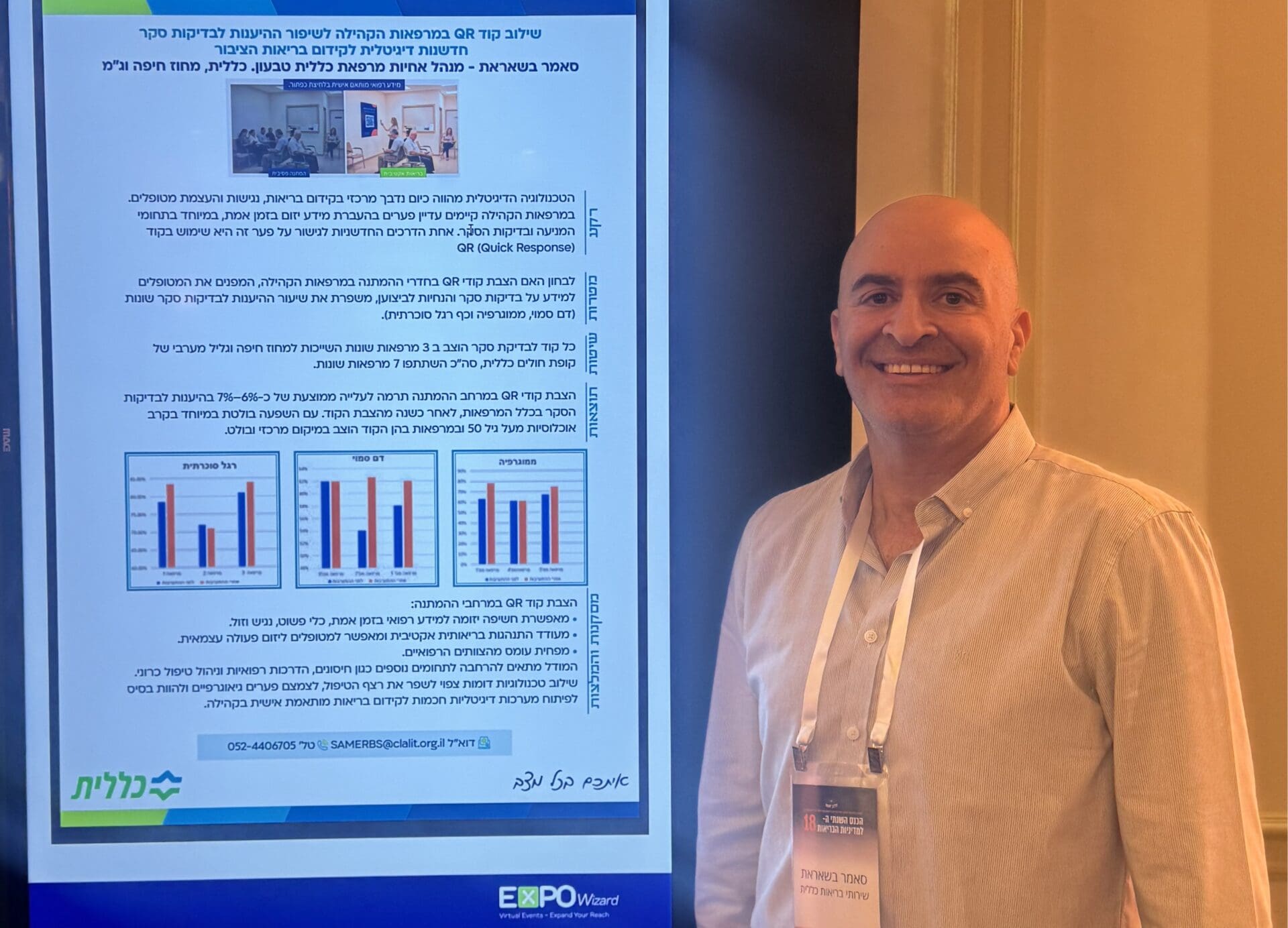
A new study conducted by Clalit in the Haifa and Western Galilee districts found that a simple and inexpensive intervention, placing QR codes in waiting rooms, was able to increase compliance rates for essential screening tests by approximately 6% to 7% in just one year. The findings demonstrate how intelligent use of available technology can change health behavior and strengthen preventive medicine in the community.
Waiting time becomes a tool for health promotion
The study, conducted in seven Clalit clinics, examined the impact of placing QR codes that linked to information about screening tests: mammography, fecal occult blood test, and diabetic foot examination. The idea behind the intervention was simple: to utilize patients' waiting time to make important medical information accessible, encourage awareness, and encourage the performance of life-saving tests.
Samer Basharat, Director of Nursing at Clalit Tivon Clinic and lead researcher, explains that community clinics are a significant meeting point for patients. “Waiting time can become a moment of learning and empowerment,” he says. “QR codes allow instant access to medical information, and encourage patients to take independent action for their health.”
Increased response to life-saving tests
About a year after the codes were put in place, an average increase of 6%–7% was recorded in response to screening tests across all clinics. The most significant increase was observed in mammograms, while a consistent improvement trend was recorded in the area of fecal occult blood tests.
The researchers note that this is a simple to implement tool, accessible to the public and low-cost, one that allows proactive exposure to medical information and reduces the burden on medical teams.
Potential for expansion into additional areas
The study's conclusions indicate that the model can also be used in other areas: vaccinations, medical training, chronic disease management, and more. Integrating accessible digital technologies in the community space may improve the continuum of care, reduce geographic gaps, and assist in the development of personalized solutions for health promotion.