


I don't often compliment the Haifa Municipality. Not out of principle, simply because most people don't have the opportunity. But before we begin: Yes, something happened here that is worth dwelling on.
Six months ago, a rocket fell 10 minutes walk from my house. Where the neighborhood (Hadar) eats pizza, drinks beer and tries to pretend that life is normal. The windows were cleaned, but the feeling that something fundamental had been shaken remained. That's what rockets do: They don't just break windows, they break silence.
The scene of the interceptor crash in Haifa - Aki Flexer in an interview with Orly Alkalai - 6/22/25
A month later, the word “renovation” appeared in one of the neighborhood’s WhatsApp groups. Immediately after it: “public participation.” It’s a word that turns on a light bulb in me and makes me raise an eyebrow, and then another: Is anyone in the Haifa municipality really offering to hear what the neighborhood’s residents want in their garden?
Now, I don't plan cities, yet. But what I do know is simple: People want to feel part of what is happening around them. In the case of a neighborhood that has been traumatized, that has lost a sense of control over reality, this desire is not a luxury, it is oxygen.
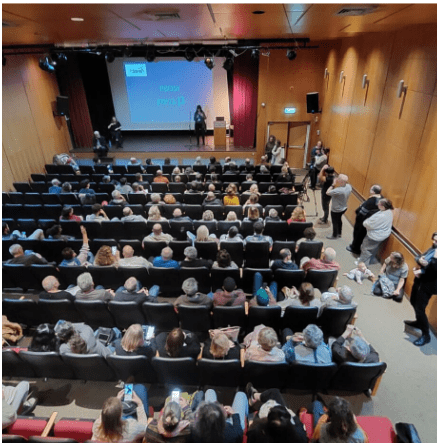
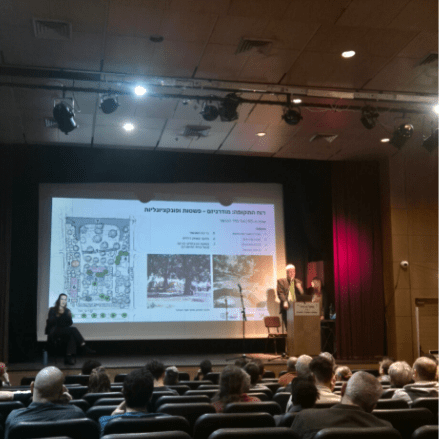
And when we arrived this week for public participation at the community center, it became clear that there was a huge demand for oxygen. The neighborhood came. The parents, the children, the adults, those who suffered the damage and those who only heard the noise. Everyone wanted to say something, ask something, understand something. Not because they were an "audience," but because this was their home.
And here comes the less convenient part: the event was good, but it was rare. Public participation cannot remain a festive surprise, it has to be a rule. A practice. A profession. A way of working. Not an act of goodwill on the part of a nice clerk or a media gimmick.
Because let's face it: a city that doesn't involve residents in decisions is like someone assembling IKEA without instructions. It might work out, but barely.
And in Haifa, especially now, public participation is not an add-on. It is part of the reconstruction. Part of the stability. Part of the way to rebuild trust that was cracked long before the missile hit.
The municipality can choose to see what happened this week as a one-time exception, or it can understand that the Haifa public is not asking for a favor. It demands to be part of it. It demands what should have been its own anyway.
By: Hila Asia, the leader of the 'Most of the City' movement.
Good intentions and a good start
Success will be measured by the result.
Champion
Indeed, your intervention and help in engaging the public is receiving responses and actions. There is no doubt that you will lead many more such initiatives.