

The Hecht Museum, housed in the main building of the University of Haifa, is a museum that displays archaeological finds and works of art that was established at the initiative of Dr. Reuven Hecht, founder of the "Dagon" silos.
Hecht Museum
The museum is the result of the initiative of Dr. Reuven Hecht (founder of the Dagon silos) and was inaugurated in 1984. It was erected inside the main building of the university designed by the Brazilian architects Oscar Niemeyer and Prof. Shlomo Gilad from Haifa.
The museum is the highlight of Dr. Reuven Hecht's extensive activities for the university, which included establishing a chair forZionism and history and establishment The Herzl Institute for the Study of Zionism and its Study.
Dr. Hecht showed great interest in the archeology of AI and the museum displays items collected by him for about 60 years. These represent the material culture of Israel from the Biblical period to the Byzantine period. The collection includes coins, inscriptions, seals and findings from underwater excavations, among others The old ship from Michael's anchorage.
The ship is from Michael anchorage
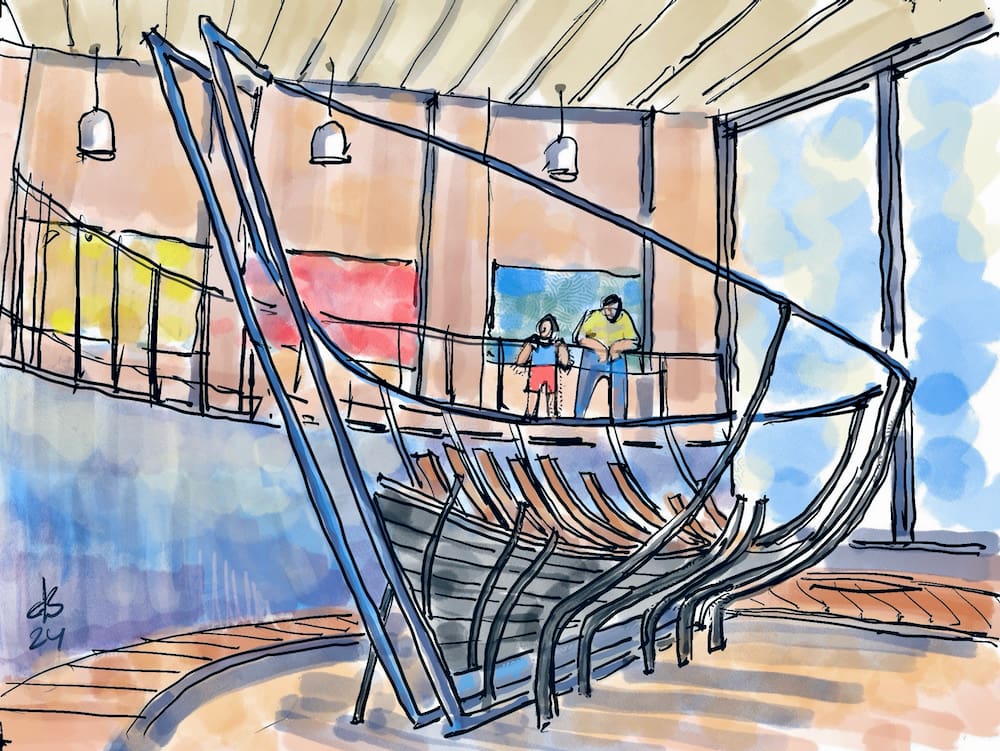
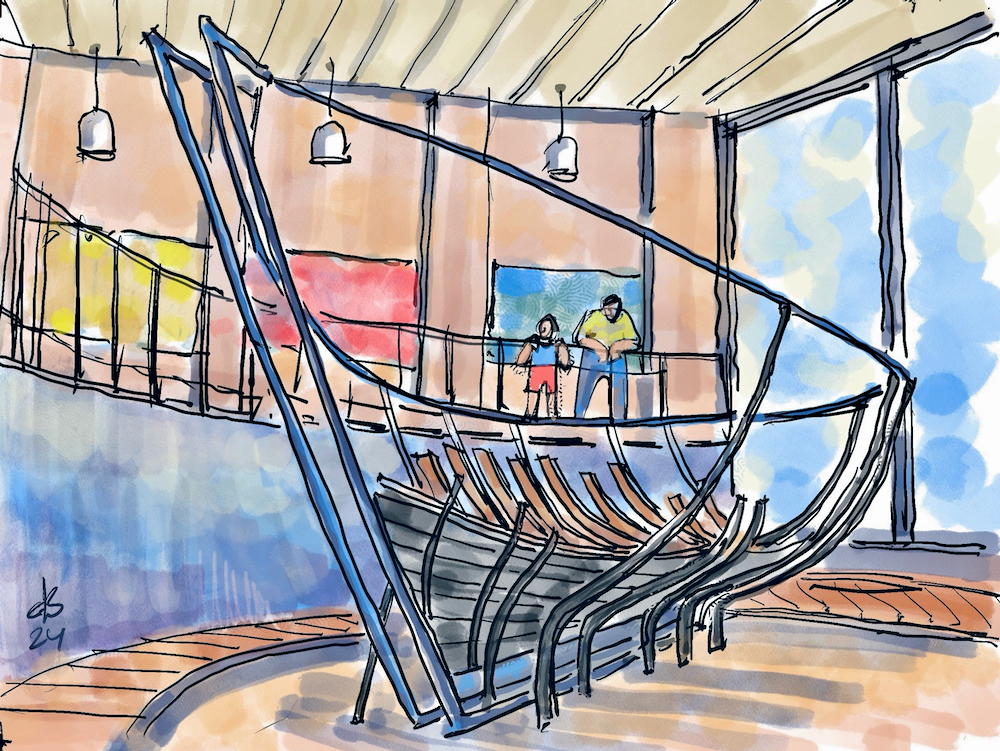
The ship is one of the most fascinating finds in the museum. This is a wooden merchant ship from the end of the fifth century BC that was discovered in 1985 in the sea, at a distance of about 70 m from the beach of Kibbutz Ma'gan Michael. The length of the ship is about 13 m and its width is about 4 m. The remains of the ship's wooden hull were well preserved on the seabed.
In 2014, the construction of a replica of the ship began at the school for naval officers in Acre by a team of experts and many volunteers. Construction continued until 2016 and the ship's launching ceremony took place in March 2017, at the Michael anchorage.
The new wing
Dr. Hecht's initiative to expand the museum was realized after his death (1993) by Haifa University and the managers of the Hecht Foundation, and in October 98 the new wing was inaugurated, designed by the architects Y. Stern and A. sonino
The new wing is dedicated to the plastic arts. The collection includes works of art with an emphasis on Impressionism and the School of Paris. Among the artists featured are Manet, Monet, Pissarro, Soutine, Modigliani and Van Gogh.
Also, this wing hosts changing exhibitions on various topics, from archeology to contemporary art.
Dr. Reuven Hecht
Dr. Reuven Hecht, born in Antwerp, was a member of the revisionist movement, a close friend of Ze'ev Jabotinsky and one of the founders of Haifa University. Being a sworn archaeologist, he worked for many years collecting ancient items related to agriculture in the Land of Israel.
The large archaeological collection of Dr. Reuven Hecht was donated by him to the museum established at the University of Haifa. Among the other cultural institutions that arose thanks to his work, we mention the cultural center "Beit Hecht" in the center of Carmel and "Hecht Park" on the Shekmona promenade on the seashore.
In 1987, Dr. Reuven Hecht was awarded the Israel Prize for his special contribution to society and the country.
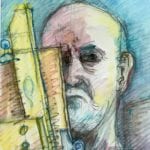
J. Stern and A. Sonino, the architects of the new wing
Israel Stern Born in Warsaw (1934). His family survived the horrors of World War II and immigrated to Israel in 1949. After completing his architecture studies at the Technion, he worked in the office of the architects Aryeh Sharon and Benjamin Idelson. Among his works are the buildings of the Faculty of Life Sciences at Tel Aviv Univ. and the Embassy of India in Tel Aviv.
Aryeh Sonino He was born in Tel Aviv (1939), scion of a family from Rome, where the Jews lived from the time of the Second Temple. After completing his architecture studies at the Technion, he went to continue his studies in Italy and the USA (master's degree). His grandfather and uncle were also architects. He became famous thanks to the planning of the synagogue in Beit Shaarim (Jezreel Valley) and the synagogue in the Magdiel settlement (today Hod Hasharon).
Epilogue
The Hecht Museum is a cultural and artistic gem in Haifa. It offers a rich and enriching experience to anyone interested in getting to know the history and culture of the Land of Israel, and admission to it is free of charge.
My thanks are hereby given to Ms. Diana Shkolnik Goren, architect of the University of Haifa, for her help in preparing the article by providing very significant information.
We invite our readers to suggest buildings as subjects for articles and if interesting stories are found behind them we will be happy to review them in this section.
Dear readers,
The articles in this section are based on open information published in sources such as Wikipedia and other websites and may include various historical inaccuracies arising from the aforementioned sources.
Did the article interest you?