


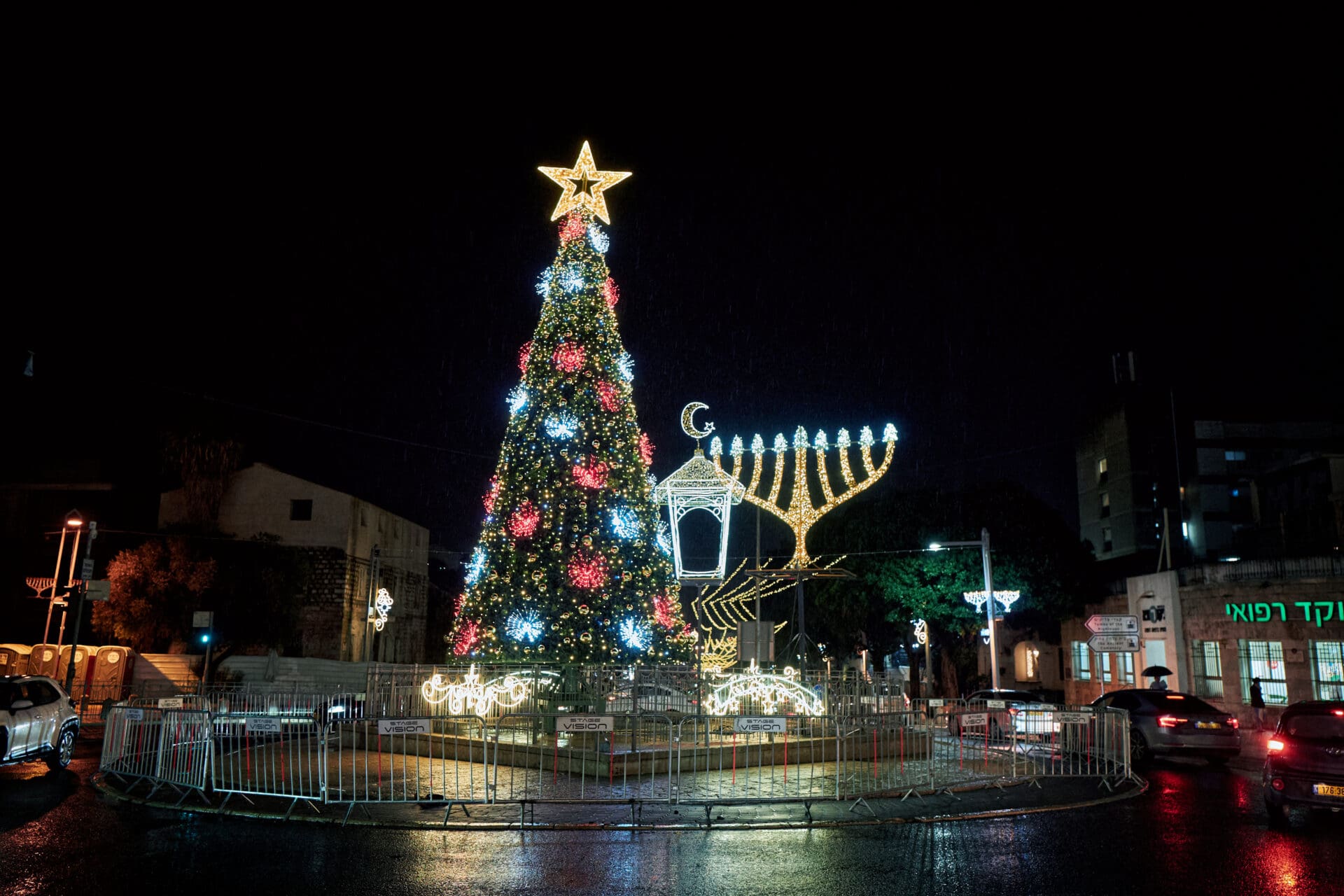
(Hai Fa – Haya and the Environment News Corporation) The holiday season in Haifa returns this year in the shadow of the security situation and tensions in Israeli society, and brings with it some difficult challenges: hundreds of thousands of visitors, traffic congestion, closed streets, overcrowding, and disruption to the daily lives of residents of Wadi Nisnas and the German colony.
In preparation for the event, which is expected to attract tens and hundreds of thousands of visitors to the city, Haifa Deputy Mayor Fakhr Bayadsi talks in an interview about the changes made this year in preparation, the expected reinforcement in the areas of security and order, transportation solutions, and efforts to minimize harm to residents. Alongside the importance of the event as a symbol of living together, Bayadsi emphasizes: "Residents first".
An event of unusual magnitude, in the heart of residential neighborhoods
According to Biadsi, it is important to understand that the holiday season is not a routine event, and that it should not be compared to festivals or Christmas markets that take place in closed, fenced areas.
"The holiday of holidays is not a normal event, nor a routine event. It is a very big challenge, unlike any other event, not only in Haifa but in the entire country. No event that brings in 200 visitors on Saturday takes place in residential neighborhoods," he says.
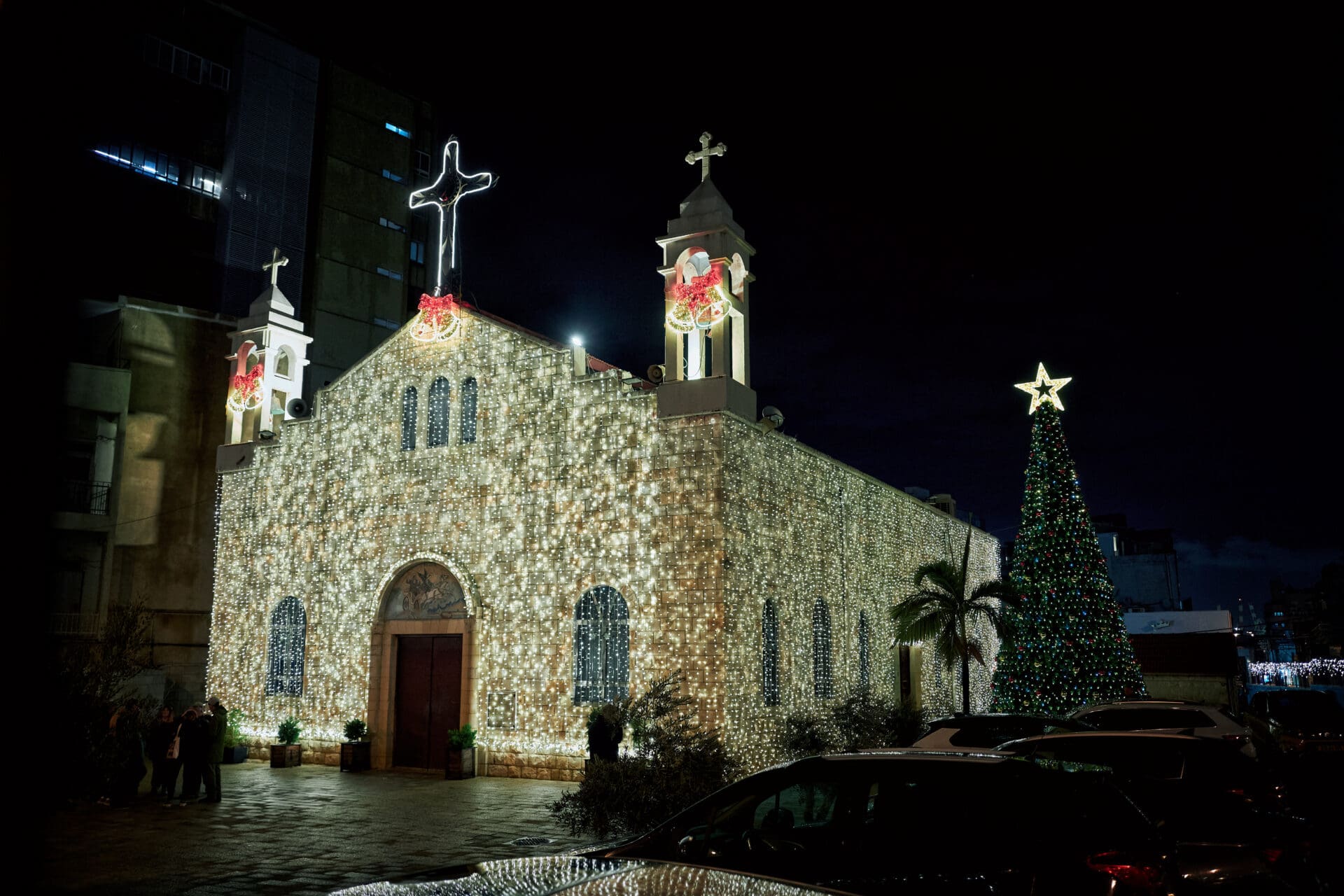
According to him, the event takes place in the heart of living and breathing neighborhoods, including Wadi Nisnas and the German Colony, and directly affects the daily lives of residents. Closing streets, blocking traffic routes, and turning neighborhood spaces into entertainment and event areas cause congestion, overcrowding, and traffic jams that affect the entire city.
"When you decide to turn a neighborhood and a residential area into an event venue, it has a negative impact on the residents. It frustrates them and makes them feel trapped. There is no magic formula. We will never be able to hold this event without traffic jams, without overcrowding, and without suffering for the residents."
Bayadsi emphasizes that, along with recognizing the importance of the event, we must also recognize the price that residents pay, and find the right balance between holding the holiday and minimizing the damage to their quality of life.
What's new this year?
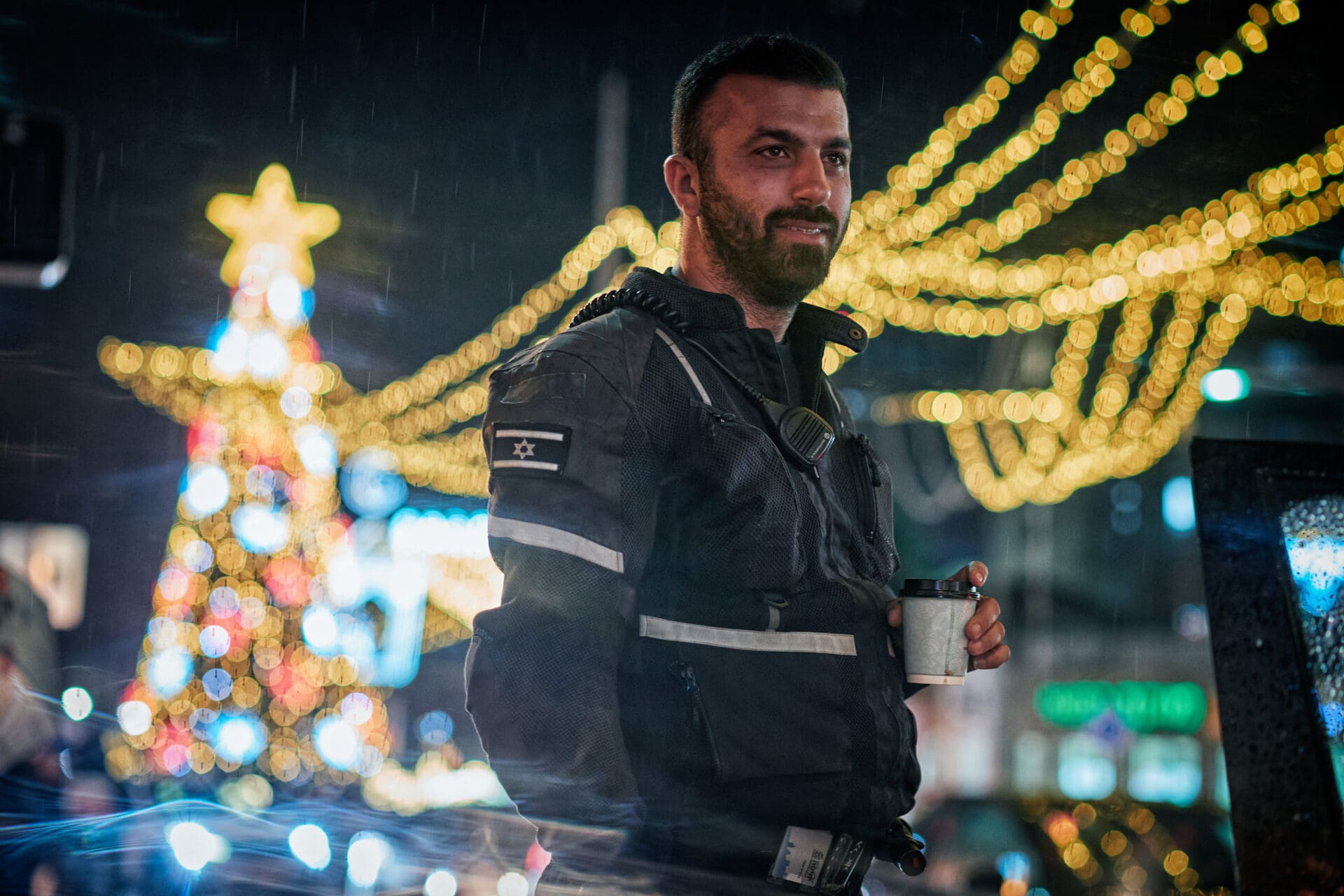
One of the main issues that Yadasi focused on in preparation for this year's event was personal safety, order, and security. He said he insisted that the event would not be possible without a significant increase in resources in this area.
To this end, the regular budget was increased. In two hundred million Shekels for the holiday events. One million was already approved by the last city council and two hundred was approved by the last finance committee and will be approved by the next city council.
"This year I fought and did not agree to hold the event without a significant addition in terms of order, safety, security and the personal safety of the residents. I said explicitly, there is no half-safety, no half-order and no half-responsibility." As part of the preparations, reinforcement of the marshals' system is planned, among other things by integrating marshals from the neighborhoods themselves, who will be able to get to know the needs of the residents and assist them in real time.
The goal is to allow residents to get to and from their homes, ensure free access for worshippers and visitors to churches, respond to emergencies, and maintain order within neighborhoods and around event locations. In addition, this year, an emphasis will be placed on preventing vandalism, noise, and disturbances at night, so that residents can continue their daily lives during the festivities.
The Metro shuttle and parking lots outside the city
Changes are also planned this year in the field of transportation, with the aim of reducing the entry of private vehicles into the city and traffic congestion in event areas.
According to Bayadsi, talks are underway with the Ministry of Transportation to strengthen the metro's activity and operate it as a shuttle, with a frequency of fifteen minutes. Among other things, a service is planned that will allow visitors arriving from the west and south to reach the event area, as well as a connection via the Bay Central Station.
At the same time, efforts are being made to map parking lots outside Haifa, to direct visitors coming from outside the city to them and encourage them to leave their cars outside the city center and use public transportation. According to him, one of the main goals is to reduce as much as possible the number of vehicles entering the neighborhoods and streets near the event centers.
Uniform and quieter music in the German colony
Another change that will be introduced for the first time this year is the installation of a surround sound system in the German Colony. The goal is to prevent a situation where every business and every stand plays music at different volumes, sometimes at high volumes, in a way that harms residents living in the area. The new system will allow for central control of the music and its volume, so that it is uniform, moderate, and in keeping with the spirit of the holiday.
"Our goal is to prevent loud, screaming music from emanating from businesses and stalls, in order to minimize the harm to people living in the residential neighborhood. We will set the tone and volume and prevent different music from each stall and each business," explains Biadsi.
"Residents first"
Alongside the logistical preparations, Bayadsi wishes to clarify that, for him, the success of the event is not measured only by the number of visitors or the scope of activities, but also by the ability to maintain the quality of life of the residents of the host neighborhoods.
"Ultimately, the residents come first. Before looking for other things, which may be luxuries, the residents want basic things. Just as they want education and culture, they want above all a sense of personal security." According to him, the municipality's responsibility is not only to hold a significant event, but also to ensure that the residents of the neighborhoods are not left to deal with its consequences alone.

"Living together is not just about shared meals – you need partnership in decision-making"
Bayadsi addressed the significance of the holiday of holidays in the current period and its role in strengthening the shared life between Jews and Arabs in Haifa. He said that precisely in a time of war, hatred and tension, the event has special importance in conveying a message of partnership, respect and acceptance of the other.
He points to the three symbols of the holiday, the crescent moon, the Christmas tree and the menorah, standing side by side, as a symbol of the statement Haifa wants to convey. "There is a very big statement and message here. The three symbols that we aspire to and want to see in the world, stand and are standing next to each other. It is a statement in itself."
The holiday season will continue to present Haifa with a complex challenge this year, on the one hand, an event that seeks to present the city as a symbol of coexistence, tolerance, and multiculturalism; and on the other, a reality in which neighborhood residents are required to bear the burdens and disruption to their daily lives. The central question will be whether the changes and reinforcements promised this year will indeed be felt on the ground, and whether it will be possible to hold the celebrations while providing a real response to the residents who live at the heart of the event.
It is important to note that the "Holiday of Holidays" festival was founded to emphasize Haifa's uniqueness as a city where Jews, Muslims, and Christians live together. During the month of December, the symbols of the three religions, the Christian fir tree, the Jewish menorah, and the Muslim crescent, come together to form a central decoration in the city, even when the holidays themselves do not coincide on the calendars.
There are years when the three holidays: Hanukkah, Christmas, and Ramadan, or other Muslim holidays, such as Eid al-Adha or Eid al-Fitr, have indeed been celebrated together. The next time the three holidays will meet in December is expected in 2031. Either way, the message is clear: there is no need to synchronize dates to celebrate the shared spirit of love, brotherhood, and mutual respect.
Good luck to us – let's go Haifa!
If there was a train on Saturday, we would have come to Haifa for this special event. Too bad. We are from Yavneh..
This is a Jewish state. You destroyed Haifa, like the entire country, after October 7th. You are nothing and nothing here in the State of Israel. Let it be clear. There is no faith, no coexistence, nothing.