


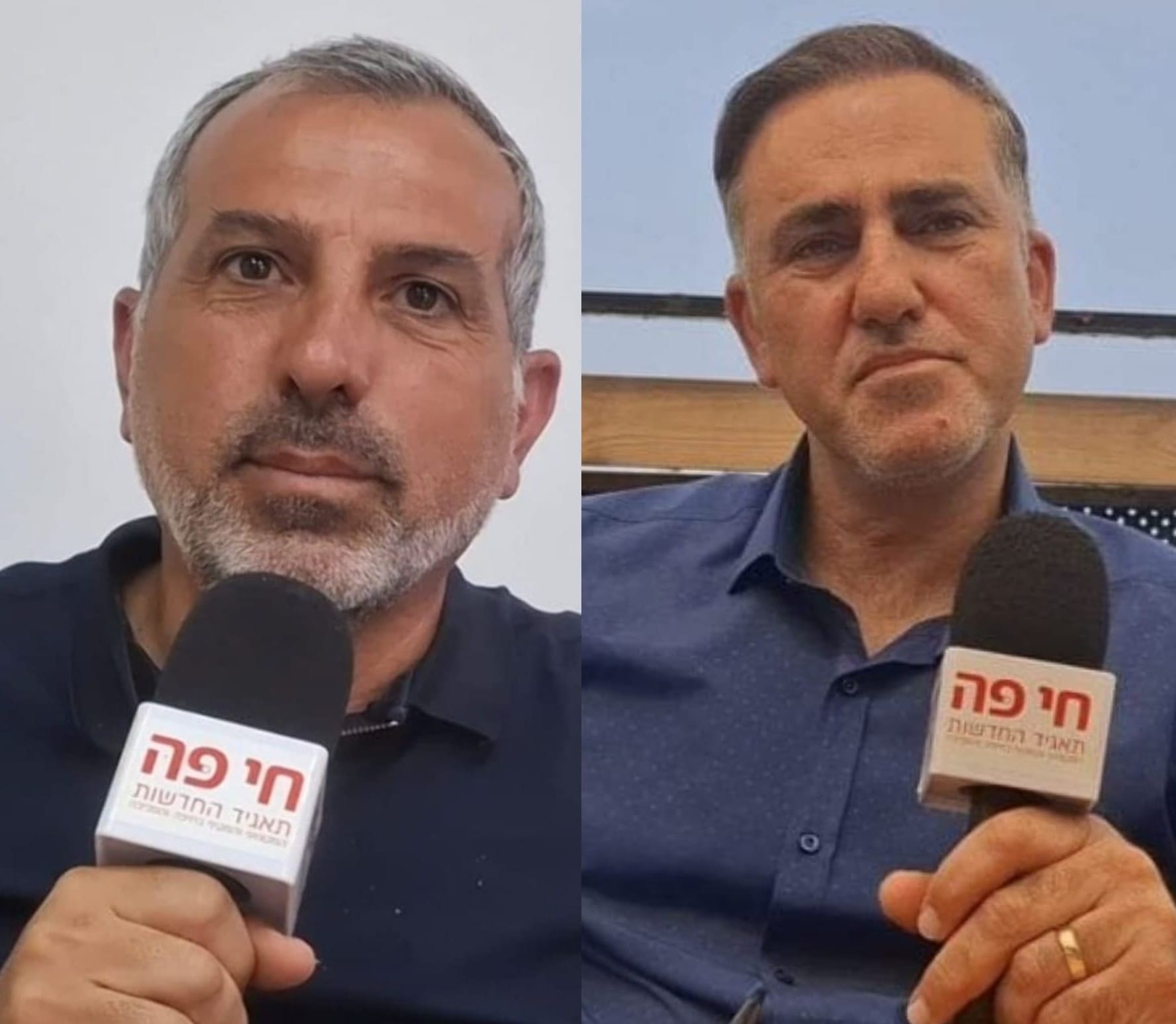
(Hai Fa – Haifa and the surrounding area news corporation) The historic achievement of the Arab parties in the 2026 elections, with 19 seats for the Joint List and Ra'am, places them in a position to significantly influence the composition of the next government. In Haifa, there was also notable support for the Joint List, which won about 10% of the city's votes.
After recommending Gadi Eisenkot to form the government, the central question is how political power will be translated into real achievements, personal security, civil equality, budgets, housing, and partnership in decision-making.
The 2026 Knesset elections mark a turning point in Israeli politics and the status of Arab society. The Joint List won 11 seats and the Grand National Assembly won eight seats, and together the two parties recorded a historic achievement of 19 seats in the Knesset. Added to this is a voting rate of approximately 77% in Arab and Druze localities, excluding the mixed cities, a figure that indicates the expansion of political participation and a growing desire to influence the future of the country.
In Haifa, political support for the Joint List was also evident, as it won about 10% of the city's votes, compared to about 1.2% for Ra'am.
On a national level, the Joint List won about 9% of the vote and became the fourth largest party in the Knesset after the Yeshar Party led by Naftali Bennett with 11 seats. Ra'am won about 6% of the vote, with eight seats, and became the sixth largest party in the Knesset, after the Democratic Party.
Arab parties in a position of influence
The electoral achievement takes on additional political significance following recent developments. The Joint List, after an agreement between the three factions that make it up, recommended Yeshar Party Chairman Gadi Eisenkot to form the government. Ra'am also announced its support for him.
Following consultations with representatives of the factions, President Yitzhak Herzog tasked Eisenkot with forming the government. In total, Eisenkot received the recommendation of 67 Knesset members, including 48 Knesset members from the opposition parties, 11 members of the Joint List, and eight members of Ra'am, a number higher than the required majority in the Knesset, which is 61 Knesset members.
However, the recommendation does not guarantee the formation of a government, and the road to agreement is still fraught with political and ideological challenges. Eisenkot's positions on issues such as defining Israel as a Jewish and democratic state, military or civilian service, and policy toward Hamas and the Gaza Strip are likely to provoke disagreements with the Arab parties.
For the same goal, two different ways to influence
One of the key issues now is how the Arab parties intend to utilize their political power. Although they are partners in the move to replace Netanyahu's government, there are significant differences between their positions regarding involvement in the next government.
The Joint List makes it clear that they do not intend to join the government, but rather to provide it with parliamentary support from outside and serve as a political safety net. The chairman of the Arab Movement for Change, MK Ahmed Tibi, made it clear that the list does not demand ministerial portfolios, but expects Eisenkot to provide a safety net for Arab society and advance the burning issues that concern it.
Ra'am, on the other hand, presents a more flexible position. The party's chairman, Mansour Abbas, made it clear that Ra'am does not rule out participation in a coalition or influence on the formation of the government and its policies. According to him, the list's political power has grown significantly, and it is at the heart of the process of shaping the next coalition. Abbas also emphasized Ra'am's desire to serve as a bridge between the Israeli public and the Palestinian public and to promote a horizon of peace.
The difference between the two approaches does not eliminate the common denominator, the demand to replace the current government and translate the power of the Arab parties into real change in civil and social reality.
What do the Arab parties demand from the next government?
The agenda presented by the Arab parties focuses primarily on issues that affect the daily lives of Arab citizens. Chief among these is the fight against crime and violence and ensuring personal security, along with stopping house demolitions, promoting housing solutions for young people, and increasing budgets for local authorities and the education, welfare, culture, and infrastructure systems.
Alongside this, they demand a fight against racism and incitement against Arab citizens, recognition of the legitimacy of their representatives, full civil equality, and a fair distribution of state resources.
The Joint List also seeks to promote a political process based on peace with the Palestinian people, recognition of their right to self-determination, and the establishment of an independent Palestinian state.

Fakhar Bayadsi: "There is no half partnership, no half equality, and no half respect"
Deputy Mayor of Haifa and Hadash representative on the City Council, Fakhar Bayadsi, sees the election results as a historic achievement for Arab society, which, he said, has regained its respect, power, and status as a central player in shaping the future of the country.
Bayadsi emphasizes that the broad vote expressed not only a protest and outcry against the existing reality, but also hope and aspiration for a better future. Behind the vote, he says, is a public that seeks to live with dignity, security, equality and real opportunities.
For him, elected representatives must respect the trust placed in them and translate it into tangible actions and achievements. He posits three central issues that must be at the heart of any future political agreement:
- The first is Eradicating crime and violence and ensuring personal security – Bayadsi emphasizes that in a civilized country, the greatest dream of an Arab child cannot be simply to stay alive. According to him, the police and law enforcement authorities must fulfill their duty to Arab society with the same determination, responsibility, and commitment that they are required to give to every citizen. “Personal security is a basic right and not a favor that is done to the public,” he clarifies.
- The second issue is True civil equality, fair distribution of resources and reduction of gaps in the areas of education, infrastructure, housing, planning and construction, employment and development of local authorities – He said that essential budgets, a fair distribution of resources, and the prevention of discriminatory and harmful legislation and decisions must be ensured. Equality, he emphasizes, must be reflected in policies and budgets and not remain a slogan.
- The third issue, and the most important in his opinion, is Respect, legitimacy and the cessation of incitement against Arab society – Bayasada calls for an end to the inflammatory, arrogant, and divisive discourse, and to stop treating Arab citizens as suspects until proven otherwise. He emphasizes the need to protect the freedom of expression, identity, and culture of Arab society, and to stop questioning the legitimacy of its elected officials.
Bayadsi makes it clear that true partnership is not limited to iftar dinners, flashy events, or joint photos under the banner of “coexistence.” Partnership means being part of decision-making, legislation, planning, resource allocation, and shaping the future.
"A true partnership is a full partnership in decision-making, and there is no half partnership," he says. "There is no half partnership, no half equality and no half respect."
Drawing on his experience as Deputy Mayor of Haifa, he emphasizes that living together in the city requires working together, making decisions together, mutual respect, and shared responsibility for the future. According to him, Haifa must be preserved as an ocean of sanity and brotherhood.
In conclusion, Bayadsi emphasizes that Arab society is not asking for favors or favors, but rather demands its rights, dignity, and its natural and proper place as a full partner. He says that the days when it could be treated as a vote bank, satisfied with empty promises, or belittled for its power and capabilities are over.

Charbel Dakhwar: Changing the government is the first goal, but not the only goal
Haifa City Council member from Balad, Charbel Dachwar, emphasizes that the Joint List's priorities begin with replacing the current government, which it defines as an extremist, racist and fascist government, headed by Benjamin Netanyahu and partnered with Bezalel Smotrich and Itamar Ben-Gvir.
According to him, the Joint List considers the current government to be the most dangerous for Arab society and all citizens of the country, and therefore replacing it is a central and urgent goal.
Dakhvar explains that the recommendation for Gadi Eisenkot does not necessarily stem from full identification with his political positions, but rather from a clear strategic consideration: the desire to bring about a change in the government and prevent its continuation in power.
Regarding participation in the government, the Joint List's position is clear: it does not intend to join the coalition, but it is willing to provide it with outside support and serve as a political safety net, provided that it commits to promoting real change and improving the situation of Arab society.
Dakhwar lists five key areas in which the Joint List demands real progress:
- Eradicating crime and violence: Formulating and implementing a comprehensive plan to combat criminal organizations, reduce violence, and increase the personal security of Arab citizens.
- Stopping the demolition of houses: Stopping the policy of house demolitions in Arab communities, cities and villages, especially in the Negev, alongside finding planning solutions and regulating construction.
- Housing solutions for young people: Expanding the housing supply, promoting master plans, and providing practical solutions to the needs of young men and women in Arab society.
- Budgets and Development: Allocating significant and equitable budgets to Arab society, with an emphasis on education, culture, infrastructure, welfare and employment, in both formal and informal education.
- Peace, equality and partnership: Promoting coexistence and full equality between Palestinian and Jewish citizens in the country, alongside promoting a peace process with our Palestinian brothers and recognizing their right to self-determination and the establishment of an independent Palestinian state.
According to him, the Joint List's message is clear. Replacing the current government is a primary goal, but it is not just about changing the government. The goal is to create a new political and social reality that will ensure personal security, civil equality, budgets, development, respect, and a better future for Arab society and all citizens of the country, alongside striving for a just and stable peace in the region.
The big test: Will the 19 mandates become a real influence?
The achievement of 19 mandates gives the Arab parties significant political power, but also imposes a heavy public responsibility on them. The public, which turned out to the polls in high numbers, wants to see results, and not be satisfied with declarations and promises.
Even in Haifa, where the Joint List won the support of about 10% of voters, this is an opportunity to raise the needs of Arab society and the demand for equality and partnership to the center of the public and political agenda.
Eisenkot faces the challenge of forming a government that can rely on the support of the Arab parties, while dealing with the differences of opinion in the opposition camp. On the other hand, the Joint List and Ra'am face the challenge of ensuring that the power given to them by the public will be translated into real change in policy and in the lives of citizens.
Ultimately, the test does not come down to the identity of the next prime minister or the composition of the coalition, but rather the ability to create a different reality: a state in which personal security, equality, budgets, respect, and representation do not depend on the identity of the citizen.
The message emerging from the words of Fakhar Bayasada and Charbel Dakhwar is clear: Arab society does not seek to be a partner only at the moment when its votes are needed to form a government. It demands to be an integral part of decision-making and shaping the future of the country. The 19 mandates are a historic achievement, but now the real test begins, to transform electoral power into influence, achievements, and full partnership.
Google who is Bayadsi and what is his past. How is it possible that Klish wanted to appoint him as the city's CEO and all the clowns on the city council opposed it because of his past. Council of Shame
Just imagine if there was a Jewish party in the United States that does not recognize the United States, defames the United States from within Congress, glorifies Jews who murdered Americans in prison and smuggles them phones and coordinates between them and Jewish terrorist organizations that openly threaten to massacre Americans, claims that it is an occupied country, and calls on American Jews not to serve or even integrate into America. That party would be voted for by 98 percent of American Jews and receive money from foreign countries that encourage it to radicalize and continue with political terrorism. Imagine if they were 60 out of 535 in Congress. I wonder if such a bizarre scenario would be allowed in America. I wonder if they would call the Jewish party racists? Of course they would. And if they would allow them to continue to act against America from within the American Congress? Of course not. So the Arabs in Israel are racist, extremist and behave in a two-faced manner between the statements towards the Jews and the internal discourse between them and between them and the Arab countries and this circus must not be allowed to continue in the Knesset. If you want equality, integrate into other parties, enlist in national service, condemn terrorism against Israel. Without this, there is no partnership in anything and there should be no agreement with their opinions.
Balad was founded by Azmi Bishara, who was suspected of aiding Hezbollah and fled to Qatar, and was also co-founded by Bassel Ghattas, who was convicted of transferring mobile phones to terrorists in prison.
And he calls Netanyahu and Smotritz extremists...do you understand that?
A huge disaster for the State of Israel if there is a partnership with the Arabs. One big disaster. Be careful after this, leftists. Don't say we didn't know, we didn't want, we didn't choose. Good luck.
If the public in the sector continues to vote en masse for the Knesset and, in particular, for the extremist parties, Thunder and Joint, in my opinion, there is a high chance that the courts will disqualify them because, ironically, who are they bothering more now? The left.
On the other hand, a Knesset without the aforementioned extremists from the left and the joint Knesset would, in my opinion, dramatically increase the vote for left-wing parties by disappointed right-wingers who see what is happening in the parliaments and streets of Europe and in the Senate in America and who reveal Zionism, voting for the right as a preventive vote for the left and the joint Knesset.
They have no place in the Israeli Knesset, certainly not in the government.
Anyone who does not clearly call for the elimination of Hezbollah and Hamas should try to form a government in Lebanon or Gaza.