


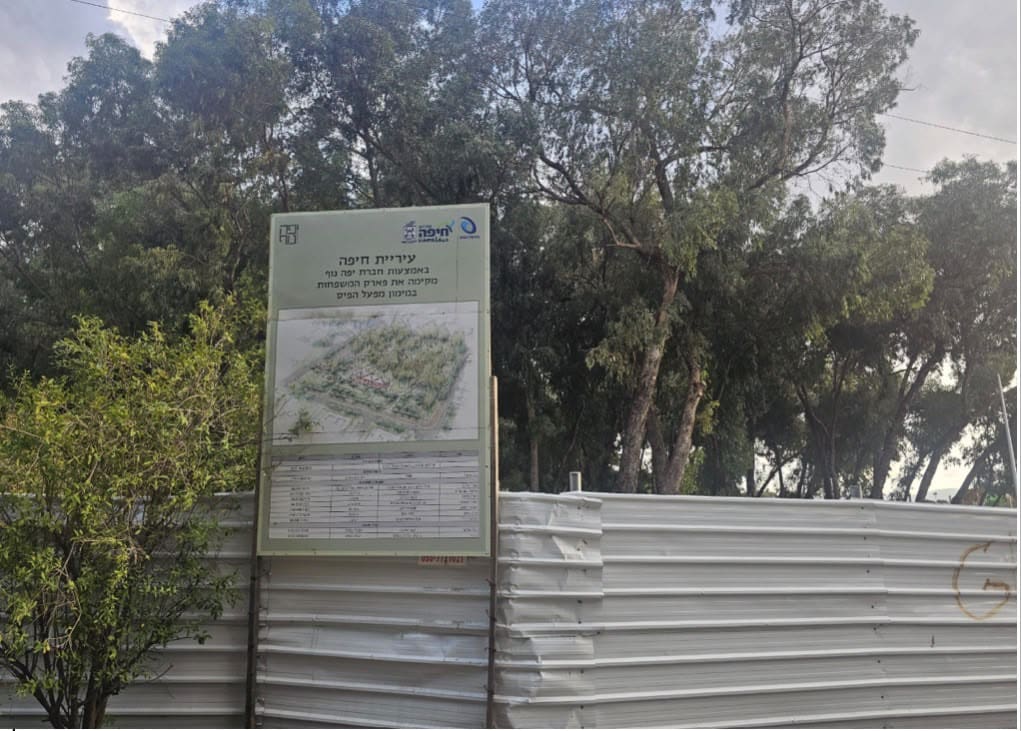
(Hai Fa – Haifa and the surrounding area news corporation) A group of environmental activists and residents of Kiryat Haim filed an appeal this week against the decision to cut down or relocate 21 mature eucalyptus trees on Avraham Danino Street in Kiryat Haim. The appeal was written by journalist Neta Peleg, who moved to Kiryat Haim a few months ago and saw the trees in her area. According to the appellants, the decision made by the forestry official is not sufficiently reasoned, and no data was presented to the public proving that the trees pose a health hazard that justifies such drastic action. They are demanding that the planned cutting be stopped, that the decision be reexamined, and that alternatives be explored that would allow the old trees, which are an integral part of the local landscape, to be preserved.
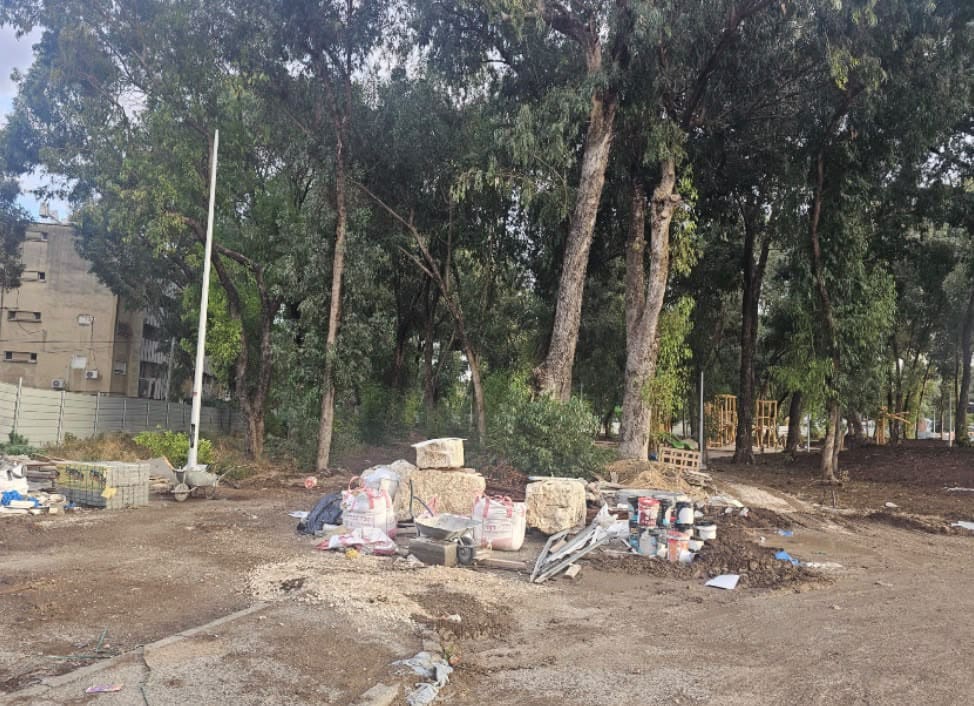
The appeal against tree felling
The appeal was filed following a decision regarding 21 mature eucalyptus trees located in Block 11580, Lot 92, Avraham Danino Street. According to documents released to the public, one of the main reasons for the decision was that the trees pose a health hazard.
However, the residents claim that the explanation provided is insufficient. According to them, it is not specified what kind of danger is involved, what it stems from, and what the professional findings are on the basis of which the decision was made. According to the appellants, if there is indeed a danger to the public, it is appropriate to present a detailed opinion or professional documents attesting to this.
They emphasize that this is not a principled opposition to any amputation, but rather a demand to receive clear information and ensure that the decision is indeed based on real need and not on other considerations.
A field tour raised questions.
According to the appellants, after the logging license was published, they arrived at the site and conducted an independent tour of the area. According to them, during the visit, they were impressed that this was an area where pedestrian traffic was not particularly significant.
Against this background, they have difficulty understanding how the site was defined as a health hazard that requires the felling of dozens of trees. "If this is a real risk," the activists say, "the data must be presented and explained why there is no other solution other than complete felling."
The activists add that precisely because this is a decision that concerns such a large number of trees, full transparency and a detailed explanation to the public are required.
Are all 21 trees dangerous?
One of the main questions raised by the appellants concerns the inclusion of all 21 trees in a single decision. They claim that even if there is a problem with one or several trees, this does not mean that all the trees on the site pose a danger.
They say that each tree must be individually examined to determine its health, stability, and contribution to the environment. Only after such an examination can it be determined which trees require immediate treatment and which can be preserved.
They emphasize that these are mature trees, some of which have been in place for decades, and therefore every tree that is cut down is an environmental resource that is lost for a very long period of time.
Demand to examine less harmful alternatives
Another central claim in the appeal is that it is unclear whether other alternatives were considered before the decision to cut down. According to the residents, in many cases, possible risks can be dealt with by pruning branches, reducing the weight of the top, treating the roots, strengthening or other maintenance activities that do not require complete cutting down.
"The central question is not only whether there is a problem," say the activists, "but whether all options have been exhausted to solve it without cutting down the trees." They argue that if other treatment methods exist, then they should be preferred, especially when it comes to old trees with significant environmental value.
The value of old eucalyptus trees
The appellants emphasize that eucalyptus trees are not just part of the local landscape but play an important environmental role.
Trees provide shade, help reduce heat loads, absorb carbon dioxide and serve as habitat for animals and birds. In an industrial area like Kiryat Haim, activists argue, their importance is even greater because they provide what little green space remains in the area.
They claim that cutting down the trees will harm not only the appearance of the place but also the quality of life of the surrounding residents and the local ecosystem.
Replanting is not an immediate solution either.
Sometimes, when a decision is made to cut down a tree, the responsible parties commit to planting new trees in place of those that were cut down. However, activists claim that alternative planting cannot be a complete solution. According to them, even if 21 new trees are planted in place, it will take many years for them to reach the size, environmental value, and shading capacity of the old trees.
In other words, even if the trees are replaced in the distant future, the environmental damage in the short and medium term will be significant.
Concern about damage to the soil and landscape system
The appeal also addresses the possible consequences of large-scale logging on the land itself. According to the residents, uprooting 21 trees at once could affect the stability of the land and increase the risk of erosion.
In addition, concentrated logging could significantly change the character of the area and lead to damage to the entire landscape. The activists want to know whether these consequences were considered before approval was granted, and whether a full environmental assessment of the significance of the logging was conducted.
Responsibility towards future generations
Beyond immediate considerations, the appeal also emphasizes the long-term responsibility towards future generations.
According to the appellants, children and young people who will grow up in Kiryat Haim in the future have the right to enjoy an urban environment that includes trees, shade, nature and green spaces. They warn that if any decision to cut down is made without thorough examination, the city's tree stock will gradually decrease and the quality of life of the residents will be affected. Therefore, they say, it is appropriate to exercise caution before any cutting down and ensure that a thorough and comprehensive examination has been carried out.
Ongoing activity of environmental activists
The struggle around Avraham Danino Street is not an isolated incident. Environmental activists in Haifa and the Kiryat Shmona regularly monitor the publication of logging permits, in an attempt to ensure that a minimum of trees are cut down.
This is especially noticeable in urban renewal projects, where old trees are sometimes present on lots designated for construction. Although the permit documents sometimes state that the trees must be preserved, in practice the trees are often damaged during construction work to a degree that prevents their survival.
On the other hand, there are also cases in which trees are carefully protected or relocated to another location, temporarily or permanently.
The big question: Who keeps the green lungs?
The current affair raises a broader question about responsibility for the city's green spaces. Does responsibility lie primarily with volunteer environmental activists, or are there municipal and public mechanisms in place to ensure that balanced decisions are made?
According to the activists, in most cases they are faced with developers, contractors, and economic entities with significant resources. On the other hand, the activists work entirely voluntarily, investing many hours in locating logging requests, reading documents, touring the area, writing appeals, and recruiting residents.
A lot of work behind every appeal
Behind the appeal filed this week are many hours of public activity. First, it was necessary to locate the logging license and learn its details. Then, the activists went out into the field, photographed the trees, and examined their condition.
It was further written: In the appeal itself, the professional claims were formulated and signatures and support from additional activists were collected. The appeal was then officially submitted, and now it is necessary to monitor the process and the responses that will be received.
This is a lot of work surrounding just one felling permit, and it illustrates the effort invested by residents who wish to influence the future of the city's public space.
The matter is under investigation by the National Forestry Officer.
The municipality said in response, because the matter is under professional review by the National Forestry Official. Until the review is completed and a decision is made on the matter, the felling process is frozen.
Did the article interest you?
God forbid. Killing trees is forbidden!!! Certainly not cutting them down!
Instead of uprooting them, they will take care of them, they will thin out the branches, which endangers human lives, they will take down what is not left.
Well done
A mature tree takes decades to grow.
Brings shade, birds, and helps against air pollution. A living creature that only does good.
It's so important to have some nature in our crowded and polluted urban space.
The eucalyptus avenue in the area of the Hebrew Battalion, Kiryat Haim High School, does provide shade and a rich habitat for bats, but the filth, cockroaches, and stench in the area of these trees are due to bat droppings, the leaves that fall from the trees, and in the fall, the pollen that causes severe allergies.
We must solve this problem. The Haifa Municipality does not clean these streets properly. The vehicles parked under the trees are constantly dirty with feces and pollen.
They have already built bicycle and pedestrian paths.
A new children's park will also be built in the area.
Why cut down trees? They are tall and provide a lot of shade!
Kiryat Haim is an orphaned village.
It's sad what's happening to her!
Homeless people lie at the entrance to the neighborhood, beggars at the intersections, there is no good lighting in the commercial areas, drug addicts wander around idly, couriers drive wildly, blocking sidewalks, and many residents who have been registered with the Ministry of the Interior for many years as residents of the neighborhood live in rented accommodation and are not entitled to elect their representatives, because the rent includes property taxes and water.
You forgot that there is also no parking enforcement, people park on the sidewalks or in squares as they read in school, protecting children at least 3 times a day.
The main thing is that property taxes are insanely exorbitant with new taxes and findings like a 60 shekel security tax per month for what?
You can enjoy a grove when it is well-maintained.
And not like in Kiryat Haim, neglected and full of dust and dirt.
You can enjoy a grove when it is well-maintained.
And not like in Kiryat Haim, neglected and full of dust and dirt.