


(haipo) – Following the outbreak of the Ebola virus in the Democratic Republic of the Congo and neighboring African countries, the Ministry of Health announced the Comprehensive systemic preparation Designed to ensure optimal preparedness of the Israeli health system for any possible scenario. As part of the preparation, professional guidelines were distributed to hospitals and medical teams, early identification mechanisms were established for travelers returning from areas with the disease, and a system was built for laboratory identification of Ebola cases.
Two suspects were transferred to hospitals under isolation conditions.
According to the Ministry of Health, the two individuals recently returned from the Democratic Republic of Congo and developed a fever upon their return to Israel. Following the suspicion of infection with the Ebola virus, they were referred for further investigation, monitoring, and treatment in isolation conditions, in accordance with professional procedures established for dealing with high-risk infectious diseases.
One of the suspects is being transferred to Sheba Medical Center in Tel Hashomer and the other to Ichilov Medical Center in Tel Aviv. Both hospitals have been designated as designated centers for receiving people suspected of having these types of illnesses.
To investigate the suspicion, a series of laboratory tests will be performed, in accordance with medical protocols accepted in Israel and around the world. At the same time, the Ministry of Health will complete an epidemiological investigation to identify people who came into contact with the suspects and who may be relevant to further investigation.
The Ministry of Health wishes to clarify that anyone who does not receive a direct contact from the ministry is not required to take any action at this stage.
What is Ebola and how is it transmitted?
The Ebola virus is transmitted through direct contact with a sick person who is showing symptoms, or through contact with the blood, body fluids, and secretions of sick or deceased people. Infection can also occur through contact with contaminated objects that have come into contact with body fluids, as well as through contact with infected animals.
The incubation period of the virus lasts between two and 21 days, with symptoms appearing in most cases within 8–10 days from the date of infection.
The disease usually begins with fever, headache, sore throat, muscle and joint pain. Later, other symptoms may appear, including loss of appetite, nausea, vomiting, diarrhea, and abdominal pain. In some cases, unexplained bleeding and multisystem failure may also occur.
According to the Ministry of Health, the fatality rate of the current strain is estimated at 25% to 50%. There is currently no vaccine or specific treatment for this strain, but early supportive care may improve the chances of survival.
More than 9,800 cases of illness in Congo
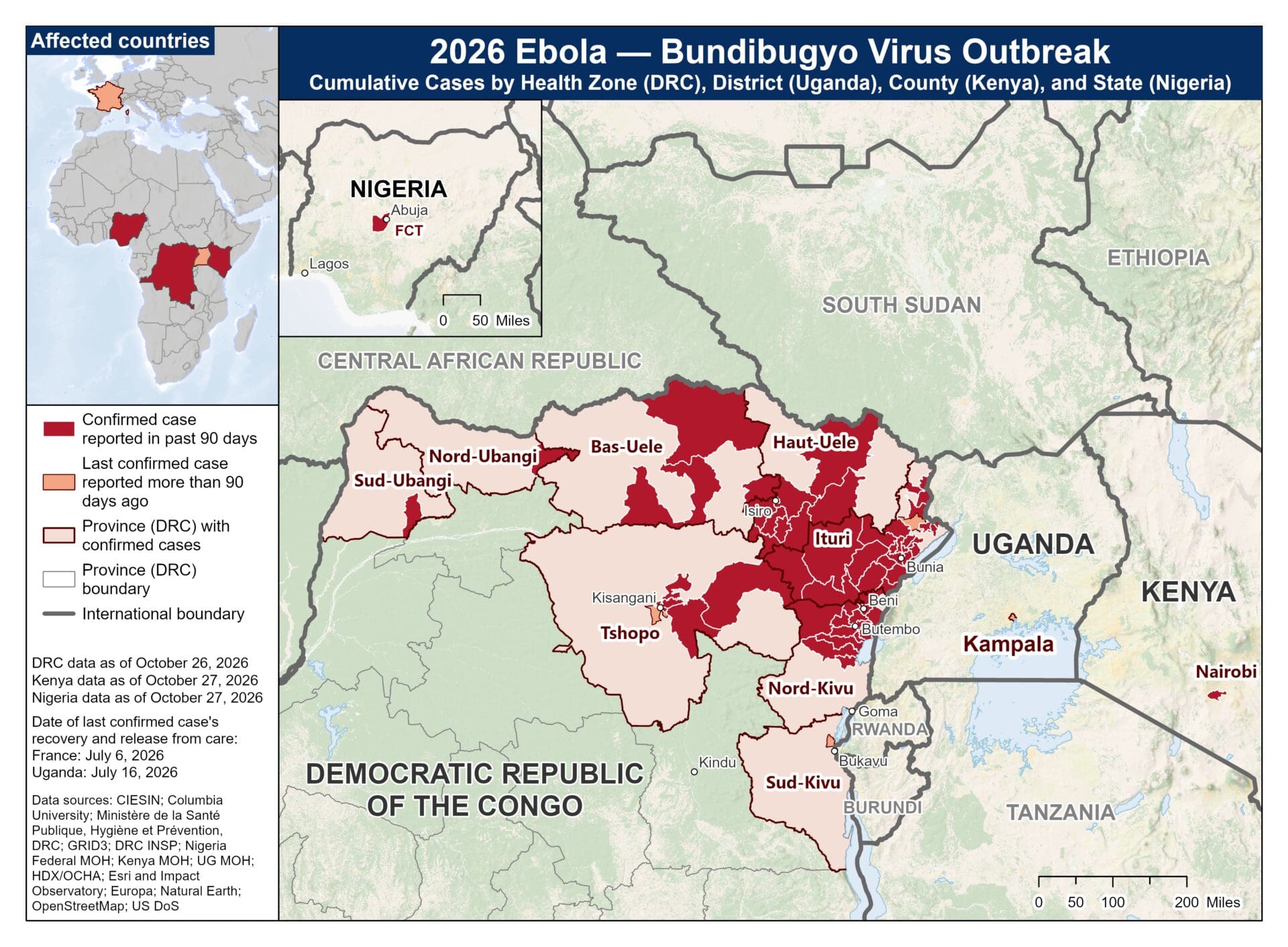
According to an epidemiological update from the Ministry of Health dated October 22, 2026, the Ebola outbreak in the Democratic Republic of the Congo, which began in May 2026, is still not under control. The virus is of the Bundibugyo strain, known as BDB.
According to published data, more than 9,800 confirmed cases and at least 4,750 deaths have been reported in the country. The disease has been identified in eight provinces in the north and northeast of the country: Ituri, North Kivu, South Kivu, Hot-Oala, Tshopo, Bas-Oala, Sud-Obengi and Nord-Obengi.
Cases have also been reported in other countries in the region. In Uganda, 20 confirmed cases, including two deaths, were reported. However, the World Health Organization declared the outbreak in the country to be over in August 2026.
In Kenya, an imported case was reported on October 6, involving a person who had arrived from the Democratic Republic of Congo via Uganda and died while hospitalized. Eight additional cases were identified among the contacts traced following the case. According to the epidemiological update, all additional cases were detected while in isolation, and no secondary transmission of the virus was reported.
In Nigeria, the first case was diagnosed on October 20, in a patient who arrived on a flight from Uganda via Addis Ababa, Ethiopia. The patient's contacts have been identified and placed under surveillance.
The Ministry of Health recommends avoiding travel to infected areas.
Following the spread of the disease, the Ministry of Health has updated its travel recommendations for the Israeli public, urging them to avoid travel to the eight districts where active cases have been identified in the Democratic Republic of Congo. It is also recommended to avoid non-essential travel to the rest of the country.
Regarding the countries bordering Congo: Uganda, South Sudan, the Central African Republic, Rwanda, Burundi, Tanzania, Zambia, Angola and the Republic of Congo – the recommendation is to avoid unnecessary travel.
The ministry recommends that travelers to Kenya and Nigeria consider the necessity of traveling, in light of the cases of illness discovered there, and follow the updates and instructions of local health authorities.
In any case of traveling to these countries, it is recommended to take precautions, be sure to wash your hands with soap and water or use alcohol-based sanitizer, and avoid contact with people suspected of being sick, with patients with symptoms, and with corpses or their bodily fluids and secretions.
It is also recommended to avoid contact with wild animals, including bats, monkeys and antelopes, and to stay away from places where bats are concentrated, such as caves and mines. The Ministry of Health also recommends avoiding funerals, crowded gatherings and unnecessary visits to medical institutions.
Have you returned from Congo and developed a fever? Here's what to do
The Ministry of Health emphasizes that travelers who have returned from the Democratic Republic of Congo and developed a fever of 38 degrees or higher or unusual symptoms within 21 days of their stay in the country are asked to stay home and avoid contact with other people.
In such a case, you should contact the Ministry of Health's Health Voice hotline at *5400 and receive instructions for further investigation and treatment. It is important to mention in the conversation that you are in the Democratic Republic of Congo.
Do not go to a clinic or hospital independently without prior arrangement. Until further notice, you should remain in home isolation, practice good hygiene, and avoid contact with household members as much as possible. It is recommended to use separate towels and separate toilets and showers, as much as possible.
The Ministry of Health emphasizes that since the beginning of the outbreak in Africa, ongoing monitoring has been underway.
developments, and that the health system is preparing to deal with suspected cases. As part of the preparation, professional guidelines were distributed to medical teams and hospitals, mechanisms were established for the early identification of travelers returning from areas of morbidity, and a system was also established for laboratory identification of the virus.
The Ministry of Health is reassuring but remains alert
The ministry emphasizes that No confirmed case of Ebola has been diagnosed in Israel, but continues to monitor developments worldwide and maintain a high level of preparedness. The public is asked to follow the instructions and stay updated on the official information channels of the Ministry of Health.
Did the article interest you?