



(haipo) – The Central Bureau of Statistics has published up-to-date data on eligible voters living in Israel ahead of the elections for the 26th Knesset, which will be held on October 27, 2026. According to the data, there are currently approximately 6.5 million eligible voters living in Israel, with their rate varying significantly between different localities and regions. In the Haifa area, the data indicate a relatively high rate of eligible voters, reflecting a more mature age structure compared to other cities.
Haifa leads among large cities: 76.3% have the right to vote
According to CBS data, the rate of eligible voters in Haifa is 76.3 %, a figure that places the city among the large cities with a high proportion of residents aged 18 and over who have the right to vote. "The rate of those with the right to vote in most large cities ranges between 70% and 80%", and Haifa is at the top of this range.
The figure reflects the population structure in the city: a relatively mature population, with a lower proportion of children and teenagers compared to cities such as Jerusalem, Beit Shemesh and Bnei Brak, where the proportion of voters is significantly lower due to the younger age composition.
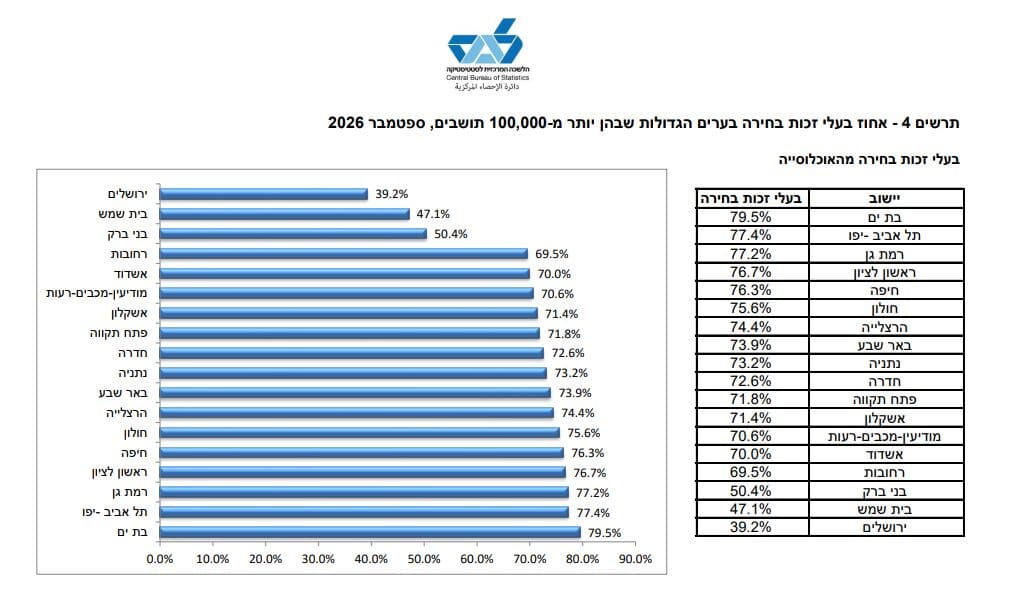
The composition of the population that affects voter turnout
The age structure is a key factor in determining the percentage of voters in each locality. For example, the share of Arabs among voters is 18%, lower than their share in the general population (22%), because“The proportion of children and residents who do not have the right to vote is greater among Arabs compared to other population groups”.
In Haifa, which has a Jewish and Arab population with a more mature age profile, the rate of those eligible to vote is high, allowing for broad representation of the city's residents in the democratic process.
Actual voter turnout – the real challenge
Despite a high percentage of residents eligible to vote, the key question is how many of them will actually turn out to vote on Election Day. The actual turnout is affected by a number of factors:
- Age structure: An older population tends to vote at higher rates. In Haifa, the age structure may contribute to a high voter turnout.
- Political and community involvement: Haifa is a city with a tradition of civic participation, but voting rates vary between different neighborhoods and communities.
- Accessibility to polling stations and transportation: The more accessible the polling stations, the higher the participation rate.
- Feeling of influence: Residents who feel their voice matters are more likely to vote.
The implications for the upcoming elections
With a high percentage of residents eligible to vote, Haifa is expected to be one of the cities most influential in the election results in the northern region. The actual voter turnout will of course be determined on election day itself, but the demographic data indicates significant voting potential.
Summary
The Central Bureau of Statistics data ahead of the elections for the 26th Knesset presents a clear picture: Haifa is one of the cities with an especially high rate of eligible voters – 76.3% of its residents. The city's mature age structure and diverse population composition contribute to a high voting potential. The big question that remains open is the actual participation rate, a figure that will only be clarified on election day, but could have a significant impact on the political map.
Did the article interest you?
The higher the average age of the city, and in Haifa a quarter of the city is elderly, the higher the percentage of eligibility, meaning that it reflects the abandonment of young people due to the failed mayor for 20 years who has been driving away tens of thousands of young people since 2003 (40 according to the Central Bureau of Statistics).
He is a nightmare disaster, he destroyed the city, buried the future, drowned Haifa in debt to the banks as he did in his previous terms, and the municipality is disintegrating from within and not functioning because of a government that is terrorizing the mayor.