


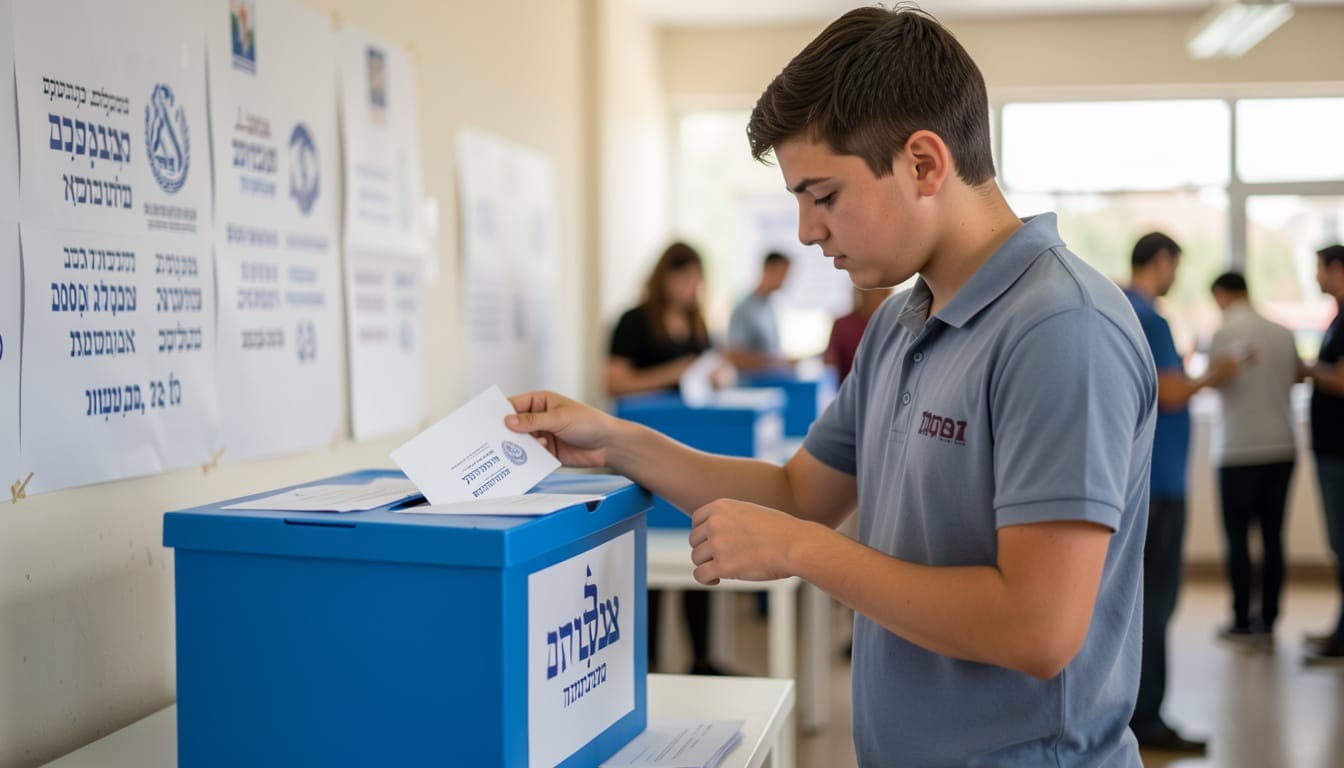
In every election campaign, the same well-worn question recurs: How many of the Arab public will go to the polls this time? The regular debate always begins with disappointment, moves through indifference, and ends with gloomy predictions of a new low in voter turnout. This time it's better to change the question..
The Arab public will go out to vote, and in droves. Not because the frustration has disappeared or the existential problems have suddenly been solved, but for one simple reason: the electoral map has undergone a metamorphosis. Almost every major current in Arab society is now offered a direct political address, from the national to the Israeli Zionist, from the left to the right, from independent representation to full integration into pan-Israeli parties.
This change is spread across the entire map. The Joint List is once again proposing a unified Arab force and independent national representation. On the other hand, Mansour Abbas and Yoav Seglovitch present a completely different model of Jewish-Arab partnership that is aimed directly at the decision-making centers. Placing Seglovitch in second place in the GNA is an unprecedented move, a Jewish-Zionist candidate at the top of an Arab-Islamic party.
An equally fascinating move is taking place on the right. Ofer Winter has included Yosef Haddad in second place in "Amach Yisrael." Haddad, a Christian Israeli Arab and former Golan fighter, is aiming straight for the cabinet and offers a natural address for the Arab voter who defines himself as Israeli, Zionist, conservative or right-wing. At the same time, the Democrats are placing Somia Beshir in tenth place and offering a path to integration from within the liberal Zionist camp. In Yisrael Beitenu, Avigdor Lieberman has already presented Hamed Amar as the party's candidate for the position of Minister of Public Security. Precisely at a time when crime and the lack of personal security rule daily life on the Arab street, this message has dramatic weight, not just a symbolic representation, but a direct claim of responsibility for the most pressing issue.
And therein lies the real story. These elections present the Arab citizen not just with a choice between party factions, but with a choice between opposing worldviews about his place in the country, national identity versus Israeli integration, independent Arab power versus partnership, protest from outside versus influence from within. Each of these answers has a ballot waiting on the ballot, making the old argument "I have no one to vote for" patently irrelevant.
But the political offering is only the starting point. What will boost the voter turnout is the election campaign itself. As we approach Election Day, the parties will flood the area, from headquarters and home circles to targeted campaigns on Arabic social media. The debate over identity, partnership, and personal security will spill out of the studios into family gatherings and WhatsApp groups. The voter turnout measured months before the election is not its ceiling, but only the starting line.
This motivation has additional fuel, this time there really is a lot at stake. Crime and violence have become a daily existential threat, and alongside them are the burning crises of housing, infrastructure, education, and the state of local authorities. The events of October 1945 and the war have sharpened deep questions of belonging, citizenship, and Jewish-Arab relations. The next government will determine personal security policy, the scope of budgets, and the national order of priorities. In such a reality, staying home is not a protest, it is handing over your voice to others who will decide for you.
This is perhaps the big change of the 2026 elections. For years, political division in Arab society was seen as a source of weakness and despair. This time, the abundance of options is producing the exact opposite result, an aggressive competition that drives people out of their homes. The Arab voice has ceased to be a voice that people beg to be addressed; it has become a battleground that everyone fights over, and when they fight over a voice, its value soars.
The central question on the upcoming election day is no longer whether the Arab public will go out to vote? The big question is, which parties will ultimately reap the fruits of this transformation?
If the voter turnout jumps dramatically, the consequences will shake the entire political map, change the balance of blocs, and directly affect the identity of the next government.
The surprise of these elections will not come from a new party that emerges from nowhere. It will come from the polling stations in the Arab communities. And when everyone is fighting for your vote, why actually stay home?
How many Arabs will actually vote for Yosef Haddad...probably even fewer than Jews will vote for Ofer Kassif...and that's the most unflattering thing you can say about both of them.
Soumya Bashir is in a relatively natural place in a far-left party that has become even more radicalized by combining Golan and Lazimi, and even in this position she will attract few Arab votes.
The only one who might attract a portion of the votes of Druze Arabs is Hamad Amar, but they are few, negligible compared to the total number that this party will receive and certainly negligible compared to the picture of the blocs.
Abbas added Seglowitz (who was also in an unrealistic position in the future and was supposed to end his political career) to whitewash Raam, which is ideologically based on the Muslim Brotherhood, and the move is not supposed to add Arab votes to Raam.
What is true in the article is that the Arabs are coming out in droves to vote, but the common cause is the one that will take the most seats, at least 10-11.
So yes, the Arabs will come out in droves to vote for the joint party, and that says it all.