


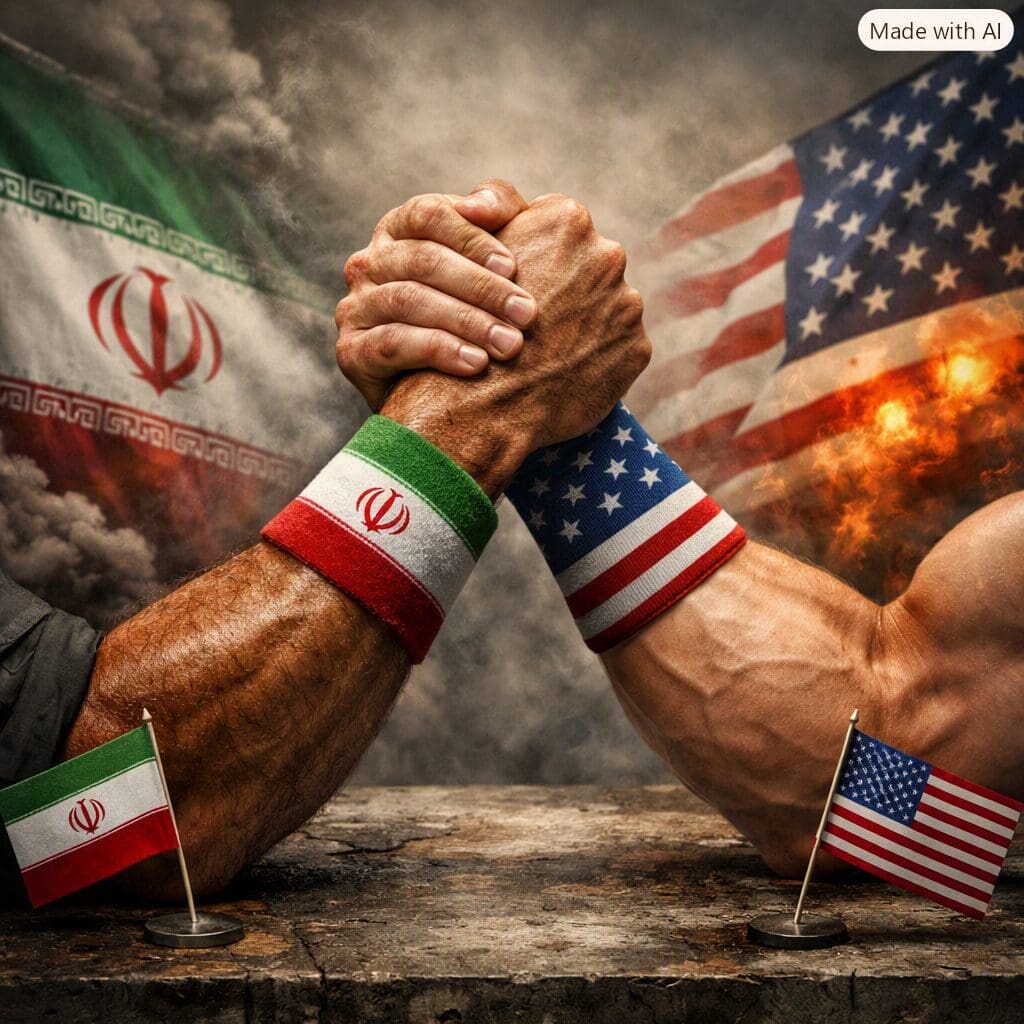
Iran is in economic crisis but is not backing down, Putin enters the picture with mediation and diesel, the US is increasing its military preparedness and Yemen is becoming the region's most troubling arena.
October 10 2026
President Donald Trump's messages toward Iran continue to change. On the one hand, he is conveying caution, seeking to avoid a broad escalation on the eve of the midterm elections and leaving an opening for talks. On the other hand, the opposite trend is taking place on the ground: the Pentagon is increasing the pace of preparations, Central Command is finalizing possible attack plans, and the American buildup of power in the region continues.
Aircraft carriers and additional naval forces are approaching the scene, while air defenses in Saudi Arabia and Qatar are being strengthened. According to reports, the Pentagon is already preparing a broad target bank that includes nuclear facilities, energy infrastructure and other strategic assets in Iran.
Therefore, it seems that the main gap today is between Political caution and military preparedness for escalationThe political decision has not yet been made, but the US military wants to ensure that if the order is given, it can quickly move from deterrence to action.
Iran is weakening at home — but continues to invest abroad
Iran is facing a deep economic crisis, sanctions, currency erosion, and high inflation. Despite this, it is not giving up its regional sphere of influence and continues to assist Hezbollah and other entities affiliated with it.
This is perhaps one of the most worrying signs: Iran is weakening at home, but continues to invest abroadThe economic crisis alone still does not change the regime's perception of security, which sees its branches as a strategic asset and not a luxury.
The withdrawal of American forces from Iraq also requires attention. It is not just the end of a military mission. It could open up a new space for a struggle for influence between Tehran, Washington, and Baghdad, and allow pro-Iranian militias to expand their activities.
Putin, diesel and the elections
Against this backdrop, Vladimir Putin entered the picture through two different channels: energy and mediation.
Increasing Russian diesel supplies could help Trump stabilize fuel prices at a politically sensitive time. It is difficult to separate energy policy from Iran: any significant escalation in the Gulf could raise prices and immediately become an electoral issue in the United States.
At the same time, Putin is offering himself as a mediator between Washington and Tehran. Russia cannot resolve the disputes over Iran's nuclear program, missiles, and regional influence alone, but it can convey messages and try to buy time.
Israel: High readiness, without seeking escalation
In Israel, too, a distinction must be made between military readiness and the desire to initiate a campaign.
At this stage, Israel is signaling that it does not seek to be the party that initiates escalation, but reserves full freedom of action if it identifies an immediate threat. The logic is clear: it has no interest in giving Iran a pretext or excuse for a provocation that will lead to a broad conflict, especially at a sensitive time.
Therefore, it is correct to be cautious about the assertion that Chief of Staff Eyal Zamir "prevented an attack." It is more accurate to say that the defense establishment carefully examines the cost of every move, Iranian response, damage to the home front, and strategic and political implications.
Netanyahu is therefore faced with a dilemma: to maintain Israeli freedom of action, but not to be the one to ignite the scene first.
Yemen — the arena that is becoming the central problem
Meanwhile, Yemen is becoming the most disturbing arena in the immediate term.
The Houthis are increasing pressure on Saudi Arabia and the shipping lanes, and the Bab al-Mandab Strait is once again becoming a strategic flashpoint. A significant attack on this area would affect not only Israel and Saudi Arabia, but also Egypt, the Suez Canal, Europe, and international trade.
In this sense, Yemen is no longer a secondary arena in the struggle with Iran. It could become an arena that dictates the pace of regional escalation.
Here, regional agreements and understandings, primarily the Mecca Agreement, will also be examined, as to whether they are capable of creating a real deterrent and not just a political framework.
The decision is still ahead of us.
The overall picture is full of contradictions: Iran is in crisis but continues to support its proxies; the United States talks about caution but is building strength; Putin supplies diesel and offers mediation; Israel is preparing but is not looking for a pretext for escalation; and Yemen is increasingly becoming a central arena.
Hence, the question is not just whether there will be another attack on Iran.
The real question is who will break the balance of caution first: Iran, Israel, or the United States.
Yair Golan accused Al Jazeera of IDF soldiers killing for fun, during a ground war due to the escape from Gaza that created Hamastan.
Anyone who points to such a wicked creature needs to be looked at.
Neturi Kaplan & Co., you have gone off the rails.