

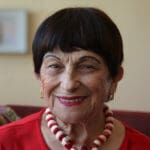

It was a long time ago, when we were young. The green Carmel was always something special. The Carmel before the construction and development was a completely different Carmel.
The Green Carmel that was another world
When we walk through the houses, streets, and neighborhoods of Carmel today, it is sometimes difficult to imagine the open spaces that were here eighty or ninety years ago. It is difficult to imagine groups of boys and girls setting up tents, singing around the campfire, walking along the mountain paths, and looking out to sea.
Today, when we talk about the Carmel, we think of residential neighborhoods, schools, shopping centers and public parks. But once upon a time, there was a completely different landscape here. The Carmel ridge was covered in natural woodland, pine trees and Mediterranean vegetation. Narrow paths and dirt roads crossed the mountain, and between the woodlands spread open areas and spectacular viewpoints of the Haifa Bay, the sea and the Zebulun Valley.
In those days, Carmel had very few residents. Alongside old villages, such as the Ahmadi neighborhood in Kabbir, the first Jewish neighborhoods began to develop. Large parts of the ridge were still open and undeveloped. An estate, for example, did not yet exist.
The last stop for cars and buses was in the center of the Carmel, near the Gan Mania grove. When we wanted to go up from the Hadar neighborhood to the Carmel, we would walk along the donkey path and arrive in front of the bus, which climbed up the mountain very slowly. Today, the path has been replaced by steps, but the memories remain vivid.
Carmel as the Kingdom of Youth
The uninhabited Carmel was a vast area for youth activity. Within the open, green landscape, youth movements found an ideal place to hold camps, hikes, scouting activities, and educational meetings.
In the 20s and 30s, many youth movements developed in Israel. Young people went out into nature, walked many kilometers to get to know the country, and developed a sense of social and national responsibility.
The "Mashotaty Carmel" Scout Tribe, led by Aryeh Karuch and under the auspices of the Reali School, was already operating in Haifa in 1925. The tribe held trips and camps for Scouting activities, and the Carmel served as a space for its members to study, to be educated, and to get to know the country.
Camps of tents, bonfires and singing
Youth movements from all over the country came to Carmel to set up summer camps. There they learned how to set up tents, prepare meals, light fires, keep the camp clean, and divide up roles among themselves.
These were days of public singing, games, stories around the campfire, hiking, and conversations about love of the land. A special sense of camaraderie developed in the camps. Boys and girls from different parts of the country met, lived together, and learned how to get along as a group.
The camp was actually a school for life.
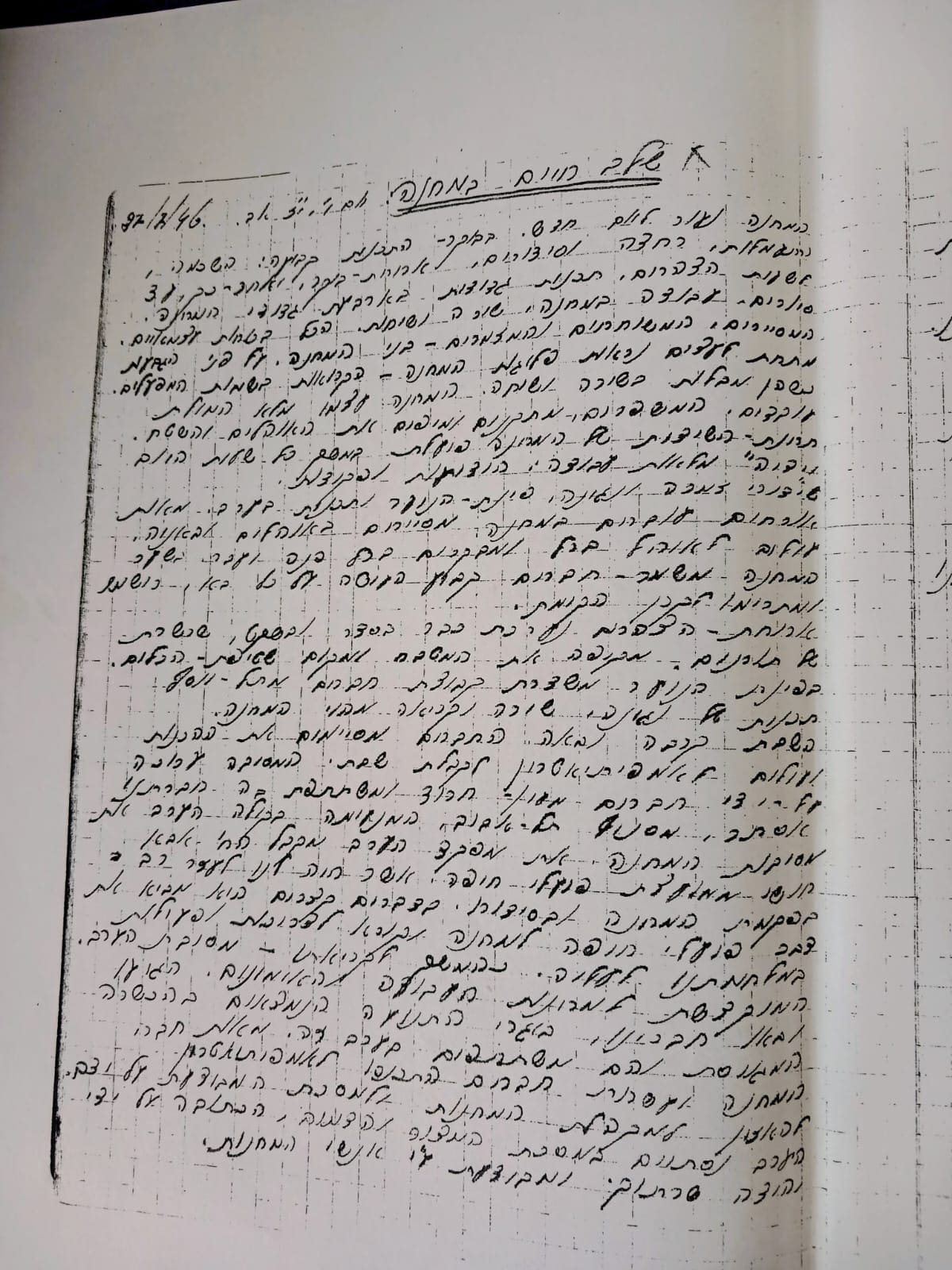
In my personal diaries from that period, I wrote a lot about the atmosphere in the camps. Even Shimon Persky, later Shimon Peres, spoke to us in one of the camps and introduced the Working Youth Movement. Representatives of Hashomer Hatzair also spoke to the campers and held extensive camp activities. The movement believed in education through nature, teamwork, independence, and personal responsibility.
The first Samaria on Mount Carmel
I especially remember the year 1945, after the end of World War II, when the first Samaria took place on Mount Carmel.
The Samarias were large national events where youth from all over the country met for scouting, sports, social and cultural activities. It was a significant event in the history of youth movements in Israel, and it left a deep impression on all participants.
I also remember the working youth camp in Carmelia. A special tent was set up in the camp dedicated to Berl Katznelson and Keren Hayesod. In this moving moment, the campers listened quietly to David HaCohen's speech. They even built a model of a large ship with the words "Maapil" written on it, a symbol of the connection between youth education and the Zionist struggle and illegal immigration in those days.
Camps that educated an entire generation
The camps on Mount Carmel were not only about social activities. They were also an educational framework in which the youth learned to understand what was happening in the country, to identify with the Zionist enterprise, and to feel like partners in building the future.
In the years leading up to the establishment of the state, tensions grew over the struggle against British rule. Illegal immigration, settlement, and security incidents also affected the world of the youth.
Many of the movement's graduates later joined pioneer training, settlement groups, and the "Hagana" and Palmach frameworks. The values of friendship, responsibility, and mutual aid acquired in the youth camps on the Carmel became an integral part of their worldview.
Memories that last a lifetime
In those days, there were no means of communication or entertainment that we know today. Therefore, youth movement camps were of enormous importance in the lives of young people. They provided experiences, friendships, and memories that accompanied the participants for many years afterward.
The Carmel of those days was much more than a geographical place. It was a space of education, pioneering, nature, and friendship. For many of that generation, the camps on the Carmel were a school of life, and the memories of them remained just as green as the mountain itself.
Haifa in general was a wonderful place to grow up, the sea, and the house overlooking the estate. Woods, valleys. Bicycles for trips, Moriah Cinema, lots of good memories.
Jamboree in the grove in front of Beit Byram and on the slopes of what is now called Freud Road... Today it's around the corner, right here, but in those days it was the end of the world... I miss my youth and remember them fondly.
Wanderers' Association
עריכה
Extended entry – Wanderers' Association
The Wanderers' Association was founded in Haifa in 1916 by Pinchas Cohen, who was a nature teacher at the Reali School.
My grandfather