


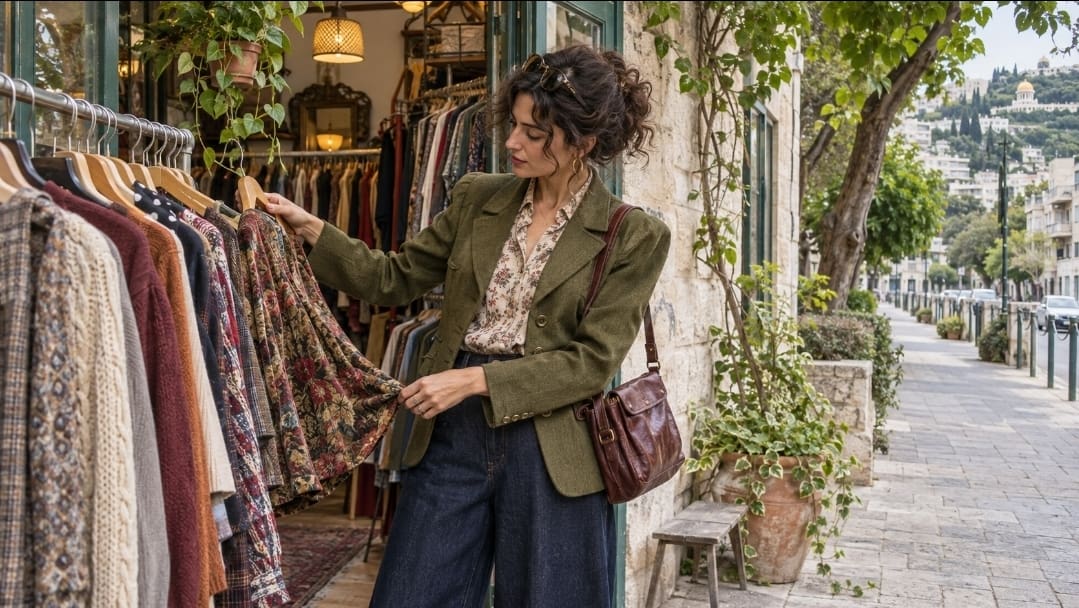
Between the changing collections and the trends that demand space in the wardrobe, the choice of clothing that already belonged to someone else is also growing. Second-hand clothing offers savings, the possibility of calculated consumption and the opportunity to find a personal style. They can be found throughout the city, on the Moriah axis and the Carmel Center. When visiting the Wizo pop-up at the Grand Canyon in Haifa, for example, I encountered this connection up close: clothes that get another chance, and social action that gives the choice of them additional meaning.
Where did the second-hand trend start?
Even before we called it a trend, we knew about second-hand within the family. Clothes were passed down from older siblings to younger siblings and within the extended family, and continued to accompany someone else after they no longer fit the person who wore them before. It was a way to save, share, and preserve a good garment. In this sense, today's fashionable idea also has a familiar family memory: the same garment, another person, and a story that continues on.
Second-hand fashion does not have a single starting point. The trade in used clothing existed in Europe for centuries, out of economic necessity and to continue using a garment that was valuable. In 18th-century England, it was already a significant part of the clothing trade.
One of the fashion turning points came in the 1960s, with the hippie culture in the United States and later in Britain. Young people combined used clothes and items from previous eras to create a personal look that was free from conventions. Shops and markets in London became hot spots for this style. Choosing an old garment thus took on an additional meaning: a way to express identity and personal taste. The connection between saving, uniqueness, and extending the life of a garment continues to speak to today's wardrobe.
Turning a used garment into a fashionable item.
There's something intriguing about searching through items that haven't been put together as part of a collection. A jacket with an interesting cut, a shirt with a special collar, or pants made of quality fabric can be the starting point for a complete look. Searching requires patience, but it allows you to move away from ready-made combinations and choose independently.
Besides the price, there is an attraction to clothes with character and a sense of discovery. The distinction is also important, second-hand describes a garment that has been passed down from owner to owner; vintage refers to items from previous periods that have a story and character of a period. Not every used shirt is vintage, and a contemporary item can also be an excellent bargain.
From the pop-up in Haifa - a glimpse into action against the phenomenon of violence against women
Behind the garment hanging on the hanger are hands that collect, sort, and prepare it for the next encounter. This creates a local chain of giving: a person makes room in the wardrobe, another person finds a suitable item, and the income helps support community activities.
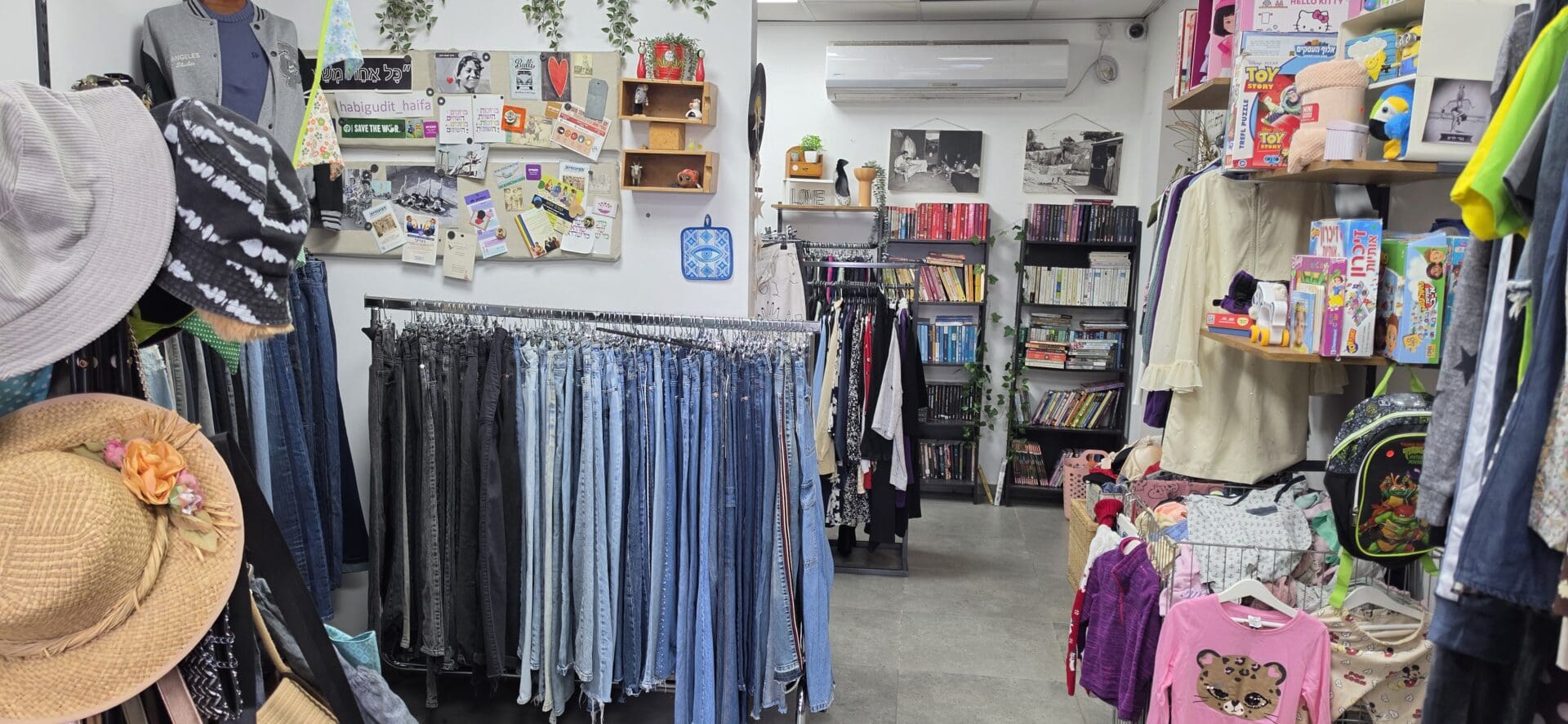
Between November 1 and 5, a pop-up store for WIZO clothing was held at Ofer Grand Mall in Haifa, as part of the month of the fight against violence against women. The store combined the sale of clothing with raising awareness, and its proceeds were intended for activities for women, girls and children who are victims of violence. During the visit, I spoke with Shaked Klein, Coordinator of the WIZO branch in Neve Sha'anan, HaifaAccording to her, the local activity she described is done on a voluntary basis.
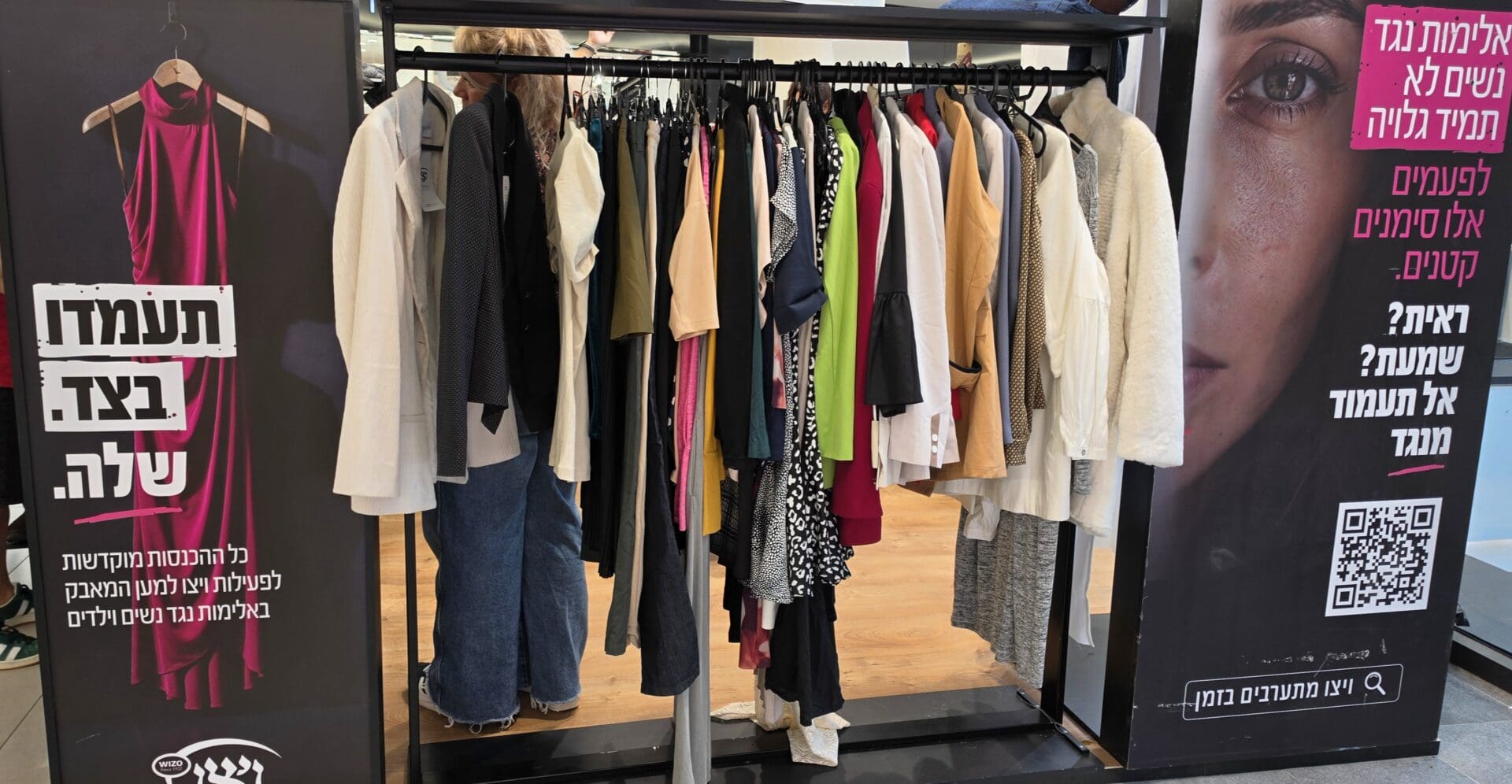
There are two second-hand clothing stores called "Bigudiyot" in Haifa, one on Moriah Street and the other in Neve Sha'anan. These receive clothing donations from the community. Volunteers sort and arrange the clothes for sale at symbolic prices, the proceeds of which are intended for social work on the issue of violence against women in Israeli society.
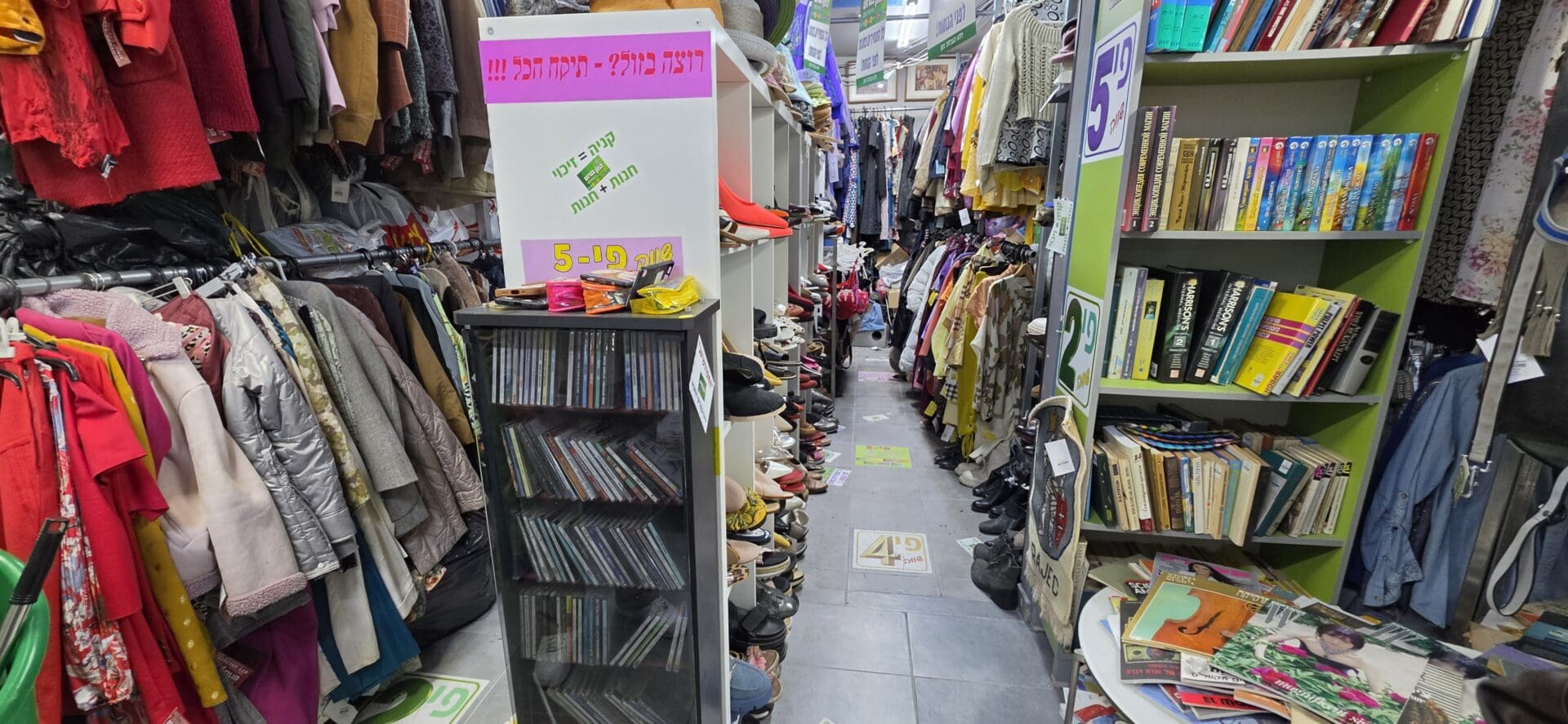
On the sea road, second-hand clothes, a surprising concept of walking among the hangers
When I entered a second-hand clothing store on Haifa's Sea Road, I felt like I had entered a maze of clothes. I walked through the hangers, excited and amazed by the selection and arrangement of the clothes. I was as excited as a child who had just entered a candy store (The Life of a Stylist).
Oleg and Olga, the owners of the store, welcomed me warmly and told me about the place and their unique sales method. Wandering through the clothes and talking to them left me with the feeling that I had discovered a corner of Haifa that was worth lingering in.
Sustainable fashion and collaborative consumption – vintage, second-hand, quality and old-fashioned fashion
In everyday conversation we call this clothing recycling, but when a garment is worn by another person, it is referred to as reuse. Textile recycling is a process in which the material is processed for a new use.
This distinction makes sense: a garment that is worn again continues to serve the purpose for which it was created. According to the European Environment Agency, extending the life of clothing, reusing and recycling can reduce the environmental impact of textile consumption. Here too, making a good choice starts with a simple question: Will I really wear it? Low price alone is no reason to add another item to your wardrobe that will never go out.
Were the clothes of the past of better quality?
One of the things that attracts me to second-hand clothing is the possibility of finding old items with durable fabric, meticulous stitching, and beautiful finishes. Compared to clothes that lose their shape after a few washes, there is value in a garment that has been used for years and still looks good. In fast fashion, the pressure to produce cheaply and at a high pace can come at the expense of durability. However, there were also low-quality clothes in the past, and the items that have survived to this day are sometimes the most successful of them. That's why I examine each garment according to the fabric, stitching, and condition, and not just by its age or label.
Turning second-hand clothing into personal style.
As a stylist, what interests me about secondhand is the ability to see the garment in the life of the person who will wear it. A tailored jacket can be paired with a T-shirt and jeans; a printed shirt can have a place alongside plain pants; a belt can change the relationship between the pieces of clothing. The possibilities are open to women and men, and to all ages.
It's worth starting with the fabric, the cut, and the condition: check for seams, zippers, stains, and wear, measure, and move around. The size on the label is just a starting point. Sometimes shortening a hem or making a small adjustment can greatly improve the look, and it's also worth considering the cost of the repair.
Before buying, I suggest thinking of at least two combinations, with clothes you already have at home. That way, the find becomes a useful part of your wardrobe.
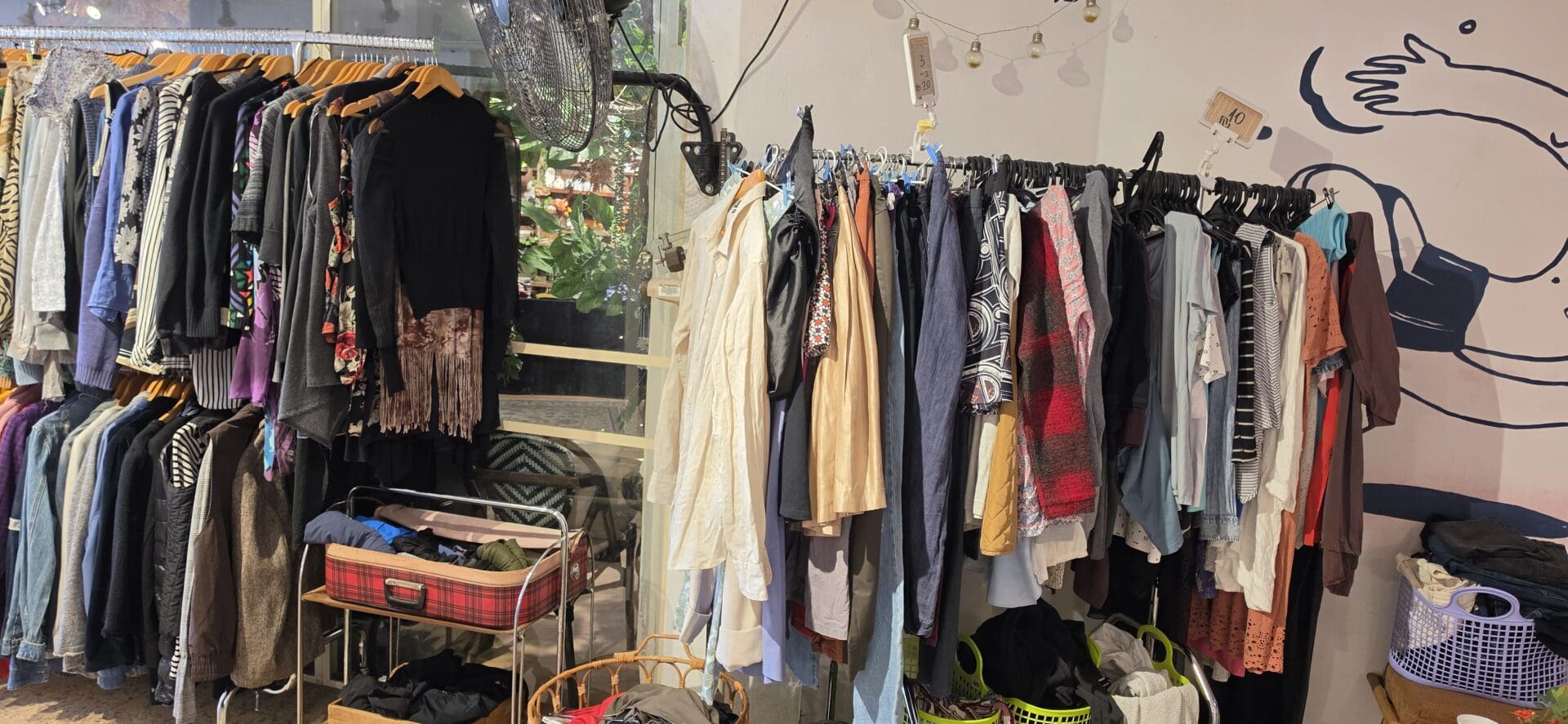
Make room for styling second-hand and vintage clothing in your wardrobe.
Visits to Wizo Haifa and Oleg and Olga's second-hand store on the Sea Road, near the Carmel Center, reminded me that a garment can have a continuation even after it has finished its role in one wardrobe; in someone else it may actually become a favorite item. As a stylist, I love accompanying people on this search and helping them find second-hand items that blend naturally with the clothes they already love to wear, in their own personal wardrobe.
Did the article interest you?
Great article, you are fascinating.
Well done to you. Continue to enjoy fashion, tips and styling.
Shabbat Shalom
Dear Ronen 🥰
Interesting article.
You discovered a new and beautiful world for me.
I would love to visit the stores listed in the article.
Your articles are very interesting.