


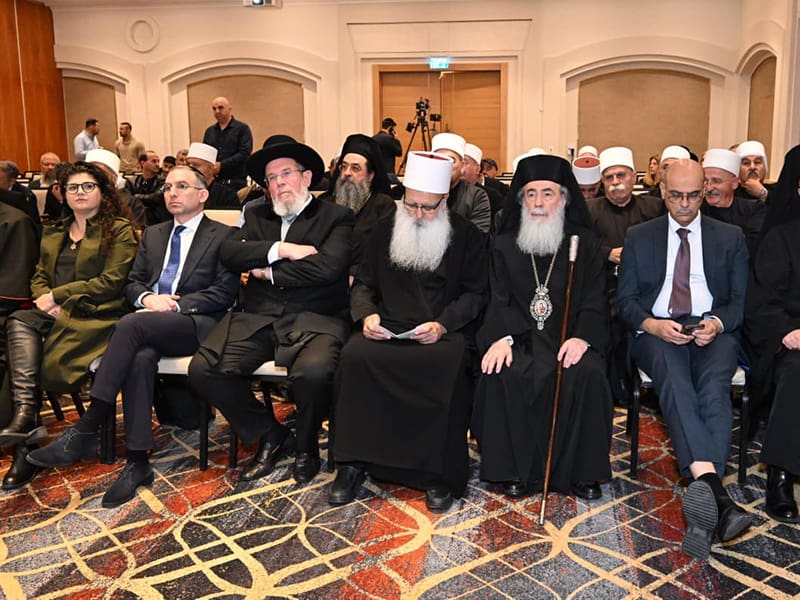
(haipo) In the midst of a tense period in Israeli society, with talk of division and polarization heard from all sides, those who wield one of the most significant influences on the public, the heads of religions and communities in Israel, gathered this week. Rabbis, sheikhs, patriarchs and Muslim, Christian, Jewish and Druze clergy sat around the same table and signed a joint statement, in three languages, calling on the public to choose a different path: a path of unity, mutual respect and living together.
The 15th Conference of the Council of Heads of Religions, held yesterday, Monday, 9/2/26, at the initiative of the Ministry of the Interior and the Religious Affairs Division, became a rare demonstration of interfaith agreement. Beyond the rituals, the participants sought to convey a clear message: faith is not supposed to separate but to unite.
The conference held in Nazareth was attended by senior religious and public leaders in Israel, including Deputy Foreign Minister MK Sharan Haskel, Interior Ministry Director General Yisrael Ozan, Chief Rabbi of Israel Rabbi Kalman Meir Bar, the spiritual leader of the Druze community Sheikh Muafek Tarif, Greek Orthodox Patriarch Theophilos III, Cardinal Pierre Battista Fitzwilliam, heads of churches and representatives of various denominations, the Qadi of the Sharia Court of Appeals, Dr. Iyad Zahlaka, and representatives of other communities from all over the country.
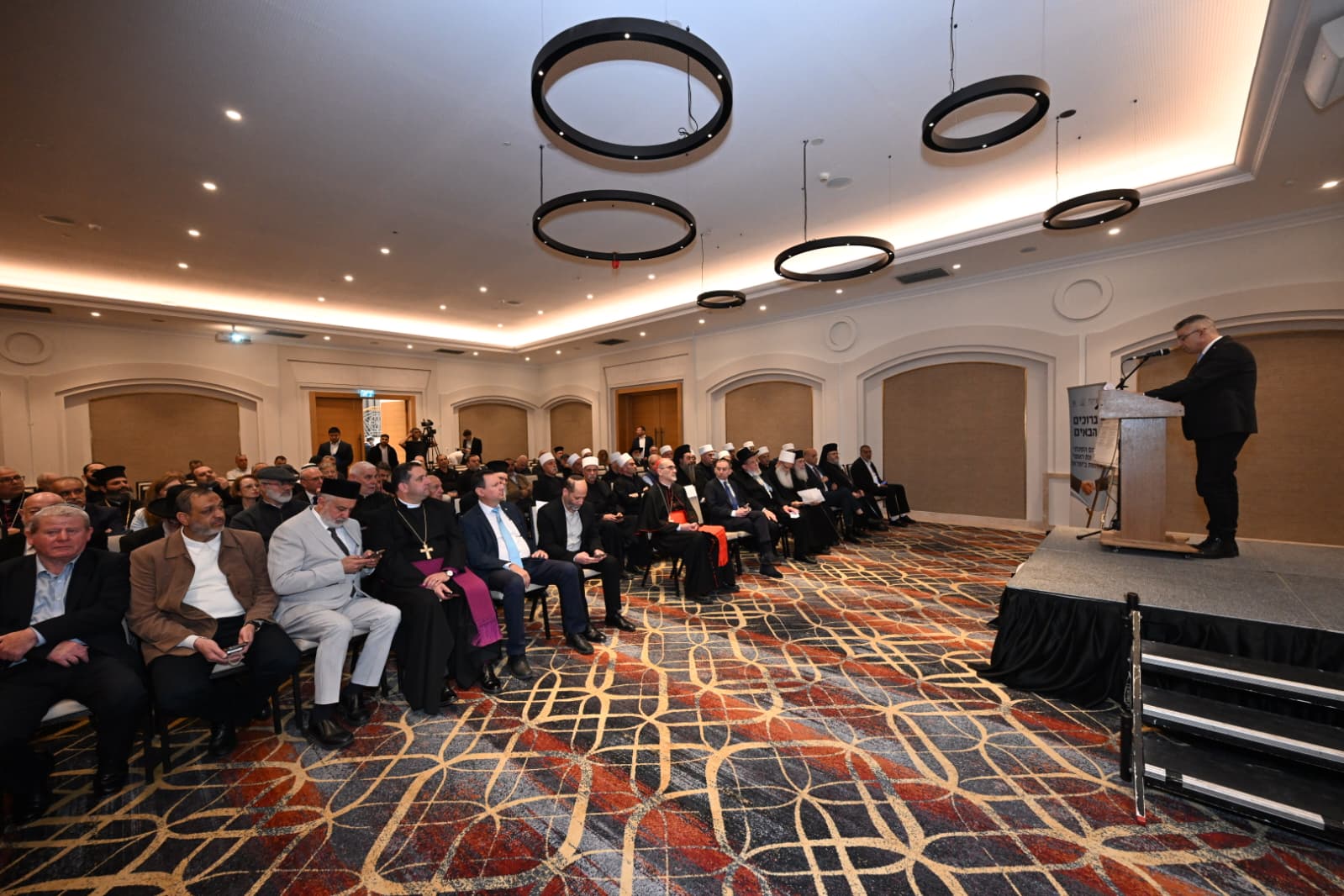
Social polarization and its consequences
Throughout the day, roundtables and in-depth discussions were held that addressed one of the burning issues in Israel today: social polarization and its implications. The leaders emphasized that their responsibility does not end with declarations, but requires action on the ground: education, community initiatives, dialogue meetings, and collaborations that will strengthen trust between the various groups.
Director General of the Ministry of the Interior, Israel Uzan, He emphasized the central role of religious leaders in shaping public consciousness: "They have significant influence in promoting values of unity, tolerance, and peace. Open and respectful dialogue between them is an important pillar in building a healthier society."
Deputy Minister of Foreign Affairs, MK Sharan Haskel, She emphasized the country's moral commitment: "Israel will continue to be the protector of religious freedom. Not because it is easy, but because it is right. Faith must be the force that pushes us toward peace, not the excuse for war."
Also the Chief Rabbi of Israel, Rabbi Kalman Meir Bar, emphasized that Judaism itself is founded on the values of peace and bringing hearts together: "This gathering is important both in terms of declaration and action. We must fight evil in order to promote goodness and peace for all residents of the country."
Sheikh Muaf Tarif, He mentioned the beauty of the human fabric in Israel: "The Israeli mosaic is revealed here in all its glory. The difference between religions cannot be a reason to harm another. Religion should connect between man and man."
Dr. Iyad Zahlaka, added a practical and clear call to combat violence and crime, especially in Arab society, and emphasized that the responsibility lies with all religious leadership.
Alongside the speeches, a joint declaration was signed in Hebrew, Arabic and English, a symbolic but significant document expressing a commitment to promoting coexistence, tolerance and cooperation between the various communities in Israel.
Faith can serve as a bridge, not a wall.
Beyond words, the conference seeks to present an alternative to the prevailing public discourse. When religious leaders, who shape values, education, and identity, choose to sit together and declare unity, they send a message that may resonate deeply with the communities themselves.
In a reality where it is easy to drift into suspicion and hatred, the mere meeting of a rabbi, a sheikh, a priest, and an imam around one table is a powerful statement: It is possible otherwiseFaith can serve as a bridge, not a wall.
The initiative of the Ministry of the Interior and the religious leaders seeks to turn this message into a routine, into regular events, into community meetings, and into educational and social collaborations. Because ultimately, the future of Israeli society depends on the ability of its people, of all religions and denominations, to see each other as partners and not adversaries.
Judging by the atmosphere in Nazareth this week, the road to peace may actually begin with a simple, face-to-face conversation.
Religions are the source of hatred, separatism, divisions, hatred, strife, oppression and violence, and therefore the very essence of such a conference is a contradiction to the values of equality, tolerance, respect for others and those who are different, freedom and human rights.