


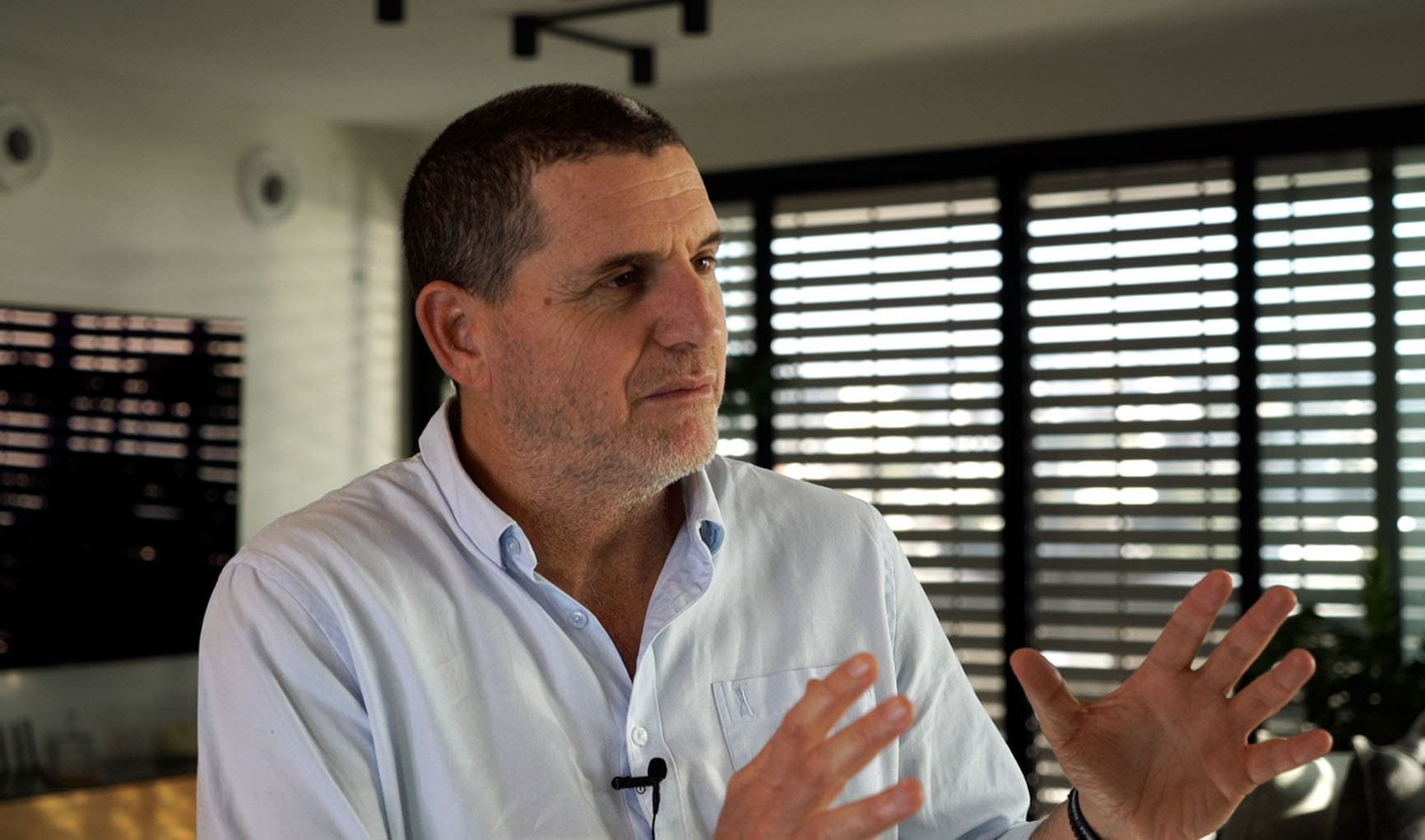
(Live here) – The plan for Atlit's departure for independence: In recent years, the public discourse of the Carmel Beach has been dominated by one central issue that concerns thousands of residents: the future of Atlit and the possibility of its becoming an independent local authority. In an interview with the "Hai Pe" podcast, the head of the Carmel Beach Regional Council, Asif Isaac, presents his position, the complex process with the state, and the long-term vision for Atlit as an independent, stable, and prosperous city.
The public background to Atlit's demand for independence
The demand for municipal independence for Atlit is not new, but in recent years it has been gaining significant momentum. According to the head of the Hof Carmel Regional Council, Asif Isaac, opinion polls alongside direct meetings with residents indicate a clear trend: most Atlit residents want to manage their lives within the framework of an independent local authority.
The desire stems from a desire to receive full municipal services, such as education, engineering, and public works departments, alongside direct representation through a mayor and an elected council. The prevailing feeling among residents is that A'talit is no longer a small settlement but a city in the making, in need of an independent administrative mechanism.

Opinion surveys versus direct meetings with residents
Isaac emphasizes that beyond formal surveys, direct encounters with the public are the most significant tool for understanding the mood. He says he meets dozens of residents every week, and the recurring conversation deals with the need for independence and the question of how it can be realized in practice. Surveys conducted over the years have reinforced this conclusion, but for him, it is listening directly to voices from the field that shapes the council's position. The conversation is not merely theoretical, but concerns practice, timetables, and residents' concerns about the economic and administrative implications of such a move.

The Geographical Committee and its role in the process
The central factor that decides on the issue of municipal independence is the Ministry of Interior's Geographical Committee. Isaac explains that it was the Minister of Interior who initiated the examination of the significance of Atlit's independence, and referred the issue to a professional committee headed by Rachel Torgman.
This is an inter-ministerial team that includes representatives from various government ministries, which examines the request comprehensively. The committee formulates a recommendation to the Minister of the Interior, and only then is a final decision made. The process, he says, is not political but professional, and is based on economic, social and planning data.

In-depth economic and social examination
One of the key components of the committee's work is a thorough economic review. Atlit's future budget, the master plans, the rate of demographic growth, and the scope of income-generating assets that will be required to balance the authority's budget are examined. Alongside this, public participation also takes place, with the understanding that the move must be supported by broad consensus.
Isaac emphasizes that the regional council and the local committee provided the committee with all the required information in full transparency, and now the ball is in the hands of the committee and the minister.
Timelines and the post-decision phase
Even if a decision in principle is made on independence, it is a long process. According to Isaac, Atlit will not become an independent city before 2028. In the first stage, a committee appointed by the Ministry of the Interior or a mayor will be appointed, without an elected plenum, for a period of three to four years. This period is intended for the establishment of municipal departments, the construction of management mechanisms and the preparation of the infrastructure for holding democratic elections. Only after that will Atlit become a fully independent authority, with elected leadership.
The question of Atlit's economic capacity
The main question that concerns the residents is whether Atlit will be able to sustain itself financially. Isaac makes it clear that this is also his main responsibility as head of the council. According to him, over 600 million shekels have been invested in Atlit in the last twenty years in water, sewage and development infrastructure.
Alongside this, in the last seven years, a strong emphasis has been placed on developing employment areas and income-generating assets. The new Atlit employment area, where the first deal has already been signed for 16 square meters, is expected to generate significant property tax revenue and serve as an economic anchor for the future authority.

Employment zones as an urban growth engine
The Atlit employment area is planned to reach a total area of approximately 200 square meters. Isaac notes that construction of offices, commerce, and restaurants is expected to begin in the coming years. The strategic location – close to Highway 2, Haifa Port (20 minutes/drive) and the train – makes the area particularly attractive for entrepreneurs. In addition, the relatively low property tax rates compared to the northern region constitute a significant competitive advantage. All of this is intended to ensure a stable economic base for Atlit as an independent city.
Agreement signed for the first complex in Atlit High-Tech Park - on the way to economic independence

The success of the development in the eyes of the residents
According to Isaac, the true success of Atlit is measured by the choice of its residents. In recent decades, there has been a sharp increase in demand for housing in the community, and land prices have climbed hundreds of percent. Many residents from Haifa and other areas of the country choose to move to Atlit thanks to the high-quality education, advanced infrastructure, proximity to the sea and public transportation. Atlit is even defined as the community with the highest demand in the Hof Carmel Regional Council, a figure that reinforces the claim that this is a city in every sense of the word.

The local committee and the relationship with the regional council
The Atlit local committee plays a central role in the daily management of the settlement. The committee members, who manage a community of about 12,500 residents, do so voluntarily, in addition to their personal work. Isaac describes a heavy and sometimes unreasonable burden on volunteer members. Recently, independent committees have been established, self-management is strengthened, and the relationship between the council and the committee is conducted through regular meetings and ongoing cooperation.
Concentration of powers and planning development
One of Isaac's significant decisions in his first term was the appointment of a deputy mayor from Atlit, for the first time in decades. The deputy holds the planning portfolio for the Carmel Beach and serves as the de facto chairman of the local planning and building committee. This is with the understanding that approximately 70% of the construction and renewal in the area is taking place in Atlit. This move is intended to strengthen Atlit's position and ensure that the development processes will suit its future needs as an independent city.
Looking ahead to Atlit as a city
In conclusion, Isaac paints a clear vision: within a few years, Atlit will reach approximately 17 residents, a number that no longer allows for management through a volunteer mechanism. According to him, Atlit is already approaching the size of a city, and the transition to independence is a natural and necessary step. This process, accompanied by investments, planning, and cooperation, is designed to ensure that when Atlit embarks on an independent path, it will do so from a place of stability, resilience, and growth.
Did the article interest you?
Oh my, what a terrible decision. Atlit does not have an industrial zone and most of the residents live in railway neighborhoods and have low incomes. So how will they finance a municipal mechanism that includes hundreds of workers? Poor people, those who chose to build their lives in Atlit in recent years are the ones who will have to finance this municipality.
Independence is a necessary step. This will make it possible to establish a new management team that sees the community's future as of paramount importance. And get rid of all the free-riding officials who sit in the committee's offices in Atlit and don't care about anything. And the saddest thing is that they are sure that there are no better people than them.
Cleaning, gardening, street lighting, road safety, security, supervision, none of these things exist today. It's just sad.