


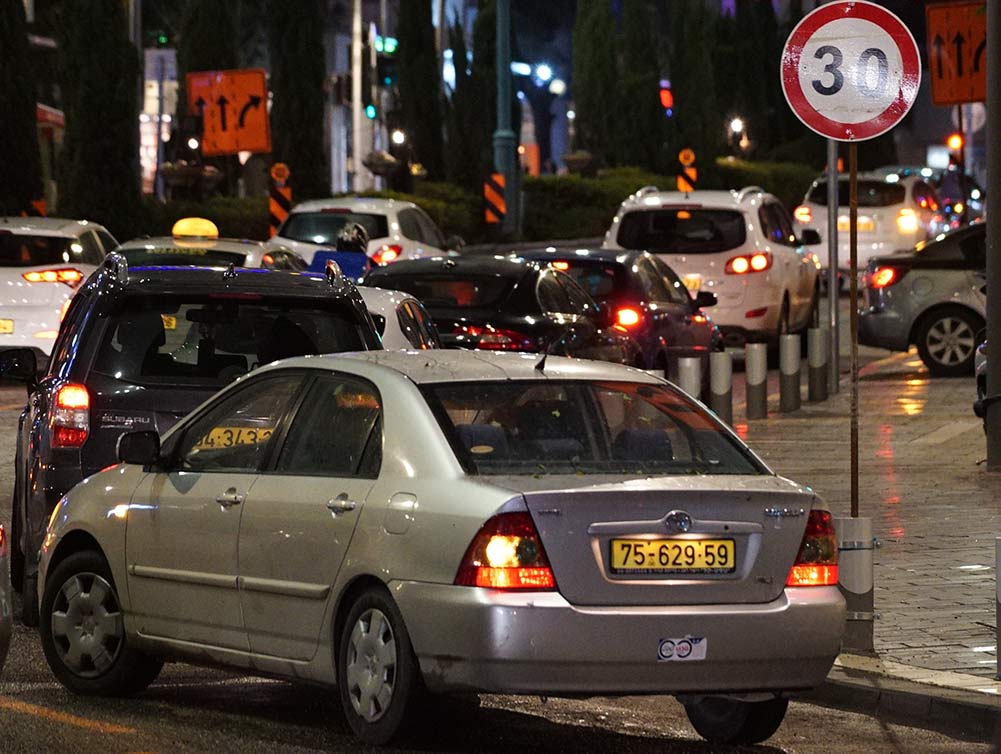
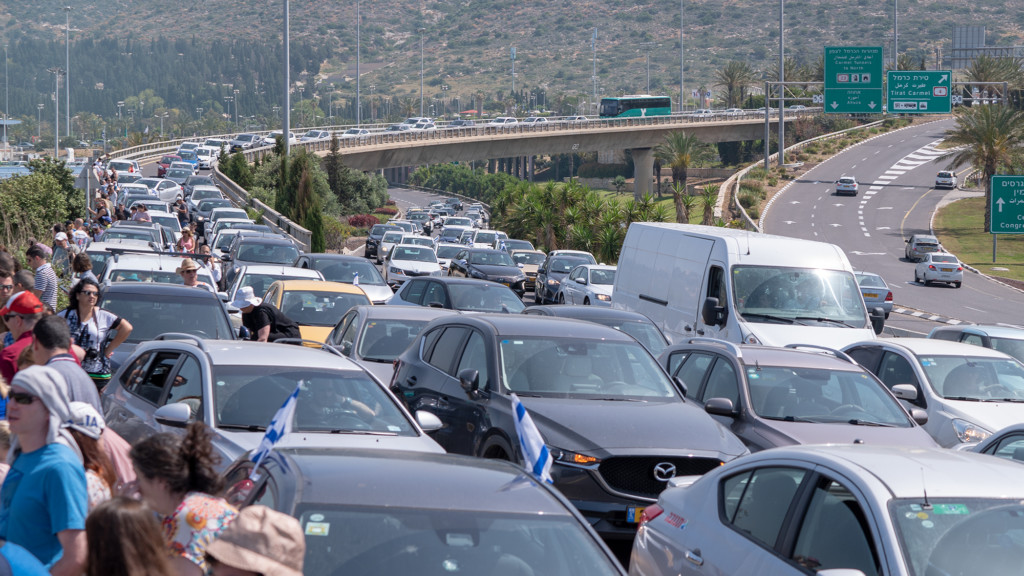
The traffic jams we faced this week on Highway 22, that daily, nerve-wracking crawl from the Matam intersection to Ha'atzmaut Street, from the Kiryat to Tirat Carmel, are just the promo. While we, proud of the vision of a bay free of factories and the construction of 150,000 new apartments, dream of urban renewal in the coastal neighborhoods that will quadruple the number of residents in them and aim to double the population of the cities in the metropolis to two million residents, one question remains open: How will we get around here?
The transportation situation in the Haifa metropolis has been deteriorating for over a decade, and although these are processes that have been going on for many years, we are on a collision course with total system paralysis.
National infrastructure projects, such as the mass transit system, as we are learning firsthand today in the Dan Bloc metropolitan area, require a long time, at best 20-30 years from the vision stage to the ribbon-cutting ceremony. The meaning is simple: decisions we avoid making today will determine the fate of the north in three decades. The State of Israel is known for chronic procrastination in making decisions, the Haifa metropolitan area must begin planning a metro system, not in another year, not in the next decade, but today. While in Jerusalem, Tel Aviv and Be'er Sheva, there is already a strategic plan, the policy that is advancing in the rest of the country (with considerable delay) includes advanced systems in Tel Aviv (3 metro lines and 3 light rail lines) and in Jerusalem (3 light rail lines as of this writing). The planned light rail from the heart of the Gulf to the Galilee also runs along a problematic route, disconnected from urban areas and on an uncongested route, so that the north is still lagging behind when it comes to first-rate national projects.
To understand how necessary the system really is, one must look at the numbers of residents and the space. In the coming decades, the core circle of the Haifa metropolis is set to house about 2 million residents, and its geographic layout will produce very high density. The main pressure of urban renewal is expected to be directed towards the coastal neighborhoods, which are characterized by relatively favorable topography. Redevelopment projects in neighborhoods such as Kiryat Eliezer and Shaar Aliyah are expected to bring them to an unprecedented density, compared to both Israeli and international terms: 40,000 to 50,000 residents per square kilometer. To put things in perspective, the average density in Paris is about 20,000 people per square kilometer, in central Tel Aviv about 15,000, and in London about 10,000, all with advanced metro systems. It is impossible to transport such masses of people with bus systems or above-ground light rail. A density of 50,000 people per square kilometer is prohibitive; the only possible solution is an underground metro in these areas.

The only way to create a truly livable and walkable city, one that allows for wide sidewalks, bustling shopping boulevards, cafes, and safe public spaces for children, is to simply remove cars from the face of the earth. That is exactly what the metro does. Existing public transportation data shows a sparse and uneven layout that is incapable of bringing about this change. In contrast, metro stations function as urban anchors; they draw the massive traffic underground, freeing residents from the bondage of the private car, and allowing the street above to return to the hands of pedestrians. Without the metro, planned densification will not create vibrant urbanism, but only one huge, congested parking lot.
In a broader perspective, the neglect of the Haifa metropolis is a symptom of a continuing lack of investment in infrastructure in the country in general and in Haifa in particular. In international comparison, in European countries, there are dozens of cities with advanced metro and mass transit networks. Even urban areas the size of Haifa currently benefit from mass transit systems, such as Mannheim in Germany, Krakow in Poland, and Bilbao in Spain, among others. Israel, on the other hand, with only two systems (as mentioned, still under construction), is light years away from this standard. If we aspire to be a developed country, to provide our residents with a high quality of life, and not to settle for the standards of developing countries, we must not leave the Haifa metropolis with solutions from the last century.
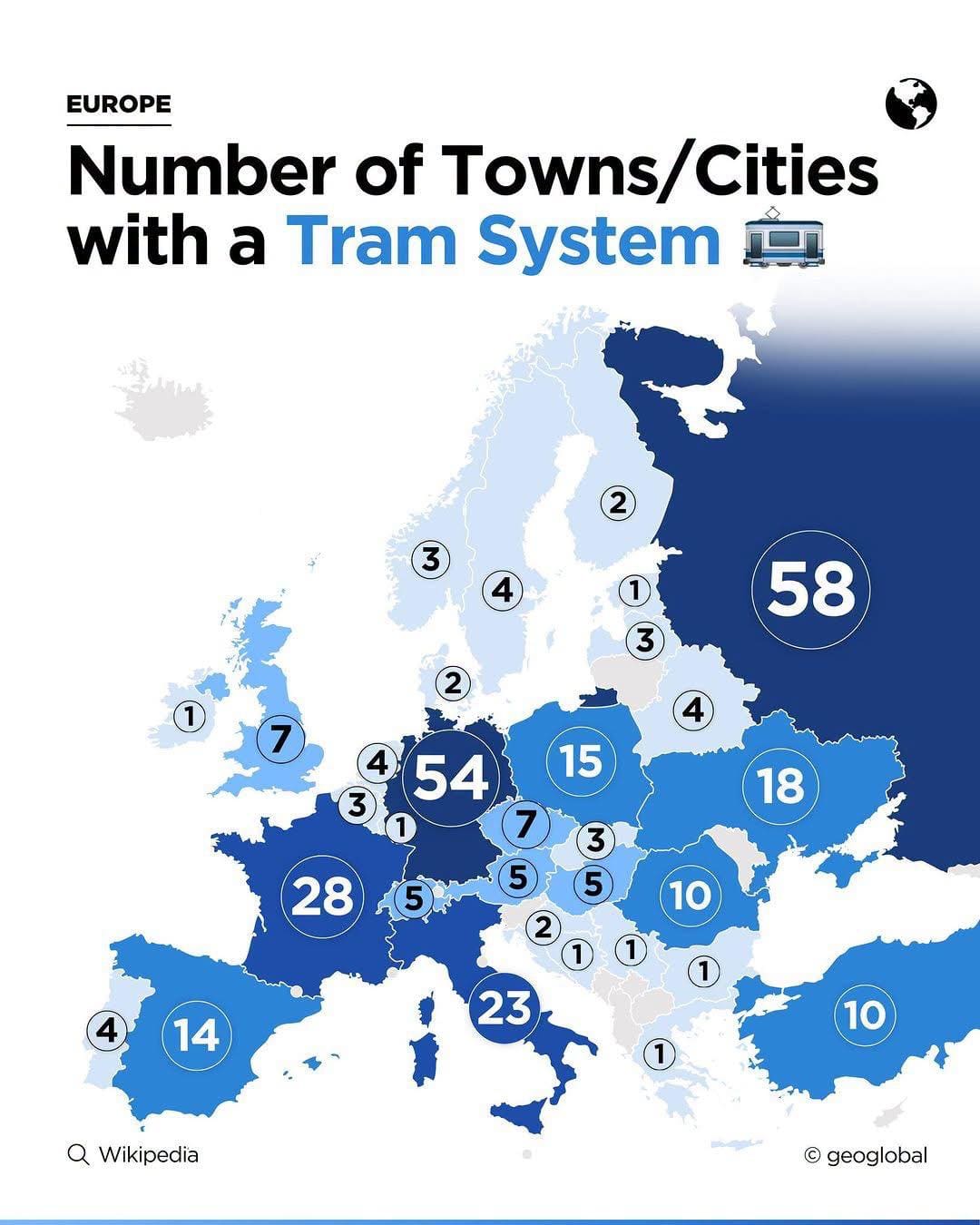
Number of cities with light rail systems in Europe, source: geoglobal
The significance of such a system is not only transportation, but socio-economic. Combining an efficient metro system, along with connecting the region to the world with an international airport in the north, will create a tremendous economic growth engine. It will turn the metropolis into a magnet for employment, high-tech and entrepreneurship, and improve the accessibility of the population of the regenerating neighborhoods, Haifa Bay and the Krayot to one vibrant and vibrant urban fabric.
National vision and projects require a view in terms of generations, not terms of office. A metro for the Haifa metropolis is neither a luxury nor a fantasy; it is Israel's most pressing planning necessity today. If we don't put the plans on the table today, in 20 years we will find ourselves in one giant traffic jam, looking enviously at Europe, and asking how we missed the train again.
If there is no change soon, I am not sure we will even exist. I hate the traitor and despise him and the madman, but his prophecies of rage scare me. He is corrupt to the highest levels, the scum of the human race, but he is far from stupid. He has information that the general public does not share, so it is appropriate to address the prophecies of rage. Just don't vote for him...
A metro that will only pass through neighborhoods on the waterfront and not go up to Carmel – will cost a fortune because of the high groundwater and will not serve anyone. The obvious solution is high-frequency buses on intersecting and densely networked lines and simple transfer between them.
That's exactly what they do.
https://haipo.co.il/item/524042
"Knowledge is power"
Don't believe all the poison spreaders, check before you write.
The vast majority of traffic jams can be solved with professional regulation of the municipal control center responsible for the traffic lights! It is also time to show the municipal and police enforcement system at critical times!!
You live in illusions.
Zero expectations from the Gush Dan-Amonim government. The Israeli government will not invest a single shekel outside of Gush Dan, Jerusalem, and Judea and Samaria. To go out to an international tender, which the winner operates including Sabbaths and holidays and receives all the revenues for 45 years, including commercial space.