


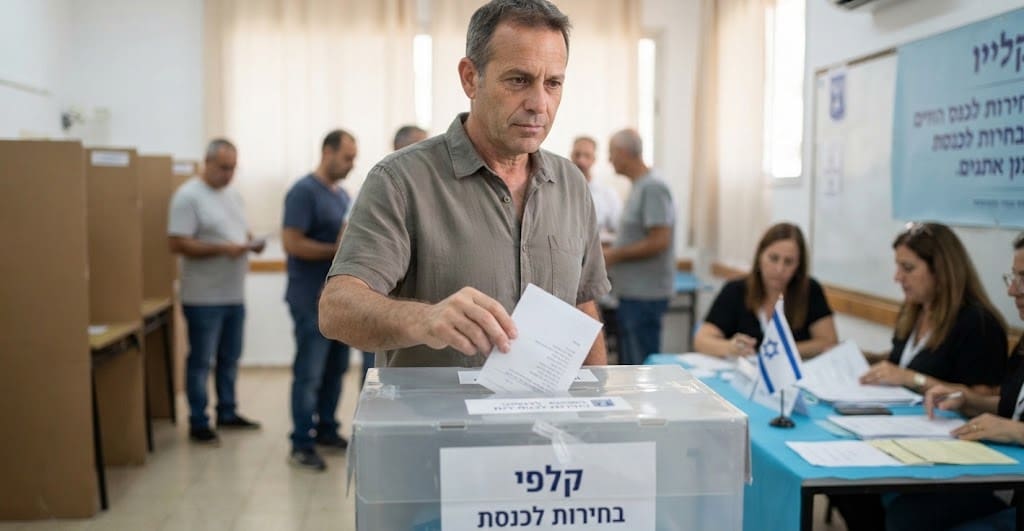
Voting without knowing: Does the public in Haifa choose a party or simply vote against someone they don't want?
Elections are one of the most important tools in a democracy. Through them, the public determines who will run the country, who will make economic and security decisions, and what the national priorities will be. However, an important question arises: to what extent is voting based on actual knowledge of the parties' activities, and to what extent is it influenced by emotions, habits, and preconceived notions?
Unfortunately, voting is often based on a small number of parameters: sympathy or dislike for a leader, ideological identification, loyalty to a party, or a desire to change the government. Sometimes a person votes for a particular party primarily because he opposes another party, without examining in depth its achievements, its failures, and its plans for the future.
The distinction between a positive vote and a negative vote
- Positive vote: A voter chooses a party or candidate because he or she completely identifies with their ideology, platform, activities, or the results they have brought (e.g., economic, social, or political support).
- Negative vote / "Yes" vote: A voter chooses a particular party, not necessarily out of love for it, but to block another party or camp that has frightened, angered, or disappointed him. In Israel, many election campaigns are conducted under a sense of urgency or existentialism (such as slogans like "just not X" or "without Y"), which pushes voters to vote "no."
The connection to reality in Haifa and public services
When citizens feel that public systems are failing them or are functioning poorly, their political response at the ballot box often tends to be Protest vote against the existing government, and not necessarily a choice out of deep trust in the alternative camp
There is nothing wrong with personal feelings and views. They are a natural part of democratic life. But are they enough to make a decision that will affect all of our lives for years to come?
The voter should also examine his decision based on knowledge and information: What has the party done in the area of the cost of living? Has it acted to make things easier for families who are having trouble making ends meet? What has it done in the areas of health, education, security, and transportation? Has it kept its promises, and how did its representation in the Knesset vote on key issues?
Residents of Haifa and the north also have practical questions: What is being done to improve transportation, strengthen hospitals, develop employment, and reduce the gaps between the center and the periphery? It is important to examine not only promises made before the elections, but also decisions made and results achieved in practice.
Here another problem arises: information about the activities of the government and the Knesset is not always accessible to the public in a simple, clear, and centralized manner. Not every citizen has the time or ability to follow votes, budgets, and government decisions. Therefore, state institutions, political parties, and the media also have a responsibility to present reliable and understandable information.
Informed voting does not require the citizen to be an expert in politics. It requires him to ask questions, compare alternatives, and examine what is behind the slogans.
The voter does not have to know everything, but he should vote out of knowledge and not just out of habit, anger, or gut feeling. A strong democracy is not measured only by the right to vote, but also by the ability to choose out of understanding and responsibility for the future of the country.
We need to see what happens. In some polls, the Joint and Ram parties are reaching 15 seats instead of 10 seats today, which indicates very high voting percentages for extremist parties.