


A year after the missile strike: Gan Binyamin still awaits the restoration promised to residents

(Live here) – A year has passed since the missile hit the building...

The Road Revolution in Haifa: Scrubbing and Layering Works in the Ramat Hen Neighborhood

(Live here) – Haifa Municipality will begin on Sunday, the 4th...

Double ambush in Haifa: Huge drug lab uncovered and commercial quantities of drugs seized

(Live) – Detectives from the Zevulun Station from the "Asher" area revealed...

Haifa Film Festival

Four decades of cinema, culture and life in the city of Haifa. I was privileged to be...

The Central Synagogue of Odessa – a House of Prayer Through the Ups and Downs of Time

In the heart of Odessa, on the corner of Yabryska ("Jewish Street") and Ryshlievska streets,...

The film "The Haggar": Ethiopia - the country left behind

A few seconds before the lights in the Rappaport Hall at the Haifa Auditorium went out,...

Flower of the week • Common marigold

The Carmel presents us with flowers in all seasons of the year. In this column we will represent...

The pilot hit the co-pilot during the "takeoff run"

Following the traumatic incident in the sky and the struggle during a flight from Dubai to Ben Gurion Airport, ...

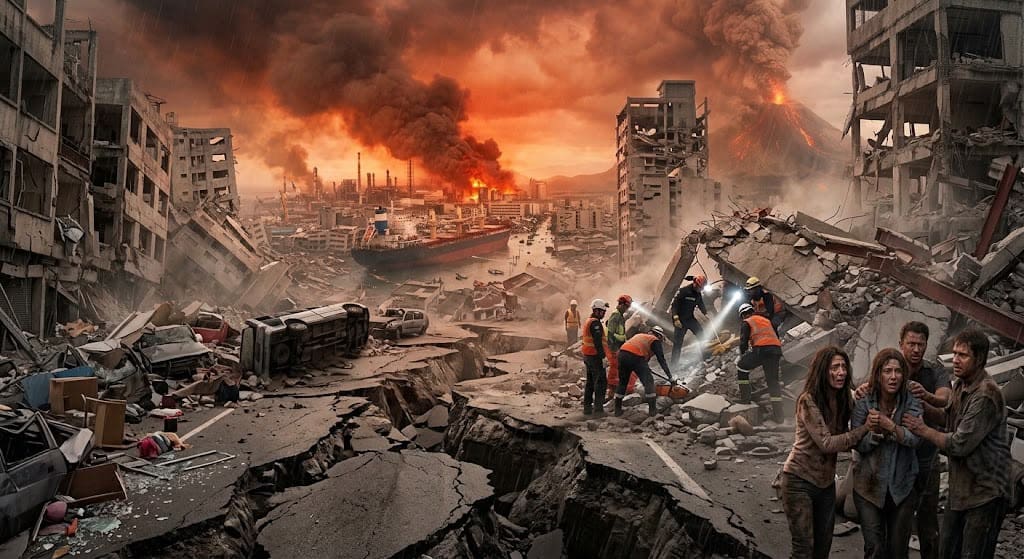
What you didn't know about the Haifa Disaster Prevention Forum

The column deals with one central idea: how the State of Israel and human society can ensure their existence, security, and prosperity in a changing world full of threats.

Introduction: The main idea

To ensure our existence (both nationally in Israel and globally), it is no longer enough to rely solely on past achievements, existing science and technology, or resource exploitation. We must move from a "destructive era" of pollution, wars, and the ever-increasing use of natural resources, to a mindset of renewal, world repair, and building strong human capital.

The main points:

1. Change of perception – from exploitation to renewal:
The problem: Humanity is harming the environment and essential resources (water, energy, food, and sustainability) while producing waste and global warming:

  • Air pollution – Burning fuels, industry, and transportation emit greenhouse gases and polluting particles.
  • global warming – Carbon dioxide and methane emissions increase the greenhouse effect and change the climate.
  • Water waste and pollution – Overuse of water, pollution of streams, groundwater and seas, and damage to freshwater sources.
  • Damage to food and soil – Intensive agriculture, pesticide use, soil erosion, and food waste harm food security.
  • High energy consumption – Dependence on fossil fuels such as oil, coal, and gas increases greenhouse gas emissions.
  • Waste production  – Large amounts of plastic, electronic waste, and industrial waste accumulate and pollute the environment.
  • Deforestation and habitat destruction – Construction, agriculture, and logging reduce natural areas and harm biodiversity.
  • Overconsumption – Rapid exploitation of natural resources, such as metals, timber, water and fuels, makes it difficult for future generations to use them.

in one sentence:
The problem is that humanity is consuming natural resources at a faster rate than nature can regenerate, while at the same time producing pollution and waste that exacerbates climate change and harms ecosystems.

The solution: Instead of a "damage and destruction" approach, we must move to advanced recycling and the development of "recreation" technologies (restoration of living systems, the environment, energy, and water sources).

2. Building human capital and professional training:
The most important key to prosperity and security is the person.

There is a need for practical and technological training from a young age (in schools, the military, academia, and industry) in fields such as science, medicine, engineering, ecology, and advanced technologies.

3. Combining Artificial Intelligence (AI) and Technology:
The use of technology, especially artificial intelligence and autonomous systems, must be based on reliability, safety, and responsibility.
 Technology should serve people and not replace critical thinking or harm the environment.

4. National and strategic resilience:
The State of Israel needs to know how to function and protect its citizens, its infrastructure (water, energy, transportation, food), and the economy both in routine and in times of emergency and disaster.

In conclusion, the text calls for conceptual and educational reform: a connection between advanced technology (such as AI), preserving ecology and environmental quality, and comprehensive investment in people, to ensure a safe, stable, and high-quality future.

Did the article interest you?

Contact the newsroom: At watsap • By email

Dr. Jacob Rob
Dr. Jacob Rob
He holds a postdoctoral degree in national security, and is a researcher and writer in the fields of national security, law, international economics, and psychology. His writings are published in a variety of websites and journals, and have been read in 74 countries. He is a member of the Writers' Association, and combines academic research with clear writing for a broad audience.

Articles related to this topic

Leave a comment

Please enter your comment!
Please enter your name here

All the articles are alive

The murder of Yanina Russinova in Haifa: A lonely young woman who tried to build a new life and was brutally murdered

(Live) – Yanina Russinova, 31, was found on the night between Thursday and Friday, 09/25/2026, in critical condition on the stairs of a building in the lower city of Haifa, after...

Haifa Film Festival

Four decades of cinema, culture and life in the city of Haifa. I was privileged to be at the first Haifa Film Festival, founded in 1983. It was the first film festival of its kind in Israel. Since then, more than...

The Central Synagogue of Odessa – a House of Prayer Through the Ups and Downs of Time

In the heart of Odessa, on the corner of Yabryska ("Jewish Street") and Ryshlievska streets, stands the city's central synagogue, a building that at one time reflected the flourishing of the large Jewish community...

The film "The Haggar": Ethiopia - the country left behind

A few seconds before the lights in the Rappaport Hall at the Haifa Auditorium went out, it was clear that this evening was no longer a routine screening. On September 29, 2026, as part of the International Film Festival...

Flower of the week • Common marigold

The Carmel presents us with flowers in all seasons of the year. In this column, we will always present one of the Carmel flowers, at the same time as it appears in the field, and you will be invited to visit it in one of the places where...