


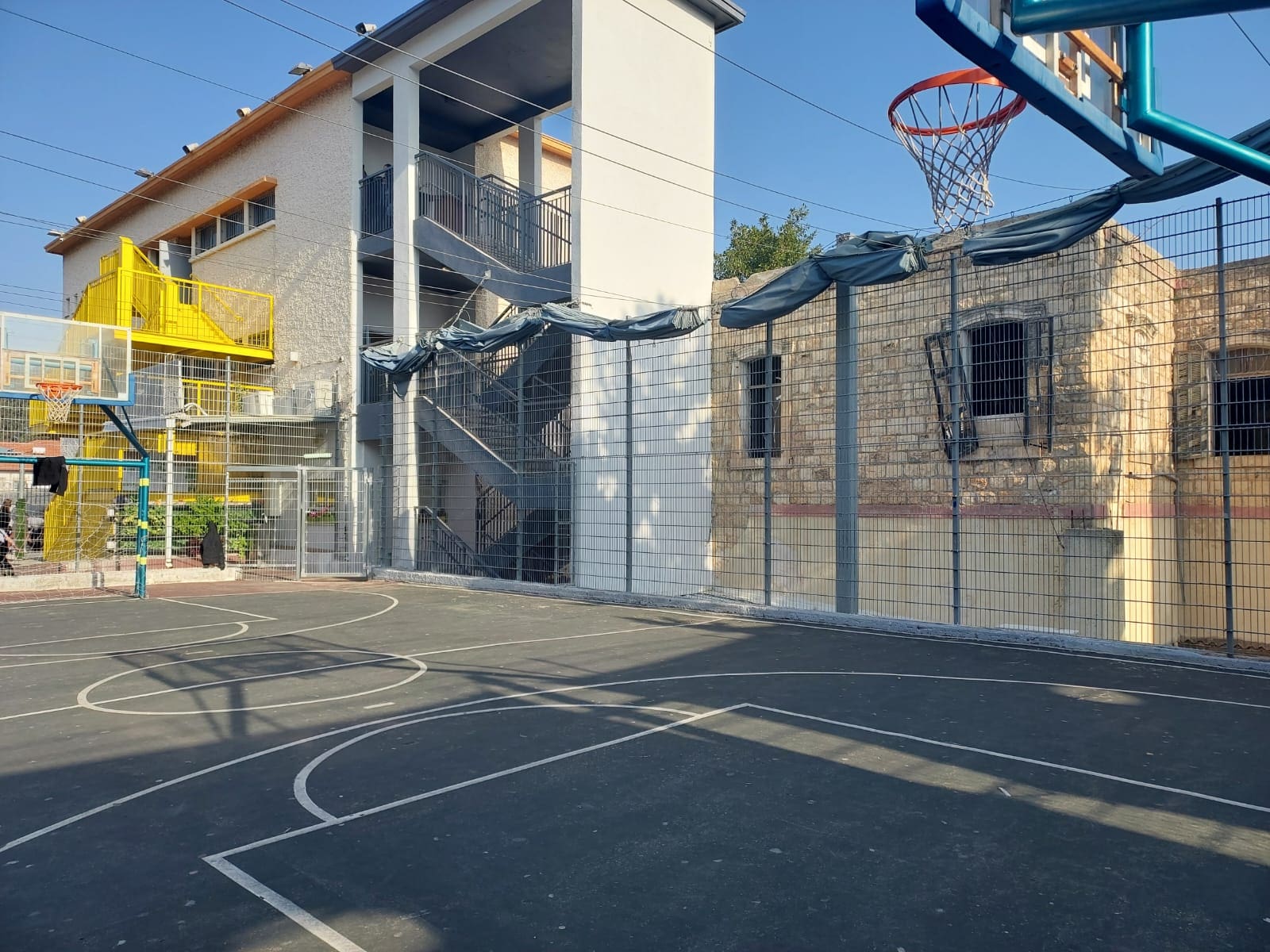
(haipo) Two days before the start of the school year, tension is mounting at Al-Khiwar Elementary School in Haifa. Parents are threatening to shut down classes on Tuesday, September 1, 2026, after they claim the municipality is refusing to allow students who want to attend the school to join, a decision they say is severely damaging to the school, the students, and the educational staff. The chairman of the parents' committee, Richard Karem, says that the struggle is not just about a number of students, but about the future of a unique and regional educational institution that is trying to maintain its stability and educational vision.
Parents' claims: "The municipality is preventing children from going to school"

Richard Karem, Chairman of the Parents' Committee, describes a frustrating reality. According to him, the parents have been in contact with the municipality throughout the summer break, and even sent a detailed letter in which they requested that students entering first grade and higher grades be allowed to join the school.
“We are supposed to open the first grade with only 11 students,” says Karem. “There are 13 more children whose parents asked to come to us and were turned down. It doesn’t make sense. The number of students determines the number of staff we are entitled to. Without students, we will lose the deputy principal of the school.”
He says the municipality’s decision hurts both children who don’t get a place in the school they want to attend, and students in Al-Khiwar who could lose essential services. “Why are 6-year-olds sitting at home on Tuesday because they don’t have school?” he asks. “We won’t allow that.”
Al-Khiwar School: A Unique and Trans-Regional Institution
Al-Khiwar School is a unique educational institution in the Arab sector of Haifa. It was established in 2004 at the initiative of a group of parents seeking an alternative to the traditional education system, and has since become a supra-regional school where any student in Haifa can enroll.
Al-Khiwar's educational vision is based on alternative and democratic education, combining art, creativity and open dialogue. The school strives to foster independent learners, critical thinkers and socially engaged, while providing space for personal expression for each child. Currently, there are approximately 244 students from first to eighth grade.
This uniqueness makes Al-Khiwar a magnet for many families in Haifa, who are looking for a different educational model, one that provides space for dialogue, creativity, and community.
Municipal policy: Priority for the regional school
According to the municipality, there is no change in the registration policy. Students are first assigned to the regional school, and only then are they allowed to submit a transfer request to a supra-regional school, such as Al-Khiwar.
The municipality claims that transferring four additional students will not meet the standard required to open a class, and on the other hand could harm the school from which they will be transferred. “Decisions on registration, opening classes and staffing standards are made in accordance with the number of students and the required standards,” the municipality said. “We continue to examine the options to ensure the stability of the school.”
Parents: “The policy is not appropriate for a regional school”
The parents claim that the municipal policy is not suitable for a school like Al-Khiwar. “We are a regional school,” says one parent. “Any student in Haifa can enroll with us. If there are children who want to study here, why prevent them? Especially when we need students to maintain standards.”
According to them, the municipality insists on a policy that does not take into account the special needs of an alternative school, whose number of students is relatively small and whose stability depends on every additional student.
Fear of losing standards: “Without students – no staff”
One of the main concerns of parents is the loss of staff. According to the Ministry of Education, the number of staff is determined by the number of students. If the first grade opens with only 11 students, the school could lose the vice principal, a key role in running an alternative school.
“It’s not just about numbers,” says a mother of a student at the school. “A vice principal is part of the beating heart of the school. Without such a standard, the whole system suffers.”
A struggle for educational identity: “Al-Khiwar is home”
For the parents, Al-Khiwar is not just an educational institution, it is a home. “Our children are flourishing here,” says a father of a third-grade student. “It is a school that allows them to be who they are. We are not willing to have it weakened by bureaucracy.” The parents emphasize that they are not opposed to a comprehensive municipal policy, but they are asking for flexibility that will allow the school to continue to exist and grow.
The parents announced that if the municipality does not allow the students to register by Tuesday, they will boycott classes. “This is a difficult step,” says Karem. “But we have no choice. We are fighting for the future of the school.”
Municipality: “Continuing to examine solutions”
The municipality, for its part, emphasizes that it is working to maintain the stability of the school. “We continue to examine the options,” it said. “The goal is to allow the school year to start as usual.” However, parents claim that time is running out and that without a quick decision, the school will be damaged.
Broader Questions: The Future of Alternative Education in Haifa
The struggle in Al-Khiwar raises broader questions about the future of alternative education in Haifa. Does the municipality support unique educational institutions? Is the registration policy appropriate for supra-regional schools? Is there room for flexibility that would allow such institutions to maintain their stability?
Many parents in the city are closely following developments, as Al-Khiwar is an educational model that represents a different approach, one that emphasizes dialogue, creativity, and community.
Towards Tuesday: Uncertainty and Hope
Tuesday is approaching, and the parents are waiting for the municipality's response. Will the students be allowed to register? Will the strike be averted? Will the school manage to maintain its standards?
Despite the tension, the parents emphasize that they act out of love for the school and out of a desire to ensure their children a quality, stable, and meaningful education.
Every year, the same shit of wildcat strikes taking advantage of the start of the school year. The education system will be privatized, so that they can finance a private school for themselves.