


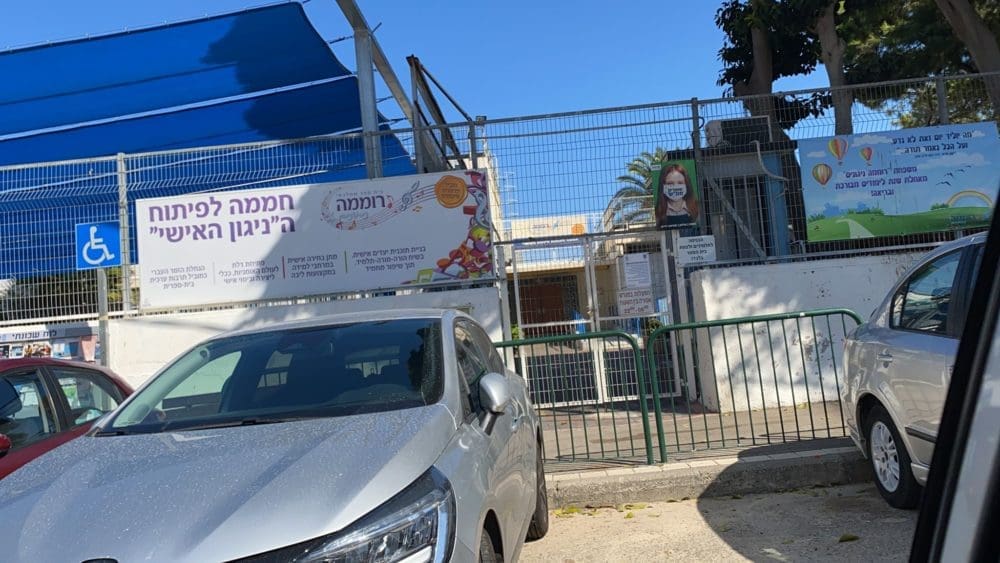
(haipo) Three weeks before the start of the school year, parents at the Nigunim Romema and Herzl schools in Haifa have announced that they will boycott classes on September 1 and will not send their children to school if a solution is not found to reduce the planned number of classes. The parents claim that the move will lead to overcrowded classes, emotional and social harm to children, and a decline in the quality of teaching. The struggle, which began in two schools, is expanding to other neighborhoods in the city and is sparking a broad public debate about standards, budgeting, and the responsibility of the authorities towards students.
Reducing classes at Herzl: Moving from four to three classes in fourth grade
At the Herzl School in Carmelia, parents were informed that in the upcoming school year, fourth-grade students will be studying in only three classes, instead of four classes as in the past three years. The parents claim that this decision undermines the stability of the children, especially in light of the fact that their first years at school were spent in the shadow of a war of iron swords, missiles on Haifa, and ongoing uncertainty.
According to the parents, the children need a familiar framework, the existing classrooms, and the division that has been practiced so far. They reject the proposal to add individual lessons or an additional teacher in some lessons, and claim that these solutions are not a substitute for maintaining four separate classrooms.
Fear of social harm: "Friends are the only anchor"
One of the main arguments of the parents at Herzl concerns the expected social harm. According to them, each student was asked to choose three friends with whom he would like to study next year, but the school has committed to placing only one friend in each new class. The parents argue that friends are the main source of support for children, especially after challenging years, and that reducing class sizes will lead to the loss of peer groups and significant emotional harm.
A survey conducted among the parents of the class yielded unequivocal findings: 94% of the parents oppose the move and believe that it will harm their children emotionally, socially, and academically. The parents note that this is a rare unanimity of opinion, indicating the depth of concern and the severity of the perceived harm.
Nigunim Romema: One first grade with 35 students and a small third grade
At the Nigunim Romema school in the new Romema neighborhood, the situation is even more complicated. Parents claim that in the coming year, there will be only one third-grade class instead of two, and that first-grade will open with 35 students, an especially high number for a first-grade class.
According to the parents, only two weeks ago they were informed that a single first grade would be opened. The parents claim that if they had decided now to open two classes instead of one, some of them would have sent their children back to school.
They point out that according to the Director General's circular, a class can be opened with up to 40 students, but emphasize that this is a general guideline that does not fit the educational reality on the ground. They claim that a crowded first grade is a sure recipe for an increase in incidents of violence, emotional difficulty, and harm to the teacher's ability to provide a personal response to each student.
Demand for municipal subsidy: "We pay high property taxes"
Liran Ben Harosh and Moshe Aharoni, from the parent leadership in Nigunim Romema, claim that the municipality should subsidize the budget gap that would allow for the opening of two first-grade classrooms and maintaining the number of third-grade classrooms. According to them, "We pay such high property taxes, and we would like to see our city's leadership put children's education first and commit suicide over it. Why does the municipality think it makes sense to budget for the salaries of five deputies, but it doesn't make sense that we parents don't want a classroom of almost 40 children in first grade?"
The parents add that there are already incidents of violence at the school, and that increasing overcrowding will only worsen the situation.
Demand for two first-grade teachers: "Promises are not enough"
In a meeting with the school principal, Shelly Greenberger, the administration promised that additional teaching hours would be allocated to first grade. The parents asked for a written commitment that there would be an additional teacher assigned to the class, but according to them, this did not appear in the minutes. Instead, it was stated that "they will do everything to ensure that there is another teacher."
The parents claim that this wording is insufficient, and that they are demanding a clear commitment to two first-grade teachers rather than a general promise. According to them, "This is about the quality of life of our children, we have no intention of compromising here."
Strike expands: "We won't start the year like this"
Parents at Nigunim Romema and Herzl announced their intention to strike on September 1 if a solution is not found. They note that the struggle is expanding to other schools in the city and that their goal is to create a broad strike of all affected parents.
According to them, this is a struggle for the future of children, the quality of learning, and the social climate in schools. They emphasize that they are not willing to accept overcrowded classrooms, damage to the social fabric, or partial solutions.
Allegations of harm to one hundred students because of just three
Parents at Herzl point out that the reduction in classes is due to the departure of only three students. According to them, "it is unthinkable that the departure of three students would lead to the complete dismantling of the social, emotional and educational fabric that was built over three years for a hundred other students."
They add that the move goes against the national educational trend, which strives to reduce overcrowding and promote student-adapted learning.
Ministry of Education response: "Standardization is determined according to procedures"
The Ministry of Education stated that the directors of educational institutions are acting in accordance with the Director General's circular and standard procedures. The ministry notes that teaching hours will be allocated for learning in small groups in core subjects, and that supervision will continue to closely monitor the pedagogical and social program that was built for each class.
The municipality's response: "Standard adjustments are made every year"
The municipality stated that standard adjustments are made annually based on the actual number of students. The changes result from moves, transfers to gifted classes, transfers between schools, and selection of unique educational frameworks.
The municipality notes that in cases where the number of classes is reduced, the Ministry of Education allocates additional teaching hours that allow students to be divided into learning groups and provide an adapted pedagogical response. It was also stated that the municipality is aware of the importance of maintaining a safe educational climate and is working together with the Ministry of Education to ensure optimal learning conditions.
For the administrators at the Ministry of Education and the municipality with a huge salary of 40 shekels a month, you are just "standard adjustments".
The Haifa Municipality, with the highest property taxes in Israel, is unable to provide even an educational standard that is in line with the property taxes and is cramming students into classrooms to save on hiring teachers.
And this is even more outrageous in neighborhoods where the municipality is also confining construction with Tama 38, meaning they know that many more students will enter the neighborhood and eventually they will have to open another classroom, but right now they are making adjustments to the standard.
Save two teachers.. The decay doesn't stop in the city. It only grows.
Later, the mayor will be asked stupidly why young residents with children in the Harech neighborhoods are leaving and only an older population remains? Really, why?