


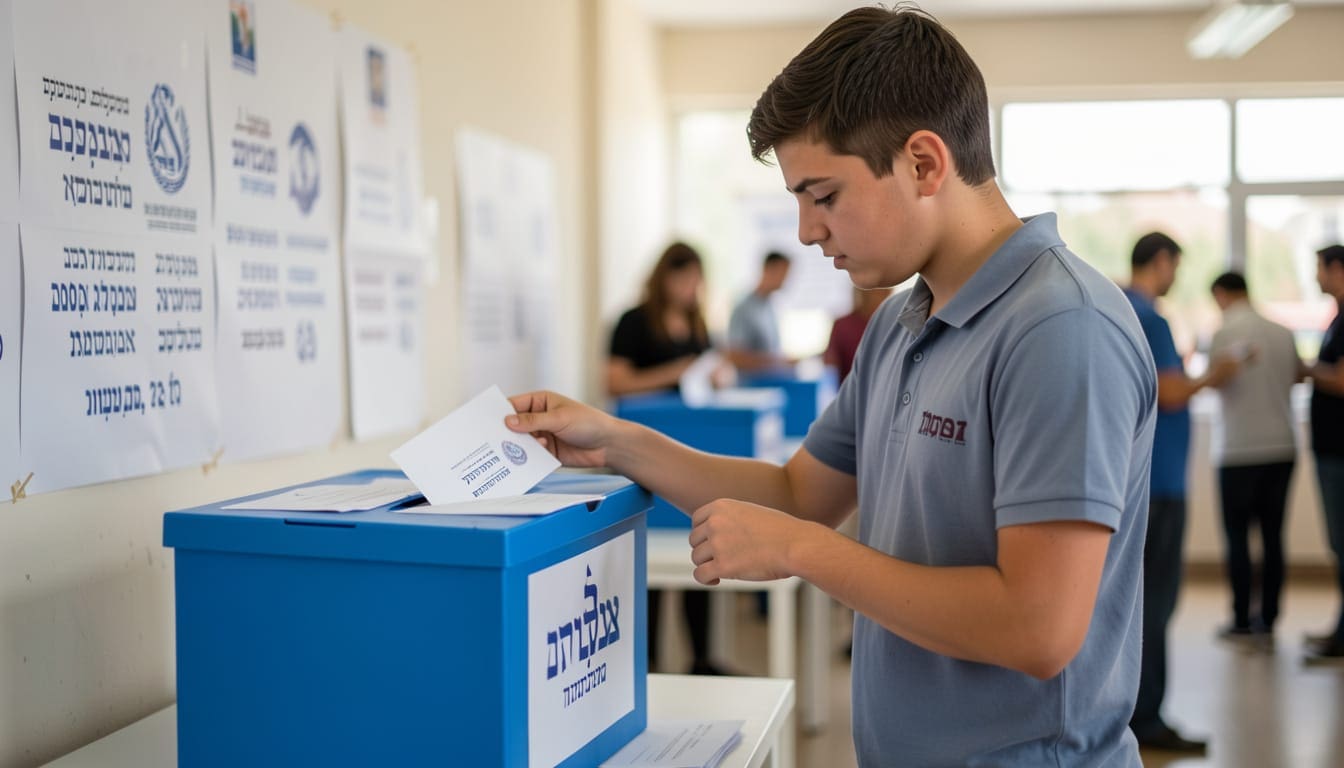
Election season is on the horizon again, and once again we are witnessing the artificial attempts to revive the Joint List. Once again, negotiations are underway to divide seats, once again pompous declarations about unity are being thrown into the air. But through the media smokescreen, the truth is simple and stark: the Arab public is not looking for a joint list. It is looking for effective leadership.
The old politics, the one that sanctifies technical unions just to pass the electoral threshold, ignores the deep crisis on the ground. It is impossible to continue arguing about symbolism, representation, and identity, when a civil catastrophe is unfolding on the streets that requires proper public administration, setting new priorities, and crisis management at the highest level. The bloody numbers indicate the collapse of the systems.
The collapse of the traditional leadership model
- The scourge of crime – The normative citizen in Arab society today lives in the shadow of rampant crime, protectionism, and daily danger in the public sphere. This reality is the result of a colossal failure and requires leadership that is capable of addressing the roots of the problem.
- The economic time bomb – Approximately 30% of Arab youth (ages 18-24) are defined as inactive, not studying or working. These young people are marginalized and become a breeding ground for despair and crime.
- Concentration in low-wage industries – The average salary in Arab localities is about 36% lower than the salary in Jewish localities (about 9000 NIS compared to about 14000 NIS), due to a high concentration in blue-collar industries.
- Lack of infrastructure and local industrial areas – Approximately 85% of Arab municipalities are ranked in low socio-economic clusters (1-3) due to a lack of property tax-generating businesses and quality jobs within the localities.
In the face of these figures, the Arab politicians' struggle for third or fourth place on one list or another is simply a mockery of the Rash.
Breaking the taboo and opening up new political possibilities
The traditional Arab political leadership must internalize that the taboo has been broken. Many Arab citizens have sobered up and now understand that real influence on the distribution of resources, on education, welfare, and personal security can also occur outside the familiar frameworks. There are other parties that can constitute a real political home for the Arab public, ones that offer pragmatism instead of slogans.
The rise of new pragmatic alternatives
The Democratic Party, for example, appears to many as a promising option for real integration into decision-making centers, based on a vision of honest civil partnership and full equality of rights. At the same time, another executive alternative is taking shape in the form of Yisrael Beytenu and represented by Hamed Amar, a public figure with credentials who has already presented and promoted operative five-year plans to improve the socio-economic situation in Arab society, an endeavor that requires a precise combination of political pragmatism, negotiation skills, and in-depth familiarity with the budget department at the Ministry of Finance.
Ostensibly, the polls support the notion that unless the Joint List is re-established, the voter turnout in Arab society will collapse. But in reality, this is a statistical illusion. The bias stems from the fact that the polls present the public with a political reality that is missing at the time of their compilation; they do not reflect the full range of options available to the Arab voter, such as voting for parties with an economic performance orientation that offer civic partnership. The lack of presentation of the full picture distorts the results and hides the true desire for integration and influence.
The need for a new and measurable leadership model
This means that it is time to think about an entirely new model of leadership. Such a model will not be tested by the question of which parties signed a surplus agreement or who speaks better from the Knesset podium. The new model must be based on measurable public management, on building strategic alliances that cross sectors, and on an uncompromising demand for economic and civic achievements.
Today's Arab public demands leadership that comes to work, measures successes, and collects receipts. If elected officials fail to offer this new model, the public will simply vote with their feet and find the solutions they deserve in other political houses.
🔅❤️🔅