


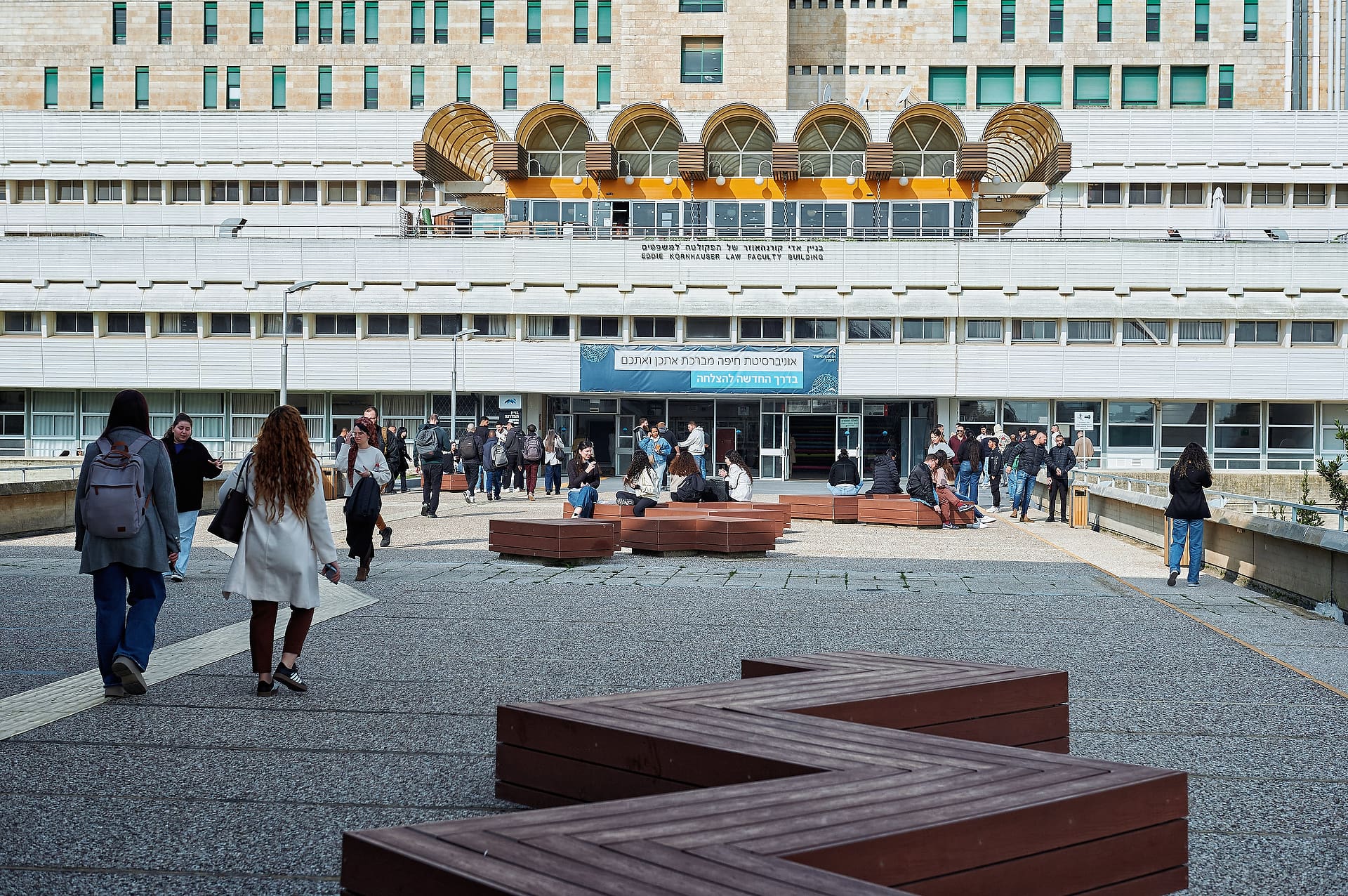
(haipo) Haifa City Council members David Etzioni and Zeev Sonenzon from the "Our Home" faction submitted a proposal for the agenda in which they sharply criticize the Haifa Municipality's policy towards the city's student population, claiming that the municipality chose to cancel benefits for students while providing unprecedented benefits specifically to institutions of higher education.
Changing perceptions: Canceling benefits for students alongside subsidizing academic institutions
The proposed arrangement claims that throughout the current term, the municipality's management has demonstrated a change in perception regarding the student population. According to council members, while in the past the municipality encouraged students through events, discounts, and benefits, now the municipality is choosing to cancel benefits for students.
The proposal details a list of vulnerabilities: the cancellation of parking benefits for students, the almost complete erosion of cultural and community activities intended for them at Hadar Carmel, an attempt to cut half a million shekels in the subsidy for student scholarships at the university, and the intention to close the student village in the Hadar neighborhood, which the proposers define as a strategic anchor for the restoration and strengthening of Hadar and the entire city.
Criticism of a 6 million shekel property tax discount for academic institutions
Etzioni and Sonenzon point to what they call "the peak of disconnection and absurdity," which they claim was expressed in an extraordinary city council meeting on the subject of the tax order on June 30, 2026. According to them, during the meeting, an attempt was made to Paid Deputy Mayor, Sophie Nakash, who is also the chairwoman of the municipal finance committee, to justify granting a 6 million shekel property tax discount to higher education institutions in the city. Nakash justified this by saying that the more the university has an interest in the city, the more it will want to open and build more faculties, donors will be interested in coming, and more students will come. The council members define this perception as "misguided and distorted," and claim that the growth of real estate and construction by academic institutions in the last decade has not translated into an active student presence in the urban space.
Proposal Requirements: Policy Review, Stopping the Student Village Closure, and Protecting Scholarships
The proposed settlement includes a number of concrete requirements:
beginning, The council members request that the municipality's CEO present, within 30 days, a detailed review of the municipality's policy on higher education and students, while analyzing the economic and municipal impact of providing benefits to institutions in the face of the cuts imposed on the student population.
Second, They demand an immediate halt to any move to close the student village in Hadar, and the submission of a strategic work plan within 90 days to expand student activity in the city, restore benefits, and restore student life to the port campus and the Hadar neighborhood.
ThirdThey request that the City Council decide that the budget for municipal scholarships for students will be protected and will not suffer any cuts during the work plans and budgets of the next ten years.
Tal, a student studying in the German colony, with his girlfriend, a student at the University of Haifa: "We wanted a young environment and proximity to the train because we are both from the center of the country. We lived on Hanamal Street - I thought it was ideal for me, 3 minutes by bike to the colony or 10 minutes on foot. We were told that there was a metro and a cable car to the university campus. The problem was that the port area was noisy at night. It seemed like they were playing music for us on purpose. We contacted many sources and saw that it bothered us and others also complained and left. The distance to the university was also decisive. It took over an hour by bus each way. It would have helped if there was an express line from the university to the city center. After much hesitation, we moved to Kiryat Yam. First of all, we were surprised how many students like us chose to live in the Krayot because it was cheaper and faster to get to the university than from some of the neighborhoods of Haifa. Some also worked, like me, in the Gulf factories and it was more convenient and faster for them. We fell in love with Kiryat Bialik and after a year, even though Kiryat Yam was also "We decided to do our third year there and the difference is very serious. We feel more organized, less crowded, cleaner and more well-kept. If I compare Hadar to any neighborhood in the Krayot, I wouldn't live in Hadar because of the feeling of overcrowding and lack of safety at night. Another thing is that in the Krayot, it's very close to shopping malls and large grocery stores, and in Haifa it's much more difficult. Almost all of my friends who live near the university and in the surrounding neighborhoods complained about the problem of expensive chains and lack of competition. Haifa is simply very expensive and very inconvenient, not only for students but also for young families who want to stay in Carmel. Sometimes it's a decision of lack of choice or sacrifice rather than preference."