


"A great victory for Haifa!"
The headlines on real estate websites this week announced the cancellation of a plan to build 460 new housing units on the grounds of the Stella Maris Air Force Base. But when you peel back the cellophane wrappings of public relations, the question arises: is this really a victory, or is it just another nail in the coffin of planning and vision in the city?

The plan in question is spread over the base area in Stella Maris, which is in a prime location for developing and strengthening the city. The area with its mesmerizing view is a missing puzzle piece in the urban continuity of the French Carmel and can connect the parts of the Carmel with a convenient topography.
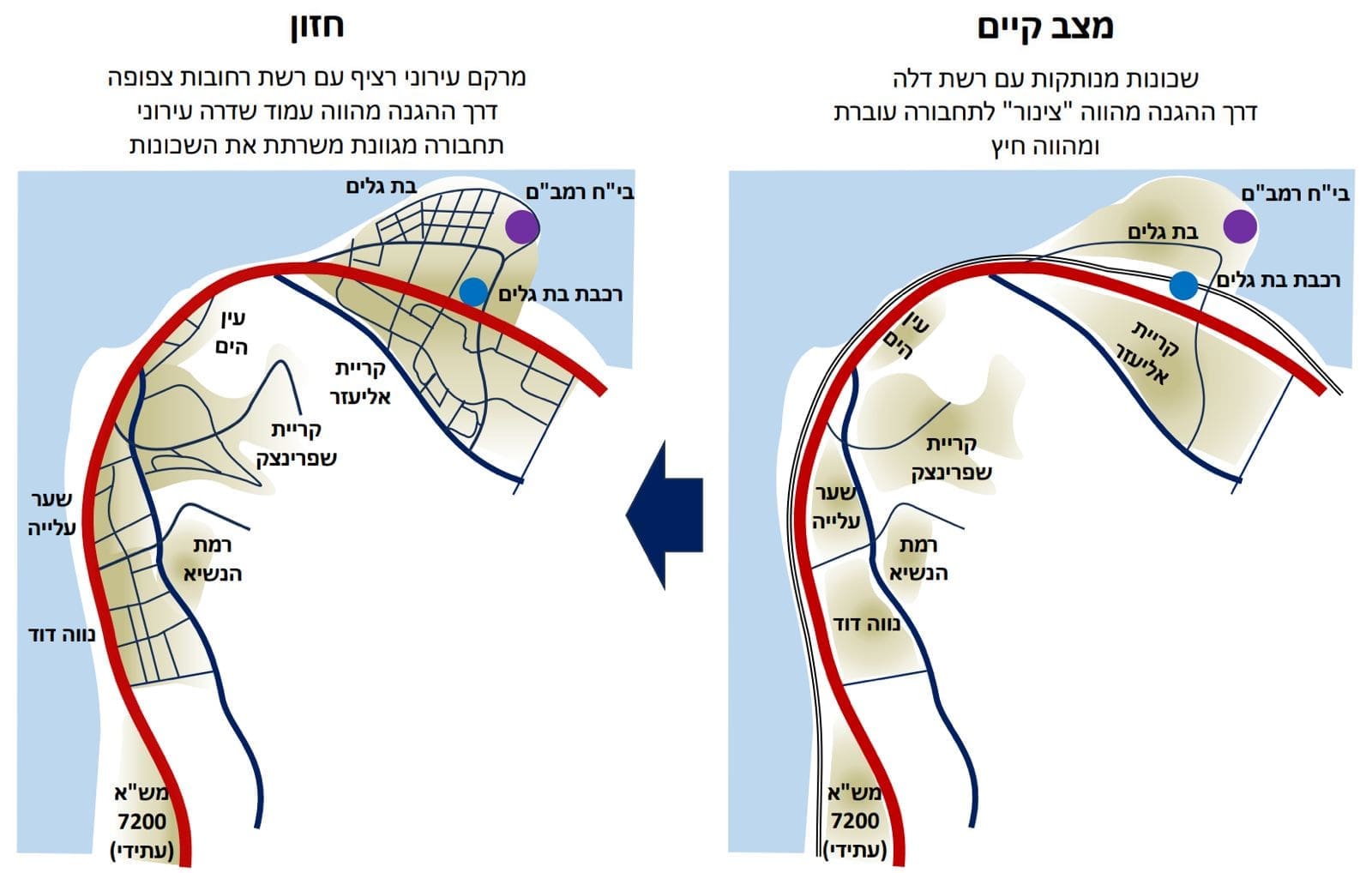
While celebrating the cancellation of 460 housing units, commerce, 2 new hotels and a scenic promenade, there is dissonance in the city's western neighborhoods. In the Egged complex, about 800 aerial meters from the place where they refused to add 460 new apartments, construction of a real estate monster of 1,650 housing units is being promoted. This is just the tip of the iceberg of a planning tsunami sweeping western Haifa and is expected to change the face of the city.

Tsunami on the west of the city – 20,000 housing units on chicken legs
The Egged complex is just one extreme example of the "crowding as much as you can" policy that applies only to the western coastal neighborhoods of Haifa but not to other areas of the city. Throughout the entire western part of the city, evacuation-construction plans are currently being promoted on an unimaginable scale of about 20,000 new housing units, and more are on the way. There is no doubt that different neighborhoods in the city have different characteristics such as location, proximity to infrastructure, natural values, and landscape sensitivity, and these produce different planning. The city center needs to be more densely populated than the Carmel, but it also needs to contain economic, social, cultural, and educational opportunities. The aforementioned addition of over 80 residents in the same area is putting the horse before the cart.
Programs that require execution and programs that encourage execution
The municipality relies on a number of partial master plans, which are not legally binding, while at the same time approving wholesale plans that do require demolition and construction. This means that we will receive dozens of new towers without a commitment from anyone who will take care of and pay for the infrastructure required for you. In addition, the binding plans are planned in small parts without looking at the entire city and long before anyone has even completed the planning for infrastructure, sewage, roads or educational institutions that will be able to accommodate this mass.
Towers and beach shuttles
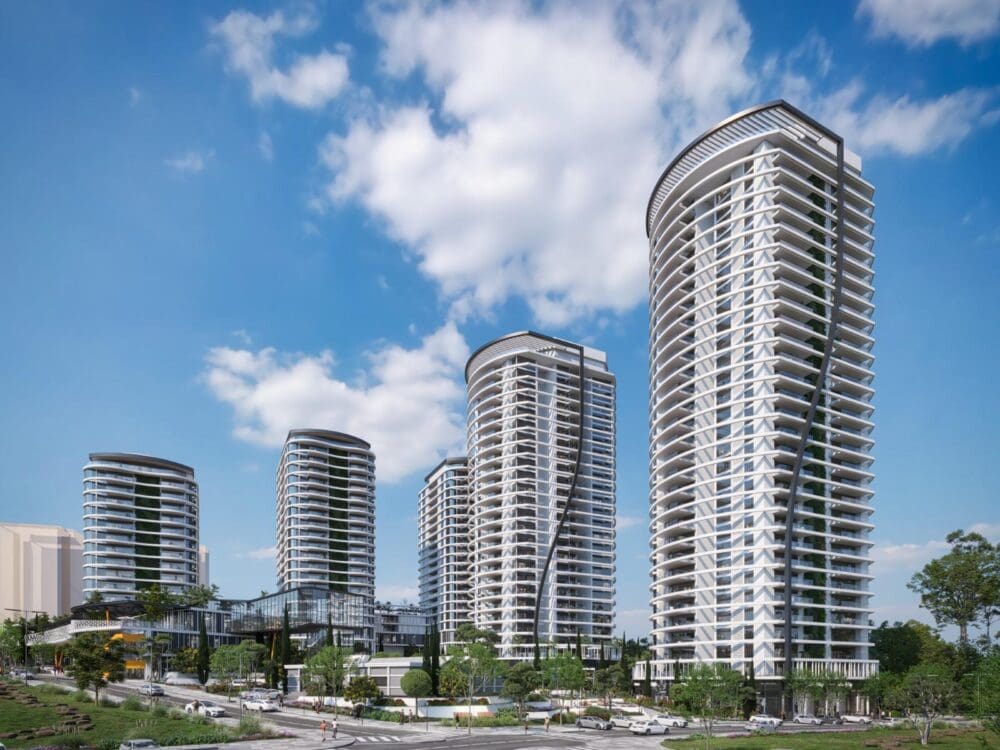
Last month, problems began to surface in the Bat Galim neighborhood, a booming neighborhood where many young families are settling. In a move away from reality, the only elementary school in the neighborhood is being closed in favor of the construction of several 30-story residential towers (later, there is a possibility that 2 kindergartens will also be closed). At the moment, there is no solution and it is obvious that the neighborhood's children and parents will have to travel throughout the city in the coming years to provide their children with a basic education. Attracting young people and families to the city should be done by improving the quality of life and services, not just by building housing units in the towers.
In Kiryat Eliezer, the situation may be even worse.
Together with the Hadar neighborhood, it is the most densely populated neighborhood in the city (150 residents per dunam, which is also 15,000 residents per square kilometer). For comparison, the density in Paris is 200 residents per dunam and in London "only" 50 residents per dunam, and only those have developed transportation and employment infrastructures.
Despite this, plans are being approved in the neighborhood for evacuation and construction like changing socks, meaning the demolition of the entire neighborhood and its reconstruction with the addition of thousands of new apartments that will create a density of about 600 residents per dunam on the same old, shaky infrastructure from the 50s (12 times that of London!). So it's true, the municipality is rightly demanding from developers more space for schools, kindergartens, and commerce, but it's not enough and without examining the needs of the residents and the infrastructure required for this.
Why is it yes and why is it no??
It is impossible to ignore the elephant in the room: why is unbridled density in coastal neighborhoods considered a planning axiom (meaning that a construction clearance must be made for every building), while a moderate addition in the heart of the urban continuity in Carmel is considered taboo? Could it be that it is easier to demolish the homes of disadvantaged populations who wish for the Housing Authority to land towers on them? While in bourgeois neighborhoods every attempt at residential addition is met with a wall in the form of a wall?
Instead of injecting young blood into the aging French Carmel and developing another area like the Louis Promenade that will connect to the cable car and from there to Bat Galim, the city leadership is choosing stagnation. This stagnation is the other side of the coin of the suffocating density on the beach.
Without a vision
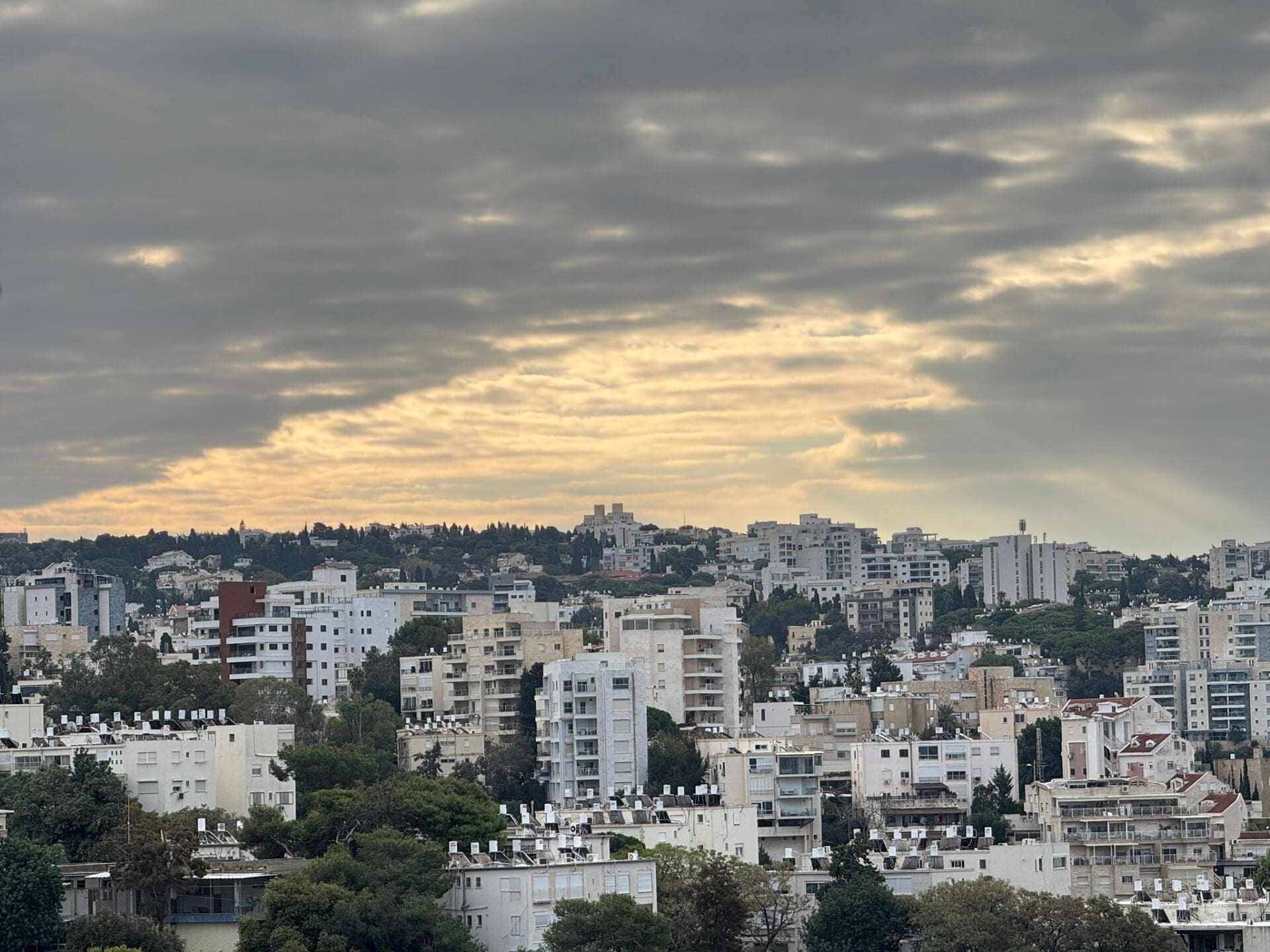
As with everything in life, the truth lies in the middle, you need to crowd but within a certain limit and with the development of compatible infrastructure, controlled development is needed in Carmel while preserving the forests and landscape. The vacant base land could have been used as "supplementary land" that would reduce the height of the towers and future density in the western neighborhoods. Another option would have been to transfer rights from buildings to be preserved with dignity, thus saving the architectural gems that tell the unique story of the city. But Haifa is currently operating without a compass. The 2018 outline plan has been outdated and irrelevant since the day it was approved, and there is no real vision that reflects the public and by which the municipality's actions can be measured.
Instead, we get planning from hand to mouth.
The city is torn between entire areas that are destined for demolition and dense construction without infrastructure, and areas that are frozen in time. What do we residents get out of it if the evacuation and construction of half the city causes harm to education, a burden on the infrastructure, unbearable dirt, noise, traffic jams, and generally harm to the quality of life? We need a city that is managed by a long-term strategy, not by real estate interests. It is time for Haifa residents to demand and ask what we get out of all this?
Did the article interest you?
Come on, who will buy and who is a project in this area in Stella Maris intended for? Will they come from the villages of the north and buy more apartments here?
It's good that the project was canceled and it's better that all construction evacuations be canceled in coastal neighborhoods.
There is no need to change the population structure as we see happening with tall buildings.
It would be better to bring back Tama and add a maximum of 2 floors to existing buildings, or even better, to build an authority that helps tenants strengthen their buildings at their own expense if they can afford it, without additional tenants and without entrepreneurial profit, but only a price with contractors that the authority will stand behind the tenants.
Keeping the buildings low-occupancy and of high quality, while strengthening them in terms of size and earthquake resistance, should be the motto.
Opponents of the construction eviction on Stephen Wise Street in Haifa will not allow the eviction to be prevented against their will.
Neighborhood action committees need to be organized, as did the residents of Danya who opposed the construction of 4 floors in the Danya neighborhood.
Yes, they objected to 4 floors.
Those opponents, including representatives of the mayor who opposed 4 floors in his neighborhood of Danya, sit on the local committee in Haifa and let developers build whatever they want - 30, 36, 38, 40 floors for housing in dozens of crowded towers with no air, no parks in the neighborhood, no public buildings for the thousands of additional families they want to bring to the neighborhood, and no public transportation.
How can one remain silent in the face of this destruction?
In Dania, they opposed 4 4 4 4 4 4 4 4 4 4 4 4 floors!!!
No 40. Oppose 4.
Understand that quality of life = low-rise, non-dense construction – the wealthy in Dania understood this very well. Point.
Thanks for an important article.
I wonder if anyone from the city will comment.
And yes, the keywords. Quality to be:
Comprehensive planning.
Infrastructure. Infrastructure. Infrastructure.
Managing services for the population before you arrive:
Education, transportation, social centers.
It's not clear what your rationale is. Let's destroy amazing urban nature because you don't like the fact that towers are being built in Bat Galim. There is no argument in the article that justifies destroying more urban nature, one that has been waiting years to be opened to the public, compared to the densification of West Haifa neighborhoods. West Haifa has accessible public transportation, beaches, and is halakhic because it is relatively flat. It is possible to create a magnificent urban continuity for the new Neot Navon with proper planning, a completely new, modern city that will attract young people.
Shahar Morag,
Contents and not contents, just like noon and not noon.
It would be better if this text had not been written because it does not bring respect to the one who wrote it and reeks of extraneous considerations. The author refers to the high density and poor planning in the coastal neighborhoods, as a counterpoint to the "stagnation" in planning in Carmel, as he laments the cancellation of the scandalously bad and unnecessary plan in the base area, which is one and only cliff in Stella Maris.
1. The planning for those 460 housing units by the Derman & Rebeccal office was poor and full of deficiencies. It tried to take control of a cliff near one of Haifa's important tourist sites, Stella Maris.
2. The writer talks about a standstill in construction or project approvals in the Carmel Range, there is no standstill. In the center of the Carmel, for example, hundreds of housing units are being built in Tama 38 and in the Yaffe Nof 120 project, and others.
3. Furthermore, the author ignores even larger-scale evacuation and construction projects from the coastal neighborhoods that were approved in Carmel HaTsrafati, Ramat Shaul, and Derech Zaraf. Such projects would benefit from the park in the cliff, which has an even greater justification.
4. The Carmel has almost no open spaces – square meters per resident, the coastal neighborhoods have 3 times more gardens and parks than in Carmel. In some Carmel neighborhoods, instead of 5-10 dunams per person, there are less than 2. And yet, in Carmel itself, there is a frenzy of adding thousands of residential units in Tama 38. Against this backdrop, approving a large park in an area with some of the most beautiful landscape values in Israel – a cliff overlooking all of Haifa, is a necessity.
The whole attempt to create an equation of "tens of thousands of housing units in western neighborhoods versus stagnation in the ridge" is a mockery of Rash. True, the article raises issues of poor planning, patch upon patch of destructive density in coastal neighborhoods. This is precisely why the writer should have congratulated the prevention of such a move in the French Carmel.
The residents of the coastal neighborhoods would do well to organize themselves into strong residents' committees, demanding that the municipality reopen all the violent plans led by greedy contractors and bad planners that will create an overly dense city, walls built hundreds of meters high along the Hagana Road, and a huge damage to the views of the sea from neighborhoods in the middle of the ridge, such as Hadar or Ein Hayam. It would have been better to write about this and not try to tie it to the welcome move of canceling the bad planning along the cliff.
Haifa is getting a metropolitan park in the heart of the very crowded Carmel Range, which is getting more and more crowded, contrary to the words of the planner who may not have checked the data. I have every hope that this metropolitan park will be an attraction for existing residents and the tens of thousands of residents who will join in the French Carmel and Ramat Shaul within walking distance of it in the coming decade.
One cannot help but wonder whether this article is motivated by a real estate interest in which the writer is directly or indirectly involved.
Wow, so many words and cries to write NIMBY
"Chicken Tears"???????????????????????????????????????
Shahar, as an expert, you missed it.
Why should solving problems in one area come at the expense of another?
Each area has its own development plan.
The flood of many mistakes and injustices, I disbelieve in the concept that produces other injustices in their place.
It's good that they stopped the plan in Stella Maris to make this gem accessible to all residents of the city, not just a few, who will buy their place.
As you noted, adding tenants requires adding infrastructure.
Kiryat Eliezer has many public spaces, a park in the heart of the neighborhood, and many public buildings. They should be upgraded, perhaps through reconstruction.
😭🙏
Really dreamed
No design logic