


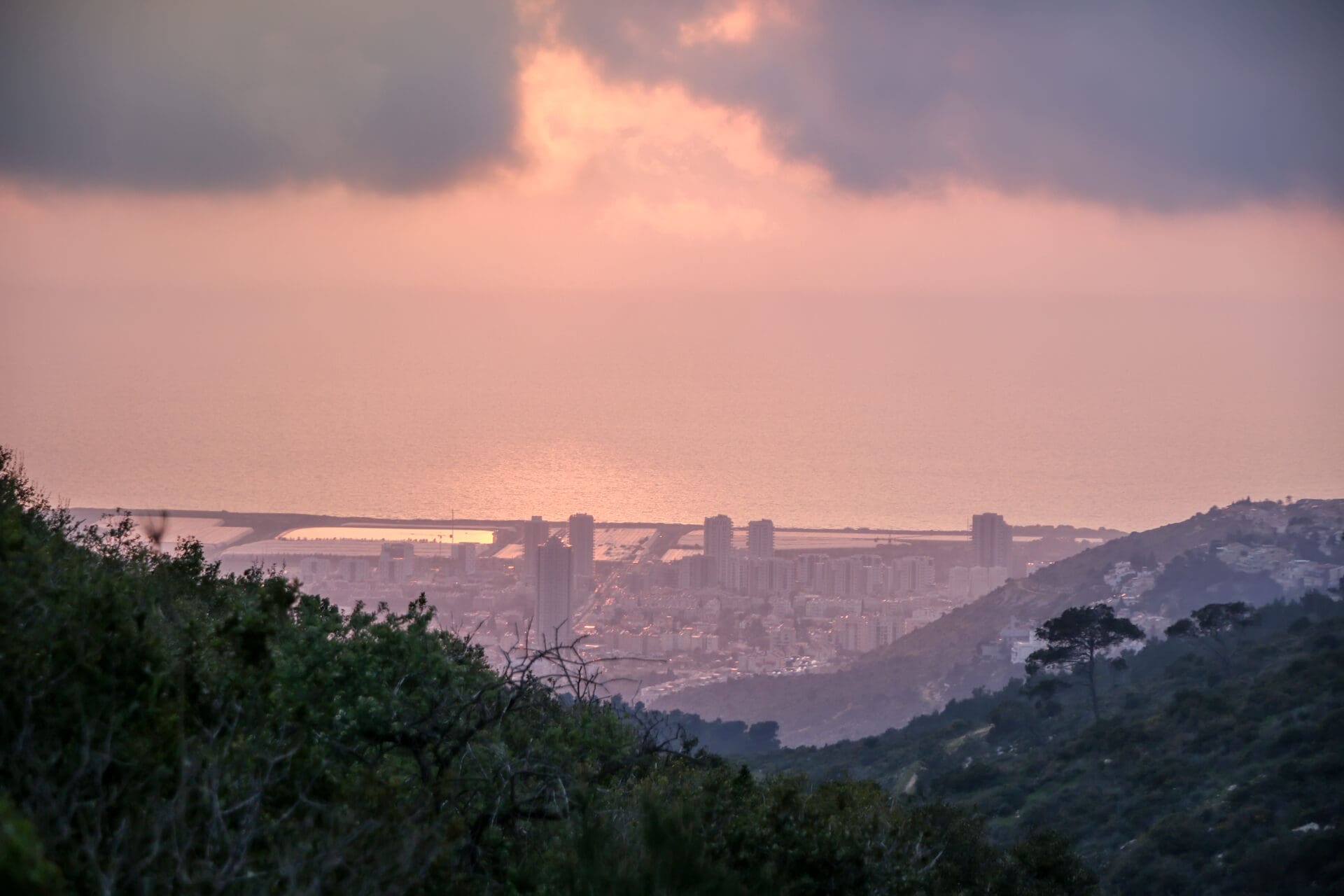
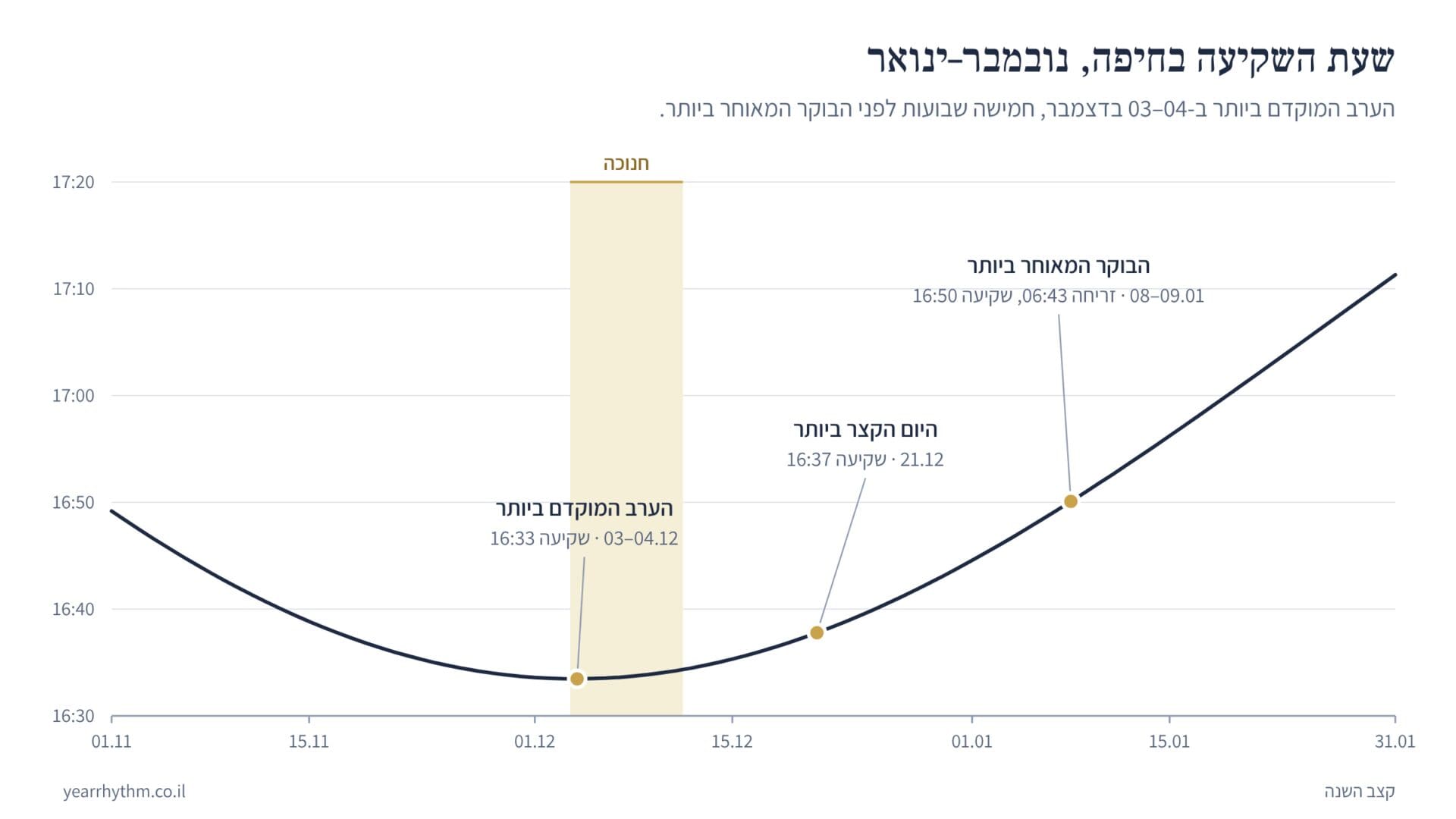
On the 1st of Kislev, Friday, December 4, 2026, we will light the first candle of Hanukkah. An evening when the sun in Haifa will set at 4:33 PM, the earliest sunset time this year. However, the shortest day of the year will not occur until about two and a half weeks later. What is the difference between the two dates, why does the morning continue to be late even as the days begin to get longer, and where is it best to watch the Haifa sunset?
Since on Fridays the Hanukkah candles are lit before the Shabbat candles, many will find themselves lighting the first candle of the holiday right as the earliest evening of the year sets in, just before darkness takes over the city's coastline.
So the shortest day of the year doesn't fall in December?
Yes, but not on the same date.
Although the public tends to associate early sunset with the shortest day of the year, these are two different events. The shortest day, also known as the "winter solstice," occurs on December 21. It is the day when the number of daylight hours is the fewest throughout the year.
In contrast, the earliest sunset occurs in early December, more than two weeks earlier.
Three different records in five weeks
In fact, over a period of about five weeks, three separate events occur in the annual light cycle:
- Early December brings the earliest evening of the year.
- December 21st is the shortest day of the year.
- Early January brings the latest morning of the year.
In Haifa, as in other cities in the north of the country, the earliest evening falls on December 4. In more southern areas, including Ashkelon and Rishon LeZion, it falls the day before. Eilat is the exception among the largest cities in Israel, where the earliest sunset comes on December 2.
The latest morning in Haifa will not arrive until January 9, when the sun will rise at 06:43 AM.
why is it happening?
The explanation lies in the combination of two astronomical factors: the tilt of the Earth's rotational axis and its elliptical orbit around the Sun.
The combination of these causes the time at which the sun reaches its highest point in the sky to not be constant throughout the year, but to "wander" slightly each day. As a result, the times of sunrise and sunset do not vary symmetrically around the shortest day of the year.
Therefore, although the days continue to shorten until December 21, sunsets begin to get a little later than that, while sunrises continue to get later even after the winter solstice.
A Chanukah of light, when nature hardly changes
This year, a special coincidence occurs: during the eight days of Hanukkah, the sunset time changes by less than one minute.
Thus, while outside the hours of light are almost unchanged, inside the houses an additional candle will be added to the menorah every evening. The light that will be felt will be mainly that lit by humans, much more than the change occurring in the sky.
Haifa offers a row of seats for sunset
There is another reason why the earliest evening of the year is particularly noticeable in Haifa.
The city, built on the slopes of Mount Carmel and facing west towards the sea, gives its residents a rare opportunity to watch the sun set over the sea horizon from a great height. Unlike many cities where the sunset disappears behind buildings or hills, in Haifa you can see the sun "enter" the sea right before your eyes.
Popular observation points include the Louis Promenade, Stella Maris, the "Eter" Bridge at the University of Haifa, Abba Khushi Roads, Fliemann and Weinshall, as well as the Cliff Observatory in the Carmel Nature Reserve.
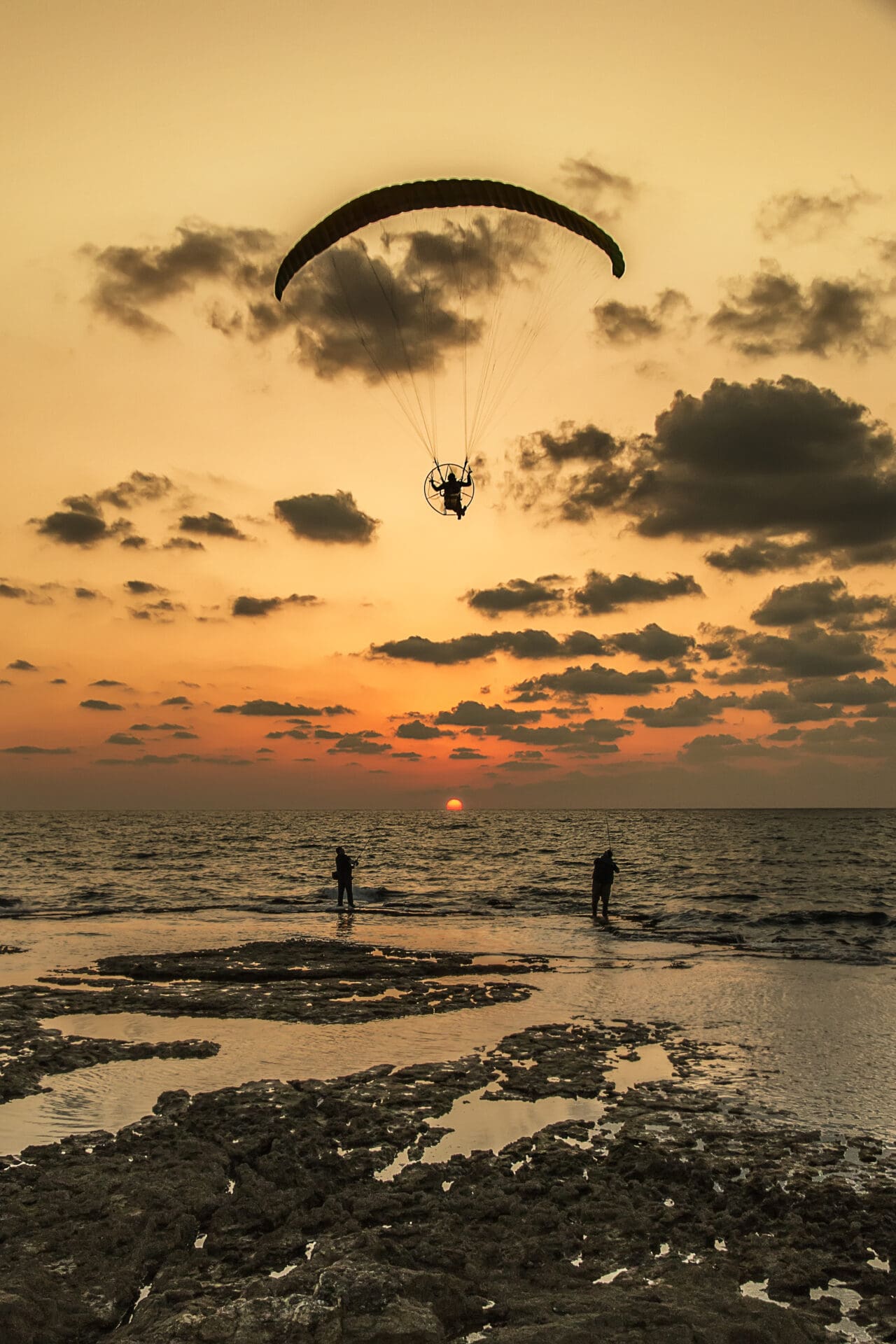
A chance to watch the sunset descend into the sea
Perhaps the best way to understand the annual light cycle is not through graphs or scientific explanations, but through observation.
In the first week of December, around 16:20 PM, go to one of the observation points facing the sea. Watch the sunset and twilight descend on the city.
Then return to the same spot exactly a month later, in early January. You'll find that the evening has already lengthened by about 17 minutes. The light has gradually returned to the afternoon hours, even if the mornings still continue to get late.
Sometimes, all it takes to feel the changing of the seasons is to stop for a moment and look west, to the sea.
the writer: Gali Stern, who teaches yoga and sound breathing in Haifa and operates the "Rhythm of the Year" website – a website about the cycle of light throughout the year, with the game "When does it get dark?" | To enter the "Rate of the Year" website, click here. 👉🏼
Did the article interest you?
🤩In "Beautiful Haifa" between the Carmel and the sea, every ♻️ "observation point" is beautiful!
And all those addicted to the "sunset", simply come to the "Haifa Beach Promenade": from our understanding
And we are – enjoying – enjoying – enjoying…😇