


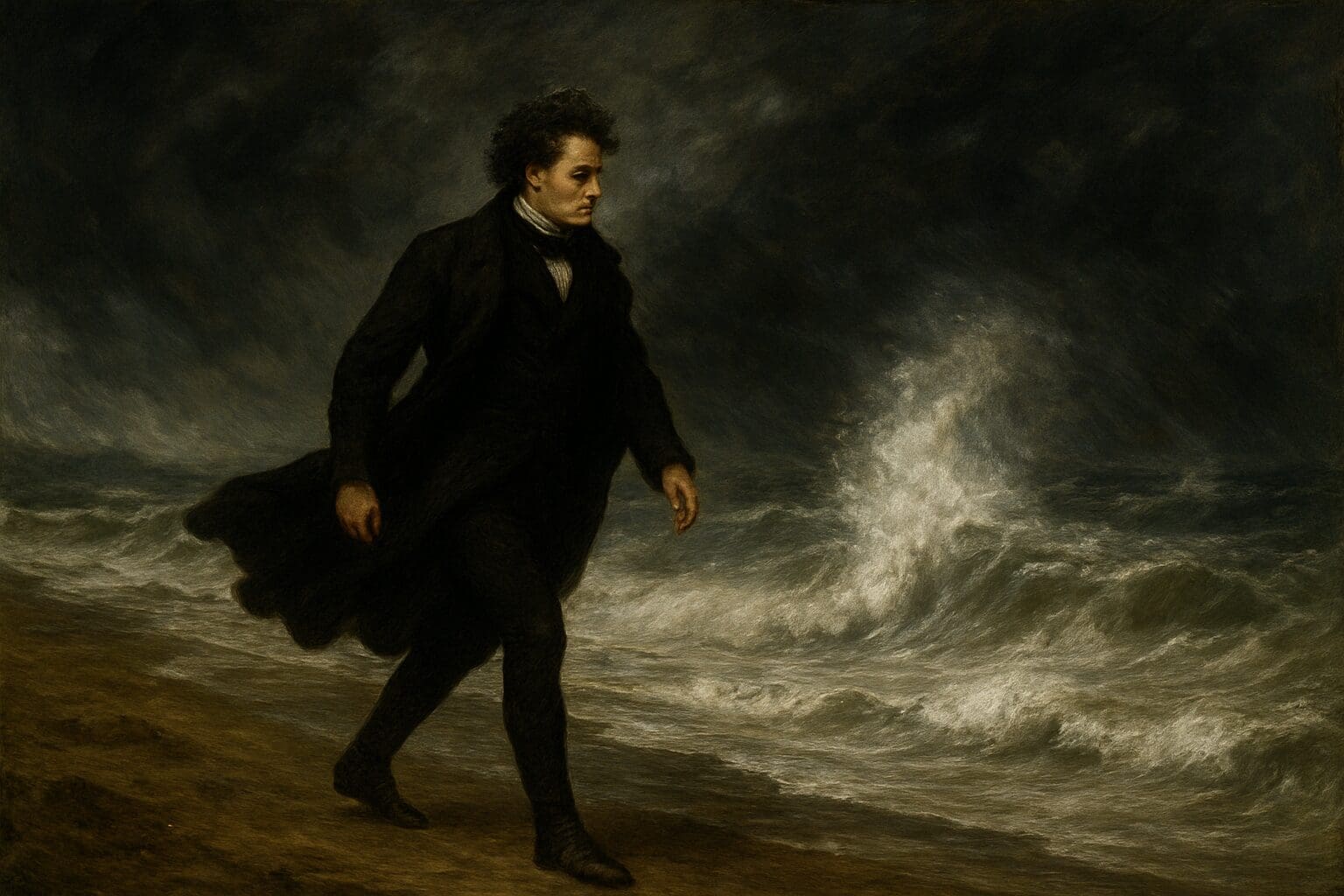
On the evening when the official forecast was given, "A fierce storm is approaching the shores of Israel, and its name is Byron," many felt a strange sense of poetic incongruity. It seems that we all have thoughts that smell a little of the salt from the sea of a storm named "Byron" approaching the shores of Israel, as if inviting the spirit of the great romantic to return for a moment to our world.
What about Lord Byron, the English nobleman, the man who spent his life among London salons, fatal loves and Greek revolutions, and the winter storm that will wash Ben Gurion Boulevard (both in Haifa and Tel Aviv...) by tomorrow?
But maybe that's actually appropriate.
Because Lord Byron was a storm in his own right: unpredictable, thunderous, beautiful, and dangerous. The kind of man who leaves behind a beach of swords and at least one fiery lover.
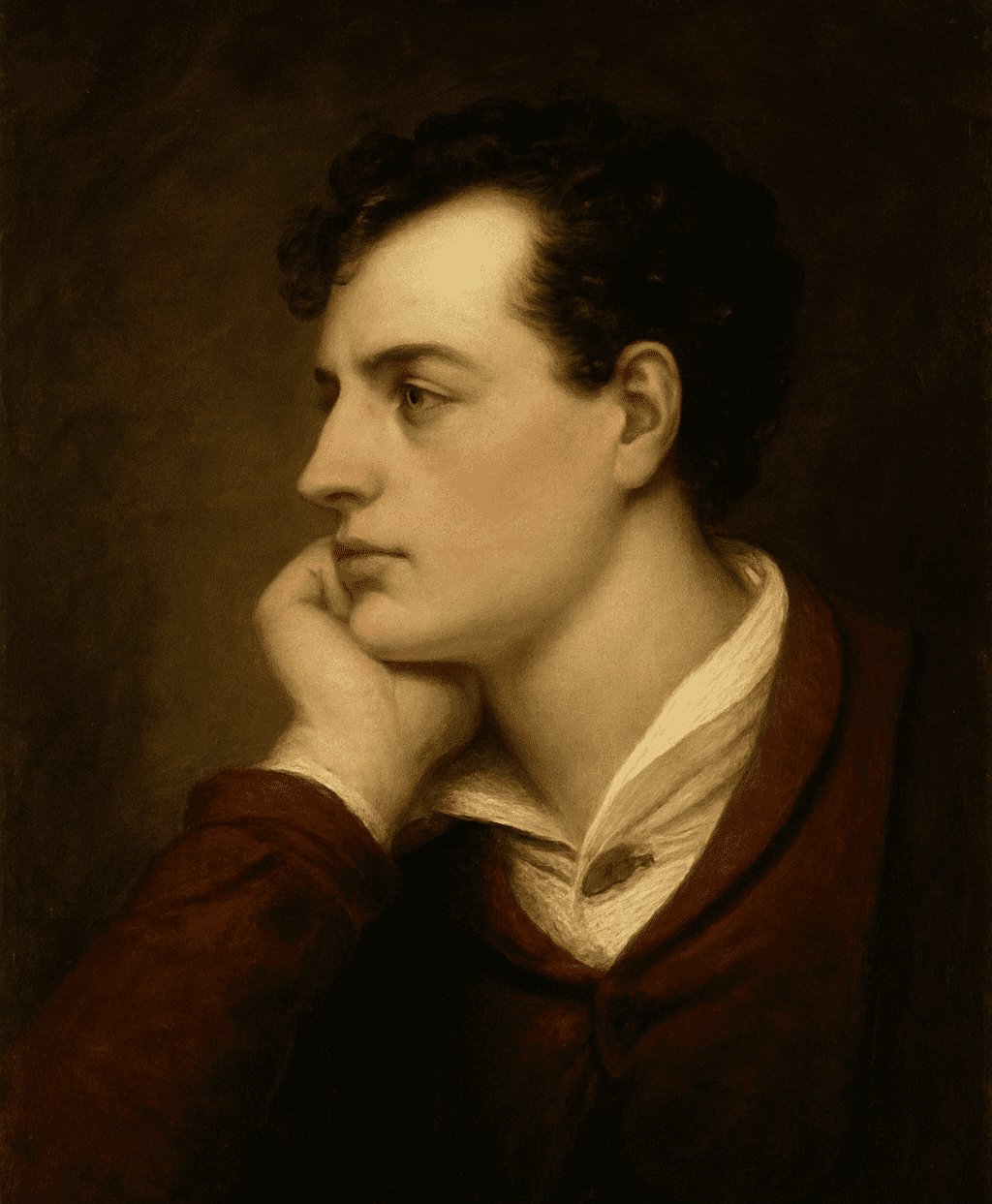
The man who lived like a wandering thunder
George Gordon, Lord Byron, was born in 1788 and it seems that from the day he was born, his fate made it difficult to set boundaries. He was born with a congenital clubfoot (a deformity in which the foot turns inward and downward and is sometimes even slightly shortened), a disadvantage that turned into constant social anxiety for him. But instead of pushing that anxiety inside, Byron simply threw it out, into life like a distillation.
He wandered between London, Switzerland, Italy, and Greece like a man wandering through a room full of mirrors, constantly looking at his changing form, sometimes immersed in drink, sometimes in lust, and sometimes in twenty thousand lines of poetry.
Anyone who has read "Don Juan" knows that Byron wrote the way other people breathe: in a flow that is arrogant, bitter, fiery, and indulgent at the same time.
Byron's "Don Juan" is a long satirical poem, consisting of 16 cantatas (long verses). He worked on it in the last years of his life (1819–1824) and never finished it.
Byron took the legendary figure of Don Juan, the legendary and scandalous lover, and turned it on its head: in Byron's version, Juan is not the temptress himself, but rather a rather innocent young man, who is led into adventures by women.
Indeed, Byron's characters do not walk on the earth but on the edge of abysses. There is a sweet disappointment in them, a kind of pride of someone who has already seen the world and found in it too much charm and also too much falsehood.

The revolutionary with the frock
At the end of his life, when he realized that pain was not enough to justify poetry, Byron became a revolutionary.
He left England, donated his money and his fading fortune to support the Greek revolt against the Ottoman Empire, and finally died there. Not in battle, but from fever and pollution, as if nature itself wanted to sweeten the score with him. He was only thirty-six, too young to die, too old to live without doubts.
His death caused shock and revulsion in England. He was too young to be buried as a saint, too wild to be written as a morality tale. But literary history already knew what to do with him: to make him a symbol. Since then, Byron has been the archetype of the "Byronic hero," that is, the beautiful, the tormented, the lonely in love, the dark in light.
Byron's "Hebrew Poems," and...it's not about writing a poem
And so, when the Israeli Meteorological Service announced a "storm named Byron," some smiled: After all, Byron has a connection to Hebrew.
Although he did not write any real Hebrew poetry, since the language was as far removed from 19th-century salons as a camel in a ballroom... he did compose a famous cycle called "Hebrew Melodies"That is, "Hebrew pleasantries."
He wrote them in 1815, at the request of the British Jewish musician, Isaac Nathan, who wanted to renew ancient melodies originating from the synagogues of London Jews. Nathan told Byron that these melodies were remnants of biblical poetry, a source of musical legend that was half truth and half fabrication, and Byron readily agreed.
He wrote texts for them in English, full of biblical charm, as if he wanted to momentarily touch upon a non-Christian, perhaps even non-European, antiquity.
Among the well-known songs in the cycle:
- “She Walks in Beauty” Some believe that this is the most beautiful love song of the 19th century, written under the inspiration of a woman shining in black. Although it is a Hebrew song only in its title, its spirit is clear, musical, almost psalmical.
- "The Destruction of Sennacherib" This is a poem explicitly based on a chapter from 2 Kings, which describes the sudden fall of Sennacherib ("And the angel of the Lord went out and struck the camp of the Assyrians..."). Byron turned it into a thunderous, rhythmic ballad, like a war drum.
- “Jephtha’s Daughter” A poem about Jephthah's daughter, who is actually the victim of a strange and twisted vow, which causes her to be doomed to die. This is a poem in which Byron takes a biblical tragedy and looks at it through the eyes of a father.
These are not, in fact, "Hebrew poems" in the literal sense, but they undoubtedly dipped their toes in the Jordan River of romantic imagination.
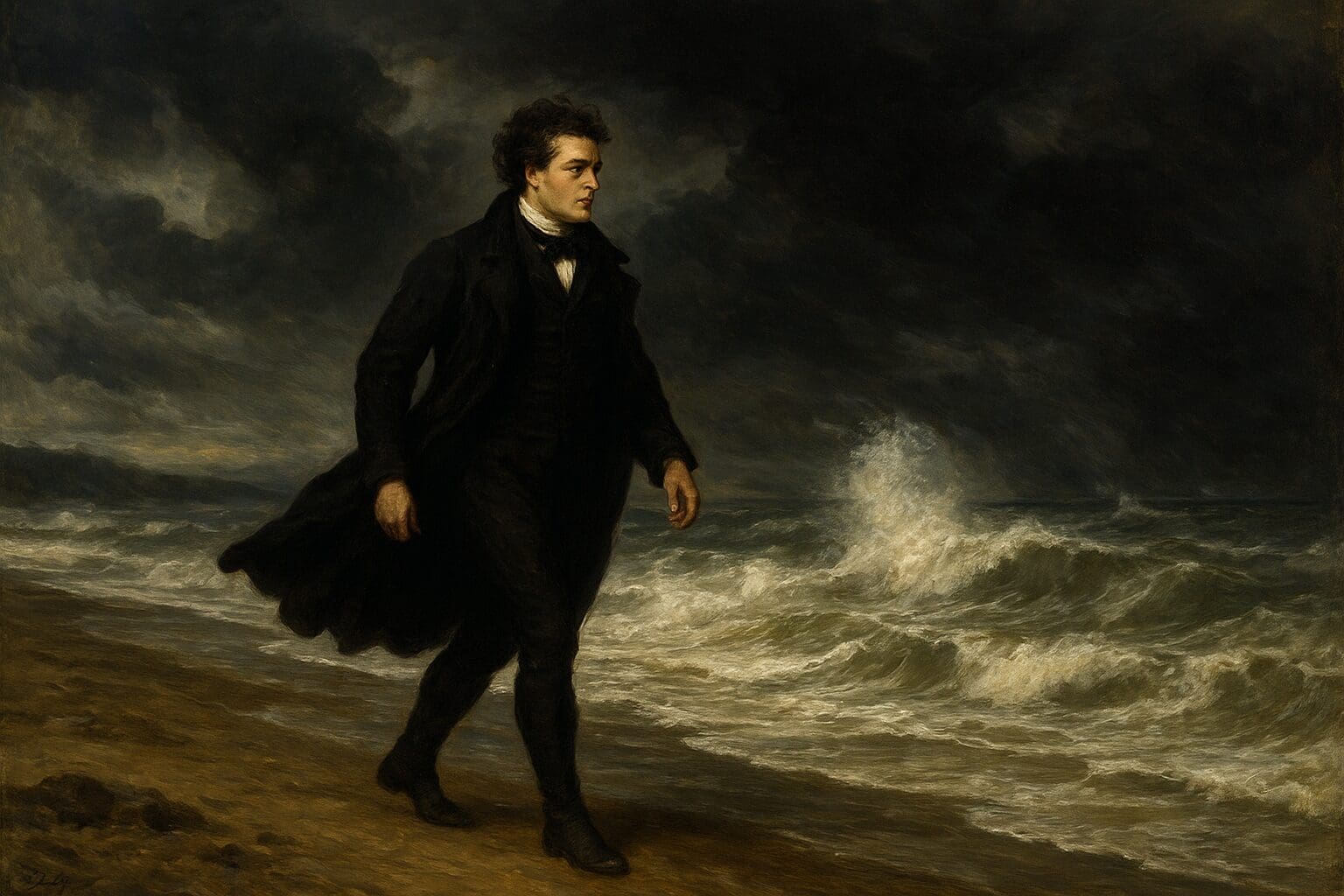
Byron and the Sea: A Connection Deeper Than the Waves
Perhaps also because of his "Hebrew charms," one is asked today, almost naturally, to link the English nobleman with the storm that landed here at night.
Lord Byron was a born sailor, whose life and work were bound up with the waves. He sailed, drowned in despair, and found in the waves of the world a permanent metaphor for human existence.
The sea is a force for him. It is proof that man is nothing but a transient being. And beyond that, the sea is a place where passion and death can live in the same room.
In the end, perhaps there is no more appropriate name for the storm.:
It arrives with force, beauty and danger, like a verse by Byron; it brings with it the memory of the "Hebrew Poems" he wrote and the ancient feeling of nostalgia. As if it had ridden to the shores of Israel on the back of that poet who understood that when the wind begins to blow, a person has no choice but to surrender.
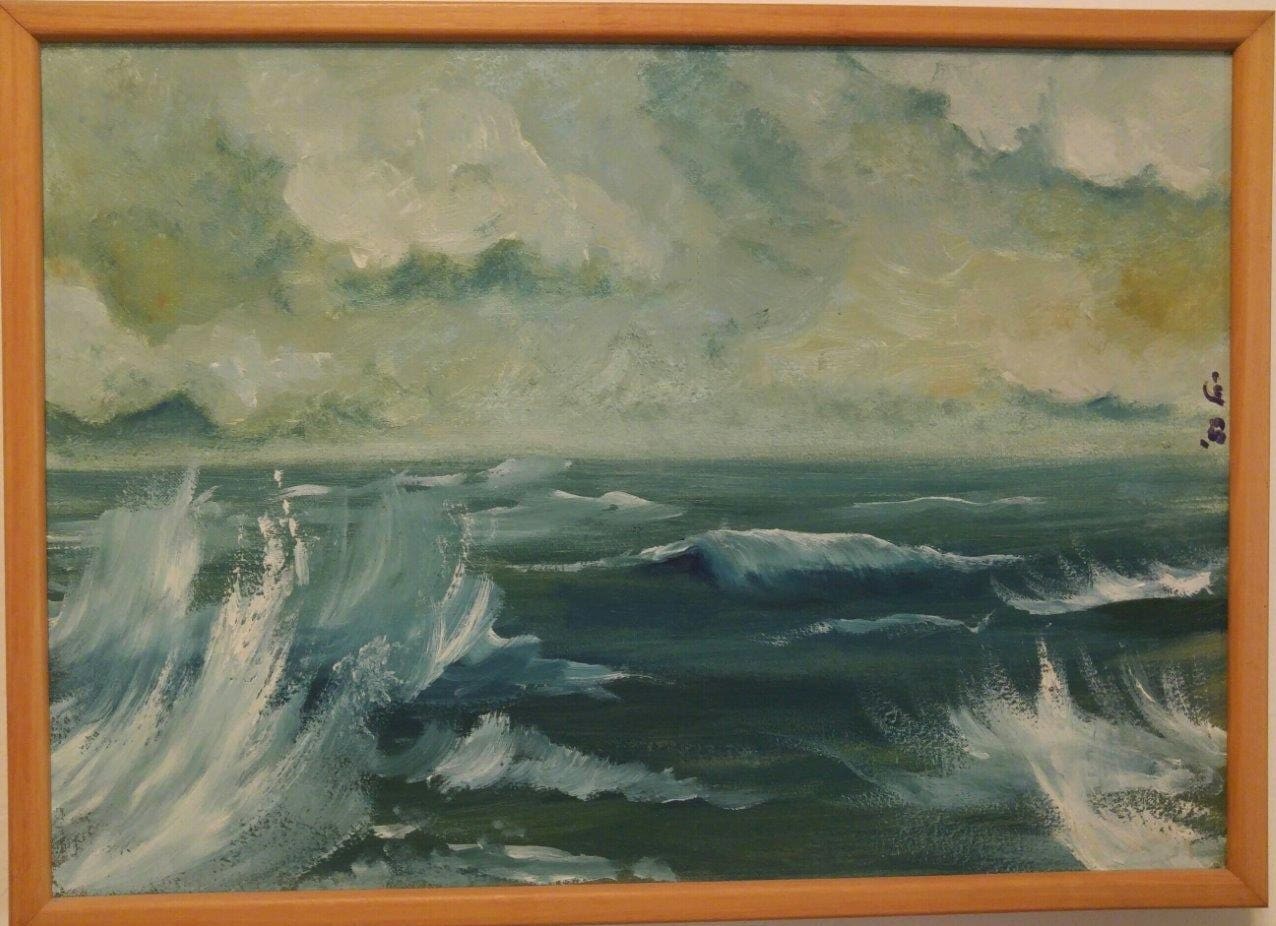
A small end, like a breaking wave
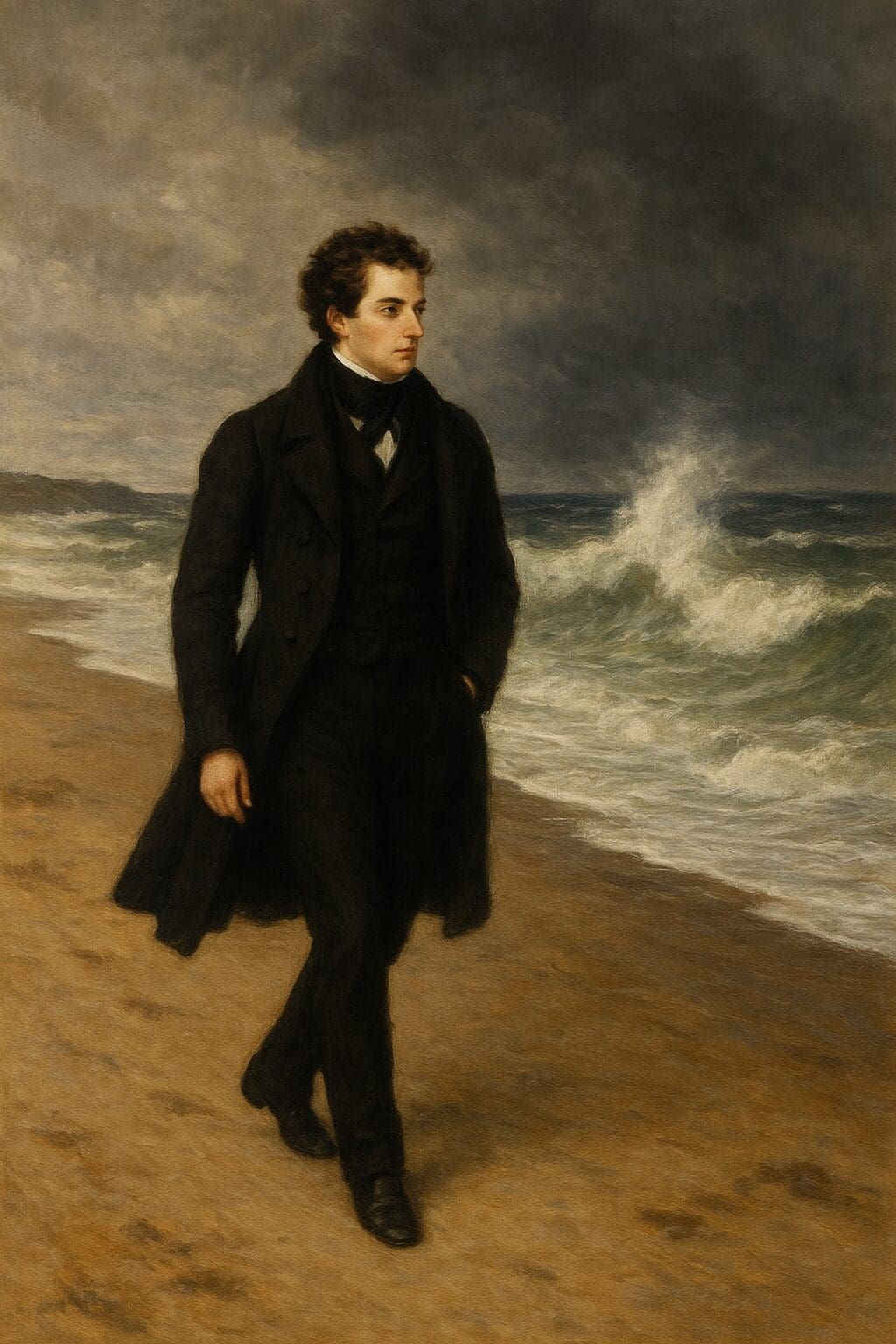
Byron was not just any romantic; he was the romantic who invented the character of the romantic: brave, vulnerable, dangerous to himself, prone to running away, burning, hiding, gaining and losing everything.
The storm that will bear his name may rattle windows in homes on the coastline. It may turn out lights. It may leave behind murky puddles. But there is also something in it that the great poet would surely have appreciated: the power to shock, to shake, to force us to look for a moment at the world as if at a line of a poem: big, wild, uncontrolled, but perhaps beautiful.
"Byron" is a British television film, based on the adult life of the English poet Lord Byron.
The film was written by Nick Deere and directed by Julian Farino, and stars Jonny Lee Miller in the title role alongside Vanessa Redgrave, who plays Lady Melbourne.
The film was first broadcast by the BBC in two parts, each approximately 75 minutes long, in September 2003.
The film can be viewed at the link: Byron.
Did the article interest you?
to Aria,
Thanks for the quote.
The spirit of the words is indeed very appropriate for the terrible and turbulent days we are experiencing.
For the sake of historical accuracy, it should be noted that the statement in this formulation is only attributed to Lord Byron, but is not confirmed with certainty as appearing in any written source in his writings,
Although there are passages in his words that carry a similar spirit.
Either way, the ethical and moral content reflected in the words remains relevant and thought-provoking.
Rachel, fascinating article. You really answered my question in a concise and comprehensive way: Who is the man after whom the name Saara was dedicated? An in-depth article about a turbulent and interesting man. And the photos attached to the article . . . amazing. Thank you.
To Sarah,
Thank you for this response!
I was happy to read that the article spoke to you and that I was able to convey the stormy spirit of the man behind the name of the storm.
It's exciting to know that the photos also contributed to the experience.
Thank you for reading and for the beautiful words.
And there is nothing more appropriate than his statement in these terrible days: "Although I love my country, I despise its inhabitants."
to Aria,
Thanks for the quote.
The spirit of the words is indeed very appropriate for the terrible and turbulent days we are experiencing.
For the sake of historical accuracy, it should be noted that the statement in this formulation is only attributed to Lord Byron, but is not confirmed with certainty as appearing in any written source in his writings,
Although there are passages in his words that carry a similar spirit.
Either way, the ethical and moral content reflected in the words remains relevant and thought-provoking.
Indeed. A special man. A free, turbulent, fiery soul. He was interesting. A wise man.
For me,
Thank you for your response.
Indeed, Lord Byron was a very interesting person, especially in his time.
Thank you for the interesting information and fascinating writing.
Dear Dorit,
Thank you for both your response and the compliment.
A very interesting article.
Thank you for bringing all this information here.
For Anat,
Thank you for the kind words. I'm glad the information touched and enriched you.
Fascinating article
Thanks
To Ronnie Da Costa Beck,
Thank you for your response.
Dear Rachel, your article stirred up in me a storm of emotions no less powerful than the one raging outside and bearing the name of the ultimate romantic!
Thank you very much for the wealth of knowledge you poured out about him, you managed to convey every emotion with your usual skill!
Edgar Khyatt
Dear Edgar,
Thank you very much for your kind words.
Your words came to me like a clear breath on a day of rain and storm.
It moves me very much to know that the article touched you so much and that everything I tried to capture: the emotion, the history, and the human vibration - found an echo in your heart.
Thank you for your sensitivity, your attention, and the beautiful way in which you bring things back to me.
Exciting… especially when it comes from you!
Racheli.