


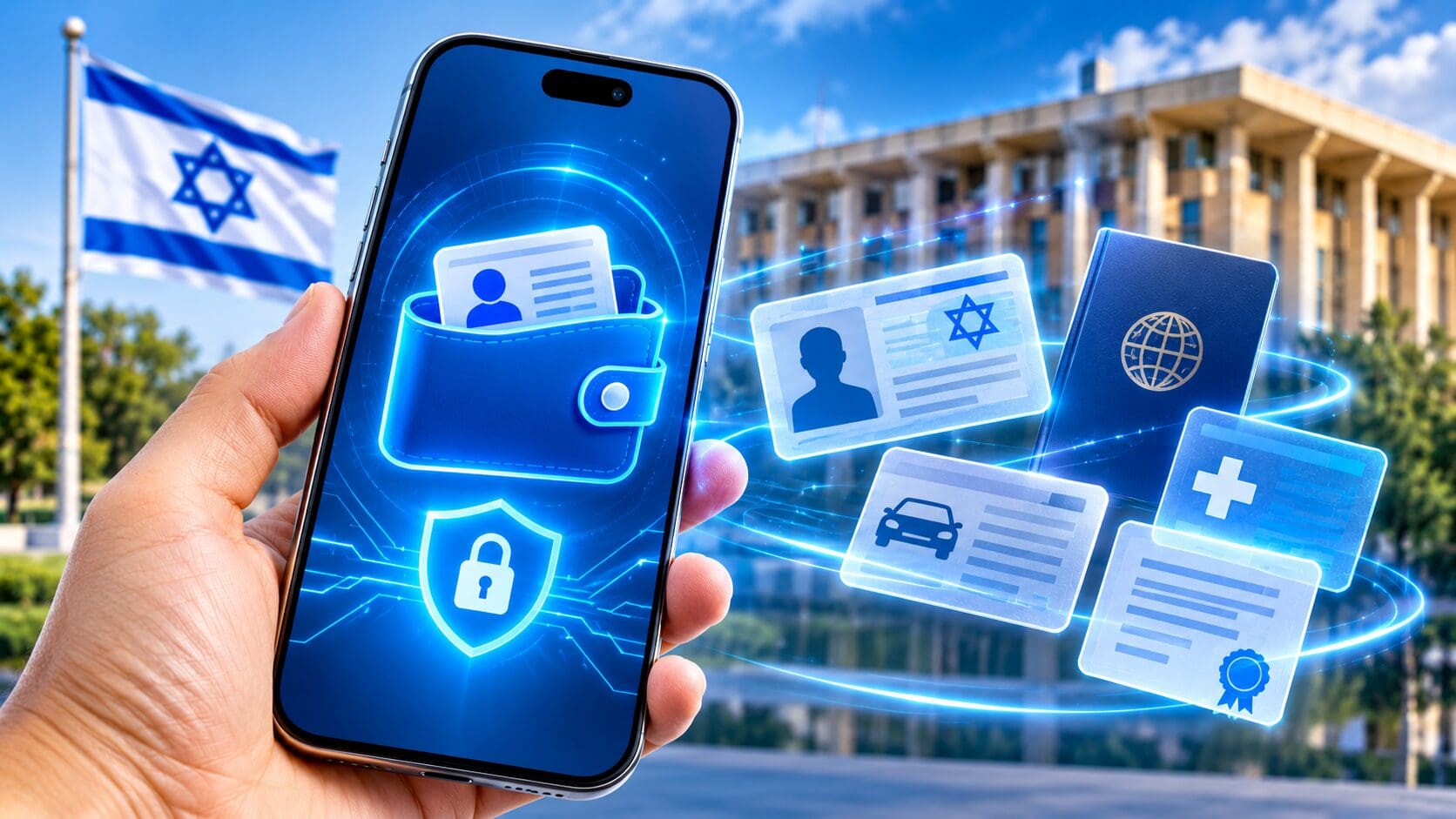
(Hai Fa – Haifa and the surrounding area news corporation) – No more dozens of passwords, separate accounts and photos of ID cards being sent everywhere. A new national strategy seeks to change the way Israeli citizens identify themselves with the state, banks, insurance companies and other entities. At the center of the move is a single digital ID and a national identity wallet that will centralize official documents on a mobile phone. Will we soon be able to leave the paperwork at home?
One identification instead of dozens of accounts
Israel is on the verge of a significant change in the way its citizens receive services and conduct business in the digital world. A new national strategy, formulated by the National Cyber Directorate in collaboration with the National Digital Directorate and other government and financial entities, proposes establishing a unified digital identification infrastructure that will allow residents to identify themselves through a single system with a wide range of entities, both government and private.
Today, many citizens are forced to open separate user accounts, remember different passwords, and go through repeated identification processes with banks, insurance companies, health care organizations, and other services. According to the new plan, this situation may change: a single national identification system could be used to verify the user's identity across a variety of services, without having to go through a separate identification process each time.
All official documents in one wallet on your phone
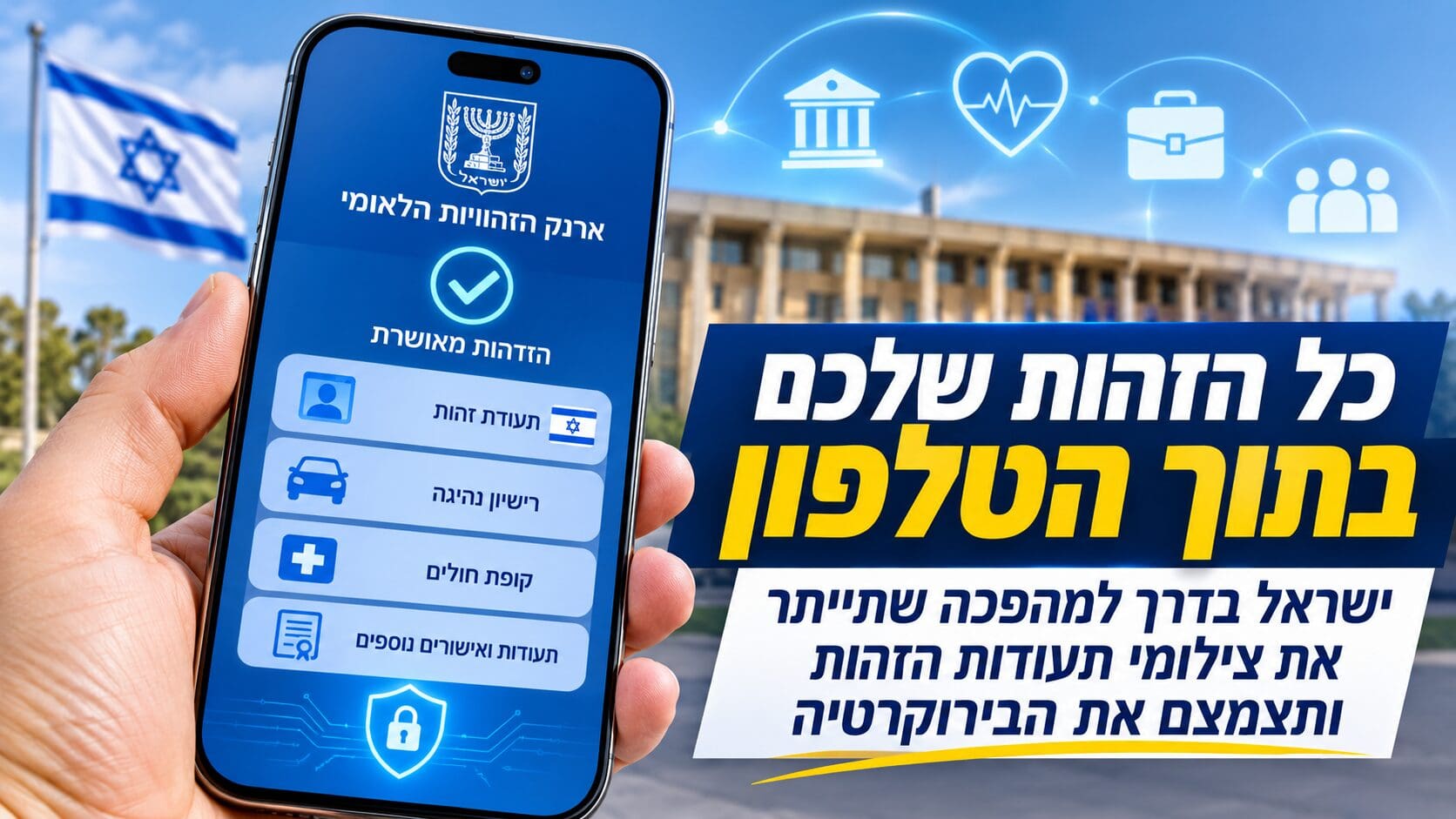
One of the key innovations in the plan is the establishment of a national digital identity wallet. This is a solution that will allow every resident to centralize certificates, licenses, permits, and official documents issued by the state on their mobile phone.
Instead of searching for documents in a file, taking a photo of an ID card, or sending copies to various entities, it will be possible to present digital documents, verify their authenticity, and prove eligibility for services directly from the phone.
The use of the wallet is expected to be possible also when receiving service face-to-face, and not just online. However, those who prefer physical documents will be able to continue using them as usual, as the state does not intend to cancel the issuance of physical certificates.
And what about privacy?
One of the main questions surrounding the move concerns privacy and the protection of personal information. The cyber division emphasizes that although national identification can also be used by private entities, the accounts of users at banks, insurance companies, and other entities will remain separate.
The role of the national identification system will be to verify a person's identity only, and not to allow the government access to their activity on their private accounts.
Fewer ID photos, fewer opportunities for fraud
Beyond convenience, the program is designed to address one of the most concerning problems of the digital age: identity theft and online phishing. Today, photos of ID cards and personal documents are transferred and stored in many databases of organizations and businesses. The proliferation of databases increases the risk of information leaks and misuse of personal information.
Through a secure national identification infrastructure, it will be possible to reduce the need to send photocopies of documents and keep copies of them, strengthen the reliability of identification processes, and make it more difficult for cybercriminals to impersonate other people.
5.5 million Israelis are already registered
As of today, approximately 5.5 million users are registered with the government identification system. The new strategy seeks to gradually expand its use to the private sector, with an emphasis on banking, healthcare, communications, and insurance. The move was formulated in collaboration with the National Cyber Directorate, the National Digital Directorate, the Population and Immigration Authority, the Budget Division of the Ministry of Finance, the Accountant General, and the Bank of Israel.
According to Naama Ben Zvi, Head of the Identification and Biometric Applications Unit in the National Cyber System, digital identification is no longer just a technological matter, but a national trust infrastructure that will enable the promotion of an advanced digital economy, protect the public from fraud, and provide more accessible and secure services.
The public is invited to express their position.
The new strategy will be presented for the first time as part of National Cyber Defense Week, which takes place from November 8 to 12, 2026. The draft strategy is open for public comment until November 30, 2026.
If the move is fully implemented, it could significantly change the daily conduct of millions of Israelis. Less bureaucracy, fewer documents, fewer passwords, and most importantly, a simpler and more secure way to prove who we are and receive the services we deserve.
Did the article interest you?