


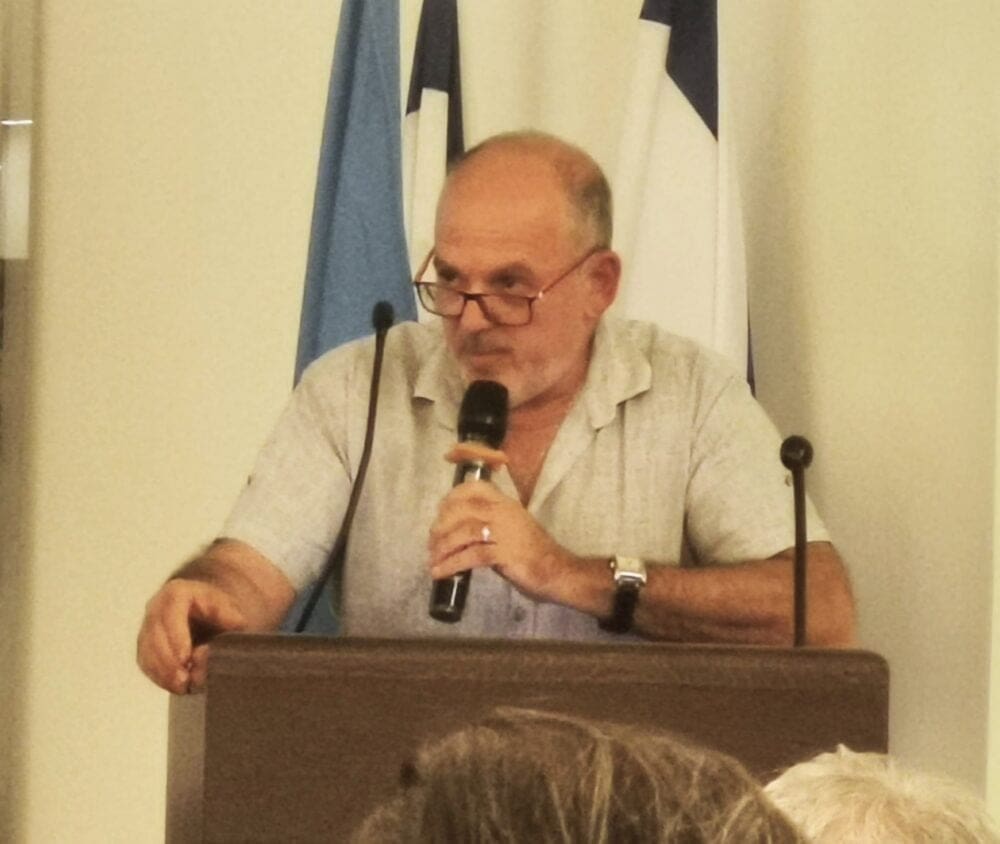
(haipo) Information and cyber security, employee employment, transportation in the Welfare Administration, building accessibility, youth centers, and municipal project management are some of the issues examined in the Haifa Municipality Comptroller's report for 2025. The report points to gaps in work processes, control, and management in several of the municipality's units, and recommends a series of steps to correct the deficiencies and improve service to residents.
The Haifa Municipality Comptroller's Report for 2025, submitted to Mayor Yona Yahav in March 2026, includes 14 audit chapters dealing with the conduct of the municipality and municipal corporations. The inspections concern, among other things, information and cyber security, personnel in the Traffic Control and Technology Management Division, waste management and recycling, the municipal economy, accessibility, transportation in the Welfare Administration, the symphony orchestra, implementation of the Freedom of Information Law, the Military Police, youth centers, garbage removal, protection of kindergartens, parking of work vehicles, and ordering drainage work on Hinet Street.
Information and Cyber Security – Gaps Between Procedures and Implementation
An inspection of the municipality's information and cyber security system found areas that require improvement, although the audit notes that progress has been made since a previous inspection conducted in 2020.
According to the report, the municipality formulated an information security policy and wrote 11 central procedures, but the inspection found that in various departments, including human resources, procurement, and operational departments, the procedures are not recognized or implemented in practice. In addition, gaps were found in the managerial structure of the information security area, including the cessation of the activities of the steering committee established for the subject and the lack of sufficient performance indicators to monitor the implementation of the work plan.
The audit also points to the lack of a detailed business continuity plan in the event of a serious incident, such as a ransomware attack, fire or flood that disables the computer room. In addition, deficiencies were found in employee permission management and vendor control.
The auditor recommends renewing the steering committee's activities, completing missing procedures, strengthening control over suppliers, and formulating an organized plan for business continuity. The full findings of the cyber audit remain confidential, for fear that their publication would aid hostile elements.
Personnel and Control in the Traffic Control Management and Technologies Division
Another chapter in the report deals with the management of personnel in the department responsible for traffic control, traffic light systems and street lighting in the city. The audit found that during the period examined, several key positions in the Operations Administration and the Traffic Control Department left their positions, including the head of the administration, his deputy, the director of the department and the director of the center and the engineering department. According to the report, the absence of key positions affected the department's management.
It was also found that employees were employed who were not assigned to an approved standard. The auditor notes that this type of employment may harm human resource management, organizational structure planning, and compliance with regulatory restrictions, and recommends examining the need for jobs and standardizing them as necessary. The report also addresses findings regarding attendance reports, overtime, and the division of responsibilities between employees and managers.
Garbage removal and waste management
The report also examined the garbage disposal system and the activities of the Waste Management and Recycling Department. According to data for 2024, 178,825.3 tons of waste were transferred to the Danu Transfer Station. Of this, 131,747.98 tons were transferred to landfill, while 47,077.32 tons were transferred to recycling. The recycling rate was 26.33% of all waste measured, compared to 73.67% that was transferred to landfill.
The audit also found deficiencies in the work procedures and controls in the cleaning department. Among other things, it was noted that there are no written and detailed work procedures for current activities, and that there is no dedicated safety procedure for garbage removal, which addresses the risks associated with working with compactor trucks, containers and operational equipment. The report also addresses the control of employee and driver attendance reports, and emphasizes the need to regulate procedures and strengthen supervisory mechanisms.
Transportation in the Welfare Administration – Questions about the tender procedures
One of the chapters deals with the transportation system operated by the municipality within the framework of the Welfare Administration, including transportation for children and toddlers with disabilities and adults. The audit found problems in the way the transportation routes were constructed and in the preparation of data for tenders. According to the report, the lists of routes included in requests for bids did not always match the number of children actually transported.
It was also stated that including routes that have been made redundant or are expected to become redundant in the price bids could give an advantage to the contractor who already knows the information, and affect the weighted price in a way that does not reflect the true cost of the required transportation.
The findings emphasize the need to improve route planning, update data before publishing tenders, and ensure fair competition among bidders.
Accessibility in public buildings and educational institutions
The report examined the accessibility of municipal structures and public places that are not buildings, including educational institutions. As part of the examination, 13 accessibility certificates for educational institutions were provided to the auditor. Five of the certificates received were not final certificates. The auditor noted that there was insufficient diligence in obtaining final accessibility certificates and that the municipal accessibility coordinator did not have all the required certificates for the educational institutions that were made accessible.
The report also notes that at the time of the inspection, a class action lawsuit was pending in court against the municipality regarding accessibility in educational institutions.
Freedom of Information Law – Difficulty in Obtaining Photographic Documentation
In the chapter dealing with the implementation of the Freedom of Information Law, the auditor refers to the manner in which requests to receive filmed material from the municipality's systems are handled.
According to the report, the municipality does not allow viewing of the material filmed in its offices, even in cases where the videos themselves cannot be transferred due to concerns about privacy. The auditor recommends examining the implementation of software that will allow the transfer of videos while maintaining privacy, and in the meantime, consider allowing applicants to view the material in the municipality's offices.
Protecting kindergartens – a project that will be examined in terms of budget and implementation
Another chapter is dedicated to the project to establish institutional protected spaces in kindergartens, which is intended to reduce the protection gaps. The project was promoted on the basis of a temporary order that allowed certain works to be carried out without a building permit, while relying on a designated grant from the Lottery.
The audit examined, among other things, the project budget and execution, the estimates, the work orders, the employment of consultants, the scope of the protected spaces built, and the manner in which the work was performed and the approval of payments to suppliers.
The symphony orchestra and youth centers were also examined.
The report includes chapters dealing with the Haifa Symphony Orchestra and the municipal youth centers. In the chapter on the orchestra, the auditor referred to the distribution of tickets to independent workers, including soloists and conductors who are or were connected to the orchestra in an employment relationship. The audit noted that the distribution of tickets as found is not consistent with the State Comptroller's guidelines and the Director General's circular from 2013, and recommended that the practice be discontinued.
In the chapter on youth centers, aspects of center management, contracts for repairs and maintenance, allocation of expenses, income from contracts, and inventory records were examined. According to the report, seven youth centers were operating in Haifa at the time of the inspection, three of them in Kiryat Haim.
What next?
The Municipal Auditor's Report for 2025 presents a broad picture of the work processes in the municipality, alongside a series of deficiencies and recommendations for their correction. Among the recurring themes in the various chapters is the need to regulate procedures, improve documentation, strengthen control mechanisms, define clear areas of responsibility, and ensure the implementation of decisions in practice.
The practical significance of the report depends on the steps the municipality takes following the findings, on monitoring the correction of the deficiencies, and on the extent to which the auditor's recommendations are implemented. The report itself does not indicate that all deficiencies have remained untreated, and therefore the responses of the audited units and the municipality's progress in implementing the recommendations must also be examined.
The municipal auditor consistently ignores the serious systemic failure in the municipal engineering administration and the violations of the law that are committed within its framework.
We must clean up the engineering department!!
Establish a stricter oversight body for construction violations!
The auditor is dealing with minor issues when there is systemic chaos throughout the municipality, with entire departments not functioning.
Everyone is silent, what a beauty, great Chi. Bor