


Military achievements are not enough without a political purpose. From my experience at the UN, I learned that isolation can be broken, but only through initiative – 26 in September 2026.
There are moments when a single image takes you back decades.
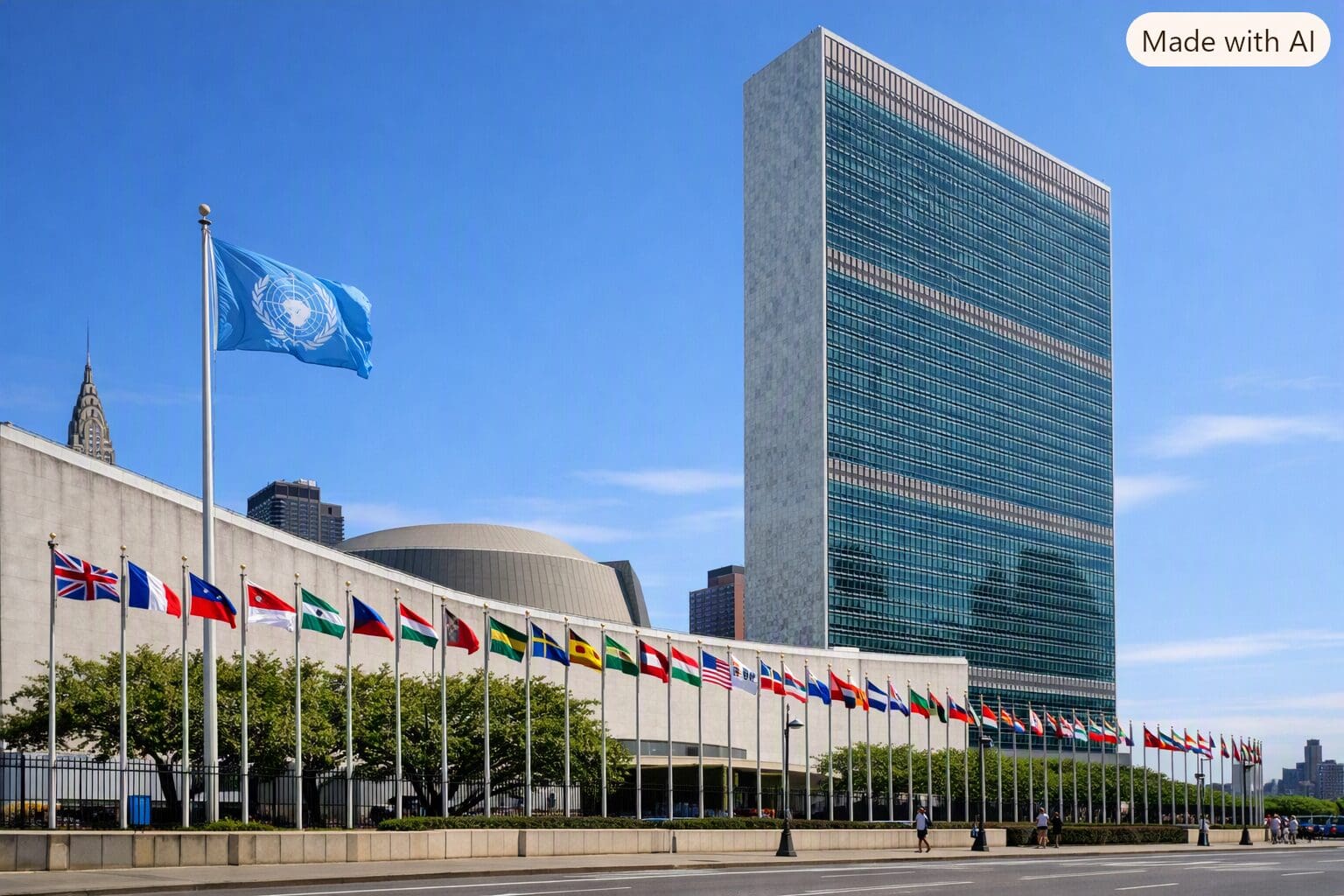
I stood in this hall as Israel's representative at a time when almost every vote became a political battle. So when I saw delegations rise and depart this week as Prime Minister Benjamin Netanyahu ascended to the General Assembly podium, I saw not just a television image, I saw a warning sign.
In September 1990, after the events on the Temple Mount, Israel found itself under severe international criticism. I knew firsthand the feeling of representing a militarily strong country, but discovering how difficult it is to act when the political space is shrinking.
But I have also seen the opposite process.
I saw how isolation is broken.
In December 1991, General Assembly Resolution 3379, which equated Zionism with racism, was repealed. 111 countries voted in favor of its repeal.
I was a member of the Israeli delegation to the UN at the time and saw firsthand the diplomatic work that was required to achieve this result. Ambassador Yoram Aridor, the American administration, and Israeli diplomacy acted systematically with many countries.
This didn't happen because the world suddenly became convinced of Israel's righteousness. It happened because there was a political goal, there was a strategy, and there was ongoing action to achieve it.
After the election of Yitzhak Rabin as Prime Minister in 1992 and the developments that led to the Oslo Accords, I saw another change. Leaders and representatives who had kept their distance from Israel for years suddenly asked to meet with the Israeli Prime Minister.
During Ambassador Gad Yaakovi's tenure, I was also involved in the process that ultimately resulted in Israel being elected to the UN Committee on Information. This was not just a technical event either. It expressed a change in Israel's status and ability to integrate into international institutions.
The conclusion I drew from those years is simple: Political isolation is not a fate, but it also does not disappear on its own.
7 October and political capital
After the October 7 massacre, Israel had broad international legitimacy to defend itself and return the abductees. Leaders came to Israel and expressed deep sympathy for its citizens.
Almost three years later, much of this political capital has eroded.
The prolonged war in Gaza, the number of civilian casualties, the debate over humanitarian aid, the question of the day after tomorrow, and the lack of a clear political path have gradually changed the international atmosphere.
Some of the criticism can and should be debated. Israel is facing real enemies, chief among them Hamas, which carried out the October 7 massacre. This fact must not be obscured.
But foreign policy is not measured only by whether we are right. It is also measured by the ability to translate justice, strength, and military achievements into a strategic outcome.
This is where, in my opinion, the main problem lies.
Netanyahu's speech – and what happened in the hall
It's good that the Israeli Prime Minister came to the General Assembly. When Israel is attacked in the international arena, the Prime Minister should appear and present her position.
Netanyahu firmly presented the Iranian threat, defended Israel's actions, rejected the accusations directed against it, and harshly attacked its critics.
But the image in the hall was hard to ignore: many delegations stood up and left when the prime minister took the podium, while others remained in the hall and supporters cheered him on.
This should not be interpreted as meaning that every country that left the hall has become an enemy of Israel or has severed relations with it. Israel still has alliances, partnerships, and deep ties with many countries.
But from a political and symbolic perspective, this is an image that Israel cannot afford to ignore.
The reactions following the speech have not yet indicated a change in trend. It did not result in a new political initiative or a significant shift in the international community's attitude toward Israel.
Hence the conclusion: A speech can explain policy; it cannot replace it.
The United States – a strategic asset, not a substitute for policy
The relationship with the United States is one of Israel's most important strategic assets. Security, political, and technological cooperation between the countries is a central component of Israel's strength.
But precisely because the relationship with Washington is so important, it must not be made a substitute for a broad international strategy.
The American veto is a strategic asset; it must not become Israel's political agenda..
The interests of the United States and Israel are very close, but not identical on every issue. Israel needs to maintain its alliance with the United States, while at the same time building and strengthening its relations with Europe, the moderate Arab states, and other countries around the world.
Iran – What is the destination??
Iran continues to be one of Israel's main strategic challenges.
Israel has demonstrated significant intelligence and military capabilities. But here too, the question is not only what can be hit, but what one seeks to achieve afterward.
What is the goal regarding the nuclear and missile programs? How do you prevent Iran from restoring damaged capabilities? And how do you combine military force, economic pressure, and diplomacy into one strategy?
The Strait of Hormuz, Houthi activity, and the threat to shipping lanes are not just Israeli matters. They concern the United States, the Gulf states, Europe, China, and the global economy.
A military achievement becomes a strategic achievement only when it is clear what is wanted to be achieved through it.
Judea and Samaria – Governance is also foreign policy
Palestinian terrorism is a real threat and must be fought vigorously. At the same time, violence by extremist elements among the settlers harms Israel's security, the rule of law, and its international standing.
I previously served as deputy commander of the Samaria region. In my experience, most settlers knew how to work with the IDF and understood that the army was the security authority on the ground.
Events like those we saw in the Kosrae region require clear law enforcement. The police and the Border Guard exist for this purpose. The IDF is facing threats on several fronts, and there is no reason to burden it with civilian policing tasks that can be carried out through the bodies the state established for this purpose.
Internal governance is also a component of Israel's political strength.
Not all criticism is isolation.
It is also important to be careful of exaggeration.
Israel is not apartheid-era South Africa, and there is no room for automatic comparisons between the situations. Israel has deep security, economic, scientific, and technological ties with many countries.
But that's precisely why warning signs must not be ignored.
Isolation doesn't start in one day or with one decision. It builds gradually: another vote against you, another country that distances itself, a leader who refuses to meet, a young public that changes its attitude, an international institution that is harder to operate in.
Anyone who experienced a period in which Israel was forced to struggle for its place in the international system needs to recognize the process before it becomes a permanent reality.
Israel needs to take the initiative
Israel does not need to wait for an initiative to be imposed on it from the outside. It must put it on the table. Israeli initiative.
In Gaza, the day after and the non-Hamas elements that will be able to take civilian responsibility need to be clearly defined.
In Judea and Samaria, governance and law enforcement must be strengthened alongside the fight against terrorism.
Facing Saudi Arabia and the moderate Arab states, efforts to build a broad regional framework must be renewed.
Against Iran, a strategy is needed that combines military force, economic pressure, and diplomacy, with a clear definition of the ultimate goal.
And in front of Europe and the United States, Israel must not only explain what it opposes, but also present What does she offer?.
Can you get out of isolation?
When I saw delegations leaving the assembly hall this week, I was reminded of that same hall more than thirty years ago.
But I also remembered what happened next.
Israel knew how to change reality. The repeal of Resolution 3379 did not happen by itself. The change in relations with many countries did not happen by itself. The political breakthroughs did not come because the world suddenly decided to love Israel.
Israel did this not by giving up its power, but by Connection between power and initiative.
This is the lesson that should guide us today as well.
Military power protects the State of Israel from its enemies. Political power enables it to transform military achievements into a better strategic reality.
Israel needs both.
And the lesson I learned at the United Nations more than three decades ago still holds true: Isolation is not a fate, but to get out of it you have to take the initiative.
It is difficult to fight the poison channels in the world when the poison channels in Israel are given ammunition and spread lies and cooked-up videos.
There is no enforcement against traitors 🤷♂️
Israel's mistake is that they did not listen to Trump, who initiated voluntary immigration.
The Gazans and the residents of Yehoshua have no business here and they should emigrate to one of their 22 countries voluntarily, or to another country voluntarily.
Now that the right is getting stronger and will hold the key, they will not allow Netanyahu to continue to ignore this.
When you say political purpose, what do you mean?
So listen and read carefully.
There will be no enemy state, no state, no entity, no army, between us and the Jordan River.
Do you want to exist or count down the time?
To the end of the Jewish state