


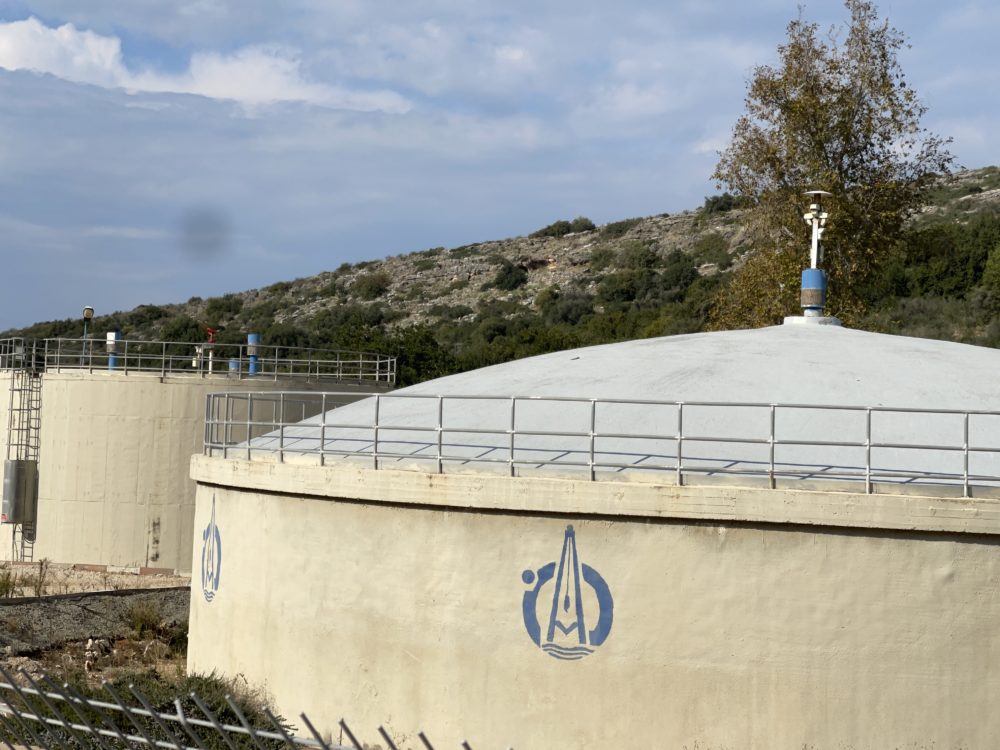
(haipo) – Two weeks after the shutdown of most desalination plants due to a bloom of microscopic algae, the water sector in Israel is returning to normal, but not to a state of complete normality. All private desalination plants have returned to activity, but only two of them are operating at full capacity, while the others are operating partially and in accordance with the Water Authority’s guidelines. At the same time, the country continues to rely on a combination of Sea of Galilee water, groundwater, wells and other water sources, with the Water Authority stating that there is currently no shortage of water supply for households or agriculture.
For the purpose of this article, Haifa asked Mekorot a series of questions regarding the state of the water sector, dealing with the shutdown of desalination plants, and the state's preparedness for scenarios of drought, sea pollution, malfunctions, and damage to infrastructure. The sources responded that the company operates the national system in accordance with the Water Authority's guidelines, and that so far there has been no damage to the water supply to households.
What is the current state of the water sector?
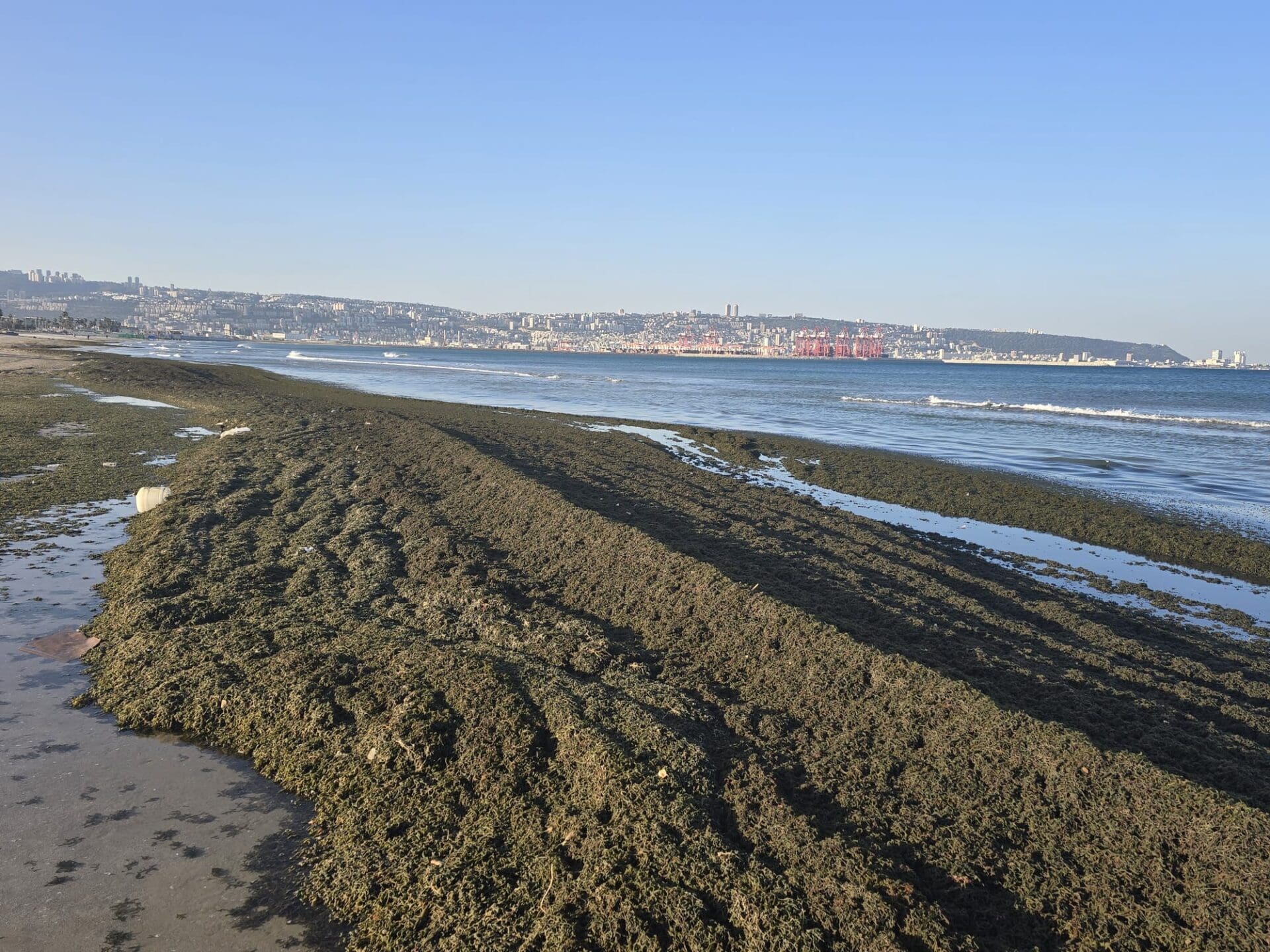
Earlier this month, most of Israel's desalination plants were shut down due to a bloom of microscopic algae in the sea. The event raised concerns about disruptions in water supplies, especially given that desalination plants are a key component of Israel's drinking water supply.
However, about two weeks after the incident, the picture is more stable. According to sources, all private desalination plants have resumed operation. The desalination plant in Hadera is operating at full capacity, while the other five facilities are operating partially and in accordance with the Water Authority's guidelines. The sources emphasize that there is currently no problem with water supply to any of the sectors.
The Water Authority's announcement from yesterday, Monday, September 14, 2026, also reinforces this picture. The authority defined the water sector as being in "full stability," and noted that all desalination plants are operating, two in full operation and the others in partial operation. Water supply to households and agriculture, according to the authority, continues as usual.
Not just desalination, this is how Israel closes the gap
One of the important points for understanding the Israeli water sector is the fact that desalinated seawater does not serve all water consumers equally. According to sources, desalination plants mainly serve the domestic sector and drinking water consumption, while agriculture relies largely on recycled water, including water produced from wastewater treatment systems (sewage water and gray water).
At the direction of the Water Authority, the supply was partially transferred from desalination water to a combination of Kinneret water, ground drilling, and aquifer water. In this way, the national system was able to bridge the gap that arose during a period when desalination plants operated on a limited basis. This is actually one of the main advantages of a national and connected water system: when one water source is damaged or reduced, the use of other sources can be increased and the water can be directed to areas where it is needed.
What water sources are available to Israel?
The Israeli water sector relies on a combination of natural water sources, desalination plants, and recycled water (wastewater). The main sources include the Sea of Galilee, aquifers and groundwater, water wells, regional desalination plants, and facilities that were not affected by the recent event, along with recycled water used primarily by the agricultural sector. All of these are joined by the national water system, which allows water to be transferred between different regions according to needs and the state of the water sources, thus providing a solution when one of the sources of supply is reduced or damaged.
The sources emphasize that the operation of all sources is carried out in accordance with the guidelines and regulations of the Water Authority.
And what happens when there is an unusual event?
The main question that arises from the recent desalination incident is how capable the Israeli water sector is of dealing with a situation in which several sources are simultaneously affected. Sources say that during the recent incident, despite the cessation of activity of the desalination facilities, the company activated the national system to fill the gap that has arisen. According to the company, apart from restrictions imposed on agriculture and the irrigation of public gardens during the first 24 hours and a half, until the national system stabilized, there was no restriction on the supply of water to households.
In other words, the event was a test for the system and at this point, according to the data provided, water supply to the public continued.
And what about marine pollution?
In recent weeks, various beaches across the country have been closed due to pollution incidents, so the question naturally arises as to how marine pollution may affect the desalination facilities. Here, the sources clarify that the desalination facilities are private facilities, owned by commercial companies and not owned by Mekorot.
Therefore, questions regarding monitoring mechanisms, warning, and the decision whether seawater can be pumped in cases of pollution should be referred, according to the company, to the Water Authority and the Ministry of Energy and Infrastructure.
However, marine pollution incidents illustrate the importance of having alternative sources and a national water system capable of dealing with the temporary interruption of a particular source.
And what is expected next?
One of the most important questions is not only how Israel has dealt with the event that has already occurred, but how it will deal with the years to come. The climate reality presents Israel with a complex challenge: on the one hand, population growth and water demand, and on the other, greater dependence on artificial systems and non-natural water sources, alongside periods of drought, decreased precipitation, and extreme events.
Mekorot emphasizes that the company is the implementing body, and does not determine water sector policy. Responsibility for determining policy and decisions regarding consumption restrictions lies with the Water Authority. At the same time, Mekorot is implementing a three-year plan to develop the water sector and connect various regions to the national system, in accordance with Water Authority approvals.
In drought and low rainfall, is there cause for concern?
According to data and forecasts, this year is characterized by drought conditions and low precipitation. In such a situation, the obvious question is whether Israel is expected to reach a state of water shortage or even consumption restrictions.
The sources would like to emphasize that the company is not the body that determines water policy, and therefore questions regarding consumption policy, allocations, and future restrictions should be referred to the Water Authority. However, recent developments show that the system does not rely on a single water source. The ability to combine desalination, the Sea of Galilee, drilling, groundwater, and recycled water is part of the infrastructure on which water supply in Israel relies.
Climate change is already being factored into planning
The challenge does not end with the current drought. Climate change and global warming are expected to affect precipitation patterns, the frequency of droughts, and the frequency of extreme events. From a water management perspective, this means the need for long-term planning, not just responding to specific events.
Sources say these changes were taken into account as part of the company's risk management, in planning that goes decades ahead. The planning also includes decisions regarding the location and development of facilities, as well as equipping itself with the appropriate equipment to deal with future scenarios.
Israel also exports knowledge in the field of water
Israel's struggle with water scarcity does not stop at the country's borders. According to sources, the company has extensive international activities that include consulting and monitoring for countries that wish to learn from Israel's experience in water resource management. Among the countries and regions where cooperation, contracts and memoranda of understanding are or have been in place in recent years are Bahrain, Morocco, Azerbaijan, India, Argentina, Cyprus and Kazakhstan.
The emphasis is on Israeli experience in managing a water economy under conditions of relative scarcity, desalination, efficient use of water, recycling, and management of complex systems.
And what is happening on the ground now?
The Water Authority's announcement from yesterday, Monday, September 14, 26, stated that the water sector is in complete stability.
All desalination plants are operating, two of them in full operation and the rest in partial operation. At the same time, water supply to households and agriculture continues as usual. The Authority also noted that as part of the long-term preparations, the desalination plants have placed orders for a dedicated stock of membranes, a step intended to strengthen operational readiness.
In addition, due to the decrease in water consumption during the holiday period and the expansion of desalination plant activity, pumping from the Sea of Galilee and from drilling has been reduced. However, the Water Authority asks the public to continue to ensure intelligent and efficient use of water.